


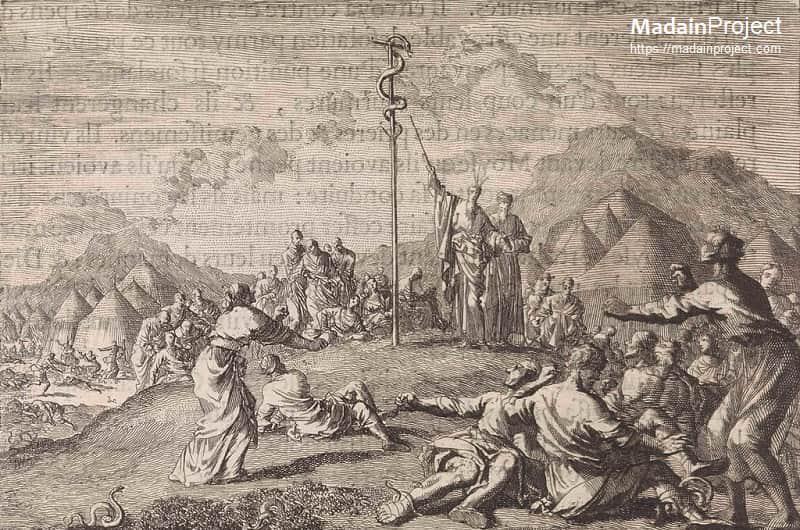
In the Baal HaTanya's view, the incident of the venomous snakes recounted in Parshat Chukat, and especially Moshe's perplexing antidote--placing a copper snake on a raised stick--articulates the spiritual foundations of this universal principle.
This collection of sources presents the Baal HaTanya's teaching in the context of preceding and contemporary commentators.
(9) Moses made a copper serpent and mounted it on a standard; and when bitten by a serpent, anyone who looked at the copper serpent would recover.
Why did Moshe make the snake out of copper? Rashi explains:
(1) נחש נחשת A SERPENT OF COPPER — He had not been told to make it of copper, but Moses said, “The Holy One, blessed be He, terms it נחש; I will therefore make it of נחשת — one term fitting the other term” (Genesis Rabbah 31:8).
And how did the copper snake on a stick cure the sick people? Rashi addresses in a prior verse:
(ב) כל הנשוך. וְאָמְרוּ רַבּוֹתֵינוּ וְכִי נָחָשׁ מֵמִית אוֹ מְחַיֶּה? אֶלָּא, בִּזְמַן שֶׁהָיוּ יִשְׂרָאֵל מִסְתַּכְּלִין כְּלַפֵּי מַעְלָה וּמְשַׁעְבְּדִין אֶת לִבָּם לַאֲבִיהֶם שֶׁבַּשָּׁמַיִם הָיוּ מִתְרַפְּאִים, וְאִם לָאו הָיוּ נִמּוֹקִים (ראש השנה כ"ט):
(2) כל הנשוך Our Rabbis said: But could the copper serpent cause death or life?! But the explanation is that when the Israelites in gazing at the serpent looked up on high and subjected their hearts to their Father in Heaven, they were healed, but if they did not do this they waste away (Rosh Hashanah 29a).
Ramban doesn't understand Rashi's explanation for the copper snake. Nowhere in G-d's command did the Hebrew word nachash appear. G-d had used the word saraf:
(א) ויעש משה נחש נחשת
. . . ולא הבינותי זה שהרי הקב"ה לא הזכיר לו נחש אלא עשה לך שרף? אבל דעתם לומר כי הלך משה אחר שם העצם אשר לו. והנראה בעיני בסוד הדבר הזה כי הוא מדרכי התורה שכל מעשיה נס בתוך נס תסיר הנזק במזיק ותרפא החולי במחליא כמו שהזכירו (מכילתא ויסע א) בויורהו ה' עץ (שמות טו כה) וכן במלח אלישע במים (מלכים ב ב כא) וידוע מדרכי הרפואות שכל נשוכי בעלי הארס יסתכנו בראותם אותם או בראות דמותם עד כי נשוכי הכלב השוטה וכן שאר הבהמות השוטות אם יביטו במים יראה להם שם בבואת הכלב או המזיק וימותו כמו שכתוב בספרי הרפואות ומוזכר בגמרא במסכת יומא (יומא פ״ד) . . .
וכשיהיה כל זה כך ראוי היה לישראל נשוכי הנחשים השרפים שלא יראו נחש ולא יזכרו ולא יעלו על לב כלל וצוה הקב"ה למשה לעשות להם דמות שרף הוא הממית אותם וידוע כי הנחשים השרפים אדומי העינים רחבי הראש שגופם כעין הנחשת בצוארם ולכן לא מצא משה לקיים מצותו בשרף בלתי שיעשה נחש נחשת כי הוא דמות נחש שרף ואם יעשנו מדבר אחר היה דמות נחש ולא דמות שרף ומה שאמרו מן הלשון הנופל על הלשון כי הזכרת השם בלבד תזיק והכלל כי צוה השם שיתרפאו במזיק הממית בטבע ועשו דמותו ושמו וכשיהיה האדם מביט בכוונה אל נחש הנחשת שהוא כעין המזיק לגמרי היה חי להודיעם כי השם ממית ומחיה:
(1) AND MOSES MADE ‘NECHASH NECHOSHETH’ (A SERPENT OF BRASS)
. . . But I do not understand this, for the Holy One, blessed be He, did not mention to Moses [the word] nachash, but said to him, Make thee ‘saraf’ (a fiery serpent)!252Verse 8.
But the intention of the Sages is that Moses was guided by the substantive name thereof [which is nachash; and saraf is merely a particular description of a certain kind of serpent — a “fiery” serpent — hence he made the saraf which G-d mentioned to him from nechosheth (brass), corresponding with its substantive name].
It appears to me that the secret of this matter is that this is one of the ways of the Torah, every deed of which is a miracle within a miracle. Thus [the Torah] removes injury by means of the cause of the injury, and heals illness by means of the cause of the sickness, as the Rabbis have mentioned in connection with [the verse], and the Eternal showed him a tree,253Exodus 15:25. See Vol. II, p. 211. and as occurred with the salt that Elisha [cast] into the water.254II Kings 2:21. See Vol. II, p. 211, Note 259. Now it is a well-known medical principle that all people bitten by poisonous creatures become dangerously ill when they see them, or [even] when they [only] see their likeness, so that if people who have been bitten by a mad dog or other mad animals look into water,255“Or any mirror.” See Vol. I, p. 259. they see there the image of the dog or the attacker, and [this] can [cause them to] die, as is written in medical books and mentioned in the Gemara of Tractate Yoma.256Yoma 84a . . .
Now in view of all this, it would have been correct that the Israelites, who had been bitten by the fiery serpents, should not look upon a serpent, and should not mention it or bring it to mind at all. But the Holy One, blessed be He, commanded Moses to make for them the likeness of a fiery serpent, which was [the creature] that killed them. And it is well-known that these fiery serpents have red eyes and wide heads, and their bodies at their necks are like brass. Therefore Moses could not fulfill His command to make a fiery serpent except by making a serpent of brass, which appears similar to a fiery serpent. For had he made it of any other material, it would have had the likeness of a serpent, but not that of a saraf (a fiery serpent). And the Rabbis251Bereshith Rabbah 31:8. who said [that Moses was to make a brass serpent] because “one word corresponds [in sound] to the other,” [meant to imply] that the mere mention of the name [saraf, which is a particular form of nachash, as explained above] was harmful [for the people who had been bitten, and yet G-d wanted to heal them through it]. The general intention [of this section, then] is that G-d commanded that they should be healed by the harmful agent whose nature is to kill; therefore they made its likeness in form and name, and when a person concentrated his gaze upon the brass serpent which resembled totally the offending agent, he lived. This was to make them realize that it is G-d [alone] Who sendeth death and maketh alive.257I Samuel 2:6.
In Ramban's view, though typically medicine is the furthest thing from the poison, in this instance, the medicine came from the poison.
This explains the awkwardness of Moshe holding up the very source of the dying people's illness. He wasn't sticking it to them. Rather, in this instance, the snake was miraculously the antidote to its own poison.
But how does this square with the reason the snake on the stick worked, quoted by Rashi, that it was the Jews looking toward heaven that was the true cause of healing?
Sefat Emet offers a beautiful explanation that is instructive to balancing medical intervention with faith in G-d:
(א) תרל"ו
בפסוק עשה לך שרף כו'. במשנה וכי נחש ממית כו' מחי' אלא בזמן שמסתכלין כלפי מעלה ומשעבדין לבם לאביהם שבשמים מתרפאין. וקשה הי' צריך להיות הסתכלות לשמים בלבד למה נחש נחושת. אכן באמת הי' הנחש מסוגל לרפואה זו ששם הקב"ה בו רפואה זו וכמ"ש רמב"ן ז"ל שדרכו של הקב"ה למתוק מר במר לכן אף שדרך הטבע מי שנשוך מכלב ורואה אותו מזיק לו יותר שם הקב"ה כאן להיפוך שע"י הראי' יתרפאו ע"ש. אעפ"כ זה הרצון שבהיותו עוסק ברפואה הגשמיי יסתכל ויהי' לבו לשמים ע"י שמיישב עצמו וכי נחש מחי' וזה שאמר מסתכלין ומשעבדין לבם. פי' אף שהם רחוקים מעולם העליון ועוסקים בטבע אעפ"כ ישעבדו לבם פי' להסתכל לשמים ולהראות שחפצים לצאת ממאסר עוה"ז והטבע ולהתדבק בו ית'. וזהו עשה לך שרף הוא התלהבות האדם לדבוק בו ית' כנ"ל:
To summarise Sefat Emet: At the same time as one needs to practically seek medicine for a cure, they need to spiritually beseech G-d who is the source of that cure. Look at the snake, but realise that its medicinal qualities are G-d-given. Therefore, look at heaven too.
Until this point, we have been guided by Ramban, who argued that the phenomenon that the same snake that caused the illness also healed was a once off freak phenomenon.
Thanks to the Sefas Emes, this once off incident also contains a timeless spiritual message about medicine and faith.
But there's another way of looking at the story:
Perhaps the phenomenon of the same snake being the source of illness and its cure is not an isolated incident but rather a broader pattern in life: challenges we face are often the very things that have the potency to propel our growth.
Perhaps looking up at heaven isn't an additional component to the snake working its magic but rather critical to it: in order for our challenges to not hamper us but propel us, we need to be able to approach them from G-d's viewpoint.
This is the essence of the Baal HaTanya's interpretation. What's most beautiful about it to me is that it is not presented simply as a feel good self fulfilling positive psychology message. It is articulated as a theological imperative founded on key Jewish texts. It is, simply, the truth.
(א) ויעש משה נחש נחשת וישימהו על הנס והיה אם נשך הנחש את איש והביט אל נחש הנחשת וחי. ואיתא במשנה (ספ״ג דר״ה) על זה בזמן שישראל מסתכלין כלפי מעלה ומשעבדין את לבם לאביהם שבשמים כו׳. וקשה למה ליה לנחש כלל אלא והיה אם נשך הנחש יסתכל כלפי מעלה. ועוד מהו ההסתכלות כלפי מעלה הלא מבואר בענין תפלה שיהיו עיניו למטה ולבו למעלה . . .
. . . הנה כל רעות ודינים ר״ל שנתהוו בעולם שרשם ומקורם המחיה אותם הוא טוב, כמשל הזונה עם בן המלך המבואר בזהר (תרומה דקס״ג ע״א) שכל רצונה וחפצה שלא לציית אותה ובזה תתענג יותר שתהא אהובה למלך משא״כ כשמפתה אותו ותוכל לו אין זה רצון המלך . . .
והענין הוא ששרש הרע המחייהו הוא טוב כמבואר בזהר שם וכי יש עבדא דמריד במאריה הגם שיש כמה עבדים המתפרצים מאת אדוניהם אמנם הם בשר ודם וחיותם נפרדים זה מזה. אבל עבדי ה׳ שמקבלים חיותם ממנו ית׳ והוא המחיה את הכל איך יש חיות לדבר שכנגדו ומשני שהוא עד״מ הזונה עם בן המלך. וזהו דבר המחיה את כל הרעות ושרשם למעלה הוא טוב וכשיורד למטה ע״ד השתלשלות נעשה באמת רע גמור ודינים גמורים הן במילי דעלמא והן במילי דשמיא . . .
והנה כשבא לאדם איזה יסורים ר״ל יחשוב כי לא למראה עיניו ישפוט שרע הוא אלא באמת שרשו הוא טוב כי ממנו ית׳ לא תצא הרעות כי אם רק טוב גמור רק שהוא אינו מושג בשביל שלא יוכל לירד לעולם השפל ונשאר למעלה (ע׳ בסש״ב פרק כ״ו ובאגה״ק ד״ה להשכילך בינה) . . .
וזהו ענין התפלה שבגוף האדם בעולם הזה שהנשמה בתוך הגוף סובלת צרות ויסורים שרצונה לידבק ביוצרה והגוף אינו מניחה וכמו גלות השכינה שמוכרחת להחיות גם הרשעים, כך הנשמה מוכרחת להחיות את הגוף וכל כוונתה אינה בשביל עצמה רק בשביל להעלות הגוף מעפר, וצריך לבררו ככסף ביד הצורף כל מה שיש תערובות יותר צריך לברר וללבן בלהב אש היותר גדול כן צריך לברר הגוף מהיצה״ר ולהביאו אל שרשו כמשל בן המלך עם הזונה הנ״ל, וכל מה שיש תערובות רע ביותר צריך להפריד ע״י אש יותר גדול וחזק בתפלה לדבק בקונו (ועמ״ש בפ׳ אמור ע״פ ונקדשתי), ולכן בבית ראשון שלא היה הרע הרבה לא היו צריכין לתפלה בהתלהבות כי אם כל מעשיהם היה להביא הרע והדינים אל שרשם ע״י הקרבנות היה דיים, אבל בבית שני התחילו לתקן התפלה והיתה קצרה לפי ערך הצטרכות האש ותערובות הרע שהיה בקרבם. ואנחנו צריכים להתפלל יותר ויותר בהתלהבות מאד. וכן בכל דור ודור למטה צריך להתפלל בהתלהבות גדולה ולא כי אכשר דרי אדרבה מפני גודל הרע אשר נתערב ונתרבה בכל דור ודור צריך להפרידו ע״י אש חזק בתפלה ולברר הרע אשר בקרבו ולהביאו אל שרשו כמשל בן המלך עם הזונה הנ״ל שיחשוב החיות של הרע המחייהו איך יש לו חיות מהקב״ה כי בלעדו לא היה יכול לחיות והקב״ה מחייהו ע״ד הנ״ל . . .
וזהו ענין נחש הנחשת שהיה צריך להשימו על הנס שהיה צריך לה להגבהת הנחש למעלה ומסתכלים כלפי מעלה כלו׳ שלא יחשוב שהנחש נפרד א״כ הוא רע ממש ונשאר רע. אבל כשיחשוב את הנחש בהגבהתו למעלה בשרשו שאינו נפרד מאתו ית׳ וחיותו משם הוא ע״ד משל הזונה עם בן המלך הנ״ל א״כ אין רע יורד מלמעלה ולכן היה נחשת שמשתנה לכמה גוונין ע״י אין. והמ״י.
Have any feedback? I'd like to hear. Email me at [email protected]. Thanks!