


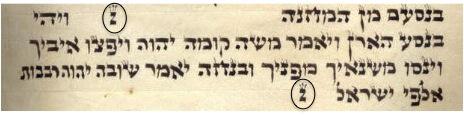
(לה) ׆ וַיְהִ֛י בִּנְסֹ֥עַ הָאָרֹ֖ן וַיֹּ֣אמֶר מֹשֶׁ֑ה קוּמָ֣ה ׀ ה׳ וְיָפֻ֙צוּ֙ אֹֽיְבֶ֔יךָ וְיָנֻ֥סוּ מְשַׂנְאֶ֖יךָ מִפָּנֶֽיךָ׃ (לו) וּבְנֻחֹ֖ה יֹאמַ֑ר שׁוּבָ֣ה ה׳ רִֽבְב֖וֹת אַלְפֵ֥י יִשְׂרָאֵֽל׃ ׆ {פ}
(ו) מִ֣י זֹ֗את עֹלָה֙ מִן־הַמִּדְבָּ֔ר כְּתִֽימְר֖וֹת עָשָׁ֑ן מְקֻטֶּ֤רֶת מֹר֙ וּלְבוֹנָ֔ה מִכֹּ֖ל אַבְקַ֥ת רוֹכֵֽל׃
(6) Who is she that comes up from the desert
Like columns of smoke,
In clouds of myrrh and frankincense,
Of all the powders of the merchant?
מִי זֹאת עֹלָה מִן הַמִּדְבָּר. כְּשֶׁהָיִיתִי מְהַלֶּכֶת בַּמִּדְבָּר וְהָיָה עַמּוּד הָאֵשׁ וְהֶעָנָן הוֹלְכִים לְפָנַי וְהוֹרְגִים נְחָשִׁים וְעַקְרַבִּים וְשׂוֹרְפִין הַקּוֹצִים וְהַבַּרְקָנִים לַעֲשׂוֹת דֶּרֶךְ מִישׁוֹר, וְהָיָה הֶעָנָן וְהֶעָשָׁן וְרוֹאִין אוֹתָן הָאֻמּוֹת וּמַתְמִיהוֹת עַל גְּדֻלָּתִי, וְאוֹמְרוֹת: "מִי זֹאת"? כְּלוֹמַר, כַּמָּה גְדוֹלָה הִיא זֹאת הָעוֹלָה מִן הַמִּדְבָּר וגו':
Who is this ascending from the wilderness. When I was traveling in the wilderness and the pillar of fire and the cloud were going before me, killing snakes and scorpions and burning the thorns and thistles to make a straight path, and [when] the cloud and the smoke were ascending, the nations saw them, and marveled at my greatness, and they would say, “Who is this?” i.e., “How great is she [Bnei Yisroel] who is ascending from the wilderness, etc.!”
(יא) רְאֵה מָה הָאָרוֹן חָבִיב, שֶׁהַמִּשְׁכָּן כֻּלּוֹ לֹא נַעֲשָׂה אֶלָּא בִּשְׁבִיל הָאָרוֹן, שֶׁהַשְּׁכִינָה בְּתוֹכוֹ. וְכָל הַנִּסִּים שֶׁהָיוּ נַעֲשִׂים לְיִשְׂרָאֵל, בָּאָרוֹן הָיוּ נַעֲשִׂים, לְפִי שֶׁהַשְּׁכִינָה בְּתוֹכוֹ. רְאֵה מַה כְּתִיב בּוֹ, וַאֲרוֹן בְּרִית ה׳ נֹסֵעַ לִפְנֵיהֶם דֶּרֶךְ שְׁלֹשֶת יָמִים לָתוּר לָהֶם מְנוּחָה (במדבר י, לג). וְהָיָה הוֹרֵג נְחָשִׁים וְעַקְרַבִּים וְשׂוֹרֵף אֶת הַקּוֹצִין וְהוֹרֵג שׂוֹנְאֵיהֶן שֶׁל יִשְׂרָאֵל.
(11) Observe how beloved the ark was from the fact that the entire Sanctuary was built because of the ark, in which the Shekhinah resided. All the miracles that were performed for Israel occurred by virtue of the ark, in which the Shekhinah dwelt. Notice that it is written concerning it: And the ark of the covenant of the Lord went before them three days’ journey, to seek out a resting place for them (Num. 10:33). It killed the snakes and scorpions, burned the thorns, and destroyed the enemies of Israel.
ויהי בנסוע הארון. נקוד עליו מלמעלה ומלמטה, מפני שלא היה זה ממקומו. רבי אומר: מפני שהוא ספר בעצמו. מכאן אמרו "ספר שנמחק ונשתייר בו פ"ה אותיות כפרשת ויהי בנסוע הארון מטמא את הידים". ר' שמעון אומר: נקוד עליו מלמעלה ומלמטה, מפני שלא היה זה מקומו. ומה היה ראוי לכתוב? – "ויהי העם כמתאוננים". משל למה הדבר דומה? לבני אדם שאמרו למלך: הנראה שתגיע עמנו, אצל מושל עכו! הגיע לעכו – הלך לו לצור. הגיע לצור – הלך לו לצידון. הגיע לצידון – הלך לו לאנטוכיה. הגיע לאנטוכיה – התחילו בני אדם מתרעמים על המלך, שנתלבטו על דרך זו. המלך צריך להתרעם עליהם, שבשבילם נתלבט על דרך זו! כך הלכה שכינה בו ביום ל"ו מיל, כדי שיכנסו ישראל לארץ; התחילו ישראל מתרעמים לפני המקום שנתלבטו על דרך זו. המקום צריך להתרעם עליהם, שבשבילם הלכה שכינה ל"ו מיל, כדי שיכנסו ישראל לארץ!
(Bamidbar 10:35) "And it was, when the ark traveled": There are signs (inverted nuns) before (this verse) and after (the next verse). Rebbi says: Because it is a book in itself — whence they ruled: A (Torah) scroll which was erased, and there remained eighty-five letters, as in the section "And it was, when the ark traveled". R. Shimon says: There are signs before and after because this is not its place. What should have been written? (Bamidbar 10:33) "And they traveled from the mountain of the L-rd, a journey of three days. (And the ark of the covenant of the L-rd preceded them a distance of three days"). (Bamidbar 11:1) "And the people were as seekers of a pretext." An analogy: Some men say to the king: Would you please accompany us to the governor of Acco? They arrive at Acco — he has gone to Tyre. They arrive at Tyre — he has gone to Tziddon. They arrive at Tziddon — he has gone to Antochia. They arrive at Antochia — some of them start complaining against the king for having put them to all of this trouble! It is the king who should complain, for having been put to all of this trouble for their sakes! Similarly, on that day the Shechinah traveled a three-days journey, so that they could (immediately) enter Eretz Yisrael — and they began to complain before Him for having been put to all of that trouble! It is He (if anyone) who should have complained! For it was for their sakes that the Shechinah was thus constrained!
The Sages taught: “And when the Ark traveled and Moses proclaimed: Rise up, God, and Your enemies will scatter and those who hate You will flee from before You.” And The Holy One, Blessed be He, made signs in the Torah for this portion, above and below to say that this is not its place. Rabbi Yehuda HaNasi says: It is not for that reason that signs were inserted. Rather, the signs are there because this portion is considered a book unto itself.
כְּמַאן אָזְלָא הָא דְּאָמַר רַבִּי שְׁמוּאֵל בַּר נַחְמָן אָמַר רַבִּי יוֹנָתָן: ״חָצְבָה עַמּוּדֶיהָ שִׁבְעָה״, אֵלּוּ שִׁבְעָה סִפְרֵי תוֹרָה? — כְּמַאן כְּרַבִּי.
According to whose opinion is that which Rabbi Shmuel bar Naḥman said that Rabbi Yonatan said, that with regard to the verse: “With wisdom she built her house, she carved its seven pillars” (Proverbs 9:1), these are the seven books of the Torah? According to whose opinion? It is according to the opinion of Rabbi Yehuda HaNasi.
(א) חׇ֭כְמוֹת בָּנְתָ֣ה בֵיתָ֑הּ חָצְבָ֖ה עַמּוּדֶ֣יהָ שִׁבְעָֽה׃
(1) Wisdom has built her house, She has hewn her seven pillars.
(ב) חצבה עמודיה שבעה. שבעת ימי בראשית, ד"א ז' ספרים שיש בתורה ויהי בנסוע הארון ספר לעצמו במסכת שבת:
(2) She has hewn her seven pillars The seven days of Creation. Another explanation: This refers to the seven books of the Torah, since (Num. 10:35f.) “And it came about when the ark traveled...” is an individual book, as is stated in tractate Shabbat (116a).
מַאן תַּנָּא דִּפְלִיג עֲלֵיהּ דְּרַבִּי — רַבָּן שִׁמְעוֹן בֶּן גַּמְלִיאֵל הוּא. דְּתַנְיָא: רַבָּן שִׁמְעוֹן בֶּן גַּמְלִיאֵל אוֹמֵר: עֲתִידָה פָּרָשָׁה זוֹ שֶׁתֵּיעָקֵר מִכָּאן וְתִכָּתֵב בִּמְקוֹמָהּ. וְלָמָּה כְּתָבָהּ כָּאן — כְּדֵי לְהַפְסִיק בֵּין פּוּרְעָנוּת רִאשׁוֹנָה לְפוּרְעָנוּת שְׁנִיָּיה. פּוּרְעָנוּת שְׁנִיָּיה מַאי הִיא — ״וַיְהִי הָעָם כְּמִתְאוֹנְנִים״. פּוּרְעָנוּת רִאשׁוֹנָה — ״וַיִּסְעוּ מֵהַר ה׳״, וְאָמַר רַבִּי חָמָא בְּרַבִּי חֲנִינָא: שֶׁסָּרוּ מֵאַחֲרֵי ה׳. וְהֵיכָן מְקוֹמָהּ? אָמַר רַב אָשֵׁי: בַּדְּגָלִים.
Who is the tanna who disagrees with Rabbi Yehuda HaNasi? It is Rabban Shimon ben Gamliel. As it was taught in a baraita that Rabban Shimon ben Gamliel says: In the future, this portion will be uprooted from here, where it appears, and will be written in its proper place. And why was it written here? It is in order to demarcate between the first punishment and the second punishment. What is the second punishment that appears immediately afterward? It is the verse: “And the people complained wickedly in God’s ears, and God heard and became angry, and the fire of God burned in them and it consumed the edge of the camp” (Numbers 11:1). What is the first punishment? It is the verse: “And they traveled from the mountain of God [mehar Hashem] for three days” (Numbers 10:33), and Rabbi Ḥama, son of Rabbi Ḥanina, said: That they turned from after God [me’aḥarei Hashem] and hurriedly fled Mount Sinai. The Gemara asks: And if so, where is the proper place for this paragraph? Rav Ashi said: In the portion of the flags.
(לג) וַיִּסְעוּ֙ מֵהַ֣ר ה׳ דֶּ֖רֶךְ שְׁלֹ֣שֶׁת יָמִ֑ים וַאֲר֨וֹן בְּרִית־ה׳ נֹסֵ֣עַ לִפְנֵיהֶ֗ם דֶּ֚רֶךְ שְׁלֹ֣שֶׁת יָמִ֔ים לָת֥וּר לָהֶ֖ם מְנוּחָֽה׃
(33) They marched from the mountain of the LORD a distance of three days. The Ark of the Covenant of the LORD traveled in front of them on that three days’ journey to seek out a resting place for them;