


About one language used by the Jews
50th Ward CHI vs. Hate Webinar, June 4, 2024
"I'm going to write English but it lets you do Assyrian Bosnian Chinese Croatian Filipino Indian Korean Other Polish Russian Serbian Spanish..."
https://www.youtube.com/watch?v=W2yDSLMcvjQ
וַיֹּ֣אמֶר אֶלְיָקִ֣ים בֶּן־חִ֠לְקִיָּ֠הוּ וְשֶׁבְנָ֨ה וְיוֹאָ֜ח אֶל־רַבְשָׁקֵ֗ה דַּבֶּר־נָ֤א אֶל־עֲבָדֶ֙יךָ֙ אֲרָמִ֔ית כִּ֥י שֹׁמְעִ֖ים אֲנָ֑חְנוּ וְאַל־תְּדַבֵּ֤ר עִמָּ֙נוּ֙ יְהוּדִ֔ית בְּאׇזְנֵ֣י הָעָ֔ם אֲשֶׁ֖ר עַל־הַחֹמָֽה׃ וַיֹּ֨אמֶר אֲלֵיהֶ֜ם רַבְשָׁקֵ֗ה הַעַ֨ל אֲדֹנֶ֤יךָ וְאֵלֶ֙יךָ֙ שְׁלָחַ֣נִי אֲדֹנִ֔י לְדַבֵּ֖ר אֶת־הַדְּבָרִ֣ים הָאֵ֑לֶּה הֲלֹ֣א עַל־הָאֲנָשִׁ֗ים הַיֹּֽשְׁבִים֙ עַל־הַ֣חֹמָ֔ה לֶֽאֱכֹ֣ל אֶת־[צוֹאָתָ֗ם] (חריהם) וְלִשְׁתּ֛וֹת אֶת־[מֵימֵ֥י רַגְלֵיהֶ֖ם] (שניהם) עִמָּכֶֽם׃ וַֽיַּעֲמֹד֙ רַבְשָׁקֵ֔ה וַיִּקְרָ֥א בְקוֹל־גָּד֖וֹל יְהוּדִ֑ית וַיְדַבֵּ֣ר וַיֹּ֔אמֶר שִׁמְע֛וּ דְּבַר־הַמֶּ֥לֶךְ הַגָּד֖וֹל מֶ֥לֶךְ אַשּֽׁוּר׃ כֹּ֚ה אָמַ֣ר הַמֶּ֔לֶךְ אַל־יַשִּׁ֥א לָכֶ֖ם חִזְקִיָּ֑הוּ כִּי־לֹ֣א יוּכַ֔ל לְהַצִּ֥יל אֶתְכֶ֖ם מִיָּדֽוֹ׃
When the army of Sennnacherib of Assyria was besieging Hezekiah's Jerusalem:
Eliakim son of Hilkiah, Shebna, and Joah replied to the Rabshakeh, “Please, speak to your servants in Aramaic, for we understand it; do not speak to us in Judean in the hearing of the people on the wall.” But the Rabshakeh answered them, “Was it to your master and to you that my master sent me to speak those words? It was precisely to the men who are sitting on the wall...” And the Rabshakeh stood and called out in a loud voice in Judean: “Hear the words of the Great King, the King of Assyria. Thus said the king: Don’t let Hezekiah deceive you, for he will not be able to deliver you from my hands.
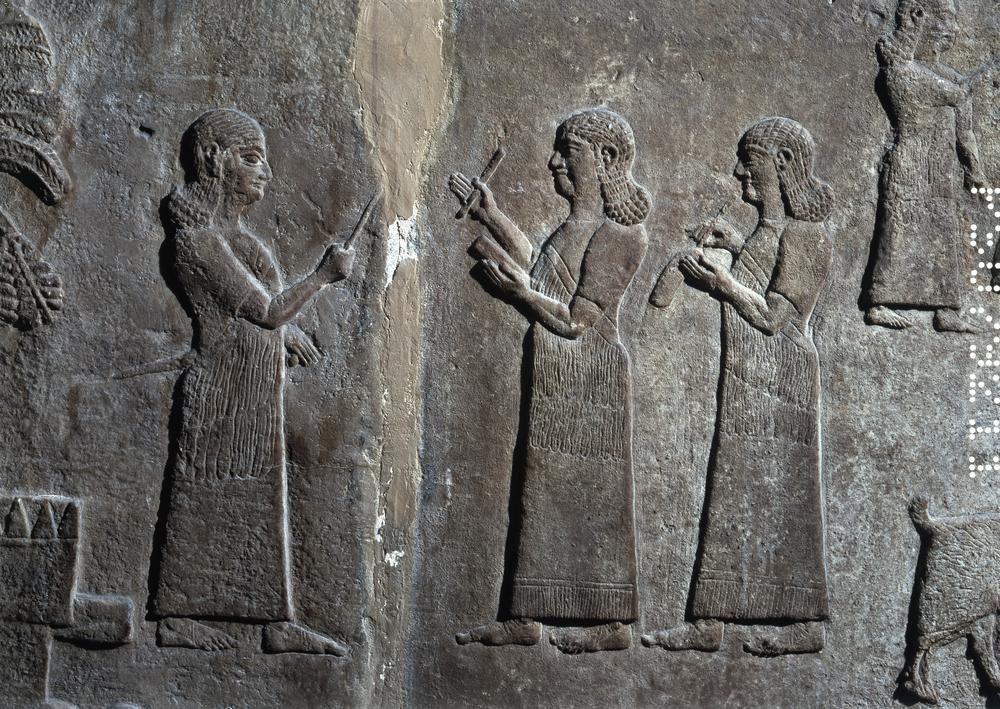
Wall relief, Central Palace, Nimrud. From reign of Tiglath-Pileser III of Assyria., 728 BCE https://www.britishmuseum.org/collection/object/W_1848-1104-5
Alabaster wall panel relief (detail): a beardless officer stands, wearing a long garment and the fringed wrap, his left hand resting on his sword, his right holding a short stick. He appears to be counting out the spoil to the two Assyrian scribes standing opposite him. Both are beardless like the officer, but their garments are decorated with fringes and they wear sandals. The first holds a clay-tablet in his left, the stylus in his right hand; the second is writing on a roll presumably made of leather; they are the Scribe of the Cuneiform and his colleague, the writer of Aramaic.
Genesis 31:47; Jeremiah 10:11; Ezra 4:8-6:18, 7:12-26; Daniel 2:4b-7:28
(5) You shall then recite as follows before your God ה׳: “My father was a fugitive Aramean. He went down to Egypt with meager numbers and sojourned there; but there he became a great and very populous nation.
(א) ארמי אובד אבי - אבי אברהם ארמי היה, אובד וגולה מארץ ארם. ...
(1) ארמי אובד אבי, my father Avraham was an Aramean, lost, and exiled from his birthplace Aram.” ...
(47) Laban named it Yegar-sahadutha, but Jacob named it Gal-ed.
(ח) רְח֣וּם בְּעֵל־טְעֵ֗ם וְשִׁמְשַׁי֙ סָֽפְרָ֔א כְּתַ֛בוּ אִגְּרָ֥ה חֲדָ֖ה עַל־יְרוּשְׁלֶ֑ם לְאַרְתַּחְשַׁ֥שְׂתְּא מַלְכָּ֖א כְּנֵֽמָא׃
an anti-Jewish letter to the king of Persia
(7) And in the time of Artaxerxes, Bishlam, Mithredath, Tabeel, and the rest of their colleagues wrote to King Artaxerxes of Persia, a letter written in Aramaic and translated Aramaic: (8) Rehum the commissioner and Shimshai the scribe wrote a letter concerning Jerusalem to King Artaxerxes as follows:
Rashi: 'written in Aramaic' - Aramaic letters
'translated in Aramaic' - written in the Aramaic language
וְיֵשׁ֡וּעַ וּבָנִ֡י וְשֵׁרֵ֥בְיָ֣ה ׀ יָמִ֡ין עַקּ֡וּב שַׁבְּתַ֣י ׀ הֽוֹדִיָּ֡ה מַעֲשֵׂיָ֡ה קְלִיטָ֣א עֲזַרְיָה֩ יוֹזָבָ֨ד חָנָ֤ן פְּלָאיָה֙ וְהַלְוִיִּ֔ם מְבִינִ֥ים אֶת־הָעָ֖ם לַתּוֹרָ֑ה וְהָעָ֖ם עַל־עׇמְדָֽם׃ וַֽיִּקְרְא֥וּ בַסֵּ֛פֶר בְּתוֹרַ֥ת הָאֱ-לֹהִ֖ים מְפֹרָ֑שׁ וְשׂ֣וֹם שֶׂ֔כֶל וַיָּבִ֖ינוּ בַּמִּקְרָֽא׃ {פ}
Jeshua, Bani, Sherebiah, Jamin, Akkub, Shabbethai, Hodiah, Maaseiah, Kelita, Azariah, Jozabad, Hanan, Pelaiah, and the Levites explained the Teaching to the people, while the people stood in their places. They read from the scroll of the Teaching of God, translating it and giving the sense; so they understood the reading.
וְתַרְגּוּם שֶׁל תּוֹרָה, אוּנְקְלוֹס הַגֵּר אֲמָרוֹ?
וְהָא אָמַר רַב אִיקָא בַּר אָבִין אָמַר רַב חֲנַנְאֵל אָמַר רַב: מַאי דִּכְתִיב: ״וַיִּקְרְאוּ בְּסֵפֶר תּוֹרַת הָאֱלֹקים מְפוֹרָשׁ וְשׂוֹם שֶׂכֶל וַיָּבִינוּ בַּמִּקְרָא״. ״וַיִּקְרְאוּ בְּסֵפֶר תּוֹרַת הָאֱלֹקים״ — זֶה מִקְרָא; ״מְפוֹרָשׁ״ — זֶה תַּרְגּוּם;
The Gemara asks: Was the translation of the Torah really composed by Onkelos the convert?
Didn’t Rav Ika bar Avin say that Rav Ḥananel said that Rav said: What is the meaning of that which is written with respect to the days of Ezra: “And they read in the book, the Torah of God, distinctly; and they gave the sense, and they caused them to understand the reading” (Nehemiah 8:8)?
The verse should be understood as follows: “And they read in the book, the Torah of God,” this is the scriptural text; “distinctly,” this is the translation, indicating that they immediately translated the text into Aramaic, as was customary during public Torah readings.
וְאָמַר רַבִּי יִרְמְיָה וְאִיתֵּימָא רַבִּי חִיָּיא בַּר אַבָּא: תַּרְגּוּם שֶׁל תּוֹרָה — אוּנְקְלוֹס הַגֵּר אֲמָרוֹ מִפִּי רַבִּי אֱלִיעֶזֶר וְרַבִּי יְהוֹשֻׁעַ.
תַּרְגּוּם שֶׁל נְבִיאִים — יוֹנָתָן בֶּן עוּזִּיאֵל אֲמָרוֹ מִפִּי חַגַּי זְכַרְיָה וּמַלְאָכִי,...
§ The Gemara cites another ruling of Rabbi Yirmeya or Rabbi Ḥiyya bar Abba. Rabbi Yirmeya said, and some say that it was Rabbi Ḥiyya bar Abba who said: The Aramaic translation of the Torah used in the synagogues was composed by Onkelos the convert based on the teachings of Rabbi Eliezer and Rabbi Yehoshua. The Aramaic translation of the Prophets was composed by Yonatan ben Uzziel based on a tradition going back to the last prophets, Haggai, Zechariah, and Malachi. ...
(ד) הַקּוֹרֵא בַּתּוֹרָה לֹא יִפְחֹת מִשְּׁלֹשָׁה פְסוּקִים. לֹא יִקְרָא לַמְּתֻרְגְּמָן יוֹתֵר מִפָּסוּק אֶחָד, וּבַנָּבִיא שְׁלֹשָׁה. הָיוּ שְׁלָשְׁתָּן שָׁלֹשׁ פָּרָשִׁיּוֹת, קוֹרִין אֶחָד אֶחָד...
(4) One who reads from the Torah in the synagogue should not read fewer than three verses. And when it is being translated, he should not read to the translator more than one verse at a time, so that the translator will not become confused.
And with regard to the Prophets, one may read to the translator three verses at a time. With respect to the Torah, an incorrect translation might lead to an error in practice, but this concern does not apply to the Prophets. If the three verses constitute three separate paragraphs, that is to say, if each verse is a paragraph in itself, one must read them to the translator one by one. ...
... רִבִּי חַגַּיי אָמַר. רִבִּי שְׁמוּאֵל בַּר רַב יִצְחָק עָאַל לַכְּנִישְׁתָּא. חֲמָא חַד סְפַר מוֹשִׁט תַּרְגוּמָא מִן גַּו סִיפְרָא. אֲמַר לֵיהּ. אֲסִיר לָךְ. דְּבָרִים שֶׁנֶּאֶמְרוּ בַפֶּה בַפֶּה וּדְבָרִים שֶׁנֶּאֶמְרוּ בִכִתָב בִּכְתָב.
...Rebbi Ḥaggai said, Rebbi Samuel bar Rav Isaac went to a synagogue. He saw a teacher delivering the translation from a book. He said to him, this is forbidden to you; matters which were said orally, orally, matters which were said in writing, in writing.
See also Rambam, Hilchot Tefillah 12:11
ואם היו שלשתן של שלש פרשיות קורין אחד אחד - ...והא שאנו מתרגמין הפטרות של פסח ועצרת טפי משאר י"ט לפי שהן מדברות בנס היום כדי לפרסם הנס וכן במתן תורה כדי לפרסם הנס:
s.v. Ve'im hayu...: The reason why we read the Targum (metargemin) the Haftarot of [the Seventh Day of] Pesach and [the Second Day of] Atzeret (=Shavuot) is because these Haftarot treat the miracle of the day. [Reading the Targum] publicizes the miracle (of the splitting of the Red Sea). Similarly with the Giving of the Torah, [reading the Targum] publicizes the miracle.
See also Bach, Orach Chaim 145:1
ספר מהרי״ל, הלכות שבועות
[ד] ...בשבועות אומרים הדיברא אקדמות מילין אחר סיום פסוק ראשון דקריאת התורה שהוא ״בחודש השלישי״. ... וכן ביום שני אתא ודוגמא או יציב פתגם אחר פסוק ראשון של הפטרה...
Sefer Maharil, Laws of Shavuot
Traditions of Rabbi Yaakov HaLevi ben Moshe Moelin, Rabbi of Mainz, d. 1427)
[4] ... On Shavuot one says the dibra "Akdamut Milin/The Beginning of Words" after completing the first verse of the Torah reading, which is "On the third New Moon" (Exodus 19:1). ... Similarly, on the Second Day [one says] "Ata veDugma/Sign and example" or "Yatziv Pitgam/Your word stands firm" after the first verse of the Haftarah.
(א) אַקְדָּמוּת מִלִּין וְשָׁרָיוּת שׁוּתָא
(ב) אַוְלָא שָׁקֵלְנָא הַרְמָן וּרְשׁוּתָא
(ג) בְּבָבֵי תְּרֵי וּתְלַת דְאֶפְתַּח בְּנַקְשׁוּתָא
(ד) בְּבָרֵי דְבָרֵי וְטָרֵי עֲדֵי לְקַשִּׁישׁוּתָא
Meir beRabbi Yitzchak of Worms, later 11th c.
(1) Before reciting the Ten Commandments,
(2) I first ask permission and approval
(3) To start with two or three stanzas in fear
(4) Of God who creates and ever sustains.
(פה) זַכָּאִין כִּי שְׁמַעְתּוּן שְׁבַח דָּא שִׁירָתָא (פו) קְבִיעִין כֵּן תֶּהֱווֹן בְּהַנְהוּ חֲבוּרָתָא (פז) וְתִזְכּוּן דִּי תֵיתְבוּן בְּעֵלָּא דָרָתָא
(פח) אֲרֵי תְצִיתוּן לְמִלּוֹי דְנָפְקִין בְּהַדְרָתָא (פט) מְרוֹמָם הוּא אֱלָקִין בְּקַדְמְתָא וּבַתְרָיְתָא (צ) צְבִי וְאִתְרָעִי בָן וּמְסַר לָן אוֹרָיְתָא
(85) You upright, having heard this hymn of praise,
(86) May you be in that blissful company!
(87) You will merit to sit in the first row
(88) If you will obey God’s majestic words.
(89) God, exalted from beginning to end,
(90) Was pleased with us and gave us the Torah.
יציב פתגם
יְהוֹנָתָן, גְּבַר עִנְוְתָן, בְּכֵן לֵהּ נַמְטֵי אַפְרִין.
Yatziv Pitgam/Your word stands firm
Yaakov ben Meir = Rabbenu Tam (1100-71)
Jonathan, the humble man, it is fitting that we should extend him thanks.
How does the fact that they are written in Aramaic enrich our experience of the Chag?