
Save " Golems, Gender, and Magic "
Golems, Gender, and Magic
The word Golem appears once in the Biblical texts:

(טז) גׇּלְמִ֤י ׀ רָ֘א֤וּ עֵינֶ֗יךָ וְעַֽל־סִפְרְךָ֮ כֻּלָּ֢ם יִכָּ֫תֵ֥בוּ יָמִ֥ים יֻצָּ֑רוּ (ולא) [וְל֖וֹ] אֶחָ֣ד בָּהֶֽם׃

(16) Your eyes saw my "golem"/unformed limbs; they were all recorded in Your book; in due time they were formed, to the very last one of them.

In the Talmud, the world "golem" is only used to refer to a mindless clod. But we are told of rabbis who create a mute living being (the word golem is not used) and an edible calf:
The bold words are literal translations, unbolded words come from the modern editor to make the terse style of the Talmud make sense.

... אמר רבא אי בעו צדיקי ברו עלמא שנאמר כי עונותיכם היו מבדילים וגו' רבא ברא גברא שדריה לקמיה דר' זירא הוה קא משתעי בהדיה ולא הוה קא מהדר ליה אמר ליה מן חבריא את הדר לעפריך

רב חנינא ורב אושעיא הוו יתבי כל מעלי שבתא ועסקי בספר יצירה ומיברו להו עיגלא תילתא ואכלי ליה.

...Rava says: If the righteous wish to do so, they can create a world, as it is stated: “But your iniquities have separated between you and your God.” In other words, someone without iniquities is alike to God and therefor has God-like world-creating powers.

Some examples:

Rava created a man, and sent his creation before Rabbi Zeira. Rabbi Zeira would speak to him but he would not reply. Rabbi Zeira said to him: You were created by one of the members of the group, one of the Sages. Return to your dust.Rav Ḥanina and Rav Oshaya would sit every Shabbat eve and engage in the study of Sefer Yetzira, and a third-born calf [igla tilta] would be created for them, and they would eat it in honor of Shabbat. §

The oldest surviving records of the creation of a being called a golem emerge in medieval commentaries of Sefer Yetzirah. Sefer Yetzirah is the oldest surviving mystical Jewish text. It translates all of reality into a code of letters and words, like the code of the Matrix or the letters of DNA. Scholars believed that if they could master this code of life, they could create life.
One of these commentaries, written by Rabbi Eleazar of Worms (late 12th c.), includes the following recipe for a golem:
To engage with Sefer Yetzirah a person has to purify themselves and dress in white clothes. A person should not engage alone but in groups of two or three as it is written "Two are better than one" (Kohelet 4:8) and it is written "and the souls they made in Charan" (Gen 12:15) and it is written "It is not good for man to be alone, I will make a fitting helper for him." That is why Bereishit Barah/the Torah's opening lines of creation begin with a "bet" (the number two). A person must take virgin mud from the mountains where no person has dug, and mix the soil with living water and make a golem, and begin to permutate the alphabets of the 221 gates, limb by limb, each limb together with the corresponding letter in Sefer Yetzirah. All the alphabets will be permutated at the begining, and afterwards they shall permutate with all of the vowels. And always a letter of the Holy Name with each vowel....
Golems are activated with sacred words and, often, a magic word written on paper and buried in the Golem's belly or head, worn on a necklace, or carved on the Golem's head. Another medieval commentary shares the famous Golem activation/de-activation code of Emet/Met:
Sefer Gemmatriot of R Yehudah the Chasid/Pious Written down at the end of the thirteenth century Ben Sira wanted to study Sefer Yetzirah. A voice came out and said, "You cannot do it alone." He went to Jeremiah, his father. Ben Sira is numerically equivalent to Ben Jeremiah (the son of Jeremiah), and they studied it and after three years, a man was created to them, upon whose forehead it was written Emet, as on the forehead of Adam. And the created one said to them: "If the Unique One, the Holy One, Blessed be, created Adam, when [later] if God wanted to kill Adam, He erased a letter from emet and what remained was MeT (dead), even more so I would like to do it and you shall no longer create a man, so that people shall not err concerning him, as it happened in the generation of Enosh. This is why Jeremiah said: Cursed is the man who relies on Adam." The created man said to them: "Reverse the combination of the letters backwards." And they erased the letter 'aleph from his forehead and he immediately turned into ashes.
Traditionally, a Golem is formed from earth to mimic the creation of us earthlings, as in this Biblical verse:

(ז) וַיִּ֩יצֶר֩ יהוה אֱלֹהִ֜ים אֶת־הָֽאָדָ֗ם עָפָר֙ מִן־הָ֣אֲדָמָ֔ה וַיִּפַּ֥ח בְּאַפָּ֖יו נִשְׁמַ֣ת חַיִּ֑ים וַיְהִ֥י הָֽאָדָ֖ם לְנֶ֥פֶשׁ חַיָּֽה׃

(7) The Multi-portal Divine formed the Earthling from the soil’s loose dirt, blowing into his nostrils the breath of life: the Earthling became a living being.

WOMAN AND GOLEM
The Golem is traditionally a mute servant. The resonance with women under patriarchy is obvious. Sometimes literally so:

...אמר רב שמואל בר אוניא משמיה דרב אשה גולם היא ואינה כורתת ברית אלא למי שעשאה כלי שנאמר (ישעיהו נד, ה) כי בועליך עושיך יהוה צבאות שמו תנא אין איש מת אלא לאשתו ואין אשה מתה אלא לבעלה אין איש מת אלא לאשתו...

...Rav Shmuel bar Unya says in the name of Rav: A woman is golem/raw material, like a vessel that has not been completed, and makes a covenant only to the one who made her a vessel through her first act of sexual intercourse, as it is stated: “For your Maker is your husband, the Lord of hosts is His name” (Isaiah 54:5).

It is taught: A man dies only to his wife, i.e., it is primarily she who suffers the pain and sadness resulting from his death, and a woman dies only to her husband...

Stories of Golems who are female pop up across sacred texts:
Matzref haHokhmah--Gathering the Wisdom, 1625Rabbi Joseph Shlomo del Medigo, Kabbalist, mathematician, and student of Galileo,1591-1665 Crete & PolandQuote from Rabbi Meir Goldstein's The Bride of Golem Sefaria source sheet They said Rabbi Shelomo ben Gabirol, that he created a woman, and she waited on him. When he was denounced to the authorities, he showed them that she was not a perfect creature, and [then] he turned her to her original state, to the pieces and hinges of wood, out of which she was made. And similar oral traditions are found in great number, especially in Ashkenaz.
The Torah says that Joseph told his father "bad reports" about his brothers. The 17th century mystic The Shelah (The Shnei Luchat Habrit), explains that these reports involved female sex robots/Golems:

(ה)עוד איתא בגמרא (שם) רבא ברא גברא שדריה לגבי ר' זירא כו', ופירש רש"י (ד"ה ברא גברא) ע"י שמות ספר יצירה. והנה יש שמות שמצירופים נברא זכר, ויש שנברא נקיבה, והיו מטיילין עמה ויוסף לא ידע מזה והיה סובר שהיא נקיבה אשה מהאב ואם, ובא והודיע לאביו שהם חשודים בעריות. וכשעסקו השבטים בצירוף סודות אלו ורצו להתחבר עליהם בני השפחות, אמרו השבטים אתם בני השפחות וכונתם היתה לשם שמים כי לא נמסרו אלו העניינים אלא למיוחסים שבדור הזה, ויוסף לא ידע זה וסבר שהיו מזלזלים בכבוד אחיהם לקרוא אותם עבדים...

(5) Sanhedrin 65b reports that the Amora Rava created a human being. He sent that creature to Rabbi Zeirah, etc. Rashi explains this was done through the names from Sefer Yetzirah. There are letters in certain names of G–d, which, if manipulated in the correct manner, enable one to create female creatures, whereas other letters in other names of G–d, when correctly manipulated, produce male creatures. It is quite possible that the brothers used their knowledge of the Sefer Yetzirah to create female creatures, and that they tripped out with/had sex with these creatures. Joseph didn't know about this and thought this woman was a sister, and went to tell their father that [his brothers] were suspected of immorality. When the brothers were engaged with these secret permutations, the sons of the maidservants (Bilhah and Zilpah) wanted to hang out with them, the brothers [refused and] said to them: "You're just the children of maidservants." The brothers' intentions were holy, because these matters were only given to the distinguished ones of the generation. Yosef did not know this and thought his brothers were belittling their brothers' honor by calling them servants...

Modern thinkers, writers, and artists often explore the intersection of womanhood and golem, as in this poem:
Golem by Sarah Matthes Retrieved from https://bwr.ua.edu/project/golem-by-sarah-matthes/


...He made a wooden girl. By winter, golem made him warm.


Golem stands aproned in the kitchen

shucking scales off a slim mackerel.


Oil spits in the iron over a fire.


With a silver spoon she gouges the eyes

neatly out of the fish's surprised face,

and pops them into her own rough sockets.


The sound of a creaking door as

something in her

smiles....


V.

Sometimes women like me are called golems, too.

Not human until another human beats inside us....
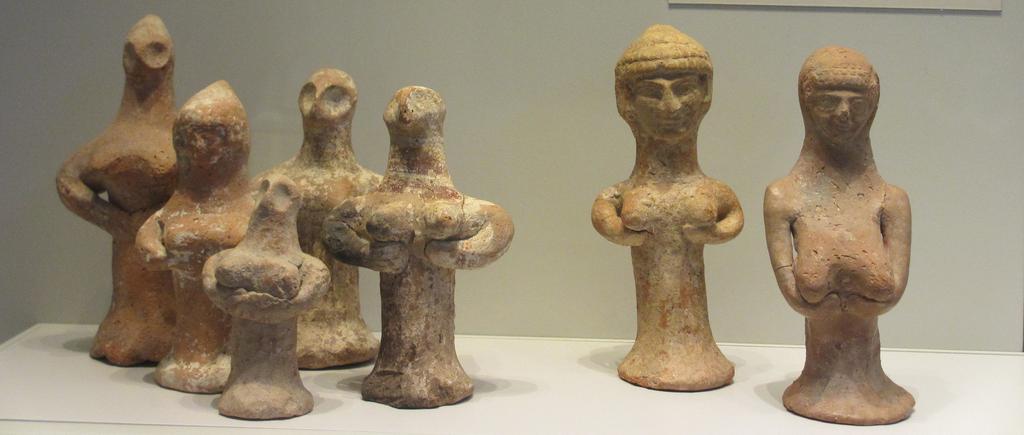
Clay Godly beings of power have ancient origins in our tradition: For generations they were a technology maintained by women to channel feminine magical power. From the 8th-6th c BCE and beyond, the ancestors connected to Asherah, the female portal to the Divine, with magical "Judean pillar figurines," female sacred figures made of clay:
In early Genesis, the matriarch Rachel steals her father's "teraphim." We don't know what they're made of, but they seem to be sacred figurines that belong to him, but are important enough to her that she steals them:

(יט) וְלָבָ֣ן הָלַ֔ךְ לִגְזֹ֖ז אֶת־צֹאנ֑וֹ וַתִּגְנֹ֣ב רָחֵ֔ל אֶת־הַתְּרָפִ֖ים אֲשֶׁ֥ר לְאָבִֽיהָ׃

(19) Meanwhile Laban had gone to shear his sheep, and Rachel stole her father’s teraphim.

Desperate for these teraphim, Lavan searches for them, but Rachel outwits him.

(לד) וְרָחֵ֞ל לָקְחָ֣ה אֶת־הַתְּרָפִ֗ים וַתְּשִׂמֵ֛ם בְּכַ֥ר הַגָּמָ֖ל וַתֵּ֣שֶׁב עֲלֵיהֶ֑ם וַיְמַשֵּׁ֥שׁ לָבָ֛ן אֶת־כׇּל־הָאֹ֖הֶל וְלֹ֥א מָצָֽא׃ (לה) וַתֹּ֣אמֶר אֶל־אָבִ֗יהָ אַל־יִ֙חַר֙ בְּעֵינֵ֣י אֲדֹנִ֔י כִּ֣י ל֤וֹא אוּכַל֙ לָק֣וּם מִפָּנֶ֔יךָ כִּי־דֶ֥רֶךְ נָשִׁ֖ים לִ֑י וַיְחַפֵּ֕שׂ וְלֹ֥א מָצָ֖א אֶת־הַתְּרָפִֽים׃

(34) Rachel, meanwhile, had taken the idols and placed them in the camel cushion and sat on them; and Lavan rummaged through the tent without finding them. (35) For she said to her father, “Let not my lord take it amiss that I cannot rise before you, for I am in a womanly way.” Thus he searched, but could not find the household idols.

Later patriarchal crusades denounced all religious figurines beloved by women, even those revered by Rebecca, as "idol worship." Remember: Whenever you come across the term "idol worship" in a patriarchal text that references women, the term is often code for female-centered religious practices.
In one of the early medieval conversations on the golem, the 14th c writings of The Rosh (Rabbi Asher ben Yechiel), we get a hint that there's a connection between a golem and the birth of "idol worship":

(א)אז הוחל לקרא בשם יהוה. מלמד שבאו בני הדור ושאלו לו לאנוש מה שמו של אביך א"ל שת ושמו של אבי אביך א"ל אדם ושם אביו של אדם מה היה שמו א"ל לא היה לו אב אלא הקב"ה בראו גולם מן הארץ ונפח בו נשמת חיים אמרו לו כיצד עשהו מיד לקח רגיבת עפר ועשאו צורת גולם ונכנס בנפיחיו השד והיה בו חיות מיד אמרו זה אלהינו והאמינו בו...

"Then [after the birth of Enosh, Adam's grandson] [people] began to call on the name of the Divine." (Gen 4:26) This teaches that the people of that generation came and asked Enosh, 'What was your father's name?' He replied, 'Seth.' 'And what was the name of your father's father?' He replied, 'Adam.' Then they asked, 'And what was the name of Adam's father?' He replied, 'He had no father but the Holy One, Blessed be, created a golem from the earth and breathed into him the breath of life.' They said to him, 'How did He make him?' Immediately, [Enosh] took a clump of soil and formed it into the shape of a golem, and with his breath, life entered it. Upon seeing this, they said, 'This is our god,' and they believed in it...

The following alternate explanation of the teraphim, dating from somewhere between the 4th and 12th centuries, conjures up the plastered skulls of Jericho (see below), which were only unearthed in the 20th century.... Perhaps (and this is wildly speculative) this text reflects a cultural memory of this ancient practice. Note the use of incantation to animate this being, just as incantation animates later golems:

(יט) וְלָבָן אָזַל לְמֵיגַז עָנֵיהּ וּגְנֵיבַת רָחֵל יַת צַלְמָנַיָא דַהֲווֹן נַכְסִין גַבְרָא בּוּכְרָא וְחִזְמִין רֵישֵׁיהּ וּמַלְחִין לֵיהּ בְּמִילְחָא וּבוּסְמָנִין וְכָתְבִין קוּסְמִין בְּצִיצָא דְדַהֲבָא וִיהָבִין תְּחוֹת לִשְׁנֵיהּ וּמְקַיְמִין לֵיהּ בְּכוּתְלָא וּמְמַלֵיל עִמְהוֹן וְאִילֵין הֲווֹן דַהֲוָה גָחִין לְהוֹן אָבוּהָא

(19) "And Laban had gone to shear his flock; and Rahel stole the images." For they had killed a man, a firstborn, and had cut off his head; they salted it with salt and spices, and wrote incantations on a plate of gold, and put it under his tongue, and set it up in the wall, and it would speak with them. These were the idols that her father would bow down to.

An example of a plastered skull from Jericho, displayed in Britian's Ashmolean museum. The lower jaw was removed and the skull is packed with dirt, plastered, and painted and decorated:
GOLEMS AS PROJECTIONS
Golems can be understood as an externalization of parts of a person or a people that feel knotted or inaccessible. Externalizing a part of ourselves can enable us to better understand it:
Claude Lévi-Strauss

The Savage MindWhat is the virtue of reduction either of scale or in the number of properties? It seems to result from a sort of reversal in the process of understanding. To understand a real object in its totality we always tend to work from its parts. The resistance it offers us is overcome by dividing it. Reduction in scale reverses this situation. Being smaller, the object as a whole seems less formidable. By being quantitatively diminished, it seems to us qualitatively simplified. More exactly, this quantitative tranposition extends and diversifies our power over a homologue of the thing, and by means of it the latter can be grasped, assessed and apprehended at a glance. A child's doll is no longer an enemy, a rival or even an interlocutor. In it and through it a person is made into a subject.
In Eastern Europe, where Jewish physical prowess and self-defense were brutally repressed, the Golem becomes a figure of strength and protection. Some of these golems in include:
The Golem of HaRav Eliyahu Baal Shem of Chelm (16th c.)As recorded by R. Yaakov Emden and translated by Shnayer Leiman, retrieved from Seforim Blog
"As an aside, I’ll mention here what I heard from my father’s holy mouth regarding the Golem created by his ancestor, the Gaon R. Eliyahu Ba’al Shem of blessed memory. When the Gaon saw that the Golem was growing larger and larger, he feared that the Golem would destroy the universe. He then removed the Holy Name that was embedded on his forehead, thus causing him to disintegrate and return to dust. Nonetheless, while he was engaged in extracting the Holy Name from him, the Golem injured him, scarring him on the face."
The Golem of PraguePerhaps the most famous Golem is said to have been created by the 16th c. Maharal of Prague, Rabbi Yehuda Loew ben Bezalel. While this story is almost certainly a literary invention from Jewish folklore authors in the early 18th century, it is deeply beloved to many Jewish people. Perhaps its resonance comes from the way it channels a deep sociological truth about the collective unconscious of Eastern European Jewry.
According to the legend, the Golem-- known as Yossele-- was formed from clay and animated with a sacred name. The Golem served as a one-being defense force for the Jews of Prague, protecting them from violence and thwarting anti-Semitic plots. However, one day the Golem went on a violent rampage. The Maharal was forced to remove the sacred name from the Golem, rendering the Golem lifeless. The Maharal placed the body of the Golem in the attic of Prague's Old New Synagogue of Prague and forbade anyone from entering the attic. Legend has it that the Golem remains there to this day...
Alok On Instagram 9/30/24


My friend Ocean Vuong, the amazing poet, he says "Survival is never an accident, it's always a creative act." And I would add, it's also a magical act. And I wanted to say thank you for all of the shape shifting, thank you for the lives that you conjured out of nothing. Thank you for the survival. It's magic. You are an everyday miracle. Every breath that you take is the most profound love poem I have ever heard.


This source sheet aims to pass the Kranjec Test