(א) (משלי א א): "משלי שלמה בן דוד מלך ישראל"- רבי תנחום בן חנילאי פתח ואמר: (איוב כח יב): "והחכמה - מאין תימָצֵא? ואי זה מְקום בינה?" - זה שלמה, שישב בתענית ארבעים יום, כדי שייתן לו המקום רוח חכמה ובינה, והיה משוטט ומבקש אחריה. אמר לו הקב"ה: (מלכים א ג ה): "שאל, מה אתן לך?" אמר לפניו 'ריבונו של עולם, איני שואל ממך לא כסף ולא זהב, אלא חכמה בלבד', שנאמר (מלכים א ג ט): "ונתת לעבדך לב שומע לשפוט את עמך". השיבו הקב"ה ואמר לו 'הואיל ולא שאלת לא כסף ולא זהב, החכמה והמדע נתונה לך במתנה'.
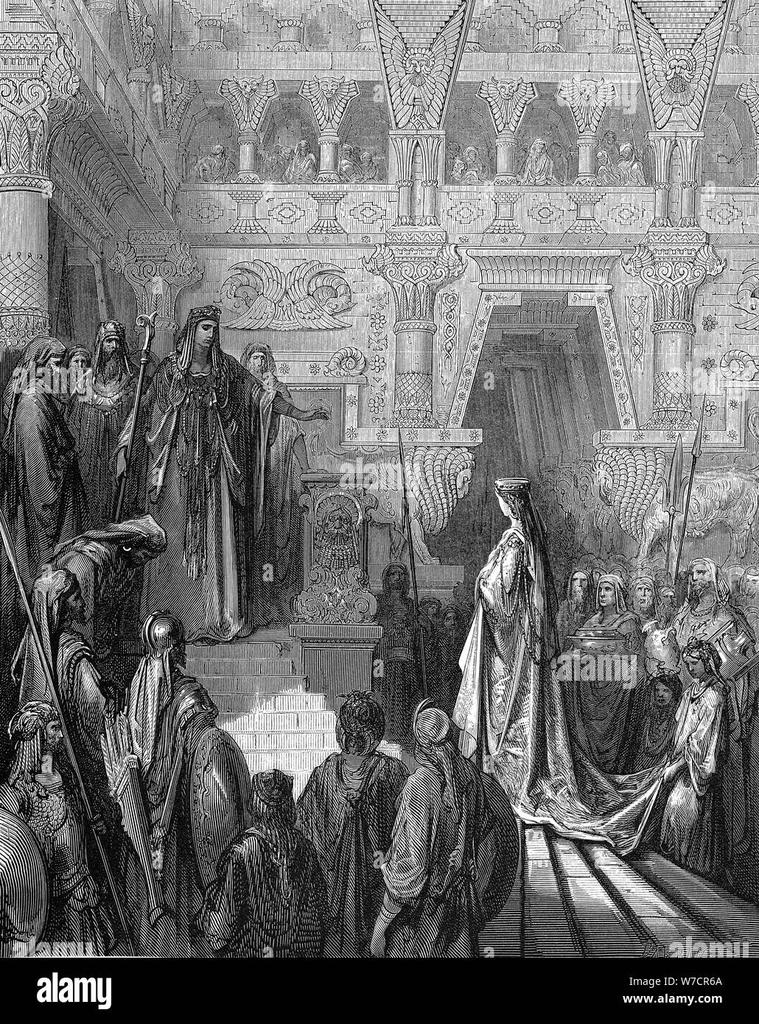
ד"א "והחכמה מאין תימָצֵא" - זה מלכת שבא, ששמעה את חכמתו, אמרה 'אלך ואראה אם חכם הוא אם לאו'. ומניין ששמעה חכמתו? שנאמר (מלכים א י א): "ומלכת שבא שומעת את שמע שלמה לשם ה' ותבוא לנסותו בחידות".
מהו בחידות? אמר רבי ירמיה בר שלום: אמרה לו 'אתה הוא שלמה, ששמעתי עליך ועל מלכותך ועל חכמתך?', אמר לה 'הן'. אמרה לו 'חכם גדול אתה, אלא אם אני שואלת ממך דבר אחד, אתה משיב לי?', אמר לה (משלי ב ו): "כי ה' יתן חכמה, מפיו דעת ותבונה".
אמרה לו 'מה הן שבעה יוצאין, ותשעה נכנסין, ושניים מוזגים, ואחד שותה?' אמר לה 'בוודאי, שבעה ימי נידה יוצאין, ותשעה ירחי לידה נכנסין, שני דדיים מוזגים, והוולד שותה'.
אמרה לו 'חכם גדול אתה, אלא אם אני שואלת ממך דבר אחר אתה משיבני?' אמר לה "כי ה' יתן חכמה", אמרה לו 'מה הוא, אשה אמרה לבנה: אביך - אבי, זקנך - בעלי, ואת - ברי, ואנא - אחותך'? אמר לה 'בוודאי, שתי בנותיו של לוט הן'.
ועוד דוגמה אחרת עשתה: הביאה לפניו תינוקות בקומה אחת ובכסות אחד, אמרה לו 'הפרש לי מאלו זכרים ונקבות'. רמז לסריסיו, והביאו לו אגוזים וקליות, התחיל מפזרם לפניהם; זכרים, שלא היו מתביישים, היו נוטלים בבגדיהם, ונקבות, שהיו מתביישות, היו נוטלות בסודריהן. אמר לה 'אלו זכרים ואלו נקבות'.
אמרה לו 'בני, חכם גדול אתה!'. ועוד דוגמה אחרת עשתה: הביאה ערלים ומהולים, אמרה לו 'הפרש לי המהולים מן הערלים'; מייד רמז לכהן גדול ופתח ארון הברית, מהולין שבהן כרעו בחצי קומתן, ולא עוד אלא שנתמלא פניהם מזיו השכינה, וערלים שבהן נופלים על פניהם. מייד אמר לה 'אלו ערלים ואלו מהולים'.
אמרה לו 'מהיכן לך?' אמר לה 'מבלעם, דכתיב (במדבר כד ד): אשר "מַחֲזֵה שַׁדַּי יֶחֱזֶה נֹפֵל וּגְלוּי עֵינָיִם", אילו לא היה נופל - לא היה רואה כלום. ואם אין אתה רוצה ללמוד מבלעם, בוא ולמד מאיוב: בשעה שבאו שלושת רעי איוב לנחמו, אמר להם (איוב יב ג): "גם לי לבב כמוכם, לא נופל אנוכי מכם", לא נופל אנוכי כמותכם'.
באותה שעה אמרה לו (מלכים א י ז): "לא האמנתי לדברים עד אשר באתי ותראינה עיניי, והנה לא הוגד לי החצי, הוספת חכמה וטוב אל השמועה אשר שמעתי; אשרי אנשיך, אשרי עבדיך אלה העומדים לפניך תמיד השומעים את חכמתך; יהי ה' אלהיך ברוך אשר חפץ בך לתתך על כסא ישראל וגו' וישימך למלך לעשות משפט וצדקה".
(1) [1] (Proverbs 1:1): "The proverbs of Solomon the son of David, king of Israel" - Rabbi Tanhum ben Hanilai began and said: (Job 28:12): "But wisdom - where can it be found? And where is the place of understanding?" - This refers to Solomon, who fasted for forty days, so that God would grant him a spirit of wisdom and understanding, and he wandered around and sought after it. God said to him (1 Kings 3:5): "Ask, what shall I give you?" He replied, 'Master of the Universe, I ask of You neither silver nor gold, but wisdom alone,' as it is written (1 Kings 3:9): "Give Your servant an understanding heart to judge Your people." God answered him and said, 'Since you asked for neither silver nor gold, wisdom and knowledge are given to you as a gift.' Moreover, wisdom preceded the Torah, as it is written (Psalms 111:10): "The fear of the Lord is the beginning of wisdom." There we learned (Mishnah Avot 3:17): "Rabbi Elazar ben Azariah says: If there is no Torah, there is no proper conduct." And since his wisdom preceded, the scripture said about him (1 Kings 3:3): "And Solomon loved the Lord"; it teaches that Solomon's wisdom was a gift. "And where is the place of understanding?" - Rabbi Shimon ben Yochai said: Wisdom and understanding are one, where there is wisdom there is understanding, and where there is understanding there is wisdom. And since he fasted for forty days and sought wisdom, God did not withhold his reward, as it is written (1 Kings 5:26): "And the Lord gave wisdom to Solomon," and it is written: (1 Kings 5:11): "And he was wiser than all men" - this refers to Adam the first, as it is written about Solomon (Proverbs 30:2): "For I am more brutish than any man, and have not the understanding of a man"; "than Ethan from the East" - this is Abraham, as it is written (Isaiah 41:2): "Who raised up one from the east, He calls him to His foot"; "Heman" - this is Moses, as it is said (Numbers 12:7): "Not so, My servant Moses, in all My house he is faithful"; "Calcol" - this is Joseph, as it is written (Genesis 47:12): "And Joseph sustained his father, and his brothers"; "Darda" - this refers to the generation of the desert, who were of exceptional knowledge; "the sons of Mahol" - this is David, whom God forgave for that sin. "And his name was among all the nations around" - this refers to Solomon, whose name went from one end of the world to the other. ANOTHER interpretation: "And wisdom, from where can it be found?" - this refers to the Queen of Sheba, who heard of his wisdom, said 'I will go and see if he is wise or not', and from where do we know that she heard his wisdom? It is written (1 Kings 10:1): "And the Queen of Sheba heard the fame of Solomon concerning the name of the LORD, and she came to prove him with hard questions." What are "hard questions"? Rabbi Jeremiah Bar Shalom said: she asked him 'Are you Solomon, about whom I heard, and about your kingdom, and about your wisdom?' He replied 'Yes.' She said to him 'You are a great sage, but if I ask you one thing, will you answer me?' He replied (Proverbs 2:6): "For the LORD giveth wisdom; out of his mouth cometh knowledge and understanding." She asked him a riddle 'What are the seven that go out, the nine that enter, the two that pour, and the one who drinks?' He answered her 'Certainly, the seven days of menstruation go out, the nine months of pregnancy enter, two breasts pour, and the baby drinks.' She said to him 'You are a great sage, but if I ask you another thing will you answer me?' He replied 'For the LORD giveth wisdom', She asked him 'What is it, a woman said to her son: your father - my father, your elder - my husband, you - my son, and I - your sister?' He answered her 'Certainly, these are Lot's two daughters.' And another example she did: she brought before him children of one height and one garment, and said to him 'Distinguish for me from these males and females.' He hinted to his eunuch, and brought him nuts and shells, and began to scatter them before them; males, who were not ashamed, took them in their garments, and females, who were ashamed, took them in their handkerchiefs. He said to her 'These are males and these are females.' She said to him 'Son, you are a great sage!'. And another example she did: she brought circumcised and uncircumcised, said to him 'Distinguish for me the circumcised from the uncircumcised'; he immediately hinted to the high priest and opened the Ark of the Covenant, the circumcised among them bowed down to half their height, and not only that but their faces were filled with the radiance of the Divine Presence, and the uncircumcised among them fell on their faces, he immediately said to her 'These are uncircumcised and these are circumcised.' She said to him 'Where did you get that from?' He said to her 'From Balaam, for it is written (Numbers 24:4): "He hath said, which heard the words of God, which saw the vision of the Almighty, falling but with opened eyes", if he had not fallen - he would not have seen anything.' And if you don't want to learn from Balaam, come and learn from Job: at the hour when the three friends of Job came to comfort him, he said to them (Job 12:3): 'I have a heart like you; I am not inferior to you,' 'I am not inferior to you.' At that hour it was said to him (1 Kings 10:7): 'I did not believe the words until I came and my eyes saw, and behold, the half was not told to me; you have added wisdom and goodness to the hearing that I have heard; happy are your men, happy are these your servants who stand before you always and hear your wisdom; may the Lord your God be blessed who desired you, to place you on the throne of Israel and so on, and he made you king to do justice and righteousness.' It was said about Solomon 'justice and righteousness,' and it was said about David 'justice and righteousness,' from where? Because it is written (2 Samuel 8:15): 'David administered justice and righteousness to all his people,' and it is said about Solomon 'justice and righteousness,' the Scripture tells us that the wisdom of Solomon is equal to the wisdom of David, and the wisdom of David is equal to the wisdom of Solomon. Alternatively, 'Where can wisdom be found?' - this teaches that Solomon was searching for where wisdom is found. Rabbi Eliezer says: in the head, Rabbi Joshua says: in the heart. As it is said (Psalms 4:1): 'You have given joy in my heart,' and it is written (Proverbs 27:11): 'Be wise, my son, and gladden my heart.' And why was wisdom given in the heart - because all the organs depend on the heart. Solomon said: I am doing as my father opened, who opened with his wisdom with the first letters and ended with the middle letters: [opened] with the head - because it is written (Psalms 1:1): 'Happy is the man who does not walk,' and he ended in the middle - as it is said (Psalms 150:6): 'Let everything that has breath praise the Lord.' In the beginning, I open in the middle, and I end at the end: I open from the place where wisdom is given, where is it - in the heart, and where is the heart given - in the middle. It turns out you are saying that David caught on to Rabbi Eliezer's words, and Solomon to Rabbi Joshua's words. And not only that, but the heart is in God's hands, as it is written (Proverbs 21:1): 'The king's heart is like streams of water in the hand of the Lord; he turns it wherever he wills.' And since Solomon saw that wisdom is given in the heart, he said: I am beginning from the place where wisdom was given, for he says 'The proverbs of Solomon.' 'The son of David' - what son of David, and don't all know that he is the son of David?! Rather, everything he did, he did in honor of David. 'King of Israel' - and don't all know that he is the King of Israel?! Rather, what he did, he did for the honor of Israel."