


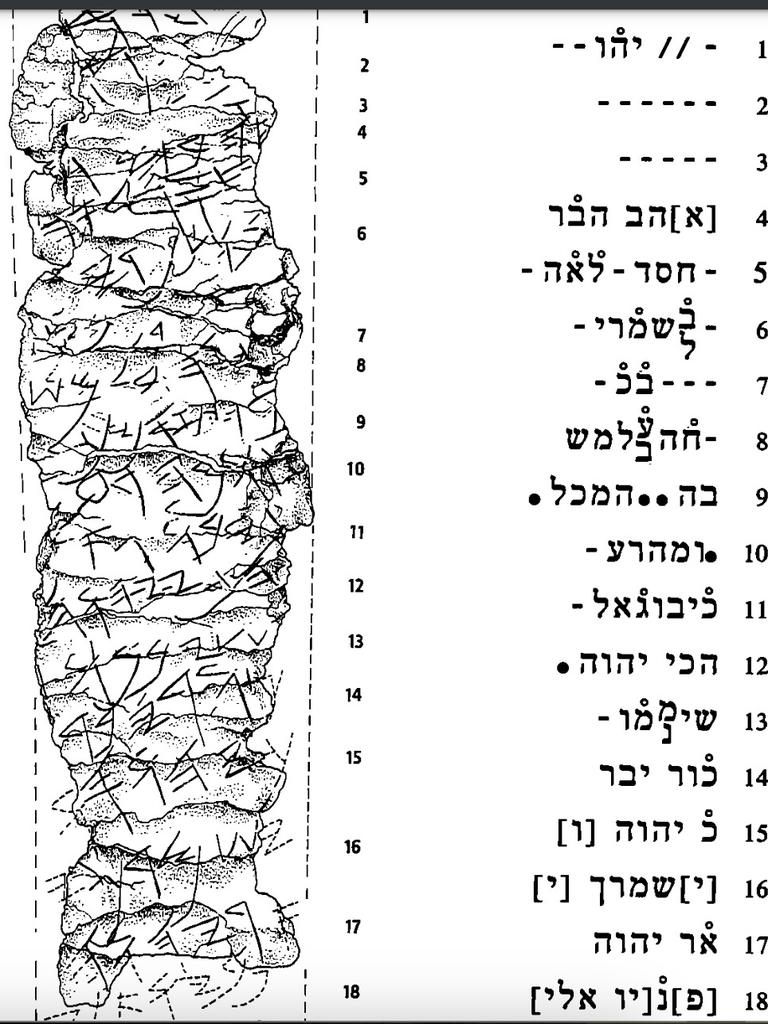
(16) The Messenger who has redeemed (protected?) me from all harm—Bless the lads. In them may my name be recalled, And the names of my fathers Abraham and Isaac, And may they be teeming multitudes upon the earth.”
8th century amulet in silver plating found in Katef Hinom by Gabi Barkay
(6) Say, therefore, to the Israelite people: I am ה'. I will free you from the labors of the Egyptians and deliver you from their bondage. I will redeem you with an outstretched arm and through extraordinary chastisements.
(ג) וגאלתי אתכם כי יעשה בהם שפטים עד שיאמרו המצרים הנה לך ישראל בפדיון נפשנו, כי טעם גאולה כענין מכר:
(3) AND I WILL REDEEM YOU. He will bring such judgments upon them until the Egyptians will say: “Here You have the Israelites as a redemption for our lives.” The meaning of the word g’ulah (redemption) is close to the subject of mecher (sale), [thus implying that “I will buy you from the Egyptians”].
(4) 3) וגאלתי, on the day the pursuing Egyptians would be drowned in the sea, as testified in Exodus 14,30 ויושע ה' ביום ההוא, “on that day the Lord orchestrated salvation, etc.” After the death of the ones who enslaved, the enslaved are obviously free.
(25) If one of your kin is in straits and has to sell part of a holding, the nearest redeemer*nearest redeemer I.e., the closest relative able to redeem the land. shall come and redeem what that relative has sold. (26) If any party has no one to be redeemer but prospers and acquires enough to redeem with,
(11) you shall provide yourselves with places to serve you as cities of refuge to which [a man]*man See note at v. 6. who has killed someone*who has killed someone See note at v. 6. —who has slain a person unintentionally—may flee. (12) The cities shall serve you as a refuge from the avenger,*avenger Lit. “redeemer,” i.e., (male) next of kin; cf. note at Lev. 25.25. so that the killer may not die unless he has stood trial before the assembly.
(8) In slight anger, for a moment, I hid My face from you; But with kindness everlasting
I will take you back in love, said God your Redeemer. (from death)
(1) “Praise the LORD, for He is good; His steadfast love is eternal!” (2) Thus let the redeemed of the LORD say, those He redeemed from adversity, (3) whom He gathered in from the lands, from east and west, from the north and from the sea. (4) Some lost their way in the wilderness, in the wasteland; they found no settled place. (5) Hungry and thirsty, their spirit failed. (6) In their adversity they cried to the LORD, and He rescued them from their troubles.
(א) וּבֹ֨עַז עָלָ֣ה הַשַּׁ֘עַר֮ וַיֵּ֣שֶׁב שָׁם֒ וְהִנֵּ֨ה הַגֹּאֵ֤ל עֹבֵר֙ אֲשֶׁ֣ר דִּבֶּר־בֹּ֔עַז וַיֹּ֛אמֶר ס֥וּרָה שְׁבָה־פֹּ֖ה פְּלֹנִ֣י אַלְמֹנִ֑י וַיָּ֖סַר וַיֵּשֵֽׁב׃ (ב) וַיִּקַּ֞ח עֲשָׂרָ֧ה אֲנָשִׁ֛ים מִזִּקְנֵ֥י הָעִ֖יר וַיֹּ֣אמֶר שְׁבוּ־פֹ֑ה וַיֵּשֵֽׁבוּ׃ (ג) וַיֹּ֙אמֶר֙ לַגֹּאֵ֔ל חֶלְקַת֙ הַשָּׂדֶ֔ה אֲשֶׁ֥ר לְאָחִ֖ינוּ לֶאֱלִימֶ֑לֶךְ מָכְרָ֣ה נׇעֳמִ֔י הַשָּׁ֖בָה מִשְּׂדֵ֥ה מוֹאָֽב׃ (ד) וַאֲנִ֨י אָמַ֜רְתִּי אֶגְלֶ֧ה אׇזְנְךָ֣ לֵאמֹ֗ר קְ֠נֵ֠ה נֶ֥גֶד הַיֹּשְׁבִים֮ וְנֶ֣גֶד זִקְנֵ֣י עַמִּי֒ אִם־תִּגְאַל֙ גְּאָ֔ל וְאִם־לֹ֨א יִגְאַ֜ל הַגִּ֣ידָה לִּ֗י (ואדע) [וְאֵֽדְעָה֙] כִּ֣י אֵ֤ין זוּלָֽתְךָ֙ לִגְא֔וֹל וְאָנֹכִ֖י אַחֲרֶ֑יךָ וַיֹּ֖אמֶר אָנֹכִ֥י אֶגְאָֽל׃ (ה) וַיֹּ֣אמֶר בֹּ֔עַז בְּיוֹם־קְנוֹתְךָ֥ הַשָּׂדֶ֖ה מִיַּ֣ד נׇעֳמִ֑י וּ֠מֵאֵ֠ת ר֣וּת הַמּוֹאֲבִיָּ֤ה אֵֽשֶׁת־הַמֵּת֙ (קניתי) [קָנִ֔יתָ] לְהָקִ֥ים שֵׁם־הַמֵּ֖ת עַל־נַחֲלָתֽוֹ׃ (ו) וַיֹּ֣אמֶר הַגֹּאֵ֗ל לֹ֤א אוּכַל֙ (לגאול) [לִגְאׇל־]לִ֔י פֶּן־אַשְׁחִ֖ית אֶת־נַחֲלָתִ֑י גְּאַל־לְךָ֤ אַתָּה֙ אֶת־גְּאֻלָּתִ֔י כִּ֥י לֹא־אוּכַ֖ל לִגְאֹֽל׃ (ז) וְזֹאת֩ לְפָנִ֨ים בְּיִשְׂרָאֵ֜ל עַל־הַגְּאֻלָּ֤ה וְעַל־הַתְּמוּרָה֙ לְקַיֵּ֣ם כׇּל־דָּבָ֔ר שָׁלַ֥ף אִ֛ישׁ נַעֲל֖וֹ וְנָתַ֣ן לְרֵעֵ֑הוּ וְזֹ֥את הַתְּעוּדָ֖ה בְּיִשְׂרָאֵֽל׃ (ח) וַיֹּ֧אמֶר הַגֹּאֵ֛ל לְבֹ֖עַז קְנֵה־לָ֑ךְ וַיִּשְׁלֹ֖ף נַעֲלֽוֹ׃ (ט) וַיֹּ֩אמֶר֩ בֹּ֨עַז לַזְּקֵנִ֜ים וְכׇל־הָעָ֗ם עֵדִ֤ים אַתֶּם֙ הַיּ֔וֹם כִּ֤י קָנִ֙יתִי֙ אֶת־כׇּל־אֲשֶׁ֣ר לֶאֱלִימֶ֔לֶךְ וְאֵ֛ת כׇּל־אֲשֶׁ֥ר לְכִלְי֖וֹן וּמַחְל֑וֹן מִיַּ֖ד נׇעֳמִֽי׃ (י) וְגַ֣ם אֶת־ר֣וּת הַמֹּאֲבִיָּה֩ אֵ֨שֶׁת מַחְל֜וֹן קָנִ֧יתִי לִ֣י לְאִשָּׁ֗ה לְהָקִ֤ים שֵׁם־הַמֵּת֙ עַל־נַ֣חֲלָת֔וֹ וְלֹא־יִכָּרֵ֧ת שֵׁם־הַמֵּ֛ת מֵעִ֥ם אֶחָ֖יו וּמִשַּׁ֣עַר מְקוֹמ֑וֹ עֵדִ֥ים אַתֶּ֖ם הַיּֽוֹם׃ (יא) וַיֹּ֨אמְר֜וּ כׇּל־הָעָ֧ם אֲשֶׁר־בַּשַּׁ֛עַר וְהַזְּקֵנִ֖ים עֵדִ֑ים יִתֵּן֩ ה' אֶֽת־הָאִשָּׁ֜ה הַבָּאָ֣ה אֶל־בֵּיתֶ֗ךָ כְּרָחֵ֤ל ׀ וּכְלֵאָה֙ אֲשֶׁ֨ר בָּנ֤וּ שְׁתֵּיהֶם֙ אֶת־בֵּ֣ית יִשְׂרָאֵ֔ל וַעֲשֵׂה־חַ֣יִל בְּאֶפְרָ֔תָה וּקְרָא־שֵׁ֖ם בְּבֵ֥ית לָֽחֶם׃ (יב) וִיהִ֤י בֵֽיתְךָ֙ כְּבֵ֣ית פֶּ֔רֶץ אֲשֶׁר־יָלְדָ֥ה תָמָ֖ר לִיהוּדָ֑ה מִן־הַזֶּ֗רַע אֲשֶׁ֨ר יִתֵּ֤ן ה' לְךָ֔ מִן־הַֽנַּעֲרָ֖ה הַזֹּֽאת׃ (יג) וַיִּקַּ֨ח בֹּ֤עַז אֶת־רוּת֙ וַתְּהִי־ל֣וֹ לְאִשָּׁ֔ה וַיָּבֹ֖א אֵלֶ֑יהָ וַיִּתֵּ֨ן ה' לָ֛הּ הֵרָי֖וֹן וַתֵּ֥לֶד בֵּֽן׃ (יד) וַתֹּאמַ֤רְנָה הַנָּשִׁים֙ אֶֽל־נׇעֳמִ֔י בָּר֣וּךְ ה' אֲ֠שֶׁ֠ר לֹ֣א הִשְׁבִּ֥ית לָ֛ךְ גֹּאֵ֖ל הַיּ֑וֹם וְיִקָּרֵ֥א שְׁמ֖וֹ בְּיִשְׂרָאֵֽל׃ (טו) וְהָ֤יָה לָךְ֙ לְמֵשִׁ֣יב נֶ֔פֶשׁ וּלְכַלְכֵּ֖ל אֶת־שֵׂיבָתֵ֑ךְ כִּ֣י כַלָּתֵ֤ךְ אֲֽשֶׁר־אֲהֵבַ֙תֶךְ֙ יְלָדַ֔תּוּ אֲשֶׁר־הִיא֙ ט֣וֹבָה לָ֔ךְ מִשִּׁבְעָ֖ה בָּנִֽים׃ (טז) וַתִּקַּ֨ח נׇעֳמִ֤י אֶת־הַיֶּ֙לֶד֙ וַתְּשִׁתֵ֣הוּ בְחֵיקָ֔הּ וַתְּהִי־ל֖וֹ לְאֹמֶֽנֶת׃ (יז) וַתִּקְרֶ֩אנָה֩ ל֨וֹ הַשְּׁכֵנ֥וֹת שֵׁם֙ לֵאמֹ֔ר יֻלַּד־בֵּ֖ן לְנׇעֳמִ֑י וַתִּקְרֶ֤אנָֽה שְׁמוֹ֙ עוֹבֵ֔ד ה֥וּא אֲבִֽי־יִשַׁ֖י אֲבִ֥י דָוִֽד׃ {פ}
(1) Meanwhile, Boaz had gone to the gate and sat down there. And now the redeemer whom Boaz had mentioned passed by. He called, “Come over and sit down here, So-and-so!” And he came over and sat down. (2) Then [Boaz] took ten elders of the town and said, “Be seated here”; and they sat down. (3) He said to the redeemer, “Naomi, now returned from the country of Moab, must sell the piece of land which belonged to our kinsman Elimelech. (4) I thought I should disclose the matter to you and say: Acquire it in the presence of those seated here and in the presence of the elders of my people. If you are willing to redeem it, redeem! But if you will not redeem, tell me, that I may know. For there is no one to redeem but you, and I come after you.” “I am willing to redeem it,” he replied. (5) Boaz continued, “When you acquire the property from Naomi so as to perpetuate the name of the deceased upon his estate.” (6) The redeemer replied, “Then I cannot redeem it for myself, lest I impair my own estate.You take over my right of redemption, for I am unable to exercise it.” (7) Now this was formerly done in Israel in cases of redemption or exchange: to validate any transaction, one man would take off his sandal and hand it to the other. Such was the practiced (8) So when the redeemer said to Boaz, “Acquire for yourself,” he drew off his sandal. (9) And Boaz said to the elders and to the rest of the people, “You are witnesses today that I am acquiring from Naomi all that belonged to Elimelech and all that belonged to Chilion and Mahlon. (10) I am also acquiring Ruth the Moabite, the wife of Mahlon, as my wife, so as to perpetuate the name of the deceased upon his estate, that the name of the deceased may not disappear from among his kinsmen and from the gate of his home town. You are witnesses today.” (11) All the people at the gate and the elders answered, “We are. May the LORD make the woman who is coming into your house like Rachel and Leah, both of whom built up the House of Israel! Prosper in Ephrathah and perpetuate your name in Bethlehem! (12) And may your house be like the house of Perez whom Tamar bore to Judah—through the offspring which the LORD will give you by this young woman.” (13) So Boaz married Ruth; she became his wife, and he cohabited with her. The LORD let her conceive, and she bore a son. (14) And the women said to Naomi, “Blessed be the LORD, who has not withheld a redeemer from you today! May his name be perpetuated in Israel! (15) He will renew your life and sustain your old age; for he is born of your daughter-in-law, who loves you and is better to you than seven sons.” (16) Naomi took the child and held it to her bosom. She became its foster mother, (17) and the women neighbors gave him a name, saying, “A son is born to Naomi!” They named him Obed; he was the father of Jesse, father of David.
Soloveitchik: Redemption, Prayer and Talmud Torah--Tradition 78
Redemption is a fundamental category in Judaic historical thinking and experiencing. Our history was initiated by a Divine act of redemption and, we are confident, will reach its finale in a Divine act of ultimate redemption. What is redemption?
Redemption involves a movement by an individual or a community from the periphery of history to its center; or, to employ a term from physics, redemption is a centripetal movement. To be on the periphery means to be a non-history-making entity, while movement toward the center renders the same entity
history-making and history-conscious. Naturally, the question arises:
What is meant by a history-making people or community? A history-making people is one that leads a speaking, story-telling, communing free existence, while a non-history-making, non-history-involved group leads a non-communing and therefore a silent, unfree existence.
Is Guela a 'one-off', automatic experience or a process? Are there different types of Geulas--complete vs. incomplete?
דֵּלֹמָא רִבִּי חִייָא רַבָּא וְרִבִּי שִׁמְעוֹן בֶּן חֲלַפְתָּא הַוּוּ מְהַלְּכִין בַּהֲדָא בִקְעַת אַרְבֶּל בִּקְרִיצְתָּא וְרָאוּ אַייֶלֶת הַשַׁחַר שֶׁבָּקַע אוֹרָהּ. אָמַר רִבִּי חִייָא רַבָּא לְרִבִּי שִׁמְעוֹן בֶּן חֲלַפְתָּא בִּירְבִּי כַּךְ הִיא גְאֻלָּתָן שֶׁל יִשְׂרָאֵל בִּתְּחִילָּה קִמְאָה קִמְאָה כָּל־מָה שֶׁהִיא הוֹלֶכֶת הִיא רָבָה וְהוֹלֶכֶת. מַאי טַעְמָא כִּי אֵשֵׁב בַּחֹשֶׁךְ י֙י אוֹר לִי. כֵּן בַּתְּחִילָּה וּמָרְדְּכַי יֹשֵׁב בְּשַׁעַר הַמֶּלֶךְ. וְאַחַר כַּךְ וַיִּקַּח הָמָן אֶת הַלְּבוּשׁ וְאֶת הַסּוּס. וְאַחַר כַּךְ וַיָּשָׁב מָרְדְּכַי אֶל שַׁעַר הַמֶּלֶךְ. וְאַחַר כַּךְ וּמָרְדְּכַי יָצָא מִלִּפְנֵוּ הַמֶּלֶךְ בִּלְבוּשׁ מַלְכוּת. וְאַחַר כַּךְ לַיְּהוּדִים הָיִתָה אוֹרָה וְשִׂמְחָה.
The great Rebbi Ḥiyya and Rebbi Simeon ben Ḥalaphta were walking in the valley of Arbela before morning and saw “the morning hind” that started radiating. The great Rebbi Ḥiyya said to Rebbi Simeon ben Ḥalaphta, the great man: so will be the geula of Israel; it starts out very little and grows and longer as it goes on (process). What is the reason (Micha 7:8): “When I shall dwell in darkness, the Lord is my light.” So also at the start (Esther 2:21): “Mordecai was sitting at the king’s gate.” After that (6:11): “Haman took the garment and the horse.” After that (6:12): “Mordecai returned to the king’s gate.” After that (8:15): “Mordecai left the king’s presence in royal garb.” After that (8:16): “The Jews had light and joy.”
(ז) ומפני ההבדל הזה שיש בין גאולה ראשונה ובין גאולה אחרונה, נאמר בגאולה ראשונה "ואכלתם אותו בחפזון כי בחפזון יצאת ממצרים". ובגאולה אחרונה כתיב (ר' ישעיה נב, ב) "כי לא בחפזון תצאו משם וגו'", ולמה החלוף הזה. ובמכלתא (שמות יב, יא) "כי לא בחפזון תצאו",, כי מפני שהגאולה הראשונה לא היתה גאולה נצחית, שהרי לא היו נגאלים רק לשעה. וכך היה ענין הגאולה גם כן, דומה לאור הברק שנראה ברקיע לשעה, ומיד עובר. ולא היתה הגאולה הראשונה דבר תמידי קיים. ולפיכך היה יציאתם בחפזון גם כן, כי כל דבר שאינו קיים תמידי הוא עובר במהירות לשעה. אבל הגאולה אחרונה, שהוא גאולה נצחית מבלי שנוי כלל, רק תמיד קיים. והתבאר לך ענין החבור הנצחי שיהיה לעתיד במהרה בימינו אמן:
As a result of this difference between the first guela and the last, we read of the first guela 'they ate it in a state of hurriedness, for they were hurried out of Egypt. But the final guela is the opposite: 'for you will not leave there in a hurried state'. Why the difference? Since the first guela was not eternal but just for the moment, symbolized by a flash of lightning which shines for a split second. But the final geula will be eternal without any change, but consistent and constant. ...
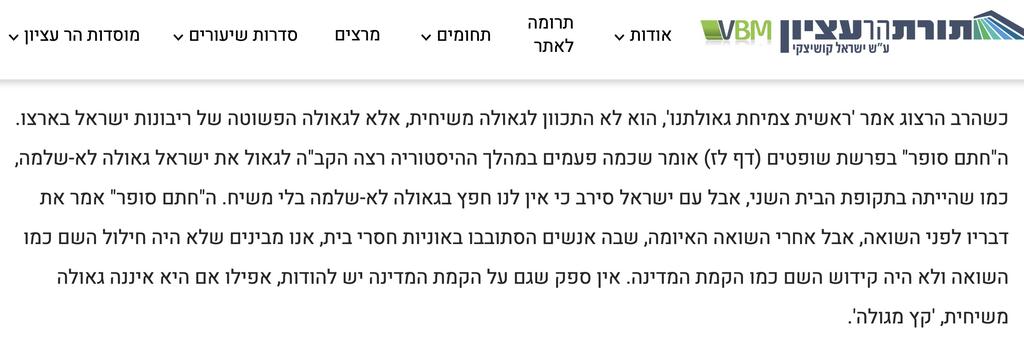
C. A new (old) idea: אתחלתא דגאולה (Beginnings of geula)
Types of 'geulot and support for the 'beginning of redemption' theory:
1. War. 2. Ingathering. 3. a. Universal acceptance. b. sovereignty. c. yearning from the people. d. Jerusalem. e. antisemitism. 4. non-Messianic redemption. 5. Teshuva dependent or not.
in the seventh year there will be wars; and upon the conclusion of the seventh year, in the eighth year, the son of David, the Messiah, will come? The redemption will take place not during the seventh year but after it. The Gemara answers: Nevertheless, the war that takes place during the seventh year is also the beginning of the redemption process, and it is therefore correct to say that Israel will be redeemed in the seventh year.
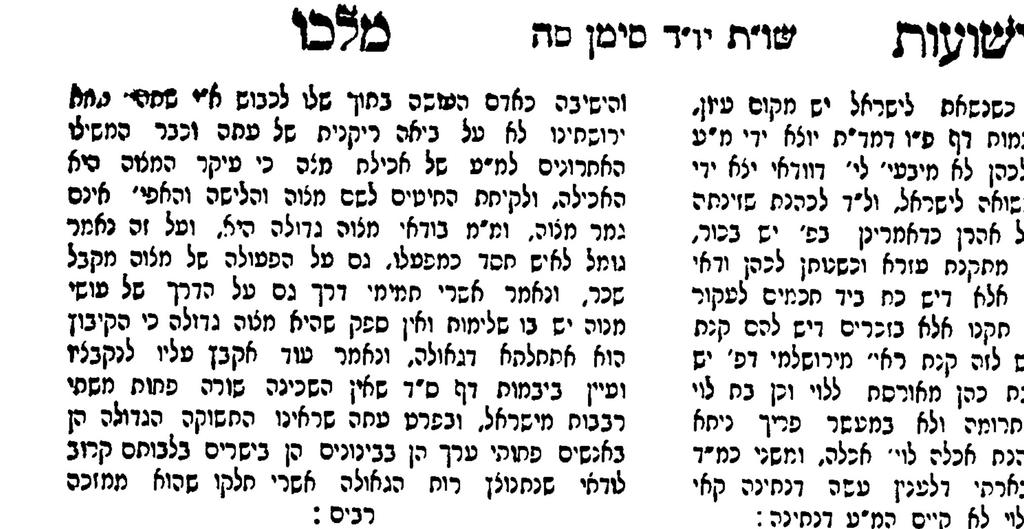
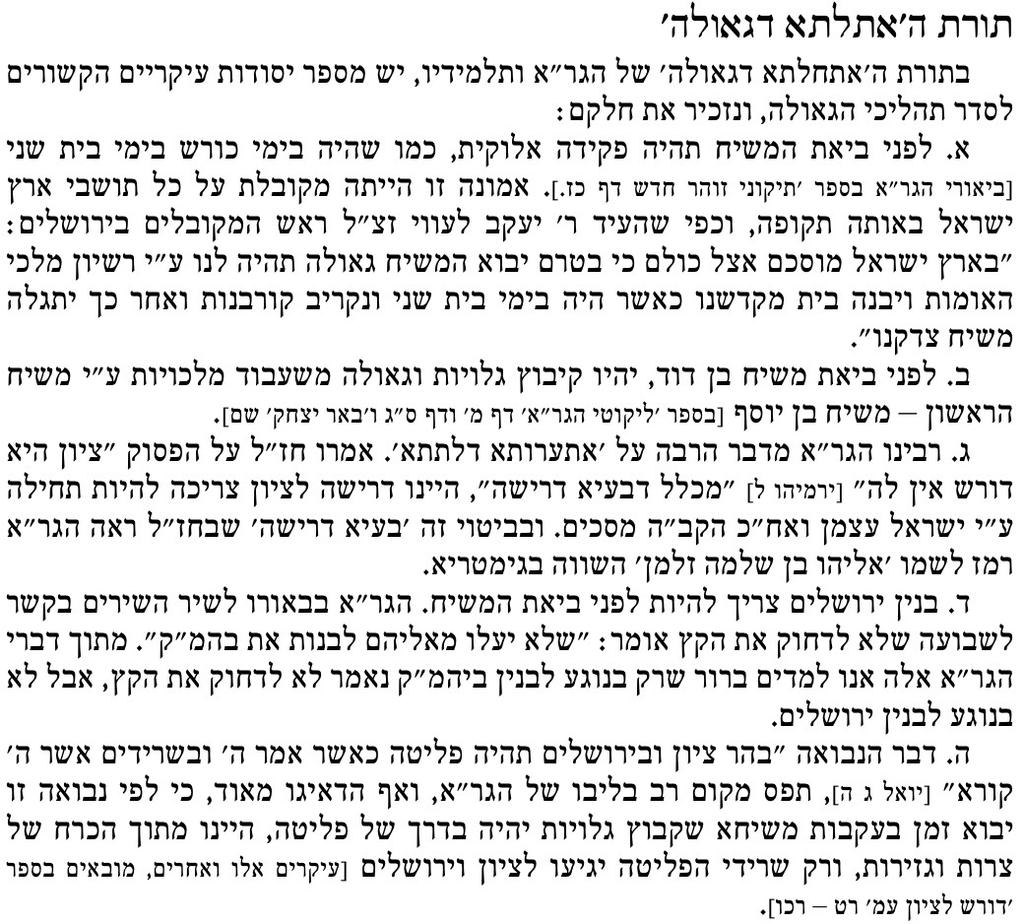
| כן, אתחלתא דגאולה ודאי הולכת ומופיעה לפנינו. אמנם לא מהיום התחילה הופעה זו, רק מאז התחיל הקץ המגולה (סנהדרין צח ע"א) להגלות, מעת אשר הרי ישראל החלו לעשות ענפים ולשאת פרי לעם ישראל אשר קרבו לבוא, התחילה אתחלתא זו. | ||
| – אגרות הראי"ה חלק ג' עמוד קנה | ||
(1) Eight years ago, in the midst of a night of the terrors of Majdanek, Treblinka, and Buchenwald; in a night of gas chambers and crematoria; in a night of total divine selfconcealment; in a night ruled by the devil of doubt and destruction who sought to sweep the Lover from her own tent into the Catholic Church; in a night of continuous searching for the Beloved — on that very night the Beloved appeared. The Almighty, who was hiding in His splendid sanctum, suddenly appeared and began to beckon at the tent of the Lover, who tossed and turned on her bed beset by convulsions and the agonies of hell. Because of the beating and knocking at the door of the mournful Lover, the State of Israel was born.
(2) How many times did the Beloved knock on the door of the Lover? It appears to me that we can count at least six knocks.
(3) First, the knock of the Beloved was heard in the political arena. From the point of view of international relations, no one will deny that the rebirth of the State of Israel, in a political sense, was an almost supernatural occurrence. Both Russia and the Western nations supported the establishment of the State of Israel. This was perhaps the one resolution on which East and West concurred [during the Cold War era]. I am inclined to believe that the United Nations was especially created for this end — for the sake of fulfilling the mission that Divine Providence had placed upon it. It appears to me that one cannot point to any other concrete accomplishment on the part of the United Nations. I do not know who the representatives of the press, with their human eyes, saw to be the chairman in that fateful session of the General Assembly in which the creation of the State of Israel was decided, but he who looked carefully with his spiritual eye saw the true Chairman who conducted the proceedings — the Beloved. He knocked with his gavel on the lectern. . If just anyone were to have opened the session of the United Nations, the State of Israel would not have been born. But it was the Beloved who rapped on the Chairman’s lectern, and the miracle materialized. Listen! My Beloved Knocks!
(4) Second, the knock of the Beloved was heard on the battlefield. The tiny defense forces of [the State of] Israel defeated the mighty Arab armies. The miracle of “the many delivered into the hands of the few” materialized before our eyes, and an even greater miracle happened! God hardened the heart of Ishmael and commanded him to go into battle against the State of Israel. Had the Arabs not declared war on Israel and instead supported the Partition Plan, the State of Israel would have remained without Jerusalem, without a major portion of the Galilee, and without some areas of the Negev. Listen! My Beloved Knocks!
(5) Third, the Beloved also began to knock on the door of the tent of theology, and possibly this is the strongest beckoning. I find satisfaction in reading about the State of Israel in the Catholic and Protestant newspapers. Despite themselves they must mention the name of Israel when they report the news of Zion and Jerusalem, which we possess. I always have a special sense of satisfaction when I read in the paper that Israel’s reaction is not as yet known because today is Saturday and government offices are closed or when I read, on the eve of Passover, an item from the United Press that “Jews will sit down tonight to the seder table in the hope that the miracles of Egypt will return and recur today.” Listen! My Beloved Knocks!
(6) Fourth, the Beloved knocks in the heart of the youth which is assimilated and perplexed. The period of hester panim in the 1940’s brought confusion among the Jewish masses and especially Jewish youth. Assimilation increased, and the urge to flee from Judaism and the Jewish people reached its apex. Fear, despair, and ignorance caused many to forsake the Jewish community and “climb aboard the ship,” to flee to Tarshish from the presence of the Lord (Jonah 1:3), just as Jonah sought to flee God’s presence. A seemingly unstoppable tidal wave stood over us and threatened to destroy us. Suddenly, the Beloved began to beckon to the hearts of the perplexed, and His beckoning, the establishment of the State of Israel, at least slowed the process of flight. Many who were once alienated are now bound to the Jewish State with ties of pride in its mighty accomplishments. Many American Jews who were partially assimilated find themselves beset by hidden fear and concern for any crisis that the State of Israel is at the time passing through, and they pray for its well-being and welfare even though they are far from being totally committed to it. Even Jews who are hostile to the State of Israel must defend themselves from the strange charge of dual-loyalty and proclaim daily and declare that they have no stake in the Holy Land. It is good for a Jew when he cannot ignore his Jewishness and is obliged to perpetually answer the questions “Who are you?” and “What is your occupation?” (Jonah 1:8), even when extraordinary fear grips him and he does not have the strength or fortitude to answer with true pride, “I am a Jew, and I fear the Lord, the God of heaven” (Jonah 1:9). The unrelenting question of, “Who are you?” ties him to the Jewish people.
(8) This phenomenon is extremely important for Jews who are afflicted with self-hatred and want to turn away from Judaism and run for their lives. They hide, like Jonah in his day, in the recesses of the ship (Jonah 1:5) and seek to “slumber” (Jonah 1:5). The Captain, however, does not permit them to ignore their fate. The shadow of Israel continuously chases after them. Random thoughts and paradoxical reflections arise from the subconscious of even the most confirmed assimilationist. And when a Jew begins to think, to reflect, when he is unable to sleep, it is impossible to know where his thoughts will take him and how his doubts will be expressed. Listen! My Beloved Knocks!
(9) The fifth knock of the Beloved is perhaps the most important. For the first time in the annals of our exile, Divine Providence has amazed our enemies with the astounding discovery that Jewish blood is not cheap! If the antisemites describe this phenomenon as being “an eye for an eye,” we will agree with them. If we want to courageously defend our continued national and historical existence, we must, from time to time, interpret the verse of an “eye for an eye” literally. So many “eyes” were lost in the course of our bitter exile because we did not repay hurt for hurt. The time has come for us to fulfill the simple meaning of “an eye for an eye.” (Exodus 21:24) Of course, I am sure everyone recognizes that I am an adherent of the Oral Law, and from my perspective there is no doubt that the verse refers to monetary restitution, as defined by halakhah. However, with respect to the Mufti and Nasser I would demand that we interpret the verse in accordance with its literal meaning — the taking of an actual eye! Pay no attention to the saccharine suggestions of known assimilationists and of some Jewish socialists who stand pat in their rebelliousness and think they are still living in Bialystok, Brest-Litovsk, and Minsk of the year 1905, and openly declare that revenge is forbidden to the Jewish people in any place, at any time, and under all circumstances. “Vanity of vanities!” (Ecclesiastes 1:2) Revenge is forbidden when it is pointless, but if one is aroused thereby to self-defense, it is the most elementary right of man to take his revenge.
(10) The Torah has always taught that a man is permitted, indeed, has a sacred obligation, to defend himself. With the verse, “If a burglar is caught in the act of breaking in” (Exodus 22:1), the Torah establishes the halakhah that one may defend not only one’s life but his property as well.7 If the thief who comes to take the property of the householder is capable of killing the householder (should the householder not comply with his demands), the householder may rise up against the criminal and kill him. For good reason the Torah relates that two of its great heroes, Abraham and Moses, took sword in hand to defend their brethren: “And when Abraham heard that his kinsman was taken captive, he led forth his retainers” (Genesis 14:14). “And when Moses saw the Egyptian smite a Jew … he struck down the Egyptian” (Exodus 2:11–12). This behavior does not contradict the principle of loving-kindness and compassion. On the contrary, a passive position, without self-defense, may sometimes lead to the most awesome brutality. “And I will gain honor from Pharaoh, and all his hosts, his chariots, and his horsemen. And the Egyptians will know that I am the Lord” (Exodus 14:17–18). God did not seek honor and recognition. He wanted Pharaoh, Moses’ contemporary, to know that he must pay a high price for his edict that “Every male child born shall be cast into the river” (Exodus 1:22). His present desire is that the blood of Jewish children who were slain as they recited the eighteen benedictions of the daily [Amidah] prayer shall also be avenged. When God smote the Egyptians, He sought to demonstrate that there will always be accountability for the spilling of Jewish blood. At present, it is necessary not only to convince the dictator of Egypt [Nasser], but the self-righteous Nehru, the Foreign Office in London, and the sanctimonious members of the United Nations, that Jewish blood is not cheap. Therefore, how laughable it is when they try to persuade us to rely on the declaration of the three Great Powers guaranteeing the status quo. We all know from experience what value can be attached to the pronouncements of the British Foreign Office and the so-called friendship of certain officials in our State Department. In general, how absurd is the request that an entire people be dependent on the kindnesses of others and remain without the ability to defend itself. Public and private honor is dependent upon the possibility of defending one’s life and one’s honor. A people that cannot defend its freedom and tranquillity is neither free nor independent. The third of the phrases of Divine redemption is “And I shall redeem you with an outstretched hand and with great judgments” (Exodus 6:6).Thank God we have lived to see the day when, with the help of God, Jews have it within their power to defend themselves.
(11) Let us not forget that the poison of Hitlerite anti-Semitism (which made Jews fair game to all) still permeates this generation, which looked with equanimity upon the horrible scene of the suffocation of millions in gas chambers as a normal event that need not be challenged. The antidote for this venom that poisoned minds and dulled hearts is the readiness of the State of Israel to defend the lives of its citizens. Listen! My Beloved Knocks!
(12) The sixth beckoning, of which we should also not lose sight, was heard at the time of the opening of the gates of the Land of Israel. A Jew escaping from an enemy’s land now knows that he can find refuge in the land of his forefathers. This is a new phenomenon in the annals of our history. Up to now, when a Jewish population was uprooted, it wandered in the wilderness of the nations without finding shelter and habitation. The shutting of the gates in the face of the exiled caused total destruction for much of the Jewish people. Now the situation has changed. When any nation expels its Jewish minority, the exiled now direct their steps to Zion, and she, as a compassionate mother, absorbs them. We are all witnesses to the settlement of Oriental Jewry in Israel over the last several years. Who knows what would have been in store for these brothers of ours in the lands of their origin if not for the State of Israel, which brought them to her in planes and ships? Had Israel been born before the Hitlerian Holocaust, hundreds of thousands of Jews could have been saved from the gas chambers and the crematoria. The miracle of the State tarried somewhat, and in the wake of its delay, thousands and tens of thousands of Jews were taken to the slaughter. Now that the hour of hester panim has passed, however, the possibility exists for Jews who are pried from their homes to take root in the Holy Land. This should not be taken lightly. Listen! My Beloved Knocks!
Detractors
1. Yeshayahu Leibowitz, 2. The Rebbe , 3. The Satmar Rebbe
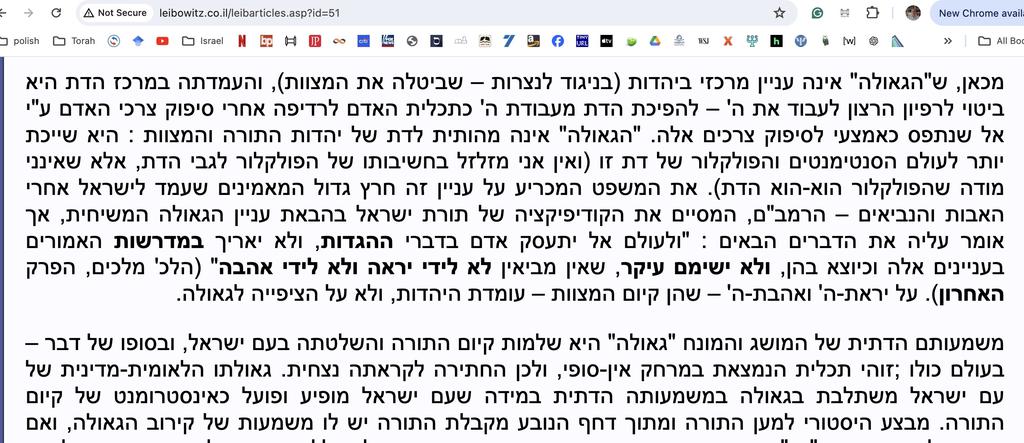

Chazal instituted the need/call for a personal geula in our Shemoneh Esreh which we recite thrice daily.
(א) רְאֵה בְעָנְיֵֽנוּ וְרִיבָה רִיבֵֽנוּ וּגְאָלֵֽנוּ מְהֵרָה לְמַֽעַן שְׁמֶֽךָ כִּי גּוֹאֵל חָזָק אָֽתָּה: בָּרוּךְ אַתָּה ה' גּוֹאֵל יִשְׂרָאֵל:
(1) Look upon our affliction, and defend our cause: and redeem us speedily for the sake of Your Name; because You are a Mighty Redeemer. Blessed are You, Adonoy, Redeemer of Israel.
(153) See my affliction and rescue me, for I have not neglected Your teaching. (154) Champion my cause and redeem me; preserve me according to Your promise.
(א) אָבִינוּ שֶׁבַּשָּׁמַיִם,
(ב) צוּר יִשְׂרָאֵל וְגוֹאֲלוֹ,
(ג) בָּרֵךְ אֶת מְדִינַת יִשְׂרָאֵל,
(ד) רֵאשִׁית צְמִיחַת גְּאֻלָּתֵנוּ.
(1) Avinu Shebashamim
(2) Rock and Redeemer of Israel
(3) Bless the State of Israel
(4) The start of flowering of Redemption