


This parsha was discussed in a Ze Kollel session, once part of Hillel Deutschland, now part of Paideia, all in partnership with Oy Vey (oyvey.nl. It includes my introduction and a summary of the discussion in the group.
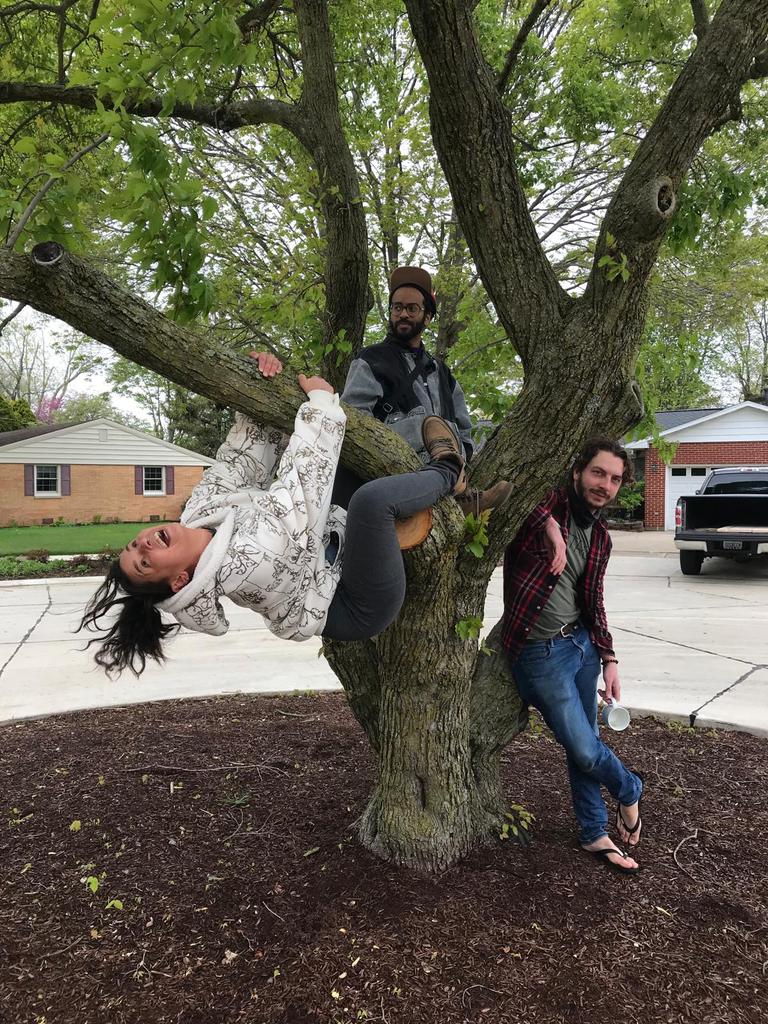
I spent April with my parents in the last days of our family house, a hub for three generations of Eghermans, in a cul-de-sac with a perfect slow growing tree in the center, strong and irresistible for climbing, as slow growing trees often are.
When I arrived, my 92-year-old father said to me, "I spend my nights talking to my mother. I don't know what that means. Is she calling to me?"
On phone calls with my cousin, my uncle told him that he was speaking with ghosts as well. He died a few weeks ago at 95. Perhaps one day, my cousin will speak with his ghosts.
I, too, have spoken with ghosts. Is this just what ageing is? A bridge to the world-to-come? Sometimes you walk halfway across and wave to those who have crossed before you. Sometimes they walk to you.
Maybe we don't turn to ghosts or inquire of them at all. Maybe they turn to us and inquire of us: the aging. Perhaps this is because we become our ancestors peers as we get older - even as we grow older than they did.
אַל־תִּפְנ֤וּ אֶל־הָאֹבֹת֙ וְאֶל־הַיִּדְּעֹנִ֔ים אַל־תְּבַקְשׁ֖וּ לְטׇמְאָ֣ה בָהֶ֑ם אֲנִ֖י יהוה אֱלֹהֵיכֶֽם׃ מִפְּנֵ֤י שֵׂיבָה֙ תָּק֔וּם וְהָדַרְתָּ֖ פְּנֵ֣י זָקֵ֑ן וְיָרֵ֥אתָ מֵּאֱלֹהֶ֖יךָ אֲנִ֥י יהוה׃ {ס}
Do not turn to ghosts and do not inquire of familiar spirits, to be defiled by them: I יהוה am your God. You shall rise before the aged and show deference to the old; you shall fear your God: I am יהוה.
In your small groups, choose 1, 2, or 3 verses to discuss together. Keep the following questions in mind.
1. How transgressive and reparative can we be in our reading of Kedoshim?
We are all well aware of how a few of the admonitions in Kedoshim have been used to harm some. Particularly in modern times. The challenge today is to read in a reparative and transgressive manner. Look for precision and loopholes and poetry.
Reparative as a reading style comes out of queer theory. Eve Kosofsky Sedgwick wrote about it in her essay, Paranoid Reading and Reparative Reading; or, You're So Paranoid, You Probably Think This Introduction Is about You What happens when we read Kedoshim from a position of love, rather than aggression and violence. It's a challenge.
2. Why do we need Kedoshim?
One could ask, why do we need Kedoshim? Is this an act of force? Is it a definition of norms?
The philosopher Yonathan Listik writes:
"In [Jacques Rancière's (1999, 44-46)] analysis of the way domination is enacted, he argues that political domination is naturalized via the rhetorical ‘do you understand?’ interpellation. This subjugates those inferior to the role of obeying without questioning: understanding what they must do while also understanding their social role as those who do not fully know and hence must obey. I would argue that Enrique Dussel (1975, 25-26), one of the proponents of decolonial theory, offers a response to such a subjugation: not understanding, being de facto unable to comprehend and to respond in a manner that is reasonable. As Dussel argues: Otherness is not a form of comprehension but of incomprehension (i.e. being ignorant/uncivilized).
To illustrate this claim, Dussel uses a line from an Argentinian folktale where one of the characters states that “in my ignorance, I know that I am worth nothing.” This is a clear demarcation of the oppressive structure where ignorance amounts to a lack of worth, but instead of reclaiming one’s worthiness and hence correcting this discriminatory posture, epistemic resistance means doubling down on this nothingness. It entails refusing an idea of homogenizing value that governs universally and, in this sense, the very same elements that demarcate oppression also allow for its destitution. In other words, to epistemologically disobey means to dismantle the idea that there is such thing as value, whichever that might be, which can then be translated into a normative structure."
3. Penalties and Promises
In Sanhedrin we read how the rabbis created walls against the use of the death penalty, making it extraordinarily difficult to enact capital punishment. Are we always setting up a tension between the law and how it's enacted. Do we leave the corners of our crops for the poor and the sojourner? Have we ensured that the deaf have no stumbling blocks? Are we as loving to the sojourner as the native born?
Ze Kollel Discussion
Reparative reading
Reparative reading was kind of what the rabbis were doing when they got to these texts around the death penalty.
Rabbi Akiva says: If we had been members of the Sanhedrin, we would have conducted trials in a manner whereby no person would have ever been executed. (Mishna Sanhedrin 4:5, Mishnah Makkot 1:10)
Reparative reading is about moving away from depression and paranoia. If we assume everything is hard, we might as well do what we want, read the way we want to. We might as well find things that are good for us.
Reparative reading also allows us to influence the tradition and the texts. One thing we have learned from studying Talmud is that the Rabbis felt that each case deserved to be heard and ruled upon in its specifics. There could be no one-size-fits all application of law.
If we are said to receive the Torah (the law) anew in each generation, then certainly it lives in the continual present, one which we live in. One which we are free to contribute to. As one participant said:
"The only reasonable thing to do with this unreasonable thing is to break open these texts"
Honoring parents: Leviticus 19:3
Each-man—his mother and his father you are to hold-in-awe,
and my Sabbaths you are to keep:
I am YHWH your God!
אִ֣ישׁ אִמּ֤וֹ וְאָבִיו֙ תִּירָ֔אוּ וְאֶת־שַׁבְּתֹתַ֖י תִּשְׁמֹ֑רוּ אֲנִ֖י יְהֹוָ֥ה אֱלֹהֵיכֶֽם׃
Not all of us have had the privilege of loving, caring parents. Some were raised with parents who tried to crush their spirits, left them with emotional scars, and who continue with abuse well into old age. How do we reconcile this passage? How do we honor it without harming ourselves and our new families? This was a question raised in discussion.
Respect for parents comes before Shabbat practice. It is the first request/demand of Kedoshim and is emphasized later as well when the verse turns to punishments. Why is this so important, we wondered?
We asked: what if you view this mitzvah in a different way. What if you say this may not be your direct biological parents, but your ancestors, the people who came before you and before them. What if it's a reminder that you are not alone, that others walked your path before you?
What if we think of this as a cycle rather than as a one way mitzvah? You honor, hold in awe, your parents and they honor and hold you as their children in awe as well. After all, their children may one day be parents. Many of us are both children and parents. This cyclical honoring ensures survival and may be useful in healing generational trauma.
Some of us make our own families - families of choice - that we can also honor and hold in awe.
אִ֣ישׁ אִמּ֤וֹ וְאָבִיו֙ תִּירָ֔אוּ
Let's look at the word תִּירָ֔אוּ, which can mean fear, honor, hold in awe. It also contains the word תראה - to see, to look. What if our honoring is seeing our parents for who they are? Without the expectations of a child or the responsibilities of a parent, but as the collected experiences and decisions that made them who they are.
Lying with a Man, Leviticus 20:13
וְאִ֗ישׁ אֲשֶׁ֨ר יִשְׁכַּ֤ב אֶת־זָכָר֙ מִשְׁכְּבֵ֣י אִשָּׁ֔ה תּוֹעֵבָ֥ה עָשׂ֖וּ שְׁנֵיהֶ֑ם מ֥וֹת יוּמָ֖תוּ דְּמֵיהֶ֥ם בָּֽם׃
A man who lies with a male [as one] lies with a woman— abomination have the two of them done, they are to be put to death, yes, death, their bloodguilt is upon them!
Here there is no admonition against homosexuality. It looks at one specific act. Rashi himself comments that "משכבי אשה means he inserts as a brush into a tube [i.e. in the manner of marital intercourse]". That's specific.
Lying with a man like you would a woman is practically impossible. "I can't lie with my boyfriend as I would with a woman. It is a completely different experience."
This can also be read as remain truthful. Don't put others into situations where you are not being truthful about yourself. Don't put yourself into that situation. Don't say you are not what you are.
Finally, patriarchy. Of course. A man was forbidden from lying with a man like he would a woman, because that would mean treating a man like property. So the message here is don't treat another man like property.
Sojourning, Leviticus 19:33
וְכִֽי־יָג֧וּר אִתְּךָ֛ גֵּ֖ר בְּאַרְצְכֶ֑ם לֹ֥א תוֹנ֖וּ אֹתֽוֹ׃
Now when there sojourns with you a sojourner in your land, you are not to maltreat him;
כְּאֶזְרָ֣ח מִכֶּם֩ יִהְיֶ֨ה לָכֶ֜ם הַגֵּ֣ר ׀ הַגָּ֣ר אִתְּכֶ֗ם וְאָהַבְתָּ֥ לוֹ֙ כָּמ֔וֹךָ כִּֽי־גֵרִ֥ים הֱיִיתֶ֖ם בְּאֶ֣רֶץ מִצְרָ֑יִם אֲנִ֖י יְהֹוָ֥ה אֱלֹהֵיכֶֽם׃
like the native-born among you shall he be to you, the sojourner that sojourns with you; be loving to him [as one] like yourself, for sojourners were you in the land of Egypt; I am YHWH your God!
For many of us, this passage is central to our feeling of Jewishness. One participant felt that it's also a kind of contradiction. We are hearing about all that is forbidden in order to set our boundaries as a people, while simultaneously being told to love those who sojourn among us. This might not be exactly a contradiction, but it is something to think about and consider.
Respect the aged, Leviticus 19:32
מִפְּנֵ֤י שֵׂיבָה֙ תָּק֔וּם וְהָדַרְתָּ֖ פְּנֵ֣י זָקֵ֑ן וְיָרֵ֥אתָ מֵּאֱלֹהֶ֖יךָ אֲנִ֥י יְהֹוָֽה׃ {ס}
You shall rise before the aged and show deference to the old; you shall fear your God: I am יהוה.
Full disclosure: my hair is turning grey pretty fast right now, so remember to respect me.
"You have living ancestors, not just ghosts."
Here we have a reminder that there are people with living memories of decades of life among us, so no need to turn to ghosts.
"Focus on this world, not the world to come."