


Lets explore Rabbi akiva and with the backdrop of this Halacha! That one should always say: "whatever G-d does he does for the good!" Is that a description or a prescription??? In other words if something bad happens, should you just say it must have been for a reason and it must have been good or are you saying this when a bad thing happens so that it could turn into something good!!!???
.... הנכנס להקיז דם אומר יהר"מ יהוה אלהי שיהא עסק זה לי לרפואה כי רופא חנם אתה ולאחר שהקיז יאמר ברוך רופא חולים. לעולם יהא אדם רגיל לומר כל מה דעביד רחמנא לטב עביד: הנני חוזר לסדר היום:
I understand this statement of "all is expected but you can cang or alter the course and G-d errs on side of goodness but what is meant by "all is about abundance of deeds"? The Rambam explains that if you can give one large sum of money to tzedakah or give the same amount in 10 different slots, its better to do it in ten slots.. but how does that really jive with the first part of the mishna!! After asking these two questions and thinking about them, we will then embark on a nice comprehensive look at rabbi akiva and then hopefully answer these two questions at the end of the talk
(טו) הַכֹּל צָפוּי, וְהָרְשׁוּת נְתוּנָה, וּבְטוֹב הָעוֹלָם נִדּוֹן. וְהַכֹּל לְפִי רֹב הַמַּעֲשֶׂה:
(15) Everything is foreseen yet freedom of choice is granted, And the world is judged with goodness; And everything is in accordance with the preponderance of works.
Lets begin
WHO WAS HE?
מִבְּנֵי בָנָיו שֶׁל הָמָן לָמְדוּ תּוֹרָה בִּבְנֵי בְרַק; מִבְּנֵי בָנָיו שֶׁל סִיסְרָא לָמְדוּ תִּינוֹקוֹת בִּירוּשָׁלַיִם; מִבְּנֵי בָנָיו שֶׁל סַנְחֵרִיב לָמְדוּ תּוֹרָה בָּרַבִּים – מַאן אִינּוּן? שְׁמַעְיָה וְאַבְטַלְיוֹן.
The Gemara adds that some of Haman’s descendants studied Torah in Bnei Brak, and some of Sisera’s descendants taught children Torah in Jerusalem, and some of Sennacherib’s descendants taught Torah in public. Who are they? They are Shemaya and Avtalyon, the teachers of Hillel the Elder.
תנו רבנן נעמן גר תושב היה נבוזר אדן גר צדק היה מבני בניו של סיסרא למדו תורה בירושלים מבני בניו של סנחריב לימדו תורה ברבים ומאן נינהו שמעיה ואבטליון
The Sages taught in a baraita: Naaman the Aramean (see II Kings, chapter 5) was a ger toshav, meaning that he accepted upon himself to refrain from idol worship but did not convert to Judaism. Nebuzaradan was a completely righteous convert. Among the descendants of Sisera (see Judges, chapter 4) were those who studied Torah in Jerusalem. Among the descendants of Sennacherib were those who taught Torah in public. The Gemara asks: And who are they? The Gemara answers: They were Shemaya and Avtalyon.
נוקי לר' עקיבא לית ליה זכות אבות. איתה בסנהדרין בפרק כל ישראל יש להן חלק (דף צו) מבני בניו של סיסרא למדו תורה בירושלים ומאן אינון ר' עקיבא ואיתה נמי בפ' הניזקין דמסכת גיטין (דף נז):נוקי לר' אלעזר בן עזריה שהוא חכם ועשיר והוא עשירי לעזרא הסופר. .... והיה ר' עקיבא יושב ומצטער ואומר לא שהוא בן תורה יותר ממני אלא שהוא בן גדולים יותר ממני אשרי אדם שזכו לו אבותיו אשרי אדם שיש לו יתד להתלות בה ומה היתה יתידתו של ר' אלעזר בן עזריה שהיה עשירי לעזרא:
I would like to add a Chidush that perhaps when Rabbi akiva says "אשרי אדם שיש לו יתד להתלות", perhaps he was cunningly referring to his great grandmother Yael since it was Yael that enticed Sisera; Yael , who drive a Yated ( a peg) into sisera's temple, was in fact his great grandmother!!!!
ובני אהרן הכהנים יתקעו בחצוצרות למה נאמר לפי שהוא אומר [ותקעו בהן] ואם באחת יתקעו, שומע אני אף ישראל במשמע ת"ל ובני אהרן הכהנים. בין תמימים ובין בעלי מומין,דברי ר' טרפון. ר"ע אומר תמימים ולא בעלי מומין. נאמר כאן כהנים ונאמר להלן (ויקרא א) כהנים, מה כהנים האמור להלן תמימים ולא בעלי מומין אף כהנים האמור כאן תמימים ולא בעלי מומין. אמר לו ר' טרפון עד מתי אתה מגבב ומביא עלינו, איני יכול לסבול אקפח את בני אם לא ראיתי שמעון אחי אמי שהיה חגר ברגלו (שהיה) [והיה] עומד ומריע בחצוצרות. אמר לו הן שמא בר"ה וביהכ"פ ביובל. אמר לו העבודה, שלא בדית, אשריך אברהם אבינו שיצא עקיבא מחלציך, טרפון ראה ושכח עקיבא דורש מעצמו ומסכים להלכה.
(Bamidbar 10:8) "And the sons of Aaron the Cohanim shall blow on the trumpets": What is the intent of this? From (Ibid. 3) "And they shall blow with them," I would think that Israelites, too, may do so; it is, therefore, written "the sons of Aaron." "the Cohanim": whether whole or blemished. These are the words of R. Tarfon. R. Akiva says: whole, not blemished, viz.: It is written here "Cohanim," and, elsewhere, (Vayikra 3:2) "Cohanim." Just as there, whole, not blemished; here, too, whole, not blemished. R. Tarfon: Akiva, how long will you pile up words against us! May I lose my sons if I did not see Shimon, my mother's brother, who was lame in one leg, standing and blowing the trumpets! R. Akiva: Might it be that you saw this on Rosh Hashanah or on Yom Kippur of the Jubilee year? R. Tarfon: I swear that you have not erred! Happy are you Abraham our father, from whose loins Akiva came forth! Tarfon saw and forgot (the day). Akiva expounded of himself and seconded the halachah.
ב) בן יוסף (ויוסף היה) נר צדק מבני בניו של סיסרא. וביוחסין בסה"ד ר' טרפון אמר עליו אשריך אברהם אבינו שיצא ר"ע מחלציך וקשה הא בן גרים היה כיצד יצא מאברהם ואולי אביו יוסף נשא בת ישראל. והכרח לזה כיון שהיה ראש ישיבה ועיבר שנים אם לא היה אמו מישראל לא הוה קרינן ביה מקרב אחיך (עיי' שמעיה). בע"מ ר"ע בא מסיסרא שבא על יעל אשת חבר הקיני. אך לדעת ר"ע עכו"ם הבא עלב"י הולד ממזר. אכן אי' בילקוט יהושע סי' ט' דיעל היתה גיורת א"כ י"ל דנתגיירה אחר שבא עלי' סיסרא (ז"ר):
מִבְּנֵי בָנָיו שֶׁל סִיסְרָא לָמְדוּ תּוֹרָה בִּירוּשָׁלַיִם. הנה בגמרא לא נזכר מי הם אך הרב פתח עינים ז"ל הביא משם הרמ"ע [רבי מנחם עזריה מפאנו] ז"ל שהיה רבי עקיבה מבני בניו של סיסרא והיינו שיצא מיעל מאותו ולד שנתעברה בו מסיסרא עיין שם. והרב הנזכר הביא קושיא מהגאון מהר"ח ז"ל והלא רבי עקיבה עצמו סבירא ליה גוי ועבד הבא על בת ישראל הולד ממזר (יבמות מד:) ואיך יצא הוא מאותו הולד שנתעברה בו יעל מסיסרא, והלא ממזר אין לו הפסק דורות להתירו דכתיב ביה (דברים כג, ד) לֹא יָבֹא לָהֶם בִּקְהַל הֳ' עַד עוֹלָם? ותירץ הרב פתח עינים כי הן מפלאות תמים דעים והותר הזרע על פי הנבואה של דבורה עיין שם.ואנא עבדא אמינא על מה שאמר מרן ז"ל בשולחן ערוך (אבן העזר סימן ד' סעיף ך') ממזר הבא על העכו"ם הולד עכו"ם ואם נתגייר הרי היא כישראל ואם בא על השפחה הולד עבד נשתחרר הרי הוא בן חורין לפיכך ממזר נושא לכתחילה שפחה שקבלה עליה מצות וטבלה לשם עבדות להתיר בניו שישתחררו ויהיו מותרים בישראלית עיין שם. ואם כן אפשר דהכי הוה מעשה שאותו הולד שיצא מבעילת סיסרא את יעל לקח גויה דהולד גוי ואחר כך נתגייר הילד והרי הוא כישראל.והנה לסברה זו של הרמ"ע דרבי עקיבה יצא מן זרע סיסרא נראה לי בס"ד לכן העלימה הגמרא הדבר הזה ולא פירשה אותו משום דסבר רבי עקיבה עכו"ם שבא על ישראלית הולד ממזר ולאו כולי עלמא גמירי ליישב הדבר כמו שתירץ הרב פתח עינים או כמו שתירצתי אנא עבדא ואפשר דנפיק מיניה זלותא לאותו צדיק אצל הפתאים לכך העלימה הגמרא את הדבר הזה.מיהו באמת רבינו האר"י ז"ל בשער הגלגולים לא אמר שיצא רבי עקיבא מיעל ולא אמר שלקחה יעל ניצוצי קדושה מקליפת סיסרא בבואו עליה אלא אמר לקחה ניצוצי קדושה מקליפת סיסרא בעת שתקעה היתד במצחו ומחצה רקתו וכמו שאמר שם בהקדמה ל"ו עיין שם. גם כתב שם וזה לשונו: גם לסיבה זו נכנסה נפש קדושה ומעולה של רבי עקיבה בהיותו בן גרים ולא מזרע ישראל לפי שהיתה טיפת זרע שיצאה מיוסף הצדיק ע"ה בעת הרהורו באשת פוטיפר שהיתה גויה עד כאן לשונו עיין שם. הרי לא אמר רבינו האר"י ז"ל שרבי עקיבה בא מאותו הולד שנתעברה בו מביאת סיסרא ועל כן אין לסמוך כי אם על דברי רבינו האר"י ז"ל ותו לא מידי.ולפי דברי רבינו האר"י ז"ל הנזכר לעיל צריך לומר מה שאמר כאן מִבְּנֵי בָנָיו שֶׁל סִיסְרָא לָמְדוּ תּוֹרָה בִּירוּשָׁלַיִם קאי על רבי עקיבא והיינו כי לפי דברי רבינו האר"י ז"ל שכתב שם שהיה נצוץ אחד בנפש רבי עקיבה שהיה תחילה בקליפה של סיסרא מסיבת חטא אדם הראשון וקין בנו שיצא זה הניצוץ ונפל שם וזה הניצוץ כשיצא אחר כך מקליפת סיסרא מוכרח ליכנס בעת ביאתו לעולם הזה בגוף גר שהיה מבני בניו של סיסרא עד כאן דבריו עיין שם. ולפי זה מובן הטעם למה לא אמר תלמודא להדיה על רבי עקיבה והיינו מפני שרבי עקיבה לא היה כל ניצוצי נפשו מקליפת סיסרא אלא רק נצוץ אחד היה שם ואינו דומה לענין שמעיה ואבטליון ורב שמואל בר שילת דכולם היו שם.
Connection to Moshe/(Yackov)/Shavuous
(ז) ומשה בן מאה ועשרים שנה, זה אחד מארבעה שמתו בן מאה ועשרים שנה ואלו הם משה והלל הזקן ורבן יוחנן בן זכיי ורבי עקיבה משה היה במצרים ארבעים שנה ובמדין ארבעים שנה ופירנס את ישראל ארבעים שנה הילל הזקן עלה מבבל בן ארבעים שנה ושימש חכמים ארבעים שנה ופירנס את ישראל ארבעים שנה רבן יוחנן בן זכיי עסק בפרגמטיא ארבעים שנה ושימש חכמים ארבעים שנה ופירנס את ישראל ארבעים שנה רבי עקיבה למד תורה בן ארבעים שנה ושמש את החכמים ארבעים שנה ופירנס את ישראל ארבעים שנה שש זוגות ששנותיהם שוות רבקה וקהת לוי ועמרם יוסף ויהושע שמואל ושלמה משה והלל הזקן ורבן יוחנן בן זכיי ורבי עקיבה.
(Ibid. 7) "And Moses was one hundred and twenty years old when he died": He was one of the four who died at the age of one hundred and twenty: Moses, Hillel the Elder, R. Yochanan b. Zakkai, and R. Akiva. Moses was in Egypt for forty years, in Midian for forty years, and led Israel for forty years. Hillel the Elder went up from Bavel (to Eretz Yisrael) at the age of forty, attended upon the sages for forty years, and led Israel for forty years. R. Yochanan b. Zakkai was in business for forty years, attended upon the sages for forty years, and led Israel for forty years. R. Akiva was a shepherd for forty years, learned (Torah) for forty years, and led Israel for forty years. Six "pairs" whose years (of life) were the same: Rivka and Kehoth; Levi and Amram; Joseph and Joshua; Samuel and Solomon; Moses and Hillel the Elder; R. Yochanan b. Zakkai and R. Akiva.
תְּפָסוֹ לְרַבִּי יְהוֹשֻׁעַ, וְהוֹשִׁיבָהוּ עַל מִטָּה שֶׁל זָהָב. אָמַר לוֹ: רַבִּי, אֱמוֹר לְתַלְמִידְךָ אַחֵר וְיֵשֵׁב. אָמַר לוֹ: מִי הוּא? רַבִּי אֶלְעָזָר בֶּן עֲזַרְיָה. אָמַר: וְיֵשׁ לוֹ בֵּן לַעֲזַרְיָה חֲבֵירֵנוּ? קָרָא עָלָיו הַמִּקְרָא הַזֶּה: ״נַעַר הָיִיתִי גַּם זָקַנְתִּי וְלֹא רָאִיתִי צַדִּיק נֶעֱזָב וְזַרְעוֹ מְבַקֶּשׁ לָחֶם״. תְּפָסוֹ וְהוֹשִׁיבוֹ עַל מִטָּה שֶׁל זָהָב. אָמַר לוֹ: רַבִּי, אֱמוֹר לְתַלְמִידְךָ אַחֵר וְיֵשֵׁב. אָמַר לוֹ: וּמִי הוּא? עֲקִיבָא בֶּן יוֹסֵף. אָמַר לוֹ: אַתָּה הוּא עֲקִיבָא בֶּן יוֹסֵף שֶׁשִּׁמְךָ הוֹלֵךְ מִסּוֹף הָעוֹלָם וְעַד סוֹפוֹ?! שֵׁב בְּנִי, שֵׁב, כְּמוֹתְךָ יִרְבּוּ בְּיִשְׂרָאֵל
Rabbi Dosa ben Harkinas recited this verse about Rabbi Elazar ben Azarya: “I have been young, and now am old; yet I have not seen the righteous forsaken, nor his seed begging bread” (Psalms 37:25). He interpreted this verse to mean that the son of a Torah scholar also becomes a Torah scholar. He grabbed him and sat him on a bed of gold. Rabbi Yehoshua said to him: Rabbi, call your other disciple so that he may sit. He said to him: Who is that? He said to him: Akiva ben Yosef. Rabbi Dosa said to him: You are Akiva ben Yosef, whose name has spread from one end of the world to the other? Even Rabbi Dosa had heard of Rabbi Akiva’s reputation as a great man. Sit, my son, sit. May the likes of you multiply in Israel.
אַתָּה הוּא עֲקִיבָא בֶּן יוֹסֵף שֶׁשִּׁמְּךָ הוֹלֵךְ מִסּוֹף הָעוֹלָם וְעַד סוֹפוֹ?. נראה לי בס"ד הטעם דנקיט מסוף ועד סוף מפני שהצדיק על ידי תורתו מעלה אורות הנקראים מ"ן [מיין נוקבין] מסוף העולם התחתון עד ראש העולם העליון וחוזר ומוריד על ידי זה אור הנקרא מ"ד [מיין דוכרין] מראש עולם העליון עד סוף עולם התחתון נמצא עסק שלו מתחיל מהסוף ומסיים בסוף.או יובן בס"ד סוף תיבת 'עוֹלָם' הוא אות מ' וגם מ"ם במלואה גם כן סופה מ'. נמצא אומרו מסוף העולם ועד סופו רמז בזה על שני מ' וידוע דרבי עקיבה מ' שנה למד ומ' שנה לימד ולכן אמר לו 'שֵׁב בְּנִי שֵׁב' כפל לשון שב רמז שזכה לשני ישיבות שהוא אחת ישיבה של לומדים ואחת ישיבה של מלמדים. שֵׁב בְּנִי, שֵׁב. נראה לי בס"ד טעם של כפל לשון שֵׁב על פי מה שאמר רבינו האר"י ז"ל בשער הגלגולים דכל החכמים או רובם בוראים נפשות הגרים על ידי עסקם בתורה והבריאה היא שמביאים אותם מקליפה הנקראת נגה שהיא טוב ורע ומכניסים אותם במקום הקדושה ונתקנים אך לא היו יכולים לחזור ולמשוך אותם הנפשות ממקום הקדושה לתת אותם אל הגרים, אבל רבי עקיבה ובן עזאי היה להם כח כפול שהיו מביאים הנפשות מקליפת נגה ומכניסים אותם במקום הקדושה ונתקנים שם ואחר כך היו ממשיכים אותם משם לתת אותם אל הגרים עיין שם.נמצא דרבי עקיבה בעסק תורתו היה עושה שני מושבות אל נפשות הגרים האחת שיכניסם במקום הקדושה שישבו שם עד שיהיו נתקנים והשניה שהיה חוזר ומושך אותם משם ומושיב אותם בגופות הגרים, ולכן אמר לו כאן 'שֵׁב בְּנִי שֵׁב' דרוח יהוה דבר בו לכפול לו הישיבה על שם כחו שפועל בשני ישיבות הנזכר על ידי עסק תורתו אשר לא נמצא כזאת אצל חכמים זולתו.ועוד נראה לי בס"ד כפל הלשון 'שֵׁב בְּנִי שֵׁב' על פי מה שאמר רבינו האר"י ז"ל בשער הגלגולים הקדמה וכו' ובעץ חיים שער המוחין דנשמת רבי עקיבה יש לו שני בחינות ישיבה אחת בבינה מצד נשמתו ואחת בחכמה מצד לבוש נשמתו. ולכן אמר לו 'שֵׁב בְּנִי שֵׁב' שכפל בו הישיבה לרמוז אתה חביב ויקר שיש לך שני בחינות ישיבה בשני מקומות אחת בחכמה ואחת בבינה.ובאופן אחר נראה לי בס"ד שרומז בכפל הלשון על סוד מאמר (מנחות כט:) 'כך עלה במחשבה' שאמר השם יתברך על רבי עקיבה שביאר רבינו האר"י ז"ל בשער הכונות בדרוש נפילת אפיים דהכונה הוא על זווג עליון דחכמה ובינה הרמוז בכף פשוטה ועל זווג תחתון דתפארת ומלכות הרמוז בכ"ף כפופה ועל זה אמר כ־ך עלה במחשבה עיין שם. וכן כאן רוח יהוה דבר בו שכפל לו הישיבה 'שֵׁב בְּנִי שֵׁב' כלומר יש לך מושב בדירה של מעלה שהוא זווג עליון דחו"ב [חכמה ובינה] ובדירה של מטה שהוא זווג תחתון דתו"מ [תפארת ומלכות].ובני ידידי כבוד הרב יעקב נר"ו פירש כפל הלשון שרמז לו שהוא ראוי להתכבד בישיבה הן מצד חכמתו הן מצד מעשיו ומדותיו הטובים עד כאן דבריו נר"ו.
From here you see the greatness as Rabbi Akiva is compared to Moshe
אמר רב יהודה אמר רב בשעה שעלה משה למרום מצאו להקב"ה שיושב וקושר כתרים לאותיות אמר לפניו רבש"ע מי מעכב על ידך אמר לו אדם אחד יש שעתיד להיות בסוף כמה דורות ועקיבא בן יוסף שמו שעתיד לדרוש על כל קוץ וקוץ תילין תילין של הלכות אמר לפניו רבש"ע הראהו לי אמר לו חזור לאחורך הלך וישב בסוף שמונה שורות ולא היה יודע מה הן אומרים תשש כחו כיון שהגיע לדבר אחד אמרו לו תלמידיו רבי מנין לך אמר להן הלכה למשה מסיני נתיישבה דעתו חזר ובא לפני הקב"ה אמר לפניו רבונו של עולם יש לך אדם כזה ואתה נותן תורה ע"י אמר לו שתוק כך עלה במחשבה לפני אמר לפניו רבונו של עולם הראיתני תורתו הראני שכרו אמר לו חזור [לאחורך] חזר לאחוריו ראה ששוקלין בשרו במקולין אמר לפניו רבש"ע זו תורה וזו שכרה א"ל שתוק כך עלה במחשבה לפני
The Gemara relates: Rami bar Tamrei, who was the father-in-law of Rami bar Dikkulei, had the leg of the letter vav in the term: “And the Lord slew [vayaharog] all the firstborn” (Exodus 13:15), written in his phylacteries, severed by a perforation. He came before Rabbi Zeira to clarify the halakha. Rabbi Zeira said to him: Go bring a child who is neither wise nor stupid, but of average intelligence; if he reads the term as “And the Lord slew [vayaharog]” then it is fit, as despite the perforation the letter is still seen as a vav. But if not, then it is as though the term were: Will be slain [yehareg], written without the letter vav, and it is unfit. § Rav Yehuda says that Rav says: When Moses ascended on High, he found the Holy One, Blessed be He, sitting and tying crowns on the letters of the Torah. Moses said before God: Master of the Universe, who is preventing You from giving the Torah without these additions? God said to him: There is a man who is destined to be born after several generations, and Akiva ben Yosef is his name; he is destined to derive from each and every thorn of these crowns mounds upon mounds of halakhot. It is for his sake that the crowns must be added to the letters of the Torah. Moses said before God: Master of the Universe, show him to me. God said to him: Return behind you. Moses went and sat at the end of the eighth row in Rabbi Akiva’s study hall and did not understand what they were saying. Moses’ strength waned, as he thought his Torah knowledge was deficient. When Rabbi Akiva arrived at the discussion of one matter, his students said to him: My teacher, from where do you derive this? Rabbi Akiva said to them: It is a halakha transmitted to Moses from Sinai. When Moses heard this, his mind was put at ease, as this too was part of the Torah that he was to receive. Moses returned and came before the Holy One, Blessed be He, and said before Him: Master of the Universe, You have a man as great as this and yet You still choose to give the Torah through me. Why? God said to him: Be silent; this intention arose before Me. Moses said before God: Master of the Universe, You have shown me Rabbi Akiva’s Torah, now show me his reward. God said to him: Return to where you were. Moses went back and saw that they were weighing Rabbi Akiva’s flesh in a butcher shop [bemakkulin], as Rabbi Akiva was tortured to death by the Romans. Moses said before Him: Master of the Universe, this is Torah and this is its reward? God said to him: Be silent; this intention arose before Me.
master compiler and organizer
אַשְׁקְךָ מִיַּיִן הָרֶקַח, אֵלּוּ מִשְׁנָיוֹת גְּדוֹלוֹת, כְּגוֹן מִשְׁנָתוֹ שֶׁל רַבִּי חִיָּא רַבָּה, וּמִשְׁנָתוֹ שֶׁל רַבִּי הוֹשַׁעְיָא וְשֶׁל בַּר קַפָּרָא וּמִשְׁנַת רַבִּי עֲקִיבָא. ...
“I would lead you, would bring you to my mother's house, that you would teach me; I would give you to drink from the spiced wine, from the juice of my pomegranate” (Song of Songs 8:2).“I would lead you, would bring you”; “I would lead you” – from the supernal to the earthly. “Would bring you to my mother’s house” – this is Sinai. Rabbi Berekhya said: Why is Sinai called “my mother’s house”? It is because Israel became like newborn babies there. “That you would teach me” mitzvot and good deeds. “I would give you to drink from the spiced wine” – these are the great compendia of baraitot, like the compendium of Rabbi Ḥiyya the Great, the compendium of Rabbi Hoshaya and of bar Kappara, and the teachings of Rabbi Akiva. “From the juice of my pomegranate” – these are the aggadot, which are tasty like a pomegranate. Alternatively, “I would give you to drink from the spiced wine” – this is the Talmud, in which mishnayot are blended like spiced wine. “From the juice of my pomegranate” – these are the vestments of the High Priest, just as it says: “A golden bell and a pomegranate” (Exodus 28:34).
(ב) ומשנת ר"ע. בשלהי קה"ר (ע"פ ובטנו הטוחנות) גרס משנת ר"ע תחלה ואח"כ של ר"ח ור"ה וב"ק. ולפ"ז י"ל משנת ר"ע הוא משניות והשאר הן תוספתות (ולגי' דהכא דר"ע לבסוף י"ל כמ"ש (בסנהדרין פ"ו) וכולהו אליבא דר"ע):
דאמר ר' יוחנן סתם מתני' ר' מאיר סתם תוספתא ר' נחמיה סתם ספרא רבי יהודה סתם ספרי ר"ש וכולהו אליבא דר"ע:
The Gemara responds: That should not enter your mind, as the unattributed baraita that was cited is a passage from the halakhic midrash on the books of Numbers and Deuteronomy entitled Sifrei, and Rabbi Yoḥanan says: An unattributed mishna is in accordance with the opinion of Rabbi Meir; an unattributed baraita in the Tosefta is in accordance with the opinion of Rabbi Neḥemya; an unattributed baraita in the Sifra, the halakhic midrash on the book of Leviticus, is in accordance with the opinion of Rabbi Yehuda; and an unattributed baraita in the Sifrei is in accordance with the opinion of Rabbi Shimon. And all of these are in accordance with the opinion of Rabbi Akiva, as all the Sages mentioned were his disciples. Therefore, it is unlikely that an unattributed baraita from the Sifrei would run counter to the opinion of Rabbi Shimon.
לר׳ עקיבא קרא לו אוצר בלום למה רבי עקיבא דומה לפועל שנטל קופתו ויצא לחוץ מצא חטים מניח בה מצא שעורים מניח בה כוסמין מניח בה פולין מניח בה עדשים מניח בה כיון שנכנס לביתו מברר חטים בפני עצמן שעורים בפני עצמן כוסמין בפני עצמן פולין בפני עצמן עדשים בפני עצמן. כך עשה ר׳ עקיבא ועשה כל התורה טבעות טבעות
Rabbi Yehudah HaNasi would praise the virtues of these sages: Rabbi Tarfon, Rabbi Akiva, Rabbi Elazar ben Azariah, Rabbi Yohanan ben Nuri, and Rabbi Yosei HaGalili.He called Rabbi Tarfon: a pile of stones. (And some say, a pile of nuts.) For when someone pulls one of them out, they all fall down and crash in on each other. So it was with Rabbi Tarfon. When a student would come before him and say: Teach me something, Rabbi Tarfon would cite Scripture, Mishnah, Midrash, Halakhot, and Aggadot. And the student would leave feeling full of goodness and blessing.He called Rabbi Akiva: a sealed vault. For Rabbi Akiva was like a worker who took his basket and went out to gather. When he found wheat, he put it in his basket. When he found barley, he put it in his basket. When he found spelt, he put it in his basket. When he found beans, he put them in his basket. When he found lentils, he put them in his basket. Then when he came back home, he would separate the wheat into one pile, the barley into one pile, the spelt into one pile, the beans into one pile, and the lentils into one pile. So it was with Rabbi Akiva. He organized the whole Torah into identifiable categories.He called Rabbi Elazar ben Azariah: a spice-peddlars’ basket. For Rabbi Elazar was like a merchant who took his cart and traveled around the country, and everyone would come out and say to him: Do you have fine oil? Do you have herbal ointments? Do you have persimmons? And they would find that he had everything. So it was with Rabbi Elazar ben Azariah. When a student would come to him and ask a question, Rabbi Elazar would tell him something from Scripture, something from Mishnah, something from Midrash, something from the law, and something from the legends. And the student would leave feeling full of goodness and blessing.
אָמַר רִבִּי יוֹנָה. כְּתִיב לָכֵ֞ן אֲחַלֶּק־ל֣וֹ בָֽרַבִּ֗ים וְאֶת־עֲצוּמִים֘ יְחַלֵּ֣ק שָׁלָל֒. זֶה רִבִּי עֲקִיבָה שֶׁהִתְקִין מִדְרַשׁ הֲלָכוֹת וְהַגָּדוֹת.
HALAKHAH: “These are the appointees who were in the Sanctuary.” Rebbi Ḥizqiah said, Rebbi Simon and the rabbis. One said, he comes to enumerate the qualified ones of every generation. But the other said, he who was in a generation enumerated what was in his generation\. He who said, he comes to enumerate the qualified ones of every generation, about all of them he says, the remembrance of the just is for blessing. He who said, he who was in a generation enumerated what was in his generation, about all of them he says, but the name of evildoers shall rot. About whom was said, the remembrance of the just is for blessing? About Ben Qaṭin and his kind. Rebbi Jonah said, it is written: Therefore, I shall distribute to him in public, and with the powerful he shall have part in booty, that is Rebbi Aqiba who organized interpretation of Scripture, practice, and homiletics. But some say, this refers to the men of the Great Assembly, who organized principles and details.
תָּנוּ רַבָּנַן: אַרְבָּעָה נִכְנְסוּ בַּפַּרְדֵּס, וְאֵלּוּ הֵן: בֶּן עַזַּאי, וּבֶן זוֹמָא, אַחֵר, וְרַבִּי עֲקִיבָא. אֲמַר לָהֶם רַבִּי עֲקִיבָא: כְּשֶׁאַתֶּם מַגִּיעִין אֵצֶל אַבְנֵי שַׁיִשׁ טָהוֹר, אַל תֹּאמְרוּ ״מַיִם מַיִם״, מִשּׁוּם שֶׁנֶּאֱמַר: ״דּוֹבֵר שְׁקָרִים לֹא יִכּוֹן לְנֶגֶד עֵינָי״. בֶּן עַזַּאי הֵצִיץ וָמֵת, עָלָיו הַכָּתוּב אוֹמֵר: ״יָקָר בְּעֵינֵי יהוה הַמָּוְתָה לַחֲסִידָיו״. בֶּן זוֹמָא הֵצִיץ וְנִפְגַּע, וְעָלָיו הַכָּתוּב אוֹמֵר: ״דְּבַשׁ מָצָאתָ אֱכוֹל דַּיֶּיךָּ פֶּן תִּשְׂבָּעֶנּוּ וַהֲקֵאתוֹ״. אַחֵר קִיצֵּץ בִּנְטִיעוֹת. רַבִּי עֲקִיבָא יָצָא בְּשָׁלוֹם.
§ The Sages taught: Four entered the orchard [pardes], i.e., dealt with the loftiest secrets of Torah, and they are as follows: Ben Azzai; and ben Zoma; Aḥer, the other, a name for Elisha ben Avuya; and Rabbi Akiva. Rabbi Akiva, the senior among them, said to them: When, upon your arrival in the upper worlds, you reach pure marble stones, do not say: Water, water, although they appear to be water, because it is stated: “He who speaks falsehood shall not be established before My eyes” (Psalms 101:7). The Gemara proceeds to relate what happened to each of them: Ben Azzai glimpsed at the Divine Presence and died. And with regard to him the verse states: “Precious in the eyes of the Lord is the death of His pious ones” (Psalms 116:15). Ben Zoma glimpsed at the Divine Presence and was harmed, i.e., he lost his mind. And with regard to him the verse states: “Have you found honey? Eat as much as is sufficient for you, lest you become full from it and vomit it” (Proverbs 25:16). Aḥer chopped down the shoots of saplings. In other words, he became a heretic. Rabbi Akiva came out safely.
Elisha Ben Avuya was probably jealous of rabbi Akiva and and thus taunted him by saying that somebody who learns old never will grasp what he learns!
אֱלִישָׁע בֶּן אֲבוּיָה אוֹמֵר, הַלּוֹמֵד יֶלֶד לְמַה הוּא דוֹמֶה, לִדְיוֹ כְתוּבָה עַל נְיָר חָדָשׁ. וְהַלּוֹמֵד זָקֵן לְמַה הוּא דוֹמֶה, לִדְיוֹ כְתוּבָה עַל נְיָר מָחוּק. ...
Elisha ben Abuyah said: He who learns when a child, to what is he compared? To ink written upon a new writing sheet. And he who learns when an old man, to what is he compared? To ink written on a rubbed writing sheet. Rabbi Yose ben Judah a man of Kfar Ha-babli said: He who learns from the young, to what is he compared? To one who eats unripe grapes, and drinks wine from his vat; And he who learns from the old, to what is he compared? To one who eats ripe grapes, and drinks old wine. Rabbi said: don’t look at the container but at that which is in it: there is a new container full of old wine, and an old [container] in which there is not even new [wine].
he passed the baton to rabbi Judah Hanasi.. And it's worth noting that he himself was born around the time that hillel died. I would say rabbi akiba was born somewhere between zero and eight while Hillel dies around zero to 8
וְזָרַח הַשֶּׁמֶשׁ וּבָא הַשָּׁמֶשׁ (קהלת א, ה), אָמַר רַבִּי אַבָּא בַּר כַּהֲנָא וְכִי אֵין אָנוּ יוֹדְעִין שֶׁזָּרַח הַשֶּׁמֶשׁ וּבָא הַשָּׁמֶשׁ, אֶלָא עַד שֶׁלֹא יַשְׁקִיעַ הַקָּדוֹשׁ בָּרוּךְ הוּא שִׁמְּשׁוֹ שֶׁל צַדִּיק הוּא מַזְרִיחַ שִׁמְשׁוֹ שֶׁל צַדִּיק חֲבֵרוֹ, יוֹם שֶׁמֵּת רַבִּי עֲקִיבָא נוֹלַד רַבֵּנוּ, וְקָרְאוּ עָלָיו וְזָרַח הַשֶּׁמֶשׁ וּבָא הַשָּׁמֶשׁ.
“The sun rises and the sun sets” (Ecclesiastes 1:5) – Rabbi Abba bar Kahana said: Do we not know that the sun rises and the sun sets? The meaning is, however, that before the Holy One blessed be He causes the sun of a righteous person to set, he causes the sun of his righteous counterpart to rise. The day that Rabbi Akiva died, Rabbeinu [Yehuda HaNasi] was born, and they applied this verse in his regard: “The sun rises and the sun sets.”
דְּאָמַר מָר: כְּשֶׁמֵּת רַבִּי עֲקִיבָא נוֹלַד רַבִּי. כְּשֶׁמֵּת רַבִּי נוֹלַד רַב יְהוּדָה. כְּשֶׁמֵּת רַב יְהוּדָה נוֹלַד רָבָא. כְּשֶׁמֵּת רָבָא נוֹלַד רַב אָשֵׁי. לְלַמֶּדְךָ שֶׁאֵין צַדִּיק נִפְטָר מִן הָעוֹלָם עַד שֶׁנִּבְרָא צַדִּיק כְּמוֹתוֹ, שֶׁנֶּאֱמַר: ״וְזָרַח הַשֶּׁמֶשׁ וּבָא הַשָּׁמֶשׁ״. עַד שֶׁלֹּא כָּבְתָה שִׁמְשׁוֹ שֶׁל עֵלִי זָרְחָה שִׁמְשׁוֹ שֶׁל שְׁמוּאֵל הָרָמָתִי, שֶׁנֶּאֱמַר: ״וְנֵר אֱלֹהִים טֶרֶם יִכְבֶּה וּשְׁמוּאֵל שׁוֹכֵב וְגוֹ׳״.
The Gemara comments: As the Master said: While Rabbi Akiva was dying, Rabbi Yehuda HaNasi was born; while Rabbi Yehuda HaNasi was dying, Rav Yehuda was born; while Rav Yehuda was dying, Rava was born; while Rava was dying, Rav Ashi was born. This teaches you that a righteous person does not leave the world before an equally righteous person is created, as it is stated: “The sun also rises and the sun also sets” (Ecclesiastes 1:5). The same applies to earlier generations: Before Eli’s sun had gone out, Samuel the Ramathite’s sun was already rising, as it is stated: “And the lamp of God was not yet gone out, and Samuel was lying in the Temple of the Lord” (I Samuel 3:3), which teaches that Samuel was already prophesying in the days of Eli.
the yeshiva was like being at Har Sinai.. his rebbi was Eliezer ben Hurkanos!
רַבִּי עֲקִיבָא אוֹמֵר אֲנִי אֵין בִּי כֹּחַ לוֹמַר כְּמוֹ שֶׁאָמְרוּ רַבּוֹתַי, אֶלָּא רַבּוֹתַי חִסְּרוּהָ, וַאֲנִי לֹא חִסַּרְתִּיהָ, אֶלָּא כְּמֵרִיחַ בְּאֶתְרוֹג, הַמֵּרִיחַ נֶהֱנָה, וְהָאֶתְרוֹג לֹא חָסֵר, וְכִמְמַלֵּא מֵאַמַּת הַמַּיִם, וּכְמַדְּלִיק מִנֵּר לְנֵר. פַּעַם אַחַת שָׁהָה רַבִּי עֲקִיבָא לָבוֹא לְבֵית הַמִּדְרָשׁ, בָּא וְיָשַׁב לוֹ מִבַּחוּץ, נִשְׁאֲלָה שְׁאֵלָה זוֹ הֲלָכָה, אָמְרוּ הֲלָכָה מִבַּחוּץ, חָזְרָה וְנִשְׁאֲלָה שְׁאֵלָה, אָמְרוּ תּוֹרָה מִבַּחוּץ, חָזְרָה וְנִשְׁאֲלָה שְׁאֵלָה, אָמְרוּ עֲקִיבָא מִבַּחוּץ פִּנּוּ לוֹ מָקוֹם, בָּא וְיָשַׁב לוֹ לִפְנֵי רַגְלָיו שֶׁל רַבִּי אֱלִיעֶזֶר, וּבֵית מִדְרָשׁוֹ שֶׁל רַבִּי אֱלִיעֶזֶר הָיָה עָשׂוּי כְּמִין רִיס, וְאֶבֶן אַחַת הָיְתָה שָׁם וְהָיְתָה מְיֻחֶדֶת לוֹ לִישִׁיבָה, פַּעַם אַחַת נִכְנַס רַבִּי יְהוֹשֻׁעַ הִתְחִיל מְנַשֵּׁק אוֹתָהּ הָאֶבֶן, וְאָמַר הָאֶבֶן הַזֹּאת דּוֹמָה לְהַר סִינַי, וְזֶה שֶׁיָּשַׁב עָלֶיהָ דּוֹמֶה לַאֲרוֹן הַבְּרִית.
“By the fragrance of your good oils, your name is like poured oil; therefore, the young women love you” (Song of Songs 1:3).“By the fragrance of your good oils,” Rabbi Yanai son of Rabbi Shimon [said]: All the songs that the patriarchs recited before You were fragrances, but we, “your name is like poured oil,” like a person who empties from his vessel to the vessel of another. All the mitzvot that the patriarchs performed before You were fragrances, but we, “your name is like poured oil,” [we have] two hundred and forty-eight positive commandments and three hundred and sixty-five negative commandments.Rabbi Eliezer, Rabbi Yehoshua, and Rabbi Akiva, Rabbi Eliezer says: If all the seas were ink, [all the reeds that grow in] the swamps were quills, the heavens and the earth were scrolls, and all people were scribes, they would not suffice to write the matters of Torah that I have learned [from my teachers], and I culled only the equivalent of one who dips the tip of his quill, like a brush, in the sea. Rabbi Yehoshua says: If all the seas were ink, the swamps were quills, the heavens and the earth were sheets of parchment, and all people were scribes, they would not suffice to write the matters of Torah that I have learned, and I culled only the equivalent of one who dips the tip of his quill, like a brush, in the sea. Rabbi Akiva says: I do not have the ability to say what my teachers said; rather, my teachers culled from it, but I did not cull from it, but rather, like one who smells a citron. The one who smells enjoys, but the citron is not lacking. And like one who fills from an aqueduct and like one who lights from a lamp to a lamp. One time, Rabbi Akiva tarried in his arrival at the study hall. He arrived and sat outside. A question was asked: Is this the halakha? They said: ‘The halakha is outside.’ Again a question was asked. They said: ‘Torah is outside.’ Again a question was asked. They said: ‘Akiva is outside, make room for him.’ He came and sat before the feet of Rabbi Eliezer. Rabbi Eliezer’s study hall was configured like an oblong arena, and there was one stone there that was designated for him [Rabbi Eliezer] to sit upon. One time Rabbi Yehoshua entered and began kissing that stone. He said: ‘This stone is like Mount Sinai and the one who sits on it is like the Ark of the Covenant.’
Why was he chosen!? Because he was Dan Lkaf Zechus!!! Kaf is hey spoon and the idea is that they used to use spoons to get your foot into a tight shoe. The concept is that you should try hard to assume the best of your friend as it is like a spoon trying to get a foot into a shoe!!!
תָּנוּ רַבָּנַן: הַדָּן חֲבֵירוֹ לְכַף זְכוּת — דָּנִין אוֹתוֹ לִזְכוּת. וּמַעֲשֶׂה בְּאָדָם אֶחָד שֶׁיָּרַד מִגָּלִיל הָעֶלְיוֹן וְנִשְׂכַּר אֵצֶל בַּעַל הַבַּיִת אֶחָד בַּדָּרוֹם שָׁלֹשׁ שָׁנִים. עֶרֶב יוֹם הַכִּפּוּרִים אָמַר לוֹ: תֵּן לִי שְׂכָרִי, וְאֵלֵךְ וְאָזוּן אֶת אִשְׁתִּי וּבָנַי. אָמַר לוֹ: אֵין לִי מָעוֹת. אָמַר לוֹ: תֵּן לִי פֵּירוֹת. אָמַר לוֹ: אֵין לִי. תֵּן לִי קַרְקַע — אִין לִי. תֵּן לִי בְּהֵמָה — אֵין לִי. תֵּן לִי כָּרִים וּכְסָתוֹת — אֵין לִי. הִפְשִׁיל כֵּלָיו לַאֲחוֹרָיו, וְהָלַךְ לְבֵיתוֹ בְּפַחֵי נֶפֶשׁ. לְאַחַר הָרֶגֶל נָטַל בַּעַל הַבַּיִת שְׂכָרוֹ בְּיָדוֹ, וְעִמּוֹ מַשּׂוֹי שְׁלֹשָׁה חֲמוֹרִים, אֶחָד שֶׁל מַאֲכָל, וְאֶחָד שֶׁל מִשְׁתֶּה, וְאֶחָד שֶׁל מִינֵי מְגָדִים, וְהָלַךְ לוֹ לְבֵיתוֹ. אַחַר שֶׁאָכְלוּ וְשָׁתוּ נָתַן לוֹ שְׂכָרוֹ. אָמַר לוֹ: בְּשָׁעָה שֶׁאָמַרְתָּ לִי ״תֵּן לִי שְׂכָרִי״ וְאָמַרְתִּי ״אֵין לִי מָעוֹת״, בַּמֶּה חֲשַׁדְתַּנִי? אָמַרְתִּי: שֶׁמָּא פְּרַקְמַטְיָא בְּזוֹל נִזְדַּמְּנָה לְךָ, וְלָקַחְתָּ בָּהֶן. וּבְשָׁעָה שֶׁאָמַרְתָּ לִי ״תֵּן לִי בְּהֵמָה״, וְאָמַרְתִּי ״אֵין לִי בְּהֵמָה״, בַּמֶּה חֲשַׁדְתַּנִי? אָמַרְתִּי: שֶׁמָּא מוּשְׂכֶּרֶת בְּיַד אֲחֵרִים. בְּשָׁעָה שֶׁאָמַרְתָּ לִי ״תֵּן לִי קַרְקַע״, וְאָמַרְתִּי לְךָ ״אֵין לִי קַרְקַע״, בַּמֶּה חֲשַׁדְתַּנִי? אָמַרְתִּי: שֶׁמָּא מוּחְכֶּרֶת בְּיַד אֲחֵרִים הִיא. וּבְשָׁעָה שֶׁאָמַרְתִּי לְךָ ״אֵין לִי פֵּירוֹת״ בַּמֶּה חֲשַׁדְתַּנִי? אָמַרְתִּי: שֶׁמָּא אֵינָן מְעוּשָּׂרוֹת. וּבְשָׁעָה שֶׁאָמַרְתִּי לְךָ ״אֵין לִי כָּרִים וּכְסָתוֹת״ בַּמֶּה חֲשַׁדְתַּנִי? אָמַרְתִּי: שֶׁמָּא הִקְדִּישׁ כָּל נְכָסָיו לַשָּׁמַיִם. אָמַר לוֹ: הָעֲבוֹדָה! כָּךְ הָיָה. הִדַּרְתִּי כׇּל נְכָסַי בִּשְׁבִיל הוּרְקָנוֹס בְּנִי שֶׁלֹּא עָסַק בַּתּוֹרָה. וּכְשֶׁבָּאתִי אֵצֶל חֲבֵירַי בַּדָּרוֹם הִתִּירוּ לִי כָּל נְדָרַי. וְאַתָּה, כְּשֵׁם שֶׁדַּנְתַּנִי לִזְכוּת, הַמָּקוֹם יָדִין אוֹתְךָ לִזְכוּת.
The Sages taught in a baraita: One who judges another favorably is himself judged favorably. And there was an incident involving a certain person who descended from the Upper Galilee and was hired to work for a certain homeowner in the South for three years. On the eve of the Day of Atonement, he said to the homeowner: Give me my wages, and I will go and feed my wife and children. The homeowner said to him: I have no money. He said to him: In that case, give me my wages in the form of produce. He said to him: I have none. The worker said to him: Give me my wages in the form of land. The homeowner said to him: I have none. The worker said to him: Give me my wages in the form of animals. He said to him: I have none. The worker said to him: Give me cushions and blankets. He said to him: I have none. The worker slung his tools over his shoulder behind him and went to his home in anguish. After the festival of Sukkot, the homeowner took the worker’s wages in his hand, along with a burden that required three donkeys, one laden with food, one laden with drink, and one laden with types of sweets, and went to the worker’s home. After they ate and drank, the homeowner gave him his wages. The homeowner said to him: When you said to me: Give me my wages, and I said: I have no money, of what did you suspect me? Why did you not suspect me of trying to avoid paying you? The worker answered, I said: Perhaps the opportunity to purchase merchandise [perakmatya] inexpensively presented itself, and you purchased it with the money that you owed me, and therefore you had no money available. The homeowner asked: And when you said to me: Give me animals, and I said: I have no animals, of what did you suspect me? The worker answered: I said: Perhaps the animals are hired to others. The homeowner asked: When you said to me: Give me land, and I said: I have no land, of what did you suspect me? The worker answered: I said: Perhaps the land is leased to others, and you cannot take the land from the lessees. The homeowner asked: And when you said to me: Give me produce, and I said: I have no produce, of what did you suspect me? The worker answered: I said: Perhaps they are not tithed, and that was why you could not give them to me. The homeowner asked: And when I said: I have no cushions or blankets, of what did you suspect me? The worker answered: I said: Perhaps he consecrated all his property to Heaven and therefore has nothing available at present. The homeowner said to him: I swear by the Temple service that it was so. I had no money available at the time because I vowed and consecrated all my property on account of Hyrcanus, my son, who did not engage in Torah study. The homeowner sought to avoid leaving an inheritance for his son. And when I came to my colleagues in the South, the Sages of that generation, they dissolved all my vows. At that point, the homeowner had immediately gone to pay his worker. Now the homeowner said: And you, just as you judged favorably, so may God judge you favorably.
notice that it goes from money cattle to pillows. Why the redundancy. The answer is that in order to judge a friend's favorably you have to train yourself over and over again. Rabbi akiva was training himself over and over again
שאילתא (א) דאסיר להון לדבית ישראל למיחשד חד על חבריה אלא לידייניה לכף זכות דתניא הדן את חבירו לכף זכות דנין אותו מן השמים לכף זכות ומעשה ברבי עקיבא בן יוסף שהיה מושכר אצל רבי אליעזר בן הורקנוס ועשה עמו שלש שנים כשבא ליפטר ממנו בערב יום הכפורים אמר לו תן לי מעותיי ואלך ואפרנס את אשתי ואת בניי אמר לו אין לי מעות שאתן לך והיה רואה מעות בידו תן לי בהמה אמר לו אין לי בהמה שאתן לך והיה רואה בהמה בתוך ביתו תן לי תבואה בשכרי אמר לו אין לי תבואה שאתן לך והיה רואה תבואה בתוך ביתו אמר לו תן לי כרים וכסתות בשכרי אמר לו אין לי כרים וכסתות שאתן לך והיה רואה כרים וכסתות בתוך ביתו תן לי קרקע בשכרי אמר לו אין לי קרקע שאתן לך והיה רואה לו קרקע מה עשה רבי עקיבא הפשיל כליו לאחוריו והלך לביתו בפחי נפש מה עשה רבי אליעזר בן הורקנוס המתין עד שיצא חג הסוכות ונטל משואות שלשה חמורים אחד של יין ואחד של שמן ואחד של כל מיני מגדים ומעות בידו והלך לביתו של ר' עקיבא והניח לפניו ואכלו ושתו והוציא המעות ונתן לו אמר לו בני חייך כשאמרת לי תן לי מעותיי ואמרתי לך אין לי מעות שאתן לך והיית רואה מעות בידי במה חשדתני אמר לו אמרתי שמא שדות וכרמים נזדמנו לו בזול וביקש ליקח מהם כשאמרת לי תן לי בהמה בשכרי ואמרתי לך אין לי בהמה שאתן לך והיית רואה בהמה בתוך ביתי במה חשדתני אמר לו אמרתי שמא מושכרות הם ביד אחרים כשאמרת לי תן לי תבואה בשכרי ואמרתי לך אין לי תבואה שאתן לך והיית רואה תבואה בתוך ביתי במה חשדתני אמר לו אמרתי שמא רוב פירותיו אינן מעושרין כשאמרת לי תן לי כרים וכסתות בשכרי ואמרתי לך אין לי והיית רואה כרים וכסתות בתוך ביתי והיית רואה לי קרקע כמה חשדתני אמר לו אמרתי שמא הקדיש רבי כל נכסיו לשמים אמר לו העבודה כך היה הורקנוס בני לא היה עוסק בתורה והקדשתי כל נכסיי לשמים כדי שיעסוק בתורה עד שבאתי אצל חכמים והתירו את נדרי שכל מי שיאחר נדרו אין נזקקין לו *שנוהג באיסור כדרך שנוהג בהיתר דברי רבי אלעזר ואמר רבי יוסי בד"א בנדר מרובה אבל בנדר מועט שלשים יום אלא כשם שדנתני לכף זכות כך ידינוך מן השמים לכף זכות אמר רבי שמעון בן לקיש החושד כשרים לוקה בגופו מנלן ממשה שנאמר והן לא יאמינו לי ולא ישמעו לקולי וקמי שמיא גלייא מילתא דישראל מהימני אינון דכתיב ויאמן וכיון דחשדינהו משה רבינו אשכחן דאיענש משה שנאמר ויאמר יהוה לו עוד הכא נא ידך בחיקך ויבא ידו בחיקו והנה ידו מצורעת כשלג וכי לא הוה אתא אחריתי למיתן ליה אלא צרעת דגופיה אלא עונשא דמילתא היא ואמר רבה ואיתימא רבי יוסי בר חנינא מידה טובה ממהרת לבא יותר ממדת פורענות דאילו התם כתיב ויוציאה והנה ידו מצורעת כשלג ולא כתיב מחיקו ואילו הכא כתיב ויוציאה מחיקו והנה שבה בבשרו מחיקו ששבה כבשרו ומאן דחשדין ליה במילתא דלית ביה צריך לאפוקי נפשיה מחשדא דהכי אשכחן בחנה בעידנא דאמר לה עלי עד מתי תשתכרין אמרה לו אשה קשת רוח אנכי ויין ושכר לא שתיתי אמר לה עלי לכי לשלום ואלהי ישראל יתן את שלתך אשר שאלת מעמו מיכן לחושד את חבירו ואין בו שצריך לפייסו ולא עוד אלא שצריך לברכו שנאמר ואלהי ישראל יתן את שלתך ומאן דחשדין ליה במילתא ולית ביה בדיל ההוא כיסופא זכי לחולק טבא ומעליא דא"ר יוסי יהא חלקי עם שחושדין אותו בדבר ואין בו ואמר רב פפא לדידי חשדין ולא הוה בי ומי מחשיד אי לאו דאית ביה והא תניא ר' ראובן בן איצטרובילו אומר אין אדם נחשד בדבר אלא אם כן עשאו או שעשה כיוצא בו או שראה אחרים מתעסקין בו ושמח לא קשיא הא בקלא דפסיק הא בקלא דלא פסיק וקלא דלא פסיק עד כמה אמר אביי אמרה לי אם דאומי מתא יומא ופלגא והני מילי דליכא אויבים דמפקין ליה קלא אבל איכא אויבים דמפקין ליה קלא לא חיישינן היינו דכתיב דשמע משה ויפול על פניו מה שמועה שמע אמר רבי שמואל בר נחמני מלמד שחשדוהו מאשת איש שנאמר ויקנאו למשה במחנה ואמר רבי שמעון בר רב יצחק מלמד שכל אחד ואחד קינא לאשתו ממשה התם משום שנאה הוא דעבוד והיכא דנפק קלא דאיקדש חיישינן דתניא יצא שמה בעיר מקודשת הרי זו מקודשת אמר רב שמואל ברבי יהודה אמר רבי אבא אמר רב הונא לא ששמעו קול הברה אלא כדי שיאמרו פלוני מהיכן שמע מפלוני ופלוני מפלוני והלכו להן למדינת הים ודאי קלא דנפק בתר נישואין דהוה מיקדשא מעיקרא אי נמי אשת כהן שנתגרשה לא חיישינן דאמר רב אשי כל קלא דבתר נישואין לא חיישינן:
והוי מתאבק בעפר רגליהם כיצד בזמן שת״ח נכנס לעיר אל תאמר איני צריך לו אלא לך אצלו ואל תשב עמו לא על גבי המטה ולא על הכסא ולא על הספסל אלא שב לפניו על הארץ וכל דבר שיצא מפיו קבלהו עליך באימה ביראה ברתת ובזיע כדרך שקבלו אבותינו מהר סיני באימה ביראה ברתת ובזיע. דבר אחר הוי מתאבק בעפר רגליהם זה רבי אליעזר ושותה בצמא את דבריהם זה רבי עקיבא. מה היה תחלתו של רבי עקיבא. אמרו בן ארבעים שנה היה ולא שנה כלום. פעם אחת היה עומד על פי הבאר אמר מי חקק אבן זו אמרו לא המים שתדיר [נופלים] עליה בכל יום אמרו [לו] עקיבא אי אתה קורא אבנים שחקו מים. מיד היה רבי עקיבא דן קל וחומר בעצמו מה רך פסל את הקשה דברי תורה שקשה כברזל על אחת כמה וכמה שיחקקו את לבי שהוא בשר ודם. מיד חזר ללמוד תורה. הלך הוא ובנו וישבו אצל מלמדי תינוקות א״ל רבי למדני תורה אחז רבי עקיבא בראש הלוח ובנו בראש הלוח כתב לו אלף בית ולמדה . (אלף תיו ולמדה תורת כהנים ולמדה). היה לומד והולך עד שלמד כל התורה כולה הלך וישב לפני רבי אליעזר ולפני ר׳ יהושע אמר להם רבותי פתחו לי טעם משנה כיון שאמר לו הלכה אחת הלך וישב לו בינו לבין עצמו אמר (אלף זו למה נכתבה בית זו למה נכתבה) דבר זה למה נאמר חזר ושאלן והעמידן בדברים. רבי שמעון בן אלעזר אומר אמשול לך משל למה הדבר דומה לסתת שהיה מסתת בהרים פעם אחת נטל קרדומו בידו והלך וישב על ההר והיה מכה ממנו צרורות דקות ובאו בני אדם ואמרו לו מה אתה עושה. אמר להם הרי אני עוקר ומטילו בתוך הירדן אמרו לו אי אתה יכול לעקור את כל ההר היה מסתת והולך עד שהגיע אצל סלע גדול נכנס תחתיו סתרו ועקרו והטילו אל הירדן ואמר לו אין זה מקומך אלא מקום זה. כך עשה להם רבי עקיבא לרבי אליעזר ורבי יהושע. אמר לו רבי טרפון עקיבא עליך הכתוב אומר (איוב כח) מבכי נהרות חבש ותעלומה יוציא אור דברים המסותרים מבני אדם הוציאם רבי עקיבא לאורה. בכל יום ויום היה מביא חבילה של עצים חציה מוכר ומתפרנס וחציה מתקשט בה עמדו עליו שכניו ואמרו לו עקיבא אבדתנו בעשן מכור אותן לנו וטול שמן בדמיהן ושנה לאור הנר אמר להם הרבה ספוקים אני מסתפק בהן אחד שאני שונה בהן ואחד שאני מתחמם כנגדן ואחד שאני יכול לישן [בהם] עתיד רבי עקיבא לחייב את כל העניים בדין שאם אומר להם מפני מה לא למדתם [והם אמרו מפני] שעניים היינו אומרים להם והלא רבי עקיבא עני ביתר ומדולדל היה [והם אמרו מפני טפינו אומרים להם והלא רבי עקיבא] היו לו בנים ובנות (אלא אומרים להם מפני) שזכתה רחל אשתו. בן מ׳ שנה הלך ללמוד תורה סוף שלש עשרה שנה לימד תורה ברבים אמרו לא נפטר מן העולם עד שהיו לו שולחנות של כסף ושל זהב ועד שעלה למטתו בסולמות של זהב. היתה אשתו יוצאה בקרדמין ובעיר של זהב אמרו לו תלמידיו רבי ביישתנו ממה שעשית לה אמר להם הרבה צער נצטערה עמי בתורה:
Become dirty in the dust of their feet. How so? When a Torah scholar enters the city, do not say: I don’t need him. Instead, go to him. And do not sit next to him on a bed, or on a chair, or on a bench. Rather, sit before him on the ground, and accept upon yourself every word that comes from his mouth with fear and reverence, trembling and sweating, just as our forefathers accepted what they heard at Mount Sinai with fear and reverence, trembling and sweating.Another explanation: Become dirty in the dust of their feet: This refers to Rabbi Eliezer; And drink in their words thirstily: This refers to Rabbi Akiva.What were the origins of Rabbi Akiva? They say that he was forty years old and had still not learned anything. Once, he was standing at the mouth of a well and he said: Who carved a hole in this stone? They said to him: It is from the water, which constantly [falls] on it, day after day. And they said: Akiva, don't you know this from the verse (Job 14:19), “Water erodes stones”? Rabbi Akiva immediately applied this, all the more so, to himself. He said: If something soft can carve something hard, then all the more so, the words of Torah, which are like steel, can engrave themselves on my heart, which is but flesh and blood. He immediately went to start studying Torah. He went with his son and they sat down by the schoolteachers. He said to one: Rabbi, teach me Torah! He then took hold of one end of the tablet, and his son took hold of the other end. The teacher wrote down aleph and beit for him, and he learned them (aleph to tav, and he learned them; the book of Leviticus, and he learned it). And he went on studying until he learned the whole Torah. Then he went and sat before Rabbi Eliezer and Rabbi Joshua. My masters, he said, open up the sense of the Mishnah to me. When they told him one law, he went off and sat down to work it out for himself. (This aleph – what was it written for? That beit – what was it written for?) Why was this thing said? He kept coming back, and kept asking them, until he reduced his teachers to silence. Rabbi Shimon ben Elazar said: I will give you a parable to tell you what this was like: Like a stonecutter who was hacking away at the mountains. One time he took his pickaxe in his hand, and went and sat on top of the mountain, and began to chip small stones away from it. Some people came by and asked him: What are you doing? He said to them: I am going to uproot the mountain and throw it into the Jordan! They said to him: You cannot uproot the entire mountain! But he kept hacking away, until he came to a big boulder. So he wedged himself underneath it, pried it loose, and threw it into the Jordan. And he said to it: Your place is not here, but there! This is what Rabbi Akiva did to Rabbi Eliezer and Rabbi Tarfon. Rabbi Tarfon said to him: Akiva, it is about you that the verse says (Job 28:11), “He stops up the streams so that hidden things may be brought to light.” For Rabbi Akiva has brought to light things which are kept hidden from human beings.Every day, he would bring a bundle of sticks, half of which he would sell to support himself and half he would use for kindling. His neighbors came and said to him: Akiva, you are choking us with all this smoke. Sell it all to us instead, and then buy oil with the money, and study by the light of a candle. He said to them: But I take care of many of my needs with it. I study [by its light]. I warm myself [by its fire]. And then I can [make it into a bed and] sleep on it.All the poor will one day be judged against Rabbi Akiva, for if one says to them: Why did you never study? [And they say: Because] we were poor! then we will say to them: But wasn’t Rabbi Akiva even poorer, completely impoverished? [And if they say: It is because of our babies, we will say: But didn’t Rabbi Akiva] have sons and daughters as well? (But they will say: It is because) he merited to have his wife Rachel [to help him].He was forty years old when he went to study Torah, and after thirteen years, he was teaching Torah to the masses. It was said that he did not leave the world until he had tables full of silver and gold, and he could go up to his bed on golden ladders. His wife would go out in a fancy gown and with golden jewelry with an engraving of Jerusalem on it. His students said: Rabbi, you are embarrassing us with what you have done for her. He said to them: She suffered greatly with me for the sake of Torah.
he was bald.. son was yehoshua ben Karcha (the bald one)
והתניא בן עזאי אומר כל חכמי ישראל דומין עלי כקליפת השום חוץ מן הקרח הזה
The Gemara raises a difficulty: But let ben Azzai see whose opinion is more reasonable, and decide accordingly. And if you would say that it is not possible for him to establish their reasoning, that is difficult: But it is taught in a baraita that ben Azzai says: All the Sages of Israel appear to me to be as unimpressive in their intellect as garlic peel, except for this bald one, i.e., Rabbi Akiva.
חוץ מן הקרח הזה - היינו ר"ע והא דגרסינן בכוליה הש"ס רבי יהושע בן קרחה היינו בן של ר"ע כדגרסינן התם (שבועות דף ו.) אמר לו ר' יהושע בנו של ר"ע לר"ע אלמא דבן עזאי היה חכם גדול והיה יודע להבחין איזה טעם יפה וה"נ הוי מצי למיקם אטעמייהו הי מיסתבר שפיר:
Rabbi Akivas marriage and beginning as torah scholar! and the six ways he went from rags to riches!
רַבִּי עֲקִיבָא אִיתְקַדַּשַׁת לֵיהּ בְּרַתֵּיה (דְּבַר) דְּכַלְבָּא שָׂבוּעַ. שְׁמַע (בַּר) כַּלְבָּא שָׂבוּעַ, אַדְּרַהּ הֲנָאָה מִכׇּל נִכְסֵיהּ. אֲזַלָא וְאִיתְנְסִיבָה לֵיהּ. בְּסִיתְוָא הֲוָה גָּנוּ בֵּי תִיבְנָא, הֲוָה קָא מְנַקֵּיט לַיהּ תִּיבְנָא מִן מַזְּיַיהּ. אֲמַר לַהּ: אִי הֲוַאי לִי, רָמֵינָא לִיךְ יְרוּשָׁלַיִם דְּדַהֲבָא. אֲתָא אֵלִיָּהוּ אִידְּמִי לְהוֹן כֶּאֱנָשָׁא וְקָא קָרֵי אַבָּבָא. אֲמַר לְהוּ: הַבוּ לִי פּוּרְתָּא דְתִיבְנָא דִּילֵדַת אִתְּתִי, וְלֵית לִי מִידַּעַם לְאַגְנוֹיַהּ. אֲמַר לַהּ רַבִּי עֲקִיבָא לְאִנְתְּתֵיהּ: חֲזִי גַּבְרָא דַּאֲפִילּוּ תִּיבְנָא לָא אִית לֵיהּ. אֲמַרָה לֵיהּ: זִיל הֱוֵי בֵּי רַב. אֲזַל תַּרְתֵּי סְרֵי שְׁנִין קַמֵּי דְּרַבִּי אֱלִיעֶזֶר וְרַבִּי יְהוֹשֻׁעַ. לְמִישְׁלַם תַּרְתֵּי סְרֵי שְׁנִין קָא אֲתָא לְבֵיתֵיהּ, שְׁמַע מִן אֲחוֹרֵי בֵּיתֵיהּ דְּקָאָמַר לַהּ חַד רָשָׁע לִדְבֵיתְהוּ: שַׁפִּיר עָבֵיד לִיךְ אֲבוּךְ חֲדָא דְּלָא דָּמֵי לִיךְ. וְעוֹד: [שַׁבְקִךְ] אַרְמְלוּת חַיּוּת כּוּלְּהוֹן שְׁנִין. אֲמַרָה לֵיהּ: אִי צָאֵית לְדִילִי — לֶיהֱוֵי תַּרְתֵּי סְרֵי שְׁנִין אַחְרָנְיָיתָא. אָמַר: הוֹאִיל וִיהַבַת לִי רְשׁוּתָא, אֶיהְדַּר לַאֲחוֹרַי. הֲדַר אֲזַל הֲוָה תַּרְתֵּי סְרֵי שְׁנֵי אַחְרָנְיָיתָא. אֲתָא בְּעֶשְׂרִין וְאַרְבְּעָה אַלְפִין זוּגֵי תַלְמִידֵי. נְפוּק כּוּלֵּי עָלְמָא לְאַפֵּיהּ, וְאַף הִיא קָמַת לְמִיפַּק לְאַפֵּיהּ. אֲמַר לַהּ הַהוּא רַשִּׁיעָא: וְאַתְּ לְהֵיכָא? אֲמַרָה לֵיהּ: ״יוֹדֵעַ צַדִּיק נֶפֶשׁ בְּהֶמְתּוֹ״. אֲתָת לְאִיתְחֲזוֹיֵי לֵיהּ, קָא מְדַחִן לַהּ רַבָּנַן. אֲמַר לְהוֹן: הַנִּיחוּ לָהּ, שֶׁלִּי וְשֶׁלָּכֶם שֶׁלָּהּ הוּא. שְׁמַע (בַּר) כַּלְבָּא שָׂבוּעַ, אֲתָא וְאִיתְּשִׁיל עַל נִידְרֵיהּ וְאִשְׁתְּרַיי, וְאִשְׁתְּרִי. מִן שֵׁית מִילֵּי אִיעַתַּר רַבִּי עֲקִיבָא: מִן כַּלְבָּא שָׂבוּעַ, מִן אַיָּלָא דִסְפִינְתָּא. דְּכֹל סְפִינָתָא עָבְדִין לֵיהּ מִין עָינָא. זִימְנָא חֲדָא אַנְשְׁיוּהּ עַל כֵּיף יַמָּא אֲתָא הוּא, אַשְׁכְּחֵיהּ. וּמִן גְּווֹזָא, דְּזִימְנָא חֲדָא יְהֵיב אַרְבָּעָה זוּזֵי לְסָפוֹנָאֵי, אֲמַר לְהוּ: אַיְיתֵי לִי מִדַּעַם, וְלָא אַשְׁכַּחוּ אֶלָּא גְּווֹזָא עַל כֵּיף יַמָּא. אַתְיוּהּ לֵיהּ. אֲמַרוּ לֵיהּ: עֲבֵיד מָרַנָא עֲלֵיהּ, אִישְׁתְּכַח דַּהֲוָה מְלֵי דִּינָרֵי. דְּזִימְנָא חֲדָא טְבַעַת סְפִינְתָּא, וְכוּלֵּי עִיסְקָא הֲוָה מַחֵית בְּהָהוּא גְּווֹזָא, וְאִישְׁתְּכַח בְּהָהוּא זִימְנָא. דְּמִן דִּסְרוּקִיתָא, וּמִן מַטְרוֹנִיתָא, וּמִן אִשְׁתּוֹ שֶׁל טוֹרָנוּסְרוּפוּס, וּמִן קְטִיעָא בַּר שָׁלוֹם
He lifted the mat [tzifeta] upon which he was sitting and said to the messenger: See what there is here. The place was miraculously filled with gold dinars. This demonstrated that Rabbi Yehuda could have had plenty of money if he had so desired. He explained: However, it is not amenable to me to derive benefit in this world. § In connection to the above incident concerning the poverty of scholars and their potential to become wealthy through remarkable circumstances, the Gemara relates an incident: Rabbi Akiva became betrothed to the daughter of bar Kalba Savua. When bar Kalba Savua heard about their betrothal, he took a vow prohibiting her from eating all of his property. Despite this, she went ahead and married Rabbi Akiva. In the winter they would sleep in a storehouse of straw, and Rabbi Akiva would gather strands of straw from her hair. He said to her: If I had the means I would place on your head a Jerusalem of Gold, a type of crown. Elijah the prophet came and appeared to them as a regular person and started calling and knocking on the door. He said to them: Give me a bit of straw, as my wife gave birth and I do not have anything on which to lay her. Rabbi Akiva said to his wife: See this man, who does not even have straw. We should be happy with our lot, as we at least have straw to sleep on. She said to him: Go and be a student of Torah. He went and studied Torah for twelve years before Rabbi Eliezer and Rabbi Yehoshua. At the completion of the twelve years, he was coming home when he heard from behind his house that one wicked person was saying to his wife: Your father behaved well toward you. He was right to disinherit you. One reason is that your husband is not similar to you, i.e., he is not suitable for you. And furthermore, he has left you in widowhood in his lifetime all these years. She said to him: If he listens to me, he should be there for another twelve years. Rabbi Akiva said: Since she has given me permission through this statement, I will go back and study more. He turned back and went to the study hall, and he was there for another twelve years. Eventually he came back accompanied by 24,000 pairs of students. Everyone went out to greet him, as he was by then a renowned teacher, and she too arose to go out to greet him. That wicked person said to her: And to where are you going? As she was excessively poor, she was not dressed in a grand manner, as fit for the wife of one so esteemed. She said to him: “A righteous man regards the life of his beast” (Proverbs 12:10); he knows that I am in this state as a result of my dedication to him. She came to present herself before Rabbi Akiva, but the Sages tried to fend her off, as they were unaware of her identity. He said to them: Leave her. Both my Torah knowledge and yours are hers. When bar Kalba Savua heard that the famous man was his son-in-law, he came before halakhic authorities and requested the dissolution of his vow, and it was dissolved. The Gemara adds: Rabbi Akiva became wealthy from six things. First, from the money he received from Kalba Savua after his vow was dissolved. Second, he gained money from the ram of a ship [eila disfineta], as craftsmen would fashion a sculpture of a type of sheep for every ship, which would be placed on its bow, and which would be used to conceal money. On one occasion, the sailors forgot this ram on the seashore, and Rabbi Akiva came and found it with the money stored inside. And third, he became wealthy from a log [gavza] of wood, as on one occasion he gave four dinars to sailors and said to them: Bring me something worthwhile. And they found only a log of wood on the seashore. They brought it to him and said to him: May our master wait with this until we bring a more worthy item. He found that the log was full of dinars, as on one occasion a ship sunk and all the merchandise, i.e., the money, owned by the people on the ship was placed in that log, and it was found on that occasion by the sailors. Rabbi Akiva became wealthy from a convoy of Ishmaelites [Serukita]. And he became wealthy from a certain lady. Rabbi Akiva borrowed money from a lady and said that God would be his guarantor. When it came time to return the loan, the king’s daughter became insane and threw a purse of jewelry into the sea, which was found by that lady. She told Rabbi Akiva that his guarantor had paid his debt and she allowed him to keep the loan. And Rabbi Akiva also grew wealthy from the wife of Turnus Rufus, who converted and gave him her money, and from Ketia bar Shalom, a Roman minister who bequeathed his fortune to him.
how he got rich! I think profund lesson here is that in order to be Bocheh , or cry, at the end of life, you have to be Sachak or happy at some point in life! we come from a putrid drop and end as dust on earth. Now, one wouldnt necessarily cry if transitioned from putrid drop to dust on earth.. But if you have sachak, laughter, in between, then that is something to cry about!!! thats how the wife of Tournusrufus figured out how to change around her life!
ומן אשתו של טורנוסרופוס - שהיה ר״ע מקפחו בקראי בפני קיסר ומקנתרו בדברים פעם אחת בא לביתו סר וזעף אמרה לו אשתו מפני מה פניך זועפים אמר לה מפני ר״ע שמקנטר אותי בכל יום בדברים אמרה לו אלהיהם של אלו שונא זמה הוא תן לי רשות ואכשיל אותו בדבר עבירה נתן לה רשות ונתקשטה והלכה לה אצל ר״ע כשראה ר״ע אותה רק שחק ובכה אמרה לו מה אינון הנך תלת מילין אמר לה שנים אפרש שלישי לא אפרש רקקתי על שבאת מטיפה סרוחה בכיתי על האי שופרא דבלי בארעא והוא שחק שצפה ברוח הקדש שעתידה להתגייר ולהנשא לו ולא רצה להודיעה אמרה לו כלום יש תשובה אמר לה הן הלכה ונתגיירה ונשאת לו לר״ע והכניסה לו ממון הרבה האי דקטיעא בר שלום מפורש בע״ז (דף י:): ודאמרן הכא דשמע אבוה ואתשיל על נדרה מפרש בכתובות בפ' אע״פ (כתובות דף סג.) דפתח ליה אילו הוית ידיע דההוא חתנך צורבא מרבנן מי אדרתיה אמר לו אפי' פרק אחד אפילו הלכה אחת איכא לאקשויי היכי פתח ליה בהא פתחא והא נולד הוא ותנן לקמן בפ' פותחין (נדרים דף סד.) דאין פותחין בנולד כיצד אמר קונם שאני נהנה לאיש פלוני ונעשה סופר ואמר אילו הייתי יודע שיעשה סופר לא הייתי נודר יש לומר דשאני הכא דר״ע על דעת שיעשה סופר נשאה כדאיתא התם בפ' אע״פ בהדיא וכיון שכן לאו נולד הוא דשכיח טובא שילמוד פרק אחד והלכה אחת:
מיתיבי מעשה ברשב"ג שהיה על גבי מעלה בהר הבית וראה עובדת כוכבים אחת נאה ביותר אמר (תהלים קד, כד) מה רבו מעשיך יהוה ואף ר"ע ראה אשת טורנוסרופוס הרשע רק שחק ובכה רק שהיתה באה מטיפה סרוחה שחק דעתידה דמגיירא ונסיב לה בכה דהאי שופרא בלי עפרא
The Gemara raises an objection from a baraita: There was an incident involving Rabban Shimon ben Gamliel, who was on a step on the Temple mount, and he saw a certain gentile woman who was exceptionally beautiful and said: “How great are Your works, O Lord!” (Psalms 104:24). And Rabbi Akiva too, when he saw the wife of the wicked Turnus Rufus he spat, laughed, and cried. He spat, as she was created from a putrid drop; he laughed, as he foresaw that she was destined to convert and he would marry her; he cried, as this beauty would ultimately be consumed by dirt.
קטיעה בר שלום מאי הוי דההוא קיסרא דהוה סני ליהודאי אמר להו לחשיבי דמלכותא מי שעלה לו נימא ברגלו יקטענה ויחיה או יניחנה ויצטער אמרו לו יקטענה ויחיה אמר להו קטיעה בר שלום חדא דלא יכלת להו לכולהו דכתיב (זכריה ב, י) כי כארבע רוחות השמים פרשתי אתכם מאי קאמר אלימא דבדרתהון בד' רוחות האי כארבע רוחות לארבע רוחות מבעי ליה אלא כשם שא"א לעולם בלא רוחות כך א"א לעולם בלא ישראל ועוד קרו לך מלכותא קטיעה א"ל מימר שפיר קאמרת מיהו כל דזכי (מלכא) שדו ליה לקמוניא חלילא כד הוה נקטין ליה ואזלין אמרה ליה ההיא מטרוניתא ווי ליה לאילפא דאזלא בלא מכסא נפל על רישא דעורלתיה קטעה אמר יהבית מכסי חלפית ועברית כי קא שדו ליה אמר כל נכסאי לר"ע וחביריו יצא ר"ע ודרש (שמות כט, כח) והיה לאהרן ולבניו מחצה לאהרן ומחצה לבניו יצתה בת קול ואמרה קטיעה בר שלום מזומן לחיי העוה"ב בכה רבי ואמר יש קונה עולמו בשעה אחת ויש קונה עולמו בכמה שנים
The emperor said to Ketia: You have spoken well and your statement is correct; but they throw anyone who defeats the king in argument into a house full of ashes [lekamonya ḥalila], where he would die. When they were seizing Ketia and going to take him to his death, a certain matron [matronita] said to him: Woe to the ship that goes without paying the tax. Ketia bent down over his foreskin, severed it, and said: I gave my tax; I will pass and enter. When they threw him into the house of ashes, he said: All of my property is given to Rabbi Akiva and his colleagues. How was this inheritance to be divided? The Gemara relates: Rabbi Akiva went out and taught that the verse: “And it shall be for Aaron and his sons” (Exodus 29:28), means half to Aaron and half to his sons. Here too, as Rabbi Akiva is mentioned separately, he should receive half, while his colleagues receive the other half.
RABBI AKIVA THE CONSOLER- trying to find the good
now we are going to look and see how Rabbi Akiva was the master controller
אָמְרוּ: אוֹתוֹ הַיּוֹם הֵבִיאוּ כׇּל טְהָרוֹת שֶׁטִּיהֵר רַבִּי אֱלִיעֶזֶר וּשְׂרָפוּם בָּאֵשׁ. וְנִמְנוּ עָלָיו וּבֵרְכוּהוּ, וְאָמְרוּ: מִי יֵלֵךְ וְיוֹדִיעוֹ? אֲמַר לָהֶם רַבִּי עֲקִיבָא: אֲנִי אֵלֵךְ, שֶׁמָּא יֵלֵךְ אָדָם שֶׁאֵינוֹ הָגוּן וְיוֹדִיעוֹ, וְנִמְצָא מַחְרִיב אֶת כָּל הָעוֹלָם כּוּלּוֹ.
The Sages said: On that day, the Sages brought all the ritually pure items deemed pure by the ruling of Rabbi Eliezer with regard to the oven and burned them in fire, and the Sages reached a consensus in his regard and ostracized him. And the Sages said: Who will go and inform him of his ostracism? Rabbi Akiva, his beloved disciple, said to them: I will go, lest an unseemly person go and inform him in a callous and offensive manner, and he would thereby destroy the entire world.
here in the sense is consoling himself
מַעֲשֶׂה בְּתַלְמִיד אֶחָד שֶׁבָּא וְשָׁאַל אֶת רִבִּי יְהוֹשֻׁעַ תְּפִילַּת הָעֶרֶב מַהוּ. אָמַר לֵיהּ רְשׁוּת. בָּא וְשָׁאַל אֶת רִבִּי גַּמְלִיאֵל תְּפִילַּת הָעֶרֶב מַהוּ. אָמַר לֵיהּ חוֹבָה. אָמַר לוֹ וְהָא רִבִּי יְהוֹשֻׁעַ אָמַר לִי רְשׁוּת. אָמַר לוֹ מָחָר כְּשֶׁאֶכָּנְס לְבֵית הַוַּעַד עֲמוֹד וּשְׁאוֹל אֶת הַהֲלָכָה הַזֹּאת. לְמָחָר עָמַד אוֹתוֹ הַתַּלְמִיד וְשָׁאַל אֶת רַבָּן גַּמְלִיאֵל תְּפִילַּת הָעֶרֶב מַהוּ. אָמַר לוֹ חוֹבָה. אָמַר לוֹ וְהָא רִבִּי יְהוֹשֻׁעַ אָמַר לִי רְשׁוּת. אָמַר רַבָּן גַּמְלִיאֵל לְרִבִּי יְהוֹשֻׁעַ אַתְּ הוּא אוֹמֵר רְשׁוּת אָמַר לֵיהּ לָאו. אָמַר לוֹ עֲמוֹד עַל רַגְלֶיךָ וְיָעִידוּךָ. וְהָיָה רַבָּן גַּמְלִיאֵל יוֹשֵׁב וְדוֹרֵשׁ וְרִבִּי יְהוֹשֻׁעַ עוֹמֵד עַל רַגְלָיו עַד שֶׁרִנְּנוּ כָל הָעָם וְאָֽמְרוּ לְרִבִּי חֻצְפִּית הַתּוּרְגְּמָן הַפְטֵר אֶת הָעָם. אָֽמְרוּ לְרִבִּי זֵינוֹן הַחֲזָן אֶמוֹר הַתְחֵיל וְאָמַר הַתְחִילוּ. וְעָֽמְדוֹ כָל־הָעָם עַל רַגְלֵיהֶם וְאָֽמְרוּ לוֹ כִּי עַל מִי לֹא עָֽבְרָה רָעָֽתְךָ תָּמִיד. הָֽלְכוּ וּמִינּוּ אֶת רִבִּי אֶלְעָזָר בֶּן עֲזַרְיָה בִישִׁיבָה בֶּן שֵׁשׁ עֵשְׂרֵה שָׁנָה וְנִתְמַלֵּא כָּל־רֹאשׁוֹ שֵׂיבָה. וְהָיָה רִבִּי עֲקִיבָא יוֹשֵׁב וּמִצְטָעֵר וְאָמַר לֹא שֶׁהוּא בֶּן תּוֹרָה יוֹתֵר מִמֶּנִּי אֶלָּא שֶׁהוּא בֶּן גְּדוֹלִים יוֹתֵר מִמֶּנּי. אַשְׁרֵי אָדָם שֶׁזָּכוּ לוֹ אֲבוֹתָיו אַשְׁרֵי אָדָם שֶׁיֵּשׁ לוֹ יָתֵד בְּמִי לְהִתָּלוֹת בָּהּ. וְכִי מַה הָֽיְתָה יְתֵידָתוֹ שֶׁל רִבִּי אֶלְעָזָר בֶּן עֲזַרְיָה שֶׁהָיָה דּוֹר עֲשִׂירִי לְעֶזְרָא. וְכַמָּה סַפְסָלִין הָיוּ שָׁם. רִבִּי יַעֲקֹב בֶּן סִיסִי אָמַר שְׁמוֹנִים סַפְסָלִים הָיוּ שָׁם שֶׁל תַּלְמִידֵי חֲכָמִים חוּץ מִן הָעוֹמְדִין לַאֲחוֹרֵי הַגֶּדֶר. רִבִּי יוֹסֵי בֵּירִבִּי אָבוּן אָמַר שְׁלֹשׁ מֵאוֹת הָיוּ שָׁם חוּץ מִן הָעוֹמְדִין לַאֲחוֹרֵי הַגֶּדֶר. כְּיַי דְּתַנִּינָן תַּמָּן בְּיוֹם שֶׁהוֹשִׁיבוּ אֶת רִבִּי אֶלְעָזָר בֶּן עֲזַרְיָה בִישִׁיבָה. תַּמָּן תַּנִּינָן זֶה דָרַשׁ רִבִּי אֶלְעָזָר בֶּן עֲזַרְיָה לִפְנֵי חֲכָמִים בְּכֶרֶם בְּיַבְנֵה. וְכִי כֶרֶם הָיָה שָׁם אֶלָּא אֵלוּ תַּלְמִידֵי חֲכָמִים שֶׁהָיוּן עֲשׂוּיִין שׁוּרוֹת שׁוּרוֹת כְּכֶרֶם. מִיַּד הָלַךְ לוֹ רַבָּן גַּמְלִיאֵל אֵצֶל כָּל אֶחָד וְאֶחָד לְפַייְסוֹ בְבֵיתוֹ. אֲזַל גַּבֵּי רִבִּי יְהוֹשֻׁעַ אַשְׁכְּחֵיהּ יְתִיב עֲבִד מְחָטִין. אֲמַר לֵיהּ אִילֵּין אַתְּ חַיֵּי. אֲמַר לֵיהּ וְעַד כְּדוֹן אַתְּ בָּעֵי מִידְעֵי. אוֹי לְדוֹר שֶׁאַתָּה פַּרְנָסוֹ. אָמַר לוֹ נֶעֱנֵתִי לָךְ. וְשָֽלְחוּן גַּבֵּי רִבִּי אֶלְעָזָר בֶּן עֲזַרְיָה חַד קַצָּר. וְאִית דָּֽמְרִין רִבִּי עֲקִיבָא הֲוָה. אָמַר לוֹ מִי שֶׁהוּא מַזֶּה בֶּן מַזֶּה יַזֶּה מִי שֶׁאֵינוֹ לֹא מַזֶּה וְלֹא בֶּן מַזֶּה יֵימַר לְמַזֶּה בֶּן מַזֶּה מֵימֶיךָ מֵי מְעָרָה וְאֶפְרָךְ אֶפֶר מַקְלֶה. אָמַר לוֹ נִתְרַצִּיתֶם אֲנִי וְאַתֶּם נַשְׁכִּים לְפִתְחוֹ שֶׁל רַבָּן גַּמְלִיאֵל. אַף עַל פִּי כֵּן לֹא הוֹרִידוּ אוֹתוֹ מִגְּדוּלָּתוֹ אֶלָּא מִינּוּ אוֹתוֹ אַב בֵּית דִּין.
It happened that one student came and asked Rebbi Joshua: What is about evening prayer? He said to him: It is voluntary. He asked Rabban Gamliel: What is about evening prayer? He said to him: It is obligatory. He said to him: But Rebbi Joshua told me that it was voluntary. He said to him: Tomorrow, when I enter the assembly hall, stand up and ask me about this practice. The next day, this student stood up and asked Rabban Gamliel: What is about evening prayer? He said to him: It is obligatory. He said to him: But Rebbi Joshua told me that it was voluntary. Rabban Gamliel said to Rebbi Joshua: Are you the one who says it is voluntary? He answered him: No. He said to him: Stand up on your feet so that they may testify against you. Then Rabban Gamliel was sitting down and lecturing while Rebbi Joshua was standing up until the people started talking and said to Rebbi Ḥuẓpit the interpreter: Send the people home. They said to Rebbi Zenon the ḥazan: Start! He said: Start! All the people stood up and said to him (Nahum 3:19): “Certainly, on whom did your evil not pass always?” They went and appointed Rebbi Eleazar ben Azariah to the Yeshivah when he was 16 years old; his head became all white. Rebbi Aqiba sat and was sad; he said, not that he is a greater Torah scholar than I am, but he comes from a greater family than I do; hail to the man whose forefathers created merit for him, hail to the man who has a peg to hang on to. What was Rebbi Eleazar ben Azariah’s peg? He was the tenth generation after Ezra. How many seats were there? Rebbi Jacob ben Sisi said: Eighty seats were there of accomplished scholars, not to count those standing behind the railing. Rebbi Yose ben Rebbi Abun said 300 were there, not to count those standing behind the railing. As we have stated there (Mishnah Zebaḥim 1:3) “On the day Rebbi Eleazar ben Azariah was appointed to the Academy.” There (Mishnah Ketubot 4:6) we have stated: “This inference did Rebbi Eleazar ben Azariah present before the sages at the vineyard of Jabneh.” Was there a vineyard? It means that the scholars sat there in rows like vines in a vineyard. Rabban Gamliel went immediately to pacify each one in his house. He came to Rebbi Joshua and found him occupied with the making of needles. He asked him: This is how you earn your living? He answered him: Until now you did not know? Woe to the generation whose caretaker you are! He said to him: I humble myself before you. They sent a washerman to Rebbi Eleazar ben Azariah, but some say that it was Rebbi Aqiba. He told him: The sprinkler, son of a sprinkler, should sprinkle. Should anyone who is neither a sprinkler nor the son of a sprinkler say to the sprinkler: your water is water from a cave and your ashes are ashes from a fireplace? He said to him: You made your peace with him! I and you shall go in the morning to Rabban Gamliel’s door. Nevertheless they did not remove him from his dignity but made him head of the court.
what does this mean? הַזֶּה . WWhy does it say it here and also buy the famous G EMARA below about the fox in the temple: lashon הַזֶּה? One answer could be because the Gematria of הַזֶּה his 17, which is exactly the Gematria of טוב; rready keeper was always looking for the good and everything, and this was their way of saying we got your message!!!
הָלַךְ רַבִּי עֲקִיבָא וּמְצָאוֹ מֵיצֵר כּוּ׳. אִיבַּעְיָא לְהוּ: מִי מֵיצֵר? רַבִּי עֲקִיבָא מֵיצֵר, אוֹ רַבִּי יְהוֹשֻׁעַ מֵיצֵר? תָּא שְׁמַע, דְּתַנְיָא: הָלַךְ רַבִּי עֲקִיבָא וּמְצָאוֹ לְרַבִּי יְהוֹשֻׁעַ כְּשֶׁהוּא מֵיצֵר, אָמַר לוֹ: [רַבִּי] מִפְּנֵי מָה אַתָּה מֵיצֵר? אָמַר לוֹ: רַבִּי עֲקִיבָא, רָאוּי לוֹ שֶׁיִּפּוֹל לַמִּטָּה שְׁנֵים עָשָׂר חֹדֶשׁ, וְאַל יִגְזוֹר עָלָיו גְּזֵירָה זוֹ. אָמַר לוֹ: רַבִּי, תַּרְשֵׁינִי לוֹמַר לְפָנֶיךָ דָּבָר אֶחָד שֶׁלִּמַּדְתַּנִי. אָמַר לוֹ: אֱמוֹר. אָמַר לוֹ: הֲרֵי הוּא אוֹמֵר ״אֹתָם״ ״אֹתָם״ ״אֹתָם״ שָׁלֹשׁ פְּעָמִים. ״אַתֶּם״ — אֲפִילּוּ שׁוֹגְגִין, ״אַתֶּם״ — אֲפִילּוּ מְזִידִין, ״אַתֶּם״ — אֲפִילּוּ מוּטְעִין. בַּלָּשׁוֹן הַזֶּה אָמַר לוֹ: עֲקִיבָא נִחַמְתַּנִי, נִחַמְתַּנִי.
This comes to teach: You [atem] are authorized to determine the date of the new month, even if you unwittingly establish the New Moon on the wrong day; you, even if you do so intentionally; you, even if you are misled by false witnesses. In all cases, once the court establishes the day as the New Moon, it is sanctified, and God grants His consent. After hearing this, Rabbi Yehoshua said to him in these words: Akiva, you have consoled me; you have consoled me.
וּכְבָר הָיָה רַבָּן גַּמְלִיאֵל וְרַבִּי אֶלְעָזָר בֶּן עֲזַרְיָה וְרַבִּי יְהוֹשֻׁעַ וְרַבִּי עֲקִיבָא מְהַלְּכִין בַּדֶּרֶךְ, וְשָׁמְעוּ קוֹל הֲמוֹנָהּ שֶׁל רוֹמִי מִפְּלָטָהּ [בְּרָחוֹק] מֵאָה וְעֶשְׂרִים מִיל, וְהִתְחִילוּ בּוֹכִין, וְרַבִּי עֲקִיבָא מְשַׂחֵק. אָמְרוּ לוֹ: מִפְּנֵי מָה אַתָּה מְשַׂחֵק? אָמַר לָהֶם: וְאַתֶּם מִפְּנֵי מָה אַתֶּם בּוֹכִים? אָמְרוּ לוֹ: הַלָּלוּ גּוֹיִם שֶׁמִּשְׁתַּחֲוִים לַעֲצַבִּים וּמְקַטְּרִים לַעֲבוֹדָה זָרָה יוֹשְׁבִין בֶּטַח וְהַשְׁקֵט, וְאָנוּ, בֵּית הֲדוֹם רַגְלֵי אֱלֹהֵינוּ שָׂרוּף בָּאֵשׁ, וְלֹא נִבְכֶּה?! אָמַר לָהֶן: לְכָךְ אֲנִי מְצַחֵק, וּמָה לְעוֹבְרֵי רְצוֹנוֹ כָּךְ, לְעוֹשֵׂי רְצוֹנוֹ עַל אַחַת כַּמָּה וְכַמָּה. שׁוּב פַּעַם אַחַת הָיוּ עוֹלִין לִירוּשָׁלַיִם, כֵּיוָן שֶׁהִגִּיעוּ לְהַר הַצּוֹפִים קָרְעוּ בִּגְדֵיהֶם, כֵּיוָן שֶׁהִגִּיעוּ לְהַר הַבַּיִת רָאוּ שׁוּעָל שֶׁיָּצָא מִבֵּית קׇדְשֵׁי הַקֳּדָשִׁים, הִתְחִילוּ הֵן בּוֹכִין וְרַבִּי עֲקִיבָא מְצַחֵק. אָמְרוּ לוֹ: מִפְּנֵי מָה אַתָּה מְצַחֵק? אָמַר לָהֶם: מִפְּנֵי מָה אַתֶּם בּוֹכִים? אָמְרוּ לוֹ: מָקוֹם שֶׁכָּתוּב בּוֹ ״וְהַזָּר הַקָּרֵב יוּמָת״, וְעַכְשָׁיו שׁוּעָלִים הִלְּכוּ בּוֹ, וְלֹא נִבְכֶּה?! אָמַר לָהֶן: לְכָךְ אֲנִי מְצַחֵק, דִּכְתִיב: ״וְאָעִידָה לִּי עֵדִים נֶאֱמָנִים אֵת אוּרִיָּה הַכֹּהֵן וְאֶת זְכַרְיָה בֶּן יְבֶרֶכְיָהוּ״ – וְכִי מָה עִנְיַן אוּרִיָּה אֵצֶל זְכַרְיָה? אוּרִיָּה בְּמִקְדָּשׁ רִאשׁוֹן, וּזְכַרְיָה בְּמִקְדָּשׁ שֵׁנִי! אֶלָּא: תָּלָה הַכָּתוּב נְבוּאָתוֹ שֶׁל זְכַרְיָה בִּנְבוּאָתוֹ שֶׁל אוּרִיָּה. בְּאוּרִיָּה כְּתִיב ״לָכֵן בִּגְלַלְכֶם צִיּוֹן שָׂדֶה תֵחָרֵשׁ״, בִּזְכַרְיָה כְּתִיב ״עוֹד יֵשְׁבוּ זְקֵנִים וּזְקֵנוֹת בִּרְחֹבוֹת יְרוּשָׁלִָם״. עַד שֶׁלֹּא נִתְקַיְּימָה נְבוּאָתוֹ שֶׁל אוּרִיָּה הָיִיתִי מִתְיָירֵא שֶׁלֹּא תִּתְקַיֵּים נְבוּאָתוֹ שֶׁל זְכַרְיָה, עַכְשָׁיו שֶׁנִּתְקַיְּימָה נְבוּאָתוֹ שֶׁל אוּרִיָּה – בְּיָדוּעַ שֶׁנְּבוּאָתוֹ שֶׁל זְכַרְיָה מִתְקַיֶּימֶת. בַּלָּשׁוֹן הַזֶּה אָמְרוּ לוֹ: עֲקִיבָא נִיחַמְתָּנוּ, עֲקִיבָא נִיחַמְתָּנוּ.
§ Apropos tribulations of exile and hope for redemption, the Gemara relates: And it once was that Rabban Gamliel, Rabbi Elazar ben Azarya, Rabbi Yehoshua, and Rabbi Akiva were walking along the road in the Roman Empire, and they heard the sound of the multitudes of Rome from Puteoli at a distance of one hundred and twenty mil. The city was so large that they were able to hear its tumult from a great distance. And the other Sages began weeping and Rabbi Akiva was laughing. They said to him: For what reason are you laughing? Rabbi Akiva said to them: And you, for what reason are you weeping? They said to him: These gentiles, who bow to false gods and burn incense to idols, dwell securely and tranquilly in this colossal city, and for us, the House of the footstool of our God, the Temple, is burnt by fire, and shall we not weep? Rabbi Akiva said to them: That is why I am laughing. If for those who violate His will, the wicked, it is so and they are rewarded for the few good deeds they performed, for those who perform His will, all the more so will they be rewarded. The Gemara relates another incident involving those Sages. On another occasion they were ascending to Jerusalem after the destruction of the Temple. When they arrived at Mount Scopus and saw the site of the Temple, they rent their garments in mourning, in keeping with halakhic practice. When they arrived at the Temple Mount, they saw a fox that emerged from the site of the Holy of Holies. They began weeping, and Rabbi Akiva was laughing. They said to him: For what reason are you laughing? Rabbi Akiva said to them: For what reason are you weeping? They said to him: This is the place concerning which it is written: “And the non-priest who approaches shall die” (Numbers 1:51), and now foxes walk in it; and shall we not weep? Rabbi Akiva said to them: That is why I am laughing, as it is written, when God revealed the future to the prophet Isaiah: “And I will take to Me faithful witnesses to attest: Uriah the priest, and Zechariah the son of Jeberechiah” (Isaiah 8:2). Now what is the connection between Uriah and Zechariah? He clarifies the difficulty: Uriah prophesied during the First Temple period, and Zechariah prophesied during the Second Temple period, as he was among those who returned to Zion from Babylonia. Rather, the verse established that fulfillment of the prophecy of Zechariah is dependent on fulfillment of the prophecy of Uriah. In the prophecy of Uriah it is written: “Therefore, for your sake Zion shall be plowed as a field, and Jerusalem shall become rubble, and the Temple Mount as the high places of a forest” (Micah 3:12), where foxes are found. There is a rabbinic tradition that this was prophesied by Uriah. In the prophecy of Zechariah it is written: “There shall yet be elderly men and elderly women sitting in the streets of Jerusalem” (Zechariah 8:4). Until the prophecy of Uriah with regard to the destruction of the city was fulfilled I was afraid that the prophecy of Zechariah would not be fulfilled, as the two prophecies are linked. Now that the prophecy of Uriah was fulfilled, it is evident that the prophecy of Zechariah remains valid. The Gemara adds: The Sages said to him, employing this formulation: Akiva, you have comforted us; Akiva, you have comforted us.
Rabbi Akiva and medical ethics
מתני׳ כל ישראל יש להם חלק לעולם הבא שנאמר (ישעיהו ס, כא) ועמך כולם צדיקים לעולם יירשו ארץ נצר מטעי מעשה ידי להתפאר ואלו שאין להם חלק לעולם הבא האומר אין תחיית המתים מן התורה ואין תורה מן השמים ואפיקורוס ר"ע אומר אף הקורא בספרים החיצונים והלוחש על המכה ואומר (שמות טו, כו) כל המחלה אשר שמתי במצרים לא אשים עליך כי אני יהוה רופאך
MISHNA: All of the Jewish people, even sinners and those who are liable to be executed with a court-imposed death penalty, have a share in the World-to-Come, as it is stated: “And your people also shall be all righteous, they shall inherit the land forever; the branch of My planting, the work of My hands, for My name to be glorified” (Isaiah 60:21). And these are the exceptions, the people who have no share in the World-to-Come, even when they fulfilled many mitzvot: One who says: There is no resurrection of the dead derived from the Torah, and one who says: The Torah did not originate from Heaven, and an epikoros, who treats Torah scholars and the Torah that they teach with contempt. Rabbi Akiva says: Also included in the exceptions are one who reads external literature, and one who whispers invocations over a wound and says as an invocation for healing: “Every illness that I placed upon Egypt I will not place upon you, for I am the Lord, your Healer” (Exodus 15:26). By doing so, he shows contempt for the sanctity of the name of God and therefore has no share in the World-to-Come. Abba Shaul says: Also included in the exceptions is one who pronounces the ineffable name of God as it is written, with its letters.
דָּבָר אַחֵר, עֵת לָלֶדֶת, מֵעֵת לָלֶדֶת הִיא עֵת לָמוּת, מִשָּׁעָה שֶׁאָדָם נוֹלָד הוּא נִגְזַר עָלָיו כַּמָּה שָׁנִים יִחְיֶה, אִם זָכָה הוּא מַשְׁלִים אֶת שְׁנוֹתָיו אִם לָאו פּוֹחֲתִין לוֹ מֵהֶם, דִּכְתִיב (משלי י, כז): יִרְאַת יהוה תּוֹסִיף יָמִים וּשְׁנוֹת רְשָׁעִים תִּקְצֹרְנָה, כָּךְ דִּבְרֵי רַבִּי עֲקִיבָא
Another matter, “a time to be born” – from the time to be born, it is the time to die. From the moment that a person is born, it is decreed upon him how many years he will live. If he merits, he will complete his years. If not, his life will be shortened, as it is written: “The fear of the Lord will increase days, but the years of the wicked will be shortened” (Proverbs 10:27). This is the opinion of Rabbi Akiva. The Rabbis say: If he merits, his life will be extended; if not, his life will be shortened. If he merits, his life will be extended, as it is stated: “Behold, I will add fifteen years to your days” (Isaiah 38:5). He said to them: From his own it is added to him. Know [that this is so,] as it is written: “Behold, a son is born to the house of David, Josiah is his name…” (I Kings 13:2), and Menashe had not yet entered the world. They said to him: Is it written: A son will be born to the house of David from Hezekiah? That is not stated, but rather “to the house of David,” [and it could have been] a son from a different [branch] of the royal house of David.This supports what the Sages, our rabbis said: There was an incident involving one of the prominent men of Tzippori, who had occasion to circumcise [his son], and the residents of Ein Te’ena came up to honor him and Rabbi Shimon ben Ḥalafta came up with them. When they came to the city gates, they came across the sound of lads standing and playing before one courtyard. They saw Rabbi Shimon ben Ḥalafta, who was distinguished and handsome. They said to him: ‘You will not move from here until you dance for us a bit.’ He said to them: ‘This is inappropriate for me, as I am an elderly man.’ He reprimanded them, but they were not daunted and did not submit. He lifted his glance and saw that the courtyard [was going to be] overturned. He said to them: ‘Repeat after me what I say: Go and say to this owner of this courtyard: “If you are sleeping, awaken, as the beginning of sin is sweet but its end is bitter.”’ From the sound of their words the owner of that courtyard awakened, and he emerged, and fell at [Rabbi Shimon ben Ḥalafta’s] feet. He said: ‘Rabbi, I beg of you, do not pay attention to their words, as they are young and foolish.’ [Rabbi Shimon ben Ḥalafta] said to him: ‘What can we do for you, the edict has already been issued. However, I will delay it for you [so you have enough] time to take out everything that you have in the courtyard.’ When he had taken out everything that he had in the courtyard, that courtyard was lifted up and then crashed down [and was destroyed].They went to fulfill the mitzva of circumcision, and the father of the boy was giving them aged wine to drink, and saying: ‘Drink of this fine wine, as I trust in the Master of Heaven that I will [also] give you to drink of it at his wedding.’ They answered him: ‘Just as you brought him to circumcision, so may you bring him to Torah and to the wedding canopy.’ From the sound of their words, Rabbi Shimon bar Ḥalafta emerged into the darkness, he was accosted by the emissary of the people. [The angel of death] said to him: ‘Is it because you rely on your good deeds that you are going out at a time that is not a time?’ [Rabbi Shimon bar Ḥalafta] said to him: ‘You, who are you?’ He said to him: ‘I am the emissary of the people.’ He said to him: ‘Why do you look forlorn?’ He said: ‘It is from the sound of the harsh words that I hear from people every day.’ He said to him: ‘What are they?’ He said to him: ‘That baby that you circumcised today, I have the document of his [fate, which states] that I am to take him from here in thirty days. His father gave you to drink and said: “Drink this fine wine as I trust in the Master of Heaven that I will give you to drink of it at his wedding.” I heard and I was sad, because your prayer abrogates it.’ [Rabbi Shimon ben Ḥalafta] said to him: ‘By your life, show me my fate.’ He said to him: ‘I have no control over yours and not over your colleagues.’ He said to him: ‘Why?’ He said: ‘It is because each and every day you exert yourself in Torah and mitzvot and perform acts of righteousness, and the Holy One blessed be He adds years to your lifetimes.’ He said to him: ‘May it be the will of the Holy One blessed be He that just as you do not control our fates, so you will not have license to violate our words and our plea for mercy from Heaven.’ The baby lived.Rabbi Akiva said: What is [the significance of] this incident for us? I do not have an incident, but rather a verse: “I will fill the number of your days” (Exodus 23:26). Moses, how many mitzvot did he fulfill and how many acts of righteousness, and ultimately, it was stated to him: “Behold, your days are approaching to die” (Deuteronomy 31:14); that is: “A time to be born [and a time to die].”Another matter, “a time to be born and a time to die” – when a man is born, the Holy One blessed be He waits up to twenty years for him to marry a woman. If he reached the age of twenty and did not marry a woman, the Holy One blessed be He says to him: It is “a time to be born” for you, but you did not wish to do so; this is nothing other than “a time to die.” Some say: One waits only a bit before that which will burn him.“A time to plant,” in peacetime; “and a time to uproot that which is planted,” in wartime.
מעשה ברבי ישמעאל ורבי עקיבה שהיו מהלכין בחוצות ירושלים והיה עמהן אדם אחד, פגע בהם אדם חולה, אמר להן רבותי אמרו לי במה אתרפא, אמרו לו קח לך כך וכך עד שתתרפא, אמר להן אותו האיש שהיה עמהן מי הכה אותו בחולי, אמרו לו הקדוש ברוך הוא, אמר להן ואתם הכנסתם עצמכם בדבר שאינו שלכם, הוא הכה ואתם מרפאין, אמרו לו מה מלאכתך, אמר להן עובד אדמה אני והרי המגל בידי, אמרו לו מי ברא את האדמה, מי ברא את הכרם, אמר להם הקדוש ברוך הוא, אמרו לו ואתה מכניס עצמך בדבר שאינו שלך, הוא ברא אותו ואת אוכל פריין שלו, אמר להן אין אתם רואין המגל בידי אלולי שאני יוצא וחורשו (ומכסתו) [ומכסחו] ומזבלו ומנכשו לא העלה מאומה, אמרו לו שוטה שבעולם ממלאכתך לא שמעת מה שכתוב אנוש כחציר ימיו, כשם שהעץ אם אינו נזבל ומתנכש ונחרש אינו עולה, ואם עלה ולא שתה מים (ולא נזבל) אינו חי והוא מת, כך הגוף הוא העץ, הזבל הוא הסם, איש אדמה הוא הרופא, אמר להם בבקשה אל תענישוני הגוף הזה, תולדותיו נתלין זה בזה, ואם אין זה אין זה, וכיון שהן מתפרקות אחד [מחברו, הגוף] נגוע ומת, כמות הבית הזה שיש לו ד' צדדין אם נתפרק אחד מהן הבית נפל).
medical ethics: choice... altering G-ds plan...
רַבִּי עֲקִיבָא אוֹמֵר, שְׂחוֹק וְקַלּוּת רֹאשׁ, מַרְגִּילִין לְעֶרְוָה. מָסֹרֶת, סְיָג לַתּוֹרָה. מַעַשְׂרוֹת, סְיָג לָעשֶׁר. נְדָרִים, סְיָג לַפְּרִישׁוּת. סְיָג לַחָכְמָה, שְׁתִיקָה: הוּא הָיָה אוֹמֵר, חָבִיב אָדָם שֶׁנִּבְרָא בְצֶלֶם. חִבָּה יְתֵרָה נוֹדַעַת לוֹ שֶׁנִּבְרָא בְצֶלֶם, שֶׁנֶּאֱמַר (בראשית ט) כִּי בְּצֶלֶם אֱלֹהִים עָשָׂה אֶת הָאָדָם. חֲבִיבִין יִשְׂרָאֵל שֶׁנִּקְרְאוּ בָנִים לַמָּקוֹם. חִבָּה יְתֵרָה נוֹדַעַת לָהֶם שֶׁנִּקְרְאוּ בָנִים לַמָּקוֹם, שֶׁנֶּאֱמַר (דברים יד) בָּנִים אַתֶּם לַיהוה אֱלֹהֵיכֶם. חֲבִיבִין יִשְׂרָאֵל שֶׁנִּתַּן לָהֶם כְּלִי חֶמְדָּה. חִבָּה יְתֵרָה נוֹדַעַת לָהֶם שֶׁנִּתַּן לָהֶם כְּלִי חֶמְדָּה שֶׁבּוֹ נִבְרָא הָעוֹלָם, שֶׁנֶּאֱמַר (משלי ד) כִּי לֶקַח טוֹב נָתַתִּי לָכֶם, תּוֹרָתִי אַל תַּעֲזֹבוּ: הַכֹּל צָפוּי, וְהָרְשׁוּת נְתוּנָה, וּבְטוֹב הָעוֹלָם נִדּוֹן. וְהַכֹּל לְפִי רֹב הַמַּעֲשֶׂה: הוּא הָיָה אוֹמֵר, הַכֹּל נָתוּן בְּעֵרָבוֹן, וּמְצוּדָה פְרוּסָה עַל כָּל הַחַיִּים. הַחֲנוּת פְּתוּחָה, וְהַחֶנְוָנִי מֵקִיף, וְהַפִּנְקָס פָּתוּחַ, וְהַיָּד כּוֹתֶבֶת, וְכָל הָרוֹצֶה לִלְווֹת יָבֹא וְיִלְוֶה, וְהַגַּבָּאִים מַחֲזִירִים תָּדִיר בְּכָל יוֹם, וְנִפְרָעִין מִן הָאָדָם מִדַּעְתּוֹ וְשֶׁלֹּא מִדַּעְתּוֹ, וְיֵשׁ לָהֶם עַל מַה שֶּׁיִּסְמֹכוּ, וְהַדִּין דִּין אֱמֶת, וְהַכֹּל מְתֻקָּן לַסְּעוּדָה:
Rabbi Akiva said: Merriment and frivolity accustom one to sexual licentiousness; Tradition is a fence to the Torah; Tithes a fence to wealth, Vows a fence to abstinence; A fence to wisdom is silence. He used to say: Beloved is man for he was created in the image [of God]. Especially beloved is he for it was made known to him that he had been created in the image [of God], as it is said: “for in the image of God He made man” (Genesis 9:6). Beloved are Israel in that they were called children to the All-Present. Especially beloved are they for it was made known to them that they are called children of the All-Present, as it is said: “you are children to the Lord your God” (Deuteronomy 14:1). Beloved are Israel in that a precious vessel was given to them. Especially beloved are they for it was made known to them that the desirable instrument, with which the world had been created, was given to them, as it is said: “for I give you good instruction; forsake not my teaching” (Proverbs 4:2). Everything is foreseen yet freedom of choice is granted, And the world is judged with goodness; And everything is in accordance with the preponderance of works. He used to say: everything is given against a pledge, and a net is spread out over all the living; the store is open and the storekeeper allows credit, but the ledger is open and the hand writes, and whoever wishes to borrow may come and borrow; but the collectors go round regularly every day and exact dues from man, either with his consent or without his consent, and they have that on which they [can] rely [in their claims], seeing that the judgment is a righteous judgment, and everything is prepared for the banquet.
visiting the sick....
אָמַר לְהוּ: לֹא כָּךְ הָיָה מַעֲשֶׂה בְּתַלְמִיד אֶחָד מִתַּלְמִידֵי רַבִּי עֲקִיבָא שֶׁחָלָה. לֹא נִכְנְסוּ חֲכָמִים לְבַקְּרוֹ, וְנִכְנָס רַבִּי עֲקִיבָא לְבַקְּרוֹ, וּבִשְׁבִיל שֶׁכִּיבְּדוּ וְרִיבְּצוּ לְפָנָיו, חָיָה. אָמַר לוֹ: רַבִּי, הֶחֱיִיתַנִי. יָצָא רַבִּי עֲקִיבָא וְדָרַשׁ: כׇּל מִי שֶׁאֵין מְבַקֵּר חוֹלִים כְּאִילּוּ שׁוֹפֵךְ דָּמִים. כִּי אֲתָא רַב דִּימִי, אָמַר: כׇּל הַמְבַקֵּר אֶת הַחוֹלֶה גּוֹרֵם לוֹ שֶׁיִּחְיֶה, וְכֹל שֶׁאֵינוֹ מְבַקֵּר אֶת הַחוֹלֶה גּוֹרֵם לוֹ שֶׁיָּמוּת. מַאי גְּרָמָא? אִילֵּימָא כׇּל הַמְבַקֵּר אֶת הַחוֹלֶה מְבַקֵּשׁ עָלָיו רַחֲמִים שֶׁיִּחְיֶה, וְכֹל שֶׁאֵין מְבַקֵּר אֶת הַחוֹלֶה מְבַקֵּשׁ עָלָיו רַחֲמִים שֶׁיָּמוּת. שֶׁיָּמוּת סָלְקָא דַּעְתָּךְ?! אֶלָּא: כֹּל שֶׁאֵין מְבַקֵּר חוֹלֶה, אֵין מְבַקֵּשׁ עָלָיו רַחֲמִים, לֹא שֶׁיִּחְיֶה וְלֹא שֶׁיָּמוּת.
Rav Ḥelbo fell ill. There was no one who came to visit him. Rav Kahana said to the Sages: Didn’t the incident involving one of the students of Rabbi Akiva who became sick transpire in that manner? In that case, the Sages did not enter to visit him, and Rabbi Akiva entered to visit him and instructed his students to care for him. And since they swept and sprinkled water on the dirt floor before the sick student, he recovered. The student said to Rabbi Akiva: My teacher, you revived me. Rabbi Akiva went out and taught: With regard to anyone who does not visit the ill, it is as though he is spilling blood, as it could be that the sick person has no one to care for him. If there are no visitors, no one will know his situation and therefore no one will come to his aid. When Rav Dimi came from Eretz Yisrael to Babylonia he said: Anyone who visits the ill causes that he will live, and anyone who does not visit the ill causes that he will die. The Gemara asks: In what way are his actions the cause of that result? If we say that anyone who visits the ill pleads for mercy from God that he will live, and anyone who does not visit the ill pleads for mercy that he will die, does it enter your mind that he would pray that the sick person will die? Rather, anyone who does not visit the ill does not plead for mercy for him, neither that he will live nor that he will die. Since he might have saved the sick person with prayers had he visited, his failure to visit is tantamount to causing his death.
how could it be that avodah zarah seems to heal!
א"ל זונין לר"ע לבי ולבך ידע דעבודת כוכבים לית בה מששא והא קחזינן גברי דאזלי כי מתברי ואתו כי מצמדי מ"ט אמר לו אמשול לך משל למה"ד לאדם נאמן שהיה בעיר וכל בני עירו היו מפקידין אצלו שלא בעדים ובא אדם אחד והפקיד לו בעדים פעם אחד שכח והפקיד אצלו שלא בעדים אמרה לו אשתו בוא ונכפרנו אמר לה וכי מפני ששוטה זה עשה שלא כהוגן אנו נאבד את אמונתינו אף כך יסורין בשעה שמשגרין אותן על האדם משביעין אותן שלא תלכו אלא ביום פלוני ולא תצאו אלא ביום פלוני ובשעה פלונית ועל ידי פלוני ועל ידי סם פלוני כיון שהגיע זמנן לצאת הלך זה לבית עבודת כוכבים אמרו יסורין דין הוא שלא נצא וחוזרין ואומרים וכי מפני ששוטה זה עושה שלא כהוגן אנו נאבד שבועתנו והיינו דא"ר יוחנן מאי דכתיב (דברים כח, נט) וחלים רעים ונאמנים רעים בשליחותן ונאמנים בשבועתן
Zunin said to Rabbi Akiva: Both my heart and your heart know that there is no substance to idol worship. Nevertheless, don’t we see people who go with broken limbs to worship idols and come back when they are whole? What is the reason for this? Rabbi Akiva said to Zunin: I will relate a parable to you. To what is this matter comparable? It can be compared to a trusted person who was in a certain city, and all the residents of his city would deposit items and money with him, even not in the presence of witnesses. And there was one man who did not trust him, who came and specifically deposited money with him in the presence of witnesses. On one occasion, that person forgot and deposited money with him not in the presence of witnesses. The trusted man’s wife said to him: Come, let us deny that he deposited the money with us, as there are no witnesses. The man said to her: Should we lose our credibility and act deceitfully just because this fool acted improperly and did not require the presence of witnesses? So too, with regard to different forms of suffering, at the time when they are sent to afflict the person, an oath is administered to them as follows: Take an oath that you shall not go and afflict the person except on such and such a day. And you shall not leave him except on such and such a day, at such and such an hour, by means of so-and-so, a specific doctor, and by means of such and such a medicine. When the time came for the suffering to leave him, this sick man went to a temple of idol worship. The forms of suffering said: By right we should not leave him. But then they say: Should we lose the fulfillment of our oath just because this fool is acting improperly? And this is consistent with that which Rabbi Yoḥanan says: What is the meaning of that which is written: “Then the Lord will make your plagues wonderful, and the plagues of your seed, even great plagues and faithful, and evil and faithful sicknesses” (Deuteronomy 28:59)? The term “evil” does not mean that the agent of sickness is in itself evil. Rather, this is referring to its mission, which is to cause harm. The term “and faithful sicknesses” indicates that the illnesses are faithful to their oath and adhere to the times designated for the affliction.
י״ט) אמר לו זונין לרבי עקיבא לבי ולבך יודעין בע״ז שאין בה ממש, והא חזינן בני אדם שהולכין לע״ז פלונית, חיגר ונתרפא, סומא ונתפתח, חרש ונשתפה? אמר לו, שוטה! אמשול לך משל למה הדבר דומה, לאדם שהיה בעיר אחת והיה מלוה לאנשים במשכון, והיה אדם אחד והלוה לו בלא משכון בלא ערב ובלא עדים, אמרה לו אשתו נכפרנו, אמר לה לאו, וכי מפני זה שעשה שלא כהוגן נאבד אמונתנו? אף זה שהלך לע״ז והגיע זמנו להתרפאות, אמר הקב״ה מפני שוטה זה שעשה שלא כהוגן לא יתרפא מחליו?! (עי׳ נוסחא אחרינא במס' ע״ז דף נ״ה.)
tzadakah is best medicine!
דְּרַבִּי עֲקִיבָא הַוְיָא לֵיהּ בְּרַתָּא, אָמְרִי לֵיהּ כַּלְדָּאֵי: הָהוּא יוֹמָא דְּעָיְילָה לְבֵי גְנָנָא, טָרֵיק לַהּ חִיוְיָא, וּמִיתָא. הֲוָה דָּאֵיג אַמִּילְּתָא טוּבָא. הָהוּא יוֹמָא שְׁקַלְתַּהּ לְמַכְבַּנְתָּא, דַּצְתַּהּ בְּגוּדָא, אִיתְרְמִי אִיתִּיב בְּעֵינֵיהּ דְּחִיוְיָא. לְצַפְרָא כִּי קָא שָׁקְלָה לַהּ, הֲוָה קָא סָרֵיךְ וְאָתֵי חִיוְיָא בָּתְרַהּ. אֲמַר לַהּ אֲבוּהּ: מַאי עֲבַדְתְּ? אֲמַרָה לֵיהּ בְּפַנְיָא אֲתָא עַנְיָא, קְרָא אַבָּבָא וַהֲווֹ טְרִידִי כּוּלֵּי עָלְמָא בִּסְעוּדְתָּא, וְלֵיכָּא דְּשָׁמְעֵיהּ. קָאֵימְנָא, שְׁקַלְתֵּיהּ לְרִיסְתָּנַאי דִּיהַבְתְּ לִי, יַהְבִתֵּיהּ נִיהֲלֵיהּ. אֲמַר לַהּ: מִצְוָה עֲבַדְתְּ. נְפַק רַבִּי עֲקִיבָא וּדְרַשׁ: ״וּצְדָקָה תַּצִּיל מִמָּוֶת״, וְלֹא מִמִּיתָה מְשׁוּנָּה, אֶלָּא מִמִּיתָה עַצְמָהּ.
And from that which transpired to Rabbi Akiva as well it can be derived that there is no constellation for the Jewish people, as Rabbi Akiva had a daughter, and Chaldean astrologers told him that on the same day that she enters the wedding canopy, a snake will bite her and she will die. She was very worried about this. On that day, her wedding day, she took the ornamental pin from her hair and stuck it into a hole in the wall for safekeeping, and it happened that it entered directly into the eye of the snake. In the morning, when she took the pin, the snake was pulled and came out with it. Her father Rabbi Akiva said to her: What did you do to merit being saved from the snake? She told him: In the evening a poor person came and knocked on the door, and everyone was preoccupied with the feast and nobody heard him. I stood and took the portion that you had given me and gave it to him. Rabbi Akiva said to her: You performed a mitzva, and you were saved in its merit. Rabbi Akiva went out and taught based on this incident that even though it is written: “And charity will save from death” (Proverbs 10:2), it does not mean that it will save a person only from an unusual death, but even from death itself.
notice here that Rabbi akiva had to really try hard in making this limud ואהבת לרעך כמוך " concept! (Rav Moshe Miller)
וְרַבִּי יוֹחָנָן, הַאי ״וְחֵי אָחִיךָ עִמָּךְ״ מַאי עָבֵיד לֵיהּ? מִבְּעֵי לֵיהּ לְכִדְתַנְיָא: שְׁנַיִם שֶׁהָיוּ מְהַלְּכִין בַּדֶּרֶךְ וּבְיַד אֶחָד מֵהֶן קִיתוֹן שֶׁל מַיִם, אִם שׁוֹתִין שְׁנֵיהֶם – מֵתִים. וְאִם שׁוֹתֶה אֶחָד מֵהֶן – מַגִּיעַ לַיִּשּׁוּב. דָּרַשׁ בֶּן פְּטוֹרָא: מוּטָב שֶׁיִּשְׁתּוּ שְׁנֵיהֶם וְיָמוּתוּ, וְאַל יִרְאֶה אֶחָד מֵהֶם בְּמִיתָתוֹ שֶׁל חֲבֵירוֹ. עַד שֶׁבָּא רַבִּי עֲקִיבָא וְלִימֵּד: ״וְחֵי אָחִיךָ עִמָּךְ״, חַיֶּיךָ קוֹדְמִים לְחַיֵּי חֲבֵירֶךָ.
The Gemara asks: And Rabbi Yoḥanan, what does he do with this verse: “And your brother shall live with you”? The Gemara answers: He requires the verse for that which is taught in a baraita: If two people were walking on a desolate path and there was a jug [kiton] of water in the possession of one of them, and the situation was such that if both drink from the jug, both will die, as there is not enough water, but if only one of them drinks, he will reach a settled area, there is a dispute as to the halakha. Ben Petora taught: It is preferable that both of them drink and die, and let neither one of them see the death of the other. This was the accepted opinion until Rabbi Akiva came and taught that the verse states: “And your brother shall live with you,” indicating that your life takes precedence over the life of the other.
RABBI AKIVA AND EVERYTHING IS GOOD!
רבי עקיבא ששימש את נחום איש גם זו שהיה דורש את כל התורה כולה בריבה ומיעט איהו נמי דורש ריבה ומיעט
Rabbi Yoḥanan said: It is because Rabbi Yishmael was the one who served as a disciple of Rabbi Neḥunya ben HaKana, who would interpret the entire Torah with the hermeneutical principle of a generalization and a detail. Therefore, Rabbi Yishmael also interprets the Torah with the method of a generalization and a detail. Rabbi Akiva was one who served as a disciple of Naḥum of Gam Zo, who would interpret the entire Torah with the hermeneutical principle of amplification and restriction. Therefore, Rabbi Akiva also interprets the Torah by amplification and restriction.
שָׁאַל רַבִּי יִשְׁמָעֵאל אֶת רַבִּי עֲקִיבָא כְּשֶׁהָיוּ מְהַלְּכִין בַּדֶּרֶךְ, אֲמַר לֵיהּ: אַתָּה שֶׁשִּׁימַּשְׁתָּ אֶת נַחוּם אִישׁ גַּם זוֹ עֶשְׂרִים וּשְׁתַּיִם שָׁנָה, שֶׁהָיָה דּוֹרֵשׁ כׇּל ״אֶתִּין״ שֶׁבַּתּוֹרָה, ״אֵת הַשָּׁמַיִם וְאֵת הָאָרֶץ״, מָה הָיָה דּוֹרֵשׁ בָּהֶן? אָמַר לוֹ: אִילּוּ נֶאֱמַר ״שָׁמַיִם וָאָרֶץ״, הָיִיתִי אוֹמֵר: ״שָׁמַיִם״ — שְׁמוֹ שֶׁל הַקָּדוֹשׁ בָּרוּךְ הוּא. עַכְשָׁיו שֶׁנֶּאֱמַר: ״אֵת הַשָּׁמַיִם וְאֵת הָאָרֶץ״, ״שָׁמַיִם״ — שָׁמַיִם מַמָּשׁ, ״אָרֶץ״ — אֶרֶץ מַמָּשׁ.
§ The Gemara relates: Rabbi Yishmael asked Rabbi Akiva a question when they were walking along the way. He said to him: You who served Naḥum of Gam Zu for twenty-two years, who would expound and learn that every appearance of the word et in the Torah is meant to teach something, what would he expound from the phrase: “The heaven and the earth” [et hashamayim ve’et ha’aretz] (Genesis 1:1)? He said to him: These words should be expounded as follows: Had it stated: In the beginning God created hashamayim veha’aretz, i.e., the heaven and the earth, without the word et, I would have said: Shamayim is the name of the Holy One, Blessed be He, and the same goes for aretz, and the verse would sound as if it meant that God, whose name is Shamayim and Aretz, created the world. Since it states “et hashamayim ve’et ha’aretz,” it is clear that these are created objects and that shamayim means the actual heaven and aretz is the actual earth. It is for this reason that the word et is necessary.
story of Nachum ish Gam Zoo- similar story but notice was in hebrew
אָמְרוּ עָלָיו עַל נַחוּם אִישׁ גַּם זוֹ שֶׁהָיָה סוֹמֵא מִשְׁתֵּי עֵינָיו, גִּדֵּם מִשְׁתֵּי יָדָיו, קִיטֵּעַ מִשְׁתֵּי רַגְלָיו, וְכׇל גּוּפוֹ מָלֵא שְׁחִין. וְהָיָה מוּטָּל בְּבַיִת רָעוּעַ, וְרַגְלֵי מִטָּתוֹ מוּנָּחִין בִּסְפָלִין שֶׁל מַיִם כְּדֵי שֶׁלֹּא יַעֲלוּ עָלָיו נְמָלִים. פַּעַם אַחַת בִּקְּשׁוּ תַּלְמִידָיו לְפַנּוֹת מִטָּתוֹ, וְאַחַר כָּךְ לְפַנּוֹת אֶת הַכֵּלִים. אָמַר לָהֶם: בָּנַיי, פַּנּוּ אֶת הַכֵּלִים, וְאַחַר כָּךְ פַּנּוּ אֶת מִטָּתִי, שֶׁמּוּבְטָח לָכֶם שֶׁכׇּל זְמַן שֶׁאֲנִי בַּבַּיִת אֵין הַבַּיִת נוֹפֵל. פִּינּוּ אֶת הַכֵּלִים וְאַחַר כָּךְ פִּינּוּ אֶת מִטָּתוֹ, וְנָפַל הַבַּיִת. אָמְרוּ לוֹ תַּלְמִידָיו: רַבִּי, וְכִי מֵאַחַר שֶׁצַּדִּיק גָּמוּר אַתָּה, לָמָה עָלְתָה לְךָ כָּךְ? אָמַר לָהֶם: בָּנַיי, אֲנִי גָּרַמְתִּי לְעַצְמִי. שֶׁפַּעַם אַחַת הָיִיתִי מְהַלֵּךְ בַּדֶּרֶךְ לְבֵית חָמִי, וְהָיָה עִמִּי מַשּׂוֹי שְׁלֹשָׁה חֲמוֹרִים, אֶחָד שֶׁל מַאֲכָל, וְאֶחָד שֶׁל מִשְׁתֶּה, וְאֶחָד שֶׁל מִינֵי מְגָדִים. בָּא עָנִי אֶחָד וְעָמַד לִי בַּדֶּרֶךְ, וְאָמַר לִי: רַבִּי, פַּרְנְסֵנִי. אָמַרְתִּי לוֹ: הַמְתֵּן עַד שֶׁאֶפְרוֹק מִן הַחֲמוֹר. לֹא הִסְפַּקְתִּי לִפְרוֹק מִן הַחֲמוֹר עַד שֶׁיָּצְתָה נִשְׁמָתוֹ. הָלַכְתִּי וְנָפַלְתִּי עַל פָּנָיו, וְאָמַרְתִּי: עֵינַי שֶׁלֹּא חָסוּ עַל עֵינֶיךָ — יִסּוֹמוּ, יָדַיי שֶׁלֹּא חָסוּ עַל יָדֶיךָ — יִתְגַּדְּמוּ, רַגְלַי שֶׁלֹּא חָסוּ עַל רַגְלֶיךָ — יִתְקַטְּעוּ. וְלֹא נִתְקָרְרָה דַּעְתִּי עַד שֶׁאָמַרְתִּי: כׇּל גּוּפִי יְהֵא מָלֵא שְׁחִין. אָמְרוּ לוֹ: אוֹי לָנוּ שֶׁרְאִינוּךָ בְּכָךְ! אָמַר לָהֶם: אוֹי לִי אִם לֹא רְאִיתוּנִי בְּכָךְ. וְאַמַּאי קָרוּ לֵיהּ נַחוּם אִישׁ גַּם זוֹ — דְּכׇל מִילְּתָא דַּהֲוָה סָלְקָא לֵיהּ, אֲמַר: גַּם זוֹ לְטוֹבָה. זִימְנָא חֲדָא בְּעוֹ לְשַׁדּוֹרֵי יִשְׂרָאֵל דּוֹרוֹן לְבֵי קֵיסָר, אָמְרוּ: מַאן יֵיזִיל — יֵיזִיל נַחוּם אִישׁ גַּם זוֹ, דִּמְלוּמָּד בְּנִיסִּין הוּא. שַׁדַּרוּ בִּידֵיהּ מְלֵא סִיפְטָא דַּאֲבָנִים טוֹבוֹת וּמַרְגָּלִיּוֹת. אֲזַל, בָּת בְּהָהוּא דִּירָא. בְּלֵילְיָא קָמוּ הָנָךְ דָּיוֹרָאֵי וְשַׁקְלִינְהוּ לְסִיפְטֵיהּ וּמְלוֹנְהוּ עַפְרָא. כִּי מְטָא הָתָם, שְׁרִינְהוּ לְסִיפְטֵי, חֲזָנְהוּ דִּמְלוּ עַפְרָא. בְּעָא מַלְכָּא לְמִקְטְלִינְהוּ לְכוּלְּהוּ, אֲמַר: קָא מְחַיְּיכוּ בִּי יְהוּדָאֵי. אֲמַר: גַּם זוֹ לְטוֹבָה. אֲתָא אֵלִיָּהוּ אִדְּמִי לֵיהּ כְּחַד מִינַּיְיהוּ, אֲמַר לֵיהּ: דִּלְמָא הָא עַפְרָא מֵעַפְרָא דְּאַבְרָהָם אֲבוּהוֹן הוּא, דְּכִי הֲוָה שָׁדֵי עַפְרָא — הָווּ סַיְיפֵי, גִּילֵי — הָווּ גִּירֵי, דִּכְתִיב: ״יִתֵּן כֶּעָפָר חַרְבּוֹ כְּקַשׁ נִדָּף קַשְׁתּוֹ״. הַוְיָא חֲדָא מְדִינְתָּא דְּלָא מָצוּ לְמִיכְבְּשַׁהּ, בְּדַקוּ מִינֵּיהּ וְכַבְשׁוּהָ. עֲיַילוּ לְבֵי גִנְזֵיה וּמְלוֹהוּ לְסִיפְטֵיהּ אֲבָנִים טוֹבוֹת וּמַרְגָּלִיּוֹת, וְשַׁדְּרוּהוּ בִּיקָרָא רַבָּה. כִּי אֲתוֹ, בִּיתוּ בְּהָהוּא דִּיּוּרָא, אֲמַרוּ לֵיהּ: מַאי אַיְיתֵית בַּהֲדָךְ דְּעָבְדִי לָךְ יְקָרָא כּוּלֵּי הַאי? אֲמַר לְהוּ: מַאי דִּשְׁקַלִי מֵהָכָא אַמְטִי לְהָתָם. סְתַרוּ לְדִירַיְיהוּ וְאַמְטִינְהוּ לְבֵי מַלְכָּא, אֲמַרוּ לֵיהּ: הַאי עַפְרָא דְּאַיְיתִי הָכָא — מִדִּידַן הוּא. בַּדְקוּהּ וְלָא אַשְׁכְּחוּהּ, וְקַטְלִינְהוּ לְהָנָךְ דָּיוֹרָאֵי.
§ The Gemara relates another story about a rundown building. They said about Naḥum of Gam Zu that he was blind in both eyes, both his arms were amputated, both his legs were amputated, and his entire body was covered in boils. And he was lying in a dilapidated house, and legs of his bed were placed in buckets of water so that ants should not climb onto him, as he was unable to keep them off in any other manner. Once his students sought to remove his bed from the house and afterward remove his other vessels. He said to them: My sons, remove the vessels first, and afterward remove my bed, as I can guarantee you that as long as I am in the house, the house will not fall. Indeed they removed the vessels and afterward they removed his bed, and immediately the house collapsed. His students said to him: Rabbi, since you are evidently a wholly righteous man, as we have just seen that as long as you were in your house it did not fall, why has this suffering befallen you? He said to them: My sons, I brought it upon myself. Naḥum of Gam Zu related to them the following: As once I was traveling along the road to my father-in-law’s house, and I had with me a load distributed among three donkeys, one of food, one of drink, and one of delicacies. A poor person came and stood before me in the road, saying: My rabbi, sustain me. I said to him: Wait until I unload the donkey, after which I will give you something to eat. However, I had not managed to unload the donkey before his soul left his body. I went and fell upon his face and said: May my eyes, which had no compassion on your eyes, be blinded; may my hands, which had no compassion on your hands, be amputated; may my legs, which had no compassion on your legs, be amputated. And my mind did not rest until I said: May my whole body be covered in boils. Naḥum of Gam Zu prayed that his suffering might atone for his failure. His students said to him: Even so, woe to us that we have seen you in this state. He said to them: Woe is me if you had not seen me in this state, as this suffering atones for me. The Gemara inquires: And why did they call him Naḥum of Gam Zu? The reason is that with regard to any matter that occurred to him, he would say: This too is for the good [gam zu letova]. Once, the Jews wished to send a gift [doron] to the house of the emperor. They said: Who should go and present this gift? Let Naḥum of Gam Zu go, as he is accustomed to miracles. They sent with him a chest [sifta] full of jewels and pearls, and he went and spent the night in a certain inn. During the night, these residents of the inn arose and took all of the precious jewels and pearls from the chest, and filled it with earth. The next day, when he saw what had happened, Naḥum of Gam Zu said: This too is for the good. When he arrived there, at the ruler’s palace, they opened the chest and saw that it was filled with earth. The king wished to put all the Jewish emissaries to death. He said: The Jews are mocking me. Naḥum of Gam Zu said: This too is for the good. Elijah the Prophet came and appeared before the ruler as one of his ministers. He said to the ruler: Perhaps this earth is from the earth of their father Abraham. As when he threw earth, it turned into swords, and when he threw stubble, it turned into arrows, as it is written in a prophecy that the Sages interpreted this verse as a reference to Abraham: “His sword makes them as the dust, his bow as the driven stubble” (Isaiah 41:2). There was one province that the Romans were unable to conquer. They took some of this earth, tested it by throwing it at their enemies, and conquered that province. When the ruler saw that this earth indeed had miraculous powers, his servants entered his treasury and filled Naḥum of Gam Zu’s chest with precious jewels and pearls and sent him off with great honor. When Naḥum of Gam Zu came to spend the night at that same inn, the residents said to him: What did you bring with you to the emperor that he bestowed upon you such great honor? He said to them: That which I took from here, I brought there. When they heard this, the residents of the inn thought that the soil upon which their house stood had miraculous powers. They tore down their inn and brought the soil underneath to the king’s palace. They said to him: That earth that was brought here was from our property. The miracle had been performed only in the merit of Naḥum of Gam Zu. The emperor tested the inn’s soil in battle, and it was not found to have miraculous powers, and he had these residents of the inn put to death.
different than blessing on good or bad
חַיָּיב אָדָם לְבָרֵךְ כּוּ׳: מַאי ״חַיָּיב לְבָרֵךְ עַל הָרָעָה כְּשֵׁם שֶׁמְּבָרֵךְ עַל הַטּוֹבָה״? אִילֵּימָא כְּשֵׁם שֶׁמְּבָרֵךְ עַל הַטּוֹבָה ״הַטּוֹב וְהַמֵּטִיב״, כָּךְ מְבָרֵךְ עַל הָרָעָה ״הַטּוֹב וְהַמֵּטִיב״, וְהָתְנַן עַל בְּשׂוֹרוֹת טוֹבוֹת אוֹמֵר ״הַטּוֹב וְהַמֵּטִיב״, עַל בְּשׂוֹרוֹת רָעוֹת אוֹמֵר ״בָּרוּךְ … דַּיַּין הָאֱמֶת״! אָמַר רָבָא: לֹא נִצְרְכָה, אֶלָּא לְקַבּוֹלִינְהוּ בְּשִׂמְחָה.
We learned in the mishna: One is obligated to recite a blessing for the bad that befalls him just as he recites a blessing for the good that befalls him. The Gemara asks: What does it mean: One is obligated to recite a blessing for the bad just as for the good? If we say this means that just as one recites a blessing for a positive event with the formula: Who is good and does good, so too one recites a blessing for a calamity with the formula: Who is good and does good, didn’t we learn in our mishna that over good tidings one recites: Who is good and does good, while over bad tidings one recites: Blessed…the true Judge? Rather, Rava said: The mishna’s statement was only necessary to instruct us to accept bad tidings with the same joy with which we accept good tidings, not to instruct with regard to which blessing to recite.
The theme of talk right here: notice the statement comes before the good is realized and once it is realized, the language reverts to hebrew! in other words, its a prayer and hope and once it is realized, can say it in hebrew! Nachum ish gam zoo had clearer version and hence clearer vision so he spoke in hebrew
וְרַבָּנַן אָמְרִי, מֵהָכָא: ״ה׳ נָתָן וַיהוה לָקָח יְהִי שֵׁם יהוה מְבֹרָךְ״. אָמַר רַב הוּנָא אָמַר רַב מִשּׁוּם רַבִּי מֵאִיר, וְכֵן תָּנָא מִשְּׁמֵיהּ דְּרַבִּי עֲקִיבָא: לְעוֹלָם יְהֵא אָדָם רָגִיל לוֹמַר: ״כׇּל דְּעָבֵיד רַחֲמָנָא לְטָב עָבֵיד״. כִּי הָא דְּרַבִּי עֲקִיבָא דַּהֲוָה קָאָזֵיל בְּאוֹרְחָא. מְטָא לְהַהִיא מָתָא, בְּעָא אוּשְׁפִּיזָא לָא יָהֲבִי לֵיהּ. אֲמַר: ״כׇּל דְּעָבֵיד רַחֲמָנָא — לְטָב״. אֲזַל וּבָת בְּדַבְרָא, וַהֲוָה בַּהֲדֵיהּ תַּרְנְגוֹלָא וַחֲמָרָא וּשְׁרָגָא. אֲתָא זִיקָא כַּבְיֵיהּ לִשְׁרָגָא. אֲתָא שׁוּנָּרָא אַכְלֵיהּ לְתַרְנְגוֹלָא. אֲתָא אַרְיָה אַכְלֵיהּ לַחֲמָרָא. אֲמַר: ״כׇּל דְּעָבֵיד רַחֲמָנָא — לְטָב״. בֵּיהּ בְּלֵילְיָא אֲתָא גְּיָיסָא, שַׁבְיַיהּ לְמָתָא. אֲמַר לְהוּ: לָאו אֲמַרִי לְכוּ כׇּל מַה שֶּׁעוֹשֶׂה הַקָּדוֹשׁ בָּרוּךְ הוּא הַכֹּל לְטוֹבָה.
And the Rabbis said: The proof is from here, as it is stated: “The Lord has given and the Lord has taken away; blessed be the name of the Lord” (Job 1:21). Rav Huna said that Rav said that Rabbi Meir said; and so it was taught in a baraita in the name of Rabbi Akiva: One must always accustom oneself to say: Everything that God does, He does for the best. The Gemara relates: Like this incident, when Rabbi Akiva was walking along the road and came to a certain city, he inquired about lodging and they did not give him any. He said: Everything that God does, He does for the best. He went and slept in a field, and he had with him a rooster, a donkey and a candle. A gust of wind came and extinguished the candle; a cat came and ate the rooster; and a lion came and ate the donkey. He said: Everything that God does, He does for the best. That night, an army came and took the city into captivity. It turned out that Rabbi Akiva alone, who was not in the city and had no lit candle, noisy rooster or donkey to give away his location, was saved. He said to them: Didn’t I tell you? Everything that God does, He does for the best.
more positive statements from Rabbi Akiva...
סַנְהֶדְרִין הַהוֹרֶגֶת אֶחָד בְּשָׁבוּעַ נִקְרֵאת חָבְלָנִית. רַבִּי אֶלְעָזָר בֶּן עֲזַרְיָה אוֹמֵר, אֶחָד לְשִׁבְעִים שָׁנָה. רַבִּי טַרְפוֹן וְרַבִּי עֲקִיבָא אוֹמְרִים, אִלּוּ הָיִינוּ בַסַּנְהֶדְרִין לֹא נֶהֱרַג אָדָם מֵעוֹלָם. רַבָּן שִׁמְעוֹן בֶּן גַּמְלִיאֵל אוֹמֵר, אַף הֵן מַרְבִּין שׁוֹפְכֵי דָמִים בְּיִשְׂרָאֵל:
This mishna continues to discuss the matter of testimony in the case of one who is liable to be executed. Concerning one whose verdict was delivered and he was sentenced to death and he fled, and he then came before the same court that sentenced him, they do not overturn his verdict and retry him. Rather, the court administers the previous verdict. Consequently, in any place where two witnesses will stand and say: We testify with regard to a man called so-and-so that his verdict was delivered and he was sentenced to death in the court of so-and-so, and so-and-so and so-and-so were his witnesses, that person shall be executed on the basis of that testimony. The mishna continues: The mitzva to establish a Sanhedrin with the authority to administer capital punishments is in effect both in Eretz Yisrael and outside Eretz Yisrael. A Sanhedrin that executes a transgressor once in seven years is characterized as a destructive tribunal. Since the Sanhedrin would subject the testimony to exacting scrutiny, it was extremely rare for a defendant to be executed. Rabbi Elazar ben Azarya says: This categorization applies to a Sanhedrin that executes a transgressor once in seventy years. Rabbi Tarfon and Rabbi Akiva say: If we had been members of the Sanhedrin, we would have conducted trials in a manner whereby no person would have ever been executed. Rabban Shimon ben Gamliel says: In adopting that approach, they too would increase the number of murderers among the Jewish people. The death penalty would lose its deterrent value, as all potential murderers would know that no one is ever executed.
דָּרַשׁ בֶּן עַזַּאי. זְבוּבֵי מָוֶת יַבְאִישׁ יַבִּיעַ שֶׁמֶן רוֹקֵחַ. אִילּוּ זְבוּב אֶחָד שֶׁמֵּת שֶׁמָּא אֵינוֹ מַבְאִישׁ שֶׁמֶן רוֹקֵחַ. וְזֶה עַל יְדֵי חֵט אֶחָד שֶׁחָטָא אִיבֵּד כָּל־זְכִיּוֹת שֶׁבְּיָדוֹ. דָּרַשׁ רִבִּי עֲקִיבָה. לָכֵן הִרְחִיבָה שְׁאוֹל נַפְשָׁהּ וּפָעֲרָה פִיהָ לִבְלִי חוֹק. לִבְלִי חוּקִים אֵין כָּתוּב כָּאן אֶלָּא לִבְלִי חוֹק. לְמִי שֶׁאֵין בְּיָדוֹ מִצְוָה אַחַת שֶׁיְּסַייֵעַ לוֹ לְכַף זְכוּת. הָדָא דְאַתְּ אָמַר לְעוֹלָם הַבָּא. אֲבָל בָּעוֹלָם הַזֶּה אֲפִילוּ תְּשַׁע מֵאוֹת וְתִשְׁעִים וְתִשְׁעָה מַלְאָכִים מְלַמְּדִין עָלָיו חוֹבָה וּמַלְאַךְ אֶחָד מְלַמֵּד עָלָיו זְכוּת הַקָּדוֹשׁ בָּרוּךְ הוּא מַכְרִיעוֹ לְכַף זְכוּת. וּמַה טַעַם. אִם יֵשׁ עָלָיו מַלְאָךְ מֵלִיץ אֶחָד מִנִּי אֶלֶף לְהַגִּיד לָאָדָם יוֹשְׁרוֹ. וַיְחוּנֶנּוּ וַיֹּאמֶר פְּדָעֵהוּ מֵרֶדֶת שַׁחַת מָצָאתִי כוֹפֶר. אָמַר רִבִּי יוֹחָנָן. אִם שָׁמַעְתָּ דָּבָר מֵרִבִּי לִיעֶזֶר בְּנוֹ שֶׁלְּרִבִּי יוֹסֵי הַגָּלִילִי נְקַב אָזְנְךָ כְּאַפְּרֳכָס הַזּוֹ וּשְׁמַע. דְּאָמַר רִבִּי יוֹחָנָן. רִבִּי לִיעֶזֶר בְּנוֹ שֶׁלְּרִבִּי יוֹסֵי הַגָּלִילִי אוֹמֵר. אֲפִילוּ תְּשַׁע מֵאוֹת וְתִשְׁעִים וְתִשְׁעָה מַלְאָכִים מְלַמְּדִין עָלָיו חוֹבָה וּמַלְאַךְ אֶחָד מְלַמֵּד עָלָיו זְכוּת הַקָּדוֹשׁ בָּרוּךְ הוּא מַכְרִיעוֹ לְכַף זְכוּת. וְלֹא סוֹף דָּבָר כָּל־אוֹתוֹ הַמַּלְאָךְ אֶלָּא אֲפִילוּ תְּשַׁע מֵאוֹת וְתִשְׁעִים וְתִשְׁעָה צְדָדִין מֵאוֹתוֹ הַמַּלְאָךְ מְלַמְּדִין עָלָיו חוֹבָה וְצַד אֶחָד מֵאוֹתוֹ הַמַּלְאָךְ מְלַמֵּד עָלָיו זְכוּת הַקָּדוֹשׁ בָּרוּךְ הוּא מַכְרִיעוֹ לְכַף זְכוּת. מַה טַעַם. אִם יֵשׁ עָלָיו מַלְאָךְ אֶחָד מֵאֶלֶף אֵין כָּתוּב כָּאן אֶלָּא אֶחָד מִנִּי אֶלֶף. מֵאֶלֶף לִצְדָדִין שֶׁלְּאוֹתוֹ מַלְאָךְ. מַה כְתִיב בַּתְרֵיהּ. וַיְחוּנֶנּוּ וַיֹּאמֶר פְּדָעֵהוּ מֵרֶדֶת שַׁחַת מָצָאתִי כוֹפֶר. פְּדָעֵהוּ בְּיִיסוּרִין. מָצָאתִי כוֹפֶר. מָצָא כוֹפֶר לְעַצְמוֹ. הָדָא דְאַתְּ אָמַר בָּעוֹלָם הַזֶּה. אֲבָל לְעוֹלָם הַבָּא רוּבּוֹ זְכִיּוֹת יוֹרֵשׁ גַּן עֵדֶן. רוּבּוֹ עֲבֵירוֹת יוֹרֵשׁ גֵּיהִנָּם. הָיָה מֶחֶצְייָן. רִבִּי יוֹסֵי בֶּן חֲנִינָה אָמַר. נוֹשֵׂא עָוֹן. רִבִּי אַבָּהוּ אָמַר. נוֹשֵׂא כְּתִיב. מָה הַקָּדוֹשׁ בָּרוּךְ הוּא עוֹשֶׂה. חוֹטֵף אֶחָד מֵחוֹבוֹתָיו וּזְכִיּוֹתָיו מַכְרִיעוֹת. אָמַר רִבִּי לָֽעְזָר. וּלְךָ יי֨ חָסֶד כִּי אַתָּה תְּשַׁלֵּם לְאִישׁ כְּמַעֲשֵׂהוּ. וְאִין לֵית לֵיהּ אַתְּ יְהִיב לֵיהּ מִן דִּידָךְ. הִיא דַעְתֵּיהּ דְּרִבִּי אֶלְעָזָר. דְּרִבִּי אֶלְעָזָר אָמַר. וּלְךָ יי֨ חָסֶד מְלַמֵּד שֶׁהוּא מַטֶּה כְלַפֵּי הַחֶסֶד.
Ben Azai preached: “A dead fly will permanently spoil perfumer’s oil.” Does not one dead fly spoil perfumer’s oil? And this person by one sin spoiled all merits he had. Rebbi Aqiba preached: “ So the abyss opened wide and its mouth swallowed the one without law.” It does not say “without laws”, but “without law”, him who has not a single merit that should help him on the scale of merit. That is, for the Future World. But in this world, even if 999 angels plead for his conviction and one angel pleads for his acquittal, the Holy One, praise to Him, lends His weight to the scale of merit. What is the reason? “If there is for him one angel out of a thousand, to tell a man his straightness. He will act with him in grace and say, let him be redeemed, not go down to destruction; I found weregilt.” Rebbi Joḥanan said, if you find a saying of Rebbi Eliezer, son of Rebbi Yose the Galilean, bend your ear like this funnel and listen, since Rebbi Joḥanan reported that Rebbi Eliezer, the son of Rebbi Yose the Galilean, said: Even if 999 angles plead for his conviction and one angel pleads for his acquittal, the Holy One, praise to Him, lends His weight to the scale of merit. Not only this entire angel, but if 999 aspects of that angel plead for conviction and one aspect for acquittal, the Holy One, praise to Him, lends His weight to the scale of merit. What is the reason? It does not say, “if there is for him one angel of a thousand,” but “one out of a thousand”, one aspect out of a thousand aspects of that angel. What is written afterwards? “He will act with him in grace and say, let him be hurt, not go down to destruction; I found weregilt.” “Let him be hurt,” by suffering. “I found weregilt,” he found means to redeem himself. That is, in this world. But in the Future World, if he has a majority of merits, he inherits paradise; a majority of sins, he inherits hell. If he was 50–50. Rebbi Yose ben Ḥanina said, “he carries his iniquity.” Rebbi Abbahu said, it is written: “He carries.” What does the Holy One, praise to Him, do? He grabs one of his demerits, and the merits decide. Rebbi Eleazar said: “You, Eternal, are acting in grace, for You will complete for everybody according to his deeds.” And if he has none, You will give him from Yours. That is Rebbi Eleazar’s opinion, for Rebbi Eleazar said, “You, Eternal, are acting in grace,” this teaches that He turns to the aspect of grace.
now we get to the stories about Rabbi Akiva students who perished
one source says it was because they did not respect one another and another source says it’s because they gave an evil eye towards each other!
רַבִּי עֲקִיבָא אוֹמֵר: לָמַד תּוֹרָה בְּיַלְדוּתוֹ — יִלְמוֹד תּוֹרָה בְּזִקְנוּתוֹ. הָיוּ לוֹ תַּלְמִידִים בְּיַלְדוּתוֹ — יִהְיוּ לוֹ תַּלְמִידִים בְּזִקְנוּתוֹ, שֶׁנֶּאֱמַר: ״בַּבֹּקֶר זְרַע אֶת זַרְעֶךָ וְגוֹ׳״. אָמְרוּ: שְׁנֵים עָשָׂר אָלֶף זוּגִים תַּלְמִידִים הָיוּ לוֹ לְרַבִּי עֲקִיבָא מִגְּבָת עַד אַנְטִיפְרַס, וְכוּלָּן מֵתוּ בְּפֶרֶק אֶחָד, מִפְּנֵי שֶׁלֹּא נָהֲגוּ כָּבוֹד זֶה לָזֶה. וְהָיָה הָעוֹלָם שָׁמֵם, עַד שֶׁבָּא רַבִּי עֲקִיבָא אֵצֶל רַבּוֹתֵינוּ שֶׁבַּדָּרוֹם וּשְׁנָאָהּ לָהֶם: רַבִּי מֵאִיר, וְרַבִּי יְהוּדָה, וְרַבִּי יוֹסֵי, וְרַבִּי שִׁמְעוֹן, וְרַבִּי אֶלְעָזָר בֶּן שַׁמּוּעַ, וְהֵם הֵם הֶעֱמִידוּ תּוֹרָה אוֹתָהּ שָׁעָה. תָּנָא, כּוּלָּם מֵתוּ מִפֶּסַח וְעַד עֲצֶרֶת. אָמַר רַב חָמָא בַּר אַבָּא וְאִיתֵּימָא רַבִּי חִיָּיא בַּר אָבִין: כּוּלָּם מֵתוּ מִיתָה רָעָה. מַאי הִיא? אָמַר רַב נַחְמָן: אַסְכָּרָה.
§ The Gemara comments: The mishna is not in accordance with the opinion of Rabbi Yehoshua. As it is taught in a baraita that Rabbi Yehoshua says: If a man married a woman in his youth, and she passed away, he should marry another woman in his old age. If he had children in his youth, he should have more children in his old age, as it is stated: “In the morning sow your seed, and in the evening do not withhold your hand; for you do not know which shall prosper, whether this or that, or whether they both alike shall be good” (Ecclesiastes 11:6). This verse indicates that a man should continue having children even after he has fulfilled the mitzva to be fruitful and multiply. Rabbi Akiva says that the verse should be understood as follows: If one studied Torah in his youth he should study more Torah in his old age; if he had students in his youth he should have additional students in his old age, as it is stated: “In the morning sow your seed, etc.” They said by way of example that Rabbi Akiva had twelve thousand pairs of students in an area of land that stretched from Gevat to Antipatris in Judea, and they all died in one period of time, because they did not treat each other with respect. And the world was desolate of Torah until Rabbi Akiva came to our Rabbis in the South and taught his Torah to them. This second group of disciples consisted of Rabbi Meir, Rabbi Yehuda, Rabbi Yosei, Rabbi Shimon, and Rabbi Elazar ben Shamua. And these are the very ones who upheld the study of Torah at that time. Although Rabbi Akiva’s earlier students did not survive, his later disciples were able to transmit the Torah to future generations. With regard to the twelve thousand pairs of Rabbi Akiva’s students, the Gemara adds: It is taught that all of them died in the period from Passover until Shavuot. Rav Ḥama bar Abba said, and some say it was Rabbi Ḥiyya bar Avin: They all died a bad death. The Gemara inquires: What is it that is called a bad death? Rav Naḥman said: Diphtheria.
his students died and then he had to reestablish new ones. New seven students after losing 12,000 or 24,000.!!!
i it is interesting to know that rav Elazar, Ben Harkness wawas Rabbi Akiva Rabbi and in Avos , he said the most important aattribute to have would be to have a good eye and Rabbi Yoshua similarly says ayin hara takes a person out of this world. So both of the teachers Rabbi Akiva sort of warned rabbi akiva about this or it’s possible that they said it after they witnessed the tragedy that fell their student.
רַבִּי עֲקִיבָא אוֹמֵר אִם הָיוּ לְךָ תַּלְמִידִים בְּנַעֲרוּתֶךָ עֲשֵׂה לְךָ תַּלְמִידִים בְּזִקְנוּתֶךָ, שֶׁאֵין אַתָּה יוֹדֵעַ אֵיזֶה מֵהֶם מִתְקַיֵּם לְךָ זֶה אוֹ זֶה, וְאִם שְׁנֵיהֶם כְּאֶחָד טוֹבִים. שְׁנֵים עָשָׂר אֶלֶף תַּלְמִידִים הָיוּ לְרַבִּי עֲקִיבָא מֵעַכּוֹ וְעַד אַנְטִיפְרָס וְכֻלָּם בְּפֶרֶק אֶחָד מֵתוּ, לָמָּה, שֶׁהָיְתָה עֵינֵיהֶם צָרָה אֵלּוּ בְּאֵלּוּ, וּבַסּוֹף הֶעֱמִיד שִׁבְעָה, רַבִּי מֵאִיר וְרַבִּי יְהוּדָה, רַבִּי יוֹסֵי וְרַבִּי שִׁמְעוֹן וְרַבִּי אֶלְעָזָר בֶּן שַׁמּוּעַ וְרַבִּי יוֹחָנָן הַסַּנְדְּלָר וְרַבִּי אֱלִיעֶזֶר בֶּן יַעֲקֹב. וְאִית דְּאָמְרֵי רַבִּי יְהוּדָה וְרַבִּי נְחֶמְיָה וְרַבִּי מֵאִיר וְרַבִּי יוֹסֵי וְרַבִּי שִׁמְעוֹן בֶּן יוֹחָאי וְרַבִּי חֲנִינָא בֶּן חֲכִינָאי וְרַבִּי יוֹחָנָן הַסַּנְדְּלָר. אָמַר לָהֶם בָּנַי, הָרִאשׁוֹנִים לֹא מֵתוּ אֶלָּא שֶׁהָיְתָה עֵינֵיהֶם צָרָה אֵלּוּ לְאֵלּוּ תְּנוּ דַּעְתְּכֶם שֶׁלֹא תַעֲשׂוּ כְמַעֲשֵׂיהֶם, עָמְדוּ וּמִלְּאוּ כָּל אֶרֶץ יִשְׂרָאֵל תּוֹרָה
“In the morning sow your seed, and in the evening do not rest your hand” (Ecclesiastes 11:6) – Rabbi Eliezer and Rabbi Yehoshua, Rabbi Eliezer said: If you sowed in the early season, sow in the late season [as well], as you do not know “which will succeed” (Ecclesiastes 11:6), whether that of the early season or that of the late season, “or whether they both alike will be good” (Ecclesiastes 11:6). Rabbi Yehoshua said: If a poor person comes to you in the morning, give him charity, [and if another comes] in the evening, give him [as well], as you do not know for which of them the Holy One blessed be He will record about you, for this one or for that one, “or whether they both alike will be good.” Rabbi Yishmael and Rabbi Akiva, Rabbi Yishmael says: If you studied Torah in your youth, study Torah in your old age [as well], as you do not know which of them will endure, this one or that one, “or whether they both alike will be good.” Rabbi Akiva says: If you had students in your youth, procure students for yourself in your old age [as well], as you do not know which of them will endure, this one or that one, “or whether they both alike will be good.” Rabbi Akiva had twelve thousand students from Akko to Antipatris and they all died in one time period. Why? Because they were miserly toward one another. Ultimately, he produced seven [disciples]: Rabbi Meir, Rabbi Yehuda, Rabbi Yosei, Rabbi Shimon, Rabbi Elazar ben Shamua, Rabbi Yoḥanan HaSandlar, and Rabbi Eliezer ben Yaakov. Some say: Rabbi Yehuda, Rabbi Neḥemya, Rabbi Meir, Rabbi Yosei, Rabbi Shimon ben Yoḥai, Rabbi Ḥanina ben Ḥakhinai, and Rabbi Yoḥanan HaSandlar. He said to them: ‘My sons, the previous students died only because they were miserly toward one another. See to it that you do not act in accordance with their actions.’ They arose and filled the entire Land of Israel with Torah knowledge. Rabbi Dostai in the name of Rabbi Shmuel bar Naḥman: If you had children in your youth, take a wife in your old age and produce [more] children. From whom do you learn this? From Abraham, who had children in his youth, and took a wife in his old age and produced [more] children. That is what is written: “Abraham took another [wife]…”
noticed that on the 33rd day of the Omer, the dying of Rabbi Akivas students stopped.. it was יח אייר which can be חי אייר! BBut also noticed that the 33rd attribute of the 48 attributes is actually that you should love your fellow
אוֹהֵב אֶת הַבְּרִיּוֹת,
Greater is learning Torah than the priesthood and than royalty, for royalty is acquired by thirty stages, and the priesthood by twenty-four, but the Torah by forty-eight things. By study, Attentive listening, Proper speech, By an understanding heart, By an intelligent heart, By awe, By fear, By humility, By joy, By attending to the sages, By critical give and take with friends, By fine argumentation with disciples, By clear thinking, By study of Scripture, By study of Mishnah, By a minimum of sleep, By a minimum of chatter, By a minimum of pleasure, By a minimum of frivolity, By a minimum of preoccupation with worldly matters, By long-suffering, By generosity, By faith in the sages, By acceptance of suffering. [Learning of Torah is also acquired by one] Who recognizes his place, Who rejoices in his portion, Who makes a fence about his words, Who takes no credit for himself, Who is loved, Who loves God, Who loves [his fellow] creatures, Who loves righteous ways, Who loves reproof, Who loves uprightness, Who keeps himself far from honors, Who does not let his heart become swelled on account of his learning, Who does not delight in giving legal decisions, Who shares in the bearing of a burden with his colleague, Who judges with the scales weighted in his favor, Who leads him on to truth, Who leads him on to peace, Who composes himself at his study, Who asks and answers, Who listens [to others], and [himself] adds [to his knowledge], Who learns in order to teach, Who learns in order to practice, Who makes his teacher wiser, Who is exact in what he has learned, And who says a thing in the name of him who said it. Thus you have learned: everyone who says a thing in the name of him who said it, brings deliverance into the world, as it is said: “And Esther told the king in Mordecai’s name” (Esther 2:22).
it seems that the victim of Rabbi Akiba was a direct direct response to the deaths of his students as opposed to a saying that occurred before
רַבִּי עֲקִיבָא אוֹמֵר (ויקרא יט, יח): וְאָהַבְתָּ לְרֵעֲךָ כָּמוֹךָ, זֶה כְּלַל גָּדוֹל בַּתּוֹרָה, שֶׁלֹא תֹאמַר הוֹאִיל וְנִתְבַּזֵּיתִי יִתְבַּזֶה חֲבֵרִי עִמִּי, הוֹאִיל וְנִתְקַלַּלְתִּי יִתְקַלֵּל חֲבֵרִי עִמִּי.
Rabbi Tanḥuma in the name of Rabbi Elazar, and Rabbi Menaḥem in the name of Rav said: Adam the first man learned all the crafts [in the world]. What is the source? “And craftsmen, they are me’adam” (Isaiah 44:11) – from Adam the first man. He learned even how to score a parchment, as it is stated: “This is the book” – it and its scoring. “[This is the book of the descendants of Adam,] on the day that God created man” – this supports what Rabbi Elazar ben Azarya said: Three miracles occurred on that day: On that day they [Adam and Eve] were created, on that day they cohabited, and on that day they produced offspring. Ben Azzai says: “This is the book of the descendants of Adam” – this verse represents the central tenet of the Torah. Rabbi Akiva says: “You shall love your neighbor as yourself” (Leviticus 19:18) – that verse represents the central tenet of the Torah, [as it teaches] that you should not say: Since I have been disparaged, let someone else be disparaged along with me; since I was cursed, let someone else be cursed along with me. Rabbi Tanḥuma said: If you do act like that, know who it is that you are disgracing: “in the likeness of God He made him” (Genesis 5:1).
noticed that in the dictum by Hillel, it is stated in Arik. Once again, it could be that he didn’t have as clear vision of the necessity to treat others with respect. Unfortunately, rabbi Akiva learn the hard way what could happen if students don’t respect other students.
שׁוּב מַעֲשֶׂה בְּגוֹי אֶחָד שֶׁבָּא לִפְנֵי שַׁמַּאי. אָמַר לוֹ: גַּיְּירֵנִי עַל מְנָת שֶׁתְּלַמְּדֵנִי כׇּל הַתּוֹרָה כּוּלָּהּ כְּשֶׁאֲנִי עוֹמֵד עַל רֶגֶל אַחַת! דְּחָפוֹ בְּאַמַּת הַבִּנְיָן שֶׁבְּיָדוֹ. בָּא לִפְנֵי הִלֵּל, גַּיְירֵיהּ. אָמַר לוֹ: דַּעֲלָךְ סְנֵי לְחַבְרָךְ לָא תַּעֲבֵיד — זוֹ הִיא כׇּל הַתּוֹרָה כּוּלָּהּ, וְאִידַּךְ פֵּירוּשָׁהּ הוּא, זִיל גְּמוֹר.
There was another incident involving one gentile who came before Shammai and said to Shammai: Convert me on condition that you teach me the entire Torah while I am standing on one foot. Shammai pushed him away with the builder’s cubit in his hand. This was a common measuring stick and Shammai was a builder by trade. The same gentile came before Hillel. He converted him and said to him: That which is hateful to you do not do to another; that is the entire Torah, and the rest is its interpretation. Go study.
now we get to the section about Rabbi Akiva and Bar Cochva
רִבִּי עֲקִיבָה אוֹמֵר הַיָּרֵא וְרַךְ הַלֵּבָב כִּשְׁמוּעוֹ שֶׁאֵינוֹ יָכוֹל לַעֲמוֹד בְּקִישְׁרֵי הַמִּלְחָמָה וְלִרְאוֹת חֶרֶב שְׁלוּפָה.
MISHNAH: “The policemen shall add and say to the people: ‘Who is the man fearful and faint-hearted, let him go and return to his house. Rebbi Aqiba says, “fearful and faint-hearted” in its simple meaning, that he cannot stand in military engagements and see a drawn sword. Rebbi Yose the Galilean says, “fearful and faint-hearted” is one who is fearful because of his sins; therefore the Torah appended him to all of these that he should return because of them. Rebbi Yose said, a widow for the High Priest, a divorcee or one having received ḥalîṣah for an ordinary Cohen, a bastard or Gibeonite girl for an Israel, a Jewish girl for a bastard or a Gibeonite, that is the “fearful and faint-hearted”.
עֲקִיבָה רִבִּי הָיָה דוֹרֵשׁ דָּרַ֨ךְ כּוֹכָ֝ב מִֽיַּֽעֲקֹ֗ב. דָּרַךְ כּוֹזִבָּא מִיַּעֲקֹב. רִבִּי עֲקִיבָה כַּד הֲוָה חֲמִי בַּר כּוֹזִבָּה הֲוָה אֲמַר. דֵּין הוּא מַלְכָּא מְשִׁיחָא. אָמַר לֵיהּ רִבִּי יוֹחָנָן בֵּן תּוֹרְתָא. עֲקִיבָה. יַעֲלוּ עֲשָׂבִים בִּלְחָיֵיךָ (וְאַדַּיִין) [וְעַדַּיִין] בֶּן דָּוִד [לֹא] יָבֹא
Rebbi Simeon ben Yohai stated: Aqiba my teacher used to preach, there appeared a star out of Jacob there appeared Koziba out of Jacob. When Rebbi Aqiba saw Bar Koziba he said, this is King Messias. Rebbi Joḥanan ben Torta said to him, Aqiba! Grass will grow from your jaws and still David’s son (still has to) [will not have] come. Rebbi Joḥanan said, the voice of Emperor Hadrian killing eighty thousand myriads at Bettar. Rebbi Joḥanan said, eighty [thousand] couples of horn-blowers were encircling Bettar, each of which was commanding several army units. There was Ben Koziba who had 200’000 with him missing a finger. The Sages sent, how long will you turn Israel into defective persons? He told them, how would it be possible to test them? They said to him, anyone who riding on his horse cannot uproot a cedar of Lebanon should not be enrolled in your army. He had 200’000 of either kind. When he went into battle he said, Master of the World: Do not support and do not hinder, did not you, God, neglect us, and do not go out with our armies. Three and a half years did Hadrian encircle Bettar. Rebbi Eleazar from Modiin was sitting in sackcloth and ashes, praying every day and saying, Master of the World, do not sit in judgment today, do not sit in judgment today. Hadrian wanted to go away. A Samaritan said to him, do not go away, for I am seeing what to do that the city will submit to you. He went to the city gate, entered, and found Rebbi Eleazar from Modiin standing in prayer. He showed himself as if he would whisper into his ear. The people of the city saw him and brought him to Ben Koziba. They said to him, we saw this old man turning to your uncle. He asked him, what did you say to him and what did he say to you? He answered, if I shall tell you, the king will kill me; but if I do not tell you, you will kill me. It is better that the king should kill me but not you. He told him, he said to me, I will make the town submit to the king. He came to Rebbi Eleazar from Modiin. He asked him, what did this Samaritan say to you. He answered, nothing. What did you say to him? He answered, nothing. He kicked him and killed him. Immediately there came an unembodied voice and said, woe, criminal shepherds, who abandon the flock, a sword on his arm and on his right eye. His arm shall dry up and his right eye darken. You killed Rebbi Eleazar from Modiin, the arm of Israel, and their right eye. Therefore this man’s arm shall dry up and his right eye darken. Immediately Bettar was taken and Ben Koziba killed. They came carrying his head to Hadrain. He asked them, who killed him? A Samaritan said to him, I killed him. He said to him, show me his body. He showed him his body; he found a poisonous snake wrapped around him. He said, if God had not killed him, who could kill him? He recited over him, if not that their Rock had sold them, and the Eternal handed them over. They killed them continuously until the horse was immersed in blood up to his nose. The blood was moving rocks of 40 seah loads, until the blood colored the sea for four mil. If you would say that it was close to the sea, in fact it is 40 mil distant from the sea. They said, 300 children’s brains were found on one stone, and they found three boxes of tefillin capsules of nine seah each, but some say nine of three each. It was stated, Rabban Simeon ben Gamliel says, 500 schools were in Bettar, the smallest one for not less than 500 children. They were saying, if the haters come against us we shall go out against them with these stylos and blind them. When the sins caused, they were binding each single one into his book and burning him; and of them only I remained. He recited referring to himself, my eye hurts my soul more than all daughters of my city. The evil Hadrian had a large vineyard, eighteen mil by eighteen mil, as from Tiberias to Sepphoris. He fenced it in with the slain of Bettar standing up with outstretched arms, and did not decide that they should be buried, until another king arose who decided that they should be buried.
וְאַל יַעֲלֶה עַל דַּעְתְּךָ שֶׁהַמֶּלֶךְ הַמָּשִׁיחַ צָרִיךְ לַעֲשׂוֹת אוֹתוֹת וּמוֹפְתִים וּמְחַדֵּשׁ דְּבָרִים בָּעוֹלָם אוֹ מְחַיֶּה מֵתִים וְכַיּוֹצֵא בִּדְבָרִים אֵלּוּ [ב.] אֵין הַדָּבָר כָּךְ. שֶׁהֲרֵי רַבִּי עֲקִיבָא חָכָם גָּדוֹל מֵחַכְמֵי מִשְׁנָה הָיָה. וְהוּא הָיָה נוֹשֵׂא כֵּלָיו שֶׁל בֶּן כּוֹזִיבָא הַמֶּלֶךְ. וְהוּא הָיָה אוֹמֵר עָלָיו שֶׁהוּא הַמֶּלֶךְ הַמָּשִׁיחַ. וְדִמָּה הוּא וְכָל חַכְמֵי דּוֹרוֹ שֶׁהוּא הַמֶּלֶךְ הַמָּשִׁיחַ. עַד שֶׁנֶּהֱרַג בַּעֲוֹנוֹת. כֵּיוָן שֶׁנֶּהֱרַג נוֹדַע לָהֶם שֶׁאֵינוֹ. וְלֹא שָׁאֲלוּ מִמֶּנּוּ חֲכָמִים לֹא אוֹת וְלֹא מוֹפֵת. וְעִקַּר הַדְּבָרִים כָּכָה הֵן. שֶׁהַתּוֹרָה הַזֹּאת חֻקֶּיהָ וּמִשְׁפָּטֶיהָ לְעוֹלָם וּלְעוֹלְמֵי עוֹלָמִים. וְאֵין מוֹסִיפִין עֲלֵיהֶן וְלֹא גּוֹרְעִין מֵהֶן:
One should not presume that the Messianic king must work miracles and wonders, bring about new phenomena in the world, resurrect the dead, or perform other similar deeds. This is definitely not true.Proof can be brought from the fact that Rabbi Akiva, one of the greater Sages of the Mishnah, was one of the supporters of King Bar Kozibah and would describe him as the Messianic king. He and all the Sages of his generation considered him to be the Messianic king until he was killed because of sins. Once he was killed, they realized that he was not the Mashiach. The Sages did not ask him for any signs or wonders.The main thrust of the matter is: This Torah, its statutes and its laws, are everlasting. We may not add to them or detract from them.
rabbi, Akiva, and his belief that studying and learning was paramount and likely protective
וּכְבָר הָיָה רַבִּי טַרְפוֹן וּזְקֵנִים מְסוּבִּין בַּעֲלִיַּת בֵּית נַתְּזָה בְּלוֹד. נִשְׁאֲלָה שְׁאֵילָה זוֹ בִּפְנֵיהֶם: תַּלְמוּד גָּדוֹל אוֹ מַעֲשֶׂה גָּדוֹל? נַעֲנָה רַבִּי טַרְפוֹן וְאָמַר: מַעֲשֶׂה גָּדוֹל. נַעֲנָה רַבִּי עֲקִיבָא וְאָמַר: תַּלְמוּד גָּדוֹל. נַעֲנוּ כּוּלָּם וְאָמְרוּ: תַּלְמוּד גָּדוֹל, שֶׁהַתַּלְמוּד מֵבִיא לִידֵי מַעֲשֶׂה.
In connection to the mishna’s statement about the importance of Torah study, the Gemara relates the following incident: And there already was an incident in which Rabbi Tarfon and the Elders were reclining in the loft of the house of Nit’za in Lod, when this question was asked of them: Is study greater or is action greater? Rabbi Tarfon answered and said: Action is greater. Rabbi Akiva answered and said: Study is greater. Everyone answered and said: Study is greater, but not as an independent value; rather, it is greater as study leads to action.
noticed that he was always insisting on people learning except for the eve prior to Passover as well as Yom Kippur. It is worth noting that legends seem to imply that he died the eve before Yom Kippur.
תַּנְיָא, אָמְרוּ עָלָיו עַל רַבִּי עֲקִיבָא: מִיָּמָיו לֹא אָמַר הִגִּיעַ עֵת לַעֲמוֹד בְּבֵית הַמִּדְרָשׁ, חוּץ מֵעַרְבֵי פְסָחִים וְעֶרֶב יוֹם הַכִּפּוּרִים. בְּעֶרֶב פֶּסַח — בִּשְׁבִיל תִּינוֹקוֹת, כְּדֵי שֶׁלֹּא יִשְׁנוּ. וְעֶרֶב יוֹם הַכִּפּוּרִים — כְּדֵי שֶׁיַּאֲכִילוּ אֶת בְּנֵיהֶם.
It was taught in a baraita: They said about Rabbi Akiva that in all his days he never said to his students that the time had come to arise from their learning in the study hall. Instead, he would continue to teach as long as they were willing to listen. This was true except for the eves of Passover and the eve of Yom Kippur, when he would stop teaching. The Gemara explains the reasons for these exceptions: On the eve of Passover, he would stop on account of the children, so that they would go to sleep during the day, so that they would not be tired and sleep at night. And on the eve of Yom Kippur, he would stop so that his students would remember to feed their children.
the story shows the paramount ability of studying Torah and how it could be protective against illness that’s why Rabbi Akiva would not want to stop learning even when his child was sick to death
אין מבטלין תלמוד תורה עד שתצא נשמתו של מת וכשהיה ר"ש בנו של ר"ע חולה לא ביטל בית מדרשו אלא פקדו ביד שלוחו בא הראשון ואמר לו נטען אמר להם שאלו עד שבא השני ואומר לו הכביד החזירן לתלמוד תורה בא השלישי ואמר לו גוסס אמר להם שאלו בא הרביעי ואמר לו השלים עמד וחלץ תפילין וקרע את בגדיו ואמר להם אחינו ישראל שמעו עד כאן היינו חייבים בת"ת מכאן ואילך אנו חייבים בכבודו של מת נתקבצו קהל גדול לקבור את בנו של ר"ע אמר להם הוציאו לי ספסל לבית הקברות ישב ודרש ואמר אחינו ישראל שמעו לא שאני חכם ויש כאן חכמים ממני לא שאני עשיר ויש עשירים ממני אנשי דרום מכירין את ר"ע אנשי גליל מאין מכירין האנשים מכירין את ר"ע הנשים והטף מאין אלא יודע אני ששכרכם מרובה שלא נצטערתם ובאתם אלא לכבוד תורה ולשם מצוה מנחם אני שאילו היה לי שבעה בנים קברתים ולא שאדם רוצה לקבור את בניו אלא יודע אני שהוא בן העולם הבא שזיכה את הרבים שכל המזכה את הרבים אין חטא בא לידו וכל המחטיא את הרבים אין מספיקין בידו לעשות תשובה משה זכה וזיכה את הרבים זכות הרבים תלוי בו שנאמר (דברים לג) צדקת ה׳ עשה ומשפטיו עם ישראל ירבעם חטא והחטיא את הרבים חטא הרבים תלוי בו שנאמר (מלכים א טו) על חטאת ירבעם (בן נבט) אשר חטא (והחטיא) [ואשר החטיא] את ישראל
We do not interrupt the study of the Torah until the soul departs from the dying man. When R. Simeon, the son of R. ‘Aḳiba, fell ill, the latter did not interrupt his expositions in the Academy but made inquiries after him through a messenger. The first messenger came and reported, ‘He is very ill’. He said to [his disciples], ‘Continue to ask questions’. Then a second came and reported, ‘He has grown worse’. R. ‘Aḳiba resumed the study of the Torah. A third came and reported, ‘He is dying’, and he said [to his disciples, ‘Continue] to ask questions’. A fourth came and reported, ‘He is dead’. Whereupon he arose, removed the tefillin, rent his garments and said to them, ‘Our brother-Israelites, hearken! Until now we had the duty to study the Torah; but from now onward we have the duty to occupy ourselves with honouring the dead’.A large assembly gathered to bury R. ‘Aḳiba’s son, and he said to them, ‘Bring a bench for me to the cemetery’. He stood upon it and expounded, ‘Our brother-Israelites, hearken! Not because I am a scholar [have you come here], there being greater scholars here than I; not because I am a rich man [have you come here], there being richer men here than I; the men of the Darom know R. ‘Aḳiba, but how should the men of Galilee know him? Men know him, but how should women and young children? I know, however, that your reward is great because you have only taken the great trouble to come here for the honour of the Torah and for the sake of the commandment [to attend the dead to the grave]. I should be comforted though I had seven sons whom I [now] buried. Not that a man desires to bury his children, but I know that my son is destined for the World to Come because he caused the many to be righteous, and whoever causes the many to be righteous, sin occurs not through him, and whoever causes the many to sin, they do not afford him the faculty to repent. Moses was righteous and caused the many to be righteous, [therefore] the righteousness of the many was [considered] dependent on him, as it is stated, He executed the righteousness of the Lord, and His ordinances with Israel. Jeroboam, the son of Nebat, sinned and caused others to sin, [therefore] the sin of the many was [considered] dependent on him, as it is stated, For the sins of Jeroboam which he sinned, and wherewith he made Israel to sin’.
Rabbi Akiva‘s tragic end
מֵאַחֲרָיו הֵבִיאוּ אֶת רַבִּי עֲקִיבָא עוֹקֵר הָרִים וְטוֹחֲנָן זוֹ בְּזוֹ בִּסְבָרָה. וְסָרְקוּ אֶת בְּשָׂרוֹ בְּמַסְרֵק בַּרְזֶל לְהִשְׁתַּבְּרָה. יָצְתָה נִשְׁמָתוֹ בְּאֶחָד וּבַת קוֹל אָמְרָה. אַשְׁרֶיךָ רַבִּי עֲקִיבָא גּוּפְךָ טָהוֹר בְּכָל מִינֵי טָהֳרָה:
רבי יהושע בן קרחה אומר לא נאמר פסוק זה אלא כנגד דורות הבאים אספו לי חסידי אלו צדיקים שבכל דור ודור כורתי בריתי (עלי זבח) אלו חנניה מישאל ועזריה שמסרו עצמן לתוך כבש האש עלי זבח [אלו] ר"ע וחביריו שמסרו עצמן לשחיטה על דברי תורה
Rabbi Yehoshua ben Korḥa says: This verse was stated to the generation of the wilderness only with regard to future generations, and should be understood in this manner: “Gather My pious together to Me”; these are the righteous that are in each and every generation. “Those that have entered into My covenant by offering”; these are Hananiah, Mishael, and Azariah, who submitted themselves to the fiery furnace to sanctify God’s name. “By offering”; this is a reference to Rabbi Akiva and his colleagues, who gave themselves up to slaughter over matters of Torah.
רַבִּי עֲקִיבָא אוֹמֵר: ״בְּכָל נַפְשְׁךָ״ אֲפִילּוּ נוֹטֵל אֶת נַפְשְׁךָ. תָּנוּ רַבָּנַן: פַּעַם אַחַת גָּזְרָה מַלְכוּת הָרְשָׁעָה שֶׁלֹּא יַעַסְקוּ יִשְׂרָאֵל בַּתּוֹרָה. בָּא פַּפּוּס בֶּן יְהוּדָה וּמְצָאוֹ לְרַבִּי עֲקִיבָא שֶׁהָיָה מַקְהִיל קְהִלּוֹת בָּרַבִּים וְעוֹסֵק בַּתּוֹרָה. אָמַר לוֹ: עֲקִיבָא אִי אַתָּה מִתְיָרֵא מִפְּנֵי מַלְכוּת? אָמַר לוֹ: אֶמְשׁוֹל לְךָ מָשָׁל, לְמָה הַדָּבָר דּוֹמֶה — לְשׁוּעָל שֶׁהָיָה מְהַלֵּךְ עַל גַּב הַנָּהָר, וְרָאָה דָּגִים שֶׁהָיוּ מִתְקַבְּצִים מִמָּקוֹם לְמָקוֹם. אָמַר לָהֶם: מִפְּנֵי מָה אַתֶּם בּוֹרְחִים? אָמְרוּ לוֹ: מִפְּנֵי רְשָׁתוֹת שֶׁמְּבִיאִין עָלֵינוּ בְּנֵי אָדָם. אָמַר לָהֶם: רְצוֹנְכֶם שֶׁתַּעֲלוּ לַיַּבָּשָׁה, וְנָדוּר אֲנִי וְאַתֶּם, כְּשֵׁם שֶׁדָּרוּ אֲבוֹתַי עִם אֲבוֹתֵיכֶם? אָמְרוּ לוֹ: אַתָּה הוּא שֶׁאוֹמְרִים עָלֶיךָ פִּקֵּחַ שֶׁבַּחַיּוֹת?! לֹא פִּקֵּחַ אַתָּה, אֶלָּא טִפֵּשׁ אַתָּה! וּמָה בִּמְקוֹם חִיּוּתֵנוּ, אָנוּ מִתְיָרְאִין, בִּמְקוֹם מִיתָתֵנוּ — עַל אַחַת כַּמָּה וְכַמָּה. אַף אֲנַחְנוּ עַכְשָׁיו שֶׁאָנוּ יוֹשְׁבִים וְעוֹסְקִים בַּתּוֹרָה, שֶׁכָּתוּב בָּהּ: ״כִּי הוּא חַיֶּיךָ וְאֹרֶךְ יָמֶיךָ״, כָּךְ, אִם אָנוּ הוֹלְכִים וּמְבַטְּלִים מִמֶּנָּה — עַל אַחַת כַּמָּה וְכַמָּה! אָמְרוּ: לֹא הָיוּ יָמִים מוּעָטִים, עַד שֶׁתְּפָסוּהוּ לְרַבִּי עֲקִיבָא וַחֲבָשׁוּהוּ בְּבֵית הָאֲסוּרִים, וְתָפְסוּ לְפַפּוּס בֶּן יְהוּדָה וַחֲבָשׁוּהוּ אֶצְלוֹ. אָמַר לוֹ: פַּפּוּס, מִי הֲבִיאֲךָ לְכָאן? אָמַר לוֹ: אַשְׁרֶיךָ רַבִּי עֲקִיבָא שֶׁנִּתְפַּסְתָּ עַל דִּבְרֵי תוֹרָה. אוֹי לוֹ לְפַפּוּס שֶׁנִּתְפַּס עַל דְּבָרִים בְּטֵלִים. בְּשָׁעָה שֶׁהוֹצִיאוּ אֶת רַבִּי עֲקִיבָא לַהֲרִיגָה זְמַן קְרִיאַת שְׁמַע הָיָה, וְהָיוּ סוֹרְקִים אֶת בְּשָׂרוֹ בְּמַסְרְקוֹת שֶׁל בַּרְזֶל, וְהָיָה מְקַבֵּל עָלָיו עוֹל מַלְכוּת שָׁמַיִם. אָמְרוּ לוֹ תַּלְמִידָיו: רַבֵּינוּ, עַד כָּאן?! אָמַר לָהֶם: כׇּל יָמַי הָיִיתִי מִצְטַעֵר עַל פָּסוּק זֶה ״בְּכָל נַפְשְׁךָ״ אֲפִילּוּ נוֹטֵל אֶת נִשְׁמָתְךָ. אָמַרְתִּי: מָתַי יָבֹא לְיָדִי וַאֲקַיְּימֶנּוּ, וְעַכְשָׁיו שֶׁבָּא לְיָדִי, לֹא אֲקַיְּימֶנּוּ? הָיָה מַאֲרִיךְ בְּ״אֶחָד״, עַד שֶׁיָּצְתָה נִשְׁמָתוֹ בְּ״אֶחָד״. יָצְתָה בַּת קוֹל וְאָמְרָה: ״אַשְׁרֶיךָ רַבִּי עֲקִיבָא שֶׁיָּצְאָה נִשְׁמָתְךָ בְּאֶחָד״. אָמְרוּ מַלְאֲכֵי הַשָּׁרֵת לִפְנֵי הַקָּדוֹשׁ בָּרוּךְ הוּא: זוֹ תּוֹרָה וְזוֹ שְׂכָרָהּ? ״מִמְתִים יָדְךָ יהוה מִמְתִים וְגוֹ׳״! אָמַר לָהֶם: ״חֶלְקָם בַּחַיִּים״. יָצְתָה בַּת קוֹל וְאָמְרָה: ״אַשְׁרֶיךָ רַבִּי עֲקִיבָא שֶׁאַתָּה מְזוּמָּן לְחַיֵּי הָעוֹלָם הַבָּא״.
The Sages said: Not a few days passed until they seized Rabbi Akiva and incarcerated him in prison, and seized Pappos ben Yehuda and incarcerated him alongside him. Rabbi Akiva said to him: Pappos, who brought you here? Pappos replied: Happy are you, Rabbi Akiva, for you were arrested on the charge of engaging in Torah study. Woe unto Pappos who was seized on the charge of engaging in idle matters.
אמר רבה בר בר חנה כשחלה ר' אליעזר נכנסו תלמידיו לבקרו אמר להן חמה עזה יש בעולם התחילו הן בוכין ורבי עקיבא משחק אמרו לו למה אתה משחק אמר להן וכי מפני מה אתם בוכים אמרו לו אפשר ספר תורה שרוי בצער ולא נבכה
§ Rabba bar bar Ḥana says: When Rabbi Eliezer fell ill, his students entered to visit him. Rabbi Eliezer said to them: There is intense wrath in the world, and it is due to that wrath of the Holy One, Blessed be He, Who is angry at His world, that I am suffering from these afflictions. His students began to cry due to their teacher’s suffering, and Rabbi Akiva was laughing. They said to him: Why are you laughing? Rabbi Akiva said to them: And for what reason are you crying? They said to him: Is it possible that Rabbi Eliezer, who is as much an exemplar of Torah as a Torah scroll, is afflicted with pain and we will not cry?
מזומן לחיי העולם הבא - תימה והלא כל ישראל יש להם חלק לעוה"ב ופירש הרב ר' מאיר כל היכא דאמר מזומן לחיי העולם הבא היינו בלא דין ובלא יסורין:
א"ר יוחנן משום ר"ש בן יהוצדק נימנו וגמרו בעליית בית נתזה בלוד כל עבירות שבתורה אם אומרין לאדם עבור ואל תהרג יעבור ואל יהרג חוץ מעבודת כוכבים וגילוי עריות ושפיכות דמים
§ The Gemara now considers which prohibitions are permitted in times of mortal danger. Rabbi Yoḥanan says in the name of Rabbi Shimon ben Yehotzadak: The Sages who discussed this issue counted the votes of those assembled and concluded in the upper story of the house of Nitza in the city of Lod: With regard to all other transgressions in the Torah, if a person is told: Transgress this prohibition and you will not be killed, he may transgress that prohibition and not be killed, because the preserving of his own life overrides all of the Torah’s prohibitions. This is the halakha concerning all prohibitions except for those of idol worship, forbidden sexual relations, and bloodshed. Concerning those prohibitions, one must allow himself to be killed rather than transgress them.
v could very well be that although not explicit from the Gemara, it could be that Rabbi Akiva was given a chance to get out of jail by bowing down to an idol and he refused, which makes sense in the sense that he would have to give up his life rather than to do that
ואילו היה עבודת כוכבים ממש חס ושלום כי מדאגת שום יסורין שבעולם לא היו משתחוים לצלם כר' חנינא בן תרדיון (לקמן עבודה זרה יח.) ששמו ספוגין על לבו ליסרו ור"ע (ברכות סא:) שסרקו בשרו במסרקות פיות
the story highlights that Rabbi Akiva indeed died on erev YeoYom Kippur; noticed that the very first day that we are introduced to Rabbi Akiva was when he was farming a land and he gave the benefit of the doubt to the owner of the house who did not pay him on time. That passage also happened on the eve before Yom Kippur. The lesson is surely that the only way Akiva was able to say kol david rachmana letava avid aand essentially was דן את הי לכף זכות was only because years before he practiced over and over again being dan lkaf zechus, his fellow man!!!
דבר אחר זו התורה שעורכת שולחן למי שמתעסק בה בעולם הזה ובעולם הבא. ד"א מעשה היה ברבי עקיבא שהיה חבוש בבית האסורים ור' יהושע הגרסי היה תלמידו ומשמשו, ערב יום הכפורים נפשטר ממנו והלך לביתו, בא אליהו ז"ל ועמד על פתח ביתו אמר ליה שלום עליך רבי אמר ליה שלום עליך רבי ומרי, אמר ליה כלום אתה צריך אמר לו ומי אתה, אמר ליה כהן אני ובאתי להגיד לך שרבי עקיבא מת בבית האסורים, מיד הלכו שניהם לבית האסורין ומצאו פתח שער בית האסורין פתוח ושר בית הסוהר היה ישן וכל האסורים היו ישנים והשכיבו את ר' עקיבא על המטה ויצאו, מיד נטפל אליהו ז"ל ונטלו על כתפיו, וכשראה רבי יהושע כך א"ל לאליהו ז"ל רבי והלא אמש אמרת לי שכהן היית וכהן אסור לטמא במת, אמר לו דייך ר' יהושע בני חס ושלום שאין טומאה בתלמידי חכמים ואף בתלמידיהם, והיו מוליכים אותו כל הלילה עד שהגיעו לאנטיפרס של קוצרין, כיון שהגיעו לשם עלו שלש מעלות וירדו שלש מעלות ונפתח המערה לפניהם וראו שם כסא וספסל ושלחן ומנורה, והשכיבו את ר' עקיבא על המטה ויצאו, וכיון שיצאו נסתמה המערה ודלקה הנר על מנורה, וכשראה אליהו כך פתח ואמר אשריכם צדיקים ואשריכם עמלי תורה ואשריכם יראי אלקים שגנוז וטמון לכם ומשומר לכם מקום בגן עדן לעתיד לבא, אשריך רבי עקיבא שנמצא לך מלון ערב בשעת מיתתך, לכך נאמר אף ערכה שלחנה. א"ר ירמיה בוא וראה כמה גדול כבוד התורה שלא דיין לחכמים שהיא עורכת שלחן לפניהם אלא שהיא מוספת להם חכמה על חכמתם, הה"ד תן לחכם ויחכם עוד שמתוך שעוסק בדברי תורה היא מוספת לו יראת ה', שנאמר תחלת חכמה יראת ה'. ודעת קדושים בינה, אלו בעלי גמרא שבשעה שיושבים ומבינים כל דבר ודבר הם דומים למלאכים שנקראו קדושים, שנאמר לקדושים אשר בארץ המה וגו':
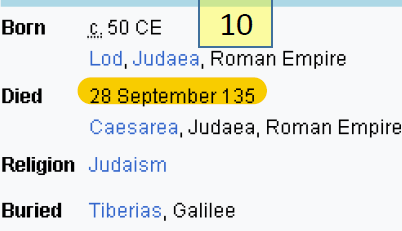
the following are 10 famous statements of Rabbi, Akiva
מתני׳ עשרת השבטים אינן עתידין לחזור שנא' (דברים כט, כז) וישליכם אל ארץ אחרת כיום הזה מה היום הולך ואינו חוזר אף הם הולכים ואינן חוזרים דברי ר"ע ר"א אומר כיום הזה מה יום מאפיל ומאיר אף עשרת השבטים שאפילה להן כך עתידה להאיר להם:
MISHNA: The ten tribes are not destined to return to Eretz Yisrael, even during the messianic era, as it is stated: “And He cast them into another land, as it is this day” (Deuteronomy 29:27). Just as the day passes never to return, so too, the ten tribes go into exile and do not return; this is the statement of Rabbi Akiva. Rabbi Eliezer says: “As it is this day,” meaning just as the day darkens and then the sky brightens the next day, with regard to the ten tribes as well, although it is dark for them now, so it is destined to brighten for them.
אָמַר רַבִּי עֲקִיבָא, חַס וְשָׁלוֹם, לֹא נֶחֱלַק אָדָם מִיִּשְׂרָאֵל עַל שִׁיר הַשִּׁירִים שֶׁלֹּא תְטַמֵּא אֶת הַיָּדַיִם, שֶׁאֵין כָּל הָעוֹלָם כֻּלּוֹ כְדַאי כַּיּוֹם שֶׁנִּתַּן בּוֹ שִׁיר הַשִּׁירִים לְיִשְׂרָאֵל, שֶׁכָּל הַכְּתוּבִים קֹדֶשׁ, וְשִׁיר הַשִּׁירִים קֹדֶשׁ קָדָשִׁים. וְאִם נֶחְלְקוּ, לֹא נֶחְלְקוּ אֶלָּא עַל קֹהֶלֶת. אָמַר רַבִּי יוֹחָנָן בֶּן יְהוֹשֻׁעַ בֶּן חָמִיו שֶׁל רַבִּי עֲקִיבָא, כְּדִבְרֵי בֶן עַזַּאי, כָּךְ נֶחְלְקוּ וְכָךְ גָּמְרוּ:
Rabbi Akiba said: Far be it! No man in Israel disputed that the Song of Songs [saying] that it does not defile the hands. For the whole world is not as worthy as the day on which the Song of Songs was given to Israel; for all the writings are holy but the Song of Songs is the holy of holies. If they had a dispute, they had a dispute only about Kohelet. Rabbi Yohanan ben Joshua the son of the father-in-law of Rabbi Akiva said in accordance with the words of Ben Azzai: so they disputed and so they reached a decision.
מַעֲשֵׂה בְּרַבִּי עֲקִיבָא שֶׁקְּרָאוֹ הַחַזָּן בָּרַבִּים לִקְרוֹת בְּסֵפֶר תּוֹרָה בַּצִּבּוּר, וְלֹא רָצָה לַעֲלוֹת. אָמְרוּ לוֹ תַּלְמִידָיו: רַבֵּנוּ, לֹא כָּךְ לִמַּדְתָּנוּ, כִּי הִיא חַיֶּיךָ וְאֹרֶךְ יָמֶיךָ, וְלָמָּה נִמְנַעְתָּ מִלַּעֲלוֹת. אָמַר לָהֶן: הָעֲבוֹדָה, לֹא נִמְנַעְתִּי לִקְרוֹת אֶלָּא עַל שֶׁלֹּא סִדַּרְתִּי אוֹתָהּ פָּרָשָׁה שְׁנַיִם שְׁלֹשָׁה פְּעָמִים, שֶׁאֵין אָדָם רַשַּׁאי לוֹמַר דִּבְרֵי תּוֹרָה לִפְנֵי הַצִּבּוּר, עַד שֶׁיִּפְשֹׁט אוֹתוֹ שְׁנַיִם שְׁלֹשָׁה פְּעָמִים בֵּינוֹ לְבֵין עַצְמוֹ. שֶׁכֵּן מָצִינוּ בְּהַקָּדוֹשׁ בָּרוּךְ הוּא, שֶׁהוּא נוֹתֵן מַעֲנֵה לָשׁוֹן לְכָל הַבְּרִיּוֹת, וְהַתּוֹרָה גְּלוּיָה לְפָנָיו כְּכוֹכָב אֶחָד. וּכְשֶׁבָּא לִתֵּן אוֹתָהּ לְיִשְׂרָאֵל, כְּתִיב בּוֹ: אָז רָאָהּ וַיְסַפְּרָהּ הֱכִינָהּ וְגַם חֲקָרָהּ. וְאַחֲרֵי כֵן וַיֹּאמֶר לָאָדָם וְגוֹ'. וְכֵן כְּתִיב: וַיְדַבֵּר אֱלֹהִים אֵת כָּל הַדְּבָרִים הָאֵלֶּה, בֵּינוֹ לְבֵין עַצְמוֹ, וְאַחֲרֵי כֵן לֵאמֹר.
It is related that the sexton once called upon R. Akiba to read the Torah before the congregation, but he was unwilling to ascend (to read). His pupils said to him: “Our master, did you not teach us that it is thy life and the light of thy days? Why then do you refuse to ascend?” He answered: “By the Temple service! I refused to read the portion only because I have not reviewed the chapter two or three times, and no one is permitted to recite the words of the Torah until he has reviewed them two or three times by himself.” And so we find that though the Holy One, blessed be He, gave the power to respond to all His creatures, and the Torah was as clear to Him as a single star, when He was about to give it to Israel, it is written concerning Him: Then did He see it, and declare it; He established it (Job 28:27), and after that it is written: And unto man He said: Similarly it is stated And God spoke all these words—to Himself. And that is followed by saying.
הַכֹּל צָפוּי, וְהָרְשׁוּת נְתוּנָה, וּבְטוֹב הָעוֹלָם נִדּוֹן. וְהַכֹּל לְפִי רֹב הַמַּעֲשֶׂה:
Everything is foreseen yet freedom of choice is granted, And the world is judged with goodness; And everything is in accordance with the preponderance of works.
הַכֹּל צָפוּי, וְהָרְשׁוּת נְתוּנָה, וּבְטוֹב הָעוֹלָם נִדּוֹן. וְהַכֹּל לְפִי רֹב הַמַּעֲשֶׂה:
Everything is foreseen yet freedom of choice is granted, And the world is judged with goodness; And everything is in accordance with the preponderance of works.
תָּנוּ רַבָּנַן: אֵיזֶהוּ עָשִׁיר? — כׇּל שֶׁיֵּשׁ לוֹ נַחַת רוּחַ בְּעׇשְׁרוֹ, דִּבְרֵי רַבִּי מֵאִיר. סִימָן מטק״ס. רַבִּי טַרְפוֹן אוֹמֵר: כׇּל שֶׁיֵּשׁ לוֹ מֵאָה כְּרָמִים וּמֵאָה שָׂדוֹת וּמֵאָה עֲבָדִים שֶׁעוֹבְדִין בָּהֶן. רַבִּי עֲקִיבָא אוֹמֵר: כֹּל שֶׁיֵּשׁ לוֹ אִשָּׁה נָאָה בְּמַעֲשִׂים. רַבִּי יוֹסֵי אוֹמֵר: כֹּל שֶׁיֵּשׁ לוֹ בֵּית הַכִּסֵּא סָמוּךְ לְשׁוּלְחָנוֹ.
Incidental to the discussion of prosperity, the Gemara mentions that on a similar topic, the Sages taught: Who is wealthy? Anyone who gets pleasure from his wealth, that is the statement of Rabbi Meir. The letters mem (Meir), tet (Tarfon), kuf (Akiva), samekh (Yosei) are a mnemonic for the tannaim who expressed opinions on this matter. Rabbi Tarfon says: A wealthy person is anyone who has one hundred vineyards, and one hundred fields, and one hundred slaves working in them. Rabbi Akiva says: Anyone who has a wife whose actions are pleasant. Rabbi Yosei says: Anyone who has a bathroom close to his table.
אֲמַר לַהּ אֲבוּהּ: מַאי עֲבַדְתְּ? אֲמַרָה לֵיהּ בְּפַנְיָא אֲתָא עַנְיָא, קְרָא אַבָּבָא וַהֲווֹ טְרִידִי כּוּלֵּי עָלְמָא בִּסְעוּדְתָּא, וְלֵיכָּא דְּשָׁמְעֵיהּ. קָאֵימְנָא, שְׁקַלְתֵּיהּ לְרִיסְתָּנַאי דִּיהַבְתְּ לִי, יַהְבִתֵּיהּ נִיהֲלֵיהּ. אֲמַר לַהּ: מִצְוָה עֲבַדְתְּ. נְפַק רַבִּי עֲקִיבָא וּדְרַשׁ: ״וּצְדָקָה תַּצִּיל מִמָּוֶת״, וְלֹא מִמִּיתָה מְשׁוּנָּה, אֶלָּא מִמִּיתָה עַצְמָהּ.
Her father Rabbi Akiva said to her: What did you do to merit being saved from the snake? She told him: In the evening a poor person came and knocked on the door, and everyone was preoccupied with the feast and nobody heard him. I stood and took the portion that you had given me and gave it to him. Rabbi Akiva said to her: You performed a mitzva, and you were saved in its merit. Rabbi Akiva went out and taught based on this incident that even though it is written: “And charity will save from death” (Proverbs 10:2), it does not mean that it will save a person only from an unusual death, but even from death itself.
רַב חֶלְבּוֹ בְּאֵישׁ. לָא אִיכָּא דְּקָא אָתֵי. אָמַר לְהוּ: לֹא כָּךְ הָיָה מַעֲשֶׂה בְּתַלְמִיד אֶחָד מִתַּלְמִידֵי רַבִּי עֲקִיבָא שֶׁחָלָה. לֹא נִכְנְסוּ חֲכָמִים לְבַקְּרוֹ, וְנִכְנָס רַבִּי עֲקִיבָא לְבַקְּרוֹ, וּבִשְׁבִיל שֶׁכִּיבְּדוּ וְרִיבְּצוּ לְפָנָיו, חָיָה. אָמַר לוֹ: רַבִּי, הֶחֱיִיתַנִי. יָצָא רַבִּי עֲקִיבָא וְדָרַשׁ: כׇּל מִי שֶׁאֵין מְבַקֵּר חוֹלִים כְּאִילּוּ שׁוֹפֵךְ דָּמִים.
Rav Ḥelbo fell ill. There was no one who came to visit him. Rav Kahana said to the Sages: Didn’t the incident involving one of the students of Rabbi Akiva who became sick transpire in that manner? In that case, the Sages did not enter to visit him, and Rabbi Akiva entered to visit him and instructed his students to care for him. And since they swept and sprinkled water on the dirt floor before the sick student, he recovered. The student said to Rabbi Akiva: My teacher, you revived me. Rabbi Akiva went out and taught: With regard to anyone who does not visit the ill, it is as though he is spilling blood, as it could be that the sick person has no one to care for him. If there are no visitors, no one will know his situation and therefore no one will come to his aid.
אָמַר רַב הוּנָא אָמַר רַב מִשּׁוּם רַבִּי מֵאִיר, וְכֵן תָּנָא מִשְּׁמֵיהּ דְּרַבִּי עֲקִיבָא: לְעוֹלָם יְהֵא אָדָם רָגִיל לוֹמַר: ״כׇּל דְּעָבֵיד רַחֲמָנָא לְטָב עָבֵיד״.
Rav Huna said that Rav said that Rabbi Meir said; and so it was taught in a baraita in the name of Rabbi Akiva: One must always accustom oneself to say: Everything that God does, He does for the best.
רַבִּי תַּנְחוּמָא בְּשֵׁם רַבִּי אֶלְעָזָר וְרַבִּי מְנַחֵם בְּשֵׁם רַב אָמַר כָּל הָאֻמָנִיּוֹת אָדָם הָרִאשׁוֹן לְמָדָם, מַאי טַעְמֵיהּ (ישעיה מד, יא): וְחָרָשִׁים הֵמָּה מֵאָדָם, מֵאָדָם הָרִאשׁוֹן. רַבָּנָן אָמְרִין אֲפִלּוּ סִרְגּוּלוֹ שֶׁל סֵפֶר, אָדָם הָרִאשׁוֹן לְמָדוֹ, שֶׁנֶּאֱמַר (בראשית ה, א): זֶה סֵפֶר, הוּא וְסִרְגּוּלוֹ. (בראשית ה, א): בְּיוֹם בְּרֹא אֱלֹהִים אָדָם, הָדָא מְסַיְּעָא לְהַהִיא דְּאָמַר רַבִּי אֶלְעָזָר בֶּן עֲזַרְיָה שָׁלשׁ פְּלָאִים נַעֲשׂוּ בְּאוֹתוֹ הַיּוֹם, בּוֹ בַּיּוֹם נִבְרְאוּ, בּוֹ בַּיּוֹם שִׁמְשׁוּ, בּוֹ בַּיּוֹם הוֹצִיאוּ תּוֹלָדוֹת. בֶּן עֲזַאי אוֹמֵר (בראשית ה, א) :זֶה סֵפֶר תּוֹלְדֹת אָדָם, זֶה כְּלַל גָּדוֹל בַּתּוֹרָה, רַבִּי עֲקִיבָא אוֹמֵר (ויקרא יט, יח): וְאָהַבְתָּ לְרֵעֲךָ כָּמוֹךָ, זֶה כְּלַל גָּדוֹל בַּתּוֹרָה, שֶׁלֹא תֹאמַר הוֹאִיל וְנִתְבַּזֵּיתִי יִתְבַּזֶה חֲבֵרִי עִמִּי, הוֹאִיל וְנִתְקַלַּלְתִּי יִתְקַלֵּל חֲבֵרִי עִמִּי. אָמַר רַבִּי תַּנְחוּמָא אִם עָשִׂיתָ כֵּן דַּע לְמִי אַתָּה מְבַזֶּה בִּדְמוּת אֱלֹהִים עָשָׂה אוֹתוֹ.
Rabbi Tanḥuma in the name of Rabbi Elazar, and Rabbi Menaḥem in the name of Rav said: Adam the first man learned all the crafts [in the world]. What is the source? “And craftsmen, they are me’adam” (Isaiah 44:11) – from Adam the first man. He learned even how to score a parchment, as it is stated: “This is the book” – it and its scoring. “[This is the book of the descendants of Adam,] on the day that God created man” – this supports what Rabbi Elazar ben Azarya said: Three miracles occurred on that day: On that day they [Adam and Eve] were created, on that day they cohabited, and on that day they produced offspring. Ben Azzai says: “This is the book of the descendants of Adam” – this verse represents the central tenet of the Torah. Rabbi Akiva says: “You shall love your neighbor as yourself” (Leviticus 19:18) – that verse represents the central tenet of the Torah, [as it teaches] that you should not say: Since I have been disparaged, let someone else be disparaged along with me; since I was cursed, let someone else be cursed along with me. Rabbi Tanḥuma said: If you do act like that, know who it is that you are disgracing: “in the likeness of God He made him” (Genesis 5:1).
to review, we highlighted Rab Akiva‘s life
but we asked two questions number one) is כל דעביד רחמנא לטבא עביכ a description of something in the past or a prescription and the answer is that it is a prescription. In other words, if something bad occurs to you, you could change the meaning of this event and make it positive. הכל צפוי והרשות נתונה וב טוב העולם
also it says הכל לפי המעשה which means that the only way you could come to understand and believe that in fact is to practice over and over being dan lkaf ze
וּכְבָר הָיָה רַבָּן גַּמְלִיאֵל וְרַבִּי אֶלְעָזָר בֶּן עֲזַרְיָה וְרַבִּי יְהוֹשֻׁעַ וְרַבִּי עֲקִיבָא מְהַלְּכִין בַּדֶּרֶךְ, וְשָׁמְעוּ קוֹל הֲמוֹנָהּ שֶׁל רוֹמִי מִפְּלָטָהּ [בְּרָחוֹק] מֵאָה וְעֶשְׂרִים מִיל, וְהִתְחִילוּ בּוֹכִין, וְרַבִּי עֲקִיבָא מְשַׂחֵק. אָמְרוּ לוֹ: מִפְּנֵי מָה אַתָּה מְשַׂחֵק? אָמַר לָהֶם: וְאַתֶּם מִפְּנֵי מָה אַתֶּם בּוֹכִים? אָמְרוּ לוֹ: הַלָּלוּ גּוֹיִם שֶׁמִּשְׁתַּחֲוִים לַעֲצַבִּים וּמְקַטְּרִים לַעֲבוֹדָה זָרָה יוֹשְׁבִין בֶּטַח וְהַשְׁקֵט, וְאָנוּ, בֵּית הֲדוֹם רַגְלֵי אֱלֹהֵינוּ שָׂרוּף
§ Apropos tribulations of exile and hope for redemption, the Gemara relates: And it once was that Rabban Gamliel, Rabbi Elazar ben Azarya, Rabbi Yehoshua, and Rabbi Akiva were walking along the road in the Roman Empire, and they heard the sound of the multitudes of Rome from Puteoli at a distance of one hundred and twenty mil. The city was so large that they were able to hear its tumult from a great distance. And the other Sages began weeping and Rabbi Akiva was laughing. They said to him: For what reason are you laughing? Rabbi Akiva said to them: And you, for what reason are you weeping? They said to him: These gentiles, who bow to false gods and burn incense to idols, dwell securely and tranquilly in this colossal city, and for us, the House of the footstool of our God, the Temple, is burnt