


(1) ראה אתה אמר אלי See. Direct Your eyes and Your heart to Your own words. You have not made known to me whom You will send with me. I will not take "I am sending an angel before you (23:20) as "making it known to me" - for this is something I do not want."
הודיעני נא את דרכך, You Yourself must let us know the way - You show me Your ways and I will follow You.
Let me know Your ways. A created being has no power to know the Creator of the world, except through God's ways.
*(ספק פרשה סתומה בכתר ארם צובה)
(18) He said, “Oh, let me behold Your Presence/Glory!” (19) And [God] answered, “I will make all My goodness pass before you, and I will proclaim before you the name יהוה, and the grace that I grant and the compassion that I show,” (20) continuing, “But you cannot see My face, for a human being may not see Me and live.” (21) And יהוה said, “See, there is a place near Me. Station yourself on the rock (22) and, as My Presence passes by, I will put you in a cleft of the rock and shield you with My hand until I have passed by. (23) Then I will take My hand away and you will see My back; but My face must not be seen.”
את כבודך, Let me behold Your Presence! Let me understand how the existence of everything can be drawn from Your existence despite the distance of the relationship between You and Your creation. This is what Isaiah 6,3 meant with the words מלא כל הארץ כבודו, “all the earth is filled with His glory.”
Oh, let me behold Your presence! He requested that he might literally see with his eyes the Presence or Glory of God.
הנה מקום אתי BEHOLD, THERE IS A PLACE BY ME — On the mountain where I am continually speaking with you there is a place prepared by Me for your sake where I will hide you that you may not be hurt by the vision. From there you will see what you will be permitted to see. A Midrashic explanation is that by the word מקום Scripture is speaking of the place where the Shechinah is and God says, "This is a place with Me" rather than "there is a place where I am" because the world is not the place of the Holy One, but God is the Place of the world. (Genesis Rabbah 68:8).
וראית את אחרי THEN YOU SHALL SEE MY BACK — God showed him the knot on the back of God's Tephillin (cf. Berakhot 7a; Menachot 35b).
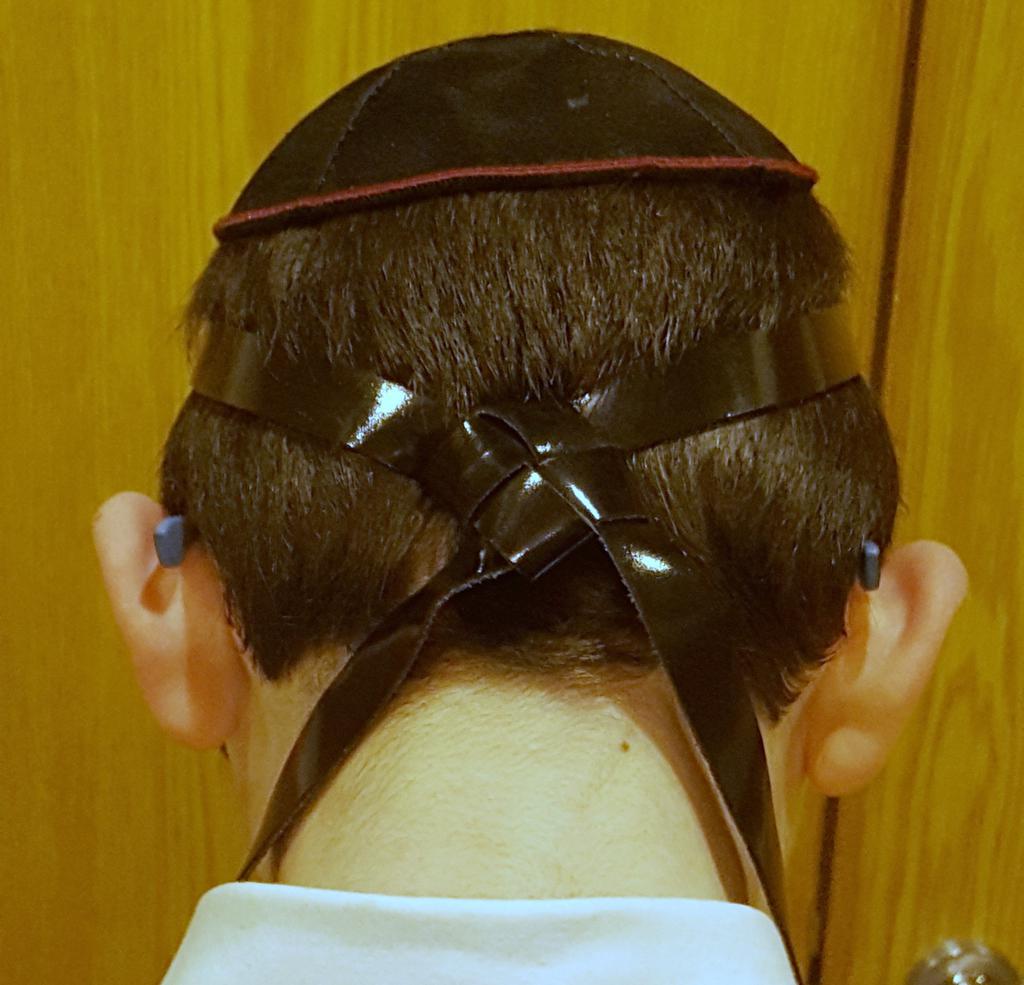
You will see My back. The remark of our Sages that God showed him the knot on His tefillin is correct, but not literally so, as contemporary scholars think. It is a profound mystery. Saadia takes this to mean "You will see the end of My light, but you cannot see its beginning." In my opinion, the text speaks of God here in human terms, as it customarily does. For we know quite clearly that God has no material body and therefore cannot be seen, since the eye can see only material things. So I think Moses does not mean "behold" literally. After all, "The Eternal would speak to Moses face to face" (v. 11) does not mean that God has a mouth. Rather, God spoke with him through a kind of direct communication for which "speech" is merely a metaphor. "As one man speaks to another" (v. 11) merely means that Moses communicated directly with the Creator, without an angelic intermediary.
And you will see My back. Rashi follows the Talmud (Berachot 6a) to explain that God showed Moses the knot of the tefillin that God wears. The knot constitutes the point where the straps which go up on the right and left come together on reaching the head. They thus symbolically represent the unity which is at the juncture of the symbolic axes [mystical forces] of Creation. Humans have the ability to see the knot of the tefillin, that is, to perceive the basic principle of unity within the apparent dualism in Creation. But humans do not have the capacity to see beyond, to penetrate the region of pure spirit from which the physical and material world emanate.
Moshe Requests to Understand Hashem's Ways
When Hashem accepted Moshe's prayers, he realized that it was a time of Heavenly benevolence. He therefore took the opportunity to present an additional request to Hashem. "Please demonstrate to me the plan by which You manipulate the affairs of the world," he prayed. "Why are there tzaddikim who lead a life of suffering? And why are there reshaim whose lives are tranquil? Show me the future reward that is in store for the tzaddikim!'
Hashem was unwilling to grant this revelation to Moshe, rebuking him, "When I appeared to you in the thornbush and wanted to reveal My Glory to you, you refused. Now that you wish to see it, I do not want to show it. Know that no human eye, not even that of the greatest prophet, can behold the ultimate reward in the world-to-come. I will, however, demonstrate to you a faint reflection of the spiritual pleasures of the se'uda (meal) in Gan Eden. I will also indicate to you as much as you are able to grasp of the punishment of the reshaim. While My Glory passes, I will shield you with My Cloud. You will see a fraction of My glory, but you cannot see My full glory while you are alive."
Moshe was given a vision of the different treasures prepared for the tzaddikim in Gan Eden. They passed in front of Moshe's eyes. Pointing at them, Hashem explained to him, "This is the treasure reserved for those who give tzedaka; this is for those who raise orphans," and so on. Finally, Hashem showed Moshe a vast treasure.
"Whose is this?" asked Moshe.
"This is the treasure of those who lack merits but upon whom I bestow My favor, since I am merciful.'
That treasure was immense because most people are not deserving of the reward which Hashem will bestow upon them.
Hashem explained to Moshe the general rules which govern His conduct in the affairs of the world:
- Some people enjoy a good life in the present world because they are perfect tzaddikim. They are rewarded in both worlds, in olam haze and olam haba.
- There may be a tzaddik who undergoes suffering in this world. He lacks perfection and is punished for his sins in olam haze in order to be able to enjoy his full reward later in olam haba.
- There may be reshaim whose lives are tranquil because they are not totally wicked. They are rewarded in the present world in order that they may be deprived of a portion in olam haba.
- Sometimes a rasha suffers in this world. He is totally wicked and therefore is punished in both worlds.
(5) יהוה came down in a cloud—and stood with him there, proclaiming the name יהוה. (6) יהוה then passed before him and proclaimed: “!יהוה! יהוה a God compassionate and gracious, slow to anger, abounding in kindness and faithfulness, (7) extending kindness to the thousandth generation, forgiving iniquity, transgression, and sin—yet not remitting all punishment, but visiting the iniquity of parents upon children and children’s children, upon the third and fourth generations.”
That's epigenetic trauma.