


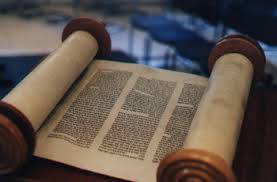

(1) When the people saw that Moses was so long in coming down from the mountain, the people gathered against Aaron and said to him, “Come, make us a god who shall go before us, for that fellow Moses—the man who brought us from the land of Egypt—we do not know what has happened to him.” (2) Aaron said to them, “[You men,] take off the gold rings that are on the ears of your wives, your sons, and your daughters, and bring them to me.” (3) And all the people took off the gold rings that were in their ears and brought them to Aaron. (4) This he took from them and cast in a mold,* and made it into a molten calf. And they exclaimed, “This is your god,*This is your god Others “These are your gods.” O Israel, who brought you out of the land of Egypt!”
Compare to Deuteronomy 9
Moses’ Tarrying on the Mountain
There is no mention in Deuteronomy that the incident was precipitated by Moses’ delayed arrival from the mountaintop. According to Exodus 32:1, 23, however, this was the precipitant cause. The people did not understand what had happened to Moses and why he tarried so long. In their anxiety, they sought to replace him by making a deity that could go before them in his stead. All of these details are lacking in Deuteronomy.
Aaron’s Role
Deuteronomy hardly mentions of Aaron’s role in the sin. According to Exodus 32, Aaron took the golden earrings that he told the people to bring to him, and formed from them a molten calf (verses 2–3). He also built an altar before the calf (also not mentioned in Deuteronomy) and proclaimed a festival for YHWH. When later confronted by Moses, Aaron lies to him and claims that he simply threw the people’s gold into a fire and the golden calf magically emerged (verse 24). The special guilt of Aaron is emphasized in verses 21 (“you have brought such great sin upon them”), 25 (since Aaron had let them get out of control) and 35 (“for what they did with the calf that Aaron made”).
The only reference to Aaron’s role in Deuteronomy 9 is in verse 20:
דברים ט:כ וּבְאַהֲרֹן הִתְאַנַּף ה' מְאֹד לְהַשְׁמִידוֹ וָאֶתְפַּלֵּל גַּם בְּעַד אַהֲרֹן בָּעֵת הַהִוא.
Deut 9:20 And YHWH was very incensed at Aaron to destroy him; so I interceded for Aaron as well at that time.
This has the clear appearance of an afterthought; Aaron is mentioned only in the context of Moses’ intercession for the people and it is not even clear from the verse what his precise role in the sin was. (This verse does, however, along with other verses suggest that the author of Deuteronomy here, as elsewhere, was familiar with the earlier story [in Exodus] and is reworking it.)
“This is your god”
In Exodus (v. 4), after Aaron forms the calf, it is announced with
שמות לב:ד ...וַיֹּאמְרוּ [תה"ש: וַיֹּאמֶר] אֵלֶּה אֱלֹקֶיךָ יִשְׂרָאֵל אֲשֶׁר הֶעֱלוּךָ מֵאֶרֶץ מִצְרָיִם.
Exod 32:4 ...And they [LXX: he] said: “This is your god, O Israel, who brought you out of the land of Egypt.”
While the MT and SP versions have the people making this announcement, given that Aaron just made the calf, and he is introducing it to the people, the LXX version is likely the original, and the revision is one of many examples in Exodus and Deuteronomy of attempting to clear Aaron as much as possible.
The announcement implies an identification of the calf with YHWH. The odd grammatical plural describing the gods is likely meant to connect the story to the account of King Jeroboam introducing the golden calves of Dan and Bethel (1 Kgs 12:28), which is another reason the that speaker here is likely Aaron. This plural was sufficient troublesome that in the late retelling of the story in Nehemiah it is changed to the singular,
נחמיה ט:יח ...זֶה אֱלֹקֶיךָ אֲשֶׁר הֶעֶלְךָ מִמִּצְרָיִם...
Neh 9:18 ...this is your god who took you out of Egypt...
Deuteronomy lacks this famous declaration.
Worshiping the Calf
In the Exodus account, the sin of the people chiefly consists in the prostration to the calf and the offering of sacrifices on Aaron’s altar (see verses 6, 8), whereas guilt for the sin of the making of the calf falls mostly on Aaron (though, since Aaron was commissioned by the people to make the calf, they too are guilty of this; cf. verses 8, 31). This worship of the calf may also be referenced in the enigmatic final verse of the chapter which states (in literal translation):
שמות לב:לה וַיִּגֹּף ה' אֶת הָעָם עַל אֲשֶׁר עָשׂוּ אֶת הָעֵגֶל אֲשֶׁר עָשָׂה אַהֲרֹן.
Exod 32:35 YHWH sent a plague upon the people, for they made the calf that Aaron made.
Clearly, the text makes little sense as is. Did the people fashion the calf or Aaron? Apparently, the text is corrupt here, and the original may have been preserved in the Syriac translation which reads פלחו (ܦܠܚܘ) “they served” in place of עשו “they made,” implying a Vorlage that read: עַל אֲשֶׁר עָבְדוּ אֶת הָעֵגֶל אֲשֶׁר עָשָׂה אַהֲרֹן “because they worshiped the calf that Aaron made.”[2]
By contrast, Deuteronomy speaks only of the national sin of fashioning the calf alone. Note that in Deuteronomy 9:16, that which Moses sees and which precipitates his smashing of the tablets is simply the calf, not the wild dancing and singing (cf. Exodus 32:17–19). No building of an altar, offering of sacrifices, or prostration is ever mentioned. Perhaps Deuteronomy’s concern to refrain from depicting Aaron sinning made it unnecessary to speak of any sin beyond the simple fashioning of the calf, which could be fully attributed to the people.
Joshua
The interchange between Moses and Joshua at the foot of the mountain, where Joshua tells Moses that he hears the sound of war in the camp, and Moses disabuses him of that notion, is not mentioned (Exodus 32:17–18).
Gold
Exodus describes the people giving their jewelry to Aaron and his forming the calf from their gold (32:2-4). The calf is then described as a molten calf. In Deuteronomy, however, there is no such description, and the calf is simply called “the molten calf” (v. 16). In other words, if we only had the book of Deuteronomy, the story would be known as the Molten Calf story, not the Golden Calf story, since we would not have any reason to think it was made out of gold; it could have been brass or silver. It is worth adding that nowhere does the Torah use the phrase “golden calf.”
The Levite Executions
No mention is made of the intervention of the sons of Levi who responded to Moses’ call and killed about three thousand people, including brothers, friends and relatives (Exodus 32:26–29).[3] In Deuteronomy 10:8–9 we are told that the tribe of Levi was appointed “at that time” to serve as God’s priests. This corresponds to Exodus 32:29 which implies that the sons of Levi were appointed for sacred duty in reward for their zealousness for God (cf. Numbers 25:10–13), but no mention is made in Deuteronomy of the reason for the new appointment.
Plague
According to Exodus 32:35, God sent a plague of some sort to punish the people for their sin. No mention of any punishment is found in Deuteronomy.[4]
Drinking the Calf
According to Exodus 32:20, Moses burnt and ground the calf, spread it over the water and gave it to the Israelites to drink. According to the (plausible) suggestion of the Rabbis, this was to test the people in a fashion analogous to the waters of the Sotah.
In Deuteronomy 9:21 Moses simply throws the dust of the calf into the water (identified as the otherwise unknown “river descending from the mountain”), apparently so that the remains of the calf can be carried away.
-David Frankel
Compare to 1 Kings
Everett Fox
The Talmud Yerushalmi (Ta’anit 4:5) states:
ר' יודן בשם ר' יסא: ”אין כל דור ודור שאין בו אונקי אחת מחטא של עגל…“
Rabbi Yudin said in the name of Rabbi Yossa: “There is no generation that doesn’t have at a least a particle of the sin of the golden calf.”[1]
Similarly, the Talmud Bavli (Sanhedrin 102a) states:
אמר ר' יצחק: ”אין לך כל פורענות ופורענות שבאה לעולם שאין בה אחד מעשרים וארבעה בהכרע ליטרא של עגל הראשון.“
R. Isaac said: “No retribution whatsoever comes upon the world which does not contain a slight fraction (a twenty-fourth) of the [retribution for] first calf (i.e., the golden calf in the wilderness).”
These statements point to the centrality of this story in Jewish cultural memory.
This centrality is further evident from the amount of times a part of this story appears as one of the official Torah readings for holidays, making it the most frequent story read in synagogue in the course of the year. In addition to the two Shabbats the story is read as part of the standard liturgical cycle, sections of it are read on the four “minor” fast days both in the shacharit and mincha services and on Tisha Be’av during the mincha service. Additionally, the ending of the story is read on Shabbat Sukkot and Pesach. All in all, parts of the story are read thirteen times throughout the year.
The significance of the story is also reflected in its association with Yom Kippur. Rashi, quoting the Seder Olam in Deuteronomy 9:18, states:
בו ביום נתרצה הקדוש ברוך הוא לישראל ואמר לו למשה (דברים י:א) פסל לך שני לוחות, עשה עוד ארבעים יום, נמצאו כלים ביום הכפורים. בו ביום נתרצה הקב”ה לישראל בשמחה ואמר לו למשה (במדבר יד:כ) סלחתי כדברך. לכך הוקבע למחילה ולסליחה.
On the same day, God was reconciled with Israel and He said to Moses, “Hew for yourself two tablets” (Exod 34:1). He [Moses] remained there another forty days; consequently, these ended on Yom Kippur [the tenth of Tishri]. On that very day, the Holy One, blessed is He, was joyfully reconciled with Israel, and He said to Moses, “I have forgiven according to your words” (Num 14:20). Therefore [Yom Kippur] was designated [as a day] for pardon and forgiveness.
-David Frankel
Rashi - It's the mixed multitude's fault
Rabbenu Bahya argues the people did not request a new god, they just wanted a new leader
-Rabbenu Bahya