


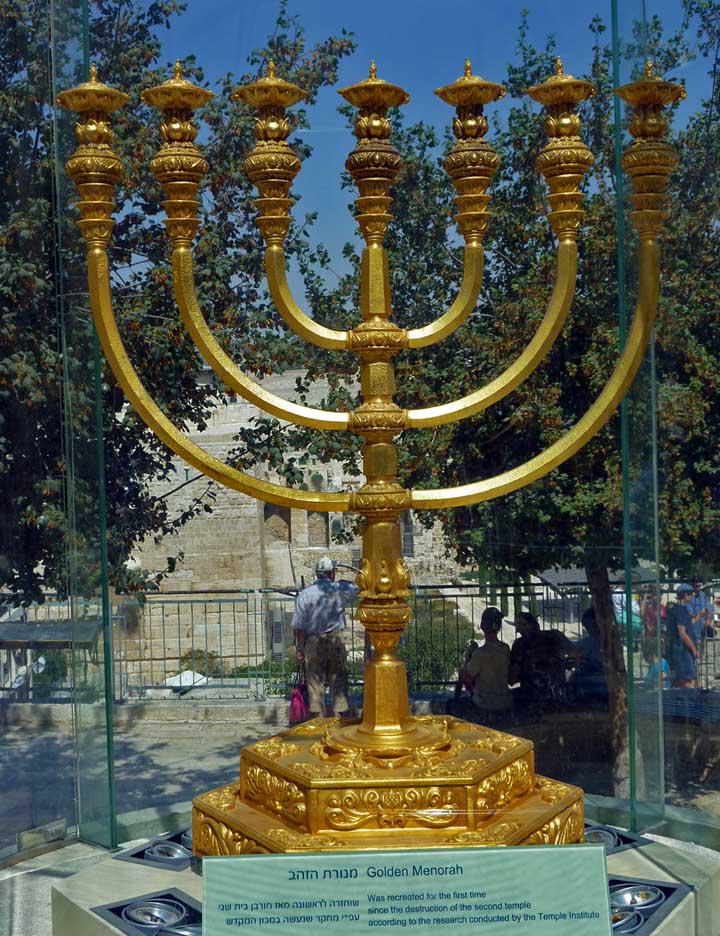
We should look for a reason for every detail... and note how meticulous was the Divine wisdom in its recipe for the construction of the candlestick... the middle branch and three on either side and three different patterns of flowers, knops and cups, the latter made like almond blossoms. It is inonceivable that such matters should ahve been recorded in the Divine law by chance. Bear in mind that a Sefer Torah is disqualified if even one letter is missing. Far be it from our Fashioner to include such detailed descriptions of both the order to make and the execution thereof in God's perfect Torah, just for the sake of beauty and human adornment.
(10) [Now] you, O mortal, describe the temple to the House of Israel, and let them measure its design. But let them be ashamed of their iniquities: (11) When they are ashamed of all they have done, make known to them the plan of the temple and its layout, its exits and entrances—its entire plan, and all the laws and instructions pertaining to its entire plan. Write it down before their eyes, that they may faithfully follow its entire plan and all its laws.
The very details of its construction contained the cure for their spiritual ils if they would only look carefully. That is why th tet uses the expression haged "tell" and hoda "make known" rather than hareh "show" indicating that it is not the urface sene of the description that counts but the inner deeper meaning which must be eludicidated: "told" and "made known."
Rav Yehuda said that Rav said: Bezalel knew how to join the letters with which heaven and earth were created. From where do we derive this? It is written here in praise of Bezalel: “And I have filled him with the spirit of God, in wisdom, and in understanding, and in knowledge, and in all manner of workmanship” (Exodus 31:3); and it is written there with regard to creation of heaven and earth: “The Lord, by wisdom, founded the earth; by understanding He established the heavens” (Proverbs 3:19), and it is written: “By His knowledge the depths were broken up and the skies drop down the dew” (Proverbs 3:20). We see that wisdom, understanding, and knowledge, the qualities with which the heavens and earth were created, are all found in Bezalel.
God creates order in the natural universe. We are charged with creating order in the human universe. That means painstaking care in what we say, what we do, and what we must restrain ourselves from doing. There is a precise choreography to the moral and spiritual life as there is a precise architecture to the tabernacle. Being good, specifically being holy, is not a matter of acting as the spirit moves us. It is a matter of aligning ourselves to the Will that made the world. Law, structure, precision: of these things the cosmos is made and without them it would cease to be. It was to signal that the same applies to human behaviour that the Torah records the precise dimensions of the Tabernacle and Noah’s ark.

The figures employed by the Prophets are of two kinds: those whose every single word in the parable or allegory is significant, and those whose only the parable as a whole is significant, the details of the description being only incidental,adding nothing significant to the idea which is being projected. They are merely ornamental or designed to conceal the idea that is being allegorically described.
"The Menorah was placed in front of the certain to enhance the glory and splendor of the house. For an abode illuminated by a continual light concealed by a curtain, makes a deep psychological impact."
(6) I GOD, in My grace, have summoned you,
And I have grasped you by the hand.
I created you, and appointed you
A covenant people, a light of nations
the lights both on the right of the center shaft and those on the left should be arranged so that the respective flames would focus in the direction of the middle. Inasmuch as the lights symbolised spiritual “enlighten-ment,” the lesson is that in all our efforts at obtaining such enlightenment, and during all the digressions that the pursuit of such disciplines necessarily entails, we must never lose sight of the direction in which we are striving and keep this central idea of such enlightenment resulting in us becoming better servants of the Lord, constantly in front of our mental eye. The reason that there were lights on both the right side of the center shaft as well as on the left side, is that pursuit of enlightenment expresses itself both in gaining of theoretical knowledge, ethical imperatives, but no less so in the practical application of such lessons learned. Both must be placed in the service of the נר המערבי, the light from the center shaft, the one which faces the Shechinah directly. Only the focusing on our spiritual goal ensures that the six lights on the various arms will continue to burn without hindrance. The thought we just tried to portray is expressed in Numbers 8,2-4 “when you kindle the lamps, toward the face of the Menorah shall the seven lamps cast light.” ...in spite of what appears to be a multiplicity of lights emanating from this Menorah, their function is singular, one of unification, just as the Menorah from which they emanate was cast out of a single chunk of gold, something unified.
The third Rebbe of Chabad, the Tzemach Tzedek, writes that the menorah represents a fusing of the two primary ways we serve G‑d: learning Torah and doing mitzvot:
- The 6 branches represent Torah, as there are 6 orders of the Mishnah, the central text of the Oral Torah.
- The upright stem represents mitzvot, which connect mundane objects with the loftiest spiritual planes.
The Menorah’s light was more brilliant than both combined and it was thus able to unify the two trajectories.
(א) וַיְדַבֵּ֥ר יְהֹוָ֖ה אֶל־מֹשֶׁ֥ה לֵּאמֹֽר׃ (ב) דַּבֵּר֙ אֶֽל־אַהֲרֹ֔ן וְאָמַרְתָּ֖ אֵלָ֑יו בְּהַעֲלֹֽתְךָ֙ אֶת־הַנֵּרֹ֔ת אֶל־מוּל֙ פְּנֵ֣י הַמְּנוֹרָ֔ה יָאִ֖ירוּ שִׁבְעַ֥ת הַנֵּרֽוֹת׃ (ג) וַיַּ֤עַשׂ כֵּן֙ אַהֲרֹ֔ן אֶל־מוּל֙ פְּנֵ֣י הַמְּנוֹרָ֔ה הֶעֱלָ֖ה נֵרֹתֶ֑יהָ כַּֽאֲשֶׁ֛ר צִוָּ֥ה יְהֹוָ֖ה אֶת־מֹשֶֽׁה׃ (ד) וְזֶ֨ה מַעֲשֵׂ֤ה הַמְּנֹרָה֙ מִקְשָׁ֣ה זָהָ֔ב עַד־יְרֵכָ֥הּ עַד־פִּרְחָ֖הּ מִקְשָׁ֣ה הִ֑וא כַּמַּרְאֶ֗ה אֲשֶׁ֨ר הֶרְאָ֤ה יְהֹוָה֙ אֶת־מֹשֶׁ֔ה כֵּ֥ן עָשָׂ֖ה אֶת־הַמְּנֹרָֽה׃ {פ}
(1) יהוה spoke to Moses, saying: (2) Speak to Aaron and say to him, “When you mount the lamps, let the seven lamps give light at the front of the lampstand.” (3) Aaron did so; he mounted the lamps at the front of the lampstand, as יהוה had commanded Moses.— (4) Now this is how the lampstand was made: it was hammered work of gold, hammered from base to petal. According to the pattern that יהוה had shown Moses, so was the lampstand made.
Rabbi Levi son of Rabbi says: A pure Menorah came down from heaven, as The Holy One Who is Blessed said to Moshe "You will make a Menorah of pure gold [alt: a pure Menorah of gold]" (Shmot 25:31) [Moshe] responded: how will we make it? [God] responded "It will be made of hammered work [mikshah]" (Shmot 25:31). Nevertheless, Moshe struggled [nitkasha] and went down and forgot its manner of work. He went up and said: My Master, how will we make it? [God] said "It will be made of hammered work." Nevertheless, Moshe struggled and went down and forgot. He went up and said: My Master, I forgot it. [God] showed Moshe and Moshe still struggled. [God] said to him: "See and do" (Shmot 25:40), and took a Menorah of fire and showed him how it was made. Nevertheless, it was a struggle for Moshe. The Holy One Who is Blessed said to him: Go to Betzalel, and he will make it. [Moshe] told Betzalel and he immediately made it. He was amazed and said: For me, how many times did the Holy One Who is Blessed show me and I struggled to make it, but for you, who never saw it, you make it from your thoughts! Betzalel, you were standing in the shadow of God [b'tzel el] when the Holy One Who is Blessed showed me how to make it. Therefore, when the Temple was destroyed, the Menorah was hidden. And this is one of the five things that was hidden: the ark, the Menorah, the fire, the holy spirit, and the cherubs. When the Holy One Who is Blessed returns in [God]'s mercy and builds [God]'s house and sanctuary, [God] will bring them back to their place to make Jerusalem rejoice, as it says, "The arid desert shall be glad, The wilderness shall rejoice" (Isaiah 35:1), "It shall blossom abundantly, It shall also exult" (Isaiah 35:2).
Another reading: "When you raise up". You see that Moshe struggled [nitkasha] with the design of the Menorah more than all the other vessels of the Mishkan [Tabernacle], until the Holy One Who is Blessed showed him with a finger. Similarly with the hoofs of impure and pure animals, as it says, "These are the animals which you shall eat" (Vayikra 11:4), these are the ones which you shall not eat, and showed him with a finger. Similarly with the moon, "this month is for you" (Shmot 12:2). Similarly with the Menorah, "This is how the Menorah was made: it was hammered work [miksha] of gold" (Bemidbar 8:4), which is to say how hard [kasha] it is to make, since Moshe became weary on account of it. When he struggled, The Holy One Who is Blessed said to Moshe: take a talent of gold and throw it in the fire and take it out, and it will be formed on its own, as it says, "its cups, calyxes, and petals were of one piece with it [lit: came out from it]" (Shmot 37:17) - he would strike it with a hammer and it would be made on its own. Therefore it says "it will be made [te'aseh] of hammered work" (Shmot 25:31) written with a [Hebrew letter] "yod" and not written "you will make [ta'aseh]", that is to say it will be made on its own. Moshe took the talent [of gold] and threw it in the fire. Moshe said, "Master of the Universe, behold the talent is in the fire. Whatever you wish - so shall it be done." The Menorah immediately came out made according to its design, thus it is written, "According to the pattern that the LORD had shown Moses..." (Bemidbar 8:4). It is not written here "so did Moses make the Menorah," rather "so was the Menorah made." And who made it? The Holy One Who is Blessed. Therefore the Holy One Who is Blessed said to Moshe: If you are careful to light [it] before me, I will protect your souls from every evil thing, since souls are compared to a candle, as it says. "the candle of Adonai is the soul of a person" (Proverbs 20:27) and it says, "When you raise up the candles)" (Bemidbar 8:2)
According to the plain meaning of the text the purpose of the Menorah in both the Tabernacle and the Temple was to establish the lofty meaning of the Temple in the minds of people and their souls. They should forever display reverence for what the Temple stood for, just as the Torah wrote (Leviticus 19,30) ומקדשי תיראו, “and you shall be in awe of My Sanctuaries.” This is why the lampstand had to be positioned outside the dividing curtain and not beyond it like the Ark. This is why the Torah emphasizes this with the words "outside the dividing curtain within the Tent of Testimony he shall position it, etc.” It should be possible to be viewed by everyone who entered the Tabernacle and who left it. Furthermore, it should also teach that the Shechinah which was beyond the dividing curtain did not need to be supplied with light from us (humans). This is also why (refers to the need to make us awe-struck) it was constructed out of gold, the most precious of all the metals.
The number of lamps on it were seven in order to correspond to the middle ground between a daily and a monthly cycle. It is known that the soul itself benefits when lights are lit and it derives pleasure and joy from its light. Once the soul is in a joyous state its joy spreads seeing the soul itself is perceived as if it were hewn out of the light of man’s intelligence. This relationship between light and intelligence is the reason why the soul is drawn after light which is of its own kind although basically the “light” of our intelligence is essentially physical in nature, whereas the light represented by the soul is of a spiritual nature. This is why Solomon was able to compare a lamp (physical light) to the soul (spiritual light) when he said (Proverbs 20,27) “the soul is the light of the Lord.”
A Midrashic approach (Tanchuma Behaalotcha 5): The Menorah with its seven lamps corresponded to the seven fixed stars which orbit the whole globe; the meaning of these words is that these seven fixed stars are perceived as separate light bodies in the skies exerting their respective influences on the creatures in the terrestrial world and providing guidance for our world both by day and by night. The seven lamps on the Menorah were burning around the clock by day and by night just as the seven fixed stars supply their light by day and by night without interruption. The middle lamp represented the sun which is constant in its light and the center of the seven fixed stars. A rational approach: The Menorah with its seven lamps is an allusion to the Torah which is generally known as אור, light....
This is why the Menorah had seven lamps. The six arms which extended from the center shaft represented the six different directions in our three-dimensional terrestrial globe. They were to be a reminder that all parts and all extremities of this globe are dependent on the Torah...
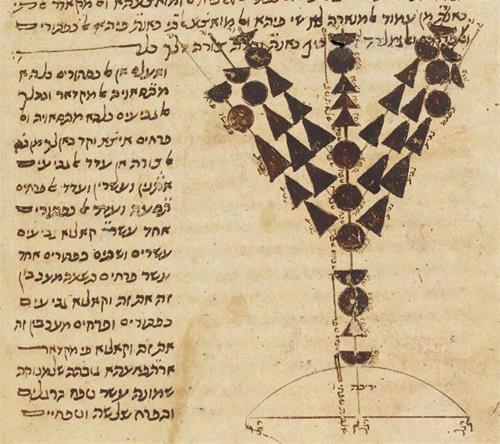
“three “cups” engraved like almonds on the one arm.” On each arm there were 3 such “cups.” This gives us a total of 18 “cups” for the six arms. The centre shaft of the Menorah had 4 “cups.” This means there were a total of 22 “cups.” This number corresponds to the letters in the Hebrew alphabet. These 22 letters are symbolic of 22 parts of the universe: wind, water, fire, the seven fixed stars, and the 12 signs of the zodiac. These letters in the Hebrew alphabet also are symbolized by the 22 parts of the human body: head, heart, kidneys, seven orifices of the body; 12 organs (compare Sefer Yetzirah).
We note that the Menorah and its arms had 3 different “decorations;” there were “knobs,” “cups” and “flowers.” The “knob” was like a round apple which protruded from the centre shaft in every direction. The “knob” symbolized the world of the angels who are basking in the radiation of the Shechinah’s brilliance in uninterrupted delight. The roundness of the “apple” symbolized the idea that something was never ending, everlasting. Our sages in Taanit 31 alluded to this delight when they said: “in the future G’d is going to make a ‘circle’ for the righteous and His glory will be amongst them.” The word used by the sages is מחול, something round which has no beginning and no end. This is the reason spiritual delights are always described in such terms to remind us that they are something enduring, something permanent. The “cup” is a vessel which is a receptacle, it irrigates and provides water. This corresponds to the world of the planets and the atmosphere which at one and the same time receive beneficial input from the world of the angels and in turn distribute it beneficially to the inhabitants of the lower, terrestrial part of the universe. The “flower” symbolizes our terrestrial part of the universe on which all the outstanding people of earth spend their lives. They are characterized as flowers, plants, etc. The overall idea gained from the appearance of the Menorah is that the 22 letters of the Torah (alphabet) enable man to achieve this greatness in all three parts of the universe.
The Menorah symbolizes man who is like a lamp, ready to give light with the help of God through the Torah and good works. It is, therefore, 18 handbreadths high, the height of a medium-sized man. Though formed of gross matter, he should make himself pure and free of dross and sin like pure gold. Man can only become a lamp of pure gold through the cleansing and refining effect of suffering. To this expression "beaten work" alludes.