


(1) ה' spoke to Moses, saying: (2) Tell the Israelite people to bring Me gifts; you shall accept gifts for Me from every person whose heart is so moved. (3) And these are the gifts that you shall accept from them: gold, silver, and copper; (4) blue, purple, and crimson yarns, fine linen, goats’ hair; (5) “rams’ skins dyed red, dolphin skins, and acacia wood; (6) oil for lighting, spices for the anointing oil and for the aromatic incense; (7) lapis lazuli and other stones for setting, for the ephod and for the breastpiece. (8) And let them make Me a sanctuary that I may dwell among them.
~ We will explore the dolphin skins question next week.
~ There are three weeks between Yitro, when the Aseret HaDibrot are read, and the Golden Calf Incident. There is a reminder that this is coming in the end of Mishpatim, last week, when Moshe goes up to Har Sinai. The list of parshiot reads as follows:
Yitro - preparation of the people and giving of the Ten Sayings
Mishpatim - several laws, ends with Moshe going up to Har Sinai
Terumah - our portion, dealing mostly with the giving of materials to construct the Mishkan (tabernacle)
Tetzaveh - next week, dealing mostly with clothing for the kohanim and their induction
Ki Tisa - counting people, the Golden Calf Debacle and its aftermath
~ Why, in your opinion, does the Torah decide to make a break in the narrative until Ki Tisa?
~ What is, in your opinion, the Text's idea of God's indwelling presence?
~ How is this project supposed to change the people?
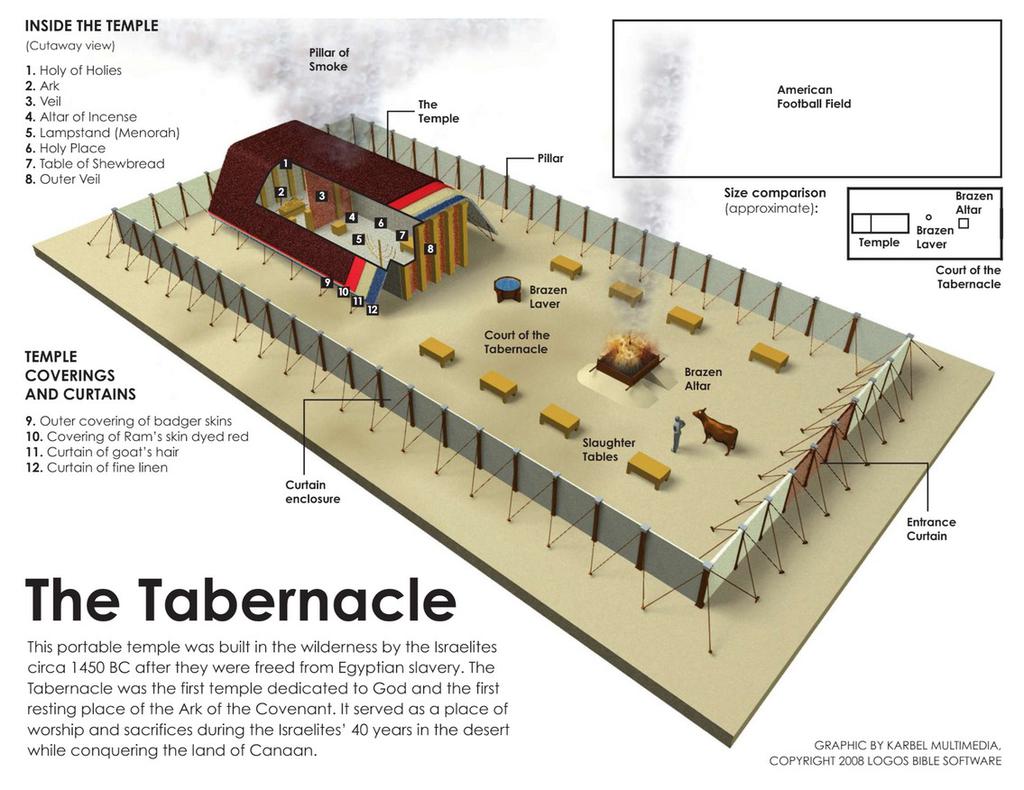
Source: https://merrimackvalleyhavurah.wordpress.com/2022/04/26/the-mishkan-in-jewish-thought-and-history/
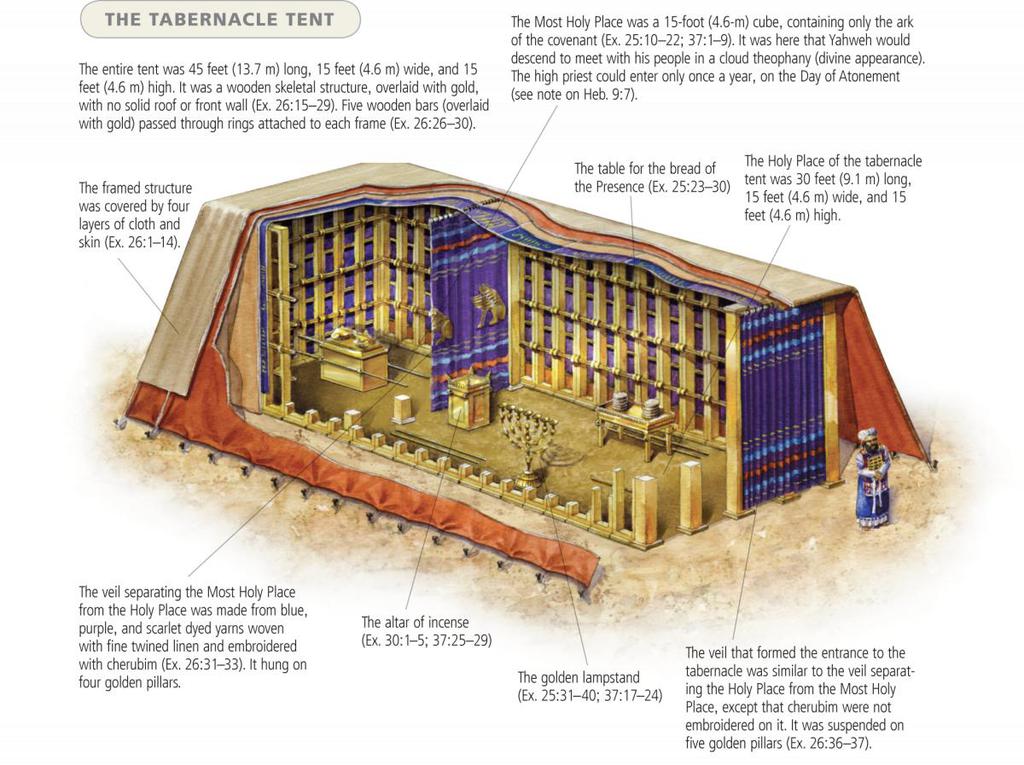
Source: https://jewschooled.com/2014/02/01/terumah-exodus-241-2719/
(ד) וְעָשִׂ֜יתָ לֻֽלְאֹ֣ת תְּכֵ֗לֶת עַ֣ל שְׂפַ֤ת הַיְרִיעָה֙ הָאֶחָ֔ת מִקָּצָ֖ה בַּחֹבָ֑רֶת וְכֵ֤ן תַּעֲשֶׂה֙ בִּשְׂפַ֣ת הַיְרִיעָ֔ה הַקִּ֣יצוֹנָ֔ה בַּמַּחְבֶּ֖רֶת הַשֵּׁנִֽית׃
(4) And make loops of blue wool on the edge of the outermost cloth of the one set; and do likewise on the edge of the outermost cloth of the other set:
ועשית ללאות תכלת וגו' (שמות כו, ד). יובן על פי מאמר חכמינו ז"ל (מנחות מג:) תכלת דומה לים וים דומה לרקיע ורקיע דומה לכסא הכבוד. הנה על דרך משל, כשאדם בונה בנין אז הבנין הוא תחילה במחשבת הבונה ואחר כך הוא התפשטות הבנין איך לבנות ואחר כך הוא עשיות הבנין ותכלית הבנין לאיזה דבר נבנה הבנין מי ידור בבנין זה. ונמצא יש בכאן ארבעה בחינות. המחשבה, והתפשטות המחשבה, ועשיה, ותכלית העשיה. והנה כשהמחשבה מתגלה בעשיה אז האדם הדר בו והוא תכלית העשיה הוא מלא כל טוב וכך הוא בהבורא ברוך הוא, כי בתחלה היה המחשבה ואשר עלה במחשבה לברוא את העולם היה רק בשביל ישראל ונמצא ישראל הם התכלית העשיה ובאמת כשהמחשבה מתגלה אז ישראל הם מלאים כל טוב ועל הבחינה הזאת יעשה כל הניסים לישראל כאשר ביארנו בברכות מגילה שהרמז הוא מגלה יו"ד וכשהמחשבה זאת מתגלה אז כל הארבעה בחינות ביחוד גמור. וזהו הרמז תכלת, כלומר תכלת דומה לים הוא עשיה, וים הוא עשיה דומה לרקיע הוא התפשטות על שם לרוקע הארץ על המים. ורקיע דומה לכסא הכבוד, היא המחשבה. ועל הבחינות אלו הרמז של שם הוי"ה ברוך הוא ארבע האותיות ושם של אדנ"י, כי היו"ד וה' רומז על המחשבה, והוא''ו רומז על התפשטות, וה"א אחרונה רומז על העשיה אשר ממנו נעשים כל העולמות ושם של אדנ"י הוא הרמז על תכלית העשיה ודו"ק:
Exodus 26:4 “and make loops made from תכלת blue wool” this verse can be understood when we consider the following statement or our sages “תכלת, wool dyed blue, resembles the ocean, which in turn is a reflection of the color of the sky, which in its turn is a reflection of the throne of God.” (Menachot 43b, Sotah 17a). Speaking allegorically, when a person begins with constructing a building, one begins with an outline of the appearance of the finished building in one's mind. After that one draws up plans for the building, and then a person proceeds with the actual construction, and after that the person or persons who will inhabit it do so. In other words, the project has four distinct aspects: mental image; clarification of the mental image; making and carrying out the reason for the making. Behold, when the mental image is reflected in the making, then person inhabiting the building experiences only good. Similarly, the Blessed Creator imagined the universe about to be created, and the entire project called “universe” had been only for the sake of the Jewish people, who are the aspect of "carrying out the reason for the making". When the thought was revealed מתגלה, that is, when the it was clarified that the Jewish people are the focal point of all of God’s creation, they are filled with immense joy. And it is due to this aspect that God performed so many overt miracles for the Jewish people as we explained regarding the blessings of the מגילה. not simply as “scroll,” but as the revelation מגלה of the [letter yud] י and when this thought was revealed מגלה then all the four aspects came together in one unity. This is the hint in the word תכלת - the resembles the ocean, which is doing, and the ocean resembles the sky רקיע, which is the clarification [of thought] since we say "spread לרוקע the earth over the water" (Psalms 136:6). And the sky resembles the throne of Glory, which is thought. And these four aspects are hinted in the name Havayah, Blessed be, as it has four letters, and since the yud and the hey hint to thought, and the vav hints to clarification of thought, and the last hey hints to doing, since from God all worlds are made of, and the name Ad-nai is a hint to the "carrying out the reason". And think deeply of these words, and you will understand them easily.
~ How does the Kedushat Levi connect the building of a house to creation? How are those two processes similar?
~ What is the connection between the Mishkan and a house?
~ How does the Kedushat Levi understand the project of God dwelling among us, or in us?
~ What is the connection between creation and the Mishkan? Creation and the Jewish people? Creation and the observance of having techelet on the four corners of a tallit?
~ How does he indicate the unification of God's name as one of the main deeds of a Jewish person? What does that unification does to God?
(טו) וְעָשִׂ֥יתָ אֶת־הַקְּרָשִׁ֖ים לַמִּשְׁכָּ֑ן עֲצֵ֥י שִׁטִּ֖ים עֹמְדִֽים׃ (טז) עֶ֥שֶׂר אַמּ֖וֹת אֹ֣רֶךְ הַקָּ֑רֶשׁ וְאַמָּה֙ וַחֲצִ֣י הָֽאַמָּ֔ה רֹ֖חַב הַקֶּ֥רֶשׁ הָאֶחָֽד׃ (יז) שְׁתֵּ֣י יָד֗וֹת לַקֶּ֙רֶשׁ֙ הָאֶחָ֔ד מְשֻׁ֨לָּבֹ֔ת אִשָּׁ֖ה אֶל־אֲחֹתָ֑הּ כֵּ֣ן תַּעֲשֶׂ֔ה לְכֹ֖ל קַרְשֵׁ֥י הַמִּשְׁכָּֽן׃ (יח) וְעָשִׂ֥יתָ אֶת־הַקְּרָשִׁ֖ים לַמִּשְׁכָּ֑ן עֶשְׂרִ֣ים קֶ֔רֶשׁ לִפְאַ֖ת נֶ֥גְבָּה תֵימָֽנָה׃ (יט) וְאַרְבָּעִים֙ אַדְנֵי־כֶ֔סֶף תַּעֲשֶׂ֕ה תַּ֖חַת עֶשְׂרִ֣ים הַקָּ֑רֶשׁ שְׁנֵ֨י אֲדָנִ֜ים תַּֽחַת־הַקֶּ֤רֶשׁ הָאֶחָד֙ לִשְׁתֵּ֣י יְדֹתָ֔יו וּשְׁנֵ֧י אֲדָנִ֛ים תַּֽחַת־הַקֶּ֥רֶשׁ הָאֶחָ֖ד לִשְׁתֵּ֥י יְדֹתָֽיו׃ (כ) וּלְצֶ֧לַע הַמִּשְׁכָּ֛ן הַשֵּׁנִ֖ית לִפְאַ֣ת צָפ֑וֹן עֶשְׂרִ֖ים קָֽרֶשׁ׃ (כא) וְאַרְבָּעִ֥ים אַדְנֵיהֶ֖ם כָּ֑סֶף שְׁנֵ֣י אֲדָנִ֗ים תַּ֚חַת הַקֶּ֣רֶשׁ הָֽאֶחָ֔ד וּשְׁנֵ֣י אֲדָנִ֔ים תַּ֖חַת הַקֶּ֥רֶשׁ הָאֶחָֽד׃ (כב) וּֽלְיַרְכְּתֵ֥י הַמִּשְׁכָּ֖ן יָ֑מָּה תַּעֲשֶׂ֖ה שִׁשָּׁ֥ה קְרָשִֽׁים׃ (כג) וּשְׁנֵ֤י קְרָשִׁים֙ תַּעֲשֶׂ֔ה לִמְקֻצְעֹ֖ת הַמִּשְׁכָּ֑ן בַּיַּרְכָתָֽיִם׃ (כד) וְיִֽהְי֣וּ תֹֽאֲמִם֮ מִלְּמַ֒טָּה֒ וְיַחְדָּ֗ו יִהְי֤וּ תַמִּים֙ עַל־רֹאשׁ֔וֹ אֶל־הַטַּבַּ֖עַת הָאֶחָ֑ת כֵּ֚ן יִהְיֶ֣ה לִשְׁנֵיהֶ֔ם לִשְׁנֵ֥י הַמִּקְצֹעֹ֖ת יִהְיֽוּ׃ (כה) וְהָיוּ֙ שְׁמֹנָ֣ה קְרָשִׁ֔ים וְאַדְנֵיהֶ֣ם כֶּ֔סֶף שִׁשָּׁ֥ה עָשָׂ֖ר אֲדָנִ֑ים שְׁנֵ֣י אֲדָנִ֗ים תַּ֚חַת הַקֶּ֣רֶשׁ הָאֶחָ֔ד וּשְׁנֵ֣י אֲדָנִ֔ים תַּ֖חַת הַקֶּ֥רֶשׁ הָאֶחָֽד׃
(15) You shall make the planks for the Tabernacle of acacia wood, upright. (16) The length of each plank shall be ten cubits and the width of each plank a cubit and a half. (17) Each plank shall have two tenons, parallel to each other; do the same with all the planks of the Tabernacle. (18) Make the planks for the Tabernacle, twenty planks, for the south, south side: (19) making forty silver sockets under the twenty planks, two sockets under the one plank for its two tenons and two sockets under each following plank for its two tenons; (20) and for the other side wall of the Tabernacle, on the north side, twenty planks, (21) with their forty silver sockets, two sockets under the one plank and two sockets under each following plank. (22) And for the rear of the Tabernacle, to the west, make six planks; (23) and make two planks for the corners of the Tabernacle at the rear. (24) They shall match at the bottom, and terminate alike at the top inside one ring; thus shall it be with both of them: they shall form the two corners. (25) Thus there shall be eight planks with their sockets of silver: sixteen sockets, two sockets under the first plank, and two sockets under each of the other planks.
~ Can you easily visualize what the Text is talking about?
~ Why do you think we have this level of detail?
~Negev, Teiman are two ways of saying “south”. Why do you think you need two ways?
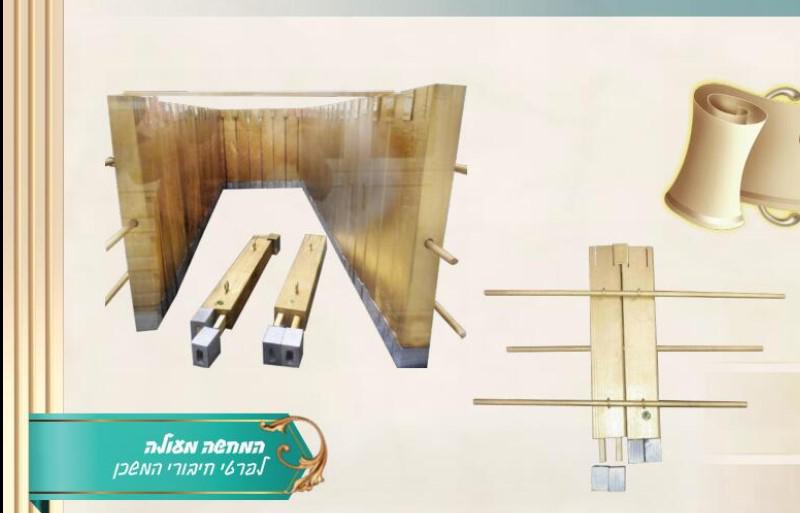
Source: https://www.kodesh1.com/%D7%92%D7%9C%D7%A8%D7%99%D7%99%D7%AA-%D7%9E%D7%95%D7%A6%D7%A8%D7%99%D7%9D/
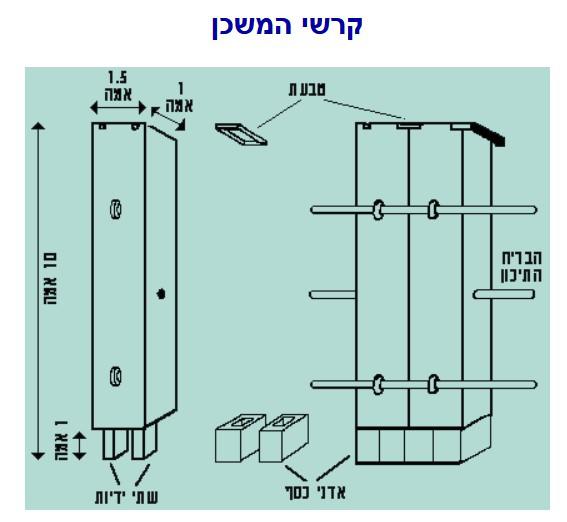
Source: https://www.daat.ac.il/daat/tanach/mishkan/6.htm
ועשית את הקרשים למשכן. יש לומר דהנה כתיב "ועשו לי מקדש ושכנתי בתוכם", ונ"ל דאיתא בברייתא דרבי ישמעאל "בשלש עשרה מדות התורה נדרשת", ור"ל עיקר התורה היא נדרשת כשאדם מחזיק בשלש עשרה מידות מה הוא רחום כו׳ וכן כולם, ואז תורתו שלומד נדרשת בכל עולמות. ו"מקדש" בגימטריא "מדת", ו"מדה" הוא לשון כלי, ור"ל כשאדם מחזיק עצמו בהמידות טובות ולשמור עצמו מכל מדה רעה, אז הוא מרכבה להשכינה. וזהו הפירוש "כביכול", ר"ל כ"ב הוא כמו ק"ב בקו"ף, שכ"ף בקו"ף מתחלפין באותיות גיכ"ק, וקב הוא מדה, כמו שמצינו "חנינא בני די לו בקב חרובין", ור"ל "כב" דהיינו ע"י המדות - "יכול", ר"ל ע"י המידות טובות שאדם מחזיק עצמו בהם ומשמר את עצמו ממידות רעות, יכול הקב"ה לשכון בזה העולם, דהיינו ע"י שהוא מרכבה להשכינה. וזהו "ועשו לי מקדש", ר"ל שתתקנו את עצמכם במידות כדי שאשכון בתוכם, וראש על המידות רעות הוא מידת שקר, דכל מידות רעות הם נגד מידת אמת, וכשיחזיק את עצמו במידת אמת וישבר עצמו ממידת שקר עד תכליתה, אזי ממילא הוא מחזיק את עצמו במידות טובות ומשבר עצמו ממידות רעות.
And make the planks for the Tabernacle of acacia wood, upright (Ex. 26:15) - we should point out that it is written "and they will make Me a sanctuary and I will dwell among them" (Ex. 25:8). And it seems to me that it is connected to the baraita of Rabbi Yishmael "in 13 midot (speech rules / character traits) the Torah is explained" (Sifra, Braita d'Rabbi Yishmael 2). And this means that the essence of the Torah is explained when a person seizes the thirteen midot (attributes), "just as God is compassionate, so too you, be compassionate" (Shabbat 133b) and so on with all of them. And then a person's Torah, the one that is learned, is explained in all the worlds. And the word "sanctuary" מקדש (mikdash) in the Gematria is מדת middat (character trait of/attribute of) and middah is an expression for vessel, meaning, when a person seizes oneself on their good attributes, and keeps oneself far from all bad attributes, then one is a chariot for the Divine presence. And this is the explanation for כביכול, "as it were" - meaning: kav as if כ"ב could be written with קו"ף like ק"ב, as it is known that kaf and kuf change places in the system גיכ"ק. And קב is a measure/middah/attribute as it is known, as we find in "my son Hanina for whom a kav of carobs is enough" (Berakhot 17b). And so the word כביכול can be explained as כב "through the middot" יכול "one is able", that is, through the good attributes that one strengthens oneself, and through distancing oneself from the bad traits, the Holy One of Blessing is able to dwell in this world, that is, because a person becomes the chariot for the Divine presence. And this is "And they will make Me a sanctuary" - meaning, that you should fix yourselves in the attributes/traits so that I will dwell among/in you. And the most prominent of all bad traits is the trait of lying, since all the bad traits are opposite of the trait of truth, and when one strengthens oneself in the trait of truth, and breaks oneself off completely the trait of lying, then automatically one strengthens oneself in the good traits, and breaks off from the bad traits.
~ How does the Noam Elimelech understand this entire description of the Tabernacle?
~ Middah can also be translated as “measure”. What is the connection between measures and attributes? Measures and character traits?
~ Where does the Noam Elimelech understand God’s presence to dwell?
~ Who else is considered to be a “Chariot for the Shechinah”? How, according to the Noam Elimelech, it is possible to be at that level? To whom is this level open? What does this mean about how the Noam Elimelech understands the ability of the Jewish people to rise spiritually? Is this for just a selected few?
וזהו "ועשית קרשים למשכן", ור"ל שאותיות "קרש" הוא אותיות "שקר", והיינו שתשבר עצמך ממידת שקר עד תכליתה ולחזק עצמך במידת היפוך, כמו קרש הוא היפך אותיות שקר, עד שתעשה עצמך קרש למשכן, דהיינו שתהיה מרכבה להשכינה כנ"ל, "עשר אמות אורך הקרש", ר"ל שדבר שהוא ארוך, אף שהוא דבר שאין לו סוף, יכול לקרות לו בשם אורך, אבל רוחב הוא דבר שיש לו סוף וצריך לומר כמה הוא רחב. וזהו הפירוש כאן "עשר אמות אורך הקרש", דהיינו בדבר שאין לו סוף, והוא בדבר רוחני שאין לו סוף ונקרא אורך, תראה שתעבוד אותה באמות שלימות בכל עשר עולמות, "ואמה וחצי אמה רוחב הקרש", ר"ל בדברי הגשמי שהוא דבר שיש לו סוף ונקרא בשם רוחב לגבי הדבר הרוחני, תראה שתעשה באמות חצאים שתאכל ותותר, או שאר גשמי תראה שלא תמלא תאוותיך בשלימות.
And this is "and make planks for the Tabernacle" (Ex. 26:15), meaning: the letters for plank קרש are the same for lie שקר, and this is that you should break off completely from the attribute of lying, and to strengthen yourself on the opposite attribute, just as a the plank is the opposite in letters of lie, until you make yourself a plank for the tabernacle, meaning, that you should be a chariot for the Shechinah, as explained above. "Ten cubits, the length אורך of the plank" (Ex. 26:16) - meaning, anything that is long ארוך, even if it has no end, one can call it with the expression "length". But the word רוחב width, implies something that is finite, and one needs to say how wide it is. And this is the explanation for "ten cubits אמות, the length of the plank" meaning, a thing that has no end, and anything that is spiritual has no end, and is called "long", make sure to serve with complete measures (amot אמות), in all the worlds. "And a cubit, and half a cubit, the width of the plank" - meaning, in the physical things, which are finite, and are called with the expression "width" in relation to the spiritual things, see that you do them with half measures, so that you will eat and have some left over (see Ruth 2:14) or that the rest of your material desires, see that you don't try to satisfy them completely.
~ What are the two basic things a person has to do to begin this journey of becoming a chariot for the Shechinah?
~ How do you imagine this idea connects with the white lies we all do to keep peace among people, white lies that are almost mandated by Jewish Law?
~ The Noam Elimelech does not make a connection between אמות amot and אמת emet, truth. But that is a connection that it appears to me the text is screaming out, at this point.
"שתי ידות לקרש האחד", דאיתא בגמרא "אשרי מי שבא לכאן ותלמודו בידו", ונ"ל דאיתא בגמרא "גדול תלמוד שמביא לידי מעשה", ונמצא תלמוד הוא גדול כשבא על ידו לידי מעשה, ובעוה"ז אם אנו רואים לאדם שלומד, אין אנו יכולים להבחין אם תורתו מוכשר להביאו לידי מעשה, ועיקר רוב המעשה נעשה ע"י היד, וזהו "אשרי מי שבא לכאן ותלמודו בידו", דהיינו שהתלמוד הביאו לידי מעשה.
"Two tenons (hands) to each plank" (Ex. 26:17) as it is found in the Gemara: "happy is the one that comes here and their learning is in their hand" (Pesachim 50a). And it appears to me that it is also written in the Gemara "greater is study, for it brings to action" (Kiddushin 40b). And in this world, when we see a person learning, we cannot understand if their Torah is good enough to bring about that person to action, and the essence of most deeds is done with one's hand, and this is "happy is the one that comes here and their learning is in their hand" - that is, their study brought them to action.
~ How does the Noam Elimelech expect Torah study to affect you?
ועל פי זה יש לפרש "שתי ידות לקרש האחד", דהנה נברא האדם בשתי ידות, יד ימין ושמאל, כדי להראות לאדם הבחירה אם להימין או להשמאיל, וגם להגביר הימין על השמאל, לעבוד בשני יצרים להכניס השמאל תחת הימין. וז"ש "שתי ידות לקרש האחד (משולבות אשה אל אחותה)", ר"ל מידה אחת שאתה רוצה להחזיק בה או לשבר אותה, תראה להחזיק אותה גם ביד שמאל ולעבוד בשני יצריך, "משולבות אשה אל אחותה", ע"ד שאמר הכתוב "גם אויביו ישלים אתו", ויהיה שלום ביניהם כמו אשה אל אחותה.
And according to this we explain "two hands for each plank" (Ex. 26:17): behold, the human being was created with two hands, right and left, so as to make explicit for the human being the choice of going to the right or to left, to serve with the two impulses, and to put the left under the right. And this is what is written "two hands for each plank", meaning one trait that you want to strengthen in yourself or that you want to cut off from yourself, see that you strengthen that also with your left hand, and to serve with both impulses. "Connected, a woman to her sister" this is to be understood through what is said in the Text "even one's enemies will make peace" and there will be peace, just as a "woman and her sister".
~ What is the non-gendered reading that the Noam Elimelech makes of “a woman and her sister”?
"ועשית קרשים כו' עשרים קרש לפאת נגבה תימנה", פירוש דהנה האדם העושה מצוה צריך לעשותה בשני בחינות, דהיינו א' שיעשנה כתקנה וכהלכתה, והב' שישמור עצמו שיעשה טוב ולא יחטא, שלא יהיה בהמצוה שום פניה ואיזה חטא ח"ו, המצוה נקראת בשם "עשר" כנ"ל, ואמר "עשרים קרש תעשה", דהיינו שתעשה המצוה בשני פעמים עשר, דהיינו "לפאת נגבה תימנה", ר"ל דנגב הוא לשון נגד, ר"ל שתשמור עצמך מפאת נגב תימנה, דהיינו ממה שהוא התנגדות התימן, דתימן הוא רמז על חכמה, ותשמור עצמך מכל פניה דהוא התנגדות המצוה ותעשה אותה בתכלית השלימות. וק"ל.
"And make planks etc twenty planks for the south, south side" (Ex. 26:18) - the explanation is that when a person does a mitzvah, they need to do it in two aspects which are one: to do it as established and according to the Jewish Law and two: to make sure that they will do it well and not sin, that is, there should be no emptiness and no sin, God forbid. The [category] mizvah is called by the expression "ten", as explained before, and so "twenty planks you shall make" meaning, that the mitzvah should be done in two times ten, that is "to the side of the south, south", meaning, Negev is the expression for neged, meaning, that you should guard yourself from the side of Negev Teimanah, that is from what is the opposition of Teiman, as Teiman is a hint to wisdom, and you should guard yourself from all emptiness that is an opposition to the mitzvah and make sure that you are doing it in its absolute completeness. And this is easy to understand.
~ How does the Noam understand the two expressions for south?
~ What spiritual message does he make in terms of how a person should do mitzvot?