


I. Why is Electricity Prohibited on Shabbat?
(ב) אֲבוֹת מְלָאכוֹת אַרְבָּעִים חָסֵר אֶחָת. הַזּוֹרֵעַ. וְהַחוֹרֵשׁ. וְהַקּוֹצֵר. וְהַמְעַמֵּר. הַדָּשׁ. וְהַזּוֹרֶה. הַבּוֹרֵר. הַטּוֹחֵן. וְהַמְרַקֵּד. וְהַלָּשׁ. וְהָאוֹפֶה. הַגּוֹזֵז אֶת הַצֶּמֶר. הַמְלַבְּנוֹ. וְהַמְנַפְּצוֹ. וְהַצּוֹבְעוֹ. וְהַטּוֹוֶה. וְהַמֵּסֵךְ. וְהָעוֹשֶׂה שְׁנֵי בָתֵּי נִירִין. וְהָאוֹרֵג שְׁנֵי חוּטִין. וְהַפּוֹצֵעַ שְׁנֵי חוּטִין. הַקּוֹשֵׁר. וְהַמַּתִּיר. וְהַתּוֹפֵר שְׁתֵּי תְפִירוֹת. הַקּוֹרֵעַ עַל מְנָת לִתְפֹּר שְׁתֵּי תְפִירוֹת. הַצָּד צְבִי. הַשּׁוֹחֲטוֹ. וְהַמַּפְשִׁיטוֹ. הַמּוֹלְחוֹ, וְהַמְעַבֵּד אֶת עוֹרוֹ. וְהַמּוֹחֲקוֹ. וְהַמְחַתְּכוֹ. הַכּוֹתֵב שְׁתֵּי אוֹתִיּוֹת. וְהַמּוֹחֵק עַל מְנָת לִכְתֹּב שְׁתֵּי אוֹתִיּוֹת. הַבּוֹנֶה. וְהַסּוֹתֵר. הַמְכַבֶּה. וְהַמַּבְעִיר. הַמַּכֶּה בַפַּטִּישׁ. הַמּוֹצִיא מֵרְשׁוּת לִרְשׁוּת. הֲרֵי אֵלּוּ אֲבוֹת מְלָאכוֹת אַרְבָּעִים חָסֵר אֶחָת:
(2) This fundamental mishna enumerates those who perform the primary categories of labor prohibited on Shabbat, which number forty-less-one. They are grouped in accordance with their function: One who sows, and one who plows, and one who reaps, and one who gathers sheaves into a pile, and one who threshes, removing the kernel from the husk, and one who winnows threshed grain in the wind, and one who selects the inedible waste from the edible, and one who grinds, and one who sifts the flour in a sieve, and one who kneads dough, and one who bakes. Additional primary categories of prohibited labor are the following: One who shears wool, and one who whitens it, and one who combs the fleece and straightens it, and one who dyes it, and one who spins the wool, and one who stretches the threads of the warp in the loom, and one who constructs two meshes, tying the threads of the warp to the base of the loom, and one who weaves two threads, and one who severs two threads for constructive purposes, and one who ties a knot, and one who unties a knot, and one who sews two stitches with a needle, as well as one who tears a fabric in order to sew two stitches. One who traps a deer, or any living creature, and one who slaughters it, and one who flays it, and one who salts its hide, a step in the tanning process, and one who tans its hide, and one who smooths it, removing hairs and veins, and one who cuts it into measured parts. One who writes two letters and one who erases in order to write two letters. One who builds a structure, and one who dismantles it, one who extinguishes a fire, and one who kindles a fire. One who strikes a blow with a hammer to complete the production process of a vessel (Rabbeinu Ḥananel), and one who carries out an object from domain to domain. All these are primary categories of labor, and they number forty-less-one.
2 outstanding English language essays on electricity on Shabbat and Yom Tov can be found here:
1. https://www.daat.ac.il/daat/english/journal/broyde_1.htm, especially section II.
2. https://www.rabbinicalassembly.org/sites/default/files/public/halakhah/teshuvot/2011-2020/electrical-electronic-devices-shabbat.pdf, especially pp. 16-36 (Intro and Conclusions are reproduced below)
Rav Daniel Nevins, Jewish Committee of Law and Standards
Question:
May electrical appliances and electronic devices2 be used on Shabbat? If not, then why not? If so, then with what restrictions? What other halakhic values should be considered regarding the use of electricity on Shabbat? May some restrictions on the use of electricity be waived in favor of the needs of disabled or frail individuals?
Response:3
In the tempestuous ocean of time and toil there are islands of stillness where man may enter a harbor and reclaim his dignity. The island is the seventh day, the Sabbath, a day of detachment from things, instruments and practical affairs, as well as of attachment to the spirit.
--Abraham Joshua Heschel, The Sabbath4
Introduction
The flick of a switch. This action, so effortless and casual, is nonetheless a powerful marker of modernity. The switch completes or breaks a circuit, unleashing or suspending the flow of electrons which power every conceivable type of machine.5 With electricity we control our physical environment, altering the shape and structure of objects and yielding light and dark, heat and cool, sound and silence, and innumerable other environmental adaptations. Electrical motors6 move people and objects in every direction, enabling those with disabilities to function more fully, and all to avoid unwanted exertion. Motion sensors are increasingly embedded in appliances such as public sinks, toilets, lights and doors, and security cameras have proliferated, making it challenging to function in modern buildings7 without an electronic transaction.8
We use electricity to control not only our physical reality, but also the digital information which is integral to contemporary life. The prevalence of batteries and wireless networks has untethered the digital device, giving us instant access to people and information to help us navigate our lives no matter where we are. Adults and older children seldom venture forth without some sort of electronic assistant. Electronic networks are tapped for transactions which once required physical acts such as entering a store and handling currency. Smart phones are increasingly employed to manage physical tasks such as unlocking and heating cars and homes as well as commercial transactions; the emerging technology of near field communications is accelerating this process.9 Digital devices are rapidly replacing their analog predecessors, with e-readers edging out printed books.10 Social networking programs are playing an increasing role in the establishment and maintenance of personal identity. The pervasive use of electricity and electronics defines modern living,11 and the integration of electronics into all aspects of life has been accelerating. For example, a new form of eyeglasses is reportedly being developed by Google that integrates the use of global positioning software and wireless networking to augment a user’s view of the physical environment, with viewers able to scroll through information about their surroundings by tilting their head.12 Wearable technology and augmented reality systems such as this will presumably become commonplace in the coming years.
Using electricity makes us powerful, yet there is a cost to being permanently networked. Our digital servants have the tendency to become tyrants, and it is nearly impossible to escape their reach. Instant access leads to the loss of privacy and the erosion of social intimacy.13 Work that used to end when we left the office now follows us out the door, down the street, and into our homes. Even on vacation it is common to see people with laptops and smart phones busily keeping up with their demanding tasks. Simple pleasures such as sitting with family and friends over an undisturbed meal, reading in a quiet room, and taking a leisurely stroll have become rare in our culture. We need a break, and Shabbat is here to help us, even as it helped earlier generations rest from the physically intensive tasks that typified their work.
As we will see, Shabbat fosters a different state of consciousness through its detailed regulation of human behavior. Each action is analyzed through two lenses: Is it melakhah, the type of work prohibited by halakhah? And, does it undermine shvut, the positive obligation to rest on Shabbat? This paper will examine these questions and will lead us to conclusions which are grounded in tradition and reflect the realities of contemporary technology and culture.
Why is all of this necessary? Why can’t everyone simply rest when and how they like? Of course, they may; Jewish practice today is voluntary, at least for most Jews. This paper, like many contemporary presentations of halakhah, is an effort to explain the meaning and the benefits of normative observance in addition to clarifying the technical legal aspects of the matter. What differentiates Shabbat from an ordinary vacation is that it is a communal and sacred enterprise. When Shabbat is observed as a day of intentional rest, it allows community to emerge. When Shabbat is sanctified, then our resting becomes something more than relaxation; it becomes an act of devotion, highlighting those values and relationships which have ultimate significance. Contemporary Jews suffer from a lack of Shabbat and a consequent erosion of purposeful community. Studying and reclaiming these sacred traditions is an essential step to rebuilding a meaningful and hardy Jewish life.
Once a week many Shabbat observant people already power down their devices and choose a Sabbath of abstention from their use.14 To be more precise, they avoid directly operating electrical devices on Shabbat, but nearly all continue to benefit from the lights, refrigerators, thermostats, clocks and countless other devices which carry on their assigned tasks. Shabbat law applies to Jews and to an extent also to non-Jewish employees.15 It applies even to work-animals owned by Jews, but not to appliances so long as they are left to function on their own.16 Sometimes these devices are programmed before Shabbat with timers to heat, elevate, illumine and darken at appointed times, thereby giving many of the benefits of electrical use even while avoiding the direct performance of forbidden labor on Shabbat.17
For many Shabbat observers, the flick of an electrical switch is tantamount to חילול שבת , the desecration of Shabbat. This is such a profound transgression that it may
be considered a capital offense (Exodus 31:14), although Judaism has not practiced the
death penalty for two millennia.17F18 The identification as a shomer Shabbat—a Sabbath observer—is in many circles associated with rendering electrical switches inaccessible or inoperative on Friday afternoon, and in the setting of timers to adjust lights and other appliances as necessary.
Maintaining a comprehensive ban on the operation of electrical and electronic devices on Shabbat is a policy with many advantages. It is relatively simple to explain and to enforce—even a toddler can be trained to avoid operating electronics on Shabbat. Forbidding even arguably permissible actions may be considered a סייג לתורה , a fence
around the Torah, preventing people from inadvertent performance of truly forbidden
activities. And the result of a comprehensive “electric Sabbath” is to create a day which
is dramatically differentiated from the rest of the week. Moreover, the motivations for
not using electricity on Shabbat go well beyond the formal requirements of the law.
Some young adults have recently published a “Sabbath Manifesto” promoting a weekly
24 hour respite from technology, though not necessarily within the bounds of the
Jewish Sabbath, and many people cherish vacations from their digital devices. Finally, reducing the use of electricity once a week can help train people to consume less power overall, and thus mitigate the harmful impact of our consumption habits on the
environment.
Nevertheless, other Shabbat observant Jews make distinctions between electrical appliances whose operation they find to be permitted and those which they deem prohibited. Such people claim that it is possible to avoid forbidden activities and to achieve the necessary state of tranquility on Shabbat even while making limited use of electricity.21 For example, dozens of Orthodox rabbis have endorsed a special light switch that is designed to avoid forbidden labor and is promoted under the slogan, “Control Electricity on Shabbos!”22 The Zomet institute in Israel has justified specially designed public telephones23 and computer keyboards24 to allow Shabbat observers to gain access to data without violating the laws of Shabbat. Some may shun the use of electricity unless it is indicated by another Jewish value such as assisting people who are ill, frail or disabled, performing necessary military services, avoiding great exertion and waste on Shabbat, or preventing animal suffering.25 Since many Shabbat observers leave unused appliances such as lights, air conditioners and elevators running all day, the refusal to adjust appliances according to need is not necessarily a green solution.
This subject is complicated, requiring sustained study of the issues and vigilance in practice. Not every action that is permitted should be recommended. The extensive use of timers and specially adapted appliances can easily undermine the distinctive atmosphere of Shabbat. Yet in some cases the trade-off in Jewish values may be justified. This subject is complex, but being shomer Shabbat has always required study of the laws of Shabbat, and simplicity itself is not a halakhic goal. Just as there are detailed regulations about how, for example, one may re-heat food on Shabbat without transgressing the ban on cooking, or use house keys without violating the ban on carrying, so too is it possible to develop careful policies about what electrical appliances may be used without violating the laws of Shabbat.
Whether one adopts a comprehensive ban or a partial permission, it is worthwhile to study the halakhic issues involved in operating electronics on Shabbat. The purpose of this paper is to examine the salient issues and give guidance to people who wish to observe the traditional Sabbath rules while also guarding Jewish values such as protecting the dignity of people who are frail or have physical disabilities, the preservation of the environment, and the joy of Shabbat. Instead of presenting a narrow discussion of one particular action, we have chosen to begin with a broad review of Shabbat laws. This survey will allow our more narrow findings to be judged within their broader context and will also provide our community with a better sense of this important area of Jewish law. Because the use of electricity has come to permeate nearly every aspect of contemporary life, and because prior halakhic studies of the use of electricity have generated considerable ambiguity on core concepts, it is not possible to issue a simple and terse ruling. This project has become extensive, yet it too will require expansion and revision as the technology continues to develop.
Our project begins in Section I with a technical discussion of melakhah ( מלאכה ), the
form of creative work prohibited on Shabbat. Some actions are considered ,אסו ר דאורייתא
forbidden by the rabbis’ understanding of the biblical prohibition, and call for severe punishment in the classical literature. Other actions are considered פטור אבל אסור , exempt from full liability, but still banned by the rabbis’ own authority. Finally, some actions are considered מותר לכתחילה , permissible from the outset.25F26 We will discuss various actions involving electricity and seek to clarify to what extent the categories of melakhah (labor) are involved.
Yet our subject is not limited to determining whether operating a given electrical appliance is physically comparable to the work traditionally prohibited on Shabbat. Another category known as שבות , or “rest” is designed to protect the special atmosphere of Shabbat and to safeguard the observant from unwitting transgression. But what is שבות , and how should it be defined in contemporary life? This is the focus of Section II,and involves the exploration of rabbinic values specific to Shabbat and Yom Tov such as: טירחא יתירא , avoiding excessive exertion; עובדא דחול , distinguishing Shabbat from workdays; and מוקצה , keeping a protective distance from the performance of forbidden labor. The observance of Shabbat does not occur in a vacuum devoid of other halakhic values. Section III explores the interaction between such values, some of which reinforce a ban on using electricity, while others would rather mandate its use in certain situations. In it we consider a representative sample of electrical devices which may be helpful to frail and disabled individuals in light of the laws of Shabbat. Finally, in Section IV, we summarize our conclusions, indicating which actions involve melakhah, and are thus forbidden unless needed to safeguard health; which actions involve considerations of shvut, and are thus forbidden unless overridden by competing Jewish values; and which are to be considered permitted.
While we have found support for some uses of electricity in certain situations, we have also discovered numerous ways in which the operation of electrical appliances is incompatible with the observance of Shabbat. This is a countercultural finding, because the constant use of electronics is extremely seductive to our generation. In the face of this great desire to “stay connected,” we often forget the cost of losing the precious hours of quiet that Shabbat offers to those who cherish her. It is appropriate to quote the resounding words of Rabbi Abraham Joshua Heschel in his classic book, The Sabbath:
To set apart one day a week for freedom, a day on which we would not use the instruments which have been so easily turned into weapons of destruction, a day for being with ourselves, a day of detachment from the vulgar, of independence of external obligations, a day on which we stop worshipping the idols of technical civilization, a day on which we use no money…is there any institution that holds out a greater hope for man’s progress than the Sabbath?225
IV. Summary and Halakhic Conclusions
In this responsum we have discussed the laws of Shabbat with attention to specific forms of melakhah and shvut. These concepts remind observers of God’s gifts of life and liberty by requiring us to act in distinctive patterns on the seventh day. Melakhah is understood to refer primarily to actions which result in a durable physical change; shvut overlaps with this category but also includes actions and even thoughts which compromise the tranquility of Shabbat and erode the distinctiveness of the seventh day. By desisting from melakhah, we begin to appreciate the natural resources of our remarkable world and become able to resist the temptation to define life’s value primarily in terms of our own actions. By dedicating the day to tranquility, we dignify our lives and are refreshed for the tasks awaiting us on the six days of labor.
We have learned that the operation of electrical and electronic circuits may not be categorically banned as melakhah but that many specific actions involving such appliances violate the laws of Shabbat. For example, any appliance used to cook food or heat air and water is banned under the category of toledat bishul, a derivative form of cooking. The operation of any appliance which records data—whether text, audio or images—is banned under the category of toledat koteiv, a derivative form of writing. Most consumer electronics fall within this category and are therefore incompatible with Shabbat observance.
While a comprehensive ban on all uses of electricity may be justified as a fence around the Torah, some uses are not only permissible but even positively indicated. Certainly any action needed to save a life—even if it involves biblically banned forms of melakhah—may be permitted under the rubric of pikuah nefesh. Actions which are forbidden under the authority of rabbinic law must be avoided unless they are required for the preservation of human dignity. In some cases such actions may also be indicated in order to avoid waste and excessive exertion. The balancing of these norms is complex and requires consultation with halakhic experts based on the particulars of any given situation and appliance.
Having completed our review of melakhah, shvut and other relevant halakhic principles, we may summarize our conclusions as follows:
Considerations of Melakhah
1. The operation of electrical circuits is not inherently forbidden as either melakhah or shvut. However, the use of electricity to power an appliance which performs melakhah with the same mechanism and intent as the original manual labor is biblically forbidden on Shabbat. For example, grinding coffee, trimming trees, sewing etc. are all forbidden with electrical appliances in the same way as these activities are forbidden without the use of electricity, as an av melakhah. 2. The use of electricity to perform an activity with a different mechanism but for the same purpose as a melakhah is forbidden to Jews on Shabbat as a derivative labor (toledah). Such prohibitions share with the primary forms the severe status of being biblically forbidden,אסור דאורייתא . Thus cooking with an electrical heating element or a microwave oven on Shabbat is forbidden as toledat bishul,25F
226 though it is permitted on Yom Tov. Recording text, sound, images or other data with an electronic device is forbidden as toledat koteiv, a derivative form of writing. Sabbath and Yom Tov operation of any electronic recording device, camera, computer, tablet, or cellular phone is forbidden by this standard.26F227 Moreover, the creation of a durable image, as with a printer, is also forbidden as a derivative form of writing. Automation may be employed prior to Shabbat to set some such processes in motion, but even here one must be cautious about the temptation to make adjustments to such devices, as well as their capacity to undermine the distinct atmosphere of Shabbat.
3. For the sake of protecting life, even biblical prohibitions are superseded. Thus all electrical and electronic devices needed to administer medicine and medically necessary therapies or to summon medical assistance are permitted on Shabbat. If the health challenge is not life-threatening, then Jewish people should not perform melakhah, but it may be permissible to employ non-Jewish assistants or use automated systems to help the patient.
Considerations of Shvut
4. The positive commandment of shvut, to rest on Shabbat, demands a day of differentiation in which one avoids commerce, the creation of loud sounds and anything which would replicate the atmosphere of the work week. Electrical appliances like fans, lighting fixtures and magnetic key cards and fobs may be used without violating either the law or the spirit of Shabbat. However, even if some electronic communication devices are not forbidden as a form of melakhah, the tranquility of Shabbat may be compromised by such activities. Rabbinical teachings indicate that Shabbat should be dedicated to prayer, Torah study, meals and rest, not to weekday concerns. We ought to anchor our day in physical
environments such as the synagogue and Shabbat dinner table that reinforce the holy nature of the day and allow the spiritual potential of the day to be realized.
228 However, Sabbath observant people can be trusted to decide what formally permitted activities are consonant with their Shabbat tranquility. 5. Positive halakhic values such as protecting human dignity, avoiding excessive strain, financial hardship, and not wasting natural resources may supersede the rabbinic restraint on using electricity as indicated by shvut. The use of electrical motors to assist frail and disabled people to move around, and the use of assistive devices to enhance hearing, speech and vision may be justified based on the demands of human dignity despite the possibility that such tools might lead one to an activity which is rabbinically banned. The use of elevators to reduce strain on Shabbat is likewise permitted. Turning off unneeded appliances is permissible to avoid financial hardship and the wasting of natural resources. In all of these cases, halakhic imperatives such as protecting human dignity, avoiding excessive strain, and conserving resources may supersede rabbinic restrictions (shvut), but not biblical prohibitions (melakhah).
6. Refraining from operating lights and other permitted electrical appliances is a pious behavior which can prevent inadvertent transgression and reinforce the distinctiveness of Shabbat. In many of our communities a ban on operating all appliances, including lights, has become the operative practice, and should therefore be maintained. Those who do make limited use of electricity must be attentive to the distinctions explained in this responsum, avoiding any activities which would result in cooking, recording or other labors on Shabbat. They also would be well-advised to be sensitive to the practice of visitors who seek to avoid any operation of circuits, and may wish to defer to the more stringent practice of much of the observant community. In this way Shabbat may provide its observers with a distinctive day of delight dedicated to prayer, Torah study and fellowship. Then Shabbat will continue its powerful role as a sign of the covenant between God and Israel, transmitting holiness from generation to generation, and supporting the creation of sacred communities.
וכך נלע"ד
פרשת ויקהל תשע"א, מתוקן פרשת אמור תשע"ב
What do you think about the interplay between halakhic and metahalakhic concerns as articulated by Nevins? How is his discourse similar and different than normative Orthodox discourse?
Rabbi Yitsḥak Yehudah Schmelkes (1827–1905), a talmudic scholar of Galicia, was born in Lemberg (Lviv, Ukraine), the son of Ḥayyim Samuel Schmelkes, claiming descent from Eleazar b. Samuel Schmelke Rokeaḥ.[1] He was the head of the rabbinical court in Lviv from 1869-1893.[2] His Beit Yiẓḥak (6 vols., 1875–1908), on the four parts of the Shulḥan Arukh, was widely acclaimed
אודות נר עלעקטרי אזכיר בזה בדין אם רשאים לדבר בשבת ע"י מכונה הנקראת טעלעפאן. והנה לפי עניות "דעתי יש איסור בדבר ושומר נפשו ירחק מזה. כי מלבד מה שמוכרח המדבר במכונה כזאת להכות מקודם בפעמון עת ירצה לדבר וזה אסור משום משמיע קול יש לאסור עוד משום דע"י סגירת זרם העלעקטרי נולד כח עלעקטרי וזה אסור בשבת דכמו בסחופא כסא אשיראי אמרינן בביצה כ"ג דאסור משום דמוליד ריחא הוא "הדין דאסור לעשות עלעקטרישע פערבינדונג בשבת ומהאי "טעמא לדעתי יש לאסור לעשות זאדאוואססער (seltzer) בשבת משום דגם שמה מוליד הרכבה חמית [חעמישע פערבינדונג]
Rav Shmelkes' position becomes very influential. It is based on the Gemara below (feel free to access the English, so as not to get bogged down). How does this analogy resonate with you? What is motivating him?
דקמוליד ריחא - שנכנס בחרס שלא היה בו ריח ואסור מדרבנן שהמוליד דבר חדש קרוב הוא לעושה מלאכה חדשה:
In dialogue with Rav Shmelkes. Blanket prohibition.(?)
Shlomo Zalman Auerbach (: שלמה זלמן אויערבאך; 1910 –1995) was an Orthodox Jewish rabbi, posek, and rosh yeshiva of the Kol Torah yeshiva in Jerusalem. The Jerusalem neighborhood Ramat Shlomo is named after Auerbach. He wrote Meorei Eish, a pioneering work concerning electricity in halacha, (1935) The first volume of his teshuvot, Minchat Shelomoh were published in 1986.
נתבאר לפי זה דלענ"ד נראה דבכה"ג דלא עשה כלל שום הדלקה או כיבוי כי אם מחבר רק את הטלפון עם הזרם אין לאסור בשבת ויו"ט לא משום מכה בפטיש ולא משום מוליד. (אך חושבני שהמון העם אינו יודע כלל להבחין בכך ויכול לטעות ע"י זה לומר שמותר גם להדליק ולכבות את החשמל בשבת, ולכן אף לדידן אין להתיר דבר זה כי אם במקום צורך גדול, וכעי"ז מצינן בשאילת יעבץ הנ"ל דאע"ג שסובר דעריכת שעון בשבת דומה לפתיחת וסגירת מנעול דשרי, אפי"ה כתב שלמעשה נכון להחמיר מפני שנראה בעיני הבריות כתיקון כלי וכ"ש כאן). ועיין גם בשערי דיעה סי' קצ"ד שאף גם הוא מתיר, אך מה אעשה שכבר הורה זקן והוא הגאון מוהר"י שמעלקיש ז"ל בשו"ת בית יצחק יו"ד ח"ב סי' ל"א בהשמטות על דבר הטלפון אם מותר לדבר בו בשבת, ובתוך דבריו כתב שם: "דכמו בסחופא כסא אשיראי אמרינן בביצה כ"ג דאסור משום דמוליד ריחא ה"ה דאסור לעשות עלעקטרושע פארבינדונג בשבת" עכ"ל. והדבר צריך הכרעה.
Outline Rav Auerbach's arguments here. What is his final psak? Why is electricity prohibited?
Rav Auerbach in dialogue with the Hazon Ish (cited at length within), on electric circuits
בירורים בענין מלאכת בונה וסותר בסגירת ופתיחת מעגל חשמלי בשבת בספר חזון "איש חלק או"ח סי' נ' אות ט' לאחר שמבאר ענין מלאכת מבעיר ומבשל שיש בהדלקת חשמל בשבת כתב אחר"כך: "עוד יש בזה משום תיקון מנא כיון שמעמידו על תכונתו לזרום את זרם החשמל בתמידות וקרוב הדבר דזה בונה מין ה"תורה, כעושה כלי, וכל ש"כן כאן שכל החוטים מחוברין לבית והוה "ליה כבונה במחובר, ואין כאן משום בנין בכלים אלא דינו כמחובר דיש בו משום בנין וסתירה, אבל הכא אין נפקותא בזה דאפי' בכלים כה"ג חשיב בונה" עכ"ל.
. וידוע שדבריו הם חדוש גדול עד מאד וכל אלה שנושא "נותן בעניני חשמל לא הזכירו כלל לחשוש בזה למלאכות של בונה וסותר, עוד יתירה מזו שמעתי אומרים בשמו של מרן בעל החזו"א זצ"ל שגם בשעה שאין שום זרם בחוטים וכשהאדם לוחץ על הכפתור לא נעשה עדיין שום דבר, מ"מ עצם סגירת המעגל להיותו ערוך ומתוקן להדלקה שתיעשה אח"כ ע"י שעון, אף גם זה חשיב בונה. ...
ותמיהני טובא דכיון שעשוי תמיד לפתוח ולסגור איך אפשר לחושבו כבונה בשעה שאין זרם בחוטים ולא נעשה כלל שום דבר, הא לא גרע מכיסוי בור ודות שיש להם בית אחיזה,...
והואיל שזה היה תמוה בעיני פניתי אליו במכתב אשר בו העירותי בקצרה שלענ"ד אין בהפעלת זרם משום בונה, והוא קרוב יותר לחיבור פתילה עם שמן שבנר כדי להאיר, או כמשתמש בזרם של מים ורוח כדי לסובב ולגרום תנועה, מבלי שתיעשה שום מלאכה, וגם כיון שהלחיצה בכפתור לפתוח או לסגור מעגל הוא דבר קל שעושים אותו תדיר, לכן אפילו במחובר הרי זה קרוי רק בשם "השתמשות" ולא כעושה כלי מחדש דחשיב כבונה.
ולאחר שקבלתי ממנו תשובה קצרה, כתבתי לו עוד מכתב והשיב לי גם עליו, אך מפני הכבוד והיראה שוב לא כתבתי כלום. והנני מעתיק בזה את שני המכתבים של בעל החזו"א זצ"ל כלשונם.
ומוצא אני לנכון להקדים שאין אני מתכוין כלל להתווכח ולהשיב עליהם כי צדיקים במיתתם קרויים חיים ועוד גדולים הם במיתתם יותר מבחייהם, ואם בחייו יראתי מלהתווכח כ"ש עכשיו, רק אמרתי לבאר בארוכה אותם הדברים שכבר העירותי בקצרה כדי שהמעיינים יתנו אל לבם לעיין בזה
What are the halakhic arguments of the Hazon Ish (Rav Avraham Yeshaya Karelitz, Belarusian, Israel 1878-1953, leader of Haredi Judaism in Israel), and how are they refuted by Rav Auerbach?
בענין הדלקה וכיבוי אור החשמל בשבת
ראה שהראב"ד סובר דמבעיר לא שייך אלא כשההבערה גורמת להרבות אש שלא היה קודם, ולכן כשההבערה היא בעצים וכדומה שהאש נאחזת בהם והם עצמם בוערים ושורפים שפיר אמרינן דאע"ג שנדלקו העצים מאש אחרת, מ"מ כיון שהם עצמם בוערים הרי נתחדש ונתרבה אש שלא הי' כלל מקודם, משא"כ במתכת הרי היא עצמה אינה בוערת אלא שהיא קולטת חום מאש אחרת ורק מפני שהמתכת אינה כלה ונשרפת לכן כל הזמן שמונחת על האש היא בולעת ואוצרת בקרבה הרבה חום עד שגם היא עצמה אדומה כגחלת של אש, ונמצא שהחום לא נתחדש רק עבר מהאש ונכנס תוך המתכת כמו שהוא נכנס בכל דבר אפוי ומבושל, שהרי אם מסירים אותה מהאש היא מתחלת תיכף להצטנן. וכיון שכן אפשר דכל זה דוקא במתכת הנדלקת מאש מצויה דאז שפיר אמרינן דאע"ג שגם המתכת נעשתה ממש אש, אפי"ה סובר הראב"ד דחשיב רק בישול ולא מבעיר כיון שהמתכת עצמה אינה בוערת ובהבערתה לא נתחדש ונתרבה אש שלא היה קודם, וכמו שאמרנו שהחום רק עבר מן האש ונכנס תוך המתכת, ונמצא שהמחמם הוא רק "מעביר" אש ממקום למקום כלומר מן הגחלים אל המתכת ולא "מבעיר", משא"כ בהדלקת חשמל אשר מקודם לא הי' כלל שום אש ורק האדם בלחיצתו על הכפתור הוא ממציא ומוליד אש חדש בחוט של מתכת שבתוך המנורה, בכה"ג יתכן דנקרא שפיר גם להראב"ד בשם "מבעיר" אש כיון שבפעולתו לא הדליק את החוט מאש אחרת רק המציא והוליד אש שלא היה כלל תחלה בעולם, והאש הזה שהמציא פולט חום והוא מבשל או מאיר כמו אש אחרת, וכיון שכן שפיר קרוי בשם מלאכת מבעיר שהרי גם במשכן לא היו צריכים את הכליון וההפסד של העצים רק הי' צורך בחום כדי לבשל, ואילו היה אז תנור של חשמל הי' יכולים שפיר לבשל את הסממנים גם על אש של חשמל, לכן מהיכ"ת נימא דבכגון דא אינו קרוי בשם מבעיר (ולפי"ז אף להסוברים בדעת הרמב"ם דלא מחייב במתכת משום מבעיר אלא בע"מ לצרף, אפשר שכל זה דוקא כשהחימום הוא מאש אחרת משא"כ בהדלקת חשמל שהוא יוצר ממש ניצוצי אש שפיר חייב בכל אופן). והתינח אם נאמר כהסוברים דלשון לא תבערו היינו דוקא כליון, יכולים שפיר לומר דהדלקת חוט חשמל לאו מלאכה היא כלל הואיל ואין החוט כלה ונשרף, אבל כיון שאמרו בגמ' דקרא דלא תבערו יצא רק ללאו או לחלק ולא כדי לאשמעינן שצריכים דוקא כילוי והפסד, וכידוע שבשו"ע הרב ז"ל כתב להדיא דהאיסור של לא תבערו איננו מפני שריפת העצים וכילוים אלא כל ריבוי אש היינו מבעיר
Here RSZA identifies a clear prohibition. Maybe even 2. What are they? In which cases of elecritical use are they relevant? and what is the weakness of the argument that he is trying to justify?
II. Electricity on Yom Tov
What are the various problems with electicity on Shabbat? Based on what we have learned about the differences between melakhah and malekhet avodah, how might you think that electricity would be different on Yom Tov?
IIa. Electric Lights in the Mizrachi and Ashkenazi traditions
Rav Rafael Aharon Ben Shimon 1847-1928, Rabbat Morrocco, Cairo, Tel Aviv, posek, chief Rabbi of Cairo, Av Bet Din for 30 years.
ובעניין אור האלקטריק אשר כל גדולי העדה וגבירה, אור במושבותם באור הליקטריקיט'י הזה. קביעותו והבאתו לביתם עולה בדמים יקרים, וחוץ מזה אין להם אור אחר זולתו. וא"כ לשחוק נהיה אם נחמיר עליהם, וברור שלא ישמעו לנו לשבת בחושך ביום טוב, ונר זולתו אי אפשר להם להכין כי כאין הם נגד האור המבהיק והמזהיר הלזה.
ועל כן חובה עלינו למשכוני אנפשין ולטרוח ולמצוא להם צד היתר אם נוכל, ומצווה היא לבלתי למוד חובה על ישראל כי חס" וחלילה עוברים על "דעת רז"ל חלילה.
ומה אשאל עזר יאיר עיני להוציא הדין להוציא הדין לאמתו ולא נכשל בדבר הלכה...
דע כי בזרם האור החשמלי הזה העובר תוך חוטי הנחושת הסובבים בכל כותלי הבית, שמדליקים בו. כל התולדה של האור הזה הנמצאת בתוך החוטים אינה נעשית ע"י בעל הבית המדליק, כי מאין לו ההכנה להוציא האור בנגיעת אצבעו ולהדליק עשרה נרות בפעם אחת, האם מעשה כשפים הוא זה? ומה עשה ומה הכין והזמין להמצאת האור הלזה?!
אכן דע כי זאת מלאכת הפאבריק הגדולה של אור האלקטריק אשר בתוך העיר במקום החרושת המעשה לחוכמה זאת, ושם בבית הפאבריק נעשת כל ההכנה להמצאת הזרם הליקטריק הדולק ומאיר. ומאש שהמציאה בבית הפבריק היא שולחת קווים לכל הבתים והחצרות החפצים להשתמש באור הזה. ובעת שהפבליק נחה ממלאכתה, לא ימצא עוד אור בחוטים האלה, וגם בהניעה הכפתור אחור וקדם.
א"כ האדם המדליק את ביתו ביו"ט הוא לא הוליד דבר, כי האור מוכן הוא בתוך החוטים ונגיעת האדם בכדי להדליק, הוא ממש כמו להסיר מכסה החלון המונע אור החמה מלהיכנס לבית.
Rav Ovadia Yosef 1920 –2013) was an Iraqi-born Talmudic scholar, a posek, the Sephardi Chief Rabbi of Israel from 1973 to 1983, and a founder and long-time spiritual leader of Israel's ultra-Orthodox Shas party Rav Yosef's responsa were highly regarded within Haredi circles, particularly among Mizrahi communities, among whom he was regarded as "the most important living halakhic authority"
(יד) מכיון שנתבאר בשם האחרונים, גדולי המחברים שבדורותינו, שאין האש נמצא בחוטי החשמל, ואין שם אלא זרם וכח בעלמא, ממילא שפיר חשיב מוליד, ואסור להדליק החשמל ביום טוב.
הן אמת כי בשו"ת ציץ אליעזר ח"א (סי' כ פ"ו אות י) כ' לדון בזה להיתר מטעם אחר, שי"ל שהאיסור של מוליד הוא רק כשעושה בידים כל ההולדה, דומיא דאין מוציאין אש מן האבנים וכו', אבל לגרום הולדה כמו בנידון החשמל שע"י גרמתו בלחיצת הכפתור עובר הזרם דרך שם ונכנס למנורה, ושם נולד האור מאליו וכו'. ע"ש. וכ"כ מהר"י רוזנברג בקונט' מאור החשמל. ולפע"ד היתר חלוש וקלוש הוא. שנראה דלא חשיב כה"ג גרמא, מכיון שהכל נעשה תיכף ומיד עם לחיצת הכפתור, וגירי דיליה הוא. ...
(טו) אולם מה נעשה ופשט המנהג פה מצרים גם בין החרדים לדבר ה' להתיר הדלקת החשמל ביום טוב, ע"פ הוראת הרה"ג מארי דאתרין מהר"א בן שמעון ז"ל. וכמ"ש בספרו ומצור דבש הנ"ל. וכ"כ ידידי הרה"ג רי"מ טולידאנו נ"י בשו"ת ים הגדול (סי' כו), שכן נהגו במצרים, וכן נראה דעתו שם. ע"ש. וכן שמעתי באומרים לי, כי כל הרבנים שקדמוני פה מצרים, עבדי עובדא בנפשייהו להקל בזה בפשיטות. ולפע"ד גרם להם כל זה מחסרון ידיעה בטיב החשמל.
וכמש"כ לעיל (אות ה). ואילו היו יודעים יפה בענינים אלו לא היו מקילים בזה. וע' בפר"ח (דיני מנהגי איסור סי' תצו, ד"ה עשירי), שאם המנהג נגד ההלכה, אפילו באיסור דרבנן יש לבטל המנהג.
... אף על פי שהעיקר להחמיר בזה, נראה שבמקום שנהגו אין למחות בהם בחזקה. ומ"מ אני מורה ובא לכל יודעי ספר החרדים לדבר ה', וביחוד אל החברים המקשיבים לקולי, שאין להקל בזה, ובפרט שאין בזה צורך כ"כ, מכיון דרובא דעלמא יש להם משרתים גוים, וכבר כתבנו לעיל שמותר לומר לעכו"ם להדליק אש מן העצים ומן האבנים ביום טוב. וע"כ זאת יעשו לצוות לגוי המשרת להדליק להם החשמל. ותו לא מידי.
(טז) המורם מכל האמור שאסור להדליק החשמל ביום טוב. אבל מותר לומר לגוי להדליקו. ולכבותו אסור אפילו ע"י גוי.
What is motivating Rav Ben Shimon's psak?
What is the core halakhic argument?
What are the strengths and weaknesses of this argument?
חשמל בשבת
אלקטרוניקה מתחדשת, וחיישנים
https://yoel-binnun.com/wp-content/uploads/2022/05/
חשמל הוא קודם כל אש. כך כתוב בתנ"ך. בורא עולם ברא עולם שיש בו חשמל אטמוספירי.
בכל התיאורים של גילוי או סילוק שכינה, ממעמד הר סיני עד יחזקאל, מתוארים ברקים. ברק הוא התפרקות של חשמל בטבע, וזה מוגדר בתורה ובנביא כאש – "... ויהי קלות וברקים וענן ֹכבד על ההר... והר סיני עָ שַ ן כלו מפני אשר ירד עליו ה' באש" (שמות י"ט, טז -יח); "... ומן האש יוצא ברק"; "וארא כעין חשמל כמראה אש... כמראה הקשת אשר יהיה בענן ביום הגשם ..." (יחזקאל א: יג, כז-כח)
(יחזקאל א', יג; כז-כח).
החזון אי"ש לא רצה לקבל זאת, וניסה לתת הגדרה אחרת לסגירת מעגל חשמלי ('בונה'), אבל ההלכה מתחילה מן התורה ומדברי הנביאים, ושם ברור ש'חשמל' הוא באמת אש בטבע, ולא רק מילה עברית מודרנית. באמצעות האלקטרו -פיזיקה ותולדותיה אפשר להבין איך ה'חשמל' האטמוספרי הפך לחשמל בידי אדם.
בשבת הבריאה כתוב: "ויכל א-להים ביום השביעי מלאכתו אשר עשה, וישבת ביום השביעי מכל מלאכתו אשר עשה" (בראשית ב', ב), ובשבת המשכן כתוב: "... וביום השביעי יהיה לכם ק דֹש, שבת שבתון לה'... לא תבערו אש בכל מ שֹב תֹיכם ביום השבת" (שמות ל"ה, ב-ג), והנה ברור שהבערת אש היא מלאכה, והיא כוללת את האש הטבעית, הברקים, כמו כל אש שבידי אדם. אלא מאי? בעבר לא ידעו איך להפעיל 'מעגל חשמלי' הדומה לאש הטבעית. בדורות האחרונים למדו להשתמש בכוח החשמלי האטמוספירי, אש הבריאה, ולהפעיל מעגלים חשמליים לשם יצירה אנושית. ברוך השם שנתן חכמה ותבונה...
בצד השני יש בבריאה גם סוג של חשמל שהוא לא אש, גם אם הוא מאיר. זהו מה שקורה אצלי ואצלכם בראש עכשיו: כשאנחנו מקשיבים ושומעים ומבינים משהו, נסגרים במוח מעגלים חשמליים. אני משער ומקווה, שאין בעולם מישהו שיאסור לחשוב במוח בשבת, כאילו יש בזה איזה 'עובדין דחול', או משהו דומה.
אם כן, יש בטבע הבריאה גם חשמל שהוא אש לכל דבר, וגם פעילות חשמלית ביולוגית, לא פחות מופלאה, ואין בה שום בעיה בשבת. דברים שהם דומים למעגלים חשמליים של המוח צריכים להיות מותרים. ולא נכון להגיד עליהם 'עובדין דחול', אלא בפשטות מותר....
אולם ברגע שאנחנו עוברים למעגלים של חיישנים חשמליים, שאינם חלק מפעולות ייצור, אבל גורמים לפעולות כמו פתיחת דלתות ונעילתן – אם זה דומה למה שקורה במוח, זה צריך להיות מותר. אבל התנאי שלי הוא, שלא תהיה שם נורית נדלקת, כמקובל בכרטיסים האלה.
What motivates/is the underlying methodology of Rav Yoel bin Nun? How is it different from Rav Ben Shimon's? What are the strengths and weaknesses of this innovative approach?
IIb. Zoom in Mizrachi Orthodox and Conservative NA worlds
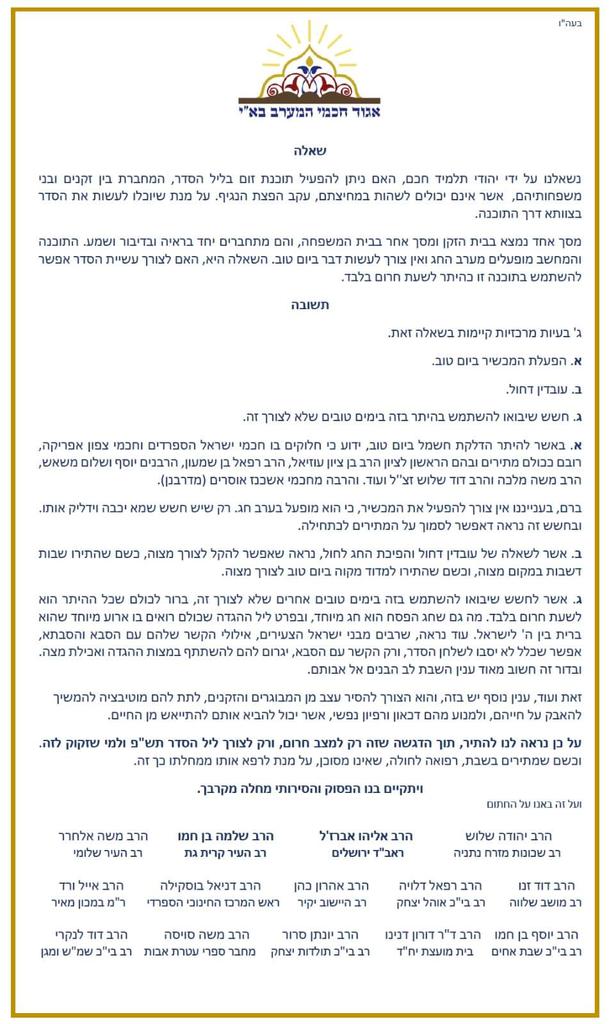
How does the above build on and depart from earlier responsa? How is it more or less convincing?
This responsa was widely rejected by the Orthodox world. For Rav Schachter's rejection, https://forum.otzar.org/download/file.php?id=85003&sid=e31d733e2bf09f7b1489fd4b0fa7a660.
At the same time, the Conservative Movement adopted their own zoom responsa, allowing wide use of zoom with a serious of restrictions: https://www.rabbinicalassembly.org/sites/default/files/2020-05/Streaming%20on%20Shabbat%20and%20Yom%20Tov%20Heller.pdf
Nevins, Electricity and Shabbat CJLS, p. 57
https://www.rabbinicalassembly.org/sites/default/files/public/halakhah/teshuvot/2011-2020/electrical-electronic-devices-shabbat.pdf
APPENDIX
Table of Rulings for Common Electronics
The variety of electrical appliances and electronic applications is vast and growing by the day. It is impossible to discuss every form available today or to anticipate what innovations will be introduced in the coming years. For this reason our project has focused on broad principles and applied them to some of the more common devices from which other applications may be extrapolated. There will certainly be need for further studies as technology and its surrounding culture continue to develop. Recall that even permitted activities may be avoided in order to further differentiate Shabbat from the weekday. Even forbidden activities may be permitted as discussed above when overridden by countervailing halakhic values such as pikuah nefesh, saving a life. We here designate activities which are biblically forbidden except to protect life as אסור . Activities which are rabbinically forbidden unless superseded by a countervailing halakhic value are categorized as ( פטור אבל אסור (פטור א"א . Another name for this is .אסור דרבנן Activities which we consider to be permitted outright are categorized as מותר .
