תַּנְיָא, הָיָה רַבִּי מֵאִיר אוֹמֵר: כׇּל תּוּשְׁבָּחוֹת הָאֲמוּרוֹת בְּסֵפֶר תְּהִלִּים כֻּלָּן דָּוִד אֲמָרָן, שֶׁנֶּאֱמַר: ״כׇּלּוּ תְפִלּוֹת דָּוִד בֶּן יִשָׁי״ (תהילים עב, כ) - אַל תִּיקְרֵי ״כׇּלּוּ״, אֶלָּא ״כׇּל אֵלּוּ״.
וּמִי כְּתָבָן?... דָּוִד כָּתַב סֵפֶר תְּהִלִּים – עַל יְדֵי עֲשָׂרָה זְקֵנִים: עַל יְדֵי אָדָם הָרִאשׁוֹן, עַל יְדֵי מַלְכִּי צֶדֶק, וְעַל יְדֵי אַבְרָהָם, וְעַל יְדֵי מֹשֶׁה, וְעַל יְדֵי הֵימָן, וְעַל יְדֵי יְדוּתוּן, וְעַל יְדֵי אָסָף, וְעַל יְדֵי שְׁלֹשָׁה בְּנֵי קֹרַח.
The baraita now considers the authors of the biblical books: And who wrote the books of the Bible?... David wrote the book of Psalms by means of ten elders of previous generations, assembling a collection that included compositions of others along with his own. He included psalms authored by Adam the first man, by Melchizedek king of Salem, and by Abraham, and by Moses, and by Heman, and by Jeduthun, and by Asaph, and by the three sons of Korah.
(י"ב) על ידי עשרה זקנים - כתב בו דברים שאמרו זקנים הללו שהיו לפניו ויש שהיו בימיו כגון אסף והימן וידותון מן הלוים המשוררים:
(12) by hand of ten elders – He wrote in it things that these elders had said who were before him, and some were in his days like Asaph and Heiman and Yedutun of the Levite singers.
(ד) ... רַבִּי הוּנָא בְּשֵׁם רַבִּי אַחָא אַף עַל פִּי שֶׁעֲשָׂרָה בְּנֵי אָדָם אָמְרוּ סֵפֶר תְּהִלִּים, מִכֻּלְּהוֹן לֹא נֶאֱמַר עַל שְׁמוֹתָם אֶלָּא עַל יְדֵי דָּוִד מֶלֶךְ יִשְׂרָאֵל. מָשְׁלוּ מָשָׁל לְמָה הַדָּבָר דּוֹמֶה, לַחֲבוּרָה שֶׁל אֲנָשִׁים הַמְבַקֶּשֶׁת לוֹמַר הִימְנוֹן לַמֶּלֶךְ, אָמַר לָהֶם הַמֶּלֶךְ כֻּלְכֶם נְעִימִים, כֻּלְכֶם חֲסִידִים, כֻּלְכֶם מְשֻׁבָּחִין לוֹמַר הִימְנוֹן לְפָנַי, אֶלָּא אִישׁ פְּלוֹנִי יֹאמַר עַל יְדֵי כֻּלְּכֶם, לָמָּה, שֶׁקּוֹלוֹ עָרֵב. כָּךְ בְּשָׁעָה שֶׁבִּקְּשׁוּ עֲשָׂרָה צַדִּיקִים לוֹמַר סֵפֶר תְּהִלִּים, אָמַר לָהֶם הַקָּדוֹשׁ בָּרוּךְ הוּא כֻּלְכֶם נְעִימִים וַחֲסִידִים וּמְשֻׁבָּחִין לוֹמַר הִימְנוֹן לְפָנַי, אֶלָּא דָּוִד יֹאמַר עַל יְדֵי כֻּלְכֶם, לָמָּה, שֶׁקּוֹלוֹ עָרֵב, הֲדָא הוּא דִכְתִיב (שמואל ב כג, א): וּנְעִים זְמִרוֹת יִשְׂרָאֵל.
(4) ... Rabbi Huna [said] in the name of Rabbi Aḥa: Even though ten people spoke in the book of Psalms, it is not attributed to them, but to David king of Israel. They stated a parable, to what is the matter analogous? To a group of people who seek to recite a hymn to the king. The king said to them: ‘You are all fine, you are all pious, you are all worthy of reciting a hymn before me; but so-and-so will recite it on behalf of all of you. Why? Because his voice is sweet.’ So too, when the ten righteous men sought to recite the book of Psalms, the Holy One blessed be He said to them: ‘You are all fine, pious, and worthy to recite a hymn before Me, but David will recite it on behalf of all of you. Why? Because his voice is sweet.’ That is what is written: “The sweet singer of Israel” (II Samuel 23:1).
(א) ר' יודן בשם ר' יהודה אמר כל מה שאמר דוד בספרו כנגדו וכנגד כל ישראל וכנגד כל העתים אמרו.
(1) Rabbi Yudan in the name of Rabbi Yehuda said, 'Everything that David said in his book, he said corresponding to himself, to all of Israel, and to all times.'
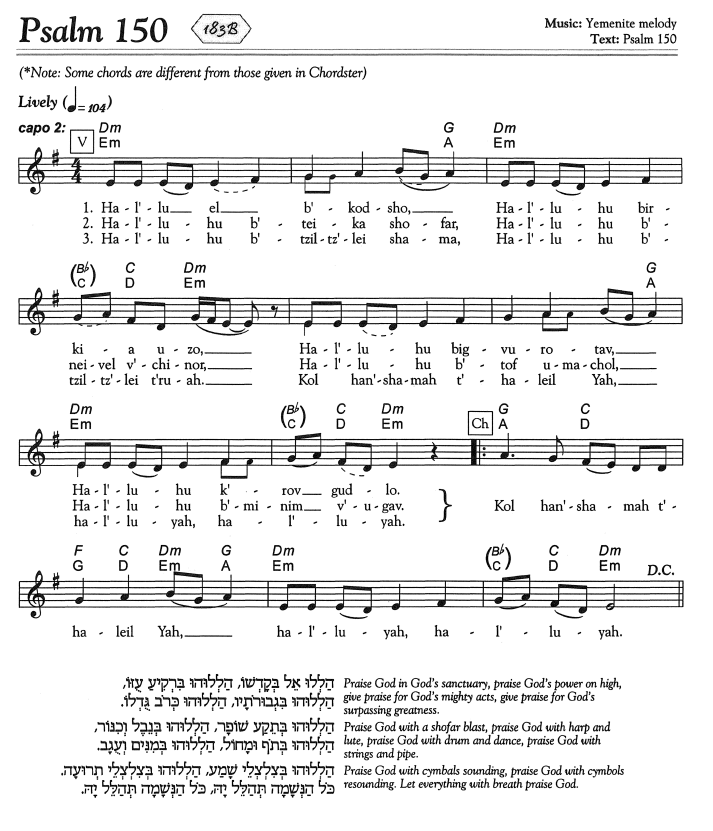
(1) Hallelujah.
Praise God in His sanctuary;
praise Him in the sky, His stronghold.
(2) Praise Him for His mighty acts;
praise Him for His exceeding greatness.
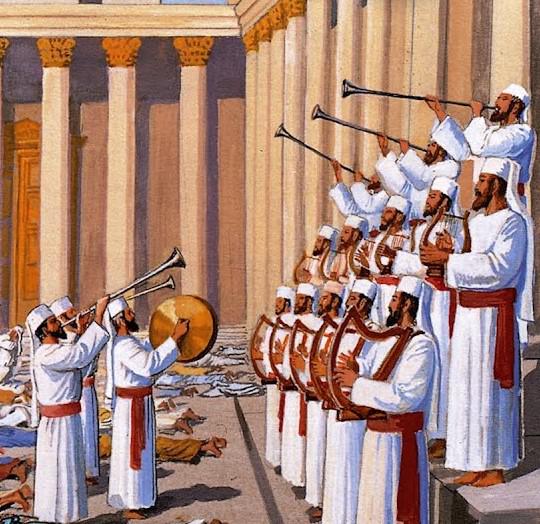
(3) Praise Him with blasts of the horn;
praise Him with harp and lyre.
(4) Praise Him with timbrel and dance;
praise Him with lute and pipe.
(5) Praise Him with resounding cymbals;
praise Him with loud-clashing cymbals.
(6) Let all that breathes praise the LORD.
Hallelujah.
- הללויה - זה המזמור יש בו שלשה עשר הלולים רמז לשלש עשרה מדות. RADAK
- בקדשו - הוא עולם המלאכים. RADAK
- עזו - ענין חוזק. David Altschuler
- בגבורותיו - בספור גבורותיו. David Altschuler
- כרוב גדלו - שהתגדל והתקדש בעמים על גאולתם. RADAK
- כרוב גדלו - כאשר גדולתו רבה. IBN EZRA
- בתקע שופר - ובכללו החצוצרות. RADAK
- בנבל - יש לו עשרה נקבים. IBN EZRA
- ועוד מעט בכלים שקולם רם מאלו הם תף ומחול ואחר כך יהללוהו במנים ועוגב שקולם עולה יותר. Romemot El, Warsaw 1875
- במינים - כלים רבים וניגון אחד. IBN EZRA
- צלצלי - המשמיעים קול גדול, וכן אמר בדברי הימים במצלתים להשמיע. כנגד הנשמות הללו יה. RADAK
- בצלצלי שמע - בכלי נגון הנקרא מצלתים המשמיע קול למרחוק. David Altschuler
- בצלצלי תרועה - המשמיעים קול תרועה. RADAK
- על כל נשימה ונשימה שישאפו רוח חיים וחסד, יהללו את ה' על חסדיו וטובותיו ומעשיו ונפלאותיו. MALBIM
- בבלי ברכות מ״ג ב:ג׳: "אָמַר רַב זוּטְרָא בַּר טוֹבִיָּה אָמַר רַב: מִנַּיִן שֶׁמְּבָרְכִין עַל הָרֵיחַ? שֶׁנֶּאֱמַר: ״כֹּל הַנְּשָׁמָה תְּהַלֵּל יָהּ״. אֵיזֶהוּ דָּבָר שֶׁהַנְּשָׁמָה נֶהֱנֵית מִמֶּנּוּ וְאֵין הַגּוּף נֶהֱנֶה מִמֶּנּוּ? הֱוֵי אוֹמֵר: זֶה הָרֵיחַ."
- תלמוד ירושלמי בכורים ג׳:ב׳:ד׳: "בַּדֶּרֶךְ הָיוּ אוֹמְרִים שָׂמַחְתִּי בְּאוֹמְרִים לִי בֵּית יי֨ נֵלֵךְ. בִּרוּשָׁלֵם הָיוּ אוֹמְרִים עוֹמְדוֹת הָיוּ רַגְלֵינוּ בִּשְׁעָרַיִיךְ יְרוּשָׁלֵם. בְּהַר הַבָּיִת הָיוּ אוֹמְרִים הַלְלוּ יָ׳הּ הַלְלוּ אֵל בְּקָדְשׁוֹ כול׳. בָּעֲזָרָה הָיוּ אוֹמְרִים כָּל הַנְּשָׁמָה תְהַלֵּל יָ׳הּ הַלְלוּ יָ׳הּ."
גְּמָ׳ הָנֵי עֲשָׂרָה מַלְכִיּוֹת כְּנֶגֶד מִי? אָמַר רַבִּי: כְּנֶגֶד עֲשָׂרָה הִלּוּלִים שֶׁאָמַר דָּוִד בְּסֵפֶר תְּהִלִּים. הִלּוּלִים טוּבָא הָווּ! הָנָךְ דִּכְתִיב בְּהוּ ״הַלְלוּהוּ בְּתֵקַע שׁוֹפָר״.
(א) הללויה הללו אל בקדשו. רבינו האר"י ז"ל רמז כאן עשר ספירות הללו אל בקדשו כתר. הללוהו ברקיע עזו חכמה. הללוהו בגבורותיו בינה. הללוהו כרב גודלו חסד. הללוהו בתקע שופר גבורה. הללוהו בנבל וכנור ת"ת. הללוהו בתף ומחול נצח. הללוהו במינים ועוגב הוד. הללוהו בצלצלי שמע יסוד. הללוהו בצלצלי תרועה מלכות. עכ"ד רבינו האר"י זצ"ל:


(ב) עֲבוֹדָה שֶׁלָּהֶן הִיא שֶׁיִּהְיוּ שׁוֹמְרִין אֶת הַמִּקְדָּשׁ. וְיִהְיוּ מֵהֶן שׁוֹעֲרִין לִפְתֹּחַ שַׁעֲרֵי הַמִּקְדָּשׁ וּלְהָגִיף דַּלְתוֹתָיו. וְיִהְיוּ מֵהֶן מְשׁוֹרְרִין לְשׁוֹרֵר עַל הַקָּרְבָּן בְּכָל יוֹם. שֶׁנֶּאֱמַר (דברים יח ז) "וְשֵׁרֵת בְּשֵׁם ה' אֱלֹהָיו כְּכָל אֶחָיו הַלְוִיִּם". אֵי זֶהוּ שֵׁרוּת שֶׁהוּא בְּשֵׁם ה' הֱוֵי אוֹמֵר זוֹ שִׁירָה. וּמָתַי אוֹמֵר שִׁירָה עַל כָּל עוֹלוֹת הַצִּבּוּר הַחוֹבָה וְעַל שַׁלְמֵי עֲצֶרֶת בְּעֵת נִסּוּךְ הַיַּיִן...
(ג) לֵוִי הָאוֹנֵן מֻתָּר לַעֲבֹד וּלְשׁוֹרֵר. וְאֵין פּוֹחֲתִין מִשְּׁנֵים עָשָׂר לְוִיִּם עוֹמְדִים עַל הַדּוּכָן בְּכָל יוֹם לוֹמַר שִׁירָה עַל הַקָּרְבָּן וּמוֹסִיפִין עַד לְעוֹלָם וְאֵין אוֹמְרִין שִׁירָה אֶלָּא בַּפֶּה בְּלֹא כְּלִי שֶׁעִקַּר הַשִּׁירָה שֶׁהִיא עֲבוֹדָתָם בַּפֶּה. וַאֲחֵרִים הָיוּ עוֹמְדִים שָׁם מְנַגְּנִין בִּכְלֵי שִׁיר. מֵהֶן לְוִיִּם וּמֵהֶן יִשְׂרְאֵלִים מְיֻחָסִין הַמַּשִּׂיאִין לִכְהֻנָּה. שֶׁאֵין עוֹלֶה עַל הַדּוּכָן אֶלָּא מְיֻחָס. וְאֵין אֵלּוּ הַמְשׁוֹרְרִים עַל פִּי הַכֵּלִים עוֹלִין לְמִנְיַן הַשְּׁנֵים עָשָׂר:
(2) Their service was to guard the Temple. Among [the Levities], there were gate-keepers who would open the gates of the Temple and close its doors. And there were singers who would accompany the sacrifices with song each day. [The latter concept is derived from the exegesis of Deuteronomy 18:7]: "And he shall serve in the name of God, his Lord, as all of his Levite brethren." Which service involves [invoking] the name of God? I would say: song.
When were songs recited? At the time that the wine libations [accompanying] all the communal burnt offerings, and the peace offerings brought on Shavuous, were brought...
(3) A Levite who is in an acute state of mourning is permitted to perform his service and sing. There should never be less than twelve Levites standing on the duchan each day to recite the songs over the sacrifices and their number could be increased without end. The songs were sung vocally without musical instruments, for the fundamental dimension of the song is vocalization. Others would stand on [the duchan] and play melodies with musical instruments: some of them were Levites and some of them were Israelites of distinguished lineage, fit to marry into the priesthood. For only a person of distinguished lineage was allowed to ascend to the duchan. The people who play musical instruments are not included in the number of the twelve singers [required].