


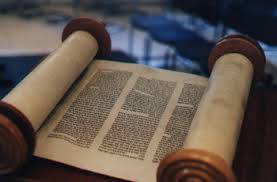

The 'toughening'/thickening of Pharaoh's heart
(1) AND PHARAOH’S HEART WAS HARDENED. By itself. (God did not harden Pharaoh’s heart. Pharaoh hardened it himself.) Pharaoh saw that the magicians were able to do what Aaron did.63Change their rods into serpents.
לאחר שהסתיים הראיון בסירובו של פרעה, לא נשאר אלא להמשיך לפעול לפי התכנית שנקבעה מלכתחילה, ולהטיל על פרעה ועל עמו את הנגעים שיענשו אותם על שעבוד ישראל ויַביאו אותם, דרגה אחר דרגה, לידי ההחלטה לשחרר את העם המשועבד.
Cassuto:
After the interview ended with Pharaoh's refusal, the only course of action was to continue to operate according to the plan decided upon from the start, and to impose on Pharaoh and his people the plagues that will punish them for enslaving the Israelites and cause those plagues to occur, step by step, until they release the people from slavery...
(1) ולא ישמע אליכם פרעה; not before the plague materialises after the warning, nor even after the plague did come to pass. He will not listen to you even after having endured many such plagues. Seeing that this is so, I will be forced to bring retribution upon them. This retribution will take the form of the killing of the firstborn as well as the drowning of all the military might of Egypt in the sea. The retribution will be seen as a punishment to fit their crimes. All the other plagues are only designed to encourage repentance, not as a form of retribution. Four times the Torah introduces this objective of the plagues. In 7,17 the Torah writes למען תדע כי אני ה', “so that you will know that I am the Lord.” In 8,18 the Torah writes: בעבור תדע כי אני ה' בקרב הארץ, “so that you will know that I am the Lord in the midst of the earth (not only in heaven).” In 9,29 the Torah writes: למען שיתי אותותי אלה בקרבו ולמען תספר...וידעתם, “this is why I perform all these miracles of Mine right in its midst, so that you will tell…. and finally realise that there is no one like Me anywhere (9,14).”
לא ישמע אליכם פרעה, לא יספיקוה מופתים שאמרנו להכניע לבבו לפי שאין בהם צער גדול לגופו:
Be'ur Yashar/Reggio:
Pharaoh will not listen to you: The wonders will not be sufficient to persuade Pharaoh's heart since they do not impose a great suffering on the body.
ר"ל וגם בתשע מכות הראשונות עדיין לא ישמע, ואז ונתתי את ידי במצרים היא מכת בכורות שזה מיוחד ליד ה',
Malbim:
...the first 9 plagues will not cause Pharaoh to listen to you, so then "I will set My hand against Egypt", this is the slaying of the first born that is unique to God
והוצאתי את בני ישראל מתוכם. להורות שתכלית המכות היה להוציאם מתוכם על כרחם.
Tzror Hamor:
"I will take them out", this teaches the purpose of the plagues is to take them out against their will *
(i.e. they don't want to go out, they need convincing)
As with the first six plagues, the threat is long and the actual carrying-out brief. Note the relationship, at the end of the episode, between the uncaring Pharaoh and his own people, who have to scratch for water.
(In other words, Pharaoh is self-centered even with regard to his own people. He's willing for them to endure suffering on account of himself, his decisions.)
https://www.thetorah.com/article/the-ethical-problem-of-hardening-pharaohs-heart
Rashi: God Gave Pharaoh a Chance
In his gloss on Exodus 7:3, Rashi states,
ואני אקשה - מאחר שהרשיע והתריס כנגדי, וגלוי לפני שאין נחת רוח באומות עובדי עבודה זרה לתת לב שלם לשוב, טוב לי שיתקשה לבו למען הרבות בו אותותי ותכירו אתם את גבורותי.
“And I will stiffen” – After Pharaoh acted wickedly toward Me, and it was clear to Me that the idolatrous nations (‘umot ) do not have the sensitivity (nahat ruah) to repent with a whole heart. It is therefore good and just (tov) that God harden his heart in order to multiply His signs so that you will recognize His might.
וכן מדתו של הקדוש ברוך הוא מביא פורענות על האומות עובדי עבודה זרה כדי שישמעו ישראל וייראו. שנאמר: הִכְרַ֣תִּי גוֹיִ֗ם נָשַׁ֙מּוּ֙ פִּנּוֹתָ֔ם הֶחֱרַ֥בְתִּי חֽוּצוֹתָ֖ם מִבְּלִ֣י עוֹבֵ֑ר נִצְדּ֧וּ עָרֵיהֶ֛ם מִבְּלִי־אִ֖ישׁ מֵאֵ֥ין יוֹשֵֽׁב: אָמַ֜רְתִּי אַךְ־תִּירְאִ֤י אוֹתִי֙ תִּקְחִ֣י מוּסָ֔ר וְלֹֽא־יִכָּרֵ֣ת מְעוֹנָ֔הּ כֹּ֥ל אֲשֶׁר־פָּקַ֖דְתִּי עָלֶ֑יהָ אָכֵן֙ הִשְׁכִּ֣ימוּ הִשְׁחִ֔יתוּ כֹּ֖ל עֲלִילוֹתָֽם:
This is the way of God (midato shel Ha-Kadosh Barukh Hu). He brings calamity upon the nations in order that Israel hear and fear Him. As it says (Zephaniah 3:6-7), “I wiped out nations: Their corner towers are desolate. I turned their thoroughfares into ruins, With none passing by; Their towns lie waste without people, Without inhabitants. And I thought that she would fear Me, Would learn a lesson And that the punishment I brought on them Would not be lost on her. Instead, all the more eagerly They have practiced corruption in all their deeds.”[9]
ואף על פי כן בחמש מכות הראשונות לא נאמר ויחזק ה' את לב פרעה, אלא ויחזק לב פרעה:
Even so, in the first five plagues, it does not say “and God stiffened Pharaoh’s heart” rather, “Pharaoh’s heart stiffened.”
Rashi’s comment is made up of three parts:
- An observation about why God would harden Pharaoh’s heart (Rashi’s own reading).
- Proof that this fits with God’s treatment of gentiles in general (Talmud).
- An observation that God waited until the 6th plague to do this (Midrash Tanchuma).
Invoking Pharaoh’s past wickedness, however, does not appear to be sufficient justification for Rashi. Thus, he appends a final point that he takes from Midrash Tanchuma,[10] that Pharaoh had ample opportunity to comply, but that after a certain time, God punished him by refusing to allow him to repent. In my view, this addition suggests that Rashi is uncomfortable with the ontological distinction in the Talmudic position upon which his prooftext is based,[11] and needs to justify this position in the narrative itself. Tanchuma helps him do that.[12]
When read as a whole, Rashi’s comment tells us that Pharaoh only lost his ability to comply with God’s demands after he had five chances to do so and because God knew in advance that he wouldn’t. This modifies the Talmudic dictum that God punishes the nations for the sake of Israel by adding the caveat that God does so only when they deserve it and have been given the opportunity to repent and avoid the punishment.[13]
Nahmanides: Making Sure Pharaoh Is Sufficiently Punished
Nahmanides’ gloss on Exod. 4:21 suggests that Moses might be upset at God’s decision to harden Pharaoh’s heart and might actually feel some sympathy for him.
ואני אחזק את לבו, ואל תתיאש אתה מלעשותם בעבור כן, ועוד תזהיר אותו במכה האחרונה אשר בה ישלחם.
“And I will stiffen his heart” – Moses, do not hold back from doing exactly what I say because of this (=my hardening his heart). Also, remember to warn Pharaoh about the last plague (the killing of the first born), the plague that will eventually set you free.
Implied here is that Moses will recognize Pharaoh’s desire to liberate Israel and his inability to actualize that desire. While this could easily (and justifiably) result in Moses’ protesting the ethics of this unfolding event, and the implications for Israel in the future, God warns him to not allow Pharaoh’s suffering (his inability to change his mind) and God’s torture (hardening his heart) to derail the process of Israel’s liberation.
I use the term “torture” knowing it is understandably problematic and intentionally provocative. However, I think it suitably describes God’s “cruel and unusual” punishment—as understood by Nahmanides—for two reasons:
- Moses is warned not to have mercy on Pharaoh, implying that mercy would be warranted given that Pharaoh was at the mercy of a God who is causing him to suffer.
- God reminds Moses to tell Pharaoh that he, through his obstinacy, will be the murderer of his own son, resulting from Israel’s continued bondage, and that Pharaoh is powerless to reverse that decree.
Needed to Accomplish Sufficient Punishment
Nahmanides deepens his investment in the notion of cruel and unusual punishment in his gloss on Exod. 7:3:
והנה פירשו בשאלה אשר ישאלו הכל, אם השם הקשה את לבו מה פשעו, ויש בו שני טעמים ושניהם אמת.
I will answer the question that all who read this narrative are want to ask; “If God hardens Pharaoh’s heart what is his sin?” There are two reasons both of which are true.
האחד, כי פרעה ברשעו אשר עשה לישראל רעות גדולות חנם, נתחייב למנוע ממנו דרכי תשובה, כאשר באו בזה פסוקים רבים בתורה ובכתובים, ולפי מעשיו הראשונים נדון.
The first reason is that Pharaoh, in his wickedness, committed unwarranted acts of evil against Israel. As a result, hi s ability to repent was removed. There are many verses in Scripture that suggest that one can be judged by one’s earlier actions (ma’asav ha-rishonim ) [justifying the removal of repentance that would alleviate or soften the punishment for those earlier actions - SM].
והטעם השני, כי היו חצי המכות עליו בפשעו, כי לא נאמר בהן רק ויחזק לב פרעה (להלן פסוק יג, כב, ח טו), ויכבד פרעה את לבו (להלן ח כח, ט ז). הנה לא רצה לשלחם לכבוד השם, אבל כאשר גברו המכות עליו ונלאה לסבול אותם, רך לבו והיה נמלך לשלחם מכובד המכות, לא לעשות רצון בוראו. ואז הקשה השם את רוחו ואמץ את לבבו למען ספר שמו...
The second reason is that his sin was his unwillingness to liberate Israel resulting in the first five plagues, where it only says, “Pharaoh’s heart was stiffened,” or “Pharaoh’s heart was hardened.” This exhibits that he did not want to liberate Israel to honor God. However, when the plagues intensified and he began to suffer from them, his heart was softened and he was wont to free them because of the plagues and not in recognition of divine will. At that point, God hardened his spirit and strengthened his heart in order to make His name known…
The first reason could simply be an example of just punishment (mida k’neged mida ). Pharaoh enslaves Israel and, in doing, so, takes away their free will, as slavery is the loss of agency. God then punishes Pharaoh by taking away his free will. Pharaoh becomes a slave to God as a punishment for enslaving Israel.[14]
But why would God have to relinquish Pharaoh’s free will in order to “punish his earlier actions”? Couldn’t God just punish Pharaoh for his earlier actions after liberating Israel while allowing him to retain his free will? Apparently, according to Nahmanides, if Pharaoh had repented as opposed to simply given up and let them go, God could not have punished him as severely for his previous actions.
The second reason suggests that Pharaoh’s sin was (also) his unwillingness to liberate Israel out of recognition of God, since in the first five plagues Pharaoh was aware of God’s demand and chose to ignore it. But this answer seems problematic.
Why is it not sufficient for Pharaoh to liberate Israel by recognizing the force of the plagues alone? Why must he do so because he recognizes God?[15]
Moreover, doesn’t this second reason explicitly contradicts Exodus 4:22, in which God says to Moses in the wilderness—before Pharaoh refuses God’s demand in the first five plagues—that He will harden Pharaoh’s heart. According to this verse, Pharaoh’s sin could not have been his volitional refusal to liberate Israel (the first five plagues, constituting disobedience to God) but must be the act of enslaving Israel in the first place.[16]
In my view, Nahmanides’ solution is not sufficient, either for interpreting the biblical narrative or for addressing the larger ethical issues that arise from it.
Maimonides: Awareness of the Loss of Free Will and the Inability to Rectify It
Maimonides addresses this issue in two places: in his legal code, Mishneh Torah, the “Laws of Repentance,” and in his introduction to his commentary on the Mishna tractate Ethics of the Fathers, called the “Eight Chapters.”[17]
Maimonides is not primarily a biblical exegete; he is not concerned with making sense of the verses in question (Rashi) or the story as a whole (Nahmanides). Rather, he uses these verses to illustrate a legal category (repentance) and a philosophical idea (free will). The nullification of Pharaoh’s free will must make sense legally and philosophically and, I would add, universally, for it to work as an exegetical solution.
In Mishneh Torah (Laws of Repentance 6:2), Maimonides very cogently elucidates free will as the foundation of repentance:
...כשם שהאדם חוטא מדעתו וברצונו כך הוא עושה תשובה מדעתו וברצונו.
…Just as one sins willingly and knowingly, one must repent willingly and knowingly.
Maimonides posits free will as the correlation between sin and repentance, but not without limits. He cites numerous examples, including both non-Israelites and Israelites, who were prevented from repenting because of their sinful behavior, concluding (Laws of Repentance 6:2),
כולן חטאו מעצמן וכולן נתחייבו למנוע מהן התשובה.
All of them sinned willfully and deserve to be prevented from repenting.
In his Eight Chapters Maimonides makes a similar argument. Here, he is more demonstrative and explicitly rejects the notion that God punished Pharaoh for not freeing Israel in the first five plagues.
Then [according to this assumption] God requested that [Pharaoh] set them free, though he was compelled not to set them free. Then God punished him and destroyed him and his followers for not setting them free. This would have been an injustice and contrary to everything we have previously set forth (“Eight Chapters,” 90).
That is, the loss of free will is only a punishment resulting from free will (i.e., the continuous choice to act wickedly) and functions inside as well as outside God’s covenant with Israel.
According to this, the exodus has a three-fold purpose:
- to liberate Israel from bondage,
- to show non-Israelites the power of God, and
- to show the Israelites that the covenant they are about to enter, while based on reciprocity (mitzvah-sin-repentance), includes the provision that God can remove Israel’s ability to avert punishment through repentance.
This third purpose, I would argue, is the central one for Maimonides. The torturous element, according to Maimonides, is that the individual who loses free will is aware of that loss in the moment.
God may punish an individual by preventing him from choosing a certain action, and he knows it, but is unable to struggle with his soul and drive it back to make this choice (“Eight Chapters,” 91).
As I understand Maimonides’ point in this oblique passage, an individual may know that he or she cannot act in a certain way because God is preventing him or her from doing so (i.e., the punishment is the temporary erasure of his free will. Even that knowledge, however, is not sufficient for the individual to gain control of his behavior such that God will lift the punishment. That is, a person can be conscious that his inability to act is itself a punishment but still be unable to chose to do the very thing that would lift the punishment.
Covenantal Ethics
For Maimonides, for the Israelites to enter into a covenant with God properly, they need to understand that the power they are given to control their own actions and destiny is not fully their own, but still the property of God. That is, their autonomy is not an erasure of servitude but a particular expression of it. Abuse of this autonomous power through sin can result in the (temporary) loss of that power, i.e., the temporary removal of free will. But, the loss of power does not negate the covenantal relationship; it traps one side in the consequences of its own actions, acutely aware of that loss as they try hopelessly to enact their will.
In Maimonides’ reading of this story, freedom of the will is never absolute in the biblical imagination, and thus covenantal ethics cannot be fully reciprocal as it includes the caveat of servitude. Ironically, in my reading of Maimonides, we do not learn this from any interaction between God and Israel. For this important lesson, Pharaoh is our teacher.
(א) אַל תְּהִי צַדִּיק הַרְבֵּה וְאַל תִּתְחַכֵּם יוֹתֵר, אַל תְּהִי צַדִּיק הַרְבֵּה יוֹתֵר מִבּוֹרַאֲךָ, מְדַבֵּר בְּשָׁאוּל, דִּכְתִיב (שמואל א טו, ה): וַיָּבֹא שָׁאוּל עַד עִיר עֲמָלֵק וגו', רַבִּי הוּנָא וְרַבִּי בְּנָיָה אוֹמֵר הִתְחִיל מִדַּיֵּן הוּא כְּנֶגֶד בּוֹרְאוֹ, וְאָמַר כָּךְ אָמַר הַקָּדוֹשׁ בָּרוּךְ הוּא: לֵךְ וְהִכִּיתָ אֶת עֲמָלֵק, אִם אֲנָשִׁים חָטְאוּ הַנָּשִׁים מֶה חָטְאוּ, וְהַטַּף מֶה חָטְאוּ, וְהַבָּקָר וְשׁוֹר וַחֲמוֹר מֶה חָטְאוּ. יָצָאת בַּת קוֹל וְאָמְרָה: אַל תְּהִי צַדִּיק הַרְבֵּה, יוֹתֵר מִבּוֹרַאֲךָ. וְרַבָּנָן אָמְרֵי הִתְחִיל מִדַּיֵּן כְּנֶגֶד עֶגְלָה עֲרוּפָה...
(1) “Do not be overly righteous, and do not be exceedingly wise; why should you be be destroyed?” (Ecclesiastes 7:16)
Rabbi Shimon ben Lakish says: Anyone who becomes compassionate when he should be cruel will ultimately become cruel when he should be compassionate, as it is stated: “And Nov, the city of priests, he smote by sword” (I Samuel 22:19).116This was carried out at Saul’s command. Should Nov not be like descendants of Amalek? The Rabbis say: Anyone who becomes compassionate when he should be cruel, ultimately, the attribute of justice will harm him, as it is stated: “Saul and his three sons died” (I Samuel 31:6).