Save " Lighting The Menorah in the Face of Antisemitism "
Lighting The Menorah in the Face of Antisemitism
CNN Headline (11/30/23)
“As a Jewish person, do you plan to put your menorah
in a window this Hanukkah?”
https://www.cnn.com/2023/12/07/us/celebrating-hanukkah-israel-hamas-war-cec/index.html
Jean Joachim’s menorah has been sitting in the window of her first-floor New York City apartment for more than a decade.... But a few weeks ago, the 75-year-old romance writer had a sobering realization. She caught a glimpse of the menorah from across her kitchen, and she did something she never imagined she’d have to: She moved it inside, where only she can see it.
“I didn’t want to put myself at risk,” she says. “I feel bad about it. But I think you have to be practical and see what’s happening these days and protect yourself.”
Across the country in Seattle, Richard Sills is doing something he’s never done as an adult. It’s been decades since his family kept a menorah in the window when he was a boy. This year, for the first time, the 70-year-old decided to display one in the window of his own home.
“I want to stand up for my heritage … and for all Jews,” he says. “I want to do the opposite of hide.”
In Europe, soaring antisemitism popularizes a new invention:
The Camouflaged Mezuzah
Disguised to resemble an alarm sensor, Camozuzah is brainchild of Ireland-based Chabad rabbi; it’s increased adoption underlines surge in hostility to Jews amid Israel-Hamas war.
The Holocaust Menorah
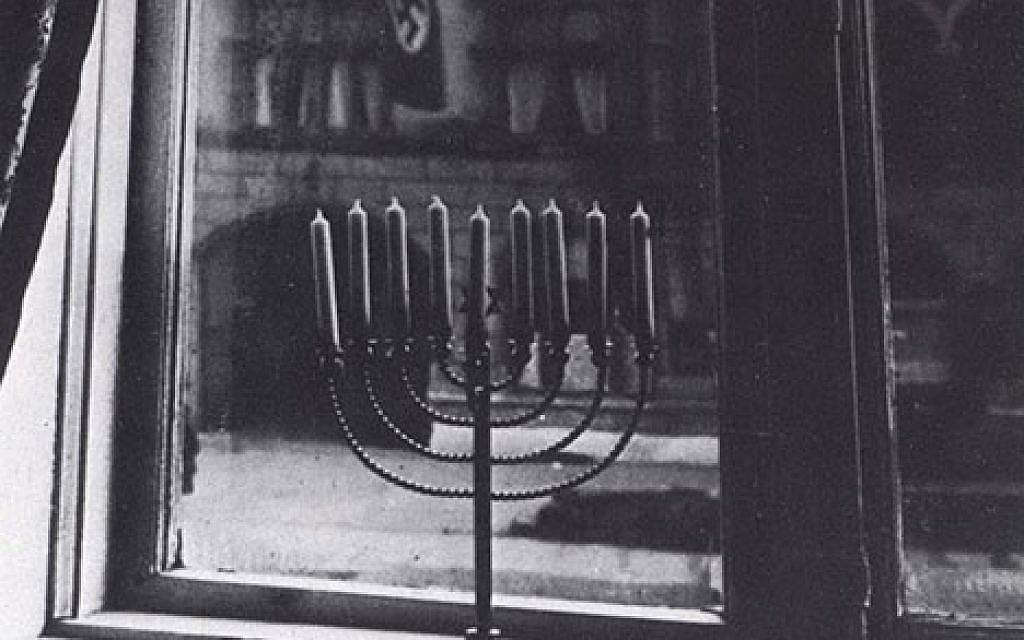
On Hanukkah 1932, just one month before Hitler came to power, Rachel Posner, wife of Rabbi Dr. Akiva Posner, took this photo of the family Hanukkah menorah from the window ledge of the family home looking out onto the building across the road decorated with Nazi flags.
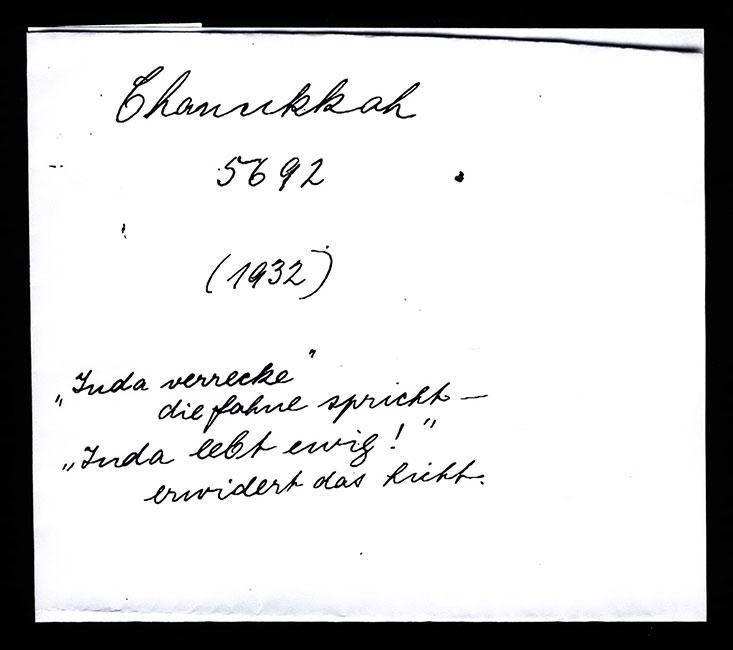
On the back of the photograph, Rachel Posner wrote in German (translated here): Chanukah 5692 (1932). "Death to Judah," so the flag says. "Judah will live forever," so the light answers.
Rabbi Dr. Akiva Posner, Doctor of Philosophy from Halle-Wittenberg University, served from 1924–1933 as the last Rabbi of the community of Kiel, Germany. After Rabbi Posner publicized a protest letter in the local press expressing indignation at the posters that had appeared in the city, “Entrance to Jews Forbidden”, he was summoned by the chairman of the local branch of the Nazi party to participate in a public debate. The event took place under heavy police guard and was reported by the local press.
When the tension and violence in the city intensified, the Rabbi responded to the pleas of his community to flee with his wife Rachel and their three children and make their way to Eretz Israel. Before their departure, Rabbi Posner was able to convince many of his congregants to leave as well and indeed most managed to leave for Eretz Israel or the United States. The Posner family left Germany in 1933 and arrived in Eretz Israel in 1934.

(ז) מִצְוַת נֵר חֲנֻכָּה, לְהַדְלִיק בַּפֶּתַח הַסָּמוּךְ לִרְשׁוּת הָרַבִּים, מִשּׁוּם פִּרְסוּמֵי נִסָּא, וְכָךְ הָיוּ עוֹשִׂין בִּזְמַן הַמִּשְׁנָה וְהַגְּמָרָא. וּבַזְּמַן הַזֶּה שֶׁאָנוּ דָרִים בֵּין הָאֻמּוֹת, מַדְלִיקִין בַּבַּיִת שֶׁהוּא דָר בּוֹ. וְאִם יֶשׁ לוֹ חַלּוֹן לִרְשׁוּת הָרַבִּים, יַדְלִיקֵם שָׁם. וְאִם לָאו, מַדְלִיקָן אֵצֶל הַפָּתַח. וּמִצְוָה שֶׁיַנִּיחֵם בַּטֶּפַח הַסָּמוּךְ לַפֶּתַח מִשְּׂמֹאל, שֶׁתְּהֵא מְזוּזָה מִיָמִין, וְנֵר חֲנֻכָּה מִשְּׂמֹאל, וְנִמְצָא שֶהוּא מְסֻבָּב בְּמִצְוֹת. וְיוֹתֵר טוֹב לְהַנִּיחָם בַּחֲלַל הַפָּתַח.

(7) It is a mitzvah to light the menorah in the doorway that opens to the street, [public domain], in order to publicize the miracle; and it was done in this manner in the days of the Mishnah and the Talmud. Now, since we live among non-Jews, we light the menorah in the house, and if you have a window facing the street, you should light it there; if not, you should light it near the door. It is a mitzvah to place the menorah within a tefach of the left side of the door so that the mezuzah will be on the right and the Chanukah lights on the left, and in so doing you find yourself surrounded by mitzvot. It is preferable to place the menorah within the open space of the door.

Yehuda Avner quotes an incredible conversation he had with
the Lubavitcher Rebbe, Reb Menachem Mendel Schneerson, z”tl
‘Reb Yehuda, let me tell you what I try to do. Imagine you are looking at a candle. What you are really seeing is a mere lump of wax with a thread down the middle. So when do the thread and wax become a candle? Or, in other words, when do they fulfill the purpose for which they were created? When you put a flame to the thread, then the wax and the thread become a candle.’ Then his voice flowed into the rhythmic cadence of the Talmud scholar poring over his text, so that what he said next came out as a chant: ‘The wax is the body and the wick is the soul. Bring the flame of Torah to the soul, then the body will fulfill the purpose for which it was created. And that, Reb Yehuda, is what I try to do--to ignite the soul of every Jew with the fire of Torah, with the passion of our tradition, and the sanctity of our heritage, so that each individual will fulfill the real purpose for which he or she was created.’
When I rose to bid my farewells, the Rebbe escorted me to the door, and there I asked him, ‘Has the Rebbe lit my candle?’ ‘No,’ he said, clasping my hand. ‘I have given you the match. Only you can light your own candle.’”

ת"ר לפי שראה אדם הראשון יום שמתמעט והולך אמר אוי לי שמא בשביל שסרחתי עולם חשוך בעדי וחוזר לתוהו ובוהו וזו היא מיתה שנקנסה עלי מן השמים עמד וישב ח' ימים בתענית [ובתפלה]כיון שראה תקופת טבת וראה יום שמאריך והולך אמר מנהגו של עולם הוא הלך ועשה שמונה ימים טובים

The Sages taught: When Adam the first man saw that the day was progressively diminishing, as the days become shorter from the autumnal equinox until the winter solstice, he did not yet know that this is a normal phenomenon, and therefore he said: Woe is me; perhaps because I sinned the world is becoming dark around me and will ultimately return tochaos and disorder. And this is the death that was sentenced upon me from Heaven. He arose and spent eight days in fasting and in prayer.Once he saw that the season of Tevet, i.e., the winter solstice, had arrived, and saw that the day was progressively lengthening after the solstice, he said: Clearly, the days become shorter and then longer, and this is the order of the world. He went and observed a festival for eight days.

Reflection Questions
  • What comes up for you when thinking about making your Menorah more visible?
  • This year, where do you want to shine your light?