


(יז) מְכַשֵּׁפָ֖ה לֹ֥א תְחַיֶּֽה׃
(17) A witch: do not let her live.
Magic is a political term, used for non-authorized spiritual practitioners usually working with individuals under the radar. Other than that, witches might not be doing things that are different from authorized spiritual practitioners.
(י) וַיָּבֹ֨א מֹשֶׁ֤ה וְאַהֲרֹן֙ אֶל־פַּרְעֹ֔ה וַיַּ֣עֲשׂוּ כֵ֔ן כַּאֲשֶׁ֖ר צִוָּ֣ה יהוה וַיַּשְׁלֵ֨ךְ אַהֲרֹ֜ן אֶת־מַטֵּ֗הוּ לִפְנֵ֥י פַרְעֹ֛ה וְלִפְנֵ֥י עֲבָדָ֖יו וַיְהִ֥י לְתַנִּֽין׃ (יא) וַיִּקְרָא֙ גַּם־פַּרְעֹ֔ה לַֽחֲכָמִ֖ים וְלַֽמְכַשְּׁפִ֑ים וַיַּֽעֲשׂ֨וּ גַם־הֵ֜ם חַרְטֻמֵּ֥י מִצְרַ֛יִם בְּלַהֲטֵיהֶ֖ם כֵּֽן׃ (יב) וַיַּשְׁלִ֙יכוּ֙ אִ֣ישׁ מַטֵּ֔הוּ וַיִּהְי֖וּ לְתַנִּינִ֑ם וַיִּבְלַ֥ע מַטֵּֽה־אַהֲרֹ֖ן אֶת־מַטֹּתָֽם׃
(10) So Moses and Aaron came before Pharaoh and did just as the Divinehad commanded: Aaron cast down his rod in the presence of Pharaoh and his courtiers, and it turned into a serpent. (11) Then Pharaoh, for his part, summoned the sages and the sorcerers; and the Egyptian magician-priests, in turn, did the same with their spells: (12) each cast down his rod, and they turned into serpents. But Aaron’s rod swallowed their rods.
(כא) וַיְדַבֵּ֨ר מֹשֶׁ֜ה אֶל־בְּנֵ֣י יִשְׂרָאֵ֗ל וַיִּתְּנ֣וּ אֵלָ֣יו ׀ כׇּֽל־נְשִׂיאֵיהֶ֡ם מַטֶּה֩ לְנָשִׂ֨יא אֶחָ֜ד מַטֶּ֨ה לְנָשִׂ֤יא אֶחָד֙ לְבֵ֣ית אֲבֹתָ֔ם שְׁנֵ֥ים עָשָׂ֖ר מַטּ֑וֹת וּמַטֵּ֥ה אַהֲרֹ֖ן בְּת֥וֹךְ מַטּוֹתָֽם׃ (כב) וַיַּנַּ֥ח מֹשֶׁ֛ה אֶת־הַמַּטֹּ֖ת לִפְנֵ֣י יהוה בְּאֹ֖הֶל הָעֵדֻֽת׃ (כג) וַיְהִ֣י מִֽמׇּחֳרָ֗ת וַיָּבֹ֤א מֹשֶׁה֙ אֶל־אֹ֣הֶל הָעֵד֔וּת וְהִנֵּ֛ה פָּרַ֥ח מַטֵּֽה־אַהֲרֹ֖ן לְבֵ֣ית לֵוִ֑י וַיֹּ֤צֵֽא פֶ֙רַח֙ וַיָּ֣צֵֽץ צִ֔יץ וַיִּגְמֹ֖ל שְׁקֵדִֽים׃
(21) Moses spoke thus to the Israelites. Their chieftains gave him a staff for each chieftain of an ancestral house, twelve staffs in all; among these staffs was that of Aaron. (22) Moses deposited the staffs before the Divine, in the Tent of Testimony. (23) The next day Moses entered the Tent of the Pact, and there the staff of Aaron of the house of Levi had sprouted: it had brought forth sprouts, produced blossoms, and borne almonds.
(יא) וַיָּ֨רֶם מֹשֶׁ֜ה אֶת־יָד֗וֹ וַיַּ֧ךְ אֶת־הַסֶּ֛לַע בְּמַטֵּ֖הוּ פַּעֲמָ֑יִם וַיֵּצְאוּ֙ מַ֣יִם רַבִּ֔ים וַתֵּ֥שְׁתְּ הָעֵדָ֖ה וּבְעִירָֽם׃ {ס}
(11) And Moses raised his hand and struck the rock twice with his rod. Out came copious water, and the community and their beasts drank.
(יב) אָ֣ז יְדַבֵּ֤ר יְהוֹשֻׁעַ֙ לַֽיהוה בְּי֗וֹם תֵּ֤ת יהוה אֶת־הָ֣אֱמֹרִ֔י לִפְנֵ֖י בְּנֵ֣י יִשְׂרָאֵ֑ל וַיֹּ֣אמֶר ׀ לְעֵינֵ֣י יִשְׂרָאֵ֗ל שֶׁ֚מֶשׁ בְּגִבְע֣וֹן דּ֔וֹם וְיָרֵ֖חַ בְּעֵ֥מֶק אַיָּלֽוֹן׃ (יג) וַיִּדֹּ֨ם הַשֶּׁ֜מֶשׁ וְיָרֵ֣חַ עָמָ֗ד עַד־יִקֹּ֥ם גּוֹי֙ אֹֽיְבָ֔יו הֲלֹא־הִ֥יא כְתוּבָ֖ה עַל־סֵ֣פֶר הַיָּשָׁ֑ר וַיַּעֲמֹ֤ד הַשֶּׁ֙מֶשׁ֙ בַּחֲצִ֣י הַשָּׁמַ֔יִם וְלֹא־אָ֥ץ לָב֖וֹא כְּי֥וֹם תָּמִֽים׃
(12) On that occasion, when the Divine routed the Amorites before the Israelites, Joshua addressed the Divine; he said in the presence of the Israelites: “Stand still, O sun, at Gibeon, O moon, in the Valley of Aijalon!” (13) And the sun stood still and the moon halted, while a nation wreaked judgment on its foes—as is written in the Book of Jashar. Thus the sun halted in midheaven, and did not press on to set, for a whole day;
(ט) שְׁא֗וֹל מִתַּ֛חַת רָגְזָ֥ה לְךָ֖ לִקְרַ֣את בּוֹאֶ֑ךָ עוֹרֵ֨ר לְךָ֤ רְפָאִים֙ כׇּל־עַתּ֣וּדֵי אָ֔רֶץ הֵקִים֙ מִכִּסְאוֹתָ֔ם כֹּ֖ל מַלְכֵ֥י גוֹיִֽם׃ (י) כֻּלָּ֣ם יַעֲנ֔וּ וְיֹאמְר֖וּ אֵלֶ֑יךָ גַּם־אַתָּ֛ה חֻלֵּ֥יתָ כָמ֖וֹנוּ אֵלֵ֥ינוּ נִמְשָֽׁלְתָּ׃
(9) Sheol below was astirTo greet your coming—Rousing for you the shadesOf all earth’s chieftains,Raising from their thronesAll the kings of nations. (10) All speak up and say to you,“So you have been stricken as we were,You have become like us!
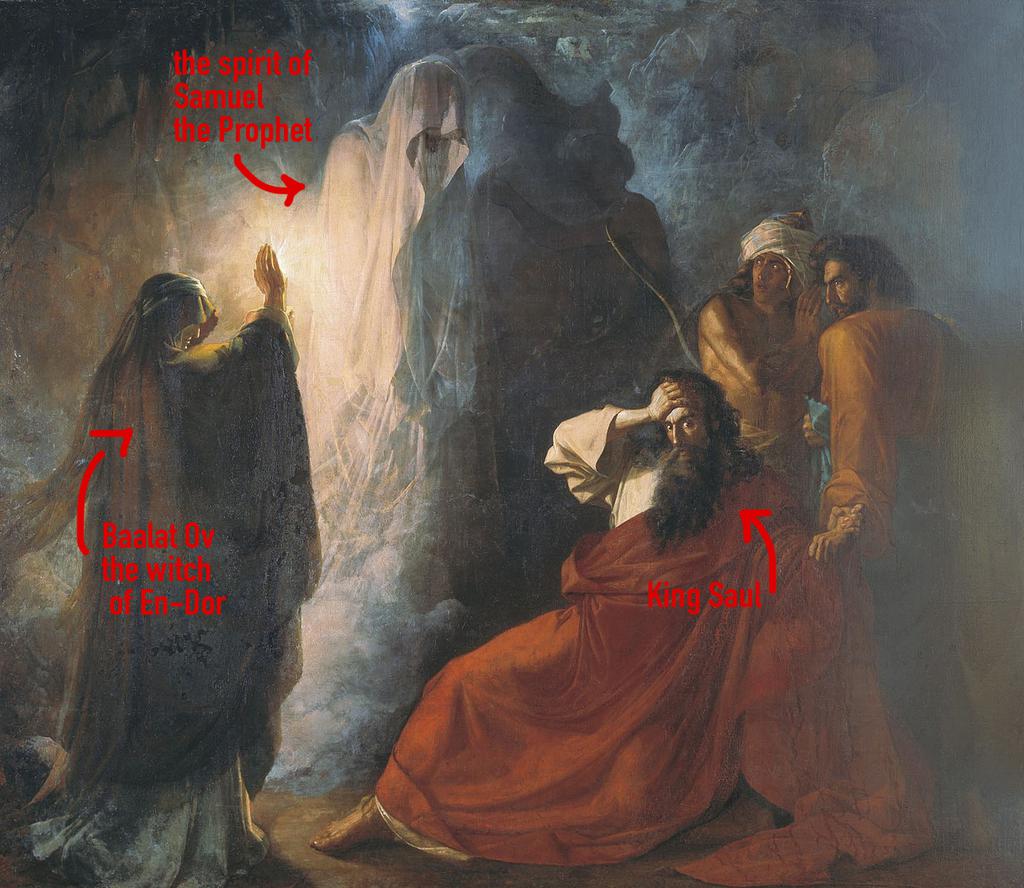
(ג) וּשְׁמוּאֵ֣ל מֵ֔ת וַיִּסְפְּדוּ־לוֹ֙ כׇּל־יִשְׂרָאֵ֔ל וַיִּקְבְּרֻ֥הוּ בָרָמָ֖ה וּבְעִיר֑וֹ וְשָׁא֗וּל הֵסִ֛יר הָאֹב֥וֹת וְאֶת־הַיִּדְּעֹנִ֖ים מֵהָאָֽרֶץ׃ (ד) וַיִּקָּבְצ֣וּ פְלִשְׁתִּ֔ים וַיָּבֹ֖אוּ וַיַּחֲנ֣וּ בְשׁוּנֵ֑ם וַיִּקְבֹּ֤ץ שָׁאוּל֙ אֶת־כׇּל־יִשְׂרָאֵ֔ל וַֽיַּחֲנ֖וּ בַּגִּלְבֹּֽעַ׃ (ה) וַיַּ֥רְא שָׁא֖וּל אֶת־מַחֲנֵ֣ה פְלִשְׁתִּ֑ים וַיִּרָ֕א וַיֶּחֱרַ֥ד לִבּ֖וֹ מְאֹֽד׃ (ו) וַיִּשְׁאַ֤ל שָׁאוּל֙ בַּיהוה וְלֹ֥א עָנָ֖הוּ יהוה גַּ֧ם בַּחֲלֹמ֛וֹת גַּ֥ם בָּאוּרִ֖ים גַּ֥ם בַּנְּבִיאִֽם׃ (ז) וַיֹּ֨אמֶר שָׁא֜וּל לַעֲבָדָ֗יו בַּקְּשׁוּ־לִי֙ אֵ֣שֶׁת בַּעֲלַת־א֔וֹב וְאֵלְכָ֥ה אֵלֶ֖יהָ וְאֶדְרְשָׁה־בָּ֑הּ וַיֹּאמְר֤וּ עֲבָדָיו֙ אֵלָ֔יו הִנֵּ֛ה אֵ֥שֶׁת בַּעֲלַת־א֖וֹב בְּעֵ֥ין דּֽוֹר׃ (ח) וַיִּתְחַפֵּ֣שׂ שָׁא֗וּל וַיִּלְבַּשׁ֙ בְּגָדִ֣ים אֲחֵרִ֔ים וַיֵּ֣לֶךְ ה֗וּא וּשְׁנֵ֤י אֲנָשִׁים֙ עִמּ֔וֹ וַיָּבֹ֥אוּ אֶל־הָאִשָּׁ֖ה לָ֑יְלָה וַיֹּ֗אמֶר (קסומי) [קָסֳמִי־]נָ֥א לִי֙ בָּא֔וֹב וְהַ֣עֲלִי לִ֔י אֵ֥ת אֲשֶׁר־אֹמַ֖ר אֵלָֽיִךְ׃ (ט) וַתֹּ֨אמֶר הָאִשָּׁ֜ה אֵלָ֗יו הִנֵּ֨ה אַתָּ֤ה יָדַ֙עְתָּ֙ אֵ֣ת אֲשֶׁר־עָשָׂ֣ה שָׁא֔וּל אֲשֶׁ֥ר הִכְרִ֛ית אֶת־הָאֹב֥וֹת וְאֶת־הַיִּדְּעֹנִ֖י מִן־הָאָ֑רֶץ וְלָמָ֥ה אַתָּ֛ה מִתְנַקֵּ֥שׁ בְּנַפְשִׁ֖י לַהֲמִיתֵֽנִי׃ (י) וַיִּשָּׁ֤בַֽע לָהּ֙ שָׁא֔וּל בַּיהוה לֵאמֹ֑ר חַי־יהוה אִֽם־יִקְּרֵ֥ךְ עָוֺ֖ן בַּדָּבָ֥ר הַזֶּֽה׃ (יא) וַתֹּ֙אמֶר֙ הָאִשָּׁ֔ה אֶת־מִ֖י אַעֲלֶה־לָּ֑ךְ וַיֹּ֕אמֶר אֶת־שְׁמוּאֵ֖ל הַֽעֲלִי־לִֽי׃ (יב) וַתֵּ֤רֶא הָאִשָּׁה֙ אֶת־שְׁמוּאֵ֔ל וַתִּזְעַ֖ק בְּק֣וֹל גָּד֑וֹל וַתֹּ֩אמֶר֩ הָאִשָּׁ֨ה אֶל־שָׁא֧וּל ׀ לֵאמֹ֛ר לָ֥מָּה רִמִּיתָ֖נִי וְאַתָּ֥ה שָׁאֽוּל׃ (יג) וַיֹּ֨אמֶר לָ֥הּ הַמֶּ֛לֶךְ אַל־תִּֽירְאִ֖י כִּ֣י מָ֣ה רָאִ֑ית וַתֹּ֤אמֶר הָאִשָּׁה֙ אֶל־שָׁא֔וּל אֱלֹהִ֥ים רָאִ֖יתִי עֹלִ֥ים מִן־הָאָֽרֶץ׃ (יד) וַיֹּ֤אמֶר לָהּ֙ מַֽה־תׇּאֳר֔וֹ וַתֹּ֗אמֶר אִ֤ישׁ זָקֵן֙ עֹלֶ֔ה וְה֥וּא עֹטֶ֖ה מְעִ֑יל וַיֵּ֤דַע שָׁאוּל֙ כִּֽי־שְׁמוּאֵ֣ל ה֔וּא וַיִּקֹּ֥ד אַפַּ֛יִם אַ֖רְצָה וַיִּשְׁתָּֽחוּ׃ {ס} (טו) וַיֹּ֤אמֶר שְׁמוּאֵל֙ אֶל־שָׁא֔וּל לָ֥מָּה הִרְגַּזְתַּ֖נִי לְהַעֲל֣וֹת אֹתִ֑י וַיֹּ֣אמֶר שָׁ֠א֠וּל צַר־לִ֨י מְאֹ֜ד וּפְלִשְׁתִּ֣ים ׀ נִלְחָמִ֣ים בִּ֗י וֵאלֹהִ֞ים סָ֤ר מֵֽעָלַי֙ וְלֹא־עָנָ֣נִי ע֗וֹד גַּ֤ם בְּיַֽד־הַנְּבִיאִים֙ גַּם־בַּ֣חֲלֹמ֔וֹת וָאֶקְרָאֶ֣ה לְךָ֔ לְהוֹדִיעֵ֖נִי מָ֥ה אֶעֱשֶֽׂה׃ {ס} (טז) וַיֹּ֣אמֶר שְׁמוּאֵ֔ל וְלָ֖מָּה תִּשְׁאָלֵ֑נִי וַיהוה סָ֥ר מֵעָלֶ֖יךָ וַיְהִ֥י עָרֶֽךָ׃ (יז) וַיַּ֤עַשׂ יהוה ל֔וֹ כַּאֲשֶׁ֖ר דִּבֶּ֣ר בְּיָדִ֑י וַיִּקְרַ֨ע יהוה אֶת־הַמַּמְלָכָה֙ מִיָּדֶ֔ךָ וַֽיִּתְּנָ֖הּ לְרֵעֲךָ֥ לְדָוִֽד׃ (יח) כַּאֲשֶׁ֤ר לֹא־שָׁמַ֙עְתָּ֙ בְּק֣וֹל יהוה וְלֹֽא־עָשִׂ֥יתָ חֲרוֹן־אַפּ֖וֹ בַּעֲמָלֵ֑ק עַל־כֵּן֙ הַדָּבָ֣ר הַזֶּ֔ה עָשָֽׂה־לְךָ֥ יהוה הַיּ֥וֹם הַזֶּֽה׃ (יט) וְיִתֵּ֣ן יהוה גַּ֣ם אֶת־יִשְׂרָאֵ֤ל עִמְּךָ֙ בְּיַד־פְּלִשְׁתִּ֔ים וּמָחָ֕ר אַתָּ֥ה וּבָנֶ֖יךָ עִמִּ֑י גַּ֚ם אֶת־מַחֲנֵ֣ה יִשְׂרָאֵ֔ל יִתֵּ֥ן יהוה בְּיַד־פְּלִשְׁתִּֽים׃ (כ) וַיְמַהֵ֣ר שָׁא֗וּל וַיִּפֹּ֤ל מְלֹא־קֽוֹמָתוֹ֙ אַ֔רְצָה וַיִּרָ֥א מְאֹ֖ד מִדִּבְרֵ֣י שְׁמוּאֵ֑ל גַּם־כֹּ֙חַ֙ לֹא־הָ֣יָה ב֔וֹ כִּ֣י לֹ֤א אָכַל֙ לֶ֔חֶם כׇּל־הַיּ֖וֹם וְכׇל־הַלָּֽיְלָה׃ (כא) וַתָּב֤וֹא הָֽאִשָּׁה֙ אֶל־שָׁא֔וּל וַתֵּ֖רֶא כִּֽי־נִבְהַ֣ל מְאֹ֑ד וַתֹּ֣אמֶר אֵלָ֗יו הִנֵּ֨ה שָֽׁמְעָ֤ה שִׁפְחָֽתְךָ֙ בְּקוֹלֶ֔ךָ וָאָשִׂ֤ים נַפְשִׁי֙ בְּכַפִּ֔י וָֽאֶשְׁמַע֙ אֶת־דְּבָרֶ֔יךָ אֲשֶׁ֥ר דִּבַּ֖רְתָּ אֵלָֽי׃ (כב) וְעַתָּ֗ה שְׁמַֽע־נָ֤א גַם־אַתָּה֙ בְּק֣וֹל שִׁפְחָתֶ֔ךָ וְאָשִׂ֧מָה לְפָנֶ֛יךָ פַּת־לֶ֖חֶם וֶאֱכ֑וֹל וִיהִ֤י בְךָ֙ כֹּ֔חַ כִּ֥י תֵלֵ֖ךְ בַּדָּֽרֶךְ׃ (כג) וַיְמָאֵ֗ן וַיֹּ֙אמֶר֙ לֹ֣א אֹכַ֔ל וַיִּפְרְצוּ־ב֤וֹ עֲבָדָיו֙ וְגַם־הָ֣אִשָּׁ֔ה וַיִּשְׁמַ֖ע לְקֹלָ֑ם וַיָּ֙קׇם֙ מֵֽהָאָ֔רֶץ וַיֵּ֖שֶׁב אֶל־הַמִּטָּֽה׃ (כד) וְלָאִשָּׁ֤ה עֵֽגֶל־מַרְבֵּק֙ בַּבַּ֔יִת וַתְּמַהֵ֖ר וַתִּזְבָּחֵ֑הוּ וַתִּקַּח־קֶ֣מַח וַתָּ֔לָשׁ וַתֹּפֵ֖הוּ מַצּֽוֹת׃ (כה) וַתַּגֵּ֧שׁ לִפְנֵי־שָׁא֛וּל וְלִפְנֵ֥י עֲבָדָ֖יו וַיֹּאכֵ֑לוּ וַיָּקֻ֥מוּ וַיֵּלְכ֖וּ בַּלַּ֥יְלָה הַהֽוּא׃ {פ}
(3) Now Samuel (the prophet) had died and all Israel made lament for him; and he was buried in his own town of Ramah. And Saul (the king) had forbidden (connecting with) ghosts and familiar spirits in the land.
(4) The Philistines (at war with Israel) gathered and they marched to Shunem and encamped; and Saul gathered all Israel, and they encamped at Gilboa.
(5) When Saul saw the Philistine force, his heart trembled with fear.
(6) And Saul inquired of the Divine, but the Divine did not answer him, either by dreams or by urim (magical divination stones of the Jewish priests) or by prophets.
(7) Then Saul said to his servants, “Find me a 'baalat ov'/female spirit master, so that I can go to her and inquire through her.” And his servants told him that there was a woman in En-dor/'Well of Generations' who was a spirit master.
(8) Saul disguised himself; he put on different clothes and set out with two men. They came to the woman by night, and he said, “Please bring up for me a spirit. Bring up for me the one I shall name to you.”
(9) But the woman answered him, “You know what Saul has done, how he has banned (connecting with) ancestral spirits and familiar spirits in the land. So why are you laying a trap for me, to get me killed?”
(10) Saul swore to her by the Divine: “As the Divine lives, you won’t get into trouble over this.”
(11) At that, the woman asked, “Whom shall I bring up for you?” He answered, “Bring up Samuel for me.”
[There is a weird jump in the plot. No details are given, but it is implied that the spirit master does something to bring up Samuel, and something about Samuel's appearance make it clear that the spirit master's customer is the king.]
(12) Then the woman recognized Samuel, and she shrieked loudly, and said to Saul, “Why have you deceived me? You are Saul!” (13) The king answered her, “Don’t be afraid. What do you see?” And the woman said to Saul, “I see a divine being coming up from the earth.”
(14) “What does he look like?” he asked her. “It is an old man coming up,” she said, “and he is wrapped in a robe.” Then Saul knew that it was Samuel; and he bowed low in homage with his face to the ground.
(15) Samuel said to Saul, “Why have you disturbed me and brought me up?” And Saul answered, “I am in great trouble. The Philistines are attacking me and God has turned away from me; He no longer answers me, either by prophets or in dreams. So I have called you to tell me what I am to do.” (16) Samuel said, “Why do you ask me, seeing that the Divine has turned away from you and has become your adversary?
(17) The Divine has done to you as foretold through me: the Divine has torn the kingship out of your hands and has given it to your fellow, to David,
(18) because you did not obey the Divine and did not execute Their wrath upon the Amalekites. That is why the Divine has done this to you today.
(19) Further, the Divine will deliver the Israelites who are with you into the hands of the Philistines. Tomorrow your sons and you will be with me; and the Divine will also deliver the Israelite forces into the hands of the Philistines.”
(20) At once Saul flung himself prone on the ground, terrified by Samuel’s words. Besides, there was no strength in him, for he had not eaten anything all day and all night.
(21) The woman went up to Saul and, seeing how greatly disturbed he was, she said to him, “Your handmaid listened to you; I took my life in my hands and heeded the request you made of me.
(22) So now you listen to me: Let me set before you a bit of food. Eat, and then you will have the strength to go on your way.” (23) He refused, saying, “I will not eat.” But when his courtiers as well as the woman urged him, he listened to them; he got up from the ground and sat on the bed.
(24) The woman had a stall-fed calf in the house; she hastily sacrificed it, and took flour and kneaded it, and baked some unleavened cakes/matzot.
(25) She set this before Saul and his courtiers, and they ate. Then they rose and left the same night.
..There’s a Buddhist story of a woman chased by a tiger. When she comes to a cliff, she sees a sturdy vine and climbs half way down. But there’s also a tiger below. And two mice—one white, one black—scurry out and begin to gnaw at the vine. At this point she notices a wild strawberry growing from a crevice. She looks up, down, at the mice. Then she eats the strawberry. So here’s the view, the breeze, the pulse in your throat. Your wallet will be stolen, you’ll... slip on the bathroom tiles of a foreign hotel and crack your hip. You’ll be lonely. Oh taste how sweet and tart the red juice is, how the tiny seeds crunch between your teeth.
(כד) וְגַ֣ם אֶת־הָאֹב֣וֹת וְאֶת־הַ֠יִּדְּעֹנִ֠ים וְאֶת־הַתְּרָפִ֨ים וְאֶת־הַגִּלֻּלִ֜ים וְאֵ֣ת כׇּל־הַשִּׁקֻּצִ֗ים אֲשֶׁ֤ר נִרְאוּ֙ בְּאֶ֤רֶץ יְהוּדָה֙ וּבִיר֣וּשָׁלַ֔͏ִם בִּעֵ֖ר יֹֽאשִׁיָּ֑הוּ לְ֠מַ֠עַן הָקִ֞ים אֶת־דִּבְרֵ֤י הַתּוֹרָה֙ הַכְּתֻבִ֣ים עַל־הַסֵּ֔פֶר אֲשֶׁ֥ר מָצָ֛א חִלְקִיָּ֥הוּ הַכֹּהֵ֖ן בֵּ֥ית יהוה׃
(24) Josiah also did away with the ghosts and the mediums, the teraphim/oracle idols and the fetishes—all the detestable things that were to be seen in the land of Judah and Jerusalem. Thus he fulfilled the terms of the Teaching recorded in the scroll that the priest Hilkiah had found in the House of the Divine.
(כב) וַיִּתְרֹֽצְצ֤וּ הַבָּנִים֙ בְּקִרְבָּ֔הּ וַתֹּ֣אמֶר אִם־כֵּ֔ן לָ֥מָּה זֶּ֖ה אָנֹ֑כִי וַתֵּ֖לֶךְ לִדְרֹ֥שׁ אֶת־יהוה׃ (כג) וַיֹּ֨אמֶר יהוה לָ֗הּ שְׁנֵ֤י (גיים) [גוֹיִם֙] בְּבִטְנֵ֔ךְ וּשְׁנֵ֣י לְאֻמִּ֔ים מִמֵּעַ֖יִךְ יִפָּרֵ֑דוּ וּלְאֹם֙ מִלְאֹ֣ם יֶֽאֱמָ֔ץ וְרַ֖ב יַעֲבֹ֥ד צָעִֽיר׃
(22) But the children struggled in [Rebecca's] womb, and she said, “If so, why do I exist?” She went to inquire of the Divine, (23) and the Divine answered her, “Two nations are in your womb, Two separate peoples shall issue from your body; One people shall be mightier than the other, And the older shall serve the younger.”
(יד) וַיָּבֹ֨א יְהוּדָ֤ה וְאֶחָיו֙ בֵּ֣יתָה יוֹסֵ֔ף וְה֖וּא עוֹדֶ֣נּוּ שָׁ֑ם וַיִּפְּל֥וּ לְפָנָ֖יו אָֽרְצָה׃ (טו) וַיֹּ֤אמֶר לָהֶם֙ יוֹסֵ֔ף מָֽה־הַמַּעֲשֶׂ֥ה הַזֶּ֖ה אֲשֶׁ֣ר עֲשִׂיתֶ֑ם הֲל֣וֹא יְדַעְתֶּ֔ם כִּֽי־נַחֵ֧שׁ יְנַחֵ֛שׁ אִ֖ישׁ אֲשֶׁ֥ר כָּמֹֽנִי׃
(14) When Judah and his brothers reentered the house of Joseph, who was still there, they threw themselves on the ground before him. (15) Joseph said to them, “What is this deed that you have done? Do you not know that a man like me practices divination?”
(ל) וְנָתַתָּ֞ אֶל־חֹ֣שֶׁן הַמִּשְׁפָּ֗ט אֶת־הָאוּרִים֙ וְאֶת־הַתֻּמִּ֔ים וְהָיוּ֙ עַל־לֵ֣ב אַהֲרֹ֔ן בְּבֹא֖וֹ לִפְנֵ֣י יהוה וְנָשָׂ֣א אַ֠הֲרֹ֠ן אֶת־מִשְׁפַּ֨ט בְּנֵי־יִשְׂרָאֵ֧ל עַל־לִבּ֛וֹ לִפְנֵ֥י יהוה תָּמִֽיד׃ {ס}
(30) Inside the breastpiece of decision you shall place the Urim and Tumim, so that they are over Aaron’s heart when he comes before the Divine. Thus Aaron shall carry the instrument of decision for the Israelites over his heart before the Divine at all times.
(כא) וְלִפְנֵ֨י אֶלְעָזָ֤ר הַכֹּהֵן֙ יַעֲמֹ֔ד וְשָׁ֥אַל ל֛וֹ בְּמִשְׁפַּ֥ט הָאוּרִ֖ים לִפְנֵ֣י יהוה עַל־פִּ֨יו יֵצְא֜וּ וְעַל־פִּ֣יו יָבֹ֗אוּ ה֛וּא וְכׇל־בְּנֵי־יִשְׂרָאֵ֥ל אִתּ֖וֹ וְכׇל־הָעֵדָֽה׃
(21) But [Joshua] shall present himself to Eleazar the priest, who shall on his behalf seek the decision of the Urim before the Divine. By such instruction they shall go out and by such instruction they shall come in, he and all the Israelite [militia], and the whole community.”
(ז) וַיֹּ֣אמֶר דָּוִ֗ד אֶל־אֶבְיָתָ֤ר הַכֹּהֵן֙ בֶּן־אֲחִימֶ֔לֶךְ הַגִּֽישָׁה־נָּ֥א לִ֖י הָאֵפ֑וֹד וַיַּגֵּ֧שׁ אֶבְיָתָ֛ר אֶת־הָאֵפ֖וֹד אֶל־דָּוִֽד׃ (ח) וַיִּשְׁאַ֨ל דָּוִ֤ד בַּֽיהוה לֵאמֹ֔ר אֶרְדֹּ֛ף אַחֲרֵ֥י הַגְּדוּד־הַזֶּ֖ה הַאַשִּׂגֶ֑נּוּ וַיֹּ֤אמֶר לוֹ֙ רְדֹ֔ף כִּֽי־הַשֵּׂ֥ג תַּשִּׂ֖יג וְהַצֵּ֥ל תַּצִּֽיל׃
(7) David said to the priest Abiathar son of Ahimelech, “Bring the ephod up to me.” When Abiathar brought up the ephod to David, (8) David inquired of the Divine, “Shall I pursue those raiders? Will I overtake them?” And He answered him, “Pursue, for you shall overtake and you shall rescue.”
(יא) וַיֹּ֣אמֶר יְהוֹשָׁפָ֗ט הַאֵ֨ין פֹּ֤ה נָבִיא֙ לַיהוה וְנִדְרְשָׁ֥ה אֶת־יהוה מֵאוֹת֑וֹ וַ֠יַּ֠עַן אֶחָ֞ד מֵעַבְדֵ֤י מֶֽלֶךְ־יִשְׂרָאֵל֙ וַיֹּ֔אמֶר פֹּ֚ה אֱלִישָׁ֣ע בֶּן־שָׁפָ֔ט אֲשֶׁר־יָ֥צַק מַ֖יִם עַל־יְדֵ֥י אֵלִיָּֽהוּ׃ (יב) וַיֹּ֙אמֶר֙ יְה֣וֹשָׁפָ֔ט יֵ֥שׁ אוֹת֖וֹ דְּבַר־יהוה וַיֵּרְד֣וּ אֵלָ֗יו מֶ֧לֶךְ יִשְׂרָאֵ֛ל וִיהוֹשָׁפָ֖ט וּמֶ֥לֶךְ אֱדֽוֹם׃ (יג) וַיֹּ֨אמֶר אֱלִישָׁ֜ע אֶל־מֶ֤לֶךְ יִשְׂרָאֵל֙ מַה־לִּ֣י וָלָ֔ךְ לֵ֚ךְ אֶל־נְבִיאֵ֣י אָבִ֔יךָ וְאֶל־נְבִיאֵ֖י אִמֶּ֑ךָ וַיֹּ֤אמֶר לוֹ֙ מֶ֣לֶךְ יִשְׂרָאֵ֔ל אַ֗ל כִּֽי־קָרָ֤א יהוה לִשְׁלֹ֙שֶׁת֙ הַמְּלָכִ֣ים הָאֵ֔לֶּה לָתֵ֥ת אוֹתָ֖ם בְּיַד־מוֹאָֽב׃ (יד) וַיֹּ֣אמֶר אֱלִישָׁ֗ע חַי־יהוה צְבָאוֹת֙ אֲשֶׁ֣ר עָמַ֣דְתִּי לְפָנָ֔יו כִּ֗י לוּלֵ֛י פְּנֵ֛י יְהוֹשָׁפָ֥ט מֶֽלֶךְ־יְהוּדָ֖ה אֲנִ֣י נֹשֵׂ֑א אִם־אַבִּ֥יט אֵלֶ֖יךָ וְאִם־אֶרְאֶֽךָּ׃ (טו) וְעַתָּ֖ה קְחוּ־לִ֣י מְנַגֵּ֑ן וְהָיָה֙ כְּנַגֵּ֣ן הַֽמְנַגֵּ֔ן וַתְּהִ֥י עָלָ֖יו יַד־יהוה׃ (טז) וַיֹּ֕אמֶר כֹּ֖ה אָמַ֣ר יהוה עָשֹׂ֛ה הַנַּ֥חַל הַזֶּ֖ה גֵּבִ֥ים ׀ גֵּבִֽים׃ (יז) כִּי־כֹ֣ה ׀ אָמַ֣ר יהוה לֹא־תִרְא֥וּ ר֙וּחַ֙ וְלֹא־תִרְא֣וּ גֶ֔שֶׁם וְהַנַּ֥חַל הַה֖וּא יִמָּ֣לֵא מָ֑יִם וּשְׁתִיתֶ֛ם אַתֶּ֥ם וּמִקְנֵיכֶ֖ם וּֽבְהֶמְתְּכֶֽם׃ (יח) וְנָקַ֥ל זֹ֖את בְּעֵינֵ֣י יהוה וְנָתַ֥ן אֶת־מוֹאָ֖ב בְּיֶדְכֶֽם׃
(11) But Jehoshaphat said, “Isn’t there a prophet of the Divine here, through whom we may inquire of the Divine ?” One of the courtiers of the king of Israel spoke up and said, “Elisha son of Shaphat, who poured water on the hands Elijah, is here.” (12) “The word of the Divine is with him,” said Jehoshaphat. So the king of Israel and Jehoshaphat and the king of Edom went down to him. (13) Elisha said to the king of Israel, “What have you to do with me? Go to your father’s prophets or your mother’s prophets.” But the king of Israel said, “Don’t [say that], for the Divine has brought these three kings together only to deliver them into the hands of Moab.” (14) “As the Divine of Hosts lives, whom I serve,” Elisha answered, “were it not that I respect King Jehoshaphat of Judah, I wouldn’t look at you or notice you. (15) Now then, get me a musician.” As the musician played, the Divine's hand came upon him, (16) and he said, “Thus said the Divine: This wadi shall be full of pools. (17) For thus said the Divine: You shall see no wind, you shall see no rain, and yet the wadi shall be filled with water; and you and your cattle and your pack animals shall drink. (18) And this is but a slight thing in the Divine sight, for Moab will also be delivered into your hands....
I found in a manuscript pamphlet written by Rabbi Elijah ha-Kohen, of blessed memory (the author of Shevet Musar, etc.), as follows: “I have a tradition from my teachers that when they wanted to do something but were unsure whether or not to follow through on it, they would take a printed Pentateuch or Bible and open it, looking to the verse at the top of the page and acting in accordance with it. It would thus turn out that they would consult the Torah about what to do in all matters. This is hinted to in the rabbinic statement that one should ‘find counsel in the Torah’…