


7 October 2023
22 Tishri 5784
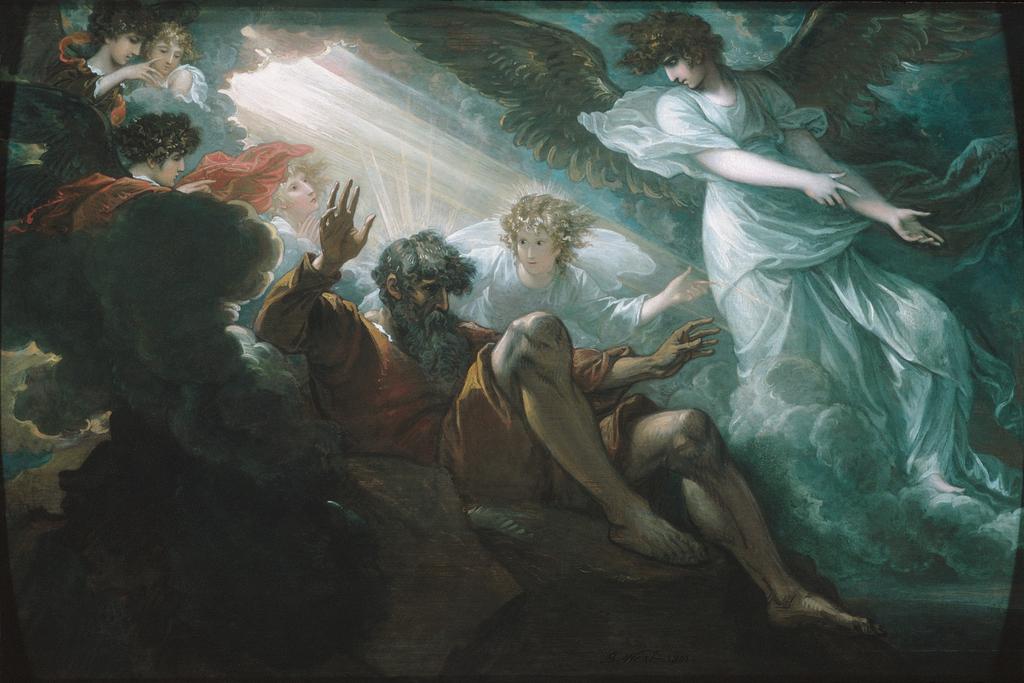
(1) Moses went up from the steppes of Moab to Mount Nebo, to the summit of Pisgah, opposite Jericho, and יהוה showed him the whole land: Gilead as far as Dan; (2) all Naphtali; the land of Ephraim and Manasseh; the whole land of Judah as far as the Western Sea; (3) the Negeb; and the Plain—the Valley of Jericho, the city of palm trees—as far as Zoar. (4) And יהוה said to him, “This is the land of which I swore to Abraham, Isaac, and Jacob, ‘I will assign it to your offspring.’ I have let you see it with your own eyes, but you shall not cross there.” (5) So Moses the servant of יהוה died there, in the land of Moab, at the command of יהוה. (6) [God] buried him in the valley in the land of Moab, near Beth-peor; and no one knows his burial place to this day. (7) Moses was a hundred and twenty years old when he died; his eyes were undimmed and his vigor unabated. (8) And the Israelites bewailed Moses in the steppes of Moab for thirty days. The period of wailing and mourning for Moses came to an end. (9) Now Joshua son of Nun was filled with the spirit of wisdom because Moses had laid his hands upon him; and the Israelites heeded him, doing as יהוה had commanded Moses. (10) Never again did there arise in Israel a prophet like Moses—whom יהוה singled out, face to face, (11) for the various signs and portents that יהוה sent him to display in the land of Egypt, against Pharaoh and all his courtiers and his whole country, (12) and for all the great might and awesome power that Moses displayed before all Israel.
At that time, [God] said to the Angel of Death: Go, bring me the soul of Moses. The Angel of Death went and stood before him, and said: Moses, give me your soul. But he scowled at him [and said: The place I sit, you have no right to even stand – and you ask me to give you my soul? So he scowled at him] and chased him away with a rebuke.
The Holy Blessed One said again to the Angel of Death: Go, bring me the soul of Moses.
Finally, the Holy Blessed One said to Moses: Moses! You’ve had enough of this world. The World to Come has been prepared for you since the six days of creation. As it says (Exodus 33:22), “God said, here is a place near Me; stand on that rock.” The Holy Blessed One took Moses’ soul and stored it under the Throne of Glory. (As it says [I Samuel 25:29], “And the soul of my master will be bound up in the bond of life.”) And when He took it, He did it with a kiss. As it says (Deuteronomy 34:5), “[Moses died…] by the mouth of God.” And not only Moses’ soul is stored under the Throne of Glory, but also the souls of all the righteous are stored there! As it says (I Samuel 25:29), “[If anyone sets out to pursue you and seek your life], the soul of my master will be bound up in the bond of life.” Could it be that the souls of the wicked are there, too? The verse continues: “but He will fling away the lives of your enemies like a slingshot.” [(To what can this be compared?) It can be compared to someone who takes a stone and places it in a sling;] even though he flings it from place to place, he does not know where it will land. So it is for the souls of the wicked, which cast about and go wandering the world, and have no place to rest.
The Holy Blessed One said again to the Angel of Death: Go, bring me the soul of Moses. He went back to the place, and looked for Moses, but could not find him. He went to the Great Sea and said to it: Did Moses come here? And it said: I have not seen him since the day that Israel passed through me. He went to the mountains and hills and asked them: Did Moses come here? [They said to him: We have not seen him since the day that Israel received the Torah on Mount Sinai. He went down to the Underworld and to Oblivion said to them: Did Moses come here? They said: We have heard his name, but we have never seen him. He went and asked the angels: Did Moses come here?] They said to him: God knows his path and his place. God stored him away for the World to Come, and no living creature knows where. As it says (Job 28:12–14, 22), “Where will wisdom be found, and where is the place of understanding? No human knows its measure, and it cannot be found in the land of the living. The Deep says, it is not in me, and the sea says it is not by me…. Oblivion and Death say: in our ears we heard a rumor.” Even Joshua was sitting in despair over Moses [for he did not know where he was], until the Holy Blessed One said to him: Joshua, why are you in despair over Moses? For “Moses My servant is dead.” (Joshua 1:2).