


Key Question: What is intersex?
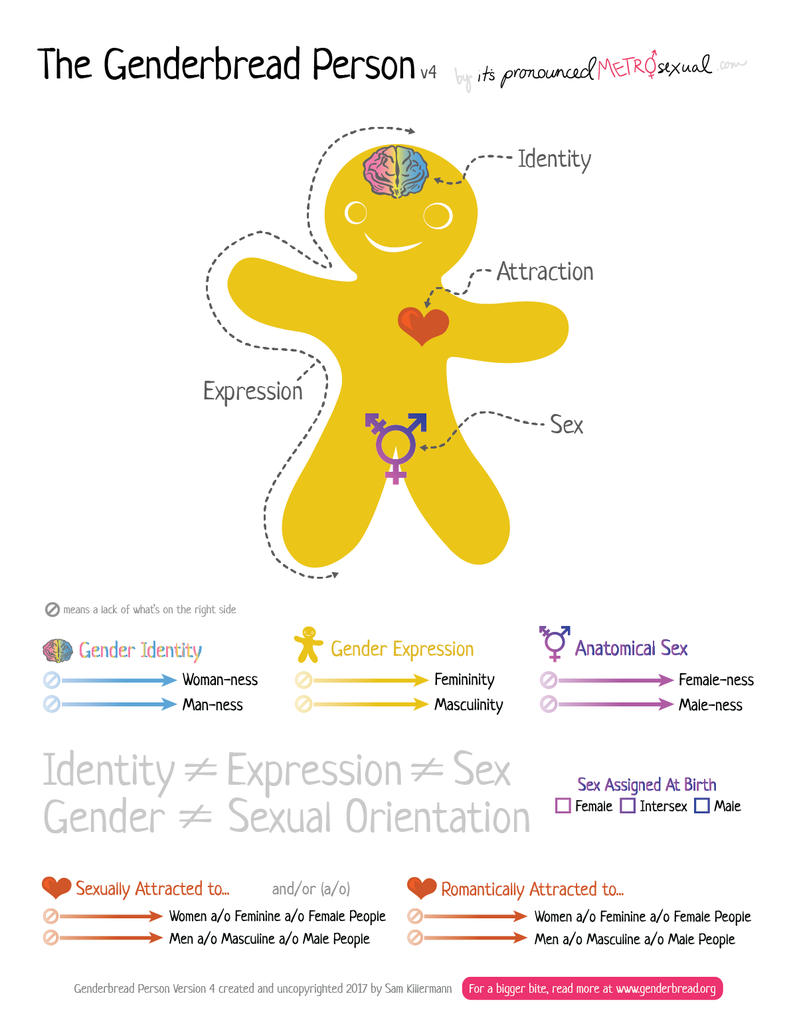
Gender - behavioral, cultural, and psychological traits typically associated with the terms man/male, woman/female or nonbinary
Sex - assigned (sometimes incorrectly) at birth usually based upon phenotypic traits
- Male - XY, scrotum, penis, and testicles, testosterone-dominant traits
- Female - XX, vulva, vagina, clitoris, ovaries, and uterus, estrogen-dominant traits
- Intersex - born with sex traits (primary or secondary; visible or invisible) that vary from the above narrow definitions of male or female
- Endosex - not intersex; having a sex categorization of male or female
The I in LGBTQIA+ stands for “intersex.”
Intersex is an umbrella term for differences in sex traits or reproductive anatomy. Intersex people are born with these differences or develop them in childhood. There are many possible differences in genitalia, hormones, internal anatomy, or chromosomes, compared to the usual two ways that human bodies develop. An intersex person has variations in one or more of these areas.
Some intersex traits are noticed at birth. Others don’t show up until puberty or later in life. Intersex people often face shame—or are forced or coerced into changing their bodies, usually at a very young age. This can include surgery, often in infancy or early childhood, and other medical treatments.
The word intersex also invokes a community. Intersex people are diverse, coming from all socioeconomic backgrounds, races, ethnicities, genders and orientations, faiths, and political ideologies. We are united by
- our experiences living with variations in our sex traits,
- the belief that these differences are a natural part of human diversity,
- the idea that people deserve their own choices about their own bodies.
Key Question: What do Jewish texts say about the sex and gender binaries?
Adapted from a variety of sources including Rabbi Elliot Kukla, Rachel Sheinderman, and Shoshanda Fender
- Zachar, male.
- Nekevah, female.
- Androgynos, having both male and female characteristics.
- Tumtum, a person whose gender-sex is unclear or obscured.
- Aylonit hamah, identified female at birth but later naturally developing male characteristics.
- Aylonit adam, identified female at birth but later developing male characteristics through human intervention.
- Saris hamah, identified male at birth but later naturally developing female characteristics.
- Saris adam, identified male at birth and later developing female characteristics through human intervention.
וַיִּבְרָ֨א אֱלֹהִ֤ים ׀ אֶת־הָֽאָדָם֙ בְּצַלְמ֔וֹ בְּצֶ֥לֶם אֱלֹהִ֖ים בָּרָ֣א אֹת֑וֹ זָכָ֥ר וּנְקֵבָ֖ה בָּרָ֥א אֹתָֽם׃
(27) And G-d created humankind in his own image, in the image of G-d, G-d created it; male and female God created them.
(א) ויאמר אלהים נעשה אדם בצלמנו כדמותנו. אמר רבי ירמיה בן אלעזר: בשעה שברא הקדוש ברוך הוא את אדם הראשון, אנדרוגינוס בראו, הדא הוא דכתיב: זכר ונקבה בראם.
(1) And God said: Let us make Adam in our image, in our shape: R' Yirmiyah ben Elazar said, when Hashem created Adam HaRishon, he was created as both genders; thus is it written, "male and female did He create them."
IN THE IMAGE OF GOD HE CREATED HIM — It explains to you that the form prepared for him was the form of the image of his Creator.
(א) אדדוגינוס יש בו דרכים שוה לאנשים ויש בו דרכים שוה לנשים ויש בו דרכים שוה לאנשים ונשים ויש בו דרכים אינו שוה לא לאנישם ולא לנשים:
(1) An Androginus (a hermaphrodite*, who has both male and female reproductive organs) is similar to men in some ways and to women in other ways, in some ways to both and in some ways to neither.
*A note on the h-word: Ancient commentaries use hermaphrodite instead of intersex because this was the language available at the time to describe people with mixed sex characteristics. Hermaphroditus (the h-word's namesake) was a Greek mythological character who had complete sets of both male and female genitalia. To have two complete sets of genitalia is not biologically possible; you cannot have "both." This mis-definition, among other persecution, erasure, and discrimination, contributed to hermaphrodite becoming a slur used against intersex people. Today, some intersex people have reclaimed use of the word (evocative of reclamation of the word queer) but use outside of historical and intersex-run contexts should be avoided.
The Midrash . . . adds that the [first human] being formed in G-d's likeness, was an androgynous, an inter-sexed person . . . Hence, our tradition teaches that all bodies and genders are created in G-d's image, whether we identify as men, women, intersex, or something else.
Read not "God created every single human being as either male or female." This verse is... a merism, a common Biblical figure of speech in which a whole is alluded to by some of its parts. When the Biblical text says, "there was evening, there was morning, the first day," it means, of course, that there was evening, there was dawn, there was morning, there was noon time, there was afternoon, there was dusk in the first day. "Evening and morning" are used to encompass all the times of day, all the qualities of light that would be found over the course of one day. So, too, in the case of this verse, the whole diverse panoply of genders and gender identities is encompassed by only two words, "male" and "female." Read not, therefore, "God created every kind of human being as either male or female" but rather "God created humankind male and female and every combination in between."
Key Question: If Judaism is inherently queer-affirming, how come it didn't stay that way?
The short answer: Centuries and centuries of colonization, white euro-centrism, queer-erasure, and antisemitism along with and followed by centuries of fear of assimilation, inter-denominational schisms, leading to more intersex erasure.
The long (but still incomplete) answer: Understanding of human sex development has varied through millennia. In one of the earliest accepted records (read: records accepted by the general public/from sources other than indigenous cultures whose concepts and validity were never acknowledged), Artistotle describes females as "incomplete" males, lacking a high internal body temperature which he believed induced characteristically male traits. In 1079 AD, shortly after the Church became the Roman Church, a papal bull (decree) forbade practice of any gender and sex theory outside the male/female binary. This included the Jewish tumtum and androgynos as well as gender-sexes in plenty of indigenous cultures, some of which were entirely wiped out. For groups who weren't wiped out, staunch enforcement of a sex-gender binary by the Church meant discrimination and historical erasure of people who existed outside the binary. In order to survive, recognition of nonbinary sex and gender identities fell out of favor. Intersex is natural, humans are resilient, and the arc of history bends towards justice. Intersex people continued to exist, and continued to be erased, and continued to exist, and continued to be erased, and so on.
Key Question: How does modern medicine historically view intersex bodies?
*A note on the use of DSD - Disorder/Difference of Sexual Development: Whether the first D stands for disorder or difference, this term is considered offensive to the intersex community. The term posits intersex bodies as pathologies to be fixed instead of as natural variations of the spectrum of human sexuality.
INTERSEX RIGHTS TODAY
Historically, medical professionals have advised parents of intersex children to keep their variation* a secret, often even from the child themself. A young intersex person may or may not know why they are at the doctor so frequently or why they have certain experiences so different from their peers. Intersex people who learn about their variation during puberty or later in life may or may not be told that their condition is an intersex variation and they're given the same advice and sometimes find that their variation was described in earlier medical records that were hidden from them or destroyed. Medical, social, and political environments raise an intersex person to be ashamed of their body and isolated from peers with like experiences. By the time they are an adult, intersex people have experienced physical and psychological trauma in the form of incompetent healthcare, coerced surgical and hormonal interventions, a lack of representation in school and the media, and a lack of community. We generally feel isolated, alone, and "othered" - even in places that call themselves LGBTQIA+ inclusive.
Thanks to a fierce, resilient community of intersex rights activists (and allies), attitudes and the medical tide are changing, albeit slowly. No hospital in the United States has a comprehensive policy against medically unnecessary intersex surgeries and procedures. After a lengthy battle spearheaded by intersex activist and author Pidgeon Pagonis, Lurie Children's hospital ceased performing some intersex surgeries; they still perform others everyday. The United Nations, National Institute of Health, and the Gay and Lesbian Medical Association all recognize intersex genital surgeries as a human rights violation and NYC Health and Hospitals has a policy to defer surgeries. Hospitals and medical systems across the country continue to perform unnecessary surgical and medical interventions on us everyday. Intersex activist, author, and Human Rights Commissioner for the city of Austin, TX Alicia Roth Weigel collaborated with Kind Clinic to open the first adult intersex healthcare clinic nationwide, the first clinic to be created from the ground up with the guidance of intersex people.
Organizations like Intersex Justice Project, InterACT, Intersex Awareness, and InterConnect (and many more internationally) fight for intersex awareness, solidarity, community, and rights every single day.
There are rabbinic interpretations which condone and even encourage surgeries and other procedures so that intersex people fit the sex binary. I chose not to include them here. These interpretations assume that the dominant medical and social-political narratives of their time were the accurate rule. While guided by Jewish ethics, they were also guided by contexts of intersex, transgender, and queer erasure. As a result, their interpretations cannot be used to define a concrete Jewish-ethical take on the gender-sex binaries and intersex rights.
(ט) מַה־שֶּֽׁהָיָה֙ ה֣וּא שֶׁיִּהְיֶ֔ה וּמַה־שֶּׁנַּֽעֲשָׂ֔ה ה֖וּא שֶׁיֵּעָשֶׂ֑ה וְאֵ֥ין כׇּל־חָדָ֖שׁ תַּ֥חַת הַשָּֽׁמֶשׁ׃ (י) יֵ֥שׁ דָּבָ֛ר שֶׁיֹּאמַ֥ר רְאֵה־זֶ֖ה חָדָ֣שׁ ה֑וּא כְּבָר֙ הָיָ֣ה לְעֹֽלָמִ֔ים אֲשֶׁ֥ר הָיָ֖ה מִלְּפָנֵֽנוּ׃
(9) Only that shall happen which has happened, only that occur which has occurred; there is nothing new beneath the sun! (10) Sometimes there is a phenomenon of which they say, “Look, this one is new!”—it occurred long since, in ages that went by before us.
מַאי טַעְמָא — ״לֵב יוֹדֵעַ מׇרַּת נַפְשׁוֹ״. פְּשִׁיטָא! מַהוּ דְּתֵימָא: רוֹפֵא קִים לֵיהּ טְפֵי, קָא מַשְׁמַע לַן.
...The Gemara asks: It is obvious that a person knows himself better than anyone else does. Why does this need to be stated explicitly?... Lest you say that the doctor is more certain because he has had more experience with this condition Therefore, the verse teaches us that even so, it is the ill person who knows his own suffering better than anyone else.
[הִלֵּל] הָיָה אוֹמֵר, אִם אֵין אֲנִי לִי, מִי לִי. וּכְשֶׁאֲנִי לְעַצְמִי, מָה אֲנִי. וְאִם לֹא עַכְשָׁיו, אֵימָתָי:
[Hillel] used to say: If I am not for myself, who is for me? But if I am only for myself, what am I? And if not now, when?
וּבְמָקוֹם שֶׁאֵין אֲנָשִׁים, הִשְׁתַּדֵּל לִהְיוֹת אִישׁ:
In a place where there are no menschen, strive to be a mensch.
אַל תִּהְיוּ כַעֲבָדִים הַמְשַׁמְּשִׁין אֶת הָרַב עַל מְנָת לְקַבֵּל פְּרָס, אֶלָּא הֱווּ כַעֲבָדִים הַמְשַׁמְּשִׁין אֶת הָרַב שֶׁלֹּא עַל מְנָת לְקַבֵּל פְּרָס
Do not be like servants who serve the master in the expectation of receiving a reward, but be like servants who serve the master without the expectation of receiving a reward
(א) רַבִּי אוֹמֵר, אֵיזוֹהִי דֶרֶךְ יְשָׁרָה שֶׁיָּבֹר לוֹ הָאָדָם, כֹּל שֶׁהִיא תִפְאֶרֶת לְעוֹשֶׂיהָ וְתִפְאֶרֶת לוֹ מִן הָאָדָם.
Rabbi Judah HaNassi would say: Which is the right path for one to choose for oneself? Whatever is harmonious for the one who does it, and harmonious for humankind.
צֶ֥דֶק צֶ֖דֶק תִּרְדֹּ֑ף לְמַ֤עַן תִּֽחְיֶה֙ וְיָרַשְׁתָּ֣ אֶת־הָאָ֔רֶץ אֲשֶׁר־יְהוָ֥ה אֱלֹהֶ֖יךָ נֹתֵ֥ן לָֽךְ׃ (ס)
Justice, justice shall you pursue, that you may thrive and occupy the land that the LORD your God is giving you.
Rav Waldenberg forcefully argues that the divine license to heal applies only to curing an illness, not to altering one’s appearance. It is certainly forbidden, he adds, to risk one’s life to undergo cosmetic surgery, even if the risk is not great.
In another responsum (Teshuvot Tzitz Eliezer 12:43), Rav Waldenberg addresses the permissibility of undergoing elective surgery on a Thursday or a Friday. While the questioner was primarily concerned about the surgery interfering with Shabbat observance and enjoyment, Rav Waldenberg simply responds that Halachah never condones elective surgery. If a surgery is not necessary, it may not be undertaken.
SVARA's Trans Halakha Project features blessings for moments throughout an individual's journey of sex- and gender- affirming actualization. There are bright, vibrant Jewish communities across the denominational spectrum embodying the Jewish values of chesed (lovingkindness - for oneself and others), kavod (respect - for oneself and others), and tikkun olam (healing the world).
(טז) הוּא הָיָה אוֹמֵר, לֹא עָלֶיךָ הַמְּלָאכָה לִגְמֹר, וְלֹא אַתָּה בֶן חוֹרִין לִבָּטֵל מִמֶּנָּה. אִם לָמַדְתָּ תוֹרָה הַרְבֵּה, נוֹתְנִים לְךָ שָׂכָר הַרְבֵּה. וְנֶאֱמָן הוּא בַעַל מְלַאכְתְּךָ שֶׁיְּשַׁלֵּם לְךָ שְׂכַר פְּעֻלָּתֶךָ. וְדַע מַתַּן שְׂכָרָן שֶׁל צַדִּיקִים לֶעָתִיד לָבֹא:
(16) He [Rabbi Tarfon] used to say: It is not your duty to finish the work, but neither are you at liberty to neglect it.
בזמן שהצבור שרוי בצער אל יאמר אדם אלך לביתי ואוכל ואשתה ושלום עליך נפשי.
At a time when the community is suffering, no one should say, “I will go home, eat, drink, and be at peace with myself.”
"Until we are all free, we are none of us free."
Now you know about Jewish ethics, social justice, and intersex rights! These texts and ethics can be applied to many social justice topics - take it and run! Your Judaism and your social justice is yours. You are as competent, capable, and divine just by being human.
Listen to our stories and amplify our voices.
Attend intersex events, interact with advocates on social media, and shop queer and intersex artists and small businesses. The more interaction with the intersex community, the more aware and inclusive our world becomes.
No Pride without the "I"
Don't forget to use the entire LGBTQIA+ acronym - even if someone says it's alphabet soup! We're there for a reason. Often, places that say they're LGBT or even LGBTQIA+ affirming don't consider the intersex perspective. Use the intersex inclusive progress flag and encourage any queer-affirming efforts to do the same!
Vote!
An intersectional feminist adage, taught to me at Goucher by Dr. Nyasha Grayman-Simpson; "the personal is political."
Voting is how some of the most concrete change happens. The intersex community stands in strong solidarity with the transgender community. Anti-trans legislation and restrictions on gender affirming care hurt us all. Many pieces of anti-trans legislation include stipulations that force the same treatments they restrict for trans folks on intersex people. We're all in the same fight together.
מוֹדֶה אֲנִי לְפָנֶֽיךָ מֶֽלֶךְ חַי וְקַיָּם שֶׁהֶחֱזַֽרְתָּ בִּי נִשְׁמָתִי בְּחֶמְלָה, רַבָּה אֱמוּנָתֶֽךָ:
I give thanks to You living and everlasting King for You have restored my soul with mercy. Great is Your faithfulness.
InterACT
InterConnect
Intersex Justice Project
Intersex Awareness
Watch List
Every Body (2023)
Buzzfeed - What It's Like to Be Intersex
Intersexion (2012)
Orchids: My Intersex Adventure (2011)
Reading List
Nobody Needs to Know (2023) - Pidgeon Pagonis
Inverse Cowgirl (2023) - Alicia Roth Weigel
XOXY (2020) - Kimberly Zeiselman
Intersex (For Lack of a Better Word) (2008) - Thea Hillman
Born Both: An Intersex Life (2017) - Hilda Viloria
Intersex 101 by InterACT
Trans Halakha Project by SVARA