


אָמַר רֵישׁ לָקִישׁ: גְּדוֹלָה תְּשׁוּבָה שֶׁזְּדוֹנוֹת נַעֲשׂוֹת לוֹ כִּשְׁגָגוֹת, שֶׁנֶּאֱמַר: ״שׁוּבָה יִשְׂרָאֵל עַד ה׳ אֱלֹהֶיךָ כִּי כָשַׁלְתָּ בַּעֲוֹנֶךָ״, הָא ״עָוֹן״ — מֵזִיד הוּא, וְקָא קָרֵי לֵיהּ מִכְשׁוֹל. אִינִי?! וְהָאָמַר רֵישׁ לָקִישׁ: גְּדוֹלָה תְּשׁוּבָה שֶׁזְּדוֹנוֹת נַעֲשׂוֹת לוֹ כִּזְכִיּוֹת, שֶׁנֶּאֱמַר: ״וּבְשׁוּב רָשָׁע מֵרִשְׁעָתוֹ וְעָשָׂה מִשְׁפָּט וּצְדָקָה עֲלֵיהֶם (חָיֹה) יִחְיֶה״! לָא קַשְׁיָא: כָּאן מֵאַהֲבָה, כָּאן מִיִּרְאָה.
נִּתְכַּוֵּין לֶאֱכוֹל בְּשַׂר חֲזִיר וְעָלָה בְּיָדוֹ בְּשַׂר טָלֶה
נִּתְכַּוֵּין לֶאֱכוֹל שׁוּמָּן וְעָלָה בְּיָדוֹ חֵלֶב
Sinful intent and the unintended sin
The Gemara explains the source that one who intended to transgress is punished even though he did not actually sin. As it is taught in a baraita concerning a husband who nullified the vow of his wife: “Her husband has made them null; and the Lord will forgive her” (Numbers 30:13). With regard to what case is the verse speaking? Why would the woman require forgiveness if her husband has nullified her vow? It is referring to a woman who vowed to be a nazirite, and her husband heard and nullified her vow. And she did not know that her husband had nullified her vow, and she drank wine and contracted impurity from a corpse, violating her presumed vow.
רַבִּי עֲקִיבָא כִּי הֲוָה מָטֵי לְהַאי פְּסוּקָא הֲוָה בָּכֵי, אָמַר: וּמָה מִי שֶׁנִּתְכַּוֵּין לֶאֱכוֹל בְּשַׂר חֲזִיר וְעָלָה בְּיָדוֹ בְּשַׂר טָלֶה, אָמְרָה תּוֹרָה: צְרִיכָה כַּפָּרָה וּסְלִיחָה, מִי שֶׁנִּתְכַּוֵּין לֶאֱכוֹל בְּשַׂר חֲזִיר וְעָלָה בְּיָדוֹ בְּשַׂר חֲזִיר – עַל אַחַת כַּמָּה וְכַמָּה.
The Gemara relates: When Rabbi Akiva came to this verse he would cry. He said: And if with regard to one who intended to eat pork, and kosher lamb came up in his hand, like this woman who intended to violate her vow but in fact did not, the Torah nevertheless says: She requires atonement and forgiveness, all the more so does one who intended to eat pork and pork came up in his hand require atonement and forgiveness.
כַּיּוֹצֵא בַּדָּבָר אַתָּה אוֹמֵר ״וְלֹא יָדַע וְאָשֵׁם וְנָשָׂא עֲוֹנוֹ״. כְּשֶׁהָיָה רַבִּי עֲקִיבָא מַגִּיעַ לְפָסוּק זֶה הָיָה בּוֹכֶה: וּמָה מִי שֶׁנִּתְכַּוֵּין לֶאֱכוֹל שׁוּמָּן וְעָלָה בְּיָדוֹ חֵלֶב – אָמְרָה תּוֹרָה: ״וְלֹא יָדַע וְאָשֵׁם וְנָשָׂא עֲוֹנוֹ״, מִי שֶׁנִּתְכַּוֵּין לֶאֱכוֹל חֵלֶב וְעָלָה בְּיָדוֹ חֵלֶב – עַל אַחַת כַּמָּה וְכַמָּה. אִיסִי בֶּן יְהוּדָה אוֹמֵר: ״וְלֹא יָדַע וְאָשֵׁם וְנָשָׂא עֲוֹנוֹ״ – עַל דָּבָר זֶה יִדְווּ כׇּל הַדּוֹוִים.
(כד) אַל־תִּֽטַּמְּא֖וּ בְּכׇל־אֵ֑לֶּה כִּ֤י בְכׇל־אֵ֙לֶּה֙ נִטְמְא֣וּ הַגּוֹיִ֔ם אֲשֶׁר־אֲנִ֥י מְשַׁלֵּ֖חַ מִפְּנֵיכֶֽם׃
אָמַר רַבִּי עֲקִיבָא: אַשְׁרֵיכֶם יִשְׂרָאֵל! לִפְנֵי מִי אַתֶּם מִטַּהֲרִין, מִי מְטַהֵר אֶתְכֶם? אֲבִיכֶם שֶׁבַּשָּׁמַיִם, שֶׁנֶּאֱמַר: ״וְזָרַקְתִּי עֲלֵיכֶם מַיִם טְהוֹרִים וּטְהַרְתֶּם״, וְאוֹמֵר: ״מִקְוֵה יִשְׂרָאֵל (ה׳)״, מָה מִקְוֶה מְטַהֵר אֶת הַטְּמֵאִים — אַף הַקָּדוֹשׁ בָּרוּךְ הוּא מְטַהֵר אֶת יִשְׂרָאֵל.
Rabbi Akiva said: How fortunate are you, Israel; before Whom are you purified, and Who purifies you? It is your Father in Heaven, as it is stated: “And I will sprinkle purifying water upon you, and you shall be purified” (Ezekiel 36:25). And it says: “The ritual bath of Israel is God” (Jeremiah 17:13). Just as a ritual bath purifies the impure, so too, the Holy One, Blessed be He, purifies Israel.
(ו) הג'- ועובר על פשע - זוֹ מִדָּה גְּדוֹלָה שֶׁהֲרֵי אֵין הַמְּחִילָה עַל יְדֵי שָׁלִיחַ אֶלָּא עַל יָדוֹ מַמָּשׁ שֶׁל הַקָּדוֹשׁ בָּרוּךְ הוּא כְּדִכְתִיב (תהלים קל, ד) כִּי עִמְּךָ הַסְּלִיחָה וְגוֹ' וּמַה הִיא הַסְּלִיחָה שֶׁהוּא רוֹחֵץ הֶעָוֹן כְּדִכְתִיב (ישעיה ד, ד) אִם רָחַץ אֲדֹנָי אֵת צֹאַת בְּנוֹת צִיּוֹן וְגוֹ׳ וְכֵן כְּתִיב (יחזקאל לו, כה) וְזָרַקְתִּי עֲלֵיכֶם מַיִם טְהוֹרִים וְגוֹ' וְהַיְנוּ וְעוֹבֵר עַל פֶּשַׁע שׁוֹלֵחַ מֵימֵי רְחִיצָה וְעוֹבֵד וְרוֹחֵץ הַפֶּשַׁע.
(6) The third: "And passes over transgression" - this is a great trait. As behold, the pardon is not through an emissary but rather actually through the Holy One, blessed be He - as it is written (Psalm 130:4), "For with You is forgiveness, etc." And what is that forgiveness? That He washes away the transgression, as it is written (Isaiah 4:4), "When the Lord will have washed away the filth of the daughters of Zion, etc." And so [too,] is it written (Ezekiel 36:25), "I will sprinkle upon you pure waters, etc." And this is [the meaning of] "and passes over transgression" - He sends forth waters of washing, and He passes and washes [away] the transgression.
(א) כדרך שיש לגוף חולי ומדוה כן יש לנפש. ומדוה הנפש וחוליה מדותיה הרעות וחטאיה. ובשוב רשע מדרכו הרעה ירפא הש"י חולי הנפש החוטאת. כמו שנאמר (תהילים מ״א:ה׳) ה' חנני רפאה נפשי כי חטאתי לך, ונאמר (ישעיהו ו׳:י׳) ושב ורפא לו.
(1) The differences in atonement
In the same way as the body has sicknesses and ailments, so too does the soul. And the ailments of the soul and its diseases are its evil traits and its sins. But when an evildoer repents from his evil path, God, may He be blessed, heals the soul of the sinner - as it is stated (Psalms 41:5), “O Lord, have mercy on me, heal my soul, for I have sinned against You.” And it is [also] stated (Isaiah 6:10), “and repent and save itself.”
(ו) ולבל ידח ממנו נדח. גזרה רצונו יתברך שלא יוכרתו ח''ו לגמרי כל היו''ד חלקי בחי' הנפש רק הט' בחי' התחתונים מחכמה דילה ולמטה הם הנכרתי'. אבל בחי' העליונה סוד הכתר דילה אינה נכרתת. שמצד דביקותה והתקשרותה עם בחי' הרוח כנ''ל נדונית כבחי' הרוח שאין בו כרת כמ''ש להלן. והוא מחסד העליון ב''ה שע''י בחי' הרוח היינו ע''י ודוי דברים מלב שהוא בחי' רוח כנ''ל. יתעלו גם הט' בחי' הנפש להתקשר כולם בבחי' הרוח כמקדם:
(6) Lest he go completely astray, His (blessed be He) will issued a judgment that they shouldn’t be cut off (heaven forefend) completely in all the ten aspects of the Neffesh. Only the nine lower aspects, from her Wisdom333Heb.: Chokhma and down they are cut off. However the uppermost aspect, the secret of her crown334Heb.: Ketter [*A] is not cut off; that from the perspective of her attachment and connection with the aspect of the Ruakh (as we described above) [*B] it [fem.] is judged to be aspect of Ruakh for which there is no cutting off, as we will learn later. And this comes from supernal compassion335Heb.: mei-khessed ha-el-yone (blessed is He), that via the aspect of Ruakh, that is via heartfelt verbal confession (which is the aspect of Ruakh, as we described above), the nine aspects of the Neffesh will rise to connect all of them with the aspect of Ruakh as before.
אבינו מלכינו
Our Father Our King
Two Aspects to Sin
(טו) שׂ֣וֹם תָּשִׂ֤ים עָלֶ֙יךָ֙ מֶ֔לֶךְ אֲשֶׁ֥ר יִבְחַ֛ר יְהֹוָ֥ה אֱלֹהֶ֖יךָ בּ֑וֹ מִקֶּ֣רֶב אַחֶ֗יךָ תָּשִׂ֤ים עָלֶ֙יךָ֙ מֶ֔לֶךְ לֹ֣א תוּכַ֗ל לָתֵ֤ת עָלֶ֙יךָ֙ אִ֣ישׁ נׇכְרִ֔י אֲשֶׁ֥ר לֹֽא־אָחִ֖יךָ הֽוּא׃
(טז) אַהֲבַת עוֹלָם אֲהַבְתָּֽנוּ יְהֹוָה אֱלֹהֵֽינוּ חֶמְלָה גְדוֹלָה וִיתֵרָה חָמַֽלְתָּ עָלֵֽינוּ: אָבִֽינוּ מַלְכֵּֽנוּ בַּעֲבוּר שִׁמְךָ הַגָּדוֹל וּבַעֲבוּר אֲבוֹתֵֽינוּ שֶׁבָּטְ֒חוּ בְךָ וַתְּ֒לַמְּ֒דֵם חֻקֵּי חַיִּים לַעֲשׂוֹת רְצוֹנְ֒ךָ בְּלֵבָב שָׁלֵם כֵּן תְּחָנֵּֽנוּ וּתְלַמְּ֒דֵֽנוּ: אָבִֽינוּ אָב הָרַחֲמָן הַמְרַחֵם רַחֵם עָלֵֽינוּ וְתֵן בְּלִבֵּֽנוּ בִּינָה לְהָבִין וּלְהַשְׂכִּיל לִשְׁמֹֽעַ לִלְמוֹד וּלְ֒לַמֵּד לִשְׁמֹר וְלַעֲשׂוֹת וּלְקַיֵּם אֶת־כָּל דִּבְרֵי־תַלְמוּד תּוֹרָתֶֽךָ... בָּרוּךְ אַתָּה ה' הַבּוֹחֵר בְּעַמּוֹ יִשְׂרָאֵל בְּאַהֲבָה:
(16) [With] everlasting love You have loved us, our God; [With] great and abundant pity have You pitied us. Our Father, our King! for the sake of your great Name and for the sake of our forefathers who trusted in You, and whom You taught statutes of life, carry out your will with a perfect heart, so too, be gracious to us and teach us. Our Father, merciful Father, Who acts with compassion have compassion on us and put into our hearts [comprehension] to understand and to be intellectually creative, to listen, to learn, and to teach, to preserve, to practice, and to fulfill all the words of instruction in Your Torah with love... Blessed are You, Adonoy, Who chooses His people Israel with love.
(א) ולכן אר''זל (ברכות ס''ג א') כל המשתף שם שמים בצערו כופלין לו פרנסתו. והענין כי מלבד זה הצער שנעשה למעלה כשמקבל עונשו ביסורים ר''ל. אין ערוך ודמיון כלל זה הצער של מעלה נגד עוצם הצער שגרם למעלה בעת עשותו העון ר''ל. כענין הבן יקיר שנתפתה ביינו ונפל לארץ ונשבר מפרקתו וגופו והוא מסוכן. והוא עצמו אינו מרגיש אז כלל סכנת נפשו. כמ''ש (משלי כ''ג) הכוני בל חליתי הלמוני בל ידעתי. אמנם אביו לבו מתמרמר מאד ע''ז וכאשר הרופאים קשרו הנשברים והניחו רטי' ותחבושת מסמנים חריפים. והבן מר צורח על הכאב שלו מהסמנים החריפים האוכלים בשרו. ועם כי אביו מצטער לצעקתו ורבות אנחותיו עתה. אין ערך כלל הצער של עתה נגד הצער והיגון הראשון שהיה לאביו בעת שנפל ושיבר עצמותיו אשר כמעט נתיאש מחייו אז.
(ב) כן ממש ע''ז האופן. הוא ענין העון ר''ל. שבעת שהאדם עושהו הוא גורם למעלה צער גדול ועצום לאין ערך. והאדם עצמו אינו מרגיש אז בזה כלל. ולא ידע כי בנפשו הוא. כי הוא נחשב אז כמת ח''ו כמאמרם ז''ל (בר''פ מי שמתו) רשעים בחייהם קרויים מתים. ויש עונות שעל ידיהם נפשו נכרתה ח''ו לגמרי מהתקשרות חבל הקדושה. אבל הוא ית''ש אב הרחמן. כביכול בצרתו לו צער. ומרוב רחמיו וחסדיו ית''ש שולח לו יסורין אשר המה רטיה ותחבושת למרק עונו ואז האדם מרגיש כאב יסוריו ומצטער. ובזה מתעורר ג''כ צער למעלה כנ''ל. אמנם אין ערוך כלל זה הצער נגד הצער שגרם למעלה בעת עשותו העון ח''ו.
(1) And for that reason the sages (OBM) stated (Berakhot 63a): “Anyone who associates the name of heaven in their suffering, his livelihood is doubled.” And the matter is that, besides the suffering caused above when he receives his punishment in the form of torments (may the Merciful save us), you can’t compare nor conceive in any way this [current] suffering above relative to the enormous amount of suffering above that he caused at the moment he performed the sin (may the Merciful save us). It’s like the situation of the beloved son who, seduced by wine, fell to the ground and broke his neck and his body, and is in a critical state. He himself doesn’t, at that moment, sense in any way the threat to his life, as is written (Mishlei 23:35): “They struck me, but I didn’t become ill; they beat me, but I was unaware”. However, his father’s heart/mind is greatly embittered over this. When the physicians set the broken bones and prescribe poultices and dressings made from searing compounds, the son bitterly cries out in pain from the searing compounds that devour his flesh. And though his father suffers at this moment from his screams and his many sighs, there’s no way to compare the current suffering to the initial suffering and grief that his father experienced when he fell and broke his bones, almost to the point of despair over his life then.
(2) So too in fact, in this way, is the matter of sin (may the Merciful save us). At the moment that a person does it, he causes great, enormous suffering above, without measure, and the person himself doesn’t sense it at all, and doesn’t realize that his life is in danger, for at that moment he is considered as if dead (heaven forefend), as the sages stated at the beginning of chapter Mee Shehmei-toe (Berakhot chapter 3): “during their lives, evil ones are called ‘dead’”. And there are sins that cause his soul-Neffesh to be cut off (heaven forefend) from its connection to the holy portion, while He (blessed be His name), the compassionate Father, by suffering His suffering (so to speak) and out of His great compassion and benevolence (blessed be His name), sends him torments that are [emphatic] poultices and dressings to scour away his sin. And then the person experiences the pain of his torments, suffers, and thereby also awakens suffering above (as explained previously). However, this suffering does not compare in any way to the suffering that he caused above at the time he performed the sin (heaven forefend).
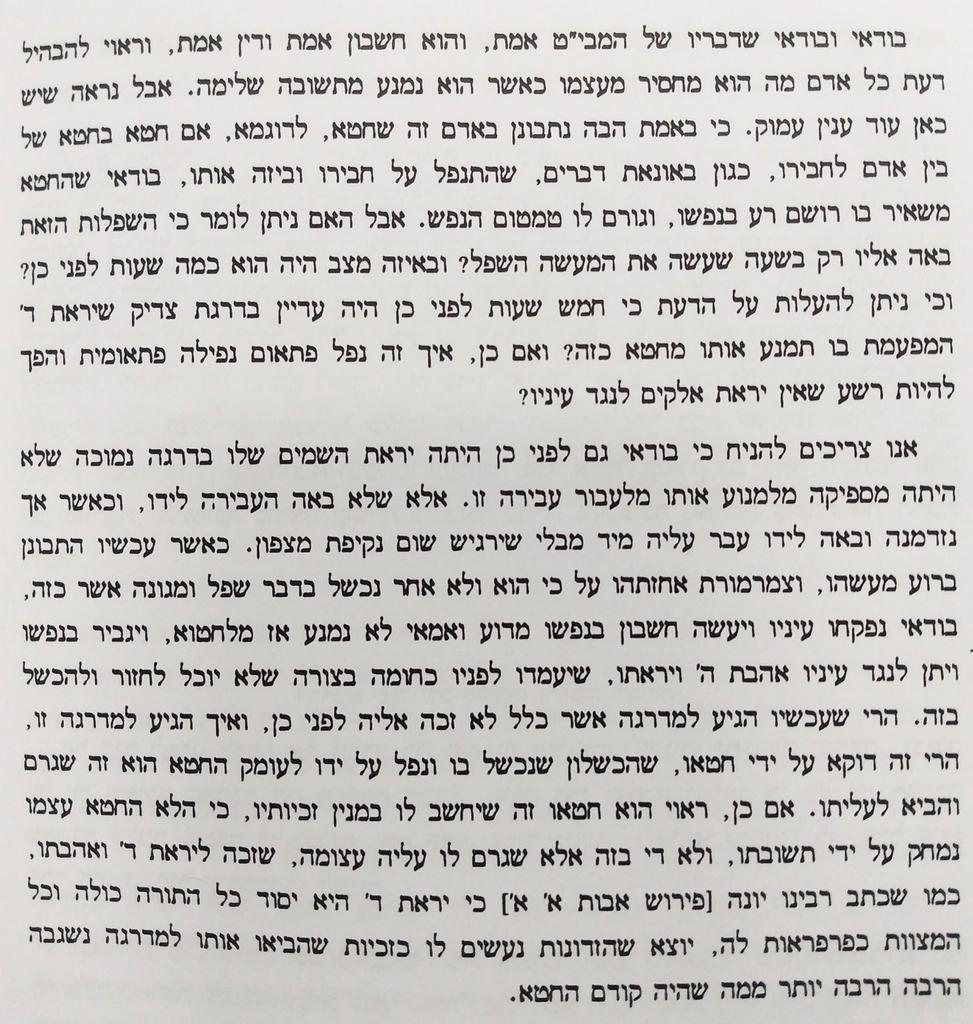
תשובה מיראה ואח״כ תשובה מאהבה
מתקנת המרד במלכינו השי״ת
First Teshuva out of Awe then Teshuva out of Love.
Teshuva of awe corrects our rebellion against Hashem our King.
Teshuva of love restores our love and appreciation of Hashem our Father.
(י) עתה נבאר עיקרי התשובה: העיקר הראשון - החרטה. יבין לבבו כי רע ומר עזבו את ה'. וישיב אל לבו כי יש עונש ונקם ושלם על העון... ויתחרט על מעשיו הרעים. ויאמר בלבו מה עשיתי. איך לא היה פחד אלהים לנגד עיני. ולא יגורתי מתוכחות על עון. ומן השפטים הרעים. כי רבים מכאובים לרשע...
(10) Now we will explain the principles of repentance. The first principle is regret: His heart should understand that leaving God is bad and bitter; and he should place into his heart that there is punishment, vengeance and repayment for iniquity... And he should regret his bad deeds and say in his heart, "What have I done? How did I not have fear of God in front of my eyes, and did not become afraid from the rebukes of iniquity and from the harsh judgments? For there are many aches [waiting] for the evildoer...
(6) Do you thus requite 'ה,
O dull and witless people?
Is not this the Father who created you—
Fashioned you and made you endure!
(1) AM NAVAL’ (A FOOLISH PEOPLE), AND NOT WISE. “A foolish people — that has forgotten [all] the good that He has done for them. And not wise to understand the result [of their actions], that it is in His power to do them good or evil.” This is Rashi’s language...
In my opinion he who performs an unrequired act [of goodness or kindness] is called nadiv (generous), while he who repays his benefactor with evil is called naval (a vile person). And so it is stated, ‘L’naval’ (the vile person) will no longer be called ‘nadiv’ (generous),23Isaiah 32:5. In other words, flattery will be extinct in Israel. for one is the opposite of the other. Therefore it was said of Nabal the Carmelite, for as his name is, so is he: Nabal is his name, and ‘n’valah’ (vileness) is with him.24I Samuel 25:25. For David did him a great favor — he guarded all his belongings — and he [Nabal] did not want to pay him any recompense; instead, he shouted at his [David’s] messengers25Ibid., Verse 14. and disgraced them. And this is the sense of the verse concerning [G-d’s words to] the friends of Job: [And my servant Job shall pray for you; for him alone will I receive favorably,] so as not to do unto you ‘n’valah’ (an unseemly act) [because you have not spoken of Me properly, as My servant Job hath;]26Job 42:8. The gist of Ramban’s thought is as follows: Since Job’s friends defended G-d’s providence, it would appear, in the eyes of the unlearned, as an unseemly act if they were to be punished, although they were to be blamed for having spoken certain things which were not right nor true. since they had defended the deed of the glorious and fearful Name,27Above, 28:58. saying it was done justly, and if He were to punish them now, it would appear as n’valah (an unseemly act).26Job 42:8. The gist of Ramban’s thought is as follows: Since Job’s friends defended G-d’s providence, it would appear, in the eyes of the unlearned, as an unseemly act if they were to be punished, although they were to be blamed for having spoken certain things which were not right nor true.
I
סליחה סליחה
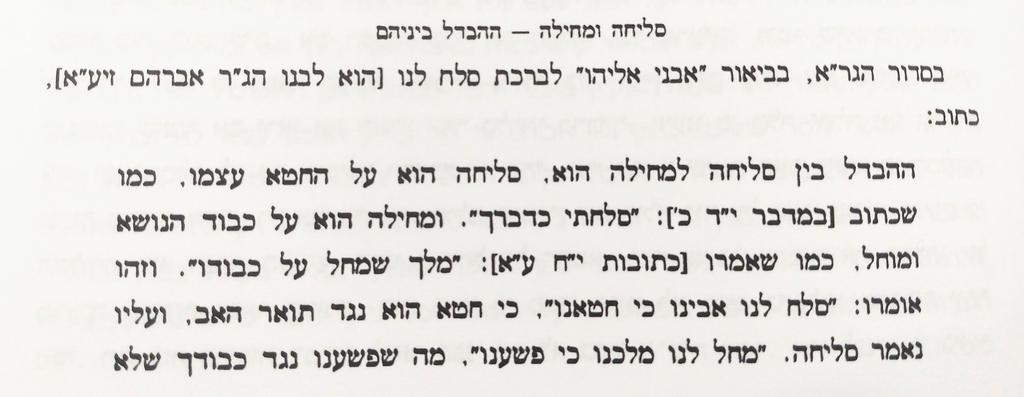
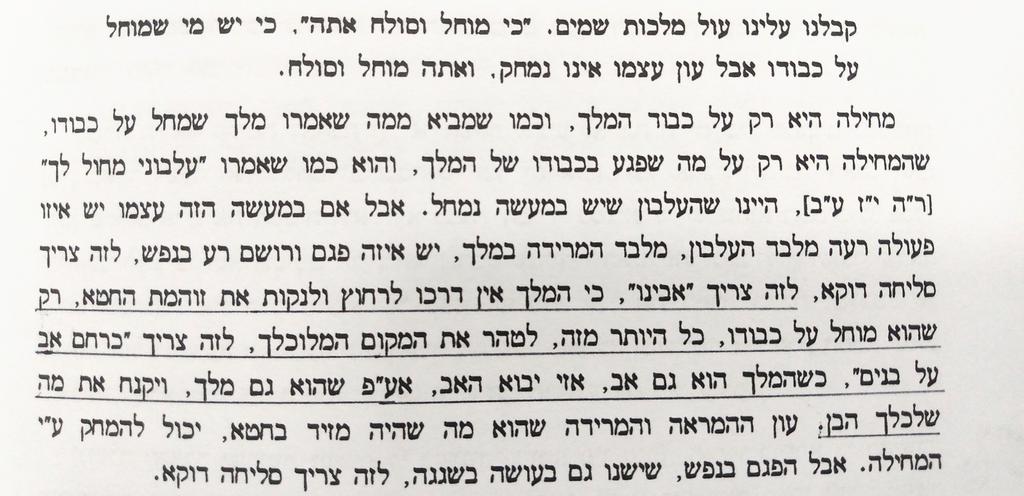
Selicha vs. Mechila
(א) סְלַח לָֽנוּ אָבִֽינוּ כִּי חָטָֽאנוּ מְחַל לָֽנוּ מַלְכֵּֽנוּ כִּי פָשָֽׁעְנוּ כִּי מוֹחֵל וְסוֹלֵֽחַ אָֽתָּה: בָּרוּךְ אַתָּה יְהֹוָה חַנּוּן הַמַּרְבֶּה לִסְלֽוֹחַ:
(1) Pardon us our Father, for we have sinned, forgive us, our King, for we have transgressed;26Error, חטא, is the result of carelessness, ignorance, or weakness; sin, פשע, is a deliberate disregard of moral or religious duty. for You forgive and pardon. Blessed are You, Hashem, Gracious One, Who pardons abundantly.
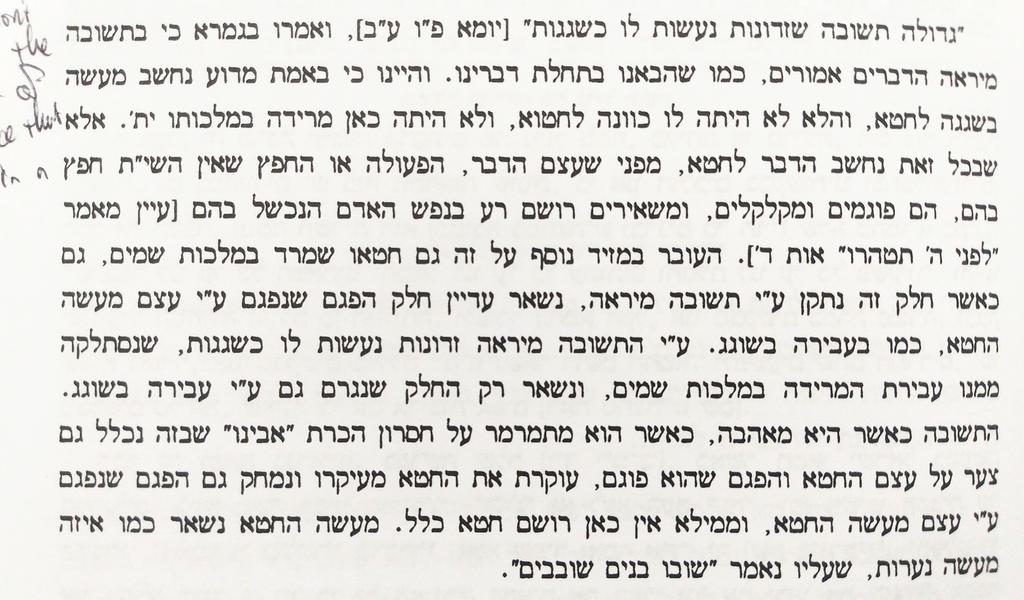
זְּדוֹנוֹת נַעֲשׂוֹת לוֹ כִּזְכִיּוֹת
Sins can even become merits!
(ד) עוד יש הבדל בין תשובת ישראל לאומות הנזכרים גם בעוה"ז והוא מה שאמרו ז"ל (יומא פ"ו) גדולה תשובה שזדונות נעשות לו כזכיות כדכתיב (יחזקאל ל"ג) ובשוב רשע מרשעתו וגו' עליהם הוא יחיה, כי לישראל לבד הוא שנעשות זכיות מצד כי קיים מצות עשה של תשובה בכל אחד מהעונות ששב ממנו, אבל האומות הנזכרים שאינם מצווים בתשובה די להם שלא יענשו על העון בשובם ממנו, ולא שיחשבו להם כזכיות, ולכך באלו הכתובים ביחזקאל הזכיר כמה פעמים בית ישראל, לומר כי לישראל לבד הוא שנחשבות לו העונות כזכיות אחרי שובם מהם.
Gmar Chasimah Tova!