


- Moses delivers his last speech [a poem] to Am Yisrael on the last day of his life on earth.
- Moses gives the people an idea of who they were, what they will become, and the pitfalls of being removed from the covenant with God.
- After trials, there will be reconciliation.
- God instructs Moses to go up to Mount Nebo, where he will be able to see the land promised to his people. There, he will die.
(19) Therefore, write down this poem and teach it to the people of Israel; put it in their mouths, in order that this poem may be My witness against the people of Israel.
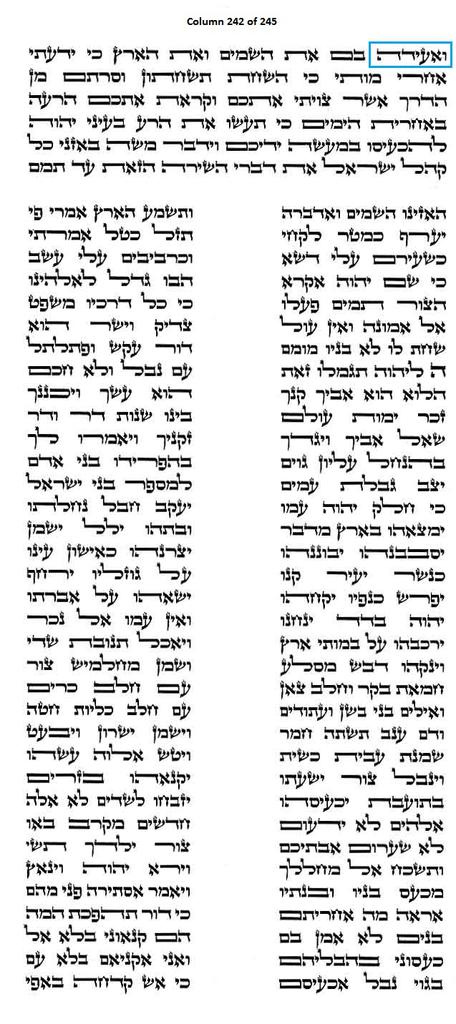
In poetry, there is a richness that comes from it having been adorned with all kinds of hints, in a way that isn’t done with prose. Like the custom of using the first letter in each line to spell out the alphabet, or to write out the poet’s name. There is a richness that is special to this fragmented language and not to prose. And it is well known that in order to achieve this level of richness, the poet is often forced to bend the language, so that the beginning letters end up being the ones he is seeking...
Aside from the most basic, simple reading, there is in every word many secrets and hidden ideas. Because of this, there are many instances when the language of the Torah is not to be read literally. And all this is not true for the Holy Torah alone, but with all sacred scripture.
The rabbis enumerated ten songs at key moments in the life of the nation. ..The tenth song has not yet been sung. It is the song of the Messiah. ~Rabbi Lord Jonathan Sacks
(א) הַאֲזִ֥ינוּ הַשָּׁמַ֖יִם וַאֲדַבֵּ֑רָה וְתִשְׁמַ֥ע הָאָ֖רֶץ אִמְרֵי־פִֽי׃
(1) Give ear, O heavens, let me speak;
Let the earth hear the words I utter!
(כז) וַיֹּ֨אמֶר יְהוֹשֻׁ֜עַ אֶל־כׇּל־הָעָ֗ם הִנֵּ֨ה הָאֶ֤בֶן הַזֹּאת֙ תִּֽהְיֶה־בָּ֣נוּ לְעֵדָ֔ה כִּי־הִ֣יא שָֽׁמְעָ֗ה אֵ֚ת כׇּל־אִמְרֵ֣י יְהֹוָ֔ה אֲשֶׁ֥ר דִּבֶּ֖ר עִמָּ֑נוּ וְהָיְתָ֤ה בָכֶם֙ לְעֵדָ֔ה פֶּֽן־תְּכַחֲשׁ֖וּן בֵּאלֹהֵיכֶֽם׃
(26) Joshua recorded all this in a book of divine instruction. He took a great stone and set it up at the foot of the oak in the sacred precinct of GOD; (27) and Joshua said to all the people, “See, this very stone shall be a witness against us, for it heard all the words that GOD spoke to us; it shall be a witness against you, lest you break faith with your God.”
(ב) יַעֲרֹ֤ף כַּמָּטָר֙ לִקְחִ֔י תִּזַּ֥ל כַּטַּ֖ל אִמְרָתִ֑י כִּשְׂעִירִ֣ם עֲלֵי־דֶ֔שֶׁא וְכִרְבִיבִ֖ים עֲלֵי־עֵֽשֶׂב׃ (ג) כִּ֛י שֵׁ֥ם יְהֹוָ֖ה אֶקְרָ֑א הָב֥וּ גֹ֖דֶל לֵאלֹהֵֽינוּ׃
(2) May my discourse come down as the rain,
My speech distill as the dew,
Like showers on young growth,
Like droplets on the grass.(3) For the name of יהוה I proclaim;
Give glory to our God!
“… as the light rain upon the herb, as the heavy rain upon the grass.” (Devarim, 32:2)
Rashi explains that all grasses (eisev) in general are called “herb,” deshe in Hebrew, when the land is dressed in herbs. This means that all the 613 mitzvot are suited for all of Israel in general. “Like the heavy rain on the grass.” Rashi explains that each particular kind of herb specifically is called a “grass” or eisev. The intention of the verse is each particular soul in Israel, where each one recognizes the negia (personal motive, partiality), of his heart. No one’s deficiency is similar to any others; therefore in that particular aspect where each one knows that he is deficient, the corresponding aspect in Torah must be reinforced in that very place until it is eventually completed. This is “the heavy rains upon the grass,” “heavy” meaning in great measure, or to increase the measure of Torah specifically in the place that is lacking.
(י) יִמְצָאֵ֙הוּ֙ בְּאֶ֣רֶץ מִדְבָּ֔ר וּבְתֹ֖הוּ יְלֵ֣ל יְשִׁמֹ֑ן יְסֹבְבֶ֙נְהוּ֙ יְב֣וֹנְנֵ֔הוּ יִצְּרֶ֖נְהוּ כְּאִישׁ֥וֹן עֵינֽוֹ׃ (יא) כְּנֶ֙שֶׁר֙ יָעִ֣יר קִנּ֔וֹ עַל־גּוֹזָלָ֖יו יְרַחֵ֑ף יִפְרֹ֤שׂ כְּנָפָיו֙ יִקָּחֵ֔הוּ יִשָּׂאֵ֖הוּ עַל־אֶבְרָתֽוֹ׃
(10) [God] found them in a desert region,
In an empty howling waste.
[God] engirded them [hovered over], watched over them,
Guarded them as the pupil of God’s eye. (11) Like an eagle who rouses its nestlings,
Gliding down to its young,
So did [God] spread wings and take them,
Bear them along on pinions;
(ד) אַתֶּ֣ם רְאִיתֶ֔ם אֲשֶׁ֥ר עָשִׂ֖יתִי לְמִצְרָ֑יִם וָאֶשָּׂ֤א אֶתְכֶם֙ עַל־כַּנְפֵ֣י נְשָׁרִ֔ים וָאָבִ֥א אֶתְכֶ֖ם אֵלָֽי׃
(4) ‘You have seen what I did to the Egyptians, how I bore you on eagles’ wings and brought you to Me.
(45) And when Moses finished reciting all these words to all Israel, (46) he said to them: Take to heart all the words with which I have warned you this day. Enjoin them upon your children, that they may observe faithfully all the terms of this Teaching. (47) For this is not a trifling thing for you: it is your very life; through it you shall long endure on the land that you are to possess upon crossing the Jordan.
...the one who walks in innocence and straightness, and keeps a good home, receives goodness derived from God Almighty. And he who perverts his path and distances himself, is distanced from the good derived from God and the opposite is derived from Him.