בֶּן עַזַּאי אוֹמֵר, הֱוֵי רָץ לְמִצְוָה קַלָּה כְבַחֲמוּרָה, וּבוֹרֵחַ מִן הָעֲבֵרָה. שֶׁמִּצְוָה גּוֹרֶרֶת מִצְוָה, וַעֲבֵרָה גוֹרֶרֶת עֲבֵרָה. שֶׁשְּׂכַר מִצְוָה, מִצְוָה. וּשְׂכַר עֲבֵרָה, עֲבֵרָה:
Ben Azzai said: Be quick in performing a minor commandment as in the case of a major one, and flee from transgression; For one commandment leads to another commandment, and transgression leads to another transgression; For the reward for performing a commandment is another commandment and the reward for committing a transgression is a transgression.
שמצוה גוררת מצוה. כך מנהגו של עולם, העושה מצוה אחת נוח לו לעשות אחרות, והמתחיל בעברות קשה לפרש מהם. ועוד, ששכר מצוה מצוה. שמן השמים מסיעין ומזמינים ביד מי שעשה מצוה אחת שיעשה אחרת כדי לתת לו שכר על שתיהן. וכן שכר עברה וכו'. פרוש אחר, ששכר מצוה מצוה, שכל מה שאדם משתכר ומתענג בעשית המצוה נחשב לו למצוה בפני עצמה, ונוטל שכר על המצוה שעשה ועל הענג וההנאה שנהנה בעשיתה:
"Since one commandment leads to another commandment": That is the way of the world, that one who does one commandment finds it easier to do others; and one who starts to do sins will find it difficult to separate from them. And also, "since the reward for a commandment is [another] commandment;" [meaning it] is from the Heavens that the one who does one commandment is helped and another commandment is placed in front of him to [also] do, in order to give him the reward for both of them. And so too, "the reward of a sin, etc." Another explanation: "since the reward for a commandment is [another] commandment;" Since all that a person is rewarded and derives enjoyment while doing a commandment is itself considered a commandment for him. And [so] he gets reward for the commandment that he did and for the enjoyment and benefit that he experienced in doing it.
ושכר עברה עברה. והשכר וההנאה שמגעת לו לאדם בעשית העברה נחשב לו כעברה בפני עצמה, ולוקה על העברה שעשה ועל השכר וההנאה שמקבל בעשיתה:
"and the reward for one sin is another sin": And the reward and benefit that one derives from doing a sin is considered like a sin itself for him. And [so] he is [punished] for the sin that he committed and for the reward and benefit that he received by doing it.
שֶׁשְּׂכַר מִצְוָה מִצְוָה...דה"ק דהשכר שירבו לך עבור שתעשה מצוה קלה בשמחה, גם זהו מצוה, כי רק למחיה שלחך הקב"ה לארץ שירבה שכרך בעה"ז ובעוה"ב וכמ"ש רצה הקב"ה לזכות את ישראל לפיכך הרבה וכו':
העברה. ולא תנן הקלה כמו במצוה, לפי דהא דתנן קלה הינו שהיא קלה על האדם לעשות, והעברות הם קלות על האדם לעשותם ורבם הם הנאה לאדם, לכך לא שיך למתני מן העברה הקלה. דרך חיים:
"A sin": And we do not learn [here], "an easy [sin]," as we do with a commandment. Since that which we learned [concerning a commandment ], "easy," means that it is easy for person to do. And sins are easy for a person to do and most of them are enjoyable for people. Hence it is not applicable to teach, "from an easy sin" - Derekh Chaim.
במשנה הוי רץ למצוה קלה כו' שמצוה גוררת מצוה. לכאורה תיפוק ליה משום מצוה זו גופה וכדלעיל רפ"ב ונראה דכאן יכוין דאפי' מצוה שאין מחוייב לרוץ אחריה כמו שאמרו בחולין (קל"ט ב') גבי שילוח הקן יכול יחזור בהרים כו' וכן מצות ציצית שאינו מחוייב ללבוש טלית בת ד' כנפות כדי להתחייב בה אשמעינן דמ"מ ישתדל וירוץ אחריה כדי לקיימה עי' בפי' הרמב"ם מה שהביא דוגמא לזה ממשה רבינו:
כבר בארנו פירוש זה המאמר בפרק י' מסנהדרין וכבר העירו חכמים ע"ה על חדוש נפלא בתורה יש בו זרוז על מעשה המצות והוא אמרו אז יבדיל משה שלש ערים בעבר הירדן וגו' בידוע שאינן מועילות שלא יהיה בהן דין ערי מקלט עד שיובדלו השלש האחרות שבארץ ישראל אמרו יודע היה משה רבינו עליו השלום שאין שלש ערים שבעבר הירדן קולטות עד שיובדלו השלש שבא"י שנא' שש ערי מקלט תהיינה ואמנם הבדיל אלו מפני שאמר הואיל ובאה מצוה לידי אקיימנה ואם כיוצא בזה במשה רבינו ע"ה משיג האמתות שלם שבשלמי' נכסף להוסיף חצי מצות עשה על כל מעלתו ושלמותו אין צריך לומר שיעשו מי שנצטרעה נפשם והוחזק צרעתה וקדמה:
We have already elucidated the explanation of this statement in Chapter 10 of Sanhedrin. And the sages, peace be upon them, have already brought attention to a wonderful innovation in the Torah in which there is inducement to the performance of the commandments. And it is its stating (Deuteronomy 4:41), "Then Moshe separated three cities in Transjordan, etc.," while knowing that they would not be effective - as they would not have the [status] of cities of refuge until the three others in the Land of Israel would be separated. They said (Makkot 10a), "Our teacher Moshe, peace be upon him, knew that these three cities in Transjordan do not shelter until the three cities in the Land of Israel would be separated, as it is stated (Numbers 35:13), 'they shall be six cities of refuge.' And he separated these nonetheless, since he said, 'Since a commandment has come to my hand, I will perform it.'" And if our teacher Moshe, peace be upon him - the fathomer of the truths, the [most] complete of the complete - was eager to add half of a positive commandment upon all of his rank and wholeness in this way, there is no need to say that those whose souls are leprous and their leprosy is strong and gaining should do [so].
וַיִּבְרַ֥ח הוּא֙ וְכׇל־אֲשֶׁר־ל֔וֹ וַיָּ֖קׇם וַיַּעֲבֹ֣ר אֶת־הַנָּהָ֑ר וַיָּ֥שֶׂם אֶת־פָּנָ֖יו הַ֥ר הַגִּלְעָֽד׃
and fled with all that he had. Soon he was across the Euphrates and heading toward the hill country of Gilead.
ויברח. מלת הבריחה בכ"מ תורה על סור האדם מאיזה מקום ואין רודף וזה מדאגת היזק עתיד אבל סור האדם מן המקום מפני היזק הווה או מפני רודף יקרא ניסה:
ויברח, usually the word בריחה, flight, means that someone departs without being pursued. The flight is inspired by fear of damage and harm not imminent. When the word ניסה is used to describe flight, this describes people fleeing from pursuers, out of fear from immediate damage and harm.

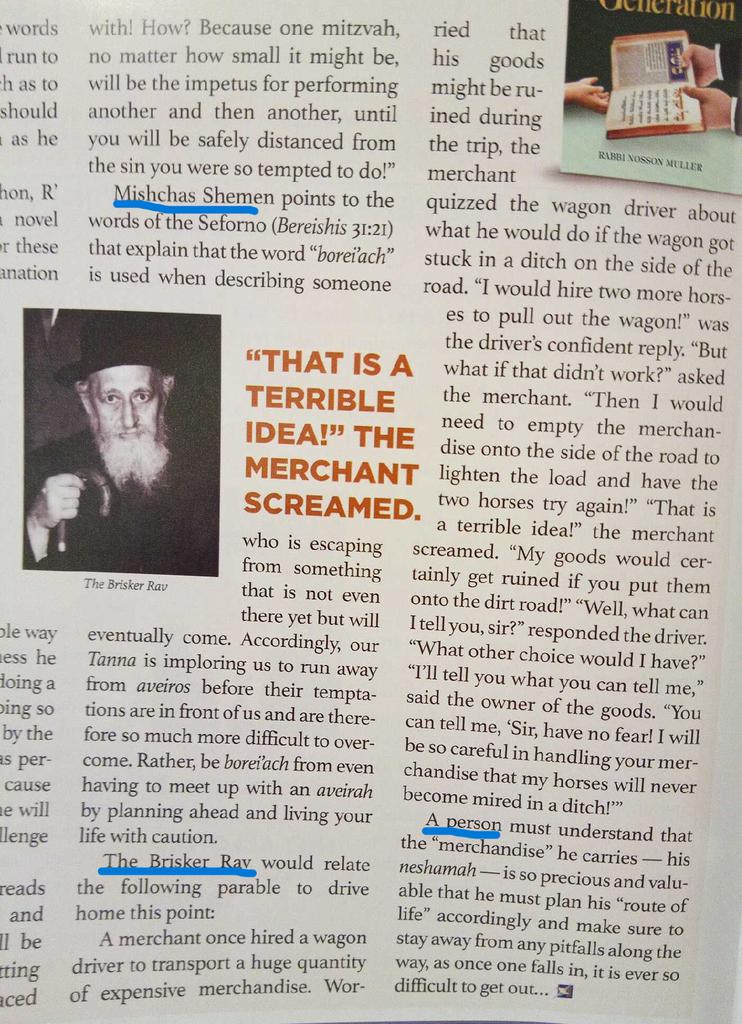
Mishchas Shemen points to the words of the Seforno (Bereishis 31:21) that explain that the word “borei’ach” is used when describing someone who is escaping from something that is not even there yet but will eventually come.
Accordingly, our Tanna is imploring us to run away from aveiros before their temptations are in front of us and are therefore so much more difficult to overcome. Rather, be borei’ach from even having to meet up with an aveirah by planning ahead and living your life with caution.
The Brisker Rav would relate the following parable to drive home this point: A merchant once hired a wagon driver to transport a huge quantity of expensive merchandise. Worried that his goods might be ruined during the trip, the merchant quizzed the wagon driver about what he would do if the wagon got stuck in a ditch on the side of the road.
“I would hire two more horses to pull out the wagon!” was the driver’s confident reply. “But what if that didn’t work?” asked the merchant. “Then I would need to empty the merchandise onto the side of the road to lighten the load and have the two horses try again!” “That is a terrible idea!” the merchant screamed. “My goods would certainly get ruined if you put them onto the dirt road!” “Well, what can I tell you, sir?” responded the driver. “What other choice would I have?”
“I’ll tell you what you can tell me,” said the owner of the goods. “You can tell me, ‘Sir, have no fear! I will be so careful in handling your merchandise that my horses will never become mired in a ditch!’”
A person must understand that the “merchandise” he carries — his neshamah — is so precious and valuable that he must plan his “route of life” accordingly and make sure to stay away from any pitfalls along the way, as once one falls in, it is ever so difficult to get out…
Avos 4:2 notes
Avos 4:2
1 משנה אבות ד׳:ב׳
בן עזאי אומר, הוי רץ למצוה קלה (כבחמורה), ובורח מן העברה. שמצוה גוררת מצוה, ועברה גוררת עברה. ששכר מצוה, מצוה. ושכר עברה, עברה:
הוי רץ למצוה קלה (כבחמורה), ובורח מן העברה
meam loez: don't do aveira in zeal to do mitzva (chiyuv wants kadish & amud - pushes away others who have right (not a zechus for niftar - opposite!), rush to mincha cut off others, push
ששכר מצוה, מצוה
another mitzvah (teva,/schar)
taanug is a mitzvah
the schar is a mitzva
the payment/investment is a mitzva
the schar for mitzva is bec its a tzivui (of Hashem, therefore "run" even to kalah bec of the mitzaveh
the mitzva itself is the schar & provides the schar, schar not unrelated, external (like wages) mitzva creates the ohr & aveira choshech
the mitzva itself is the schar, (aside from olam haba) greatest privelege to have opportunity to serve King of universe (kail ha'kadosh)
רץ למצוה קלה
avoda step by step, sulam, small, easy, few lines siddur, easy limud - then gorerres
"run" bec chitzonios m'orerres pnimius, yisgaber k'ari, run to shul etc...
maaseh R Leible Eiger, w/ his zeidy, shitas Ben Azai (carry from reshus yochid to rabim via karmelis - patur bec "mehalaich k'omeid") Tos' quotes yerushalmi: acc to Ben Azai impossible to chayav for carrying 4 amos reshus harabim. Answer: קופץ, the zeidy asked so acc to B"A why were chazal gozer by shofar, lulav, megilla on shabbos (shema yaavireno 4 amos in r"hr, קופץ is mot shchiach! R Leible: "Pashut!" he's holding a shofar abt to do mitza, heart is burning to do ratzon Hashem!
2 ברטנורא על משנה אבות ד׳:ב׳:א׳
שמצוה גוררת מצוה. כך מנהגו של עולם, העושה מצוה אחת נוח לו לעשות אחרות, והמתחיל בעברות קשה לפרש מהם. ועוד, ששכר מצוה מצוה. שמן השמים מסיעין ומזמינים ביד מי שעשה מצוה אחת שיעשה אחרת כדי לתת לו שכר על שתיהן. וכן שכר עברה וכו'. פרוש אחר, ששכר מצוה מצוה, שכל מה שאדם משתכר ומתענג בעשית המצוה נחשב לו למצוה בפני עצמה, ונוטל שכר על המצוה שעשה ועל הענג וההנאה שנהנה בעשיתה:
3 ברטנורא על משנה אבות ד׳:ב׳:ב׳
ושכר עברה עברה. והשכר וההנאה שמגעת לו לאדם בעשית העברה נחשב לו כעברה בפני עצמה, ולוקה על העברה שעשה ועל השכר וההנאה שמקבל בעשיתה:
4 יכין אבות ד׳:ט״ז
שֶׁשְּׂכַר מִצְוָה מִצְוָה...דה"ק דהשכר שירבו לך עבור שתעשה מצוה קלה בשמחה, גם זהו מצוה, כי רק למחיה שלחך הקב"ה לארץ שירבה שכרך בעה"ז ובעוה"ב וכמ"ש רצה הקב"ה לזכות את ישראל לפיכך הרבה וכו':
5 עיקר תוספות יום טוב על משנה אבות ד׳:ב׳:א׳
העברה. ולא תנן הקלה כמו במצוה, לפי דהא דתנן קלה הינו שהיא קלה על האדם לעשות, והעברות הם קלות על האדם לעשותם ורבם הם הנאה לאדם, לכך לא שיך למתני מן העברה הקלה. דרך חיים:
6 רש״ש על משנה אבות ד׳:ב׳:א׳
במשנה הוי רץ למצוה קלה כו' שמצוה גוררת מצוה. לכאורה תיפוק ליה משום מצוה זו גופה וכדלעיל רפ"ב ונראה דכאן יכוין דאפי' מצוה שאין מחוייב לרוץ אחריה כמו שאמרו בחולין (קל"ט ב') גבי שילוח הקן יכול יחזור בהרים כו' וכן מצות ציצית שאינו מחוייב ללבוש טלית בת ד' כנפות כדי להתחייב בה אשמעינן דמ"מ ישתדל וירוץ אחריה כדי לקיימה עי' בפי' הרמב"ם מה שהביא דוגמא לזה ממשה רבינו:
this answers kasha: of course one has to fulfill all mitzvos, whats chiddush??
Mahrit Algazi brings proof from Tosfos that just like chetzi shiur asur m"hat re: issur, so too re" mitzvos, if all you have is 1/2 kzayis matzah at seder chayav to eat it bec mekayaim 1/2 mitzva
7 רמב"ם משנה אבות ד׳:ב׳:א׳
כבר בארנו פירוש זה המאמר בפרק י' מסנהדרין וכבר העירו חכמים ע"ה על חדוש נפלא בתורה יש בו זרוז על מעשה המצות והוא אמרו אז יבדיל משה שלש ערים בעבר הירדן וגו' בידוע שאינן מועילות שלא יהיה בהן דין ערי מקלט עד שיובדלו השלש האחרות שבארץ ישראל אמרו יודע היה משה רבינו עליו השלום שאין שלש ערים שבעבר הירדן קולטות עד שיובדלו השלש שבא"י שנא' שש ערי מקלט תהיינה ואמנם הבדיל אלו מפני שאמר הואיל ובאה מצוה לידי אקיימנה ואם כיוצא בזה במשה רבינו ע"ה משיג האמתות שלם שבשלמי' נכסף להוסיף חצי מצות עשה על כל מעלתו ושלמותו אין צריך לומר שיעשו מי שנצטרעה נפשם והוחזק צרעתה וקדמה:
Source Sheet created on Sefaria by tzvi nathan