


(א) וַתִּקְרַ֜בְנָה בְּנ֣וֹת צְלׇפְחָ֗ד בֶּן־חֵ֤פֶר בֶּן־גִּלְעָד֙ בֶּן־מָכִ֣יר בֶּן־מְנַשֶּׁ֔ה לְמִשְׁפְּחֹ֖ת מְנַשֶּׁ֣ה בֶן־יוֹסֵ֑ף וְאֵ֙לֶּה֙ שְׁמ֣וֹת בְּנֹתָ֔יו מַחְלָ֣ה נֹעָ֔ה וְחׇגְלָ֥ה וּמִלְכָּ֖ה וְתִרְצָֽה׃ (ב) וַֽתַּעֲמֹ֜דְנָה לִפְנֵ֣י מֹשֶׁ֗ה וְלִפְנֵי֙ אֶלְעָזָ֣ר הַכֹּהֵ֔ן וְלִפְנֵ֥י הַנְּשִׂיאִ֖ם וְכׇל־הָעֵדָ֑ה פֶּ֥תַח אֹֽהֶל־מוֹעֵ֖ד לֵאמֹֽר׃ (ג) אָבִ֘ינוּ֮ מֵ֣ת בַּמִּדְבָּר֒ וְה֨וּא לֹא־הָיָ֜ה בְּת֣וֹךְ הָעֵדָ֗ה הַנּוֹעָדִ֛ים עַל־ה' בַּעֲדַת־קֹ֑רַח כִּֽי־בְחֶטְא֣וֹ מֵ֔ת וּבָנִ֖ים לֹא־הָ֥יוּ לֽוֹ׃ (ד) לָ֣מָּה יִגָּרַ֤ע שֵׁם־אָבִ֙ינוּ֙ מִתּ֣וֹךְ מִשְׁפַּחְתּ֔וֹ כִּ֛י אֵ֥ין ל֖וֹ בֵּ֑ן תְּנָה־לָּ֣נוּ אֲחֻזָּ֔ה בְּת֖וֹךְ אֲחֵ֥י אָבִֽינוּ׃ (ה) וַיַּקְרֵ֥ב מֹשֶׁ֛ה אֶת־מִשְׁפָּטָ֖ן לִפְנֵ֥י ה'׃ {פ}
(ו) וַיֹּ֥אמֶר ה' אֶל־מֹשֶׁ֥ה לֵּאמֹֽר׃ (ז) כֵּ֗ן בְּנ֣וֹת צְלׇפְחָד֮ דֹּבְרֹת֒ נָתֹ֨ן תִּתֵּ֤ן לָהֶם֙ אֲחֻזַּ֣ת נַחֲלָ֔ה בְּת֖וֹךְ אֲחֵ֣י אֲבִיהֶ֑ם וְהַֽעֲבַרְתָּ֛ אֶת־נַחֲלַ֥ת אֲבִיהֶ֖ן לָהֶֽן׃ (ח) וְאֶל־בְּנֵ֥י יִשְׂרָאֵ֖ל תְּדַבֵּ֣ר לֵאמֹ֑ר אִ֣ישׁ כִּֽי־יָמ֗וּת וּבֵן֙ אֵ֣ין ל֔וֹ וְהַֽעֲבַרְתֶּ֥ם אֶת־נַחֲלָת֖וֹ לְבִתּֽוֹ׃ (ט) וְאִם־אֵ֥ין ל֖וֹ בַּ֑ת וּנְתַתֶּ֥ם אֶת־נַחֲלָת֖וֹ לְאֶחָֽיו׃ (י) וְאִם־אֵ֥ין ל֖וֹ אַחִ֑ים וּנְתַתֶּ֥ם אֶת־נַחֲלָת֖וֹ לַאֲחֵ֥י אָבִֽיו׃ (יא) וְאִם־אֵ֣ין אַחִים֮ לְאָבִיו֒ וּנְתַתֶּ֣ם אֶת־נַחֲלָת֗וֹ לִשְׁאֵר֞וֹ הַקָּרֹ֥ב אֵלָ֛יו מִמִּשְׁפַּחְתּ֖וֹ וְיָרַ֣שׁ אֹתָ֑הּ וְֽהָ֨יְתָ֜ה לִבְנֵ֤י יִשְׂרָאֵל֙ לְחֻקַּ֣ת מִשְׁפָּ֔ט כַּאֲשֶׁ֛ר צִוָּ֥ה ה' אֶת־מֹשֶֽׁה׃ {פ}
(1) The daughters of Zelophehad, of Manassite family—son of Hepher son of Gilead son of Machir son of Manasseh son of Joseph—came forward. The names of the daughters were Mahlah, Noah, Hoglah, Milcah, and Tirzah. (2) They stood before Moses, Eleazar the priest, the chieftains, and the whole assembly, at the entrance of the Tent of Meeting, and they said, (3) “Our father died in the wilderness. He was not one of the faction, Korah’s faction, which banded together against ה', but died for his own sin; and he has left no sons. (4) Let not our father’s name be lost to his clan just because he had no son! Give us a holding among our father’s kinsmen!” (5) Moses brought their case before ה'. (6) And ה' said to Moses, (7) “The plea of Zelophehad’s daughters is just: you should give them a hereditary holding among their father’s kinsmen; transfer their father’s share to them. (8) “Further, speak to the Israelite people as follows: ‘If a householder dies without leaving a son, you shall transfer his property to his daughter. (9) If he has no daughter, you shall assign his property to his brothers. (10) If he has no brothers, you shall assign his property to his father’s brothers. (11) If his father had no brothers, you shall assign his property to his nearest relative in his own clan, who shall inherit it.’ This shall be the law of procedure for the Israelites, in accordance with God's command to Moses.”
- Where does the narrative end and the halacha begin?
- Why does the halacha go three steps beyond the situation at hand?
- Is this a testate system (where a last will and testament is mandated) or an intestate system (where property is divided by law)?
- What is the "hereditary holding" נַחֲלַ֥ת אֲבִיהֶ֖ן that the daughters ask for? Does U.S. property law contain an analogue?
והעברת. עַל שֵׁם שֶׁהַבַּת מַעֲבֶרֶת נַחֲלָה מִשֵּׁבֶט לְשֵׁבֶט, שֶׁבְּנָהּ וּבַעְלָהּ יוֹרְשִׁין אוֹתָהּ — שֶׁ"לֹא תִסֹּב נַחֲלָה" (במדבר ל"ו) לֹא נִצְטַוָּה אֶלָּא לְאוֹתוֹ הַדּוֹר בִּלְבַד (בבא בתרא ק"כ) — וְכֵן וְהַעֲבַרְתֶּם אֶת נַחֲלָתוֹ לְבִתּוֹ, בְּכֻלָּן הוּא אוֹמֵר "וּנְתַתֶּם" וּבַבַּת הוּא אוֹמֵר "וְהַעֲבַרְתֶּם":
והעברת — ...the form of העבר ha'avar “causing to pass” is exceptionally used in the case of a daughter being her father’s heiress because a daughter as heiress ordinarily causes the inheritance to pass from one tribe to another tribe, since her son and her husband are her heirs (Sifrei Bamidbar 134:2; Bava Batra 147a), for it must be born in mind that the command (Numbers 36:7), “The inheritance shall not move from tribe to tribe” was laid only upon that generation (Bava Batra 120a). And so, for the same reason, we have this verb used in (v. 8): “Then ye shall cause his inheritance to pass to his daughter”, for you see that in all of them (the other cases mentioned here) it says, ונתתם unetatem, “and ye shall give” (vv. 9, 10, 11), but in the case of a daughter it says, והעברתם vaha'avartem, “and ye shall cause it to pass”.
(1) The family heads in the clan of the descendants of Gilead son of Machir son of Manasseh, one of the Josephite clans, came forward and appealed to Moses and the chieftains, family heads of the Israelites. (2) They said, “God commanded my lord to assign the land to the Israelites as shares by lot, and my lord was further commanded by ה' to assign the share of our kinsman Zelophehad to his daughters. (3) Now, if they become the wives of persons from another Israelite tribe, their share will be cut off from our ancestral portion and be added to the portion of the tribe into which they become [wives]; thus our allotted portion will be diminished. (4) And even when the Israelites observe the jubilee, their share will be added to that of the tribe into which they become [wives], and their share will be cut off from the ancestral portion of our tribe.” (5) So Moses, at God's bidding, instructed the Israelites, saying: “The plea of the Josephite tribe is just. (6) This is what ה' has commanded concerning the daughters of Zelophehad: They may become the wives of anyone they wish, provided they become wives within a clan of their father’s tribe. (7) No inheritance of the Israelites may pass over from one tribe to another, but the Israelite [heirs]—each of them—must remain bound to the ancestral portion of their tribe. (8) Every daughter among the Israelite tribes who inherits a share must become the wife of someone from a clan of her father’s tribe, in order that every Israelite [heir] may keep an ancestral share. (9) Thus no inheritance shall pass over from one tribe to another, but the Israelite tribes shall remain bound each to its portion.” (10) The daughters of Zelophehad did as God had commanded Moses: (11) Mahlah, Tirzah, Hoglah, Milcah, and Noah, Zelophehad’s daughters, became the wives of their uncles’ sons, (12) becoming wives within clans of descendants of Manasseh son of Joseph; and so their share remained in the tribe of their father’s clan.
- What does the amendment reflect about Jewish inheritance law?
- Is the following mishnah testate or intestate succession?
- What contradictions or gaps do you notice between m. Bava Batra 8:2 and 8:4?
- What contradictions to do you notice within m. Bava Batra 8:4?
The son and the daughter of the deceased are alike in the halakhot of inheritance. But the difference is that the firstborn son takes a double portion of the property of the father, and he does not take a double portion of the property of the mother. And another difference is that the daughters are sustained from the property of the father after he dies, but the daughters are not sustained from the property of the mother, which is all inherited by the sons.
لِلرِّجَالِ نَصِيبٌ مِمَّا تَرَكَ الْوَالِدَانِ وَالْأَقْرَبُونَ
وَلِلنِّسَاءِ نَصِيبٌ مِمَّا تَرَكَ الْوَالِدَانِ وَالْأَقْرَبُونَ
مِمَّا قَلَّ مِنْهُ أَوْ كَثُرَ ۚ
نَصِيبًا مَفْرُوضًا {7}
To the men [belongs] a portion of what parents and close relatives leave,
And to the women [belongs] a portion of what parents and close relatives leave -
Whether it be little or much,
A required portion. {7}
يُوصِيكُمُ اللَّهُ فِي أَوْلَادِكُمْ ۖ لِلذَّكَرِ مِثْلُ حَظِّ الْأُنْثَيَيْنِ ۚ فَإِنْ كُنَّ نِسَاءً فَوْقَ اثْنَتَيْنِ فَلَهُنَّ ثُلُثَا مَا تَرَكَ ۖ وَإِنْ كَانَتْ وَاحِدَةً فَلَهَا النِّصْفُ ۚ وَلِأَبَوَيْهِ لِكُلِّ وَاحِدٍ مِنْهُمَا السُّدُسُ مِمَّا تَرَكَ إِنْ كَانَ لَهُ وَلَدٌ ۚ فَإِنْ لَمْ يَكُنْ لَهُ وَلَدٌ وَوَرِثَهُ أَبَوَاهُ فَلِأُمِّهِ الثُّلُثُ ۚ فَإِنْ كَانَ لَهُ إِخْوَةٌ فَلِأُمِّهِ السُّدُسُ ۚ مِنْ بَعْدِ وَصِيَّةٍ يُوصِي بِهَا أَوْ دَيْنٍ ۗ
آبَاؤُكُمْ وَأَبْنَاؤُكُمْ لَا تَدْرُونَ أَيُّهُمْ أَقْرَبُ لَكُمْ نَفْعًا ۚ فَرِيضَةً مِنَ اللَّهِ ۗ إِنَّ اللَّهَ كَانَ عَلِيمًا حَكِيمًا {11}
وَلَكُمْ نِصْفُ مَا تَرَكَ أَزْوَاجُكُمْ إِنْ لَمْ يَكُنْ لَهُنَّ وَلَدٌ ۚ فَإِنْ كَانَ لَهُنَّ وَلَدٌ فَلَكُمُ الرُّبُعُ مِمَّا تَرَكْنَ ۚ مِنْ بَعْدِ وَصِيَّةٍ يُوصِينَ بِهَا أَوْ دَيْنٍ ۚ وَلَهُنَّ الرُّبُعُ مِمَّا تَرَكْتُمْ إِنْ لَمْ يَكُنْ لَكُمْ وَلَدٌ ۚ فَإِنْ كَانَ لَكُمْ وَلَدٌ فَلَهُنَّ الثُّمُنُ مِمَّا تَرَكْتُمْ ۚ مِنْ بَعْدِ وَصِيَّةٍ تُوصُونَ بِهَا أَوْ دَيْنٍ ۗ وَإِنْ كَانَ رَجُلٌ يُورَثُ كَلَالَةً أَوِ امْرَأَةٌ وَلَهُ أَخٌ أَوْ أُخْتٌ فَلِكُلِّ وَاحِدٍ مِنْهُمَا السُّدُسُ ۚ فَإِنْ كَانُوا أَكْثَرَ مِنْ ذَٰلِكَ فَهُمْ شُرَكَاءُ فِي الثُّلُثِ ۚ مِنْ بَعْدِ وَصِيَّةٍ يُوصَىٰ بِهَا أَوْ دَيْنٍ غَيْرَ مُضَارٍّ ۚ وَصِيَّةً مِنَ اللَّهِ ۗ وَاللَّهُ عَلِيمٌ حَلِيمٌ {12}
God will make you bequeath the following to your children: For boys, the equivalent of two girls, but if there were only two women, then they receive two thirds of the inheritance. And if there is only one, then she gets half. And to his parents, to each of them, a sixth of what he leaves if he has a child. If he did not have a child, and his parents are his heirs, then to his mother [goes] a third; if he had brothers, then to his mother [goes] a sixth, after any bequest he needed to bequeath or any debt. Your parents and your children – you do not know which of them is closer to you in benefit. [This is] an obligation from God. Indeed, God is knowing, wise. {11}
And to you, half of what your wives leave, if they did not have children. If they did have a child, then you [receive] a fourth from what they leave, after any bequest they might have made or any debt [has been paid]. And they shall receive a fourth of what you leave if you do not have a child, but if you have a child, then they receive an eighth of what you leave, after any bequest you might have made or any debt [has been paid]. If a man or a woman dies without a direct heir, and they have a brother or a sister, then each of them [receives] a sixth. But if they have more [than two siblings], then they share a third, after any bequest he might have made or any debt [has been paid], without prejudice – this is a bequest from God. God is knowing, forbearing. {12}
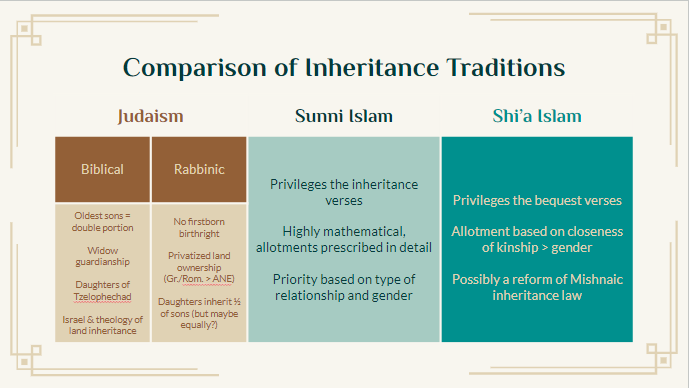
- Where do you see testate succession and where do you see intestate succession? How do you think Jews and Muslims might reconcile conflicting systems?
- How does studying an excerpt from the Qur'an affect your understanding of Islam and/or the relationship between Judaism and Islam?