(טז) לֹא־תֵלֵ֤ךְ רָכִיל֙ בְּעַמֶּ֔יךָ לֹ֥א תַעֲמֹ֖ד עַל־דַּ֣ם רֵעֶ֑ךָ אֲנִ֖י יְקוָֽק׃
(16) Do not go around as a gossiper among your people.
Do not stand still when your neighbor's life is in danger. I am God.
אַזְהָרָה לְמוֹצִיא שֵׁם רַע מְנָלַן? רַבִּי אֶלְעָזָר אָמַר: מִ״לֹּא תֵלֵךְ רָכִיל״. רַבִּי נָתָן אוֹמֵר: מִ״וְּנִשְׁמַרְתָּ מִכֹּל דָּבָר רָע״. וְרַבִּי אֶלְעָזָר מַאי טַעְמָא לָא אָמַר מֵהַאי? הָהוּא מִיבְּעֵי לֵיהּ לְכִדְרַבִּי פִּנְחָס בֶּן יָאִיר. ״וְנִשְׁמַרְתָּ מִכֹּל דָּבָר רָע״, מִכָּאן אָמַר רַבִּי פִּנְחָס בֶּן יָאִיר: אַל יְהַרְהֵר אָדָם בַּיּוֹם וְיָבֹא לִידֵי טוּמְאָה בַּלַּיְלָה. וְרַבִּי נָתָן מַאי טַעְמָא לָא אָמַר מֵהַאי? הָהוּא: אַזְהָרָה לְבֵית דִּין שֶׁלֹּא יְהֵא רַךְ לָזֶה וְקָשֶׁה לָזֶה.
The Gemara asks: From where do we derive the warning, i.e., the prohibition that serves as the source for the flogging for a defamer? Rabbi Elazar says that the prohibition is derived from the verse “You shall not go up and down as talebearer” (Leviticus 19:16). Rabbi Natan says that it is derived from: “Then you shall keep yourself from every evil thing [davar ra]” (Deuteronomy 23:10), which is expounded to mean dibbur ra, evil speech. The Gemara asks: And what is the reason that Rabbi Elazar did not state that it is derived from this verse quoted by Rabbi Natan? The Gemara answers: He requires that verse for the statement of Rabbi Pineḥas ben Yair, as it was taught: “Then you shall keep yourself from every evil thing”; from here Rabbi Pineḥas ben Yair said: A person should not think impure thoughts by day and thereby come by night to the impurity of an emission. The Gemara asks the reverse question: And what is the reason that Rabbi Natan did not state that it is derived from that verse cited by Rabbi Elazar? The Gemara answers: Rabbi Natan explains that verse, which includes the term talebearer [rakhil], as a warning to the court that it should not be soft to [rakh la] this litigant and harsh to that one, but it must treat both sides as equals.
Who is a רכיל? One who loads himself up with matters, and goes from this one to that one, saying to each, such did that man say, thus and such have I heard concerning that man, even though it be true, behold him, he destroys the universe. There is yet an extremely grosser iniquity, which, too, is included in this prohibitive commandment, and that is, לשון הרע, one who spreads scandal about his fellow even though he be telling truth. If he be lying, he is called a מוציא שם רע who invents an evil name against his fellow. The person who speaks לשון הרע, sits in company and relates, saying: thus and such did that certain party, thus and such were his parents, and thus and such I did hear about him and of course, he relates scandalous matters. Of him, the Verse says: "May the Lord cut off all flattering lips, the tongue that speaketh proud things" (Ps. 12.4).
The wise men said: "There are three transgresssions which call forth retribution from the man who perpetrates in this world, and disinherit him from a share in the world to come. They are: idolatry, adultery, and bloodshed; but the לשון הרע outweighs them all" (Arakin, 16b). The wise men, moreover, said:3Arakin, 16b. G. "He who speaks with לשון הרע is like an atheist, for it is said: 'Who have said, Our tongues will we make mighty, our lips are with us, who is Lord over us'"? (Ps. 12.5.). And, again, the wise men said: "לשון הרע kills three persons, the one who speaks it, the one of whom it is spoken, and the one who receives it". In fact, the greatest harm comes to the one who receives the evil report.
אמר רב עמרם אמר רב שלש עבירות אין אדם ניצול מהן בכל יום הרהור עבירה ועיון תפלה ולשון הרע לשון הרע סלקא דעתך אלא אבק לשון הרע
Rav Amram says that Rav says: There are three sins from which a person is not spared each day. They are: Having sinful thoughts, and committing sins concerning deliberation in prayer, and uttering malicious speech. The Gemara asks: Can it enter your mind that a person cannot go through the day without uttering malicious speech? The Gemara answers: Rather, Rav was referring to uttering a hint, i.e., words with a bare trace, of malicious speech.
There are things which are forbidden because of the "dust" of lashon hara. As when one says about another: "Who would have said about Ploni that he would be the way he is now!" or "Don't talk about Ploni. I don't want to talk about what happened or what will happen," and the like. Also in the category of the "dust" of lashon hara is speaking in one's praise before his enemies; for this will cause them to speak demeaningly of him. And it is forbidden to be profuse in praise of him, even if not before his enemies; for through this he will come to demean him in the end, saying: "except for this one bad trait that he has." Or the listeners will say: "Why do you speak so much in his praise? Does he not have this and this trait?"
וכי דרכה של אשה ליטול שש סאין אלא רמז [רמז] לה שעתידין ששה בנים לצאת ממנה שמתברכין בשש [שש] ברכות ואלו הן דוד ומשיח דניאל חנניה מישאל ועזריה דוד דכתיב (שמואל א טז, יח) ויען אחד מהנערים ויאמר הנה ראיתי בן לישי בית הלחמי יודע נגן וגבור חיל ואיש מלחמה ונבון דבר ואיש תואר וה' עמו וגו'
ואמר רב יהודה אמר רב כל הפסוק הזה לא אמרו דואג אלא בלשון הרע יודע נגן שיודע לישאל גבור שיודע להשיב איש מלחמה שיודע לישא וליתן במלחמתה של תורה (איש תואר שמראה פנים בהלכה ונבון דבר שמבין דבר מתוך דבר) וה' עמו שהלכה כמותו בכל מקום
בכולהו אמר להו יהונתן בני כמוהו כיון דאמר ליה [וה' עמו] מילתא דבדידיה נמי לא הוה ביה חלש דעתיה ואיקניא ביה דבשאול כתיב (שמואל א יד, מז) ובכל אשר יפנה ירשיע ובדוד כתיב ובכל אשר יפנה יצליח
The Gemara asks: And is it the typical manner of a woman to take a heavy burden of six se’a of barley? Rather, Boaz alluded to Ruth that six descendants are destined to emerge from her who would each be blessed with six blessings, and these are they: David, and the Messiah, Daniel, Hananiah, Mishael, and Azariah. The Gemara elaborates: David was blessed with six virtues, as it is written: “And one of the servants answered and said: Behold, I have seen a son of Yishai of the house of Bethlehem who knows to play, and is a fine warrior, and a man of war, and prudent in speech, and a comely man, and the Lord is with him” (I Samuel 16:18).
Rav Yehuda says that Rav says: Doeg the Edomite, one of Saul’s servants, stated this entire verse only as malicious speech, in an attempt to incite Saul to be jealous of David. “Who knows how to play” means that he knows how to ask complex and germane questions about Torah matters. “A fine warrior” means that he knows how to answer questions raised with regard to matters of Torah. “A man of war,” means that he knows to negotiate his way in the battle to understand the Torah. “A comely man” is one who displays understanding in facets of halakha and explains it well. “And prudent in speech [davar]” means that he infers one matter [davar] from another matter. “And the Lord is with him” means that the halakha is ruled in accordance with his opinion in every area of halakha. The Gemara relates: In response to all of these virtues listed in praise of David, Saul said to his servants: My son Jonathan is his equal. Once Doeg said to Saul: “And the Lord is with him,” meaning that the halakha is ruled in accordance with his opinion in every area of halakha, a matter that did not apply even to Saul himself, he was offended and grew jealous of David. As with regard to Saul it is written: “And wherever he turned he put them to the worse” (I Samuel 14:47), and with regard to David it is written: And wherever he turns he does prosper. Although the verse about Saul is referring to his victories and his prominence in Torah, he was not privileged to have all of his conclusions accepted as halakha.
Toeles
(16) Do not deal basely with members of your people. Do not profit by the blood of your fellow [Israelite]: I am ה'.

This footnote is referring to a case where the storekeeper was cheating a customer al pi halacha, but what if he wasn't strictly cheating?
For example, the item is worth 5 and the storekeeper is charging 6, but if it's less than 1/6th (ona'a) perhaps you can't say anything ...
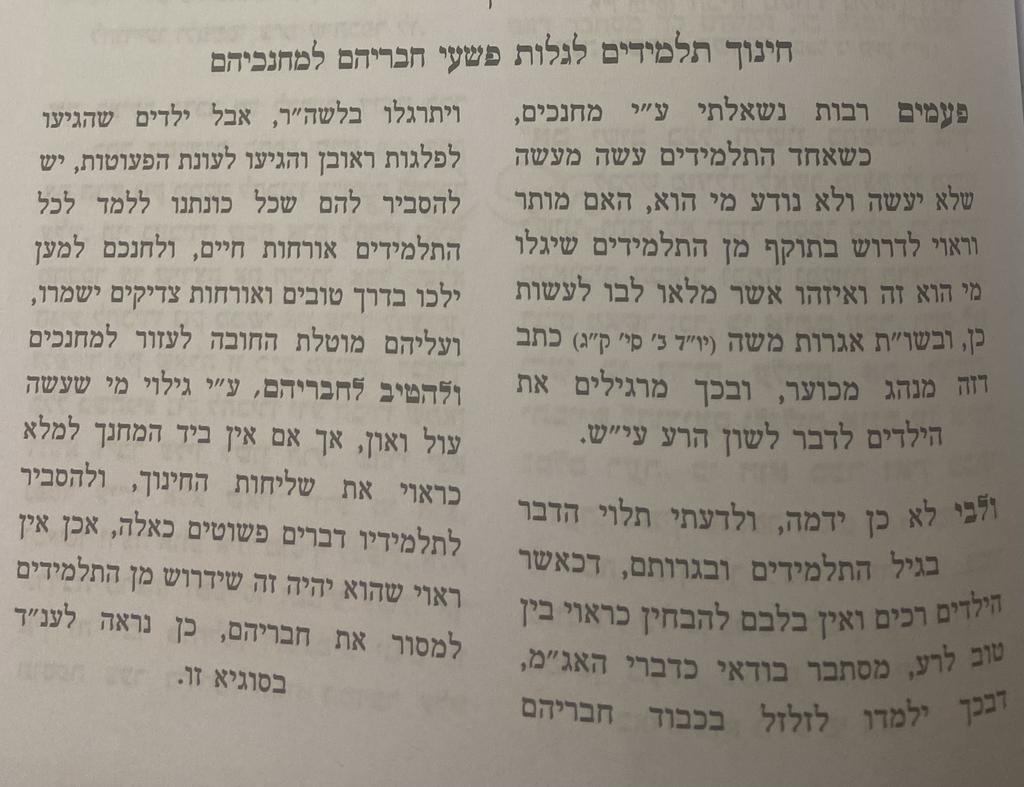
(כז) פחות משתות וכו'. בדין זה היה לי צ״ע, מי נימא כיון דלכתחלה אסור לרמותו אפילו בפחות משתות כמו שנפסק בח״מ בסימן רכ״ז ממילא צריך להגיד לו, או דילמא כיון דהוא ספיקא דדינא כמו שמובא בהרא״ש בב״מ דאפשר דאפילו לכתחלה מותר בפחות משתות, א״כ ממילא אסור מן הדין לילך ולרגל עליו, והוא בכלל לישנא בישא. ואפשר כיון דספיקא דאורייתא הוא, וזיל הכא לחומרא לענין אונאה, וזיל הכא לחומרא לענין סיפור.
I need to look into this din. Perhaps because it is forbidden to overcharge even less than 1/6th as it says in Choshen Mishpat 227 that you need to tell or maybe since it's a doubt if the transaction is valid, as the Rosh brings in Baba Metzia, that even a priori less than 1/6th may be charged. If it is permitted to overcharge less than 1/6th then one would be forbidden to go and tell the customer (that he is being overcharged) since it would be lashon hara. It's possible that since we're dealing with d'oraisa doubts that we would be strict both for the 1/6th not being allowed and strict about telling.
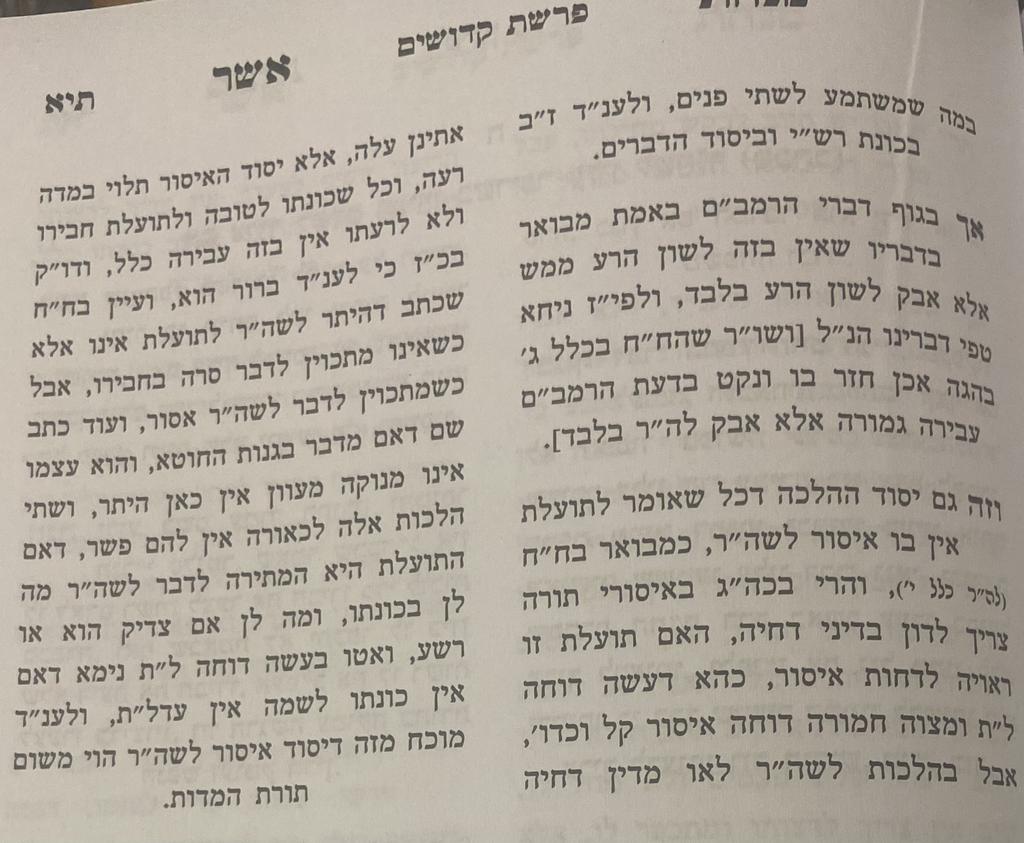
Even though the Minchas Asher is saying doche, what he really means is hutra.
And turn it into joy with a good word.
אלא משום דכתיב לא תעיל דויא בלבך דגברי גיברין קטל דויא הא שלמה אמרה (משלי יב, כה) דאגה בלב איש ישחנה ר' אמי ור' אסי חד אמר ישיחנה מדעתו וחד אמר ישיחנה לאחרים
*ואפשר דהוא הדין אם כונתו בספורו להפג את דאגתו מלבו, הוי כמכון לתועלת על להבא, [ולפי זה מה שאמרו ז"ל: דאגה בלב איש ישיחנה לאחרים, קאי גם על ענין כזה], אך שיזהר, שלא יחסרו שאר הפרטים שבסעיף זה.
(א) לא תשא את שם ה' אלקיך לשוא. אזהרה למקבל לשון הרע. אפס אם יבא איש אצלך צועק על חבירו מפני שהוא הוכיחו בפניך ולבו חרה לו ואומר כי זה שהוכיחו עושה כך וכך ואומר עליו דברים שלא כהוגן. ואתה יודע בזה כי אחרי שיגיד לך לא ילך להגיד לאחרים כי אינו חושש להודיע לרבים. וכדי להוציא הדברים מלבו שהם כבדות עליו להגיד מצוה לשמעו ומה שתוכל לתקן כנגד חבירו לחבבו תעשה ותתקן ותאמר לו פלוני אוהב אותך. ולמה אתה מדבר כדברים האלה אם יקבל מוטב ואם לאו אע"פ ששמע לדבריו אל תאמין ואל תגיד לאחרים להסירם מלבו ואותן האחרים יהיו מקבלי שמע שוא ויאמינו לו ומה יעשו ילכו ויגידו לאותו האיש הלעז שזה הוציא עליו ויבא גם הוא להתקוטט עמו.
(1) “Thou shalt not utter a false report” (Exod. 23:1). This is also a warning to those who listen to evil talk. However, if a man comes to you complaining about his neighbor because his neighbor reproved him in your presence and for this reason he is angry with him and he says, “That one who dared to reprove, himself does such and such,” and he continues to relate unpleasant things about him; if you know that after he tells you he will not go and tell others, because he does not care to inform the public, but tells you in order to unburden his heart, because it weighs upon him, it is a meritorious deed to listen to him. That which you are able to improve in making him beloved to his friend, do and arrange. Say to him, “so and so loves you, why then do you speak so?” If he accepts, good, if not, even though you listened to his talk do not believe it. But you should not tell others in order to help him remove it from his heart. For others will be recipients of a false report and they will believe him. What will they do? They will relate to the other man the evil talk that this one spread about him, and he too will come to quarrel with him. The result is that the quarrel comes about through you because you did not listen to him.
R' Daniel Feldman False Facts & True Rumors
Questions
- How much has to be revealed?
- When does it have to be revealed?
- What are a 3rd party's obligation when asked or when s/he knows that the information has not been revealed?
- If a couple is about to marry, it is appropriate to inform one of them if their potential spouse has a serious illness or has heretical beliefs.
- Chofetz Chaim says that things like naivety are not to be revealed and also that a potential husband is not a talmud chacham since the family could have had him tested prior to the wedding.
- clear negative impact
- not everything that is negative has a clear negative impact
- anything that can be investigated should not be volunteered by a 3rd party
- What is a serious illness?
- Obviously some part of this is in the eye of the potential spouse, nonetheless things that doctors agree affect fertility are included, things that significantly impact a person's quality of life are included (e.g. MS), mental illness, anything that can be transmitted to a child
- R' Yitzchak Zilberstein "migaleh tefach u'michaseh tefachayim"
- What about past aveiros or "aveiros"?
- Depends on if the person is/was ragil in it.
- R' Yitzhak Weiss talks about someone who did a "major sin" in his youth and if he only did it once, did teshuva and now lives an exemplary life that he doesn't need to reveal.
- What about "aveiros" - extent that this is viewed by a given community as a character flaw. E.g. in Williamsburg, it would probably ruin someone's shidduch to reveal that they have a TV but in Great Neck not so much.
- Solicited vs. Unsolicited
- Unsolicited in a situation of "vadai hezek", certain damage. E.g. you know that one of them can't have children and this hasn't been revealed. (Tzitz Eliezer says this even applies to a doctor who has confidential info!)
- Solicited can reveal even a safek hezek
A different tack is taken by the Klausenberger Rebbe based on the Rema in EH 1:3
מצוה על כל אדם שישא אשה בן י"ח והמקדים לישא בן י"ג מצוה מן המובחר אבל קודם י"ג לא ישא דהוי כזנות ובשום ענין לא יעבור מך' שנה בלא אשה ומי שעברו עליו ך' שנה ואינו רוצה לישא ב"ד כופין אותו לישא כדי לקיים מצות פריה ורביה ומיהו אם עוסק בתורה וטרח בה ומתיירא לישא אשה כדי שלא יטרח במזונו ויתבטל מן התורה מותר להתאחר: הגה ובזמן הזה נהגו שלא לכוף ע"ז וכן מי שלא קיים פריה ורביה ובא לישא אשה שאינה בת בנים כגון עקרה וזקנה או קטנה משום שחושק בה או משום ממון שלה אע"פ שמדינא היה למחות בו לא נהגו מכמה דורות לדקדק בענין הזיווגים ואפי' בנשא אשה ושהה עמה עשרה שנים לא נהגו לכוף אותו לגרשה אע"פ שלא קיים פריה ורביה וכן בשאר ענייני זיווגים: (ריב"ש סי' ט"ו) ובלבד שלא תהא אסורה עליו:
It is incumbent on every man that they should marry a woman at the age of 18 and the diligent get married at 13 and this mitzvah is for those who choose it, but before the age of 13 one should not marry, because it is similar to harlotry. ... Rem"a: ...
(Nowadays) we haven't had the custom for many years to look too closely at shidduchim ...
This is understood by the Klausenberger Rebbe in Divrei Yatziv EH 15 that we "look the other way" about certain imperfections about people looking to marry and that the people in this "market" agree that even if everything is not as described, that they are mochel. Of course, this is only talking about a geneivas da'as type of situation, not a mekach ta'os.