


אִי אֲבֵילוּת דְּמֵעִיקָּרָא הוּא — אָתֵי עֲשֵׂה דְרַבִּים וְדָחֵי עֲשֵׂה דְיָחִיד. וְאִי אֲבֵילוּת דְּהַשְׁתָּא הוּא — לָא אָתֵי עֲשֵׂה דְיָחִיד וְדָחֵי עֲשֵׂה דְרַבִּים.
The Gemara explains: If it is a mourning period that had already begun at the outset of the Festival, the positive mitzva of rejoicing on the Festival, which is incumbent upon the community, comes and overrides the positive mitzva of the individual, i.e., the mourning. And if the mourning period began only now, i.e., the deceased died during the Festival, the positive mitzva of the individual does not come and override the positive mitzva of the community.
April 15, 1865: Abraham Lincoln dies after assasination by John Wilkes Booth
June 1, 1865: National Day of Mourning declared
CONGREGATION MIKVE ISRAEL OF PHILADELPHIA,
Thursday, June I, 1865, BY THE REV. SABATO MORAIS, MINISTER OF THE CONGREGATION
HEBREWS of America! Repress the joyful emotions that thrill your hearts! Heirs of the fiery law, which from the se- cret top of Sinai did, at this season, cast forth rays of unquench- able light! dismiss, if it be for a few moments, the pleasurable thoughts that cluster around your mindsl True, when the residue of the chosen seed holds a feast to the Lord, you cannot afflict your soul with fasting. Sackcloth and ashes would ill become those who but yesterday came hither adorned with the garment of unfading beauty first donned at Horeb. Yet, the memory of the righteous must, even now, draw from our lips a blessing and a prayer. We would fain have postponed the discharge of so solemn but mournful a duty. We would have, at least, wished that in this land of equal rights, where the religious tenets of a majority can claim no higher privileges than those revered by a minor- ity, there should not have been found protestants against the first summons of the authorities. But who among us will, this day, let any motives sever him from the community? Who will refuse to mingle his tears with those which, like a swelling stream, flow from a sorrow-stricken nation? Brethren! if our lot had been cast in countries that lie be- yond the broad Atlantic, we might, at times, have deemed it prudent to conform with the action of those who were enjoined to lament the demise of some unpopular Ruler....
But we mourn as mortals mourn when bereaved of a friend and guide. We mourn because, clinging to the earth, we would have desired that the beloved of his people might reap with joy in their midst, the harvest of national greatness and peace which he had sown in tears. We mourn, because the voice is hushed whence proceeded the accents of beneficence, for truly “he opened his mouth with wisdom, and on his tongue dwelt the law of kindliness.”...The conquests of the famous Macedonian king may cease to be remembered, the exploits of the hero that passed the Rubicon may find no space in the pages of his- tory; but the goodly, aye, the religious thoughts and deeds of our citizen Ruler will form the song and joy of the latest gene- rations. As long as the heart feels and the mind thinks he will be hailed the defender of human liberty and the promoter of civilization. From the uttermost part of the earth shall be heard the voice that sings, “Glory to the righteous.”...
...* It being the second day of the feast of Pentecost, no collection could be made in the Synagogue; but a sum amounting to $300 was subsequently raised from the free-will offerings of members and seat-holders. glows with gratitude at the recollection of his labor and ser- vices, is the acknowledgment that becomes one so good. We must bear his name with a blessing upon our lips. Teach our children to pronounce it with the reverence inspired by that of the immortal father of this Republic. Picture in their presence, as an incentive to virtue, his unostentatious goodness. Show how he adhered to truth amid appalling trials; how he met death for the sake of principles. The precious blood will then, indeed, bear fruits of sublimity. Ah! yes, let his blood, treach- erously spilled, be that of the covenant, which shall draw all into one political faith, even the preservation of our beloved Union. Oh, blessed be the grief we feel, if it will adjust all differences, bury away all animosities, make an end of party strife, and raise a high and exalted throne to enduring peace in the country of Lincoln and Washington. Men of Israel! At the foot of the altar let us vow again this day unswerving fidelity to the Law of Sinai, and steadfast allegiance to the American Constitution, which will henceforth secure to all their inalienable rights—life, liberty, and the pur- suit of happiness.
We may not raise our voice in lamentation
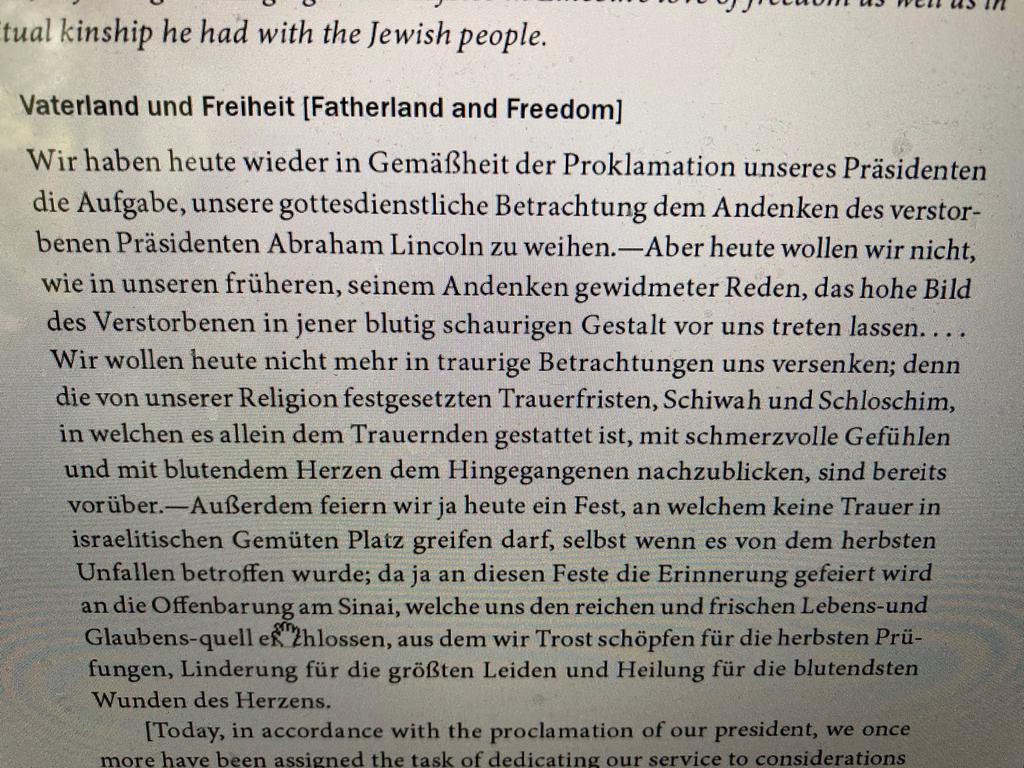
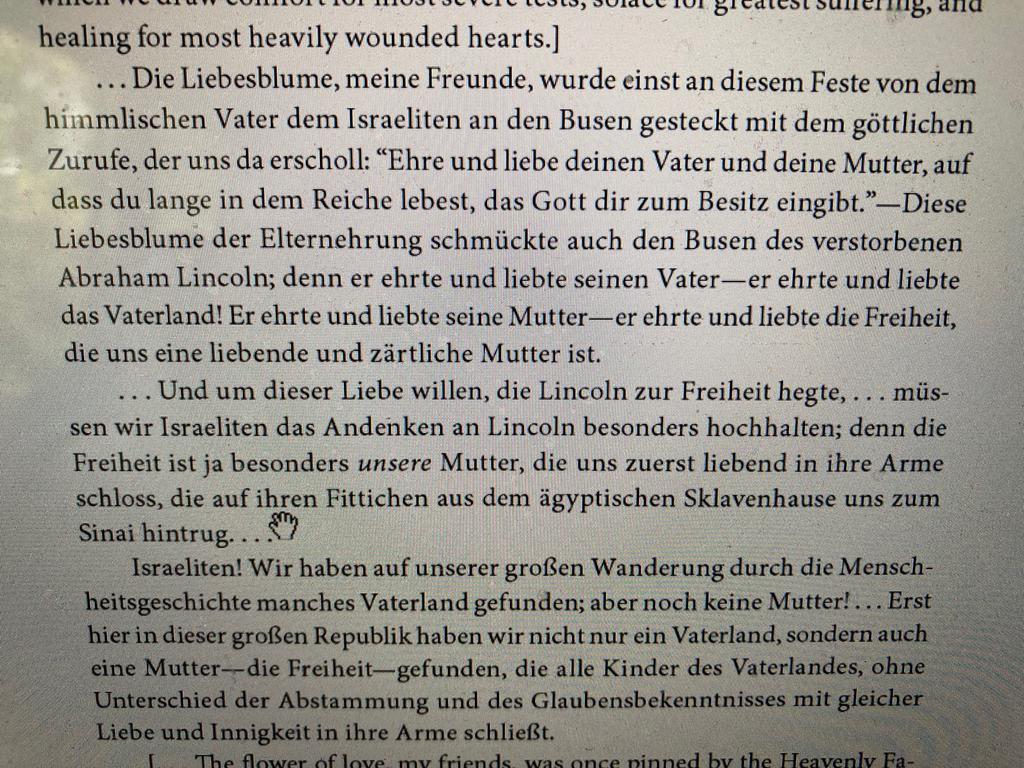
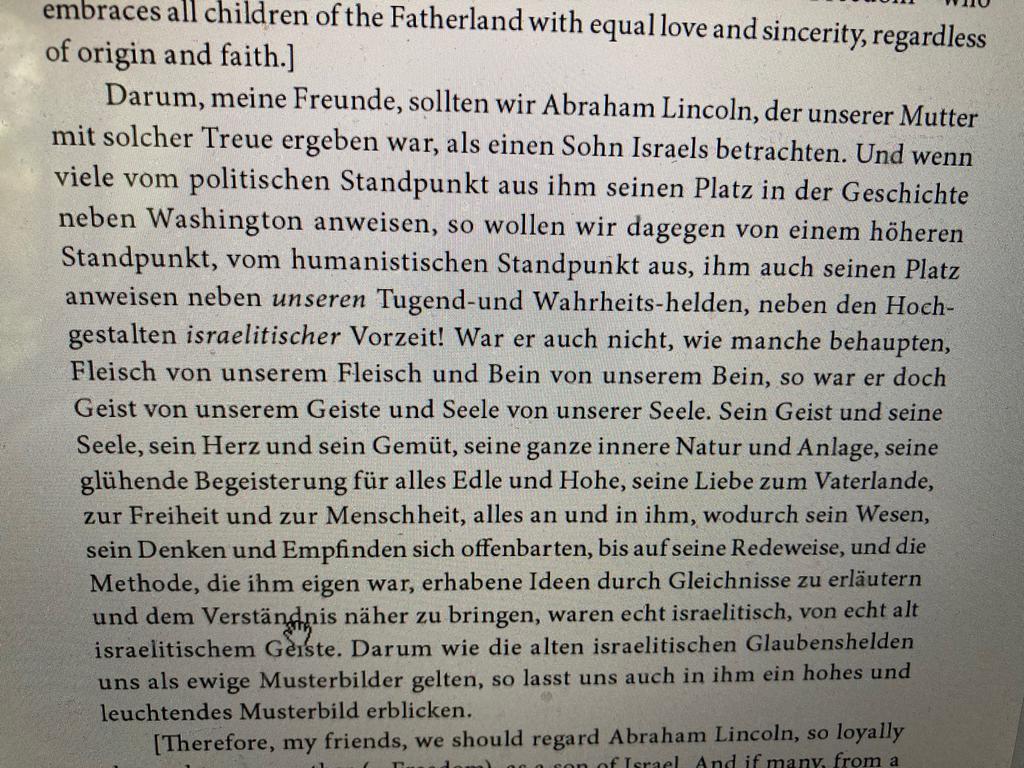
Rabbi Jacque Judah Lyons, Shearith Israel, June 1, 1865
Throughout the land the court of every shrine is this day frequented; all earthly pursuits and worldly thoughts are set aside and the presence of the Merciful One is sough in his sanctuary by our fellow citizens to evince their resignation under the calamity that has befallenthem, in the murder of their Chief Magistrate. We, as Israelites, however, have come here this day in accordance with our time honored custom, to complete the celebration of our great festival commemerating the revelation of God on Mount Sinai. Then and there a government was inaugurated, which pointed to God, the Supreme ruler of Heaven and Earth as King, and made all men, of whatever rank, wealth, or learning, equals in the eyes of the law; and well may it be said, it was the occasion from which the world may date with propriety the commencement of its civilization. In the annual commemeration of the great event, during the period of our dispersion, we can comply with but one direction, which is recorded in Deuteronomy 6:11: "Thou shalt love the Lord thy God."
Joy, then, my friends, is enjoined upon us as our cheif duty upon our present festival. You need scarecely be told that by that joy is meant the emotion excited by a proper appreciation of God's kindness, which excludes all evidence of grief, and is evinced in acts of gratitude and songs of fervent praise. Sorrow and dejection, the chief characteristics of a day of humiliation, are incompatible with our joy. The rules of our ritual prohibit every demonstration of sorrow and all supplicatory invocation on this day of joy. But for this restriction we too, in common with our fellow citizens of all denominations, would have observed this day of humilitation. Had not the day that was originally appointed for this purpose been changed, we, too, would have mourned 'with a great and very sore lamentation' the loss of a true a great Patriot....
If we may not raise our voices in lamentation, we may as members of that great house of mourning, where the head of the family has been taken away, avail ourselves of the prvilege of praying for the happiness of his soul. The prayer for the dead, which is so well intended to bring consolation to the heart of the mourner, so far from being prohibited, constitues in some of our congregations a particular feature of the service, this being one of the days designated, whereupon a remembrance of our departed friends is calculation to sanctify our rejoicing, to impress us with the transitoiness of all that is of this earth, and make us aspire to the possession of the eternal joy, reserved for the righteous in a blessed immortatlity....
As we have said from this place on a recent occassion, it is the assurance of our religion. Israel's bondage was broken, and seven weeks after the nation for the first time was brough in communion with their God to witness the recelation of his power and will. Then and there men's liberty was defined, restraints were placed upon his passions when the all-saving lessons of truth and justice were promulgated, that with the good and with the pious of all creeds it shall be well in the world to come....
In this spirit, believing that the merits of our departed President will find favor with an all-merciful God, let us pray for the reception of his soul into the kingdom of Heaven.
A Proclamation
Whereas by my proclamation of the 25th instant Thursday, the 25th day of next month, was recommended as a day for special humiliation and prayer in consequence of the assassination of Abraham Lincoln, late President of the United States; but
Whereas my attention has since been called to the fact that the day aforesaid is sacred to large numbers of Christians as one of rejoicing for the ascension of the Savior:
Now, therefore, be it known that I, Andrew Johnson, President of the United States, do hereby suggest that the religious services recommended as aforesaid should be postponed until Thursday, the 1st day of June next.
In testimony whereof I have hereunto set my hand and caused the seal of the United States to be affixed.
Done at the city of Washington, this 29th day of April, A. D. 1865, and of the Independence of the United States of America the eighty-ninth.
ANDREW JOHNSON.
By the President:
W. HUNTER,
Acting Secretary of State.