


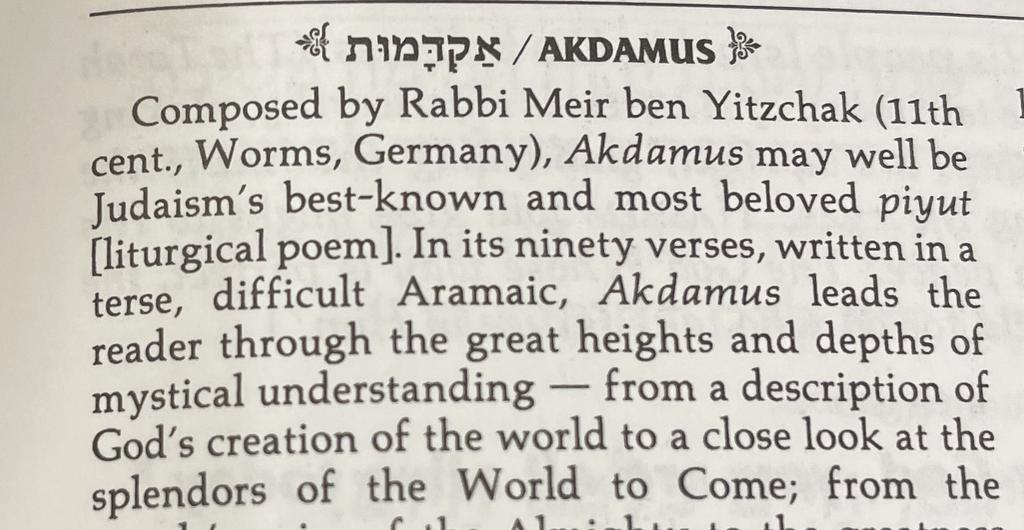
(א) אַקְדָּמוּת מִלִּין וְשָׁרָיוּת שׁוּתָא
(ב) אַוְלָא שָׁקֵלְנָא הַרְמָן וּרְשׁוּתָא
(ג) בְּבָבֵי תְּרֵי וּתְלַת דְאֶפְתַּח בְּנַקְשׁוּתָא
(ד) בְּבָרֵי דְבָרֵי וְטָרֵי עֲדֵי לְקַשִּׁישׁוּתָא
(1) Before reciting the Ten Commandments,
(2) I first ask permission and approval
(3) To start with two or three stanzas in fear
(4) Of God who creates and ever sustains.
תְּפִלָּה: רַחֲמֵי הִיא, כׇּל הֵיכִי דְּבָעֵי מְצַלֵּי. וּתְפִלָּה בְּכׇל לָשׁוֹן? וְהָאָמַר רַב יְהוּדָה: לְעוֹלָם אַל יִשְׁאַל אָדָם צְרָכָיו בִּלְשׁוֹן אֲרָמִית, דְּאָמַר רַבִּי יוֹחָנָן: כׇּל הַשּׁוֹאֵל צְרָכָיו בִּלְשׁוֹן אֲרַמִּי — אֵין מַלְאֲכֵי הַשָּׁרֵת נִזְקָקִין לוֹ, לְפִי שֶׁאֵין מַלְאֲכֵי הַשָּׁרֵת מַכִּירִין בִּלְשׁוֹן אֲרַמִּי! לָא קַשְׁיָא: הָא — בְּיָחִיד, הָא — בְּצִבּוּר.
(ד) יכול להתפלל בכל לשון שירצה וה"מ בצבור אבל ביחיד לא יתפלל אלא בלשון הקודש וי"א דה"מ כששואל צרכיו כגון שהתפלל על חולה או על שום צער שיש לו בביתו אבל תפלה הקבועה לצבור אפי' יחיד יכול לאומרה בכל לשון ויש אומרים דאף יחיד כששואל צרכיו יכול לשאול בכל לשון שירצה חוץ מלשון ארמי:
(4) One may pray in any language one desires; and this applies [when one is praying together] with a congregation. But when [one is praying] alone, one should only pray in the Holy Language. And some say that this [requirement to only pray in Hebrew] only applies when one is asking for one's own [personal] needs, for example: one who has prayed for someone who is ill, or for some affliction in one's household; however, [when reciting] the regular liturgy established for the congregation, even an individual may recite it in any language. And some say that even an individual requesting his own personal needs may request them in any language one wishes, except for in the Aramaic language.
שאין מלאכי השרת מכירין בלשון ארמי - לבד מגבריאל כדאמר בסוטה בריש אלו נאמרין (סוטה דף לג.) דאמר מר בא גבריאל ולמדו שבעים לשונות ליוסף ותימה דאפי' מחשבה שבלב כל אדם יודעים ולשון ארמי אין יודעים:
[ט] חוץ מלשון ארמי וכו'. שאין מלאכי השרת נזקקין ללשון ארמי. כתב עולת תמיד תימא דלשון תרגום הוא לשון חשוב מכל הלשונות חוץ מלשון הקודש, עד כאן, ואישתמיטתיה דברי מעדני מלך שם שכתב לפי שתרגום הוא קרוב ללשון הקודש משום כך הוא מגונה בעיניהם לפי שהוא כמו לשון שנשתבש, אך לפי זה אם כן לשון ערבי גם כן יהיה מגונה בעיניהם שהוא כמו כן קרוב ללשון הקודש. ובספר תמים [דעים] סימן קפ"ד מצאתי שמטעם זה אמרו שאין מלאכי השרת מכירין בלשון ארמי כדי שלא יניחו המתפללים לשון הקודש אם יניחוה מלהתפלל בו ורצה לומר שאין משגיחין בו להביא תפילתו לפני המקום ובספר באר שבע פרק אלו נאמרים כתב הטעם לפי שרצה הקב"ה שלא יבינו כשאנו אומרים תפילות נאות ושבחות גדולות בלשון ארמי כדי שלא יתקנאו בנו, עד כאן. כתב מלבושי יום טוב ומכל מקום בציבור נראה דליכא קפידא וכן רגילין לומר יקום פורקן, גם בריך שמיה וכו' דבזוהר פרשת ויקהל, עד כאן, וכן כתב בלחם חמודות דף י' דאפשר לומר שכשהוא בציבור לא קאמר ר' יהודה, עד כאן. והוא תמוה הלא הוא ש"ס מפורש בסוטה דף ל"ג הוא, כתב בספר תמים דעים והוא הדין אפילו ביחיד אם מתפללין בדמעה וצועקים בו על אונאה דשערי דמעה ושערי אונאה לא ננעלו ואין צריך שיביאו המלאכים את תפילתן והוא הדין אם מתפללין בכיוון גדול מתוך צרה שהם נשמעים אף שאין המלאכים מכירין לשונם, שהרי מנשה קיבל הקב"ה תפילתו בעל כרחן של מלאכים. כתב בספר ווי העמודים טוב לבכות בעת תפילתו, ומי שיש לו לב קשה ואינו יכול לבכות יתן קולו בבכי כאילו הוא בוכה, וזה פירוש הפסוק כי שמע ה' קול בכיי וגו' ומכל מקום נראה שיהא הכל בלחש ובפרט בציבור כמו שכתב סעיף ב':
וי"א כו'. דהם מכירים בכל לשון רק דלשון זה מגונה בעיניהם וז"ש אין נזקקים לו ובזה מתורץ קושיית התוס' דשבת י"ב ב' ד"ה שאין כו' ותמהו על תוס' מנין להם שמכירין מחשבות שבלב ונראה שלמדו ממ"ש ג' דברים מזכירין כו' ועיון תפלה ועתוס' שם אבל בזוהר ח"א ק"א ב' לא ידעו בהאי עלמא אלא מה כו' ואע"ג דבגמ' ב"מ פ"ז א' אמרו יודעין היו כו' מ"מ אמת הוא אף להגמ' וכן לשון אין מכירין מ' אין מבינין ולכן לא אתמסר להון וז"ש אין נזקקין:
(יט) ארמי - ובצבור מותר אף לשון ארמי. ובזה אתי שפיר מה דאומרים יקום פורקן ובריך שמיה בצבור וכדומה [פמ"ג]. ולפ"ז אם מתפלל בביתו אין יכול לאמר שום יקום פורקן. וכן מוכח באור זרוע הגדול בהלכות שבת סי' נ':
(ירושלמי סוטה פ"ז ה"ז)
וכמה קשה הי' לי הדבר ימים רבים איך אנו כותבין גט אשה בלשון בלול מעברית וארמית, והלא קיי"ל גט הנכתב בשתי לשונות פסול, עד שנתיישב לי לפי המבואר כאן דיש קרבת מקום וכבוד בין לשונות עברית וארמית, ולכן אין נחשבות כשתי לשונות מיוחדות, ובאמת גם לולא אלה המלות יגר שהדותא מצינו הרבה תיבות ארמיות בתורה וכמש"כ רש"י בפ' בראשית בפסוק הוא ישופך ראש דהמלה ישופך היא ארמית, וכ"כ רמב"ן בפ' ויצא בפסוק זבדני אלקים שהמלה זבדני היא ארמית, ובפ' ברכה ואתה מרבבות קדש וכן הרבה, ולכן אין לדונם כשתי לשונות נפרדות, והארכנו בענין זה במאמר מיוחד על חקר לשון הקודש, קראנוהו בשם שפה לנאמנים (ווארשוי תרנ"ג), וכאן די בזה. .
לשון סורסי - קרוב הוא ללשון ארמי ואומר אני שזה לשון גמרת ירושלמי ואומות העולם קורין אותו לינג"א שוריי"א (שפה סורית) :
או לשון יווני - שהיו קרובין לארץ יון ולשון יון יפה מזה והיה לו לספר בו:
וִיהִי רָצוֹן מִלְּפָנֶֽיךָ ה' אֱלֹקֵי אַבְרָהָם אֱלֹקֵי יִצְחָק וֵאלֹקֵי יַעֲקֹב. הָאֵל הַגָּדוֹל הַגִּבּוֹר וְהַנּוֹרָא. אֵל עֶלְיוֹן. אֶהְיֶה אֲשֶׁר אֶהְיֶה. שֶׁכָּל הַמַּלְאָכִים שֶׁהֵם פּוֹעֲלֵי תְפִלּוֹת. יָבִֽיאוּ תְפִלָּתִי לִפְנֵי כִסֵּא כְבוֹדֶֽךָ.
(2) Behold, I stand here, impoverished in good deeds, perturbed and frightened in fear [of Him,] Who is enthroned upon the praises of Yisrael. I have come to stand and to plead before You on behalf of Your people, Yisrael, who have appointed me their messenger; even though I am not worthy or qualified for the task. I therefore beseech You, God of Avraham, God of Yitzchak and God of Yaakov; Adonoy, Adonoy, Almighty, Compassionate and Gracious, God of Yisrael, Shaddai, Eminent and Awesome, please, help me succeed in the mission which I have undertaken to stand [before You] and to seek mercy for myself and for those who have appointed me. Do not hold them responsible for my sins, nor condemn them for my iniquities, as I am a sinner and a transgressor. Let them not be disgraced through my transgressions; may they not be ashamed of me, nor may I be ashamed of them. Accept my prayer as the prayer of one who is mature and experienced [in prayer], and as one who is respected, whose beard is full-grown, whose voice is pleasant, and who is pleasing to his fellow man. Rebuke Satan that he not accuse me, and may our assembling [be acceptable] to You with love; and may all [our] transgressions be covered over with [Your] love. All our troubles and afflictions; please turn them for us and all Yisrael into happiness and joy, life and peace. May they love truth and peace, and may there be no impediment in my prayer. And may it be Your will, Adonoy, God of Avraham, God of Yitzchak and God of Yaakov; the Almighty, the Great, the Powerful, the Awesome, most high, Almighty, [Who is known by the Name]: “I am that I am” that all the angels who convey prayers, may they bring my prayers to the presence of Your glorious throne, and spread them to You for the sake of all those who are righteous, pious, pure and upright, and for the sake of Your glorious Name, [which is] great and awesome; for You hear the prayers of Your people, Yisrael, with compassion. Blessed are You Who hears prayers.
ההוא דאתא לשזביה ללוט - ותימה דאמרינן בבראשית רבה (פרשה נ) דאין מלאך אחד עושה שתי שליחות ויש לומר דכאן לא עשה מיכאל בשליחות אחת כי אם מעשה אחד שבישר את שרה וכשהלך משם לסדום אז הותחלה שליחות אחרת ודוקא במקום אחד אין עושה ב' שליחות ובב"ר (שם) יש שרפאל בא להציל את לוט ורפואת אברהם אינה נזכרת ואפילו בא כמו כן לרפואת אברהם חשיב הכל שליחות אחת דרפואה והצלה ענין אחד הוא הקשה הר"ר אלחנן הא משמע לישנא דקרא ששניהם הצילוהו כדכתיב (בראשית יט) ויחזיקו האנשים בידו וכתיב ויוציאוהו ויניחוהו מחוץ לעיר וכתיב בתריה שאמר ליה מלאך שבא להפוך את סדום כי לא אוכל לעשות דבר עד באך שמה ויש לומר ששניהם הוציאוהו חוץ לעיר ומיכאל הלך עמו עד צוער וגבריאל היה מצוה אותו למהר:
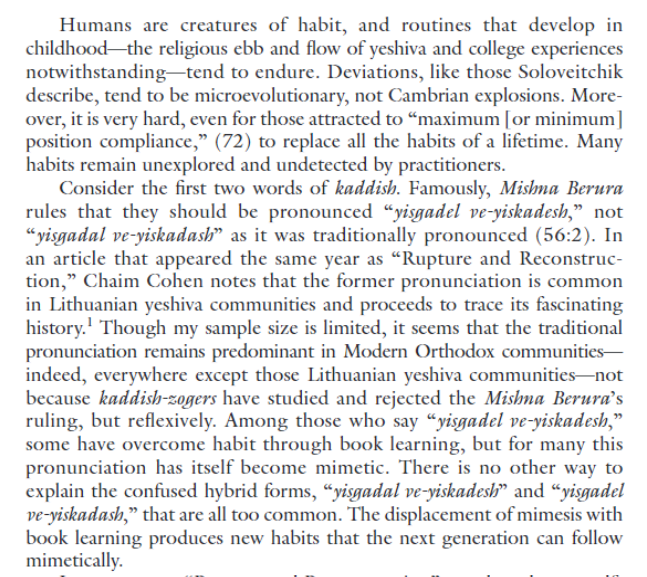
(א) הקדיש הוא שבח גדול ונורא שתקנו אנשי כנסת הגדולה אחרי חורבן בית ראשון. והיא תפילה על חילול שמו יתברך מחורבן בית המקדש, וחורבן ארץ הקודש, ופיזור ישראל בארבע כנפות הארץ. ואנו מתפללים שיתגדל ויתקדש שמו יתברך, כמו שאמר הנביא: "והתגדלתי והתקדשתי, ונודעתי לעיני גוים רבים, וידעו כי אני ה'." ואמר ר' יוסי בריש ברכות שפעם אחת שמע בת קול שמנהמת כיונה ואומרת: "אוי לבנים, שבעונותיהם החרבתי את ביתי, ושרפתי את היכלי, והגליתים…". ואמר לו אליהו הנביא ששלוש פעמים ביום יוצא בת קול כזה. ולא עוד אלא שבשעה שישראל נכנסין לבתי כנסיות ולבתי מדרשות, ועונין "אמן! יהא שמיה רבה…" – הקדוש ברוך הוא מנענע בראשו ואומר: "אשרי המלך שמקלסין אותו בביתו כך. מה לו לאב שהגלה את בניו, ואוי להם לבנים שגלו מעל שולחן אביהם." ומפני גודל מעלתו תיקנוהו בלשון ארמית, מפני שבבבל דיברו בלשון זה. ולכן כדי שכולם יבינו – תיקנו בלשון המדובר. ועוד יש טעמים כמוסים בזה.
(1) The Kaddish is great and awesome praise that the Men of the Great Assembly fixed after the destruction of the First Temple. It is a prayer about the desecration of the Blessed Name from the destruction of the Sanctuary, the decimation of the Holy Land, and the dispersion of Israel to the 4 corners of the earth. We pray 'let the Blessed name be magnified and sanctified' as the prophet said: "I will make myself greater and more sanctified and be known to the nations, and they will know that I am Hashem." As R. Yosi said at the beginning of Berakhot, once a Bat Kol was heard cooing like a dove and saying: 'Oy to the children, that because of their sins, I destroyed My house, and burned my temple, and exiled them...' And Eliahu the prophet said to him, that three times each day a Bat Kol like this is heard. And further, at the time Israel enters its synagogues and study halls, and they answer 'amen! yehei shmei raba...amen ! May His great Name be blessed', the Holy One of Blessing nods his head and says, 'happy is the King who is praised like this in His house. What it is to be a Father who exiled His children? And woe to the children who were exiled from the table of their Father.' And because of its elevated status, it was decreed that it [the Kaddish] would be recited in Aramaic, because in Babylonia they spoke this language. And thus, so that everyone would understand it, [the Kaddish] was established in the spoken tongue. And, additionally, there are hidden reasons for this.
(יח) וְהָיָ֣ה ׀ בַּיּ֣וֹם הַה֗וּא בְּי֨וֹם בּ֥וֹא גוֹג֙ עַל־אַדְמַ֣ת יִשְׂרָאֵ֔ל נְאֻ֖ם אדושם ה' תַּעֲלֶ֥ה חֲמָתִ֖י בְּאַפִּֽי׃ (כג) וְהִתְגַּדִּלְתִּי֙ וְהִתְקַדִּשְׁתִּ֔י וְנ֣וֹדַעְתִּ֔י לְעֵינֵ֖י גּוֹיִ֣ם רַבִּ֑ים וְיָדְע֖וּ כִּֽי־אֲנִ֥י ה'׃ {ס}
(א) כבר נתבאר גודל מעלתו וגודל קדושתו של הקדיש בריש סימן הקודם. וזה תקוותינו בעתיד, כמו שאמר הנביא: "והתגדלתי והתקדשתי ונודעתי… וידעו כי אני ה'" – שזהו התכלית מהבריאה. ופסוק זה נאמר על מלחמת גוג ומגוג, שאז תחת אשר עד כה היה שמו יתברך מחולל בין עובדי כוכבים, אבל אז יתגדל ויתקדש שמו הגדול. וזהו פירושו: ד"יהא שמיה רבה" דבארמית, הוי זה כמו בעברית "שמו הגדול" והוא שם הוי"ה...
(ב) "בעלמא די ברא כרעותיה" – בעולם שברא כרצונו...
(ג) "בחייכון… בעגלא ובזמן קריב" – זהו תפילה שנזכה לראות זה בחיינו, וזה יהיה במהירות. שמפני שחבלי משיח קשים הם לסובלם...
(ב) הקדיש - נוסח הקדיש יתגדל ויתקדש שהוסד ע"פ המקרא והתגדלתי והתקדשתי האמור (ביחזקאל ל״ח:כ״ג) לענין מלחמת גוג ומגוג שאז יתגדל שמו של הקב"ה דכתיב ביום ההוא יהיה ד' אחד ושמו אחד. ויאמר הדלית דיתגדל ויתקדש בצירי כי הוא עברי ולא תרגום [עיין בב"י] ולא בשני שוואין כאלו התיו והגימל בשווא אלא הגימל בפתח. וידגיש הגימל דיתגדל דלא לישתמע יתקדל לשון עורף תרגום עורף קדל. ולא ידגיש ביותר הב' דיתברך...
נְקַדֵּשׁ אֶת שִׁמְךָ בָּעוֹלָם כְּשֵׁם שֶׁמַּקְדִּישִׁים אוֹתוֹ בִּשְׁמֵי מָרוֹם. כַּכָּתוּב עַל יַד נְבִיאֶֽךָ. וְקָרָא זֶה אֶל זֶה וְאָמַר: קָדוֹשׁ קָדוֹשׁ קָדוֹשׁ ה' צְבָאוֹת מְלֹא כָל־הָאָֽרֶץ כְּבוֹדוֹ: אָז בְּקוֹל רַֽעַשׁ גָּדוֹל אַדִּיר וְחָזָק מַשְׁמִיעִים קוֹל מִתְנַשְּׂאִים לְעֻמַּת שְׂרָפִים. לְעֻמָּתָם בָּרוּךְ יֹאמֵֽרוּ: בָּרוּךְ כְּבוֹד ה' מִמְּקוֹמוֹ: מִמְּקוֹמְךָ מַלְכֵּֽנוּ תוֹפִֽיעַ וְתִמְלוֹךְ עָלֵֽינוּ כִּי מְחַכִּים אֲנַחְנוּ לָךְ מָתַי תִּמְלוֹךְ בְּצִיּוֹן בְּקָרוֹב בְּיָמֵֽינוּ לְעוֹלָם וָעֶד תִּשְׁכּוֹן: תִּתְגַּדַּל וְתִתְקַדַּשׁ בְּתוֹךְ יְרוּשָׁלַֽיִם עִירְךָ לְדוֹר וָדוֹר וּלְנֵֽצַח נְצָחִים: וְעֵינֵֽינוּ תִרְאֶֽינָה מַלְכוּתֶֽךָ כַּדָּבָר הָאָמוּר בְּשִׁירֵי עֻזֶּֽךָ עַל יְדֵי דָוִד מְשִֽׁיחַ צִדְקֶֽךָ: יִמְלֹךְ ה' לְעוֹלָם אֱלֹקַֽיִךְ צִיּוֹן לְדֹר וָדֹר הַלְלוּיָהּ:
. רַבָּן שִׁמְעוֹן בֶּן גַּמְלִיאֵל אוֹמֵר מִשּׁוּם רַבִּי יְהוֹשֻׁעַ, מִיּוֹם שֶׁחָרַב בֵּית הַמִּקְדָּשׁ, אֵין יוֹם שֶׁאֵין בּוֹ קְלָלָה, וְלֹא יָרַד הַטַּל לִבְרָכָה, וְנִטַּל טַעַם הַפֵּרוֹת.
(12) From the time when the early prophets died the Urim VeTummim was nullified. From the time when the Second Temple was destroyed the shamir worm ceased to exist and also the sweetness of the honeycomb, as the verse says with regard to the laws of the Torah: “More to be desired are they than gold, indeed, than much fine gold; sweeter also than honey and the honeycomb” (Psalms 19:11). And men of faith ceased from being among the Jewish people, as it is stated: “Help, Lord, for the pious man is finished; for the faithful fail from among the children of men” (Psalms 12:2). Rabban Shimon ben Gamliel says that Rabbi Yehoshua testified: From the day the Temple was destroyed there is no day that does not include some form of curse. And since then the dew has not descended for blessing, and the taste has been removed from fruit. Rabbi Yosei says: Since then, the fat of fruit has also been removed.
רַבָּן שִׁמְעוֹן בֶּן גַּמְלִיאֵל אוֹמֵר מִשּׁוּם רַבִּי יְהוֹשֻׁעַ: מִיּוֹם שֶׁחָרַב בֵּית הַמִּקְדָּשׁ אֵין וְכוּ׳. אָמַר רָבָא: בְּכׇל יוֹם וָיוֹם מְרוּבָּה קִלְלָתוֹ מִשֶּׁל חֲבֵירוֹ, שֶׁנֶּאֱמַר: ״בַּבֹּקֶר תֹּאמַר מִי יִתֵּן עֶרֶב וּבָעֶרֶב תֹּאמַר מִי יִתֵּן בֹּקֶר״, הֵי בֹּקֶר? אִילֵימָא בֹּקֶר דְּלִמְחַר, מִי יָדַע מַאי הָוֵי? אֶלָּא דַּחֲלֵיף. וְאֶלָּא, עָלְמָא אַמַּאי קָא מִקַּיַּים? אַקְּדוּשָּׁה דְסִידְרָא, וְאַ״יְּהֵא שְׁמֵיהּ רַבָּא״ דְּאַגַּדְתָּא, שֶׁנֶּאֱמַר: ״אֶרֶץ עֵיפָתָה כְּמוֹ אֹפֶל צַלְמָוֶת וְלֹא סְדָרִים״, הָא יֵשׁ סְדָרִים — תּוֹפִיעַ מֵאוֹפֶל.
(ב) וּבָא לְצִיּוֹן גּוֹאֵל וּלְשָׁבֵי פֶֽשַׁע בְּיַעֲקֹב נְאֻם ה': וַאֲנִי זֹאת בְּרִיתִי אֹתָם אָמַר ה' רוּחִי אֲשֶׁר עָלֶֽיךָ וּדְבָרַי אֲשֶׁר שַֽׂמְתִּי בְּפִֽיךָ לֺא יָמֽוּשׁוּ מִפִּֽיךָ וּמִפִּי זַרְעֲךָ וּמִפִּי זֶֽרַע זַרְעֲךָ אָמַר ה' מֵעַתָּה וְעַד עוֹלָם:
(ג) וְאַתָּה קָדוֹשׁ יוֹשֵׁב תְּהִלּוֹת יִשְׂרָאֵל: וְקָרָא זֶה אֶל זֶה וְאָמַר: קָדוֹשׁ קָדוֹשׁ קָדוֹשׁ ה' צְבָאוֹת מְלֺא כָל הָאָֽרֶץ כְּבוֹדוֹ:
(ד) וּמְ֒קַבְּ֒לִין דֵּין מִן דֵּין וְאָמְ֒רִין קַדִּישׁ בִּשְׁ֒מֵי מְרוֹמָא עִלָּאָה בֵּית שְׁכִינְתֵּהּ קַדִּישׁ עַל אַרְעָא עוֹבַד גְּבוּרְתֵּהּ קַדִּישׁ לְעָלַם וּלְעָלְ֒מֵי עָלְ֒מַיָּא ה' צְבָאוֹת, מַלְיָא כָל אַרְעָא זִיו יְקָרֵהּ:
(ה) וַתִּשָּׂאֵֽנִי רֽוּחַ וָאֶשְׁמַע אַחֲרַי קוֹל רַֽעַשׁ גָּדוֹל: בָּרוּךְ כְּבוֹד ה' מִמְּ֒קוֹמוֹ:
(ו) וּנְ֒טָלַתְנִי רוּחָא וּשְׁמָעִית בַּתְרַי קָל זִֽיעַ סַגִּיא דִּמְ֒שַׁבְּ֒חִין וְאָמְ֒רִין בְּרִיךְ יְקָרָא דַיהוָֹה מֵאֲתַר בֵּית שְׁכִינְתֵּהּ:
(ז) ה' יִמְלֺךְ לְעוֹלָם וָעֶד:
(ח) ה' מַלְכוּתֵהּ קָאֵים לְעָלַם וּלְעָלְ֒מֵי עָלְ֒מַיָּא:
(2) The Redeemer shall come to Zion and to those of Jacob who repent from sin, says Adonoy. As for Me, this is My covenant with them, said Adonoy: My spirit which is upon you, and My words which I have put in your mouth shall not depart from your mouth, nor from the mouth of your children, nor from the mouth of your children’s children, said Adonoy— from now to eternity.
(3) And You, Holy One, are enthroned upon the praises of Israel. And [the angels] call one to another and say: Holy, holy, holy is Adonoy of Hosts: the fullness of all the earth is His glory.”
(4) And they receive [sanction] one from another, and say, Holy in the highest heights of heaven, the abode of His Divine Presence; holy upon earth, the work of His mighty power; holy forever and to all eternity— is Adonoy of hosts; the whole earth is filled with the radiance of His glory.
(5) And a wind lifted me; and I heard behind me the sound of a great rushing; Blessed is the glory of Adonoy from His place.
(6) And a wind lifted me and I heard behind me a sound of a great rushing of those who uttered praises and said, ‘Blessed is the glory of Adonoy from the place, the abode of His Divine Presence.
(7) Adonoy will reign forever and ever.
(8) Adonoy, His kingdom is established forever and to all eternity.

הָא לַחְמָא עַנְיָא דִּי אֲכָלוּ אַבְהָתָנָא בְאַרְעָא דְמִצְרָיִם. כָּל דִכְפִין יֵיתֵי וְיֵיכֹל, כָּל דִצְרִיךְ יֵיתֵי וְיִפְסַח. הָשַּׁתָּא הָכָא, לְשָׁנָה הַבָּאָה בְּאַרְעָא דְיִשְׂרָאֵל. הָשַּׁתָּא עַבְדֵי, לְשָׁנָה הַבָּאָה בְּנֵי חוֹרִין.
The Recitation [of the exodus story]
The leader uncovers the matsot, raises the Seder plate, and says out loud:
This is the bread of destitution that our ancestors ate in the land of Egypt. Anyone who is famished should come and eat, anyone who is in need should come and partake of the Pesach sacrifice. Now we are here, next year we will be in the land of Israel; this year we are slaves, next year we will be free people.