


(1) A certain man took [into his household as his wife] a woman of Levi. (2) The woman conceived and bore a son; and when she saw how beautiful he was, she hid him for three months.
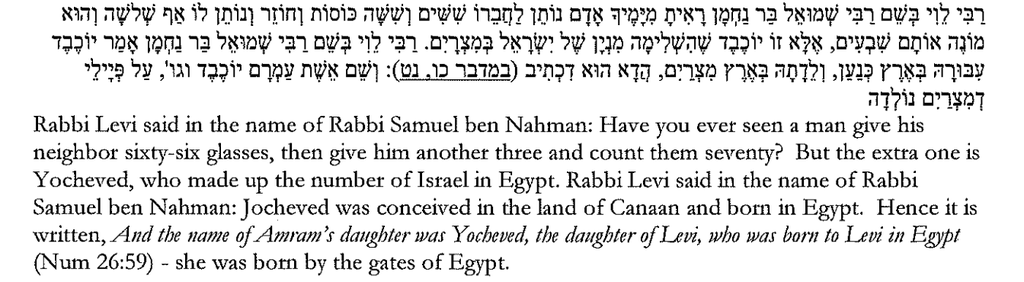
The rabbis of the Talmud discuss the prohibitions on incestual relationships found in Leviticus and use Yocheved and Amram's relationship as proof text.
And the king of Egypt said to the Hebrew midwives, the first of whom was named Shifrah; and the second, Puah": Shifra is Yocheved (Moses' mother). Puah is Miriam (Moses' sister). "Shifra" — because she "beautifies (meshapereth) the child. "Puah" — because she "coos" (poeh) to the child. Variantly: "Shifra" — because Israel was fruitful (paru) and multiplied in her days. "Puah" — because she moaned (poah) and wept over her brother, as it is written (Ibid. 2:4) "And his sister stood from afar to know what would be done with him."
(יג) כְּשֶׁרָאָה שֶׁהֵם פָּרִים וְרָבִים, גָּזַר עַל הַזְּכָרִים, הֲדָא הוּא דִכְתִיב (שמות א, טו): וַיֹּאמֶר מֶלֶךְ מִצְרַיִם לַמְיַלְּדֹת וגו'. מִי הָיוּ הַמְיַלְּדוֹת, רַב אָמַר כַּלָּה וַחֲמוֹתָהּ, יוֹכֶבֶד וֶאֱלִישֶׁבַע בַּת עֲמִינָדָב. רַבִּי שְׁמוּאֵל בַּר נַחְמָן אָמַר, אִשָּׁה וּבִתָּהּ, יוֹכֶבֶד וּמִרְיָם. וְלֹא הָיוּ לְמִרְיָם אֶלָּא חָמֵשׁ שָׁנִים, שֶׁאַהֲרֹן גָּדוֹל מִמּשֶׁה שָׁלשׁ שָׁנִים. אָמְרוּ רַבּוֹתֵינוּ זִכְרוֹנָם לִבְרָכָה הוֹלֶכֶת הָיְתָה עִם יוֹכֶבֶד אִמָּהּ וְעוֹשָׂה צְרָכֶיהָ, וְהָיְתָה זְרִיזָה, שֶׁעַד שֶׁהַתִּינוֹק קָטָן הוּא נִכָּר. הוּא שֶׁאָמַר שְׁלֹמֹה (משלי כ, יא): גַּם בְּמַעֲלָלָיו יִתְנַכֶּר נָעַר וגו'. אֲשֶׁר שֵׁם הָאַחַת שִׁפְרָה, שֶׁהָיְתָה מְשַׁפֶּרֶת אֶת הַתִּינוֹק, כְּשֶׁהוּא יוֹצֵא מָלֵא דָּם, פּוּעָה שֶׁהָיְתָה נוֹפַעַת יַיִן בַּתִּינוֹק אַחַר אִמָּהּ. דָּבָר אַחֵר, שִׁפְרָה, שֶׁפָּרוּ וְרָבוּ יִשְׂרָאֵל עָלֶיהָ. פּוּעָה, שֶׁהָיְתָה מַפִּיעָה אֶת הַתִּינוֹק כְּשֶׁהָיוּ אוֹמְרִים מֵת. פּוּעָה, שֶׁהָיְתָה מַפִּיעָה אֶת הַתִּינוֹק כְּשֶׁהָיוּ אוֹמְרִים מֵת. דָּבָר אַחֵר, שִׁפְרָה, שֶׁשִּׁפְּרָה מַעֲשֶׂיהָ לִפְנֵי הָאֱלֹהִים.
(13) And the king of Egypt said to the midwives, etc. Who are the midwives. Rav says a woman and her daughter in law - Yocheved and Elisheva bat Aminadav. And Rabi Shmuel bar Nachman says a woman and her daughter Yocheved and Miriam. That one of their names was Shifra - she beautified the baby when it would come out full of blood. Puah - that she squirted wine into the babies mouth after it came out of its mother. Another thing, Shifra: that B"Y were fruitful and multiplied under her. Puah: that she would cause the newborn to cry out when it was thought to be stillborn. Another thing, Shifra that she beautified her actions before Hashem Another thing, Puah - that she appeared to B"Y for Hashem - she taught B"Y. Puah - she was insolent (hofi’ah panim) toward Pharaoh and looked down her nose at him.
(א) פרק ט
(ב) ויבאו [בני ישראל] כל העדה מדבר צן בחדש הראשון וישב העם בקדש ותמת שם מרים ותקבר שם, ולא היה מים לעדה ויקהלו על משה ועל אהרן (במדבר כ׳:א׳-ב׳), שנסתלקה הבאר, שנת הארבעים היתה, וראש חדש ניסן היה, בו בפרק וישלח משה מלאכים מקדש אל מלך אדום וגו' (שם כ יד), עשו שם ישראל ג' חדשים, ויעל אהרן הכהן וגו', ואהרן בן שלש ועשרים ומאת שנה במתו בהר ההר (שם לג), כיון שמת אהרן, נסתלקו ענני כבוד, ובאו הכנעניים להלחם עם ישראל, וישמע הכנעני מלך ערד וגו' (שם לג מ), ומה שמועה שמע, שמע שמת אהרן, והלך התייר הגדול שבהן, ונסתלק עמוד הענן, שהיה נלחם להם, ובא ונלחם עמהם, וחזרו לאחוריהם ז' מסעות וחנו במוסרה, שנאמר ובני ישראל נסעו מבארת בני יעקן מוסרה שם מת אהרן (דברים י ו), וכי במוסרה מת אהרן, והלא בהר ההר מת אלא ממקום שמת אהרן, חזרו לאחוריהן ז' מסעות, עד שחנו במוסרה, משם נסעו הגדגדה וגו' (שם י ז), ומשם בארה וגו' (במדבר כא טז), היא הבאר שחזרה להם, ויסעו בני ישראל ויחנו באבת, ויסעו מאבת ויחנו בעיי העברים וגו', משם נסעו ויחנו בנחל זרד, משם נסעו ויחנו מעבר ארנון וגו' (שם), שם נלחמו עם סיחון ויכהו ישראל לפי חרב וגו', ויפנו ויעלו דרך הבשן וגו', ויאמר ה' אל משה אל תירא אתו וגו', ויכו אתו ואת בניו וגו' (שם), ויסעו בני ישראל ויחנו בערבות מואב וגו' (שם כב א), ויהי אחרי המגפה וגו' (שם כו יט), לאלה תחלק הארץ וגו' (שם כו נג), ועומדים בערבות מואב, החזירו הבנים לאבות, וחזרו האבות והורישו לבנים, שרח בת אשר היתה מבאי מצרים ומיוצאיה, מבאי מצרים, דכתיב ושרח אחתם (בראשית מו יז), ומבאי הארץ, שנאמר ושם בת אשר שרח (במדבר כו מו), ויוכבד היתה מבאי מצרים ומיוצאיה, מבאי מצרים, שנאמר ושם אשת עמרם יוכבד בת לוי וגו' (שם כו נט), יאיר בן מנשה ומכיר בן מנשה נולדו בחיי יעקב אבינו, ומתו לאחר מיתת משה רבינו, ונבח היה מן הנולדים במצרים, ומת לאחר מיתת משה רבינו, ונקבר בעבר הירדן, ולא נותר מהם איש וגו' (שם כו סה):
(1) Chapter 9
(2) They [the Israelites]--the entire congregation--came to the wilderness of Tzin in the first month, and the nation settled there, and Miriam died there and was buried there, and therre was not water for the congregation, and they gathered against Moses and Aaron (Numbers 20:1-2). When the well disappeared, it was Year 40, and it was the first of the month of Nissan, there in the episode when Moses sent messengers from Kadesh to the King of Edom (ibid. 20:14), and Israel made [themselves] there for 3 months. Aaron the Priest went up etc., and Aaron was 123 years old when he died at the hill of the mountain (ibid. 33). When Aaron died, the clouds of glory disappeared, and the Canaanites came to make war against Israel...Serah bat Asher was among those who came to Egypt and those who left it. [She was] from those who came to Egypt, as it is written, "And Serah their sister" (Genesis 46:17), and [she was] from those who came to the Land [of Israel], as it says, "And there was the daughter of Asher, Serah" (Numbers 26:46). And Yokheved was among those who came to Egypt and those who left it. [She was] from those who came to Egypt, as it is written, "And the name of the wife of Amram was Yokheved, daughter of Levi etc." (ibid. 26:59). Ya'ir son of Menasheh and Makhir son of Menasheh were born in the lifetime of our ancestor Jacob, and they died after the death of Moses our teacher, and Novach was among those born in Egypt, and he died after the death of Moses our teacher, and he was buried beyond the Jordan, but there was no man among them left etc. (ibid. 26:65).