5 Sh’vat 5783 | January 27, 2023
Parshat Bo
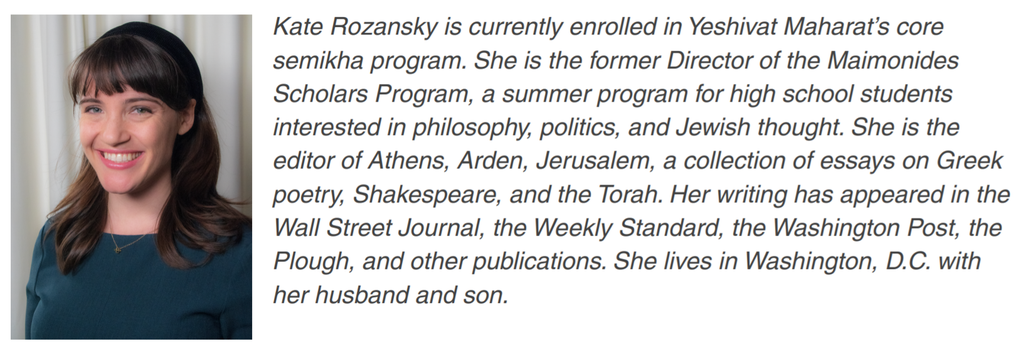
Kate Rozansky
Class of 2025
I would like to think with you today about a touchy subject: the plague of darkness.
Then YKVK said to Moshe, “Hold out your arm toward the sky that there may be darkness upon the land of Egypt, a darkness (hoschech) that is touchable (yamesh).
The darkness was…touchy. Touchable. That phrase, yamesh hoschech, is often translated as “a darkness that can be felt” (Shemot 10:22). But what does that mean? Rashi points us to a midrash which says the word yamesh comes from the root ממשש (memashesh), which is a particularly intense, grasping kind of touch (Rashi on Ex. 10:21). It is the root for the modern Hebrew word for “tentacle.” Touch shows up in a few interesting ways in this parsha:
(כב) וַיֵּ֥ט מֹשֶׁ֛ה אֶת־יָד֖וֹ עַל־הַשָּׁמָ֑יִם וַיְהִ֧י חֹֽשֶׁךְ־אֲפֵלָ֛ה בְּכׇל־אֶ֥רֶץ מִצְרַ֖יִם
Moses held out his hand toward the heavens and thick darkness descended upon all the land of Egypt.
The plague of darkness is the only plague that Moshe brings in by hand. In every other instance he will use Aharon or his staff or some other prop when he ushers in the plague. This is a darkness that must be touched by Moshe, before it can be felt by the Egyptians. Up until this point in the Torah, ממשש words have shown up four times, appearing in two different (but both morally ambiguous) episodes in Sefer Bereshit. If we explore these episodes it might help us illuminate the darkness of this darkness.
The first time we see this word is when Yaakov is plotting with his mother to steal Esav’s blessing, and he says to her:
But maybe my father will feel me (yemusheni), and I shall appear to him as a deceiver.
Yaakov is right to worry, because when he comes before Yitzhak, Yitzhak says:
גְּשָׁה־נָּ֥א וַאֲמֻֽשְׁךָ֖ בְּנִ֑י הַֽאַתָּ֥ה זֶ֛ה בְּנִ֥י עֵשָׂ֖ו אִם־לֹֽא׃
Come closer that I may feel you (va’ahmushecha)...— are really my son Esav or not?
Because Yaakov is wearing a disguise, Yitzhak’s feeling does not reveal the truth, and he is deceived. That’s the first pair of mamshash words.
The second story takes place twenty years later: Yaakov and his family are fleeing from Lavan. Lavan catches up to them, incensed because someone has stolen his teraphim, his “household Gods.” Rachel has stolen the teraphim from her father and when he comes to search her tent, she is sitting on them.
וַיְמַשֵּׁ֥שׁ לָבָ֛ן אֶת־כׇּל־הָאֹ֖הֶל וְלֹ֥א מָצָֽא׃
Laban felt (vayemashesh)through the tent without finding them.
Yaakov then chides his father-in-law:
כִּֽי־מִשַּׁ֣שְׁתָּ אֶת־כׇּל־כֵּלַ֗י מַה־מָּצָ֙אתָ֙
You have felt (mishashta) through all the vessels, and what did you find?!
This rhetorical question highlights the fact that Rachel is deceiving both her husband and her father. In both cases, the graspers are clinging tightly to something very important to them. Yitzhak wants Esav to have the blessing. Lavan wants his idols - but more than that, he wants to keep his power over his children. Yet the grasping in each case is an act of self-delusion. Because for both men, the change they fear has already happened. Yaakov has already stepped into Esav’s place. Lavan’s daughters are already free. In both cases, these men are fighting for something they want very badly. But God has other ideas. Two fathers deceived. Two husbands deceived. Two patriarchs overthrown.
Which brings me back to Pharoah. What does it mean that the darkness is a grasping darkness? Who is being grasped by it? Not the Jews. The Jewish people have light in their dwellings. The darkness grasps at the Egyptians. Perhaps this textual parallel is used to show that Pharoah is about to lose power, not just over the Jews, but over the Egyptians. Indeed, over his entire kingdom.
There’s a midrash I love about the Book of Yonah. Recall that when Yonah at last reaches Ninevah, he only has to call for repentance a single time before the entire kingdom begins a sincere and complete repentance. The midrash says that the reason the King of Ninevah repents so beautifully and so quickly is that the he knows that this God means business – because the King of Ninevah is, in fact, the very same Pharoah who enslaved us in Egypt. If Pharoah is King of Ninevah, it means he is no longer the King of Egypt. I guess he moved. (What do you think that search process was like?) After the Jewish people leave Egypt, the Egyptians, too, are liberated from Pharoah. We did not become free at the expense of the Egyptians. We become free with them. Even Pharoah is eventually freed from his own tyranny when he repents, at last, in Ninevah (Pirke D'Rabbi Eliezer 43).
When God hardens Pharaoh's heart, it is indeed a kind of trickery. Just as Rivkah wrapping Yaakov’s arms in goat-skins or Rachel sitting on Lavan’s idols is deceptive and even a bit profane. Sometimes there is deception on the way to deliverance. Pharoah’s furious grasping cannot compete with God’s strong hand and outstretched arm.
And yet there is also this image of Moshe, reaching his hand towards the sky, welcoming in the darkness. It is only when he releases his grip on the staff - which is of course not the true source of his strength -that he ushers in this miracle.
When we find ourselves grasping at something, we must ask ourselves if what we actually need is to let go. What is it that you can let go of to make room for more kedusha in your life? Is it a grudge? Is it a fear? Maybe you want to invite guests for Shabbat more often, but you’re afraid it will be awkward. Or perhaps you want to learn to lein Megillah but you’re self-conscious about speaking Hebrew in front of your peers. Can you release that fear, and reach for that kedusha?
And what in your life are you holding on to even though it is already gone? Maybe there is an image of yourself - of someone you love - or a community you love - that is different from what you hoped it would be. Perhaps you need to release that idea, in order to love them as they are.
When we strive together for important things, we have to recognize that we are often reaching in the dark. My bracha for us is that, as we do so, we have both the faith and the courage to approach this darkness as Moshe does in this week’s parsha. May we see it as a darkness from heaven, and meet it with a free and open hand.