


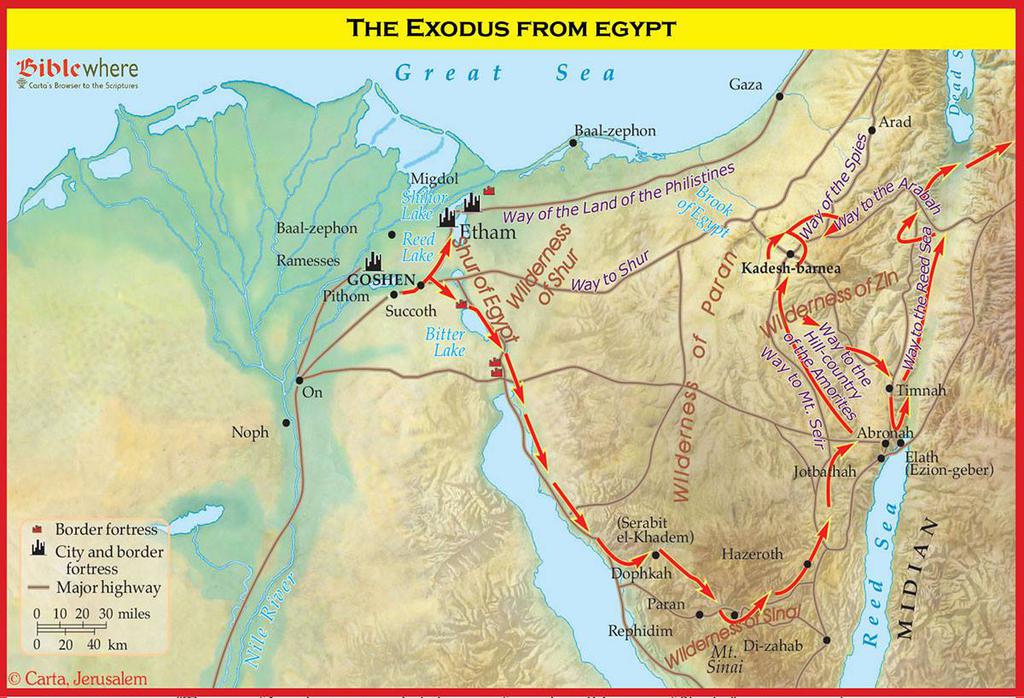
(יז) וַיְהִ֗י בְּשַׁלַּ֣ח פַּרְעֹה֮ אֶת־הָעָם֒ וְלֹא־נָחָ֣ם אֱלֹקִ֗ים דֶּ֚רֶךְ אֶ֣רֶץ פְּלִשְׁתִּ֔ים כִּ֥י קָר֖וֹב ה֑וּא כִּ֣י ׀ אָמַ֣ר אֱלֹקִ֗ים פֶּֽן־יִנָּחֵ֥ם הָעָ֛ם בִּרְאֹתָ֥ם מִלְחָמָ֖ה וְשָׁ֥בוּ מִצְרָֽיְמָה׃ (יח) וַיַּסֵּ֨ב אֱלֹקִ֧ים ׀ אֶת־הָעָ֛ם דֶּ֥רֶךְ הַמִּדְבָּ֖ר יַם־ס֑וּף וַחֲמֻשִׁ֛ים עָל֥וּ בְנֵי־יִשְׂרָאֵ֖ל מֵאֶ֥רֶץ מִצְרָֽיִם׃
(17) Now when Pharaoh let the people go, God did not lead them by way of the land of the Philistines, although it was nearer; for God said, “The people may have a change of heart when they see war, and return to Egypt.” (18) So God led the people round about, by way of the wilderness at the Sea of Reeds. Now the Israelites went up armed out of the land of Egypt.
(ב) דַּבֵּר֮ אֶל־בְּנֵ֣י יִשְׂרָאֵל֒ וְיָשֻׁ֗בוּ וְיַחֲנוּ֙ לִפְנֵי֙ פִּ֣י הַחִירֹ֔ת בֵּ֥ין מִגְדֹּ֖ל וּבֵ֣ין הַיָּ֑ם לִפְנֵי֙ בַּ֣עַל צְפֹ֔ן נִכְח֥וֹ תַחֲנ֖וּ עַל־הַיָּֽם׃
(א) וישבו. לַאֲחוֹרֵיהֶם, לְצַד מִצְרַיִם הָיוּ מְקָרְבִין כָּל יוֹם הַשְּׁלִישִׁי, כְּדֵי לְהַטְעוֹת אֶת פַּרְעֹה שֶׁיֹּאמַר תּוֹעִים הֵם בַּדֶּרֶךְ...
(ד) וְחִזַּקְתִּ֣י אֶת־לֵב־פַּרְעֹה֮ וְרָדַ֣ף אַחֲרֵיהֶם֒ וְאִכָּבְדָ֤ה בְּפַרְעֹה֙ וּבְכׇל־חֵיל֔וֹ וְיָדְע֥וּ מִצְרַ֖יִם כִּֽי־אֲנִ֣י ה' וַיַּֽעֲשׂוּ־כֵֽן׃
(לא) וַיַּ֨רְא יִשְׂרָאֵ֜ל אֶת־הַיָּ֣ד הַגְּדֹלָ֗ה אֲשֶׁ֨ר עָשָׂ֤ה ה' בְּמִצְרַ֔יִם וַיִּֽירְא֥וּ הָעָ֖ם אֶת־ה' וַיַּֽאֲמִ֙ינוּ֙ בַּֽה' וּבְמֹשֶׁ֖ה עַבְדּֽוֹ׃ {פ}
(יא) וַיֹּאמְרוּ֮ אֶל־מֹשֶׁה֒ הֲֽמִבְּלִ֤י אֵין־קְבָרִים֙ בְּמִצְרַ֔יִם לְקַחְתָּ֖נוּ לָמ֣וּת בַּמִּדְבָּ֑ר מַה־זֹּאת֙ עָשִׂ֣יתָ לָּ֔נוּ לְהוֹצִיאָ֖נוּ מִמִּצְרָֽיִם׃ (יב) הֲלֹא־זֶ֣ה הַדָּבָ֗ר אֲשֶׁר֩ דִּבַּ֨רְנוּ אֵלֶ֤יךָ בְמִצְרַ֙יִם֙ לֵאמֹ֔ר חֲדַ֥ל מִמֶּ֖נּוּ וְנַֽעַבְדָ֣ה אֶת־מִצְרָ֑יִם כִּ֣י ט֥וֹב לָ֙נוּ֙ עֲבֹ֣ד אֶת־מִצְרַ֔יִם מִמֻּתֵ֖נוּ בַּמִּדְבָּֽר׃
In 1519, Cortes, the Spanish commander engaged in the conquest of Mexico, burned the ships that carried his men. His soldiers now had no possibility of escape.
They had to win or die.
Before they crossed the Red Sea, the Israelites were fearful. But once they had crossed the sea, their was no way back. Their boats were burned. They looked only forward, for there was no return.
"I believe the greatest positive changed in our lives comes when, having undertaken a challenge, we cross our own Red Sea and know there is no way back. There is only a way forward. Then G-d gives us the strength to fight our battles and win.
Q2) Are there any Kriat Yam Suf's you need to passover right now in your life?
(יג) וַיֹּ֨אמֶר מֹשֶׁ֣ה אֶל־הָעָם֮ אַל־תִּירָ֒אוּ֒ הִֽתְיַצְּב֗וּ וּרְאוּ֙ אֶת־יְשׁוּעַ֣ת ה' אֲשֶׁר־יַעֲשֶׂ֥ה לָכֶ֖ם הַיּ֑וֹם כִּ֗י אֲשֶׁ֨ר רְאִיתֶ֤ם אֶת־מִצְרַ֙יִם֙ הַיּ֔וֹם לֹ֥א תֹסִ֛פוּ לִרְאֹתָ֥ם ע֖וֹד עַד־עוֹלָֽם׃ (יד) ה' יִלָּחֵ֣ם לָכֶ֑ם וְאַתֶּ֖ם תַּחֲרִשֽׁוּן׃ {פ}
(ח) וַיָּבֹ֖א עֲמָלֵ֑ק וַיִּלָּ֥חֶם עִם־יִשְׂרָאֵ֖ל בִּרְפִידִֽם׃ (ט) וַיֹּ֨אמֶר מֹשֶׁ֤ה אֶל־יְהוֹשֻׁ֙עַ֙ בְּחַר־לָ֣נוּ אֲנָשִׁ֔ים וְצֵ֖א הִלָּחֵ֣ם בַּעֲמָלֵ֑ק מָחָ֗ר אָנֹכִ֤י נִצָּב֙ עַל־רֹ֣אשׁ הַגִּבְעָ֔ה וּמַטֵּ֥ה הָאֱלֹקִ֖ים בְּיָדִֽי׃ (י) וַיַּ֣עַשׂ יְהוֹשֻׁ֗עַ כַּאֲשֶׁ֤ר אָֽמַר־לוֹ֙ מֹשֶׁ֔ה לְהִלָּחֵ֖ם בַּעֲמָלֵ֑ק וּמֹשֶׁה֙ אַהֲרֹ֣ן וְח֔וּר עָל֖וּ רֹ֥אשׁ הַגִּבְעָֽה׃ (יא) וְהָיָ֗ה כַּאֲשֶׁ֨ר יָרִ֥ים מֹשֶׁ֛ה יָד֖וֹ וְגָבַ֣ר יִשְׂרָאֵ֑ל וְכַאֲשֶׁ֥ר יָנִ֛יחַ יָד֖וֹ וְגָבַ֥ר עֲמָלֵֽק׃ (יב) וִידֵ֤י מֹשֶׁה֙ כְּבֵדִ֔ים וַיִּקְחוּ־אֶ֛בֶן וַיָּשִׂ֥ימוּ תַחְתָּ֖יו וַיֵּ֣שֶׁב עָלֶ֑יהָ וְאַהֲרֹ֨ן וְח֜וּר תָּֽמְכ֣וּ בְיָדָ֗יו מִזֶּ֤ה אֶחָד֙ וּמִזֶּ֣ה אֶחָ֔ד וַיְהִ֥י יָדָ֛יו אֱמוּנָ֖ה עַד־בֹּ֥א הַשָּֽׁמֶשׁ׃ (יג) וַיַּחֲלֹ֧שׁ יְהוֹשֻׁ֛עַ אֶת־עֲמָלֵ֥ק וְאֶת־עַמּ֖וֹ לְפִי־חָֽרֶב׃ {פ}
(ח) וְהָיָה כַּאֲשֶׁר יָרִים משֶׁה יָדוֹ וְגָבַר יִשְׂרָאֵל וְגוֹ' (שמות יז), וְכִי יָדָיו שֶׁל משֶׁה עוֹשׂוֹת מִלְחָמָה אוֹ שׁוֹבְרוֹת מִלְחָמָה. אֶלָּא לוֹמַר לְךָ, כָּל זְמַן שֶׁהָיוּ יִשְׂרָאֵל מִסְתַּכְּלִים כְּלַפֵּי מַעְלָה וּמְשַׁעְבְּדִין אֶת לִבָּם לַאֲבִיהֶם שֶׁבַּשָּׁמַיִם הָיוּ מִתְגַּבְּרִים. וְאִם לָאו, הָיוּ נוֹפְלִין.
(8) Incidental to the discussion of the required intent when sounding the shofar, the mishna cites the verse: “And it came to pass, when Moses held up his hand, that Israel prevailed; and when he let down his hand, Amalek prevailed” (Exodus 17:11). It may be asked: Did the hands of Moses make war when he raised them or break war when he lowered them? Rather, the verse comes to tell you that as long as the Jewish people turned their eyes upward and subjected their hearts to their Father in Heaven, they prevailed, but if not, they fell. Similarly, you can say: The verse states: “Make for yourself a fiery serpent, and set it upon a pole; and it shall come to pass, that everyone that is bitten, when he sees it, he shall live” (Numbers 21:8). Once again it may be asked: Did the serpent kill, or did the serpent preserve life? Rather, when the Jewish people turned their eyes upward and subjected their hearts to their Father in Heaven, they were healed, but if not, they rotted from their snakebites. Returning to its halakhic discussion, the mishna continues: A deaf-mute, an imbecile, or a minor who sounds the shofar cannot discharge the obligation on behalf of the community. This is the principle with regard to similar matters: Whoever is not obligated to do a certain matter cannot discharge the obligation on behalf of the community.
This explains the Talmudic expression:
"Making a Zivvug is as hard as splitting of the sea"
Q) How can we manifest more trust in Hashem while at the same time making our Hishtadlus-our efforts?