


When the Jews wandered in the desert following the Exodus for 40 years until they entered the Promised Land, G-d provided them daily with heavenly manna (Exodus ch.16). In order to enable the Jews to observe Shabbat (and not have to carry and prepare the manna on the Day of Rest), G-d provided them with a double portion on Friday (Exodus 16:22-27).
To commemorate this miracle, the Sages instituted that we break bread over two complete loaves at the start of every Shabbat meal. These two loaves are known as Lechem Mishneh.
בוצע על שתי ככרות [שלימות] שאוחז שתיהן בידו ובוצע התחתונה: הגה ודוקא בליל שבת [ד"ע] אבל ביום השבת או בליל י"ט בוצעין על העליונה [כל בו והגהות מיי' פ"ח מהלכות חמץ ומצה] והטעם הוא על דרך הקבלה:
Two loaves -- in commemoration of the verse that states, "Collect a double portion (of manna)." One is also required to have lechem mishneh on Yom Tov. Women are also obligated, since they took part in the miracle of the manna.
The lower loaf -- The Ba"ch was perplexed by this ruling [to cut the lower loaf], based on the Talmudic principle that we don't pass over a mitzvah [and if one cuts the lower loaf, one would be passing over the upper loaf].
[His son-in-law] Ta"z was therefore accustomed to hold the lower loaf a bit closer to him than the upper loaf, and thus it would not be considered passing over the upper loaf. Alternatively, one could first recite the blessing, then place the upper loaf below the lower loaf before cutting the upper loaf.
One should not cut the loaf until after reciting the blessing, in order that the loaves should be whole. Some are punctilious to make a slight mark on the loaf with a knife before the blessing.
ואחר כל זה מובן ענין שתי הלחם שבשבת שע"פ נגלה צריך להניח זו ע"ג זו כי בחי' נגלה היא בבחינת השתלשלות בחי' או"י וכאשר יניח זו ע"ג זו מורה על בחי' השתלשלות בדרך עילה ועלול כו'. ובחי' נסתר הוא בחי' או"ח עליית אורות להיות עולות ונכללות בתכלית ההתכללות בבחי' מקיף הכללי כנ"ל מטעם זה צריך שיהיו זו בצד זו שתיהן בשוה שמורים על בחי' התכללות אמתי במקיף העליון שמקיף לכל פרטי פרטי ההשתלשלות בשוה כו' קמיה מעלה ומטה שוין כו' וד"ל.
According to halakha, one should place the loaves one on top of the other, because this represents the Divine flow of energy to the world known as Seder Hishtalshelus. This also represents the Kabbalistic idea know as Ohr Yashar (literally, straight path of light), which is the concept of cause-and-effect.
However, according to Kabbalah, the loaves should be side-by-side, because this reflects the concept of Ohr Chozer (literally, reflected light), whereby the Divine flow of light ascends to a transcendent space, where all is equal. At that level, everything is truly inclusive.
At that place, all details of creation as see as equal [and thus the lechem mishneh should be next to each other, alluding to their equal space within the transcendent reality]. And this will suffice for those who understand.
דיני שמחת יו"ט ובו ד סעיפים:
וחייב לבצוע על שתי ככרות ולקבוע כל סעודה על היין
...It is an obligation to eat two loaves of bread [on Yom Tov] and to include wine in the meal.
Two loaves -- because manna would not descend on Yom Tov, just like Shabbat. A double-portion would descend on Erev YT.
נוהגין להביאו לכתחלה קודם קידוש ולפרוס מפה לכסות הפת עד אחר הקידוש בין שמקדש על היין בין שמקדש על הפת וצריך שתהא גם מפה תחת הפת על השלחן כדי שתהא הפת בין שתי מפות זכר למן שהיה עליו טל מלמעלה וטל מלמטה:
Whether one recites Kiddush over wine or over bread, he should spread a cloth to cover the bread until after Kiddush. [In addition,] there should be a cloth on the table under the bread. Thus, the bread will be between two cloths, in commemoration of the manna which [was covered by] dew from above and from below.
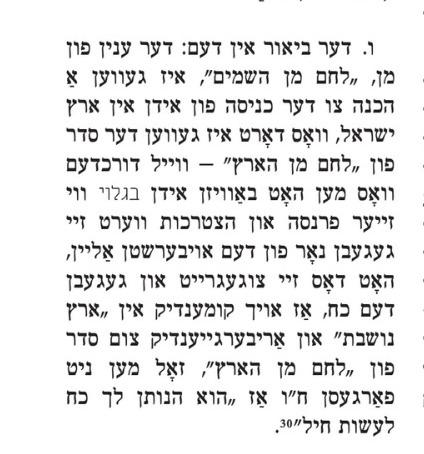
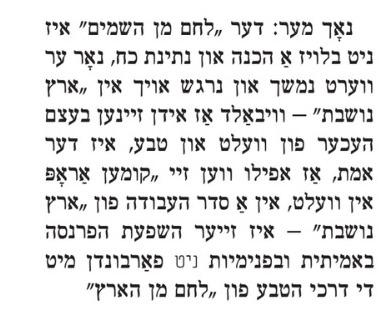
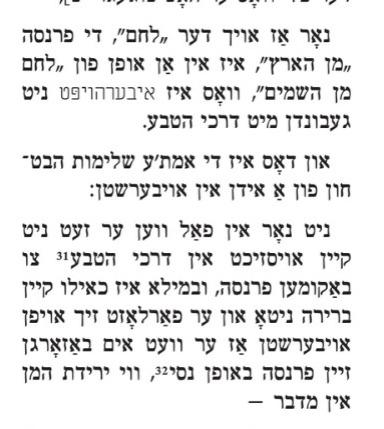
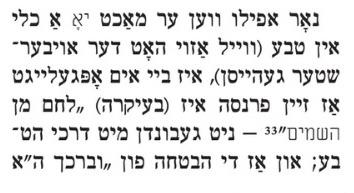
The Lubavitcher Rebbe, Likkutei Sichos vol.16, Beshalach sicha 3
The manna, “bread from Heaven,” was intended to prepare the Jews for their entry into the land of Israel, where they would have {to work within the natural order to obtain} “bread from the land.” Since the Jews were shown openly that their livelihood and needs were provided by Hashem alone, this prepared and gave them the strength not to forget, G-d forbid, that “He gives you power to make wealth,” even after they would enter the “settled land” and transitioned to a routine {predicated on nature to obtain} “bread from the land.”
Furthermore, the “bread from Heaven” did not only prepare and empower {the Jews to have faith later on in Israel}, but its influence was also extended, and continued to be felt, in the “settled land.” Since Jews are essentially higher than the world and nature, the truth is that even after they “come down” into the world and have to work within the natural order of a “settled land,” the true and deep-rooted source of their livelihood is not dependent on the natural means of producing “bread of the land.”
Rather the “bread” — the livelihood “from the land” — also comes as “bread from Heaven” which is totally disconnected from the ways of nature.
This is the true and complete trust that a Jew has in Hashem:
Not only {does a person trust Hashem} in situations when he sees no prospect for obtaining his livelihood through any natural means, and therefore, he has no choice but to rely upon Hashem to provide for him in a miraculous way, like the manna in the desert; but —
Even {in a situation} in which he does employ a natural vessel (because that is what Hashem has instructed), it is still obvious to him that his livelihood is (fundamentally) “bread from Heaven,” and not based on natural means. The promise that “Hashem, your L-rd, will bless you in all that you do” doesn't mean that Hashem will only bless him relative to the(measures and limitations of) the “vessel” (“you do”) which the person prepared (even when “He will bless you” with blessing and success). Rather, this blessing will be beyond compare {to the natural capacity of the vessels}, as if the vessel made no difference.