


1: Why are rituals important?
2: How do they make us feel?
3: How may we change even small rituals to better repair harm?
1. What do the rituals of arrest, court trial, and incarceration accomplish?
"The purpose of ritual is to render the invisible visible”
Criminal trials and hearings can “act as boundary-maintaining devices in the sense that they demonstrate to whatever audience is concerned where the line is drawn between behavior that belongs in the special universe of the group and behavior that does not."
- McIntosh and Erikson 1966:11
In his book The Machinery of Criminal Justice, Stephanos Bibas claims that punishment in colonial America was theatrical and communal. Enacting this form of justice was easier then because communities were smaller and more likely to share moral beliefs (Bibas 2012; Durkheim 1933). Bibas praises the communal mode of colonial punishment. People could have a part in and watch “justice” being done, which increased faith in the system. It was also less punitive. When people saw their peers punished for offenses they also committed, they more likely than not felt that the offender was worthy of redemption. This model involved reintegration, a sense that society should care for and redeem criminals because they are just like everyone else.
- Marissa Michaels writing about Stephanos Bibas
"Punishment is directed above all at others, at all the potentially guilty. So these obstacle-signs that are gradually engraved in the representation of the condemned man must therefore circulate rapidly and widely; they must be accepted and redistributed by all; they must shape the discourse that each individual has with others and by which crime is forbidden to all by all. There must be no secret penalties either; but punishment must be regarded as a retribution that the guilty man makes to each of his fellow citizens, for the crime that has wronged them all."
- Michel Foucault, Discipline and Punish
-
What is unsettling about an unsolved murder?
-
What do you like about this ritual?
-
What about it relates to what we’ve been learning about restorative justice?
-
What are the problematics of it?
-
Which of the explanations offered fall under restorative and which fall under transformative justice?
(1) If, in the land that your G-d יי is assigning you to possess, someone slain is found lying in the open, the identity of the slayer not being known, (2) your elders and magistrates shall go out and measure the distances from the corpse to the nearby towns. (3) The elders of the town nearest to the corpse shall then take a heifer which has never been worked, which has never pulled in a yoke; (4) and the elders of that town shall bring the heifer down to an everflowing wadi, which is not tilled or sown. There, in the wadi, they shall break the heifer’s neck. (5) The priests, sons of Levi, shall come forward; for your G-d יי has chosen them for divine service and to pronounce blessing in the name of יי, and every lawsuit and case of assault is subject to their ruling. (6) Then all the elders of the town nearest to the corpse shall wash their hands over the heifer whose neck was broken in the wadi. (7) And they shall make this declaration: “Our hands did not shed this blood, nor did our eyes see it done. (8) Absolve, יי, Your people Israel whom You redeemed, and do not let guilt for the blood of the innocent remain among Your people Israel.” And they will be absolved of bloodguilt. (9) Thus you will remove from your midst guilt for the blood of the innocent, for you will be doing what is right in the sight of יי.
(ו) זִקְנֵי אוֹתָהּ הָעִיר רוֹחֲצִין אֶת יְדֵיהֶן בַּמַּיִם בִּמְקוֹם עֲרִיפָה שֶׁל עֶגְלָה, וְאוֹמְרִים, (שם) יָדֵינוּ לֹא שָׁפְכֻה אֶת הַדָּם הַזֶּה וְעֵינֵינוּ לֹא רָאוּ. וְכִי עַל דַּעְתֵּנוּ עָלְתָה, שֶׁזִּקְנֵי בֵית דִּין שׁוֹפְכֵי דָמִים הֵן, אֶלָּא שֶׁלֹּא בָא לְיָדֵינוּ וּפְטַרְנוּהוּ בְלֹא מָזוֹן, וְלֹא רְאִינוּהוּ וְהִנַּחְנוּהוּ בְלֹא לְוָיָה. וְהַכֹּהֲנִים אוֹמְרִים, (שם) כַּפֵּר לְעַמְּךָ יִשְׂרָאֵל אֲשֶׁר פָּדִיתָ יי וְאַל תִּתֵּן דָּם נָקִי בְּקֶרֶב עַמְּךָ יִשְׂרָאֵל. לֹא הָיוּ צְרִיכִים לוֹמַר (שם) וְנִכַּפֵּר לָהֶם הַדָּם, אֶלָּא רוּחַ הַקֹּדֶשׁ מְבַשַּׂרְתָּן, אֵימָתַי שֶׁתַּעֲשׂוּ כָּכָה, הַדָּם מִתְכַּפֵּר לָהֶם:
(6) The Elders of that city would then wash their hands in water in the place of the breaking of the neck of the heifer, and they would recite: “Our hands did not spill this blood, nor did our eyes see” (Deuteronomy 21:7). The mishna explains: But did it enter our minds that the Elders of the court are spillers of blood, that they must make such a declaration? Rather, they mean to declare that the victim did not come to us and then we let him take his leave without food, and we did not see him and then leave him alone to depart without accompaniment. They therefore attest that they took care of all his needs and are not responsible for his death even indirectly. And the priests recite: “Forgive, Lord, Your people Israel, whom You have redeemed, and suffer not innocent blood to remain in the midst of Your people Israel” (Deuteronomy 21:8). They did not have to recite the conclusion of the verse: “And the blood shall be forgiven for them,” as this is not part of the priests’ statement, but rather the Divine Spirit informs them: When you shall do so, the blood is forgiven for you.
HALAKHAH: The rabbis here explain the verse about the murderer, the rabbis there explain the verse about the murder victim. The rabbis here explain the verse about the murderer, "he did not come to our attention and we sent him away," and did not execute him; "or that we did not see him and left him," and muddled his trial. But the rabbis there explain the verse about the murder victim, "he did not come to our attention and we sent him away," without company; "or that we did not see him and left him," without provisions.
|
Seforno (Deuteronomy 21:7), 16th century Italian Rabbi |
ספורנו ,דברים כא:ז |
|
“Our hands did not shed this blood” – We did not leave any known murderer in the land. “Nor did our eyes see it done” – This was not in a place that people saw. For if people had seen it, they would have risen up and spoken out. |
ידינו לא שפכה - שלא הנחנו שום נודע לרוצח בארץ. ועיננו לא ראו - שלא היה זה במקום רואים. שאם היו שם רואים, היו מתקוממים ומגידים. |
In each small group, go through each ritual of the days of awe.
Make and fill in a chart of what you think it accomplishes for the individual doing it, the community, G-d, and any other stakeholders you can think of.
Discuss and/or write what you think aligns with a restorative justice framework or what doesn't.
2. Selichot - penitential poems and prayers said in the lead up to and during days of awe. First mentioned in medieval Midrash, Tanna D'Veit Eliyuahu Zuta.
David knew that the Temple would be destoyed in the future and the sacrificial cult would be nullified, and David was troubled thinking, how will Israel make atonement then? So G-d said to David, when troubles come upon Israel, let them
I. stand before me together as a single unit
2. and make confession before me
3. and say the selichot (forgiveness) service before me and I will answer them.
3. Unetanah Tokef - prayer said in high points of both Rosh Hashanah and Yom Kippur service [edited]
...
Your throne is established in mercy.
You are enthroned upon it in truth.
In truth You are the judge,
The exhorter, the all‑knowing, the witness,
He who inscribes and seals,
Remembering all that is forgotten.
You open the book of remembrance
Which proclaims itself,
And the seal of each person is there.
The great shofar is sounded,
A still small voice is heard.
The angels are dismayed,
They are seized by fear and trembling
As they proclaim: Behold the Day of Judgment!
For all the hosts of heaven are brought for judgment.
They shall not be guiltless in Your eyes...
On Rosh Hashanah it is inscribed,
And on Yom Kippur it is sealed.
How many shall pass away and how many shall be born,
Who shall live and who shall die,
...
But repentance, prayer and righteousness transform the severe decree.
4. Tashlich. Tashlich, which literally translates to “casting off,” is a ceremony performed on the afternoon of the first day of Rosh Hashanah. During this ceremony, Jews symbolically cast off the sins of the previous year by tossing pebbles or bread crumbs into flowing water.
5. Tefilah (prayer). Many scholars believe that the root of this word comes from a Ugaritic verb for judgement and that the infinitive form must have meant to judge oneself.
6. Kol Nidre. The service performed on the eve of Yom Kippur, the day when our fates are sealed. The melancholy chant of Kol Nidre opens the service. It is a "ritual for the annulment of vows, so that we wouldn't have to bear the guild of abusing the power of speech." "On Kol Nidre we affirm that it is an absolute catastrophe, it throws the sould out of balance, to have our words out of line with our deeds. But it is also an inevitable catastrophe." - Alan Lew
All vows, Prohibitions, oaths, consecrations, vows that we may vow, swear, consecrate, or prohibit upon ourselves -
from this Yom Kippur until the next Yom Kippuer, may it come upon us for good -
regarding them all, we regret them henceforth.
They will all be permitted, abandoned, cancelled, null and void, without power and without standing.
Our vows shall not be valid vows; our prohibitions shall not be valid prohibitions;
and our oaths shall not be valid oaths.
7. Enacting Death on Yom Kippur. On Yom Kippur, people fast, abstain from sex, and wear white to enact death. "Both Yom Kippur and death atone. We say the Vidui, the final confession, on two occasions in our lives - on Yom Kippur and on the day of our death." - Alan Lew. "On Yom Kippur, this day of repentance... the reason it's the most joyous day of the year is because it's when we're most honest with ourselves." Rabbi Sharon Braus
8. Neilah. The last service on Yom Kippur, the last chance to be redeemed. "Neilah reflects the more spiritual concept of the closing of the gates of Heaven, which have been kept open to receive our final prayers and supplications." - My Jewish Learning
9. Building of the sukkah. Sukkot is a joyous holiday in which we build an outdoor structure with an open roof that we eat all of our meals under. It is commanded in the Torah, "You shall dwell in Sukkot seven days, every citizen in Israel shall dwell in Sukkot, so that your descendants shall know that in sukkot I caused the Children of Israel to dwell when I brought them out of the land of Egypt. (Leviticus 23:42-43).
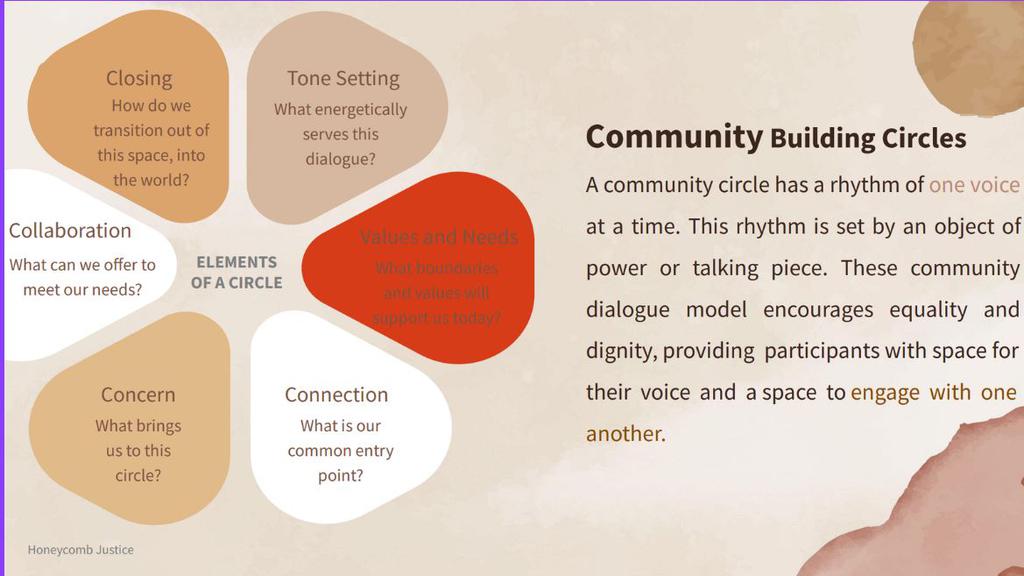
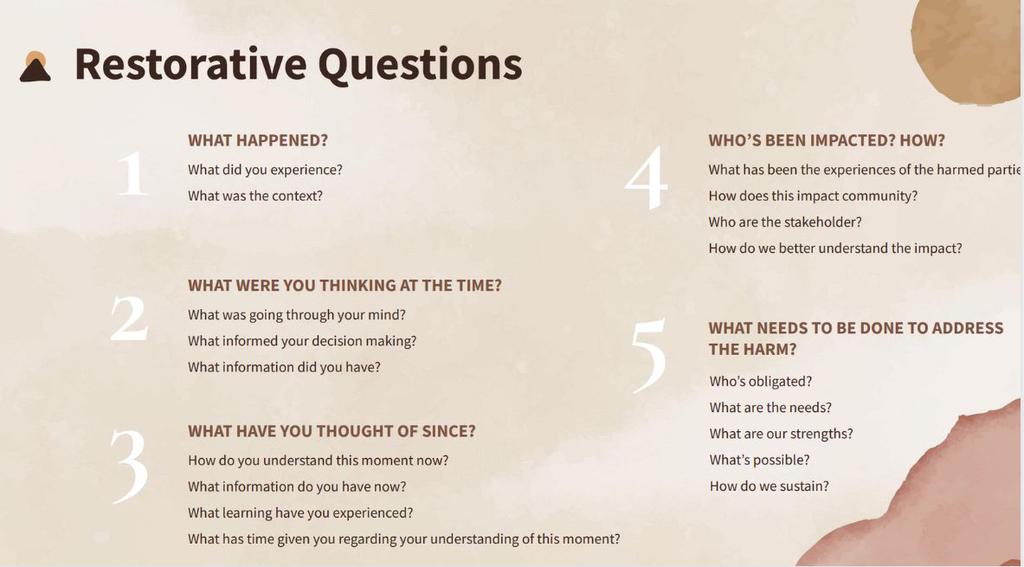
A framework of community healing that uses storytelling to name the impact of the harm, acknowledge needs, and imagine solutions tailored to the community.
The stated goals of restorative justice are to heal victims, reintegrate offenders, and build community (Maglione 2019)
Just some quick background:
|
Babylonian Talmud, Sanhedrin 17a |
תלמוד בבלי, סנהדרין יז ע"א |
|
Rav Yehudah said in the name of Rav: No one is to be given a seat on the Sanhedrin unless he is able to prove the cleanliness of a reptile from Biblical texts. |
אמר רב יהודה אמר רב: אין מושיבין בסנהדרין אלא מי שיודע לטהר את השרץ מן התורה. |
|
Mishnah Sanhedrin 4:2 |
משנה סנהדרין ד:ב |
|
Capital cases begin from [hearing the opinions from the judges on] the side. |
דִּינֵי נְפָשׁוֹת מַתְחִילִין מִן הַצָּד. |
|
Babylonian Talmud, Sanhedrin 17a |
תלמוד בבלי, סנהדרין יז ע"א |
|
Rav Kahana said: If the Sanhedrin unanimously finds [the accused] guilty, he is acquitted. |
אמר רב כהנא סנהדרי שראו כולן לחובה - פוטרין אותו. |
1. Split up into two groups, one representing the position to cancel, the other to keep. In your groups, come up with a proposal. Be creative in the approach and feel free to add caveats (5 minutes)
2. We'll reconvene. Each side will present their proposal. The other side should write down their points. (5 minutes total)
3. Each side will have the opportunity to add points to the other side's position (5 minutes total)
4. Each side reconvenes and comes up with a final proposal, taking into account any new points that arise (3 minutes)
5. Each side presents their final version of their proposal (3 minutes total)
6. We arrange ourselves in a semicircle, first years at the end and increasing in class year to the center. Quickly, each person says why they are leaning towards one way in one sentence. (2 minutes)
7. We vote. Each person says their vote, starting from first-years to grad student (1 minute)
|
Two months ago, a board member of the Orchard Institute of Jewish Studies and one of the largest single donors to Orchard asked his old friend, retired Senator Cregg McNeal, to come and speak to the Orchard student body next Tuesday about his recent book on how high-tech can bring peace to the Middle East. Last week, a recent immigrant from a Muslim-majority country carried out a shooting attack in a school gymnasium in the former Senator’s home state resulting in the loss of human life. Within the hour, McNeal tweeted “barbarians and savages!” In a television interview, he called for supporting a travel ban that would include the attacker’s country of origin. In addition, he called for all Muslims in the US to fill out a questionnaire asking if they denounced a list of terror organizations and swore allegiance to the United States of America and its Constitution. The responses came swiftly. Lawmakers across the aisle, and several civil rights organizations, as well as many Jewish organizations, harshly condemned his tweet as being racist and un-American, and referred to his suggestion of a questionnaire as a ‘loyalty oath,’ which they argued is unconstitutional and against the first amendment. A meme portraying former Senator McNeal with a poster of Senator Joseph McCarthy in the background reading “The New McNealizzm Starts Today!” went viral, being shared by millions on social media. McNeal responded in another television interview that his tweet was only referring to terrorists and not to all Muslims. In addition, he criticized the TV interviewer for “not focusing on the real victims of this story, the people who lost their lives and their families!” The speaking event set to take place next week within Orchard has already been advertised on Facebook. As a result, numerous Orchard alumni have written comments and sent emails asking that the talk be canceled, as it would give his statements and proposals legitimacy and a platform. They believe that it is critical that Orchard, as a Jewish organization, express a clear moral voice that rejects such religious discrimination by rescinding the invitation. Yesterday afternoon, Orchard students started a petition to boycott the talk if it is not canceled. So far, a quarter of the student body has signed the petition, and it is likely that this number will grow rapidly (even though there is a silent minority of students who privately expressed their desire, in conversations with staff and faculty members, not to cancel the talk). The board member who invited him feels very disappointed and hurt by the reaction of the student body and strongly believes that the talk should not be canceled under any circumstance, as Orchard needs to be a place where all voices are heard. There is no institutional policy or precedent for how to proceed in such situations. |
|
Arguments for KEEPING THE SPEAKER |
Arguments for CANCELING THE SPEAKER |
1. What was unique to you about this specific procedure? How is different from the stucture of a typical U.S. court?
2. Why start with the opinions of lower-ranking members?
3. How may sitting in a semicircle encourage disagreement?