
Save "Organ Transplant In Minors

Yeshiva of Greater Washington
"
Organ Transplant In Minors Yeshiva of Greater Washington

וְאָמַר רַב חִסְדָּא אָמַר מָר עוּקְבָא: מִי שֶׁנִּשְׁתַּטָּה — בֵּית דִּין יוֹרְדִין לִנְכָסָיו וְזָנִין וּמְפַרְנְסִין אֶת אִשְׁתּוֹ וּבָנָיו וּבְנוֹתָיו, וְדָבָר אַחֵר. אֲמַר לֵיהּ רָבִינָא לְרַב אָשֵׁי: מַאי שְׁנָא מֵהָא דְּתַנְיָא: מִי שֶׁהָלַךְ לִמְדִינַת הַיָּם וְאִשְׁתּוֹ תּוֹבַעַת מְזוֹנוֹת — בֵּית דִּין יוֹרְדִין לִנְכָסָיו, וְזָנִין וּמְפַרְנְסִין אֶת אִשְׁתּוֹ, אֲבָל לֹא בָּנָיו וּבְנוֹתָיו, וְלֹא דָּבָר אַחֵר?

Apropos this ruling, the Gemara cites another statement that Rav Ḥisda said that Mar Ukva said: With regard to one who became insane, the court enters his property and feeds and provides a livelihood for his wife, his sons, and his daughters, and it also gives something else, as will be explained. Ravina said to Rav Ashi: In what way is this case different from that which is taught in a baraita: In the case of one who went overseas and his wife claims sustenance, the court descends to his property and feeds and provides a livelihood for his wife, but not for his sons and daughters and does not give something else. If a father is not obligated to sustain his children in his absence, what is different about a situation where he is mad?

ולא שאני לך כו' - יוצא מן המקום לדעת היה בידו לצוות על מזונות בניו ובנותיו ואשתו ולא צוה גילה דעתו שאינו רוצה לזונן הילכך אשתו דמיחייב לה בתנאי כתובה אשתעבוד ניכסיה בניו ובנותיו לא אבל נשתטה דיצא מן העולם שלא לדעת מסתמא ניחא ליה שיזונו בניו ובנותיו משלו:

וְאֵין אַפּוֹטְרוֹפִּין רַשָּׁאִין לִמְכּוֹר שָׂדוֹת וְלִיקַּח עֲבָדִים אֲבָל מוֹכְרִין עֲבָדִים וְלוֹקְחִין בָּהֶן שָׂדוֹת רַבָּן שִׁמְעוֹן בֶּן גַּמְלִיאֵל אוֹמֵר אַף לֹא לִמְכּוֹר עֲבָדִים וְלִיקַּח שָׂדוֹת מַאי טַעְמָא דִּלְמָא לָא מְשַׁפְּיָין
The baraita continues: And stewards are not permitted to sell fields belonging to the orphans and use the proceeds to purchase slaves. But they may sell the orphans’ slaves and use their proceeds to purchase fields, as land is considered to be a more stable asset. Rabban Shimon ben Gamliel says: Stewards may not even sell slaves and use the proceeds to purchase fields. The Gemara explains: What is the reason for this? Perhaps it will turn out that the property is not secure [meshappeyan], the ownership of the fields being contested by others, and consequently the steward will have made matters more complicated for the orphans as a result of his purchase.
רַבָּה רְמָא צְדָקָה אַיַּתְמֵי דְּבֵי בַּר מָרִיּוֹן אֲמַר לֵיהּ אַבָּיֵי וְהָתָנֵי רַב שְׁמוּאֵל בַּר יְהוּדָה אֵין פּוֹסְקִין צְדָקָה עַל הַיְּתוֹמִים אֲפִילּוּ לְפִדְיוֹן שְׁבוּיִם אֲמַר לֵיהּ אֲנָא לְאַחְשׁוֹבִינְהוּ קָא עָבֵידְנָא
It is reported that Rabba imposed a contribution to a certain charity on the orphans of the house of bar Maryon. Abaye said to him: But didn’t Rav Shmuel bar Yehuda teach: One does not impose a charity obligation on orphans even for the sake of redeeming captives, since they are minors and are not obligated in the mitzvot? Rabba said to him: I did this to elevate them in standing, i.e., so that people should honor them as generous benefactors; not in order that the poor should benefit.

יאוש שלא מדעת אביי אמר לא הוי יאוש ורבא אמר הוי יאוש...כי פליגי בדבר שאין בו סימן אביי אמר לא הוי יאוש דהא לא ידע דנפל מיניה רבא אמר הוי יאוש דלכי ידע דנפל מיניה מיאש מימר אמר סימנא לית לי בגויה מהשתא הוא דמיאש

With regard to one’s despair of recovering his lost item that is not a conscious feeling, i.e., were he aware of the loss of his property, he would have despaired of its recovery, but he was unaware of his loss when the finder discovered the item, Abaye said: It is not considered despair; the owner maintains ownership of the item, and the finder may not keep it. And Rava said: It is considered despair and the finder may keep it. The Gemara limits the scope of the dispute. In the case of an item on which there is a distinguishing mark, everyone agrees that despair that is not conscious is not considered despair. And even though we hear that he ultimately despairs of recovering the item, it is not considered despair, as when the item came into the possession of the finder, it was in a prohibited manner that it came into his possession. It is prohibited because when the owner learns that it fell from his possession, he does not despair of its recovery immediately. Instead, he says: I have a distinguishing mark on the item; I will provide the distinguishing mark to the finder, and I will take it. With regard to an item swept away by the tide of the sea or by the flooding of a river, even though the item has a distinguishing mark, the Merciful One permits the finder to keep it as we seek to state below, later in the discussion. When they disagree, it is with regard to an item in which there is no distinguishing mark. Abaye said: Despair that is not conscious is not considered despair, as he did not know that the item fell from him; therefore, he cannot despair of recovering it. Rava said: Despair that is not conscious is considered despair, as when he discovers that it fell from him, he will despair of its recovery; as he says upon this discovery: I have no distinguishing mark on the item. Therefore, it is considered from now, when the item fell, that he despairs.
אמימר ומר זוטרא ורב אשי אקלעו לבוסתנא דמרי בר איסק אייתי אריסיה תמרי ורימוני ושדא קמייהו אמימר ורב אשי אכלי מר זוטרא לא אכיל אדהכי אתא מרי בר איסק אשכחינהו וא"ל לאריסיה אמאי לא אייתית להו לרבנן מהנך שפירתא
The Gemara digresses with a related incident: Ameimar, Mar Zutra, and Rav Ashi happened to come to the orchard [levustana] of Mari bar Isak. His sharecropper came and placed dates and pomegranates before them. Ameimar and Rav Ashi ate the fruit, but Mar Zutra did not eat the fruit due to the concern that the sharecropper had provided them with the fruit without the approval of the owner of the field. Meanwhile, Mari bar Isak came and found them eating his fruit and said to his sharecropper: Why didn’t you bring the Sages fruit from those higher-quality fruits?

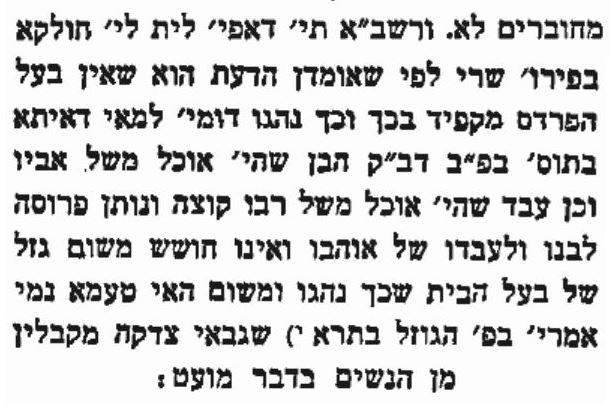
מר זוטרא לא אכל - וא"ת ואמאי לא אכל האמר רבא פרק הגוזל בתרא (ב"ק דף קיט.) אריסא מדנפשיה קא זבן ויש לומר דהתם שהביא האריס מבית דמסתמא ממה שהגיע לחלקו מביא אבל הכא שהביא מן הפרדס היה חושש מר זוטרא... דאין לומר שהיה סומך שיתרצה מרי בר איסק כשידע דהלכה כאביי ואע"ג דהשתא ניחא ליה מעיקרא לא הוה ניחא ליה:

מותר ליקח מן האריס כו' מדברי התוס' פרק אלו מציאות (בבא מציעא דף כ"ב) סוף ע"א והגהת אשר"י והגהת מרדכי שם מבואר דאם אדם נותן לאכול לחברו מדבר שאינו שלו אלא של חברו אע"פ שיודע שחברו יתרצה אסור לאכלו דהלכה כאביי דיאוש ש"מ לא הוי יאוש ואע"ג דהשתא ניח' ליה מעיקרא לא הוי ניח' ליה ואי לאו דמסתפינ' הייתי אומר שמותר ויאוש שלא מדעת שאני שגם אח"כ אינו מייאש אלא משום שאינו יודע היכן הוא ובע"כ הוא מתייאש א"כ אמרי' מעיקרא באיסורא אתי לידי' דבמה יקנה אי ביאוש הא השת' אינו מתייאש ואלו הי' יודע שהוא אצלו לא מתייאש משא"כ הכא כיון שידוע שיתרצ' א"כ השתא נמי בהיתרא אתי לידיה דמסתמ' אינו מקפיד על זה...

מותר ליקח מן האריס. בפרק אלו מציאות (בבא מציעא דף כ"ב) בתוס' שם דאם אדם נותן לחבירו לאכול מדבר שאינו שלו אלא של אחר אע"פ שהוא יודע שחבירו ודאי יתרצה לכשיודע לו אסור לאוכלו משום דהלכה כאביי...ע"ש ויש לדקדק מהא דאמרו בפרק נערה דף מ"ח מי שנשתטה ב"ד יורדין לנכסיו וזנין ומפרנסין אשתו ובניו ובנותיו ודבר אחר א"ל רבינא לרב אשי מ"ש מהא דתניא מי שהלך למד"ה ואשתו תובעת מזונות ב"ד יורדים לנכסיו וזנין ומפרנסין אשתו אבל לא בניו ובנותיו ודבר אחר א"ל ולא שאני לך בין יוצא מדעת ליוצא שלא מדעת ופירש"י דנשתטה דשלא לדעת יצא מן העולם מסתמא ניחא ליה שיזונו בניו ובנותיו משלו ע"ש וכיון דאפי' היכא דידוע לנא דבודאי יתרצה ה"ל יאוש שלא מדעת וא"כ היכי זנין בניו ובנותיו נהי דניחא לי' השתא מיהו לא ידע: ואפשר כיון דגבי בניו ובנותיו אפי' ביותר משש מצוה מיהא הוי אע"ג דלא כפינן ליה כמבואר שם דף מ"ח וניחותא דמצוה שאני דאע"ג דהשתא לא ידע מהני וכמ"ש הב"י בי"ד סי' של"ג וע' מ"ש בסי' רס"ב סק"א אלא דהתם נמי אמרו דבר אחר היינו תכשיט ומשום דניחא ליה דלא תינוול ע"ש ומה בכך דניחא ליה השתא מיהא לא ידע:
Chidushei Ha'Ran Bava Metzia 22a
Igros Moshe, Choshen Mishpat II, 74:5