Save "Parashat Shemot: The Burning Bush"
Parashat Shemot: The Burning Bush

(א) בָּרוּךְ אַתָּה יְהֹוָה אֱלֹהֵֽינוּ מֶֽלֶךְ הָעוֹלָם אֲשֶׁר קִדְּ֒שָֽׁנוּ בְּמִצְוֹתָיו וְצִוָּנוּ לַעֲסֹק בְּדִבְרֵי תוֹרָה:

(1) Blessed are You, Adonai, Ruler of the Universe, Who sanctifies us with commandments and commands us to be engrossed in the words of Torah.
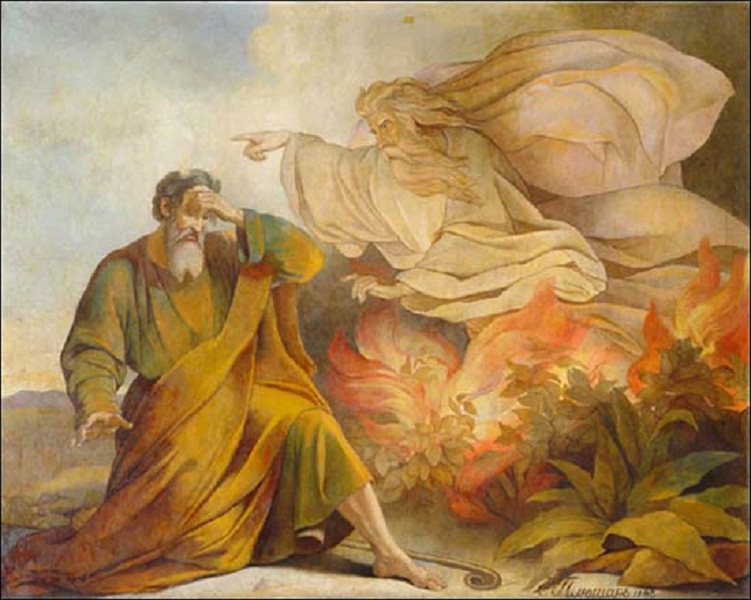
Eugene Pluchart's God Appears to Moses in Burning Bush 1848
Domenico Feti's Moses Before the Burning Bush (1613)
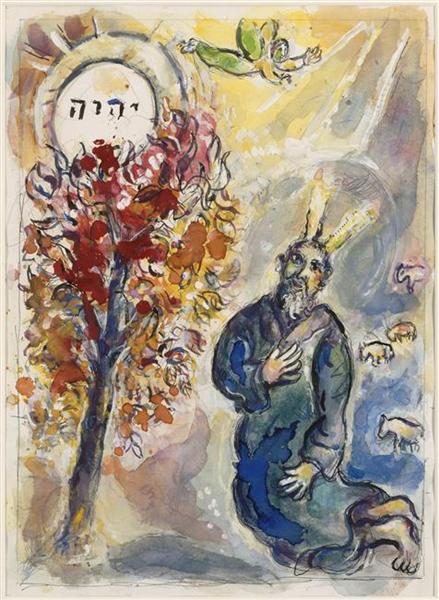
Marc Chagall 1966

(א) וּמֹשֶׁ֗ה הָיָ֥ה רֹעֶ֛ה אֶת־צֹ֛אן יִתְר֥וֹ חֹתְנ֖וֹ כֹּהֵ֣ן מִדְיָ֑ן וַיִּנְהַ֤ג אֶת־הַצֹּאן֙ אַחַ֣ר הַמִּדְבָּ֔ר וַיָּבֹ֛א אֶל־הַ֥ר הָאֱלֹקִ֖ים חֹרֵֽבָה׃ (ב) וַ֠יֵּרָא מַלְאַ֨ךְ יי אֵלָ֛יו בְּלַבַּת־אֵ֖שׁ מִתּ֣וֹךְ הַסְּנֶ֑ה וַיַּ֗רְא וְהִנֵּ֤ה הַסְּנֶה֙ בֹּעֵ֣ר בָּאֵ֔שׁ וְהַסְּנֶ֖ה אֵינֶ֥נּוּ אֻכָּֽל׃ (ג) וַיֹּ֣אמֶר מֹשֶׁ֔ה אָסֻֽרָה־נָּ֣א וְאֶרְאֶ֔ה אֶת־הַמַּרְאֶ֥ה הַגָּדֹ֖ל הַזֶּ֑ה מַדּ֖וּעַ לֹא־יִבְעַ֥ר הַסְּנֶֽה׃ (ד) וַיַּ֥רְא יי כִּ֣י סָ֣ר לִרְא֑וֹת וַיִּקְרָא֩ אֵלָ֨יו אֱלֹקִ֜ים מִתּ֣וֹךְ הַסְּנֶ֗ה וַיֹּ֛אמֶר מֹשֶׁ֥ה מֹשֶׁ֖ה וַיֹּ֥אמֶר הִנֵּֽנִי׃ (ה) וַיֹּ֖אמֶר אַל־תִּקְרַ֣ב הֲלֹ֑ם שַׁל־נְעָלֶ֙יךָ֙ מֵעַ֣ל רַגְלֶ֔יךָ כִּ֣י הַמָּק֗וֹם אֲשֶׁ֤ר אַתָּה֙ עוֹמֵ֣ד עָלָ֔יו אַדְמַת־קֹ֖דֶשׁ הֽוּא׃ (ו) וַיֹּ֗אמֶר אָנֹכִי֙ אֱלֹקֵ֣י אָבִ֔יךָ אֱלֹקֵ֧י אַבְרָהָ֛ם אֱלֹקֵ֥י יִצְחָ֖ק וֵאלֹקֵ֣י יַעֲקֹ֑ב וַיַּסְתֵּ֤ר מֹשֶׁה֙ פָּנָ֔יו כִּ֣י יָרֵ֔א מֵהַבִּ֖יט אֶל־הָאֱלֹקִֽים׃

(1) Now Moses, tending the flock of his father-in-law Jethro, the priest of Midian, drove the flock into the wilderness, and came to Horeb, the mountain of God. (2) An angel of the Eternal appeared to him in a blazing fire out of a bush. He gazed, and there was a bush all aflame, yet the bush was not consumed. (3) Moses said, “I must turn aside to look at this marvellous sight; why doesn’t the bush burn up?” (4) When the Eternal saw that he had turned aside to look, God called to him out of the bush: “Moses! Moses!” He answered, “Here I am.” (5) God said, “Do not come closer. Remove your sandals from your feet, for the place on which you stand is holy ground. (6) Then God said: “I am the God of your father, the God of Abraham, the God of Isaac, and the God of Jacob.” And Moses hid his face, for he was afraid to look at God.

What did Moses see?

סְנֶה (n-m) heb
    • a bush, thorny bush
      • the burning bush of Moses
      • perhaps a blackberry bush
איננו אכל - אפילו במקום יציאת הלהבה מן הסנה לא היה גחלת כלל.

איננו אוכל. Even at the point where the flame came forth from the bush there was no evidence of coal or ash.

בלבת אש. בְּשַׁלְהֶבֶת אֵשׁ – לִבּוֹ שֶׁל אֵשׁ, כְּמוֹ "לֵב הַשָּׁמַיִם" (דברים ד'), "בְּלֵב הָאֵלָה" (שמואל ב י"ח); וְאַל תִּתְמַהּ עַל הַתָּי"ו, שֶׁיֵּשׁ לָנוּ כַיּוֹצֵא בוֹ, "מָה אֲמֻלָה לִבָּתֵךְ" (יחזקאל ט"ז):
בלבת אש means IN A FLAME OF FIRE, i. e. in the very heart of (לב) the fire. Similarly is לב used of inanimate objects in: (Deuteronomy 4:11) “in the heart of (לב) heaven”; (II Samuel 18:14) “in the midst of (לב) the terebinth”. Do not be puzzled by the ת, although the ordinary word for heart, לב. does not require the suffix ת in the construct form, because we have another example of this form, viz., (Ezekiel 16:30) “how weak is thy heart (לבתך)”.‎

(ב) מתוך הסנה. וְלֹא אִילָן אַחֵר, מִשּׁוּם "עִמּוֹ אָנֹכִי בְצָרָה" (תהילים צא טו):

(2) מתוך הסנה OUT OF THE MIDST OF A BUSH (a thornbush) — and not from any other tree, in accordance with the idea (Psalms 91:15) “I will be with him in trouble” (Midrash Tanchuma, Shemot 14).

(ד) דָּבָר אַחֵר, וְלָמָּה בְּלַבַּת אֵשׁ? מִשְּׁנֵי חֲלָקָיו שֶׁל סְנֶה וּלְמַעְלָה, שֶׁהַלֵּב נָתוּן מִשְּׁנֵי חֲלָקָיו שֶׁל אָדָם וּלְמַעְלָה. וְלָמָּה מִתּוֹךְ הַסְּנֶה, וְלֹא מִתּוֹךְ אִילָן גָּדוֹל, וְלֹא מִתּוֹךְ תְּמָרָה? אָמַר הַקָּדוֹשׁ בָּרוּךְ הוּא: כָּתַבְתִּי בַּתּוֹרָה, עִמּוֹ אָנֹכִי בְצָרָה (תהלים צא, טו). הֵם נְתוּנִים בְּשִׁעְבּוּד, וְאַף אֲנִי בַּסְּנֶה מִמָּקוֹם צָר. לְפִיכָךְ מִתּוֹךְ הַסְּנֶה שֶׁכֻּלּוֹ קוֹצִים.

(4) Another comment on why in a flame of fire (belibbat esh)? The fire was on both sides of the bush and in the upper portion, just as the heart (leb) is placed between the two sides of a man’s body and in the upper portion of his body. Why did He appear in the midst of a bush of thorns rather than in a large tree or a column of smoke? The Holy One, blessed be He, said: I have stated in the Torah: I will be with him in trouble (Ps. 91:15); inasmuch as they were enslaved, I appeared in a bush of thorns, which is a place of trouble. Therefore, out of the midst of a bush which is full of thorns, I appeared unto him.

What does Moses do?

אסורה נא ואראה. אתבונן ואראה. מדוע לא יבער הסנה. למה לא יכלו המצרים ברב מכותם, כענין ודלקו בהם ואכלום:
אסורה נא ואראה; I will try and understand the phenomenon by looking at it more closely. מדוע לא יבער הסנה. Why the Egyptians do not perish from the many plagues they have to endure. The normal reaction to burning is that the object afire is consumed by the fire, as mentioned in Ovadiah 18.
וירא ה' כי סר לראות. להתבונן בדבר:

וירא ה' כי סר לראות, When G’d saw that Moses took a deeper interest in the phenomenon,

What is the significance of this event?

וירא והנה הסנה בוער באש. דולק, וזה דרך חידת הנבואה, שהיה המלאך בתוך הסנה, והאש בוערת בסנה סביב המלאך, להורות שבהיות צדיקי ישראל, שהם מלאכי ה', בתוך הסנה של עם מצרים, שהיו להם סרבים וסלונים. הסנה יבער באש בצרת עשר מכות, אבל לא יכלו באותן הצרות, כמו שהורה באמרו והסנה איננו אכל, שהיה בלתי כלה באש המלהט בו. כי לא היתה נבואת משה רבינו עליו השלום אז כמו שהיתה אחר כך, כמו שהעיד באמרו כי ירא מהביט אל האלהים על הפך ותמונת ה' יביט אבל מיום מתן תורה ואילך שנגלה אז לכל ישראל פנים בפנים והם לא סבלו זה, כאמרם לא אוסיף עוד לשמוע את קול ה' וכו' והוא לבדו נשאר באותה מדרגה, כמו שאמר שובו לכם ואתה פה עמוד עמדי וכאמרו ויעמוד העם מרחוק ומשה נגש, היתה נבואת משה רבינו פנים בפנים ומראה ולא בחידות:
וירא והנה הסנה בוער באש, it kept burning; This phenomenon indicated the prophetic nature of the experience. Unless the angel had been within the bush, this could not have happened as something natural. The fire Moses saw burning enveloped the angel. The implied message was that the righteous members of the Jewish people, who are themselves angels of G’d, i.e. His messengers on earth, and who are surrounded by the Egyptian nation who treated them as burning thistles or less, would themselves become subject to this fire when enduring the ten plagues, but would remain unharmed by all those plagues. This is what Moses was taught when he saw והסנה איננו אוכל. it was not consumed by the flames which kept burning. The level of Moses’ prophecy at that time was not yet at the level it would be later on. The very fact that the Torah describes Moses as being even afraid to look at the spectacle before his eyes is proof of this (compare verse 6). From the day the Torah was given, as the Torah testifies in Numbers 12,8 ותמונת ה' יביט, G’d extended the power of Moses’ prophetic visions so that He shows him a visual image of G’d. The entire Jewish people had had a brief revelation of G’d’s glory at Mont Sinai only. Their power of endurance was so limited even at that time that the Torah reports them as saying that they could not even endure hearing the voice of the Lord, not to speak of enduring a visual image. Only Moses was able to retain the level of prophecy which the entire nation experienced during the revelation at Mount Sinai. This is the meaning of Deuteronomy 5,27-28 שובו לכם לאהליכם ואתה פה עמוד עמדי, “you (pl.) go back to your tents, and you (sing.) remain standing here beside Me.” This is also borne out by Exodus 20,18 ויעמוד העם מרחוק, “the people stood at a distance,” followed by ומשה נגש, “whereas Moses approached.” (to the cloud within which the glory of G’d was enveloped). Moses’ level of prophecy from that time on remained on the level known as פנים אל פנים, “face to face,” i.e. direct, not indirect. G’d told Miriam and Aaron there that He does not speak to Moses in riddles but by showing him a visual image (Numbers 12,8)
וירא מלאך ה'. תחלה אמר וירא מלאך ה' ואחר כך אמר וירא ה' כי סר לראות ויקרא אליו אלהים ועל כן אמר ר' אברהם כי האלהים הוא המלאך הנזכר כמו כי ראיתי אלהים פנים אל פנים אע"ג דכתיב אלהי אביך כי ידבר השליח בשם השולח. וכתב הרמב"ן ואינו נכון שמשה גדול הנבואה לא יסתיר פניו ממלאך וכתב הוא כי רבותינו אמרו בב"ר שהוא מיכאל ר' יוסי הארוך בכל מקום שהיו רואין אותו היו אומרים שם רבינו הקדוש כך כל מקום שמיכאל נראה שם כבוד השכינה נתכוונו לומר מתחלה נראה אליו מיכאל ושם כבוד השכינה והוא לא ראה הכבוד כי לא הכין דעתו בנבואה וכאשר כיון לבו וסר לראות נתגלה אליו כבוד השכינה:

וירא מלאך ה', “An angel of the Lord appeared to him;” First the Torah reports that an angel of the Lord appeared to Moses, and afterwards we read that G’d saw that Moses had taken note of the spectacle of the burning bush whereupon G’d called out to him. This prompted Ibn Ezra to say that the word אלוקים in verse 4 refers to the angel mentioned in verse 2 as מלאך ה', “an angel of the Lord.” We find a parallel construction in Genesis 32,31 where Yaakov describes himself as having “seen G’d face to face.” This in spite of the fact that G’d had described himself to Yaakov as “the G’d of your father.” The fact is that the messenger is permitted to assume the name of the One Who has dispatched him while he is carrying out the instructions of his master. [clearly, Yaakov had not had a vision of G’d Himself, face to face, something which is impossible, as explained by G’d to Moses in Exodus Ed.]

Nachmanides disagrees with the commentary of Ibn Ezra, claiming that Moses, the most outstanding of all the prophets would certainly not be afraid to look at the vision of an angel, a vision granted to many prophets who were inferior to him. He goes on to say that our sages describe the angel Moses saw as being Michael, a most high ranking angel, not one of the lower ranking angels that appeared to other prophets. He identified this angel with the one described by Yaakov before his death as המלאך הגואל אותי in Genesis Elsewhere this angel is described by G’d as incorporating some of G’d’s essence, שמי, “within him.” (compare Exodus 23,21). (see Bereshit Rabbah 97,3 that whenever Rabbi Yossi ha-aruch is mentioned the listeners felt that his mentor, Rabbi Yehudah hanassi, was personally present.

This type of angel, the one described as bearing the name of the Lord, is understood as being the category closest to the throne of G’d in the celestial regions. At the revelation of the burning bush, Moses encountered one of these angels.

פָּתַח רִבִּי יִצְחָק וְאָמַר כְּתִיב, (תהלים לה) חוֹנֶה מַלְאַךְ יְיָ סָבִיב לִירֵאָיו וַיְחַלְּצֵם, הָא אוּקְמוּהָ. אֲבָל בְּאֲתַר חַד כְּתִיב כִּי מַלְאָכָיו יְצַוֶּה לָךְ, מַלְאָכָיו סַגִּיאִין, וְהָכָא חַד דִּכְתִיב חוֹנֶה מַלְאַךְ יְיָ סָבִיב לִירֵאָיו וַיְחַלְּצֵם. אֶלָּא כִּי מַלְאָכָיו יְצַוֶּה לָךְ, אִלֵּין שְׁאָר מַלְאָכִין. מַלְאַךְ יְיָ סָבִיב דָּא שְׁכִינְתָּא, כְּמָה דְאַתְּ אָמֵר, (שמות ג׳:ב׳) וַיֵּרָא מַלְאַךְ יְיָ אֵלָיו בְּלַבַּת אֵשׁ מִתּוֹךְ הַסְּנֶה. וּבְגִין כָּךְ חוֹנֶה מַלְאַךְ יְיָ סָבִיב לִירֵאָיו, לַאֲקָפָא לֵיהּ בְּכָל סִטְרִין בְּגִין לְשֵׁזָבָא לֵיהּ. וְכַד שְׁכִינְתָּא שַׁרְיָא בְּגַוֵּיהּ דְּבַר נָשׁ, כַּמָּה מַשִּׁרְיָין קַדִּישִׁין כֻּלְּהוּ אִזְדַּמְּנוּ לְתַמָּן.
Rabbi Yitzchak said, It is written, "The angel of Hashem encamps round about those who fear Him, and he delivers them" (Tehilim 34:8). This verse has already been explained. But in another place, it is written, "For He shall give His angels charge over you," namely, many angels, whereas here only one is mentioned, as it is written, "The angel of Hashem encamps." The verse, "For He shall give His angels charge over you," refers to angels in general, but the verse, "The angel of Hashem," refers to the Shechinah, as it is written, "And the angel of Hashem appeared to him in a flame of fire out of the midst of a bush" (Shemot 3:2). just as it refers to the Shechinah in the first verse, so The angel mentioned here also points to the Shechinah. And so, "the angel of Hashem encamps round about those who fear Him," to encircle them in every direction so as to deliver them. And when the Shechinah resides inside man, all the holy hosts come there.
ואין הכונה באלו המאמרים כולם מה שיחשבוהו הפתאיים שיש לו ית׳ דברים, או מחשבה או התבוננות אל שאלת עצה והעזר בדעת אחרים – ואיך יעזר הבורא במה שברא? אבל כולו באור שאפילו חלקי המציאות עד בריאת האברים מבעלי החיים כפי מה שהם – כל זה באמצעות מלאכים – כי הכוחות כולם מלאכים. ומה מאד רע עורון הסכלות ומה מאוד מזיק – אילו אמרת לאיש אחד מאשר יחשבו שהם ׳חכמי ישראל׳ שהאלוה ישלח מלאך שיכנס בבטן האשה ויציר שם העובר ייטב לו זה מאוד ויקבלהו, ויראה זה עוצם ויכולת בחוק האלוה וחכמה ממנו ית׳ – עם האמינו גם כן שה׳מלאך׳ גוף מאש שורפת שיעורו כשליש העולם כולו – ויראה זה כולו אפשר בחק האלוה; אמנם אם תאמר לו שהאלוה שם בזרע כח מציר יעשה תמונת אלו האברים ויתארם והוא – ה׳מלאך׳ או ההצורות כולם מפעולת השכל הפועל והוא – ה׳מלאך׳ והוא – ׳שרו של עולם׳ אשר יזכרוהו ה׳חכמים׳ תמיד – יברח מזה כי לא יבין ענין זה העוצם והיכולת האמיתיים והוא – המצאת הכוחות הפועלות בדבר אשר לא יושגו בחוש. כבר בארו ה׳חכמים ז״ל׳ למי שהוא ׳חכם׳ כי כל כח מן הכוחות הגופניות – ׳מלאך׳ כל שכן הכוחות המפוזרות בעולם ושכל כח יש לו פעולה אחת מיוחדת ולא יהיו לו שתי פעולות. ב׳באשית רבה׳: ״תני אין מלאך אחד עושה שתי שליחויות ואין שני מלאכים עושין שליחות אחת״ – וזהו ענין כל הכוחות. וממה שיחזק אצלו היות הכוחות האישיות הטבעיות והנפשיות נקראות ׳מלאכים׳ – אמרם במקומות רבים ועיקרו ב׳בראשית רבה׳: ״בכל יום הקב״ה בורא כת של מלאכים ואומרים לפניו שירה והולכים להם״. וכאשר הוקשה זה המאמר במאמר מורה על היות המלאכים עומדים, וכן התבאר פעמים שהמלאכים ׳חיים וקימים׳ – היה המענה שמהם קיים ומהם אבד. וכן הענין באמת, כי אלו הכוחות האישיות הוות נפסדות על ההמשך, ומיני הכוחות ההם נשארים לא יפסדו. ושם נאמר בענין ׳יהודה ותמר׳: ״אמר ר׳ יוחנן ביקש לעבור וזימן לו הקב״ה מלאך שהוא ממונה על התאוה״ – רצונו לומר: כח הקושי – הנה כבר קרא הכח הזה גם כל ׳מלאך׳. וכן תמצאם תמיד אומרים ׳מלאך שהוא ממונה על כך וכך׳ – כי כל כח שמינהו האלוה ית׳ על ענין מן הענינים הוא ׳מלאך הממונה על אותו דבר׳. וכתוב ב׳מדרש קוהלת׳: ״בשעה שאדם ישן נפשו אומרת למלאך, ומלאך לכרוב״ – הנה כבר בארו למי שיבין וישכיל שהכח המדמה גם כן יקרא ׳מלאך׳ ושהשכל יקרא ׳כרוב׳. ומה מאד נאה זה למי שידע, ומה מאד הוא נמאס לפתאים.
These passages do not convey the idea that God spoke, thought, reflected, or that He consulted and employed the opinion of other beings, as ignorant persons have believed. How could the Creator be assisted by those whom He created! They only show that all parts of the Universe, even the limbs of animals in their actual form, are produced through angels: for natural forces and angels are identical. How bad and injurious is the blindness of ignorance! Say to a person who is believed to belong to the wise men of Israel that the Almighty sends His angel to enter the womb of a woman and to form there the fœtus, he will be satisfied with the account; he will believe it, and even find in it a description of the greatness of God’s might and wisdom; although he believes that the angel consists of burning fire, and is as big as a third part of the Universe, yet he considers it possible as a divine miracle. But tell him that God gave the seed a formative power which produces and shapes the limbs, and that this power is called “angel,” or that all forms are the result of the influence of the Active Intellect, and that the latter is the angel, the Prince of the world, frequently mentioned by our Sages, and he will turn away; because he cannot comprehend the true greatness and power of creating forces that act in a body without being perceived by our senses. Our Sages have already stated—for him who has understanding—that all forces that reside in a body are angels, much more the forces that are active in the Universe. The theory that each force acts only in one particular way, is expressed in Bereshit Rabba (chap. 1.) as follows: “One angel does not perform two things, and two angels do not perform one thing”; this is exactly the property of all forces. We may find a confirmation of the opinion that the natural and psychical forces of an individual are called angels in a statement of our Sages which is frequently quoted, and occurs originally in Bereshit Rabba (chap. lxxviii.): “Every day God creates a legion of angels; they sing before Him, and disappear.” When, in opposition to this statement, other statements were quoted to the effect that angels are eternal—and, in fact, it has repeatedly been shown that they live permanently—the reply has been given that some angels live permanently, others perish; and this is really the case; for individual forces are transient, whilst the genera are permanent and imperishable. Again, we read (in Bereshit Rabba, chap. lxxxv.), in reference to the relation between Judah and Tamar: “R. Jochanan said that Judah was about to pass by [without noticing Tamar], but God caused the angel of lust, i.e., the libidinous disposition, to present himself to him.” Man’s disposition is here called an angel. Likewise we frequently meet with the phrase “the angel set over a certain thing.” In Midrash-Koheleth (on Eccles. 10:7) the following passage occurs: “When man sleeps, his soul speaks to the angel, the angel to the cherub.” The intelligent reader will find here a clear statement that man’s imaginative faculty is also called “angel,” and that “cherub” is used for man’s intellectual faculty. How beautiful must this appear to him who understands it; how absurd to the ignorant!