


From The Sefaria Blog:
The Jerusalem Talmud, also known as the Talmud Yerushalmi or Palestinian Talmud, is the sister text to the better-known Babylonian Talmud. It was compiled in Israel between the 3rd and 5th centuries from oral traditions. Like the Babylonian Talmud, the Jerusalem Talmud is a textual record of rabbinic debate about law, philosophy, and biblical interpretation, structured as a commentary on the Mishnah. However, a language barrier (it is written in a different dialect of Aramaic), reduced elaboration, and complex structure can make it difficult to study.
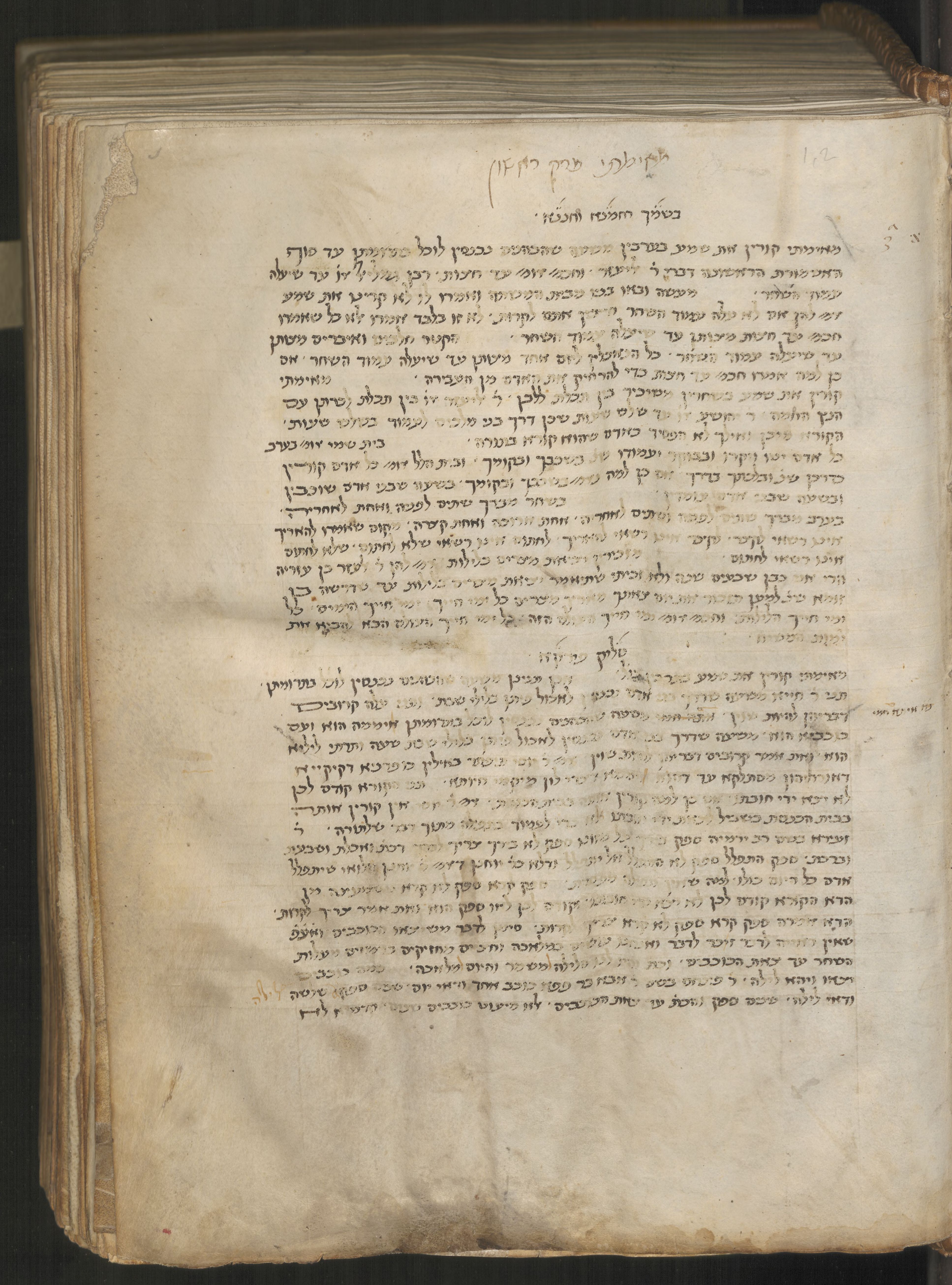
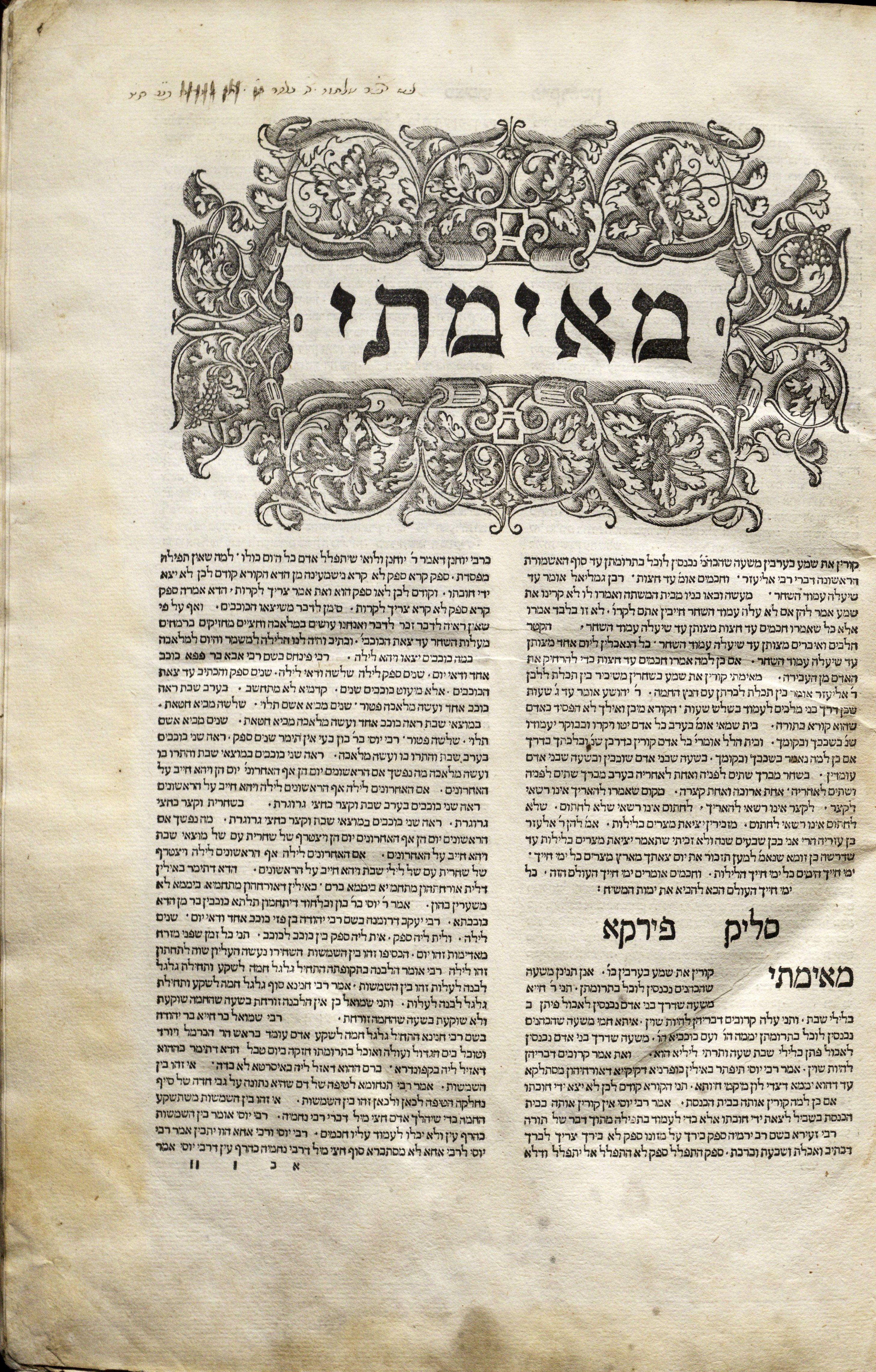
The only fully extant manuscript of the Jerusalem Talmud was set down by Rabbi Jehiel ben Jekuthiel Anav in 1289, which formed the base for the first printing in Venice by Daniel Bomberg in 1524. Sefaria has manuscript images from both of these editions visible in the resource panel, to see the original format of the texts alongside the modern, digital version.
The English translation of the Yerushalmi was completed in 2015 by Heinrich Guggenheimer, a renowned mathematician who also published works on Judaism. He spent the last 20 years of his life working on translating the Jerusalem Talmud. With his blessing, Sefaria approached his publisher de Gruyter GmbH who enthusiastically agreed to partner on this open access version of Dr. Guggenheimer’s historic work. Dr. Guggenheimer passed away on March 4, 2021 at the age of 97.
With this new edition, Sefaria invites all interested learners to incorporate this vital work of Jewish thought into their studies.
- "Intimidated by the Jerusalem Talmud? There's now a more 'accessible' translation." The Forward. December 14, 2021
- "New online translation by Sefaria may be the Jerusalem Talmud's 'Cinderella moment.'" The Times of Israel. January 7, 2022
- "Revival of the Forgotten Talmud." Lehrhaus. January 13, 2022
https://torahinmotion.org/discussions-and-blogs/shabbat-17-murder-in-the-beit-midrash
Shabbat 17: Murder in the Beit Midrash
The Talmud quotes some 316 debates between Beit Hillel and Beit Shammai. “Since both these and those are the words of the living God”, the Talmud (Eiruvin 13b) asks, “why was the law established in accordance with Beit Hillel?” The answer of the Talmud is not because they were smarter—the Talmud actually says the students of Shammai were sharper—but rather, it was because “they were agreeable and forbearing, they would teach both their own statements and the statements of Beit Shammai. Moreover, they stated the views of Beit Shammai before their own statements”.
One may be tempted to argue that the views of Beit Shammai are slightly more correct, but when viewing the picture in totality, our tradition preferred to adopt “the humility of Hillel and not the harshness of Shammai”[1] (Shabbat 30b). And that may be true. Yet our Sages understood that those who are more humble, who think about and entertain dissenting views, are less likely to make errors. Knowledge is not the only criteria for establishing the correct procedures. It is noteworthy that on at least three occasions, the Talmud notes that Beit Hillel, upon hearing the arguments of Beit Shammai, changed their views to be in accordance with Beit Shammai (Mishna, Eduyot 1:12-14). Never do we find Beit Shammai changing their views to those of Beit Hillel. Beit Shammai may have had more talent, but talent alone is never enough.
While we, halacha lemaseh, in practice, follow the view of Beit Hillel, the Tosafists (Sukkah 3a) quote from the siddur of Rav Amram Gaon[2] that there are six cases—three related to the laws of tzitzit, two relating to brachot and one relating to a Sukkah—where we follow the view of Beit Shammai....
However, these six cases are not the only time we follow the view of Beit Shammai. In what is one of saddest, yet largely unknown, events in Jewish history, “they counted, and Beit Shammai outnumbered Beit Hillel, and 18 ordinances were passed on that day[3]” (Shabbat 13b). Reading the Mishna, one gets the impression that there was some discussion and debate, a vote was taken, and with the students of Shammai in the majority, their view carried the day[4].
Yet as the Gemara alludes to, and the Talmud Yerushalmi spells out in greater tragic detail, this was no ordinary debate and no ordinary vote. Only regarding one of these 18 ordinances is there any mention of discussion and debate...
Shammai said to him: If you provoke me and insist that there is no difference between gathering olives and grapes, then, in order not to contradict this, I will decree impurity on the gathering of olives as well. They related that since the dispute was so intense, they stuck a sword in the study hall, and they said: One who seeks to enter the study hall, let him enter, and one who seeks to leave may not leave, so that all of the Sages will be assembled to determine the halakha. That day Hillel was bowed and was sitting before Shammai like one of the students. The Gemara said: And that day was as difficult for Israel as the day the Golden Calf was made, as Hillel, who was the Nasi, was forced to sit in submission before Shammai, and the opinion of Beit Shammai prevailed in the vote conducted that day. And Shammai and Hillel issued the decree, and the people did not accept it from them. And their students came and issued the decree, and the people accepted it from them.
תָּנוּ רַבָּנַן: עֲלוּבִין וְאֵינָן עוֹלְבִין, שׁוֹמְעִין חֶרְפָּתָן וְאֵינָן מְשִׁיבִין, עוֹשִׂין מֵאַהֲבָה וּשְׂמֵחִין בְּיִסּוּרִין — עֲלֵיהֶן הַכָּתוּב אוֹמֵר: ״וְאֹהֲבָיו כְּצֵאת הַשֶּׁמֶשׁ בִּגְבֻרָתוֹ״.
And the Sages taught: About those who are insulted and do not insult, who hear their shame and do not respond, who act out of love and are joyful in suffering, the verse says: “And they that love Him are as the sun going forth in its might” (Judges 5:31).
(31) So may all Your enemies perish, O LORD! But may those who love God be as the sun rising in might!
And the land was tranquil forty years.
The deviousness of the treacherous leads them to ruin.
https://thelehrhaus.com/scholarship/revival-of-the-forgotten-talmud/
Yerushalmi in the Middle Ages
We know very little about what happened to Yerushalmi for the first 500 years after its completion. Unlike the Babylonian Talmud, about which we have the rich letter of Rav Sherira Gaon (987), we have barely any information about the nature of learning in the land of Israel in late antiquity. The oldest extant piece of Yerushalmi is a seventh-century synagogue mosaic in Rehob, near Beit She’an. The document contains the Beraita de-Tehumin, the list of the borders of the land of Israel found in Yerushalmi Shevi’it (6:1), and a selection from Yerushalmi Demai (2:1). It indicates that some communities used Yerushalmi as a source of Halakhah in this period...[14]
The next extensive use of Yerushalmi appears in the writings of Rabbeinu Hananel and Rav Nissim Gaon, both active in the first half of the eleventh century in Qayrawan, Tunisia. They quote Yerushalmi hundreds of times in their commentaries on Bavli. It is not clear why specifically at that time Yerushalmi gained popularity, as Yerushalmi was seemingly not well known in Qayrawan before then.[23] Some have conjectured that Rav Hushiel, the father of Rabbeinu Hananel, may have brought the Yerushalmi to Qayrawan.[24]
Yerushalmi’s further spread occurred gradually. For example, Rashi seemingly did not have access to a full copy of Yerushalmi, while Rabbeinu Tam had at least a copy of Yerushalmi Zera’im and Moed in his library.[25] Even the Rishonim most interested in Yerushalmi struggled to find copies of it.[26] Ri could only look up something in Yerushalmi Avodah Zarah after gaining access to a copy,[27] Ra’avyah wrote that he does not have access to Yerushalmi Kilayim,[28] and Ra’avad lamented that the Yerushalmi we possess was not properly edited.[29] About 100 years later, Rashba attributes the gross errors in Yerushalmi to the lack of study; only one in a generation masters it (omeid alav). The above comments came from Rishonim who quoted Yerushalmi extensively and studied it regularly. So many others had no interest in or awareness of Yerushalmi.
In contrast, among the Rishonim who did study Yerushalmi extensively was Rabbi Shimshon of Shantz (Sens), who used Yerushalmi throughout his commentary on Mishnah. Rambam, who based many rulings in Mishneh Torah on Yerushalmi, wrote that he had plans to write a summary of the practical halakhot derived from Yerushalmi, like Rif did for Bavli. It seems he eventually abandoned this project, but some of this work in Rambam’s handwriting survived in the Genizah.[30] Additionally, a student of Ra’avad, Rav Yitzhak Cohen, wrote a commentary on most of the three orders of Moed, Nashim, and Nezikin.[31] Rabbi Yehudah ben Yakar, the teacher of Ramban, also apparently authored a commentary on Yerushalmi.[32] Unfortunately, neither of these texts have survived. Unlike the rest of Yerushalmi, several medieval commentaries on Tractate Shekalim have survived.[33] For the most part, Yerushalmi remained obscure throughout the Middle Ages and beyond. I would estimate that at any given time during the Middle Ages, no more than about 100 people studied Yerushalmi regularly.