13 Tevet 5783 | January 6, 2023
Parshat Vayechi
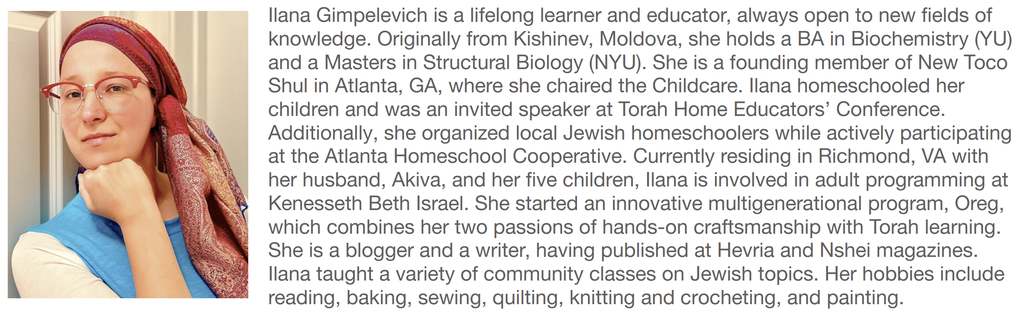
Ilana Gimpelevich
Class of 2026
The book of Genesis ends with parshat Vayechi, a culmination of the Divine actively interacting with human lives. Yaakov is the third forefather of the chosen people, and here he carefully selects the next generation upon whom to bestow the Divine favor. He designates for special blessing Menashe and Ephraim, two sons of Yosef, Yaakov’s favorite son from his beloved Rachel.
Upon encountering the youth, Yaakov is a grandfather overcome with love, who is hugging and kissing his grandchildren before blessing them. Yosef assembles his children according to their birth order: Menashe, as a first born, under Yaakov’s right hand and Ephraim, as the younger, under Yaakov’s left. Yosef, conscious of all the hatred that he experienced due to being his father’s favorite, is setting up to break the favoritism by giving each child their due place. Yet Yaakov has other ideas:
But Israel stretched out his right hand and laid it on Ephraim’s head, though he was the younger, and his left hand on Manasseh’s head—thus crossing his hands—although Manasseh was the first-born.
Yosef is appalled. He attempts to physically reposition his father’s hands. As an obedient son, he assumes that his father is making an honest mistake due to the dulling of his vision. He kindly offers a verbal explanation:
“Not so, Father,” Joseph said to his father, “for the other is the first-born; place your right hand on his head.”
Yet Yaakov is adamant that he intends to bless the grandchildren in the order that he sees fit:
But his father objected, saying, “I know, my son, I know. He too shall become a people, and he too shall be great. Yet his younger brother shall be greater than he, and his offspring shall be plentiful enough for nations.” So he blessed them that day, saying, “By you shall Israel invoke blessings, saying: God make you like Ephraim and Manasseh.” Thus he put Ephraim before Manasseh.
With this one bracha, the intergenerational favoritism of the younger appears to be sealed into Jewish history. Avraham chose Yitzhak to be his heir, bypassing the older Yishmael. Yitzhak, aware of his father’s choice, favors Esav, yet Rivkah sets the scene where the paternal blessing lands on the younger Yaakov. Yaakov, a progenitor of twelve tribes, singles out Yosef. Binyamin, born of the same wife, is a close second. Yosef is the natural heir to this tradition of favoritism. Yosef is at a crossroads: as a viceroy of Egypt during the years of hunger, he holds the future of his brothers and of his family in his hands. He has a choice: accept his position of being chosen and singled out, or blend back into the family of twelve tribes of equal standing. Nowhere is the choice starker than this blessing being offered by Yaakov to Yosef’s children: rely on Divine inspiration through Yakov’s blessing that Ephraim is the chosen one to carry the mantle of the patriarch, or fight against it. The rest of the brothers long ago resigned themselves to a special status that is carried by Yosef.
Yet Yosef is intent on breaking this cycle of favoritism. He does not bask in the glory of his selection, but rather fully intends to build the Jewish nation from the full twelve tribes. He long ago forgave his brothers and does not stand by idly when his father attempts to reach into the next generation and carry forward the legacy of favoritism through the younger Ephraim.
Is Yosef successful? Yaakov still gets his way, establishing the blessing of “May you be like Ephraim and Menashe” for generations to come. Yaakov ultimately keeps his hands where he placed them. The Torah is silent on how Menashe and Ephraim received this favoritism. Yet Jewish history seems to side with Yosef. The Jewish people, b’nei Yisrael, harken back to the twelve tribes, all the sons of Israel, and not just to Yosef. Ephraim is not a tribe that is selected for leadership.
The biggest demonstration that the sibling dynamic of suspicion and jealousy (arguably born of parental favoritism) is broken appears in the next group of biblical siblings: Miriam, Aharon and Moshe. While all three are leaders in their own right, there is camaraderie and love between them instead of suspicion and vying to get to the top. The clearest illustration of this is Moshe’s attempt to demur leadership to Aharon:
But he said, “Please, O my lord, make someone else Your Agent.”
God responds:
There is your brother Aaron the Levite. He, I know, speaks readily. Even now he is setting out to meet you, and he will be happy to see you.
Aharon is glad that Moshe is chosen as a leader to communicate with the Divine. That is a stark turn from the fraternal hatred, jealousy and suspicion that permeates Breishit. Perhaps this wholesome sibling bond is the direct legacy of Yosef’s choice to sway his father’s hands. Perhaps, unlike Yakov’s continuous struggle with the Divine, Yosef does successfully turn the hand of blessing so that it abundantly nourishes all of the Jewish people.