Purim 2012/5772
Purim
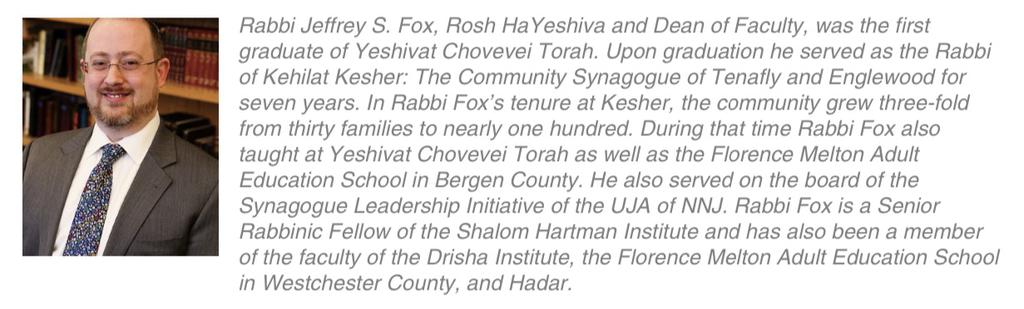
Rabbi Jeffrey Fox
Rosh Yeshiva
What was so special about the miracle during time of Mordechai and Esther that drove the rabbis to create a new holiday? After all, there are other miracles recorded in the Tanach that also seem worthy of establishing a commemoration. Reb Levi Yitzchak of Berditchev (1740 - 1810) asked this question in his first essay on Purim (קדושת לוי, קדושות לפורים, קדושה ראשונה).
In order to understand the unique status of Purim he reminds us of a central Talmudic passage:
״וַיִּתְיַצְּבוּ בְּתַחְתִּית הָהָר״, אָמַר רַב אַבְדִּימִי בַּר חָמָא בַּר חַסָּא: מְלַמֵּד שֶׁכָּפָה הַקָּדוֹשׁ בָּרוּךְ הוּא עֲלֵיהֶם אֶת הָהָר כְּגִיגִית, וְאָמַר לָהֶם: אִם אַתֶּם מְקַבְּלִים הַתּוֹרָה מוּטָב, וְאִם לָאו — שָׁם תְּהֵא קְבוּרַתְכֶם. אָמַר רַב אַחָא בַּר יַעֲקֹב: מִכָּאן מוֹדָעָא רַבָּה לְאוֹרָיְיתָא. אָמַר רָבָא: אַף עַל פִּי כֵן הֲדוּר קַבְּלוּהָ בִּימֵי אֲחַשְׁוֵרוֹשׁ, דִּכְתִיב: ״קִיְּמוּ וְקִבְּלוּ הַיְּהוּדִים״ — קִיְּימוּ מַה שֶּׁקִּיבְּלוּ כְּבָר.
And they camped underneath the mountain (Exodus 19) Rav Avdimi bar Chama bar Chasa said, “This teaches that the Holy Blessed One hung the mountain over them like a barrel and said to them, ‘If you accept the Torah – Good! If not – there will be your burial place.’” Rav Acha bar Yaakov said, “This is a great challenge [to the authority] of the Torah.” Rava said, “Even so, they re-received her (Torah) in the time of Achashverosh. As it is written The Jews fulfilled and accepted (Esther 9). They fulfilled [of their own free will] that which they had already received [against their will].
The Rabbis here are picking up on the psychological reality of the Jewish People immediately following the Exodus. They had just witnessed super-natural miracles including: the ten plagues, the splitting of the sea and the destruction of Egypt, could they possibly have said, “no thank you,” to God at Sinai? After all, they were at this point entirely dependent on divine protection for food and water in the wilderness. In a certain very real sense the experience of the revelation of the Torah of Sinai was one of duress (מודעא).
In fact, in a world in which there are divine miracles changing the natural order, there really is no free will around the questions of obedience to God. How could any human being possibly deny their own experience of hashem and reject the Torah? In a deep sense, as long as God’s voice - either through super-natural miracles, or the existence of prophecy - pervades human reality, we do not have a true choice regarding divine obedience.
Only once we reach a point in human history where commanding voice of Sinai is experienced internally can we have a true acceptance of the Torah of our own free will. At what stage in Jewish History was a true free-will acceptance of the Torah first possible? Only once hashem was no longer publicly perceived to be in full view of humanity. What makes Purim and Megilat Esther unique, is that God’s name is absent from the book. This famous problem led to a debate amongst the Rabbis regarding whether or not Esther was written with divine inspiration (see Bavli, Megila 7a).
However, for the Kedushat Levi, it is the apparent silence of HaShem that amplifies the miracle of Purim to warrant the establishment of a new Holiday. He wrote:
כיון שהנס היה בטבעים אשר בה מלכותו מכוסה, לכן הוא נס גדול. כי דרך משל הוא, למלך אשר בא ברוב חייליו ומנצח את המלחמה, אין כל כך פלא כמו שהמלך בא לפעמים ביער יחידי בלא כלי מלחמתו וחיילותיו אינם עמו והוא מנצח בגבורתו לבדו... כן הדבד הזה כשהקב”ה משנה הטבעים ונראה מלכותו אשר הוא עושה משמי שמים וכל צבאם אינו כל כך פלא, כי מי שבראם יכול לשנותם. אבל אם עושה נסים בטבעים, ומלכותו בהסתר, ואף על פי כן עושה פלאים, כמו בימי מרדכי ואסתר, הוא פלא גדול. ולכן גדלה הנס כל כך בעיני ישראל עד שקבלו את התורה
Since the miracle was within the boundaries of nature, in which the Kingdom of God is covered, therefore it was a great miracle. Here is an analogy: A king who is with his vast armies, is victorious in battle. This is not as wondrous as when the king sometimes goes out alone in the forest without his articles of war, and his soldiers are not with him, and he is victorious based on his great strength alone…
So too this matter. When the Holy Blessed One changes nature and shows God’s kingship it is not such a wonder – for the one who created [nature] can change nature. But if God does miracles within the rules of nature, and the divine Kingship is hidden, and God none the less does wonders, like in the days of Mordechas and Ester – that is a great wonder. Therefore the miracle was so great in the eye of Israel that they received the Torah...
In a certain way, we are living in a world in which it is always Purim. Especially in a post-Enlightenment, post-Darwinian time at which one need not posit the existence of God to make sense of the universe, we are constantly making a choice to be part of the world of the Torah. Today God is “alone in the forest without articles of war.” It our job to find the forest to encounter the divine.
One place that I personally find God is in the learning and teaching of Halakha. To be able to see God’s hand gently guiding the poskim of every generation is truly inspiring. May this Purim remind of what it means to seek God in times when God is silent.