Rosh HaShanah 2013/5774
Rosh Hashana
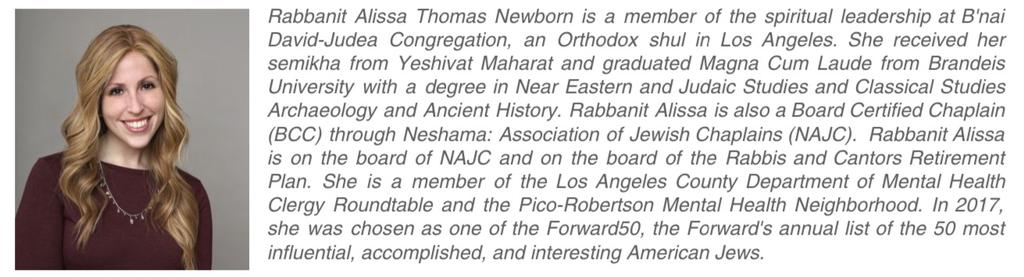
Rabbanit Alissa Thomas Newborn
Class of 2016
The month of Elul is traditionally a time of spiritual reflection and closeness to God, our Creator. It is also paradoxically a time of distance, when we face our own limitations and feel the vulnerability of our flawed selves.
How can we simultaneously feel so close and so far away from our Source? How are we supposed to bridge the gap?
This secret marks the intensity of Elul: We cannot draw close to God without feeling the pangs of our own distances, our own insecurities, egos, and doubts. “Teshuvah Gemurah”, a complete and enduring return to God requires a raw awareness of both our potential to grow and our fears of failure. The risk reveals the reward.
The name of the month, 'Elul', traditionally comes from the first letter of each word in the verse from Shir HaShirim, Song of Songs, 'Ani LeDodi VeDodi Li', 'I am to my beloved and my beloved is to me'. The name in and of itself references love, the deep love ben adam lechavero, between a man and his friend, and “ben adam leMakom”, between a man and God.
Love, whether romantic, parental, platonic, or spiritual, requires vulnerability. Love necessitates an investment that transcends greed and selfishness and instead emulates a holy generosity. When we offer our vulnerable, giving beings during Elul, we begin to take our leap toward closeness to God.
We are said to be standing “achor el achor”, back to back, at the beginning of Elul. But once we open our hearts we are able to stand “panim el panim”, face to face.
Right now, we have been given a window of opportunity to be vulnerable, to ask for forgiveness, to forgive others, and to work on our own limitations in order to truly love and be loved. Through revealing our raw, exposed, and even pained hearts to God, we are able to draw close and receive the embrace of Divine love, mercy, and compassion.
May we know the comfort of being seen, standing “panim el panim”, face to face with each other and God. May we have compassion and patience with ourselves as we know our own laws and strive to do teshuvah, to return and to repair. And may we love with our entire selves, with our strengths and weaknesses, with our longings and fears, with our prayers and pains.
“Karov Hashem Lechol Korav”, for God is close to all who cry out to Him.