Sukkot 2013/5774
Sukkot
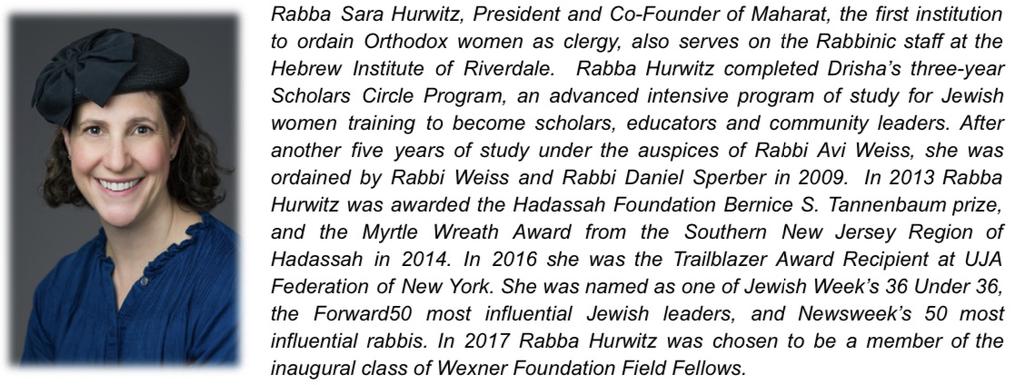
Rabba Sara Hurwitz
President and Co-Founder
We are a nation obsessed with security:
When we buy a computer, the first thing we do is put a password on it. Then we download spyware, to protect the computer. Then we put a password on our spyware. Which still doesn’t help! Last year, I still managed to contract a cyber bug, wiping my computer׳s memory twice in one year!
Remember how simple traveling within the US used to be? Passengers were just required to show ID. Relatives who weren’t flying could walk their loved ones up to the gate! Then airlines started randomly checking bags. Then they introduced metal detectors. Now you can’t get onto a plane until you have removed your shoes, belt, jewelry, and walk through a full body scanner!
When I lived in South Africa, we were never allowed to sleep in our sukkot, despite the fact that the weather was mild. It was too dangerous. We lived barricaded behind electric fences, with barbed wire, and a guard posted on every street. With good reason. My home was broken into twice. My grandmother was locked in a closet by intruders who stole every item in their home, and my cousins were held at gunpoint in their own home.
We live in a world that is not secure.
We live in a world where guns are accessible. Where people can walk into schools and shoot children. Where an ex soldier can walk onto a navy base, and murder innocent people.
And so, our protective instincts kick in, and we put up more walls, more fences, and more guards. How else can we feel secure in a world full of uncertainty?
Perhaps then, our sukkot are meant to emulate our sense of insecurity and uncertainty of life.
The very nature of a sukkah, after all, is decidedly temporary and uncertain. It has a roof that is open to the elements; walls that can be blown down at any moment. We are meant to experience the harshness that is inevitable in our world. The sukkah’s very existence conveys insecurity.
I would like to argue today, however, that the complete opposite is true. A sukkah is not a symbol of insecurity, but rather a symbol of helping us seek security within the fragility of our lives.
In Vayikra (23:43) we are commanded to dwell in booths for seven days:
“So that your generations will know that I caused you the children of Israel to dwell in booths when I took them from the land of Egypt.”
But why would God want us to build and live in sukkot after the turmoil and hardship of Mitzrayim? What comfort does a sukkah hold for those who have suffered?
We can begin to answer this question by looking at the other two other times that sukkot are mentioned in the Torah-- not only with regard to the festival, but in two other contexts. Once as the place where our patriarch Jacob stayed upon his return after his reunion with his brother Eisav, and once as the first station that the Israelites camped after the Exodus from Egypt.
The Mekhilta de Rabbi Ishmael (Tractate De-Pis’ha 14 Lauterbach ed., vol. 1, p. 108) connects these three very different uses of the word sukkot. And if you look closely, each mention of the sukkah, comes after a trying and difficult time for the Jewish people.
The very first place that the Jews escape to, upon leaving Egypt is to a place called Succoth. Immediately after the death of the first born, the Torah explains that Bnei Yisrael “journeyed from Ramses to Succoth” וַיִּסְעוּ בְנֵי־יִשְׂרָאֵל מֵרַעְמְסֵס סֻכֹּתָה. (Shemot 12:37)
It is in the city of Succoth where Bnei Yisrael baked dough for matzah for the journey ahead. Succoth, then is, a place of refuge; a protective space. The Jews marched from the hardship of Mitzrayim to the sheltering city of Succoth.
And in Bereishit (33:17), the Torah tells us that Yaakov built a sukkah, immediately following the harrowing encounter with his brother. Yaakov hears that his brother is approaching, and he prepares for the worst, for war, tragedy and bloodshed. The Torah conveys within the drama of the reunion, a sense of uncertainty, even when they parted as friends. The Haamek Davar notes the coolness between them:
(טז) וַיָּ֩שׇׁב֩ בַּיּ֨וֹם הַה֥וּא עֵשָׂ֛ו לְדַרְכּ֖וֹ שֵׂעִֽירָה׃ (יז) וְיַעֲקֹב֙ נָסַ֣ע סֻכֹּ֔תָה
So Eisav started back that day towards seir. But Jacob journeyed to Succoth.
-- they did not embrace and kiss, when they parted ways, and thus, Yaakov is left feeling tentative about his future. And in his uncertainty, he goes to Succoth. And what does he do there:
וַיִּ֥בֶן ל֖וֹ בָּ֑יִת וּלְמִקְנֵ֙הוּ֙ עָשָׂ֣ה סֻכֹּ֔ת עַל־כֵּ֛ן קָרָ֥א שֵׁם־הַמָּק֖וֹם סֻכּֽוֹת׃ {ס}
he built himself a house, and for his livestock he made sukkot, and therefore called the name of the place Succoth.
How does Yaakov respond to uncertainty? He builds a sukkah. And in the very next pasuk, Yaakov arrives in the city of shchem—shalem. Intact.
וַיָּבֹא יַעֲקֹב שָׁלֵם עִיר שְׁכֶם
He emerged from his sukkah with a sense of peace and serenity.
A Sukkah, then, is a symbol of God’s protection. It is the anneni hakavod, the clouds of glory that surrounded Bnei Yisrael in the desert, bathing them with the protective presence of the Divine. (Sukkah 11b)
It is the “sukkat shlomecha” the shelter of God’s peace that we recall in the haskevenu prayer that we recite during maariv. The shelter that protects us from plague, famine, and woe. דֶבֶר וְחֶרֶב וְרָעָב וְיָגוֹן.
This brings us back to our central question: why would God want us to build and live in sukkoth after turmoil, hardship and uncertainty?
Because the Sukkah is a symbol of finding security within insecurity; protecting ourselves from the unknown by reminding ourselves to keep building. To keep living.
The Maharal (Netzach Yisrael, Chapter 35) living in the 15th century describes the fragility of the sukkah in this counter-intuitive way. Every time we say brikat hamazon, we pray: “May the All-Merciful One establish for us the fallen sukka of David (sukkat David ha-nofalet).”
Why should we be blessed with a fallen sukkah, and not the strength of a bayit or home? The Maharal explains that if a sukkah falls, it can easily be put up again; but when a house falls, its bricks crumble. A house’s fall is complete and final, and putting it back up is impossible. When it is later rebuilt it becomes a totally new house. A sukkah, however, is always ready to be put back up, retaining its original kedusha, its original essence, and it is easy to do so. It is resilient.
A sukkah exemplifies the human spirit to pick ourselves up and re-build. We know that tragedy is inevitable. We know that we will fall. That people will fall. Yet, we retreat into our sukkot where we seek out God’s protection. And remind ourselves of our intrinsic ability to re-build.
This is how I am able to watch the news. To see so much hardship. To listen to tragic stories of loss. Of people struggling. Of people losing their homes due to flooding, fires, and earthquakes.
We build sukkot as a response to uncertainty. We recognize the fragility of life. And we respond by building a structure that, though we know it can fall, we know that we can put it back together again.
It is the shelter of the sukkah that we invoke in Psalm 27, recited during this period:
(ד) אַחַ֤ת ׀ שָׁאַ֣לְתִּי מֵֽאֵת־יקוק אוֹתָ֢הּ אֲבַ֫קֵּ֥שׁ שִׁבְתִּ֣י בְּבֵית־יקוק כׇּל־יְמֵ֣י חַיַּ֑י לַחֲז֥וֹת בְּנֹעַם־יקוק וּלְבַקֵּ֥ר בְּהֵֽיכָלֽוֹ׃ (ה) כִּ֤י יִצְפְּנֵ֨נִי ׀ בְּסֻכֹּה֮ בְּי֢וֹם רָ֫עָ֥ה
“One thing have I asked of the LORD, that will I seek after: that I may dwell in the house of the LORD all the days of my life, to behold the graciousness of the LORD, and to visit early in God’s Temple. For God hides me in God’s sukkah in the day of evil;”
That is power of sukkoth- the human ability to seek security within insecurity.