


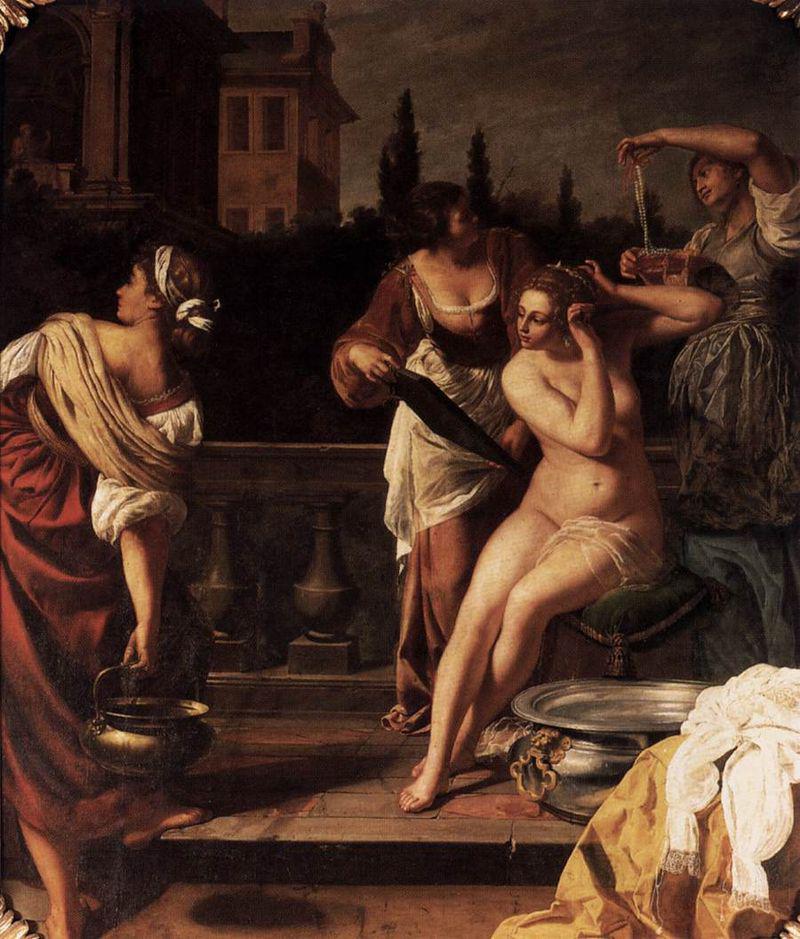
That David played, and it pleased the Lord
But you don't really care for music, do ya?
It goes like this, the fourth, the fifth
The minor fall, the major lift
The baffled king composing "Hallelujah"
Your faith was strong but you needed proof
You saw her bathing on the roof
Her beauty in the moonlight overthrew ya
She tied you to a kitchen chair
She broke your throne, and she cut your hair
And from your lips she drew the Hallelujah
- What does David do when he learns Batsheva is pregnant? Why?
- What does this story tell us about Uriah's character? What does it tell us about David's character?
- Why was God displeased with David?
- If you were David, what would you have done?
- Make a list of Batsheva's actions in this story.
Batsheva, Uriah's Wife
(א) וַיְהִי֩ לִתְשׁוּבַ֨ת הַשָּׁנָ֜ה לְעֵ֣ת ׀ צֵ֣את הַמְּלָאכִ֗ים וַיִּשְׁלַ֣ח דָּוִ֡ד אֶת־יוֹאָב֩ וְאֶת־עֲבָדָ֨יו עִמּ֜וֹ וְאֶת־כׇּל־יִשְׂרָאֵ֗ל וַיַּשְׁחִ֙תוּ֙ אֶת־בְּנֵ֣י עַמּ֔וֹן וַיָּצֻ֖רוּ עַל־רַבָּ֑ה וְדָוִ֖ד יוֹשֵׁ֥ב בִּירוּשָׁלָֽ͏ִם׃ {ס}(ב) וַיְהִ֣י ׀ לְעֵ֣ת הָעֶ֗רֶב וַיָּ֨קׇם דָּוִ֜ד מֵעַ֤ל מִשְׁכָּבוֹ֙ וַיִּתְהַלֵּךְ֙ עַל־גַּ֣ג בֵּית־הַמֶּ֔לֶךְ וַיַּ֥רְא אִשָּׁ֛ה רֹחֶ֖צֶת מֵעַ֣ל הַגָּ֑ג וְהָ֣אִשָּׁ֔ה טוֹבַ֥ת מַרְאֶ֖ה מְאֹֽד׃(ג) וַיִּשְׁלַ֣ח דָּוִ֔ד וַיִּדְרֹ֖שׁ לָאִשָּׁ֑ה וַיֹּ֗אמֶר הֲלוֹא־זֹאת֙ בַּת־שֶׁ֣בַע בַּת־אֱלִיעָ֔ם אֵ֖שֶׁת אוּרִיָּ֥ה הַֽחִתִּֽי׃(ד) וַיִּשְׁלַח֩ דָּוִ֨ד מַלְאָכִ֜ים וַיִּקָּחֶ֗הָ וַתָּב֤וֹא אֵלָיו֙ וַיִּשְׁכַּ֣ב עִמָּ֔הּ וְהִ֥יא מִתְקַדֶּ֖שֶׁת מִטֻּמְאָתָ֑הּ וַתָּ֖שׇׁב אֶל־בֵּיתָֽהּ׃(ה) וַתַּ֖הַר הָאִשָּׁ֑ה וַתִּשְׁלַח֙ וַתַּגֵּ֣ד לְדָוִ֔ד וַתֹּ֖אמֶר הָרָ֥ה אָנֹֽכִי׃(ו) וַיִּשְׁלַ֤ח דָּוִד֙ אֶל־יוֹאָ֔ב שְׁלַ֣ח אֵלַ֔י אֶת־אוּרִיָּ֖ה הַחִתִּ֑י וַיִּשְׁלַ֥ח יוֹאָ֛ב אֶת־אוּרִיָּ֖ה אֶל־דָּוִֽד׃(ז) וַיָּבֹ֥א אוּרִיָּ֖ה אֵלָ֑יו וַיִּשְׁאַ֣ל דָּוִ֗ד לִשְׁל֤וֹם יוֹאָב֙ וְלִשְׁל֣וֹם הָעָ֔ם וְלִשְׁל֖וֹם הַמִּלְחָמָֽה׃(ח) וַיֹּ֤אמֶר דָּוִד֙ לְא֣וּרִיָּ֔ה רֵ֥ד לְבֵיתְךָ֖ וּרְחַ֣ץ רַגְלֶ֑יךָ וַיֵּצֵ֤א אֽוּרִיָּה֙ מִבֵּ֣ית הַמֶּ֔לֶךְ וַתֵּצֵ֥א אַחֲרָ֖יו מַשְׂאַ֥ת הַמֶּֽלֶךְ׃(ט) וַיִּשְׁכַּ֣ב אוּרִיָּ֗ה פֶּ֚תַח בֵּ֣ית הַמֶּ֔לֶךְ אֵ֖ת כׇּל־עַבְדֵ֣י אֲדֹנָ֑יו וְלֹ֥א יָרַ֖ד אֶל־בֵּיתֽוֹ׃(י) וַיַּגִּ֤דוּ לְדָוִד֙ לֵאמֹ֔ר לֹא־יָרַ֥ד אוּרִיָּ֖ה אֶל־בֵּית֑וֹ וַיֹּ֨אמֶר דָּוִ֜ד אֶל־אוּרִיָּ֗ה הֲל֤וֹא מִדֶּ֙רֶךְ֙ אַתָּ֣ה בָ֔א מַדּ֖וּעַ לֹא־יָרַ֥דְתָּ אֶל־בֵּיתֶֽךָ׃(יא) וַיֹּ֨אמֶר אוּרִיָּ֜ה אֶל־דָּוִ֗ד הָ֠אָר֠וֹן וְיִשְׂרָאֵ֨ל וִיהוּדָ֜ה יֹשְׁבִ֣ים בַּסֻּכּ֗וֹת וַאדֹנִ֨י יוֹאָ֜ב וְעַבְדֵ֤י אֲדֹנִי֙ עַל־פְּנֵ֤י הַשָּׂדֶה֙ חֹנִ֔ים וַאֲנִ֞י אָב֧וֹא אֶל־בֵּיתִ֛י לֶאֱכֹ֥ל וְלִשְׁתּ֖וֹת וְלִשְׁכַּ֣ב עִם־אִשְׁתִּ֑י חַיֶּ֙ךָ֙ וְחֵ֣י נַפְשֶׁ֔ךָ אִֽם־אֶעֱשֶׂ֖ה אֶת־הַדָּבָ֥ר הַזֶּֽה׃
(1) At the turn of the year, the season when kings go out [to battle], David sent Joab with his officers and all Israel with him, and they devastated Ammon and besieged Rabbah; David remained in Jerusalem.(2) Late one afternoon, David rose from his couch and strolled on the roof of the royal palace; and from the roof he saw a woman bathing. The woman was very beautiful,(3) and the king sent someone to make inquiries about the woman. He reported, “She is Bathsheba daughter of Eliam [and] wife of Uriah the Hittite.”(4) David sent messengers to fetch her; she came to him and he lay with her—she had just purified herself after her period—and she went back home.(5) The woman conceived, and she sent word to David, “I am pregnant.”(6)
Thereupon David sent a message to Joab, “Send Uriah the Hittite to me”; and Joab sent Uriah to David.(7) When Uriah came to him, David asked him how Joab and the troops were faring and how the war was going.(8) Then David said to Uriah, “Go down to your house and bathe your feet.” When Uriah left the royal palace, a present from the king followed him.(9) But Uriah slept at the entrance of the royal palace, along with the other officers of his lord, and did not go down to his house.(10) When David was told that Uriah had not gone down to his house, he said to Uriah, “You just came from a journey; why didn’t you go down to your house?”(11) Uriah answered David, “The Ark and Israel and Judah are located at Succoth, and my master Joab and Your Majesty’s men are camped in the open; how can I go home and eat and drink and sleep with my wife? As you live, by your very life,-a I will not do this!”
(יד) וַיְהִ֣י בַבֹּ֔קֶר וַיִּכְתֹּ֥ב דָּוִ֛ד סֵ֖פֶר אֶל־יוֹאָ֑ב וַיִּשְׁלַ֖ח בְּיַ֥ד אוּרִיָּֽה׃(טו) וַיִּכְתֹּ֥ב בַּסֵּ֖פֶר לֵאמֹ֑ר הָב֣וּ אֶת־אוּרִיָּ֗ה אֶל־מוּל֙ פְּנֵ֤י הַמִּלְחָמָה֙ הַחֲזָקָ֔ה וְשַׁבְתֶּ֥ם מֵאַחֲרָ֖יו וְנִכָּ֥ה וָמֵֽת׃ {ס}(טז) וַיְהִ֕י בִּשְׁמ֥וֹר יוֹאָ֖ב אֶל־הָעִ֑יר וַיִּתֵּן֙ אֶת־א֣וּרִיָּ֔ה אֶל־הַמָּקוֹם֙ אֲשֶׁ֣ר יָדַ֔ע כִּ֥י אַנְשֵׁי־חַ֖יִל שָֽׁם׃(יז) וַיֵּ֨צְא֜וּ אַנְשֵׁ֤י הָעִיר֙ וַיִּלָּֽחֲמ֣וּ אֶת־יוֹאָ֔ב וַיִּפֹּ֥ל מִן־הָעָ֖ם מֵעַבְדֵ֣י דָוִ֑ד וַיָּ֕מׇת גַּ֖ם אוּרִיָּ֥ה הַחִתִּֽי׃(יח) וַיִּשְׁלַ֖ח יוֹאָ֑ב וַיַּגֵּ֣ד לְדָוִ֔ד אֶת־כׇּל־דִּבְרֵ֖י הַמִּלְחָמָֽה׃
(14) In the morning, David wrote a letter to Joab, which he sent with Uriah.(15) He wrote in the letter as follows: “Place Uriah in the front line where the fighting is fiercest; then fall back so that he may be killed.”(16) So when Joab was besieging the city, he stationed Uriah at the point where he knew that there were able warriors.(17) The men of the city sallied out and attacked Joab, and some of David’s officers among the troops fell; Uriah the Hittite was among those who died.(18) Joab sent a full report of the battle to David.
(כו) וַתִּשְׁמַע֙ אֵ֣שֶׁת אוּרִיָּ֔ה כִּי־מֵ֖ת אוּרִיָּ֣ה אִישָׁ֑הּ וַתִּסְפֹּ֖ד עַל־בַּעְלָֽהּ׃(כז) וַיַּעֲבֹ֣ר הָאֵ֗בֶל וַיִּשְׁלַ֨ח דָּוִ֜ד וַיַּאַסְפָ֤הּ אֶל־בֵּיתוֹ֙ וַתְּהִי־ל֣וֹ לְאִשָּׁ֔ה וַתֵּ֥לֶד ל֖וֹ בֵּ֑ן וַיֵּ֧רַע הַדָּבָ֛ר אֲשֶׁר־עָשָׂ֥ה דָוִ֖ד בְּעֵינֵ֥י יהוה׃ {פ}
(26) When Uriah’s wife heard that her husband Uriah was dead, she lamented over her husband.(27) After the period of mourning was over, David sent and had her brought into his palace; she became his wife and she bore him a son. But God was displeased with what David had done.
What do you think Rosenblatt is saying about Batsheva's character; how does she make this assertion that Batsheva is "forceful and defiant"? Do you agree with this interpretation of Batsheva's letter to David?
Batsheva the Queen
(כד) וַיְנַחֵ֣ם דָּוִ֗ד אֵ֚ת בַּת־שֶׁ֣בַע אִשְׁתּ֔וֹ וַיָּבֹ֥א אֵלֶ֖יהָ וַיִּשְׁכַּ֣ב עִמָּ֑הּ וַתֵּ֣לֶד בֵּ֗ן (ויקרא)[וַתִּקְרָ֤א] אֶת־שְׁמוֹ֙ שְׁלֹמֹ֔ה וַיהוה אֲהֵבֽוֹ׃
(24) David consoled his wife Bathsheba; he went to her and lay with her. She bore a son and she named him Solomon. The LORD favored him.
(יא) וַיֹּ֣אמֶר נָתָ֗ן אֶל־בַּת־שֶׁ֤בַע אֵם־שְׁלֹמֹה֙ לֵאמֹ֔ר הֲל֣וֹא שָׁמַ֔עַתְּ כִּ֥י מָלַ֖ךְ אֲדֹנִיָּ֣הוּ בֶן־חַגִּ֑ית וַאֲדֹנֵ֥ינוּ דָוִ֖ד לֹ֥א יָדָֽע׃(יב) וְעַתָּ֕ה לְכִ֛י אִיעָצֵ֥ךְ נָ֖א עֵצָ֑ה וּמַלְּטִי֙ אֶת־נַפְשֵׁ֔ךְ וְאֶת־נֶ֥פֶשׁ בְּנֵ֖ךְ שְׁלֹמֹֽה׃(יג) לְכִ֞י וּבֹ֣אִי ׀ אֶל־הַמֶּ֣לֶךְ דָּוִ֗ד וְאָמַ֤רְתְּ אֵלָיו֙ הֲלֹֽא־אַתָּ֞ה אֲדֹנִ֣י הַמֶּ֗לֶךְ נִשְׁבַּ֤עְתָּ לַאֲמָֽתְךָ֙ לֵאמֹ֔ר כִּֽי־שְׁלֹמֹ֤ה בְנֵךְ֙ יִמְלֹ֣ךְ אַחֲרַ֔י וְה֖וּא יֵשֵׁ֣ב עַל־כִּסְאִ֑י וּמַדּ֖וּעַ מָלַ֥ךְ אֲדֹנִיָּֽהוּ׃(יד) הִנֵּ֗ה עוֹדָ֛ךְ מְדַבֶּ֥רֶת שָׁ֖ם עִם־הַמֶּ֑לֶךְ וַֽאֲנִי֙ אָב֣וֹא אַחֲרַ֔יִךְ וּמִלֵּאתִ֖י אֶת־דְּבָרָֽיִךְ׃(טו) וַתָּבֹ֨א בַת־שֶׁ֤בַע אֶל־הַמֶּ֙לֶךְ֙ הַחַ֔דְרָה וְהַמֶּ֖לֶךְ זָקֵ֣ן מְאֹ֑ד וַאֲבִישַׁג֙ הַשּׁ֣וּנַמִּ֔ית מְשָׁרַ֖ת אֶת־הַמֶּֽלֶךְ׃(טז) וַתִּקֹּ֣ד בַּת־שֶׁ֔בַע וַתִּשְׁתַּ֖חוּ לַמֶּ֑לֶךְ וַיֹּ֥אמֶר הַמֶּ֖לֶךְ מַה־לָּֽךְ׃(יז) וַתֹּ֣אמֶר ל֗וֹ אֲדֹנִי֙ אַתָּ֨ה נִשְׁבַּ֜עְתָּ בַּיהוה אֱלֹהֶ֙יךָ֙ לַאֲמָתֶ֔ךָ כִּֽי־שְׁלֹמֹ֥ה בְנֵ֖ךְ יִמְלֹ֣ךְ אַחֲרָ֑י וְה֖וּא יֵשֵׁ֥ב עַל־כִּסְאִֽי׃(יח) וְעַתָּ֕ה הִנֵּ֥ה אֲדֹנִיָּ֖ה מָלָ֑ךְ וְעַתָּ֛ה אֲדֹנִ֥י הַמֶּ֖לֶךְ לֹ֥א יָדָֽעְתָּ׃
(11) Then Nathan said to Bathsheba, Solomon’s mother, “You must have heard that Adonijah son of Haggith has assumed the kingship without the knowledge of our lord David.(12) Now take my advice, so that you may save your life and the life of your son Solomon.(13) Go immediately to King David and say to him, ‘Did not you, O lord king, swear to your maidservant: “Your son Solomon shall succeed me as king, and he shall sit upon my throne”? Then why has Adonijah become king?’(14) While you are still there talking with the king, I will come in after you and confirm your words.”(15) So Bathsheba went to the king in his chamber.—The king was very old, and Abishag the Shunammite was waiting on the king.—(16) Bathsheba bowed low in homage to the king; and the king asked, “What troubles you?”(17) She answered him, “My lord, you yourself swore to your maidservant by the LORD your God: ‘Your son Solomon shall succeed me as king, and he shall sit upon my throne.’(18) Yet now Adonijah has become king, and you, my lord the king, know nothing about it.
(כח) וַיַּ֨עַן הַמֶּ֤לֶךְ דָּוִד֙ וַיֹּ֔אמֶר קִרְאוּ־לִ֖י לְבַת־שָׁ֑בַע וַתָּבֹא֙ לִפְנֵ֣י הַמֶּ֔לֶךְ וַֽתַּעֲמֹ֖ד לִפְנֵ֥י הַמֶּֽלֶךְ׃(כט) וַיִּשָּׁבַ֥ע הַמֶּ֖לֶךְ וַיֹּאמַ֑ר חַי־יהוה אֲשֶׁר־פָּדָ֥ה אֶת־נַפְשִׁ֖י מִכׇּל־צָרָֽה׃(ל) כִּ֡י כַּאֲשֶׁר֩ נִשְׁבַּ֨עְתִּי לָ֜ךְ בַּיהוה אֱלֹהֵ֤י יִשְׂרָאֵל֙ לֵאמֹ֔ר כִּֽי־שְׁלֹמֹ֤ה בְנֵךְ֙ יִמְלֹ֣ךְ אַחֲרַ֔י וְה֛וּא יֵשֵׁ֥ב עַל־כִּסְאִ֖י תַּחְתָּ֑י כִּ֛י כֵּ֥ן אֶעֱשֶׂ֖ה הַיּ֥וֹם הַזֶּֽה׃(לא) וַתִּקֹּ֨ד בַּת־שֶׁ֤בַע אַפַּ֙יִם֙ אֶ֔רֶץ וַתִּשְׁתַּ֖חוּ לַמֶּ֑לֶךְ וַתֹּ֕אמֶר יְחִ֗י אֲדֹנִ֛י הַמֶּ֥לֶךְ דָּוִ֖ד לְעֹלָֽם׃ {פ}
(28) King David’s response was: “Summon Bathsheba!” She entered the king’s presence and stood before the king.(29) And the king took an oath, saying, “As the LORD lives, who has rescued me from every trouble:(30) The oath I swore to you by the LORD, the God of Israel, that your son Solomon should succeed me as king and that he should sit upon my throne in my stead, I will fulfill this very day!”(31) Bathsheba bowed low in homage to the king with her face to the ground, and she said, “May my lord King David live forever!”
Batsheva the Queen Mother
(יט) וַתָּבֹ֤א בַת־שֶׁ֙בַע֙ אֶל־הַמֶּ֣לֶךְ שְׁלֹמֹ֔ה לְדַבֶּר־ל֖וֹ עַל־אֲדֹנִיָּ֑הוּ וַיָּ֩קׇם֩ הַמֶּ֨לֶךְ לִקְרָאתָ֜הּ וַיִּשְׁתַּ֣חוּ לָ֗הּ וַיֵּ֙שֶׁב֙ עַל־כִּסְא֔וֹ וַיָּ֤שֶׂם כִּסֵּא֙ לְאֵ֣ם הַמֶּ֔לֶךְ וַתֵּ֖שֶׁב לִימִינֽוֹ׃(כ) וַתֹּ֗אמֶר שְׁאֵלָ֨ה אַחַ֤ת קְטַנָּה֙ אָֽנֹכִי֙ שֹׁאֶ֣לֶת מֵֽאִתָּ֔ךְ אַל־תָּ֖שֶׁב אֶת־פָּנָ֑י וַיֹּֽאמֶר־לָ֤הּ הַמֶּ֙לֶךְ֙ שַׁאֲלִ֣י אִמִּ֔י כִּ֥י לֹא־אָשִׁ֖יב אֶת־פָּנָֽיִךְ׃
(19) So Bathsheba went to King Solomon to speak to him about Adonijah. The king rose to greet her and bowed down to her. He sat on his throne; and he had a throne placed for the queen mother, and she sat on his right.(20) She said, “I have one small request to make of you, do not refuse me.” He responded, “Ask, Mother; I shall not refuse you.”
(א) דִּ֭בְרֵי לְמוּאֵ֣ל מֶ֑לֶךְ מַ֝שָּׂ֗א אֲֽשֶׁר־יִסְּרַ֥תּוּ אִמּֽוֹ׃(ב) מַה־בְּ֭רִי וּמַֽה־בַּר־בִּטְנִ֑י וּ֝מֶ֗ה בַּר־נְדָרָֽי׃
(1) The words of Lemuel, king of Massa, with which his mother admonished him:
(2) No, my son!
No, O son of my womb!
No, O son of my vows!
- "Bathsheba the Kingmaker", Carl S. Ehrlich