


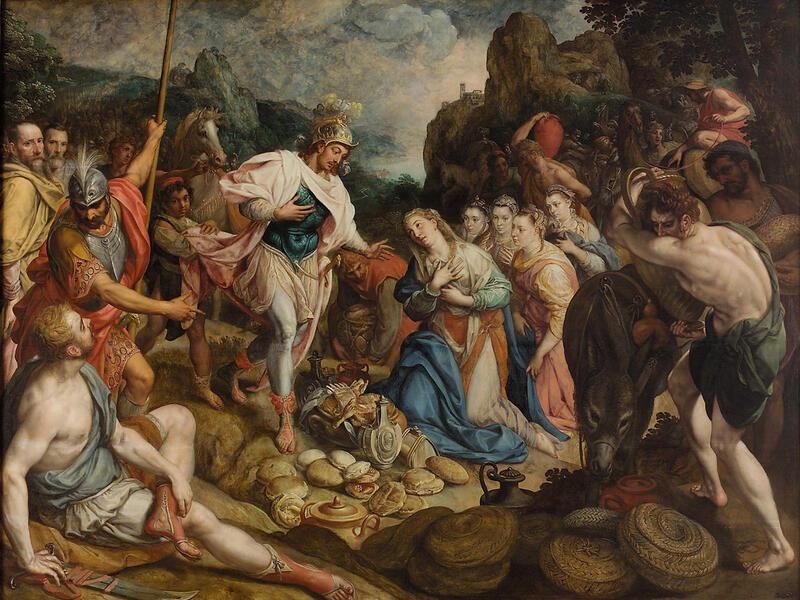
David and Abigail by Antonio Molinari
(א) וַיָּ֣מׇת שְׁמוּאֵ֔ל וַיִּקָּבְצ֤וּ כׇל־יִשְׂרָאֵל֙ וַיִּסְפְּדוּ־ל֔וֹ וַיִּקְבְּרֻ֥הוּ בְּבֵית֖וֹ בָּרָמָ֑ה וַיָּ֣קׇם דָּוִ֔ד וַיֵּ֖רֶד אֶל־מִדְבַּ֥ר פָּארָֽן׃ {פ} (ב) וְאִ֨ישׁ בְּמָע֜וֹן וּמַֽעֲשֵׂ֣הוּ בַכַּרְמֶ֗ל וְהָאִישׁ֙ גָּד֣וֹל מְאֹ֔ד וְל֛וֹ צֹ֥אן שְׁלֹשֶׁת־אֲלָפִ֖ים וְאֶ֣לֶף עִזִּ֑ים וַיְהִ֛י בִּגְזֹ֥ז אֶת־צֹאנ֖וֹ בַּכַּרְמֶֽל׃ (ג) וְשֵׁ֤ם הָאִישׁ֙ נָבָ֔ל וְשֵׁ֥ם אִשְׁתּ֖וֹ אֲבִגָ֑יִל וְהָאִשָּׁ֤ה טֽוֹבַת־שֶׂ֙כֶל֙ וִ֣יפַת תֹּ֔אַר וְהָאִ֥ישׁ קָשֶׁ֛ה וְרַ֥ע מַעֲלָלִ֖ים וְה֥וּא (כלבו) [כָֽלִבִּֽי]׃ (ד) וַיִּשְׁמַ֥ע דָּוִ֖ד בַּמִּדְבָּ֑ר כִּי־גֹזֵ֥ז נָבָ֖ל אֶת־צֹאנֽוֹ׃ (ה) וַיִּשְׁלַ֥ח דָּוִ֖ד עֲשָׂרָ֣ה נְעָרִ֑ים וַיֹּ֨אמֶר דָּוִ֜ד לַנְּעָרִ֗ים עֲל֤וּ כַרְמֶ֙לָה֙ וּבָאתֶ֣ם אֶל־נָבָ֔ל וּשְׁאֶלְתֶּם־ל֥וֹ בִשְׁמִ֖י לְשָׁלֽוֹם׃ (ו) וַאֲמַרְתֶּ֥ם כֹּ֖ה לֶחָ֑י וְאַתָּ֤ה שָׁלוֹם֙ וּבֵיתְךָ֣ שָׁל֔וֹם וְכֹ֥ל אֲשֶׁר־לְךָ֖ שָׁלֽוֹם׃ (ז) וְעַתָּ֣ה שָׁמַ֔עְתִּי כִּ֥י גֹזְזִ֖ים לָ֑ךְ עַתָּ֗ה הָרֹעִ֤ים אֲשֶׁר־לְךָ֙ הָי֣וּ עִמָּ֔נוּ לֹ֣א הֶכְלַמְנ֗וּם וְלֹֽא־נִפְקַ֤ד לָהֶם֙ מְא֔וּמָה כׇּל־יְמֵ֖י הֱיוֹתָ֥ם בַּכַּרְמֶֽל׃ (ח) שְׁאַ֨ל אֶת־נְעָרֶ֜יךָ וְיַגִּ֣ידוּ לָ֗ךְ וְיִמְצְא֨וּ הַנְּעָרִ֥ים חֵן֙ בְּעֵינֶ֔יךָ כִּֽי־עַל־י֥וֹם ט֖וֹב בָּ֑נוּ תְּנָה־נָּ֗א אֵת֩ אֲשֶׁ֨ר תִּמְצָ֤א יָֽדְךָ֙ לַעֲבָדֶ֔יךָ וּלְבִנְךָ֖ לְדָוִֽד׃ (ט) וַיָּבֹ֙אוּ֙ נַעֲרֵ֣י דָוִ֔ד וַיְדַבְּר֧וּ אֶל־נָבָ֛ל כְּכׇל־הַדְּבָרִ֥ים הָאֵ֖לֶּה בְּשֵׁ֣ם דָּוִ֑ד וַיָּנֽוּחוּ׃ (י) וַיַּ֨עַן נָבָ֜ל אֶת־עַבְדֵ֤י דָוִד֙ וַיֹּ֔אמֶר מִ֥י דָוִ֖ד וּמִ֣י בֶן־יִשָׁ֑י הַיּוֹם֙ רַבּ֣וּ עֲבָדִ֔ים הַמִּתְפָּ֣רְצִ֔ים אִ֖ישׁ מִפְּנֵ֥י אֲדֹנָֽיו׃ (יא) וְלָקַחְתִּ֤י אֶת־לַחְמִי֙ וְאֶת־מֵימַ֔י וְאֵת֙ טִבְחָתִ֔י אֲשֶׁ֥ר טָבַ֖חְתִּי לְגֹזְזָ֑י וְנָֽתַתִּי֙ לַאֲנָשִׁ֔ים אֲשֶׁר֙ לֹ֣א יָדַ֔עְתִּי אֵ֥י מִזֶּ֖ה הֵֽמָּה׃ (יב) וַיַּהַפְכ֥וּ נַעֲרֵֽי־דָוִ֖ד לְדַרְכָּ֑ם וַיָּשֻׁ֙בוּ֙ וַיָּבֹ֔אוּ וַיַּגִּ֣דוּ ל֔וֹ כְּכֹ֖ל הַדְּבָרִ֥ים הָאֵֽלֶּה׃ (יג) וַיֹּ֩אמֶר֩ דָּוִ֨ד לַאֲנָשָׁ֜יו חִגְר֣וּ ׀ אִ֣ישׁ אֶת־חַרְבּ֗וֹ וַֽיַּחְגְּרוּ֙ אִ֣ישׁ אֶת־חַרְבּ֔וֹ וַיַּחְגֹּ֥ר גַּם־דָּוִ֖ד אֶת־חַרְבּ֑וֹ וַֽיַּעֲל֣וּ ׀ אַחֲרֵ֣י דָוִ֗ד כְּאַרְבַּ֤ע מֵאוֹת֙ אִ֔ישׁ וּמָאתַ֖יִם יָשְׁב֥וּ עַל־הַכֵּלִֽים׃ (יד) וְלַאֲבִיגַ֙יִל֙ אֵ֣שֶׁת נָבָ֔ל הִגִּ֧יד נַֽעַר־אֶחָ֛ד מֵהַנְּעָרִ֖ים לֵאמֹ֑ר הִנֵּ֣ה שָׁלַח֩ דָּוִ֨ד מַלְאָכִ֧ים ׀ מֵהַמִּדְבָּ֛ר לְבָרֵ֥ךְ אֶת־אֲדֹנֵ֖ינוּ וַיָּ֥עַט בָּהֶֽם׃
(1) Samuel died, and all Israel gathered and made lament for him; and they buried him in Ramah, his home.
David went down to the wilderness of Paran. (2) There was a man in Maon whose possessions were in Carmel. The man was very wealthy; he owned three thousand sheep and a thousand goats. At the time, he was shearing his sheep in Carmel. (3) The man’s name was Nabal, and his wife’s name was Abigail. The woman was intelligent and beautiful, but the man, a Calebite, was a hard man and an evildoer. (4) David was in the wilderness when he heard that Nabal was shearing his sheep. (5) David dispatched ten young men, and David instructed the young men, “Go up to Carmel. When you come to Nabal, greet him in my name. (6) Say as follows: ‘To life!-b Greetings to you and to your household and to all that is yours! (7) I hear that you are now doing your shearing. As you know, your shepherds have been with us; we did not harm them, and nothing of theirs was missing all the time they were in Carmel. (8) Ask your young men and they will tell you. So receive these young men graciously, for we have come on a festive occasion. Please give your servants and your son David whatever you can.’”
(9) David’s young men went and delivered this message to Nabal in the name of David. When they stopped speaking, (10) Nabal answered David’s servants, “Who is David? Who is the son of Jesse? There are many slaves nowadays who run away from their masters. (11) Should I then take my bread and my water, and the meat that I slaughtered for my own shearers, and give them to men who come from I don’t know where?” (12) Thereupon David’s young men retraced their steps; and when they got back, they told him all this. (13) And David said to his men, “Gird on your swords.” Each girded on his sword; David too girded on his sword. About four hundred men went up after David, while two hundred remained with the baggage. (14) One of [Nabal’s] young men told Abigail, Nabal’s wife, that David had sent messengers from the wilderness to greet their master, and that he had spurned them.
How is Abigail is introduced--what words are used to describe her? How is her husband described? What sort of characters do we anticipate based on these descriptors?
What is David asking for?
Why did Nabal turn David and his men away?
What can we infer about Abigail that, upon hearing their master's response to David's request, the servants go straight to Abigail to tell her everything?
If you were Abigail in this situation, how might you respond? What might you do?
(23) When Abigail saw David, she quickly dismounted from the ass and threw herself face down before David, bowing to the ground. (24) Prostrate at his feet, she pleaded, “Let the blame be mine, my lord, but let your handmaid speak to you; hear your maid’s plea. (25) Please, my lord, pay no attention to that wretched fellow Nabal. For he is just what his name says: His name means ‘boor’ and he is a boor.
“Your handmaid did not see the young men whom my lord sent. (26) I swear, my lord, as Adonai lives and as you live—Adonai who has kept you from seeking redress by blood with your own hands—let your enemies and all who would harm my lord fare like Nabal! (27) Here is the present which your maidservant has brought to my lord; let it be given to the young men who are the followers of my lord. (28) Please pardon your maid’s boldness. For God will grant my lord an enduring house, because my lord is fighting God's battles, and no wrong is ever to be found in you. (29) And if anyone sets out to pursue you and seek your life, the life of my lord will be bound up in the bundle of life in God's care; but He will fling away the lives of your enemies as from the hollow of a sling. (30) And when God has accomplished for my lord all the good He has promised you, and has appointed you ruler of Israel, (31) do not let this be a cause of stumbling and of faltering courage to my lord that you have shed blood needlessly and that my lord sought redress with his own hands. And when God has made my lord prosper, remember your maid.” (32) David said to Abigail, “Praised be Adonai, the God of Israel, who sent you this day to meet me! (33) And blessed be your prudence, and blessed be you yourself for restraining me from seeking redress in blood by my own hands. (34) For as sure as Adonai, the God of Israel, lives—who has kept me from harming you—had you not come quickly to meet me, not a single male-e of Nabal’s line would have been left by daybreak.”
What actions does Abigail take?
How did Abigail approach David? What language does she use?
Why might she have chosen this tactic?
How does David respond?
How do we feel about David's willingness to slaughter Nabal on a slight? Does this align with our preconceived views of King David?
- Naomi Harris Rosenblatt, After the Apple
What rhetorical elements does Rosenblatt describes? Where can we find evidence in the text?
(38) About ten days later God struck Nabal and he died. (39) When David heard that Nabal was dead, he said, “Blessed be God who championed my cause against the insults of Nabal and held back His servant from wrongdoing; God has brought Nabal’s wrongdoing down on his own head.”
David sent messengers to propose marriage to-f Abigail, to take her as his wife. (40) When David’s servants came to Abigail at Carmel and told her that David had sent them to her to make her his wife, (41) she immediately bowed low with her face to the ground and said, “Your handmaid is ready to be your maidservant, to wash the feet of my lord’s servants.” (42) Then Abigail rose quickly and mounted an ass, and with five of her maids in attendance she followed David’s messengers; and she became his wife.
Compare this proposal of marriage to the one we looked at last week, with David and Michal. What are some similarities between the two? What are some differences?
תָּנוּ רַבָּנַן: אַרְבָּעִים וּשְׁמוֹנָה נְבִיאִים וְשֶׁבַע נְבִיאוֹת נִתְנַבְּאוּ לָהֶם לְיִשְׂרָאֵל, וְלֹא פִּחֲתוּ וְלֹא הוֹתִירוּ עַל מַה שֶּׁכָּתוּב בַּתּוֹרָה.
The Sages taught in a baraita: Forty-eight prophets and seven prophetesses prophesied on behalf of the Jewish people, and they neither subtracted from nor added onto what is written in the Torah.
שֶׁבַע נְבִיאוֹת מַאן נִינְהוּ? שָׂרָה, מִרְיָם, דְּבוֹרָה, חַנָּה, אֲבִיגַיִל, חוּלְדָּה וְאֶסְתֵּר.
§ The Gemara asks with regard to the prophetesses recorded in the baraita: Who were the seven prophetesses? The Gemara answers: Sarah, Miriam, Deborah, Hannah, Abigail, Huldah, and Esther.
Why does the Talmud claim Abigail is a prophetess?
Does this interpretation change our view of Abigail and David's marriage?
Looking at the text from I Samuel, how else might we see Abigail acting as a prophetess?
After reading through this story, was there anything David did that surprised you, or that you were not expecting?
Who has more agency in this story? Who has more of an effect on the narrative?
- Naomi Harris Rosenblatt, After the Apple
Why does Rosenblatt thinks this passage may have been written by a woman? Do you agree with her claim?
A key moment in this passage is Abigail's plea for David to remember her. What do you think Abigail wants to be remembered for?
What would you like to be remembered for?