


בָּרוּךְ אַתָּה יהוה
אֱלהֵינוּ מֶלֶך–הָעולָם
אֲשֶׁר קִדְּשָנוּ בְּמִצְותָיו
וְצִוָּנוּ לַעֲסק בְּדִבְרֵי-תורָה.
Barukh atah Adonai Eloheinu melekh ha’olam asher kid’shanu b’mitzvotav v’tzivanu la’asok b’divrei torah.
Blessed are You, Lord our God, Ruler of the Universe, who has sanctified us with commandments, and commanded us to study words of Torah.
Today we'll be using the Torah Yesharah, translated and edited by Chas. Kahane. New York, 1963. Kahane calls it an interpretative translation—think of Plaut. In his preface, he offers a long explanation of what that means and why it is critical to his task. Here are a couple of excerpts:
The Torah cannot and must never be translated literally, without following the Oral interpretation as given to Moses on Sinai. Jewish tradition therefore is opposed to translations of the Torah for the purposes of displaying to other nations that we, too, possess a literature. Likewise, a translation done because of fear, as in the case of the Ptolemy incident, results in unnecessary and erroneous renditions. Also, a translation which is done with the intent to please the Bible critics is not acceptable.
To us the Torah is not solely a book of wisdom, a work of art or a philosophical treatise. To the Jew Torah is the guide and the direction for life. Jewish generations therefore recognized and sanctified the Onkelos translation; for it was definitely based on traditional Oral Law and was done under the guidance and direction of Rabbi Eliezer and Rabbi Joshua, the exponents of the Oral Law — based on the teachings which they received from their teachers, traced back to Moses.
…
Therefore, only that person or persons who believe in these fundamental principles can be authorized to translate theTorah for those who do not understand it in the original Hebrew. Every Hebrew word is impregnated with implications, and is imbued with the connotations setting forth the traditional Oral Law, as given to Moses on Sinai by the Almighty. In short, Judaism holds a Bible translation sacred only when it is interpreted according to the spirit of the Talmud which is the Oral Law. This must be in the spirit of the devotion and holiness and recognition of the sanctity of the Divine Word.
It is in this spirit that the present translation- interpretation has been written. The translator has probed into the commentaries, ancient and medieval, as printed in the Rabbinic Bible and has culled much from them. Onkelos, Jonathan Ben Uziel, Rashi, Rashbam, Ibn Ezra, Ramban, Sforno and others speak through these pages; he consulted also the modern commentators: Dr. J. H. Hertz and Rev. Dr. A. Cohen. It is recorded that “everything which a diligent pupil may teach is derived from Sinai through Moses.” As one who has devoted his life to the study of Torah, I respectfully present this work to the Jewish public with the hope that it will serve to teach all who thirst for “the word of the Eternal” that sacred heritage which is “our life and the length of our days.”
If you're following along in some other translation, you'll undoubtedly notice some discrepancies. They are important, so please call them out when we encounter them.
Sometimes, I bring in a verse that is not in the day's parasah. Usually, this is to add context or highlight a discrepancy. I'll mark those with a tan background.
This portion is the story of Jacob's search for a wife. We'll concentrate on two specific themes:
- The use of magic
- Two grifters trying to get the better of each other
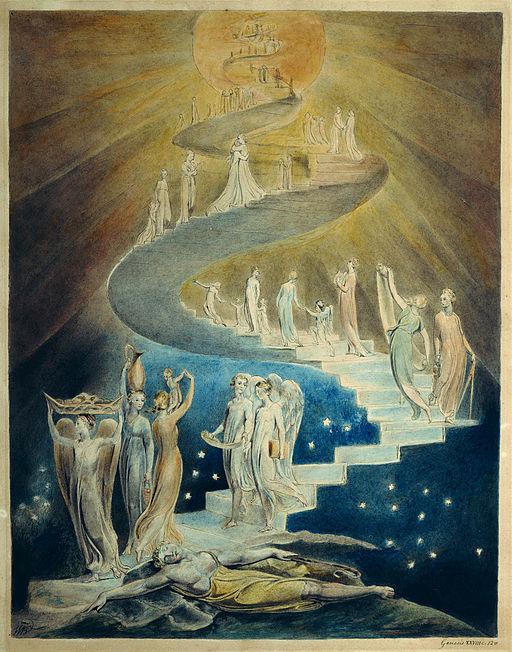
וַיֵּצֵ֥א יַעֲקֹ֖ב מִבְּאֵ֣ר שָׁ֑בַע וַיֵּ֖לֶךְ חָרָֽנָה׃ וַיִּפְגַּ֨ע בַּמָּק֜וֹם וַיָּ֤לֶן שָׁם֙ כִּי־בָ֣א הַשֶּׁ֔מֶשׁ וַיִּקַּח֙ מֵאַבְנֵ֣י הַמָּק֔וֹם וַיָּ֖שֶׂם מְרַֽאֲשֹׁתָ֑יו וַיִּשְׁכַּ֖ב בַּמָּק֥וֹם הַהֽוּא׃ וַֽיַּחֲלֹ֗ם וְהִנֵּ֤ה סֻלָּם֙ מֻצָּ֣ב אַ֔רְצָה וְרֹאשׁ֖וֹ מַגִּ֣יעַ הַשָּׁמָ֑יְמָה וְהִנֵּה֙ מַלְאֲכֵ֣י אֱלֹהִ֔ים עֹלִ֥ים וְיֹרְדִ֖ים בּֽוֹ׃
When Jacob departed from Beersheba, and went toward Haran, he reached the place where Abraham had bound his son on the altar, and he recited the evening services, and he made his lodging there, for the sun had set; and he took one of the stones of the place, put it under his head, and lay down to sleep in that holy place.
(עפ"י מדרש.) He dreamt that a ladder was set up on the ground, and its top reached to heaven; and that prayers to the Almighty were ascending, and salvation descending through it.
(א"ע.)
Those three verses are dramatically different from other, more familiar, translations. Here are a couple of other translations:
—Jewish Publication Society Inc. JPS TANAKH: The Holy Scriptures (blue): The New JPS Translation according to the Traditional Hebrew Text (p. 43). The Jewish Publication Society. Kindle Edition.
#####
28:10 And Jacob left Beersheba and set out for Haran. 11] Coming upon a [certain] place, he passed the night there, for the sun was setting; taking one of the stones of the place, he made it his headrest as he lay down in that place. 12] He dreamed, and lo—a ladder was set on the ground, with its top reaching to heaven, and lo—angels of God going up and coming down on it.
—The Torah: A Modern Commentary: Revised Edition (p. 195) [aka Plaut]. CCAR Press. Kindle Edition.
Any translations that approach literal describe angels going up and down the ladder. Kahane is drawing from the sages' work in the interpretation of dreams. Some took angels to mean angels (messengers of God); some concluded that they were the tutelary angels of various nations; and some subscribed to the idea that they were Jacob's prayers. Pick one.
How on earth (or in heaven) did Kahane get the idea that Jacob recited the evening prayers? It is certainly not in the Hebrew. Remember, he said he drew on multiple sources.
A tractate of the Talmud, it deals with the rules of prayer.
The Gemara elaborates: It was taught in a baraita in accordance with the opinion of Rabbi Yosei, son of Rabbi Ḥanina: Abraham instituted the morning prayer, as it is stated when Abraham came to look out over Sodom the day after he had prayed on its behalf: “And Abraham rose early in the morning to the place where he had stood before the Lord” (Genesis 19:27), and from the context as well as the language utilized in the verse, the verb standing means nothing other than prayer, as this language is used to describe Pinehas’ prayer after the plague, as it is stated: “And Pinehas stood up and prayed and the plague ended” (Psalms 106:30). Clearly, Abraham was accustomed to stand in prayer in the morning.
Isaac instituted the afternoon prayer, as it is stated: “And Isaac went out to converse [lasuaḥ] in the field toward evening” (Genesis 24:63), and conversation means nothing other than prayer, as it is stated: “A prayer of the afflicted when he is faint and pours out his complaint [siḥo] before the Lord” (Psalms 102:1). Obviously, Isaac was the first to pray as evening approached, at the time of the afternoon prayer.
Jacob instituted the evening prayer, as it is stated: “And he encountered [vayifga] the place and he slept there for the sun had set” (Genesis 28:11). The word encounter means nothing other than prayer, as it is stated when God spoke to Jeremiah: “And you, do not pray on behalf of this nation and do not raise on their behalf song and prayer, and do not encounter [tifga] Me for I do not hear you” (Jeremiah 7:16). Jacob prayed during the evening, after the sun had set.
Yeah, what they said.
Jacob rose in the morning, and took the stone which he had put under his head, and set it up as a pillar. Thus he marked the spot where he had slept, and poured oil upon the top of it, to distinguish it from the rest.
(א"ע.) He called the name of that place "Bethel," meaning "House of the Almighty"; but previously the name of the city had been Luz.
(מלבי"ם.) Jacob made a vow, saying: "After the Almighty will have been with me, by watching over me on this way that I go, and will have given me bread to eat and clothing to put on;
(עפ"י כל מפרשי ראשונים שהנדר לא הי' עפ"י תנאי.) And I will have come back to my father's house in peace, and the Eternal has proved, for me, an Almighty protection against my enemies;
(עפ"י כל מפרשי ראשונים שהנדר לא הי' עפ"י תנאי.) Then this stone, which I have set up as a pillar, will be the site for a house of the Almighty; and of all which You will give me, I will surely give a tenth to You, as charity."
(עפ"י כל מפרשי ראשונים שהנדר לא הי' עפ"י תנאי.)
Suitably impressed, Jacob makes an agreement with God. It's referred to as a vow, not a covenant. What makes it different from other agreements between God and man?
Encouraged by the Eternal’s promises, Jacob proceeded rapidly on his journey, and went to the land of the children of the East.
(רש"י.) As he looked, he saw a well in the field. There were three flocks of sheep lying beside it for Out of that well they watered the flocks, and a large stone was upon the opening of the well.
(רש"י.) When all the flocks used to gather there, they would roll the stone from the opening of the well, and water the sheep; then they would put the stone back in its place on the opening of the well.
(רש"י.) Jacob said to them: "Brothers, from where do you come?" And they said: "We are from Haran." He said to them: "Do you know Laban, the grandson of Nahor?"; and they said: "We know him." And he further asked: "Is he getting along well?" They said: "He is fine; and there is Rachel, his daughter, coming with the sheep." He said: "Look, it is yet the height of day, and it is not the time for the cattle to be taken in; water the sheep, and go feed them." And they said: "We cannot, until all the herdsmen have gathered together, at which time they will roll the stone off the opening of the well; then we will water the sheep." While he was still speaking to them, Rachel came with her father's sheep, for she was a shepherdess. And, when Jacob saw Rachel, the daughter of Laban, his mother’s brother, and the sheep of Laban, his mother's brother, Jacob approached and rolled the stone from the opening of the well, and watered the flocks of Laban, his mother's brother.

The commentators often ascribed superpowers to the patriarchs, in this case supernal strength.
An aggadic-midrashic work on the Torah containing exegesis and retellings of biblical stories, attributed to Rabbi Eliezer ben Hyrcanus of the first century CE.
Jacob's steps were not straitened, and his strength did not fail, and like a strong hero he rolled away the stone from the mouth of the well, and the well came up, and spread forth water outside itself, and the shepherds saw and they all wondered, for all of them were unable to roll away the stone from the mouth of the well; but Jacob alone rolled the stone from off the mouth of the well, as it is said, "And Jacob went near, and rolled the stone from the well's mouth" (Gen. 29:10).
We've met Laban (Lavan) before. If you shake hands with him, count your fingers.
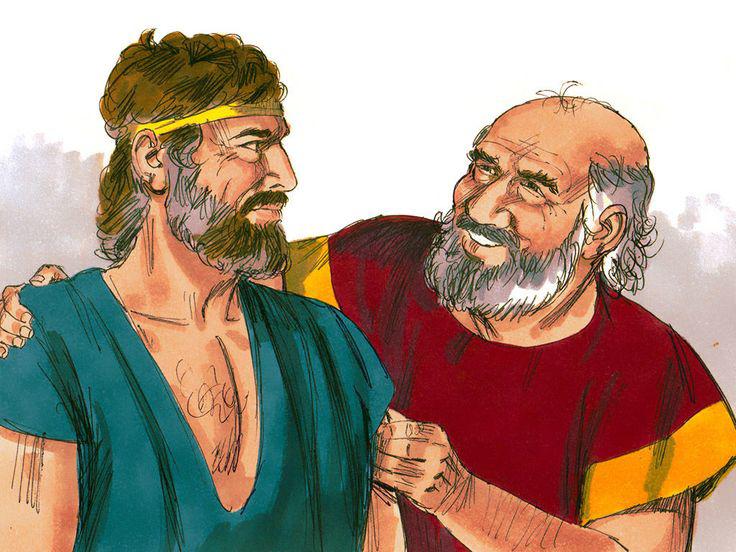
(ספורנו.) And Laban said to him: “Surely you are my bone and flesh, as a kinsman of mine"; and he stayed with him, working for a month.
(ספורנו.)
Although Laban welcomes Jacob as a cousin, Jacob winds up working for Laban for a month without any explicit wages. Is that a normal way to treat a guest?
Now, Laban had two daughters; the name of the older was Leah, and the name of the younger was Rachel. Leah's eyes were tender; and Rachel had beautiful features and a fair complexion.
(אונקלוס, רש"י.) Jacob loved Rachel; and he said explicitly: “I will serve you for seven years, in return for Rachel, your younger daughter."
(רש"י.)
The rabbis squeezed a lot of juice out of those three verses:
- Leah, being older than Rachel, should have been married off first. Jacob asked for Rachel. Why? Because he, the younger brother, should marry the younger sister.
- Leah, being the elder, was supposed to marry Esau. But his reputation was so nasty that her eyes were damaged by constant weeping, fasting, and praying over her fate.
- Leah's poor vision was therefore a mark of her righteousness. The priestly line and the Davidic line (including the Messiah) were descended from Leah, and that was her reward.
(ספורנו.) And Jacob said to Laban: “Give me the woman who has been betrothed to me as my wife, for my time of work is completed, and I will marry her." And Laban invited all the men of the place and made a feast, so as to confuse Jacob.
(ילקוט שמעוני.) And in the evening he took his daughter Leah, heavily veiled and obscured by darkness, and brought her to him, and he married her.
Granted, Laban was a con man; but was Jacob really an easy mark? The rabbis did some serious backfilling to explain what happened:
Composed: Talmudic Babylon, c.450 - c.550 CE
Jacob said to Rachel: Will you marry me? Rachel said to him: Yes, but my father is a deceitful person, and you cannot defeat him. Jacob said to her: What is his method of deceit of which I need be aware? Rachel said to him: I have a sister who is older than me, and he will not marry me off before he marries her off, even if he promises that he will do so. Jacob said to her: I am his brother, i.e., equal, in deceit, and he will not be able to deceive me. That is why Jacob said that he was “her father’s brother.” Rachel said to him: But is it permitted for the righteous to act deceitfully? Jacob answered her: Yes, in certain circumstances. As the verse states concerning God: “With the pure You show Yourself pure; and with the crooked You show Yourself subtle” (II Samuel 22:27). Therefore, to counter Laban’s deceit, Jacob gave Rachel secret signs to prove to him that she was the one marrying him. Laban did in fact attempt to have Jacob marry Leah instead of marrying Rachel. When Laban’s associates were bringing Leah up to the wedding canopy to marry Jacob, Rachel thought: Now my sister will be humiliated when Jacob discovers that she is the one marrying him. Therefore, Rachel gave the signs to Leah. And this is as it is written: “And it came to pass in the morning that, behold, it was Leah” (Genesis 29:25). This verse is difficult, as by inference, should one derive that until now she was not Leah? Rather, through the signs that Jacob gave to Rachel and that she gave to Leah, he did not know it was she until that moment. This is the modesty of Rachel to which Rabbi Yonatan was referring.
Jacob was as wily as Laban; it was Rachel's virtuous nature that does him in.
Jacob could have divorced Leah; but Laban convinces him not to. Instead, Jacob marries Rachel immediately but is required to work seven more years. Why doesn't Jacob just pack up and go?
Whatever might have been the real story, Jacob still loves Rachel more than Leah.
(רמב"ן, ספורנו, מלבי"ם.)
(רמב"ן.) And Jacob was angry with Rachel; and he said: “What do you ask of me? It is up to you to pray to the Almighty, who had withheld from you the fruit of the womb, and created you incapable of child-bearing.”
(אונקלוס, ספורנו.)
Leah has son after son. The envious Rachel has Jacob impregnate her handmaid, Bilhah, and adopts her sons. Leah, thinking she is done bearing children herself, has Jacob impregnate her own handmaid, Zilpah, and likewise adopts her sons. But Rachel hasn't had any children of her own; and that rankles no end.
Let's refresh our memories: what does the Torah say about magic, divination, astrology, and the like?
לֹֽא־יִמָּצֵ֣א בְךָ֔ מַעֲבִ֥יר בְּנֽוֹ־וּבִתּ֖וֹ בָּאֵ֑שׁ קֹסֵ֣ם קְסָמִ֔ים מְעוֹנֵ֥ן וּמְנַחֵ֖שׁ וּמְכַשֵּֽׁף׃ וְחֹבֵ֖ר חָ֑בֶר וְשֹׁאֵ֥ל אוֹב֙ וְיִדְּעֹנִ֔י וְדֹרֵ֖שׁ אֶל־הַמֵּתִֽים׃ כִּֽי־תוֹעֲבַ֥ת יְהֹוָ֖ה כׇּל־עֹ֣שֵׂה אֵ֑לֶּה וּבִגְלַל֙ הַתּוֹעֵבֹ֣ת הָאֵ֔לֶּה יְהֹוָ֣ה אֱלֹהֶ֔יךָ מוֹרִ֥ישׁ אוֹתָ֖ם מִפָּנֶֽיךָ׃
There must not be found among you anyone who sacrifices his son or daughter in fire, or one who misguides people by superstition of objects, or superstition of time, or an enchanter, or a sorcerer;
(עפ"י רש"י.) or a charmer of snakes, or one who consults a posed ventriloquist, or a wizard, or an inquirer of the dead.
(עפ"י רש"י.) For anyone who does such things is abhorrent to the Eternal, and it is because of these abhorrent things that the Eternal your Almighty is driving them out before you.
(עפ"י רש"י.)
The patriarchs were paragons of virtue. They observed, in their own lives, the entire written Torah and Oral Law. So, what happened next was definitely against the prohibition in Deuteronomy.
וַיֵּ֨לֶךְ רְאוּבֵ֜ן בִּימֵ֣י קְצִיר־חִטִּ֗ים וַיִּמְצָ֤א דֽוּדָאִים֙ בַּשָּׂדֶ֔ה וַיָּבֵ֣א אֹתָ֔ם אֶל־לֵאָ֖ה אִמּ֑וֹ וַתֹּ֤אמֶר רָחֵל֙ אֶל־לֵאָ֔ה תְּנִי־נָ֣א לִ֔י מִדּוּדָאֵ֖י בְּנֵֽךְ׃ וַתֹּ֣אמֶר לָ֗הּ הַמְעַט֙ קַחְתֵּ֣ךְ אֶת־אִישִׁ֔י וְלָקַ֕חַת גַּ֥ם אֶת־דּוּדָאֵ֖י בְּנִ֑י וַתֹּ֣אמֶר רָחֵ֗ל לָכֵן֙ יִשְׁכַּ֤ב עִמָּךְ֙ הַלַּ֔יְלָה תַּ֖חַת דּוּדָאֵ֥י בְנֵֽךְ׃
(רשב"ם, רמב"ן.) But she said to her: “Isn't it enough that you have taken away my husband's affection? Now do you want to take away my son's charmed figs also?” And Rachel said: “Therefore, let him be with you tonight, in return for your son's charmed figs.”
(עפ"י מלבי"ם.)
The word for what Reuben found is דֽוּדָאִים֙ (dudaim). Kahane, based on some rabbinic traditions, translates this as "enchanted figs." Jeremiah 24:1-2 uses the same word to mean figs, but not "enchanted" figs. Most other translations, dictionaries, and lexicons translate it as mandrake.
Why would Rachel be interested in them? To answer that, we need a little side trip.
The Hebrew root (no pun intended) is דוֹד. It is pronounced dod, and means uncle. However, the form דוֹדי, while it can mean "my uncle," also means "my beloved." You've probably heard it in Shabbat services.
לכה דודי לקראת כלה
פני שבת נקבלה
Lekha dodi liqrat kallah
p'ne Shabbat neqabelah
Let’s go, my beloved, to meet the bride,
Let us welcome the presence of Shabbat.
This is a roundabout way of getting to this point: mandrakes are not just any plant. They can cause death, hallucinations, and many other effects. They have been used, even in modern times, as an anesthetic. In folklore, however, they have one particular use. A picture is worth a thousand words:

Oops, wrong Mandrake …
Here's a picture of what you might pull out of the ground:

As you can imagine, they were used to induce fertility.
Leah goes on to have several more children, six sons and one daughter (Dinah); but Rachel remains barren for years.
(רש"י.)
The Torah doesn't say whether or not the mandrake roots worked, nor do the rabbis talk about it. They attribute her fertility to her generous treatment of her sister.
The seven years pass, and Jacob wants to leave; but he's been a hired hand all this time. He and Laban get into a squabble over severance pay. Laban claims that the increase in the flocks belongs to him; Jacob retorts that since it was his (and God's) doing, he should get a share of the profits. Laban concedes that it was Jacob's work that made him, Laban, rich; but he doesn't budge.
(אונקלוס, רש"י.)
And he [Jacob] answered him: “You know how faithfully I have served you, and how I have taken care of your livestock. For what little you had before I came has increased abundantly, and the Eternal has blessed you since my foot entered your house; now, then, when shall I provide for my own household as well?”
(רש"י, רמב"ן.)
Laban proposes that Jacob continue working for him. (Jacob had, after all, been working off Rachel's bride price.) Jacob offers Laban what seems like a good deal.
(רשב"ם.) I will pass through all your flock today, removing from there every speckled and spotted, and every brown one among the sheep, and the spotted and speckled among the goats; and those born in these colors, henceforth, will constitute my reward.
(רש"י.) In the future, my honesty will testify for me, whenever you come to inspect my reward: any one that is not speckled and spotted among the goats, and brown among the sheep, you may consider stolen by me.”
(הירץ.) And Laban said: “Agreed. I am eager to have it as you say.”

No sooner have they agreed on the terms, than Laban cheats.
(רש"י.) And he set a distance of three days' journey between himself and Jacob; and Jacob tended the rest of Laban's flocks.
But God puts his thumb on the scale.
(רמב"ן, רד"ק.)
What's Jacob up to?
Laban and his sons don't know how he's doing it, but they know Jacob is pulling a fast one on them. At the urging of God and good sense, Jacob decides it's time to get out of town.
(ראה פסוק יא, וראה רש"י כאן.) Now Jacob wished to do nothing before consulting his wives; he therefore sent and called Rachel and Leah to the field to his flocks.
(הירץ.) And he said to them: “I see that the expression of your father's face toward me is not as it used to be, for he suspects that I keep in my possession what is rightfully his; but in reality, the Almighty of my father has been with me, and it is He who gave me what I have.
(ספורנו) For you know that I used to serve your father with all my power. However, your father defrauded me, and changed my wages ten times; but the Almighty did not allow him to do me harm. Although he originally promised me all kinds of colored flocks, he changed it to one color; yet, if he said thus: 'The speckled will be your wages,' then all the flocks would bear speckled; but if he said thus: 'The streaked shall be your wages,' then all the flocks would bear streaked.
(רמב"ן.) Thus, the Almighty delivered the livestock of your father to me.
The women don't trust their father either. They readily agree to go.
(רש"י.) Does he not consider us strangers? For he has sold us to you in exchange for your labor; and has, moreover, devoured our property by withholding your wages.
(רש"י.) But all the wealth which the Almighty has withheld from our father is ours and our children's. Now, then, do whatever the Almighty has said to you."
(רש"י.)
Then Jacob rose and set his children and his wives on the camels.
(רש"י.) And he carried away all his livestock, and all his possessions which he owned, the servants and the camels which he had purchased for the livestock he had acquired in Paddan-Aram to go to his father, Isaac, in the land of Canaan.
(רש"י.) Now Laban had gone away for a few days, to celebrate the shearing of his sheep; and Rachel stole the images on which her father relied to bring him protection and good fortune.
(רמב"ן, הירץ.) And Jacob deluded the heart of Laban, the trickster, by not telling him that he was fleeing.
(ספורנו.) So he escaped with all that he had, crossed the Euphrates River; and he headed for the hill country of Gilead.
Why on earth did Rachel steal her father's idols? As you can imagine, the rabbis came up with several ways of looking at it. There were two kinds of teraphim: one made by craftsmen; and one made by headhunters.
Composed: c.950 - c.1550 CE, a midrash that covers Biblical history, from creation until the Judges period
They took a man that was the first born and put him to death and took all the hair off his head, and then the head was salted with salt and anointed with oil. And afterwards they took a small plate of copper or of gold and wrote “the name” upon it and placed the plate under his tongue; and then the head was brought into the house and lights were kindled around it, and they worshipped it and bowed down before it. And when they bowed down to it the head spoke to them, concerning all that they would inquire of it, through the power of “the name’” under its tongue. And some people make those images in the likeness of man, of gold and of silver, and they go to them at certain times known to them, and the idols will attract the power of the stars, and tell them all about future things. And the images which Rachel stole from her father were of the latter kind. And Rachel stole those images of her father so that he should not be able to ascertain whither Jacob had gone. And when Laban returned home he asked for Jacob and his household and they could not be found, and he went seeking his images to find out whither Jacob had gone. And Laban went to other images and making inquiries they told him that Jacob had fled to the house of his father in Canaan.
On the other hand,
Medieval French rabbi and author of a comprehensive commentary on the Talmud and commentary on the Tanakh.
ותגגב רחל את התרפים AND RACHEL STOLE THE TERAPHIM — her intention was to wean her father from idol-worship (Genesis Rabbah 74:5).
We know they were man-sized and manshaped.
Spanish rabbi, man of letters and writer (1089–1167)
THE TERAPHIM. Proof that the teraphim are human forms can be found in the teraphim which Michal, the daughter of Saul, placed in David’s bed thereby fooling the guards into thinking that the teraphim were really David.
…
That teraphim are idols can be ascertained by Laban’s referring to them as gods (v. 30). Some say that Rachel stole the teraphim in order to keep her father from idolatry. If this were the case, why did she take them with her and not bury them on the way? The most likely reason that Rachel stole the teraphim was that Laban, her father, was an astrologer, and Rachel feared that he would look at the stars and discover which way they fled.
But were they really idols?
Moses ben Nachman (1194–1270), a leading medieval Jewish scholar
Now it is possible that Laban used the teraphim for idol worship, as he himself said, Why hast thou stolen my gods? But not all teraphim were for the purpose of worship, for how could one find idolatry in the house of our lord David. That which the commentators say seems reasonable, namely, that these are vessels to receive a knowledge of the hours, and they divine with them in order to gain knowledge of future events.
Bahya ben Asher ibn Halawa (1255–1340), one of the most distinguished of the biblical exegetes of Spain
Rabbeinu Chananel writes as follows concerning the subject of the Teraphim: Rachel stole the Teraphim in order to force her father to become a penitent seeing he would realise that a god which allows itself to be stolen surely could not be something of substance. How could a god who cannot take care of himself take care of others?
When he hears what happened, Laban chases after Jacob and catches up with him in Gilead. As usual, he speaks as though butter wouldn't melt in his mouth.
But he does have one legitimate complaint:
Jacob has a ready answer to the first question:
(רש"י.)
But he sets himself up for real trouble when answering the second:
(רשב"ם.)
At Jacob's invitation, Laban searches the whole camp; but Rachel outsmarts him one last time.
(רמב"ן.)

Jacob finally gives Laban a piece of his mind.
(ספורנו.) I lived in such a way that during the day the drought consumed me, and the frost at night; and sleep was absent from my eyes. It is now twenty years that I have been in your house; I have worked for you fourteen years in return for your two daughters, and six years for your flocks; and you altered my wages ten times. Had not the Almighty of Abraham, He whom Isaac has revered, stood me in good stead, surely by now, you would have sent me away empty-handed. The Almighty has seen my affliction and the honest labor of my hands, and He rendered judgment last night.”
(רש"י.)
Laban takes one last shot at justifying himself, but he can't weasel out of this one. He decides that the best he can do is to cut a covenant of peace with Jacob.
עֵ֚ד הַגַּ֣ל הַזֶּ֔ה וְעֵדָ֖ה הַמַּצֵּבָ֑ה אִם־אָ֗נִי לֹֽא־אֶעֱבֹ֤ר אֵלֶ֙יךָ֙ אֶת־הַגַּ֣ל הַזֶּ֔ה וְאִם־אַ֠תָּ֠ה לֹא־תַעֲבֹ֨ר אֵלַ֜י אֶת־הַגַּ֥ל הַזֶּ֛ה וְאֶת־הַמַּצֵּבָ֥ה הַזֹּ֖את לְרָעָֽה׃ אֱלֹהֵ֨י אַבְרָהָ֜ם וֵֽאלֹהֵ֤י נָחוֹר֙ יִשְׁפְּט֣וּ בֵינֵ֔ינוּ אֱלֹהֵ֖י אֲבִיהֶ֑ם וַיִּשָּׁבַ֣ע יַעֲקֹ֔ב בְּפַ֖חַד אָבִ֥יו יִצְחָֽק׃
This heap [of stones–JS] will be a sign, and this pillar a token, that I will not violate the treaty, to which this heap bears witness and that you will not violate the treaty to which this heap and this pillar attest; namely, not to harm one another.
(א"ע.) The Almighty of Abraham, and the gods of Nahor, their ancestral gods, will judge between us." But Jacob swore by the Eternal, Whom Isaac, his father, revered.
(רש"י, א"ע.)
There are two big differences between this translation and every other one I could find): the others use the word "Fear," rather than "Eternal". The former is the literal meaning of the word פַּחַד; and Kahane refers to the gods of Nahor, making the word plural (although the Hebrew uses the same word, אֱלֹהֵ֨י, in both instances).
The Torah: A Modern Commentary: Revised Edition (p. 208) [aka Plaut]. CCAR Press. Kindle Edition.
Why is Jacob's witness contrasted with Laban's witnesses?
The Kabbalah is a school of esoteric study that concerns itself with the relationship between the unchanging, perfect God and the constantly changing, imperfect mortal realm. In this snippet, the mystics describe God as having three aspects: love and mercy on the right; fear on the left; and the middle way.
Composed: Middle-Age Spain (c.1260 - c.1300 CE) by Gikatilla, a Spanish kabbalist, it discusses 300 names of God
[O]ur father Avraham took the right side in purity, and so inherited the right [side] of High, which is the aspect of Hesed, and regarding this it is said: "then Avram journeyed by stages toward the Negev" (Genesis 12:9). Yitzchak took the aspect of the left side in purity, which is Fear [Pahad], and regarding this it is written "Jacob swore by the Fear of his father Isaac" (Genesis 31:53). And Yaakov took in purity the middle line [characteristic/route] and regarding this it is written "Ya'akov was a simple man, living inside the tents" (Genesis 25:27) - between the tent of Avraham and the tent of Yitzchak.
Hosea 12:13 – 14:10
Hosea was active in the 8th century BCE, probably in the north. He is the first of the minor prophets, those whose writings were relatively short. He is variously seen as a prophet of doom or redemption. He is among the first of the prophets to compare the relationship between God and Israel to that of husband and wife. The analogy is explicit: God tells Hosea to marry a whore, and their marriage is a metaphor for Israel's betrayal of God.
I'll be inserting some relevant verses that are not in today's haftarah. The metaphor spans the entire work, so I hope the additional context will help.
Because the Kahane translation doesn't include the prophets, we'll switch to The Koren Jerusalem Bible.
וַיֹּ֨אמֶר יְהֹוָ֜ה אֶל־הוֹשֵׁ֗עַ לֵ֣ךְ קַח־לְךָ֞ אֵ֤שֶׁת זְנוּנִים֙ וְיַלְדֵ֣י זְנוּנִ֔ים כִּֽי־זָנֹ֤ה תִזְנֶה֙ הָאָ֔רֶץ מֵאַחֲרֵ֖י יְהֹוָֽה׃
When the Lord spoke at first with Hoshea, the Lord said to Hoshea, Go take to thee a wife of harlotry and children of harlotry; for the land has lewdly gone astray from the Lord.
But after a good start, things went very bad. Hosea begins a litany of sins and punishments.
צָרוּר֙ עֲוֺ֣ן אֶפְרָ֔יִם צְפוּנָ֖ה חַטָּאתֽוֹ׃ חֶבְלֵ֥י יוֹלֵדָ֖ה יָבֹ֣אוּ ל֑וֹ הוּא־בֵן֙ לֹ֣א חָכָ֔ם כִּי־עֵ֥ת לֹֽא־יַעֲמֹ֖ד בְּמִשְׁבַּ֥ר בָּנִֽים׃ מִיַּ֤ד שְׁאוֹל֙ אֶפְדֵּ֔ם מִמָּ֖וֶת אֶגְאָלֵ֑ם אֱהִ֨י דְבָרֶ֜יךָ מָ֗וֶת אֱהִ֤י קָֽטׇבְךָ֙ שְׁא֔וֹל נֹ֖חַם יִסָּתֵ֥ר מֵעֵינָֽי׃ כִּ֣י ה֔וּא בֵּ֥ין אַחִ֖ים יַפְרִ֑יא יָב֣וֹא קָדִים֩ ר֨וּחַ יְהֹוָ֜ה מִמִּדְבָּ֣ר עֹלֶ֗ה וְיֵב֤וֹשׁ מְקוֹרוֹ֙ וְיֶחֱרַ֣ב מַעְיָנ֔וֹ ה֣וּא יִשְׁסֶ֔ה אוֹצַ֖ר כׇּל־כְּלִ֥י חֶמְדָּֽה׃ תֶּאְשַׁם֙ שֹׁמְר֔וֹן כִּ֥י מָרְתָ֖ה בֵּאלֹהֶ֑יהָ בַּחֶ֣רֶב יִפֹּ֔לוּ עֹלְלֵיהֶ֣ם יְרֻטָּ֔שׁוּ וְהָרִיּוֹתָ֖יו יְבֻקָּֽעוּ׃ {פ}
Efrayim provoked him to anger most bitterly: therefore shall he leave his blood guilt upon him, and his Lord shall requite his reproach on him. When Efrayim spoke, there was trembling; he exalted himself in Yisra᾽el; but when he became guilty through the Ba῾al, he died. And now they sin more and more, and have made for themselves molten images of their silver, and idols according to their own understanding, all of it the work of the craftsmen: they say of them, Let the men who sacrifice kiss calves. Therefore they shall be as the morning cloud, and as the dew that passes early away, as the chaff that is driven with the wind out of the floor, and as the smoke out of the window. Yet I am the Lord thy God from the land of Miżrayim, and thou knowst no god but me: for there is no saviour besides me. I did know thee in the wilderness, in the land of great drought. When they were fed, they became full; they were filled, and their heart was exalted; therefore they have forgotten me. Therefore I will be to them as a lion: as a leopard by the way I will observe them: I will meet them like a bear that is bereaved of her whelps, and I will rend their closed up heart, and there will I devour them like a lion: the wild beast shall tear them. O Yisra᾽el thou hast destroyed thyself; for thou art against me, against thy help. Where is thy king, that he may save thee in all thy cities? and thy judges of whom thou didst say, Give me a king and princes? I give thee a king in my anger, and take him away in my wrath. The iniquity of Efrayim is bound up; his sin is laid in store. The pangs of a travailing woman shall come upon him: he is an unwise son; for this is no time to tarry, at the moment of childbirth. I would ransom them from the power of She᾽ol; I would redeem them from death: O death where are thy plagues? O She᾽ol, where is thy destruction? compassion shall be hidden from my eyes. Though he be fertile among the reed grass, an east wind shall come, the wind of the Lord shall come up from the wilderness, and his spring shall become dry, and his fountain shall be dried up: he shall spoil the treasure of all precious vessels. Shomeron [Samaria] shall be found guilty, for she has rebelled against her God: they shall fall by the sword: their infants shall be dashed in pieces, and their women with child shall be ripped up.
Hosea has married a whore, who chased after false lovers; and Israel had married God, but chased after false Gods; Hosea offers reconciliation to his wife, and God to his.
And I said to her, Thou shalt remain as mine for many days; thou shalt not play the harlot, and thou shalt not belong to another man: so will I also be towards thee. For the children of Yisra᾽el shall remain for many days, having no king, nor prince, nor sacrifice, nor pillar, nor efod, nor terafim: afterwards the children of Yisra᾽el shall return, and seek the Lord their God, and David their king; and shall come trembling to the Lord and his goodness in the latter days.
And Hosea winds up his opus with a pep talk.