19 Tishrei 5783 | October 14, 2022
Sukkot
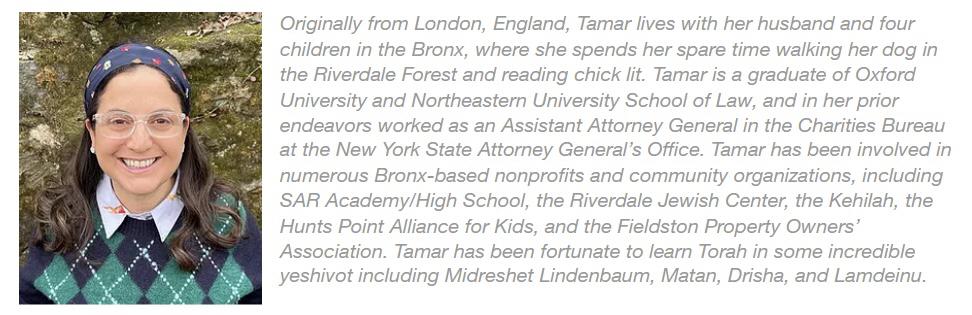
Tamar Green Eisenstat
Class of 2023
This Sunday we will be celebrating Hoshanah Rabbah, the seventh and final day of the festival of Sukkot. On Hoshana Rabbah, we carry out a special mitzvah called “chibbut arava”, in which we wave/beat branches of willow (arava). Rav Kook, as expounded by Rabbi Moshe-Zvi Neria, emphasizes that when we carry out this mitzvah, we should hit with the arava, as if we are honoring it, rather than trying to destroy it. It’s somewhat puzzling however, why was the arava selected for this lofty mitzvah - why not select the long and elegant lulav, which would be ideal for waving around, rather than the diminutive willow branch?
The answer, according to Rav Kook, lies in Bavli Sukkah 43b, where a story is told of a Second Temple Era dispute between the Rabbis and the Boethusians (a sectarian priestly group), regarding the Temple mitzvah of bringing aravot to adorn the altar on Hoshana Rabbah. The Rabbis held that if Hoshana Rabbah fell out on a Shabbat (which no longer happens under our current Jewish calendar), then aravot should still be brought to the altar. The Boethusians, by contrast, held that bringing aravot to the altar on Shabbat is a violation of Shabbat and should absolutely not be done.
One year, when Hoshana Rabbah and Shabbat fell out on the same day, matters came to a head when the clever Boethusians hid all of the Temple’s aravot under a large rock on Shabbat eve. This act would have prevented the priests from being able to use the aravot, since moving a rock on Shabbat violates the Rabbinic prohibition of muktzeh (as rocks do not have a permitted purpose on Shabbat). The mise en scène would have left the Rabbis in a quandary. If they instructed the priests to move the large rock to get to the aravot, then the priests would be violating muktzeh, but if they did not instruct the priests to remove the rock, then the priests would be unable fulfill the mitzvah of adorning the altar with aravot. By consequence, the Jewish people would then erroneously come to believe that the Rabbis agreed with the Boethusians’ position that aravot should not be brought to the altar when Hoshana Rabbah falls out on Shabbat.
Incredibly, before anyone realized what the Boethusians had done, a group of “amei ha’aretz”- “simple people”– unlearned in the rules of muktzeh– saw the large rock on top of the aravot and immediately removed the rock, thereby enabling the aravot to be used to adorn the altar. In so doing, a potentially explosive encounter between the Rabbis and the Boethusians was resolved. To commemorate what Rav Kook describes as the impulsive, uncomplicated acts of “simple people,” we hit/wave with our simple arava branches on Hoshana Rabbah. Yet, on reflection, what is so great about being simple? Why should be praise the “amei ha’aretz”? Weren’t they just ignorant of the rules of muktzeh? Aren’t we committed to immersing ourselves in intellectual (as well as spiritual) growth via Torah study, an anything-but-simple enterprise? To answer this question, let’s turn to marshmallows.
In our leadership class at Yeshivat Maharat, Maya Bernstein introduced us to a 2010 TED Talk by Tom Wujec about the marshmallow challenge. In this celebrated challenge, Wujec explains that groups of four people were timed to see how they performed in creating a tower out of strands of spaghetti, string, tape, and a single marshmallow. The challenge was performed by groups from all different backgrounds: CEOs, architects, kindergarten children, and so on. Most surprisingly, it was found that kindergarten children way outperformed CEO’s and MBA graduates in this challenge. Children, with their openness, willingness to dive into play, and collaborate rather than jockey for power, were able to dominate the marshmallow challenge in ways that highly-educated adult groups frequently could not. As such, the marshmallow challenge shows us that there are times when simple, naive curiosity can foster problem solving at way higher levels than sophisticated acumen.
But how do we as individuals channel this “simple person”/child-like narrative? Are we supposed to dumb-down our intellect in order to win at life? Absolutely not, but neither should we allow our internal resistance to get in our way. Rabbi Nachman of Bratslav in his celebrated story “The Clever Man and the Simple Man” explains why.
In Rabbi Nachman’s tale, two friends, one exceptionally clever and one very simple, start their lives on the same exact course. Yet, each time an opportunity comes the way of the clever man, he overly scrutinizes it; he lets his ego, anxieties, and suspicions get in the way, and he ends up continually choosing the less desirable path, resulting in a stagnant, unfulfilled existence. By contrast, the simple man does not overly analyze each opportunity that comes his way; he is open, self aware of his limitations, and humble. Through saying “yes” to all opportunities that cross his path, he ends up climbing to better and better places until he becomes advisor to the king. So for Rabbi Nachman, channeling a simple, open approach to life yields more success than overly complicated and weighty approaches.
With the help of Rabbi Nachman and some marshmallows, we are ready to answer our original question: what can we learn from our humble arava? Quite simply: we should always try to be open; rather than overthinking our decision making, we should allow our innate curiosity to take over, quashing self doubt and anxiety in the process. This year, as we wave/beat with our aravot, let’s try our best to channel our childlike sense of wonder, our inner “am ha’aretz”, and in so doing infuse this positive energy into the year ahead. Chag Sameach.