6 Kislev 5775 | November 28, 2014
Parshat Vayeitzei
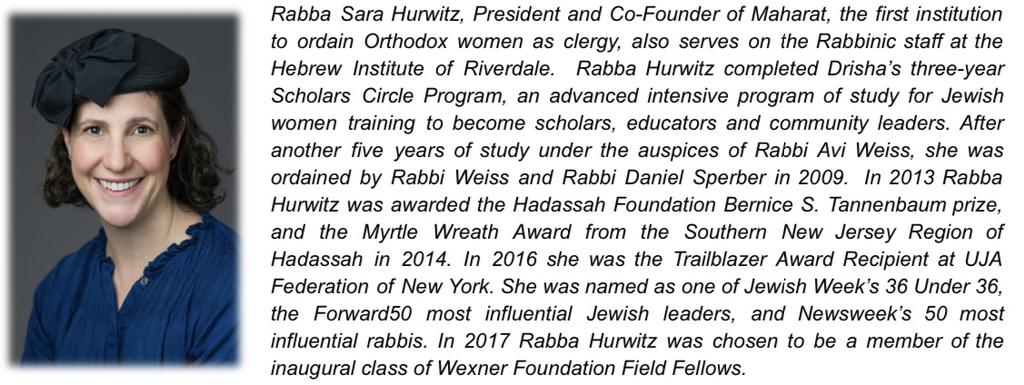
Rabba Sara Hurwitz
President and Co-Founder
Parshat Vayeitze depicts the first narrative of love at first sight. Yaakov looks up and sees Rachel and immediately falls in love with her. He single-handedly removes the heavy stone blocking the well, then runs to her, kisses her and
וַיִּשָּׂ֥א אֶת־קֹל֖וֹ וַיֵּֽבְךְּ׃
begins to cry.
And yet, as deep and visceral as his love may have been, Rachel was not to be his destiny.
Rashi, commenting on Yaakov’s reaction, explains that as soon as he saw her, “he broke into tears because he foresaw, through sacred inspiration, that Rachel would not be buried with him (Rashi, ad loc.) He knew from the moment he met her, they were not destined to be eternally united. In fact, Yaakov is buried next to Leah in Ma’arat Hamakhpalah, not Rachel. Indeed,Yaakov and Leah actually have many similarities, that perhaps, make them better suited for one another.
You see, Yaakov was not the only one who wept. Leah’s eyes are also reddened from tears. The Torah describes Leah’s eyes as ainai racot (Berishit 29:17), which many commentators translate as eyes that are weak from crying. Just like Yaacov’s tears eventually lead to him marrying Rachel, Leah’s tears lead to her union with Yaacov. The Gemara (Bava Batra 123a) explains that
שֶׁהָיְתָה שׁוֹמַעַת עַל פָּרָשַׁת דְּרָכִים בְּנֵי אָדָם שֶׁהָיוּ אוֹמְרִים שְׁנֵי בָנִים יֵשׁ לָהּ לְרִבְקָה שְׁתֵּי בָנוֹת יֵשׁ לוֹ לְלָבָן גְּדוֹלָה לַגָּדוֹל וּקְטַנָּה לַקָּטָן וְהָיְתָה יוֹשֶׁבֶת עַל פָּרָשַׁת דְּרָכִים וּמְשָׁאֶלֶת גָּדוֹל מָה מַעֲשָׂיו אִישׁ רַע הוּא מְלַסְטֵם בְּרִיּוֹת קָטָן מָה מַעֲשָׂיו אִישׁ תָּם יֹשֵׁב אֹהָלִים וְהָיְתָה בּוֹכָה עַד שֶׁנָּשְׁרוּ רִיסֵי עֵינֶיהָ.
Leah would stand at the crossroads, in the center of town, and hear people talking about her. “Rebecca has two sons and Lavan has two daughters,” they would say. “The elder son (Eisav) will marry the older daughter (Leah) and the younger daughter (Rachel) the younger son (Yaakov). She sat at the crossroads asking all who passed by: The older son, what kind of person is he? A bad person, a robber, people answered. And the younger son- what kind of person is he? He is a mild man who sits in the tents of Torah. And she cried until her eyelashes fell off.
Leah, sitting in the crossroads had a choice. She can follow the path that will lead her to her fate, where she was preordained to marry Eisav or she can dry her eyes, and defy her fate, and choose another path: one which will ultimately lead to her true destiny, to Yaakov, placing her as one of the foremothers of Bnei Yisrael.
Yaakov and Leah are similar in one other respect. Each sold something precious for the greater good. Last week, we learned that Yaakov bartered his lentil stew in exchange for Eisav’s birthright, which effectively secured Yaakov’s place as the father of Israel. In our story, Leah sells the dudaim, the mandrakes, to Rachel in exchange for getting an extra night to sleep in Yaakov’s tent. Immediately following this union, the Torah tells us that Leah had more children. Leah names her final son Zevulen:
הַפַּ֙עַם֙ יִזְבְּלֵ֣נִי אִישִׁ֔י כִּֽי־יָלַ֥דְתִּי ל֖וֹ שִׁשָּׁ֣ה בָנִ֑ים
Now my husband will make his permanent home with me for I have born him six sons.
Yaacov and Leah will rest together for all eternity. Although their union may not have been one of love at first sight, it was a marriage that was destined to be; where Leah changed the course of her life, by drying her eyes, and having the vision to choose to marry Yaakov, thereby securing her place as one of the mothers of Bnei Yisrael.
Rabba Sara's Overarching Theme:
Feeling God’s presence, shouldn’t be that difficult. “You shall walk after the Lord your God,”(Devarim 12:5) we are told; seek out God’s presence. And yet, astonished, R. Hama son of R. Hanina (Talmud Bavli, Sotah 14a) asks, how is it possible to walk with the Shechina? Rav Hama quotes an early pasuk from Devarim that describes “... the Lord your God as a devouring Fire.”(Devarim 4:24). How is it possible to get close to God without being scorched? R. Hama answers his own question: We must walk after the midot, after the attributes of God, not his immediate presence.
In Hebrew, good attributes, midot, are translated as “good measures.” Rabbi Adin Steinsaltz in The Thirteen Petalled Rose, suggests that a quality is determined by its proportion. In other words our midot are the balance of our varied characteristic traits. To act Godly is to put our best spiritual essence forward, while trying to keep in check the inevitability of negative attributes. We are at once both good and bad, compassionate and injurious.
At Yeshivat Maharat, our students are ordained with the ability to lead, pasken, and teach. But, they must also be finely attuned to the nuances of the human condition. Spiritual leaders are most effective when they have confronted and understand their own midot, their own balance of human traits. Our Torah narratives bring to bare the multi-layers of the characteristic traits that individuals must learn to balance within themselves.
And so, I offer this weekly parsha column as a model of Yeshivat Maharat’s Pastoral Torah curriculum, where we will explore the rich and varies layers of the human condition.