


Checking in- Ayeka- Where are YOU?
(ט) וַיִּקְרָ֛א יקוק אֱלֹקִ֖ים אֶל־הָֽאָדָ֑ם וַיֹּ֥אמֶר ל֖וֹ אַיֶּֽכָּה׃
(9) G-d יקוק called out to the Human and said to him, “Where are you?”
G-d knew where Adam was physically, so this question is a check in to see where Adam was emotionally and spiritually.
What is one thing you'd like to let go from the past week? What is one thing you are grateful for?
What is one thing you'd like to let go from the past week? What is one thing you are grateful for?
Centering Ourselves in the Here & Now
(יא) וַיִּקְרָ֨א אֵלָ֜יו מַלְאַ֤ךְ יקוק מִן־הַשָּׁמַ֔יִם וַיֹּ֖אמֶר אַבְרָהָ֣ם ׀ אַבְרָהָ֑ם וַיֹּ֖אמֶר הִנֵּֽנִי׃
(11) Then a messenger of יקוק called to him from heaven: “Abraham! Abraham!” And he answered, “Here I am.”
What is Mussar?
Mussar (means correction/ instruction/ ethics) is an 1,100-year-old Jewish spiritual tradition that teaches us how to become a mensch – a good person – or at the very least, a better version of yourself. This is achieved through tikkun middot; repairing and growing our inner character traits. The study of Mussar is a way of life that can lead us to realizing our highest potential – holiness/kedusha
“When I was a young man, I wanted to change the world. I found it difficult to change the world, so I tried to change my nation. When I found I couldn’t change the nation, I began to focus on my town. I couldn’t change the town, so, as an older man, I tried to change my family.
Now, as an older man, I realize that the only thing I can change is myself. And suddenly I realize that if, long ago, I had changed myself, I could have made an impact on my family. My family could have made an impact on our town. The town’s impact could have changed the nation, and I could indeed have changed the world.”
--- Rabbi Yisrael Salanter, father of the Mussar movement, 1810-1883
What does it mean to you to be a mensch?
What impact do we- as individuals- have on our communities, as we are today and as we could be?
Mussar (means correction/ instruction/ ethics) is an 1,100-year-old Jewish spiritual tradition that teaches us how to become a mensch – a good person – or at the very least, a better version of yourself. This is achieved through tikkun middot; repairing and growing our inner character traits. The study of Mussar is a way of life that can lead us to realizing our highest potential – holiness/kedusha
“When I was a young man, I wanted to change the world. I found it difficult to change the world, so I tried to change my nation. When I found I couldn’t change the nation, I began to focus on my town. I couldn’t change the town, so, as an older man, I tried to change my family.
Now, as an older man, I realize that the only thing I can change is myself. And suddenly I realize that if, long ago, I had changed myself, I could have made an impact on my family. My family could have made an impact on our town. The town’s impact could have changed the nation, and I could indeed have changed the world.”
--- Rabbi Yisrael Salanter, father of the Mussar movement, 1810-1883
What does it mean to you to be a mensch?
What impact do we- as individuals- have on our communities, as we are today and as we could be?
In the Mussar tradition middot (plural) refer to our inner character traits such as humility, gratitude, and patience. The Hebrew word for a single trait is middah, which literally means “measure”. The message of Mussar then, is the importance of identifying and understanding the degree – or measure – of each of the traits that live in our soul.
"Life is a curriculum. The goal of Mussar practice is not to take on pre-ordained characteristics, but to become the most refined, perfected, elevated version of the unique person you already are. To do that, we must first come to know and embrace our soul curriculum, which means tackling each one of our personal middot, traits, that hang as thick veils blocking the holy inner light from entering our lives.”
--- Alan Morinis, Founder, The Mussar Institute
"Life is a curriculum. The goal of Mussar practice is not to take on pre-ordained characteristics, but to become the most refined, perfected, elevated version of the unique person you already are. To do that, we must first come to know and embrace our soul curriculum, which means tackling each one of our personal middot, traits, that hang as thick veils blocking the holy inner light from entering our lives.”
--- Alan Morinis, Founder, The Mussar Institute
The Mussar Middot
Humility: ענוה – Anavah (often spelled with two vavs as ענווה )
Patience: סבלנות – Savlanut
Gratitude: הכרת הטוב – Hakarat Ha’Tov
Compassion: רחמים – Rachamim
Order: סדר – Seder
Equinimity: מנוחת הנפש – Menuchat Ha’Nefesh
Honor: כבוד– Kovod
Simplicity: הסתפקות – Histapkut
Enthusiasm: זריזות – Zerizut
Silence: שתיקה – Sh’tikah
Generosity: נדיבות – Nedivut
Truth: אמת – Emet
Moderation: שביל הזהב – Shevil Ha’zahov
Loving Kindness: חסד – Chesed
Responsibility: אחריות – Achrayut
Trust: בטחון – Bitchon
Faith: אמונה – Emunah
Awe: יראה Yirah – *No English translation is accurate. A close association is fear/awe
Humility: ענוה – Anavah (often spelled with two vavs as ענווה )
Patience: סבלנות – Savlanut
Gratitude: הכרת הטוב – Hakarat Ha’Tov
Compassion: רחמים – Rachamim
Order: סדר – Seder
Equinimity: מנוחת הנפש – Menuchat Ha’Nefesh
Honor: כבוד– Kovod
Simplicity: הסתפקות – Histapkut
Enthusiasm: זריזות – Zerizut
Silence: שתיקה – Sh’tikah
Generosity: נדיבות – Nedivut
Truth: אמת – Emet
Moderation: שביל הזהב – Shevil Ha’zahov
Loving Kindness: חסד – Chesed
Responsibility: אחריות – Achrayut
Trust: בטחון – Bitchon
Faith: אמונה – Emunah
Awe: יראה Yirah – *No English translation is accurate. A close association is fear/awe

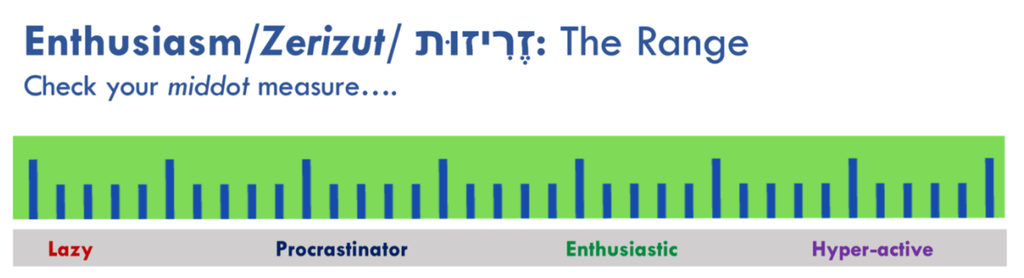

In which middot do you feel strongest/ most balanced? In which middot do you feel you need to develop/ refine as part of your personal soul curriculum?
Which middot do you think are our strengths at Hillel JUC, and which do you think we could work to on to find more balance as a community?
Which middot do you think are our strengths at Hillel JUC, and which do you think we could work to on to find more balance as a community?