4 Shevat 5780 | January 31, 2020
929
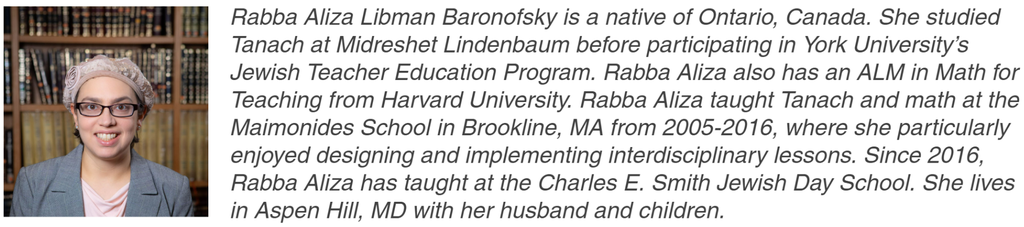
Rabba Aliza Libman Baronofsky
Class of 2022
The book of Jeremiah opens with a series of verses that in superhero parlance would be called an ‘origin story.’ God comes to Jeremiah and tells him: "Before I created you in the womb, I knew you; Before you were born, I consecrated you; I appointed you a prophet for the nations” (verse 5).
How does Jeremiah react to this appointment? His first recorded quotation demurs: “Ah, Lord GOD! I don’t know how to speak” (verse 6).
If you’re suddenly reminded of the tale of Moses, you are not far off. In his book, The God of Old, Professor James Kugel identifies a number of prophets as having an experience known as ‘prophetic call narrative’ (the aforementioned ‘origin story’.) We’ve previously discussed Isaiah’s prophetic call narrative as having connections to Moses.
Jeremiah’s experience includes motifs seen in stories about Isaiah, Moses, and Samuel. Most significantly, he mentions difficulty with speech when he tries to decline God’s offer.
God responds with a symbolic action: “The LORD put out His hand and touched my mouth, and the LORD said to me: Herewith I put My words into your mouth.” (verse 9).
We believe, of course, that God has no hands, and we know enough about human physiology to know that touching the mouth cannot put words in it. This touching of the mouth establishes Jeremiah as the spiritual heir of Isaiah, who was touched in the mouth with a fiery coal.
Jeremiah’s experience here is one where the symbolic touch prepares him to use his mouth to speak for God, and also lets us know that his journey will involve a number of symbolic actions. In our chapter, God shows Jeremiah a rod made of the wood of an almond tree and a boiling pot. Both of these are symbols that evil will befall the Jews of the southern kingdom.
God must tell Jeremiah to be strong: his message, we shall see, will be unpopular. The first king in Jeremiah’s lifetime, Josiah, is in fact the most zealous for God and worthy king in many generations. Though Josiah tries to rid the land of all of the false gods and evil practices, he does not succeed in forestalling God’s anger, which II Kings 23:26 explains is a result of the evil that preceded him: “However, the LORD did not turn away from His awesome wrath which had blazed up against Judah because of all the things Manasseh did to vex Him.”
Jeremiah is thus set up with a task that will be tremendously draining: he is young, he arises in an era of spiritual renewal, and his job is to watch the Jewish people as they falter and their society goes up in flames. He must explain to the people why these misfortunes are befalling them. In Jeremiah’s 40 years as a prophet in Jerusalem he will return often to demonstrations and symbolic actions, but his protestations will fall on deaf ears.