18 Sivan 5782 | June 17, 2022
Parshat Beha'alotecha
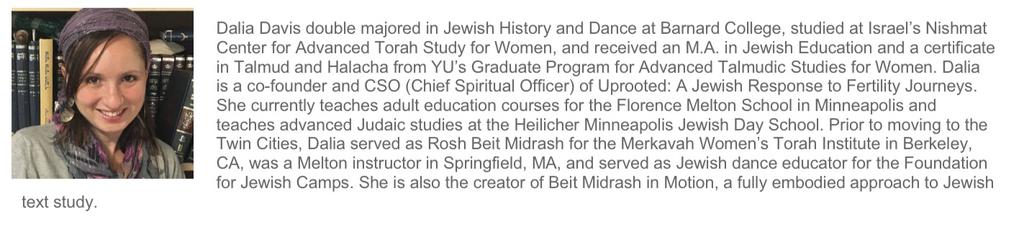
Rabbanit Dalia Davis
Class of 2022
(א) וַתְּדַבֵּ֨ר מִרְיָ֤ם וְאַהֲרֹן֙ בְּמֹשֶׁ֔ה
And Miriam and Aharon spoke regarding Moshe
Parshat Beha’alotecha concludes with Miram afflicted by tzara’at, a consequence of speaking lashon hara about Moshe. There is a seeming injustice in this story insofar as Aharon is spared this punishment despite having participated in the conversation.
The most apparent explanation emphasizes that the verb וַתְּדַבֵּר is written in the singular feminine form, literally, “and she spoke.” Rashi learns from this that Miriam initiated the conversation. Similarly, Ibn Ezra views Miriam in a more active role and Aharon as a more passive party to the exchange.
However, there is a more forgiving way to understand this passage and Miriam’s affliction in particular. What if the tzara’at was more of a gift than a punishment? Could it have been something Miriam desperately needed, however unpleasant? This would be consistent with a model of Hashem as our loving parent, more than the dispenser of reward and punishment.
To explore this possibility, consider a sub-theme within the parsha, the theme of replacement. The concept of Pesach Sheini, which appears earlier in the parsha, presents one example.
Speak unto the children of Israel, saying: When anyone throughout your generations shall be (ritually impure) or on a far journey (on the eve of Pesach,) they shall (nonetheless) observe Hashem’s Pesach. In the second month on the fourteenth day at dusk they shall keep it; they shall eat it with unleavened bread and bitter herbs.
Pesach Sheni is rightly understood as a beautiful paradigm of second chances, substitutions, and replacements. The 14th of Iyyar functions as a replacement for the 14th of Nisan.
Pesach Sheini is not the only example of replacement in the parsha. Immediately prior, we learn of the transference of spiritual leadership from the bechorim (the elder sons), to the Levi’im.
For they are formally assigned to Me from among the Israelites: I have taken them for Myself in place of all the first issue of the womb, of all the male firstborn of the Israelites.
The word תַּחַת here is understood to mean “in place of,” as the Levi’im replaced the bechorim as a consequence of the latter’s participation in the golden calf debacle. Of note, תַּחַת literally means means “beneath.” תַּחַת depicts the demotion of the bechorim who are now spiritually beneath the Levi’im. Unlike Pesach Sheini which was a replacement of time, this is a replacement of people. This challenging edict does not carry with it the beauty of second chances. What must it have felt like to be those bechorim, watching someone else step into the role you anticipated? What must they have experienced when being replaced?
If only these bechorim could have spoken with the numerous other bechorim in Tanach who also endured the experience of replacement. Yishmael, Esav, the ten tribes of Malchut Yisrael, and Menasheh ben Yosef surely would have been able to commiserate with this experience. They too lost special privileges and honor, watching others rise in their place. With the exception of Menasheh, the result was often struggle, alienation and further negative behaviors.
Such antipathy towards replacement is evident in a fascinating recent scientific study. Participants were asked if they would prefer to be replaced by people or robots. Most chose the latter:
Bearing this in mind, let us return to Miriam. Miriam was Moshe and Aharon’s elder sister. She was the bechorah and the first to receive nevuah (prophecy.) It was actually in Miriam’s nevuah that Moshe’s existence and unique role was first foretold. The gemara quotes Miriam as saying,
עֲתִידָה אִמִּי שֶׁתֵּלֵד בֵּן שֶׁיּוֹשִׁיעַ אֶת יִשְׂרָאֵל.
My mother will give birth to a son who will be the savior of Israel!
The fruition of her nevuah necessarily resulted in the diminution of her prophetic role. Her baby brother proved to be not only a savior but the greatest prophet in history. To some extent, Miriam had been replaced.
It is unclear how much Miriam was aware of or affected by this replacement. However, it is plausible to suggest it might have been a factor in the circumstances that brought about her lashon hara, tzara’at, and banishment.
Different theories exist regarding the content of Miriam’s conversation with Aharon. Among the most prominent is the midrash Sifrei Bamidbar which suggests Miriam commented about Moshe’s ongoing separation from his wife. Moshe maintained this separation to enable his maximal level of nevuah. Perhaps on a subconscious level, this tapped into Miriam’s own pain of having been replaced or superseded in prophecy by her younger sibling.
If, however, Miriam’s lashon hara was an expression of pain rather than malice, why does G-d afflict her with such a harsh punishment? Perhaps the omniscient G-d is not subjecting her to a punishment as much as offering her an opportunity. The tzara’at forces her to go into isolation. In this state of loneliness, Miriam has no choice but to be all alone. She is given the opportunity, albeit through an uncomfortable situation, to reflect and introspect. This solitude may allow her respite from comparing herself to Moshe and his prophetic abilities. As she recovers from her tzara’at, she can pause, take note of her own gifts, find her own voice, and become the best version of herself. This new Miriam may be one who appreciates her own intrinsic value irrespective of anyone else’s talents and successes. In her solitude she can shield herself against any threats to her self-worth and emerge stronger and more resilient.
When Miriam does emerge from her isolation, she receives a gift in the form of validation of her unique and critical role among her people. Her fellow Israelites had waited for her before traveling. Despite having access to Moshe throughout Miriam’s quarantine, they still needed Miriam, and so they waited.
וְהָעָם֙ לֹ֣א נָסַ֔ע עַד־הֵאָסֵ֖ף מִרְיָֽם׃
The nation did not travel until Miriam rejoined them.
May we all realize our own intrinsic value and be able turn challenging moments in our lives into opportunities for growth and healing.