


Today we are focusing on the soul trait N'divut, or generosity. It shares the Hebrew root with the word Nadea, a volunteer. Someone who practices N'divut, voluntarily gives of themselves in some way.
1) What are some of the different ways we give of ourselves?
2) Why do we choose to give?
3) What might get in the way of us cultivating N'divut?
2) Why do we choose to give?
3) What might get in the way of us cultivating N'divut?
Alan Morinis, Everyday Holiness (p.158). Shambhala.
The very act of giving itself ultimately makes us more charitable, merciful, and loving. “Love flows in the direction of giving,” was Rabbi Dessler’s teaching. This may also be what the Talmud means to convey when it teaches, “If you want to bond yourself to loving your friend, give to him for his benefit." Rabbi Dessler saw the impact that our deeds have on our soul-traits. We don’t have to wait until our hearts are fully open and infused with natural generosity before we begin to give. To the contrary, acts of generosity awaken love and foster the soul-trait of generosity.
The very act of giving itself ultimately makes us more charitable, merciful, and loving. “Love flows in the direction of giving,” was Rabbi Dessler’s teaching. This may also be what the Talmud means to convey when it teaches, “If you want to bond yourself to loving your friend, give to him for his benefit." Rabbi Dessler saw the impact that our deeds have on our soul-traits. We don’t have to wait until our hearts are fully open and infused with natural generosity before we begin to give. To the contrary, acts of generosity awaken love and foster the soul-trait of generosity.
(י) וְאָכַלְתָּ֖ וְשָׂבָ֑עְתָּ וּבֵֽרַכְתָּ֙ אֶת־יְהֹוָ֣ה אֱלֹהֶ֔יךָ עַל־הָאָ֥רֶץ הַטֹּבָ֖ה אֲשֶׁ֥ר נָֽתַן־לָֽךְ׃
(10) When you have eaten your fill, give thanks to your God יהוה for the good land given to you.
Chizkuni, Deuteronomy 8:10:1
ואכלת ושבעת וגו׳, “you will eat and be satisfied;” this verse is the one from which the sages derived the first three blessings in the prayer known as ברכת המזון, saying grace after meals.
ואכלת ושבעת וגו׳, “you will eat and be satisfied;” this verse is the one from which the sages derived the first three blessings in the prayer known as ברכת המזון, saying grace after meals.
Tur HaAroch, Deuteronomy 8:10
על הארץ הטובה אשר נתן לך, “for the good land that He has given you.” At all times, and in every location whenever you will feel sated, you are to bless Him in acknowledgment of both the nourishing food and the land on which it grows. You are to especially express gratitude that the land is ours as an inheritance to be passed on to your children. This commandment is not dependent on our owning or living in the land during any particular period.
על הארץ הטובה אשר נתן לך, “for the good land that He has given you.” At all times, and in every location whenever you will feel sated, you are to bless Him in acknowledgment of both the nourishing food and the land on which it grows. You are to especially express gratitude that the land is ours as an inheritance to be passed on to your children. This commandment is not dependent on our owning or living in the land during any particular period.
Rabbeinu Bachya, Devarim 8:10
“you will bless the Lord your G’d.” According to the plain meaning of the text Moses means that when you reflect on the painful periods of your history, the sufferings you experienced in the land of Egypt, and you also look back on the discomforts experienced during your long trek through the desert, you will be inspired to bless the Lord as soon as you will enjoy eating the produce of this land. You will include the food of the land in your blessing of the Lord. An approach to these words by our halachic authorities based on Berachot 21: our verse is the positive commandment to recite grace after one’s meal.
“you will bless the Lord your G’d.” According to the plain meaning of the text Moses means that when you reflect on the painful periods of your history, the sufferings you experienced in the land of Egypt, and you also look back on the discomforts experienced during your long trek through the desert, you will be inspired to bless the Lord as soon as you will enjoy eating the produce of this land. You will include the food of the land in your blessing of the Lord. An approach to these words by our halachic authorities based on Berachot 21: our verse is the positive commandment to recite grace after one’s meal.
Rabbi Yair Robinson, "N’divut—Generosity: Inseparable from Hakarat HaTov (Gratitude)," in Rabbi Barry Block's The Mussar Torah Commentary A Spiritual Path to Living a Meaningful and Ethical Life (p. 287-8). CCAR Press.
A gift, I would argue, is something freely given by someone else, to our benefit, where we cannot return the favor. That is demonstrated beautifully in Parashat Eikev, which presents Moses describing the various blessings that Israel will experience once they enter the Promised Land, as well as how God will allow Israel to conquer it. In describing those blessings—of sustenance, of health, of children, and of victory—Moses also reminds Israel of their forty years of wandering and miracles that God wrought for them during that time—not only large and obvious miracles, like manna, but the otherwise unnoticed fact that their clothes haven’t worn out. In all of these descriptions, there is a reminder, both explicit and implicit: these have all been gifts of God, and God’s gifts will continue.
A gift, I would argue, is something freely given by someone else, to our benefit, where we cannot return the favor. That is demonstrated beautifully in Parashat Eikev, which presents Moses describing the various blessings that Israel will experience once they enter the Promised Land, as well as how God will allow Israel to conquer it. In describing those blessings—of sustenance, of health, of children, and of victory—Moses also reminds Israel of their forty years of wandering and miracles that God wrought for them during that time—not only large and obvious miracles, like manna, but the otherwise unnoticed fact that their clothes haven’t worn out. In all of these descriptions, there is a reminder, both explicit and implicit: these have all been gifts of God, and God’s gifts will continue.
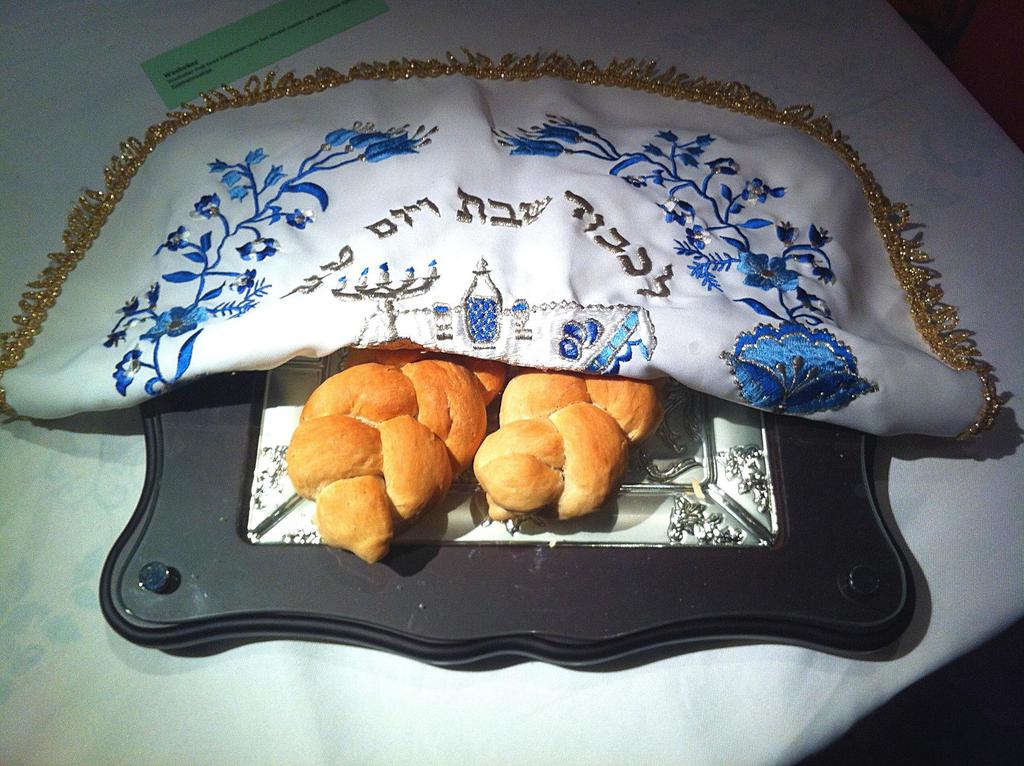
Challah's in the Ark Story, as told by Rabbi Lawrence Kushner, The Book of Miracles
(http://www2.huc.edu/ece/wp-content/uploads/2015/12/Service-Learning-Two-Stories.pdf)
1) In this story, why was the wealthy man motivated to give? How did he feel when he gave of himself?
2) What was the poor man's experience like in receiving this gift from God? How did he feel?
There was a pivotal moment when both the giver and receiver found out the truth. At this point anything could have happened. The giver could have refused to give. The receiver could have refused the giver's gifts, they could have kept on doing what they had been doing, or they could have used this as an opportunity to build a relationship.
3) How do you think the poor man would have felt if the rich man stopped giving food so generously?
4) How do you the rich man would have felt if the poor man would have refused his gifts?
(http://www2.huc.edu/ece/wp-content/uploads/2015/12/Service-Learning-Two-Stories.pdf)
1) In this story, why was the wealthy man motivated to give? How did he feel when he gave of himself?
2) What was the poor man's experience like in receiving this gift from God? How did he feel?
There was a pivotal moment when both the giver and receiver found out the truth. At this point anything could have happened. The giver could have refused to give. The receiver could have refused the giver's gifts, they could have kept on doing what they had been doing, or they could have used this as an opportunity to build a relationship.
3) How do you think the poor man would have felt if the rich man stopped giving food so generously?
4) How do you the rich man would have felt if the poor man would have refused his gifts?
Alan Morinis. Everyday Holiness (p. 155). Shambhala.
Generously bearing the burden of the other is also central to a story said to have been told by the Ba’al Shem Tov, the founder of Chassidism. He said that in hell, people sit around a great banquet table piled high with food. Each person is given a fork six feet in length, far too long for them to maneuver into their mouths. They are starving. In heaven, on the other hand, people sit around exactly the same banquet. But in heaven each feeds the person across the table. And in so doing, all are filled. In stressing the practice of “bearing the burden of the other,” Rabbi Simcha Zissel was working out details of a spiritual method pointed to by his own teacher, Rabbi Yisrael Salanter. In one of his most memorable sayings, Rabbi Salanter comments that “the spiritual is higher than the physical, but the physical needs of another are an obligation of my spiritual life.” In order to follow a spiritual path, I have to pay attention to the needs of others. Generosity would be one of the most accessible ways to do that.
Generously bearing the burden of the other is also central to a story said to have been told by the Ba’al Shem Tov, the founder of Chassidism. He said that in hell, people sit around a great banquet table piled high with food. Each person is given a fork six feet in length, far too long for them to maneuver into their mouths. They are starving. In heaven, on the other hand, people sit around exactly the same banquet. But in heaven each feeds the person across the table. And in so doing, all are filled. In stressing the practice of “bearing the burden of the other,” Rabbi Simcha Zissel was working out details of a spiritual method pointed to by his own teacher, Rabbi Yisrael Salanter. In one of his most memorable sayings, Rabbi Salanter comments that “the spiritual is higher than the physical, but the physical needs of another are an obligation of my spiritual life.” In order to follow a spiritual path, I have to pay attention to the needs of others. Generosity would be one of the most accessible ways to do that.
Rabbi Yair Robinson
Why is it so hard to accept a gift? The answer, I believe, is what a friend of mine, the Episcopal priest Father Russ Bohner, calls “being half-generous.” What does Father Bohner mean by “half-generous”? Most of us think of generosity only as the act of giving, not receiving. We’re happy to give. Giving fills us with a certain joy. We love the feeling of giving a gift to a friend or of helping someone out. The same hospitalized congregant would describe in detail how they loved driving congregants to appointments or bringing food to shut-ins. Being on the receiving end, on the other hand, fills so many of us with dread. Some of this feeling is caused by our false assumption that we need to return the favor. We receive a gift, something freely given, and we perceive ourselves obliged to repay the kindness. When we cannot reciprocate—for example, when we are in a vulnerable position like the ill congregant—we recoil from accepting the offer. Our pride, feeling of unworthiness, and fear of obligation toward the other constrict us. Instead of accepting the generous offer of support, praise, or a gift, we reject it and are poorer for it. We are good at giving; but we are terrible at receiving, because we fear the need to be grateful. However, Mussar teaches that the middah of n’divut (נְדִיבוּת, “generosity”), is intimately related to the hakarat hatov (הַכָּרַת הַטּוֹב, “gratitude”) commanded in Eikev.
Why is it so hard to accept a gift? The answer, I believe, is what a friend of mine, the Episcopal priest Father Russ Bohner, calls “being half-generous.” What does Father Bohner mean by “half-generous”? Most of us think of generosity only as the act of giving, not receiving. We’re happy to give. Giving fills us with a certain joy. We love the feeling of giving a gift to a friend or of helping someone out. The same hospitalized congregant would describe in detail how they loved driving congregants to appointments or bringing food to shut-ins. Being on the receiving end, on the other hand, fills so many of us with dread. Some of this feeling is caused by our false assumption that we need to return the favor. We receive a gift, something freely given, and we perceive ourselves obliged to repay the kindness. When we cannot reciprocate—for example, when we are in a vulnerable position like the ill congregant—we recoil from accepting the offer. Our pride, feeling of unworthiness, and fear of obligation toward the other constrict us. Instead of accepting the generous offer of support, praise, or a gift, we reject it and are poorer for it. We are good at giving; but we are terrible at receiving, because we fear the need to be grateful. However, Mussar teaches that the middah of n’divut (נְדִיבוּת, “generosity”), is intimately related to the hakarat hatov (הַכָּרַת הַטּוֹב, “gratitude”) commanded in Eikev.
Rabbi Yair Robinson
In Eikev, Moses reminds us of God’s generosity—of protection, of sustenance, of a land flowing with milk and honey—and our need to express our gratitude for God’s gifts. When, in response to Parashat Eikev’s central commandment, we express our gratitude for God’s sustenance, we also place ourselves in the realm of n’divut. We are called to ask, “I have sustenance, but what of those who do not? My life is full of miracles and mercy, but what of other people’s suffering? My satisfaction is not, at the end of the day, my own, but an expression of God’s generosity; so, what can I do to make sure that God’s generosity is felt by as many people as possible?” When we receive the gift, the compliment, the offer of support, we must not bat it aside or think ourselves unworthy; we must accept it, acknowledge it, and reflect on how we can pass that generosity on to others, continuing the cycle of n’divut.
In Eikev, Moses reminds us of God’s generosity—of protection, of sustenance, of a land flowing with milk and honey—and our need to express our gratitude for God’s gifts. When, in response to Parashat Eikev’s central commandment, we express our gratitude for God’s sustenance, we also place ourselves in the realm of n’divut. We are called to ask, “I have sustenance, but what of those who do not? My life is full of miracles and mercy, but what of other people’s suffering? My satisfaction is not, at the end of the day, my own, but an expression of God’s generosity; so, what can I do to make sure that God’s generosity is felt by as many people as possible?” When we receive the gift, the compliment, the offer of support, we must not bat it aside or think ourselves unworthy; we must accept it, acknowledge it, and reflect on how we can pass that generosity on to others, continuing the cycle of n’divut.