


מַתְנִי׳ כׇּל כִּתְבֵי הַקֹּדֶשׁ מַצִּילִין אוֹתָן מִפְּנֵי הַדְּלֵיקָה, בֵּין שֶׁקּוֹרִין בָּהֶן, וּבֵין שֶׁאֵין קוֹרִין בָּהֶן. אַף עַל פִּי שֶׁכְּתוּבִים בְּכׇל לָשׁוֹן, טְעוּנִים גְּנִיזָה. וּמִפְּנֵי מָה אֵין קוֹרִין בָּהֶם — מִפְּנֵי בִּיטּוּל בֵּית הַמִּדְרָשׁ.
MISHNA: With regard to all sacred writings, one may rescue them from the fire on Shabbat, whether they are read in public, e.g., Torah or Prophets scrolls, or whether they are not read in public, e.g., Writings scrolls. This ruling applies even though they were written in any foreign language. According to the Rabbis, those scrolls are not read in public, but they are still sacred and require burial. And why does one not read the Writings on Shabbat? Due to suspension of Torah study in the study hall. People came to the study hall at specific times on Shabbat to hear words of halakha, and other texts were not allowed at those times.
... סֵפֶר תּוֹרָה שֶׁבָּלָה, אִם יֵשׁ בּוֹ לְלַקֵּט שְׁמוֹנִים וְחָמֵשׁ אוֹתִיּוֹת, כְּגוֹן פָּרָשַׁת ״וַיְהִי בִּנְסוֹעַ הָאָרוֹן״ — מַצִּילִין, וְאִם לָאו — אֵין מַצִּילִין.
...With regard to a Torah scroll that is worn, if there is enough to compile from it eighty-five complete letters as in the portion of: “And when the Ark traveled,” one rescues it from the fire, and if not one does not rescue it.
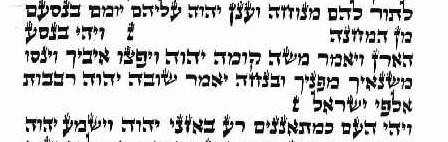
וַיְהִ֤י הָעָם֙ כְּמִתְאֹ֣נְנִ֔ים רַ֖ע בְּאׇזְנֵ֣י יְהֹוָ֑ה וַיִּשְׁמַ֤ע יְהֹוָה֙ וַיִּ֣חַר אַפּ֔וֹ וַתִּבְעַר־בָּם֙ אֵ֣שׁ יְהֹוָ֔ה וַתֹּ֖אכַל בִּקְצֵ֥ה הַֽמַּחֲנֶֽה׃
They marched from the mountain of Hashem a distance of three days. The Ark of the Covenant of Hashem traveled in front of them on that three days’ journey to seek out a resting place for them; and G-d’s cloud kept above them by day, as they moved on from camp.
Whenever the Aron traveled, Moses would say: “Rise, Hashem, and let Your enemies be scattered, and those who hate You, flee before You.” And when it rested, he would say: Return, Hashem, to the myriads and thousands of Israel.
The people took to complaining bitterly before ה. ה heard and was incensed: a fire of ה broke out against them, ravaging the outskirts of the camp.
The Gemara asks: According to whose opinion is that which Rabbi Shmuel bar Naḥman said that Rabbi Yonatan said, that with regard to the verse: “With wisdom she built her house, she carved its seven pillars” (Proverbs 9:1), these are the seven books of the Torah? According to whose opinion? It is according to the opinion of Rabbi Yehuda HaNasi, as by his count there are seven books of the Torah: Genesis; Exodus; Leviticus; Numbers until: “And when the Ark traveled”; the portion: “And when the Ark traveled,” which is considered its own book; the remainder of Numbers; and Deuteronomy.
AND THE PEOPLE WERE ‘K’MITHON’NIM.’ The correct interpretation appears to me to be that as they got further away from Mount Sinai, which was near an inhabitable settlement, and entered the great and dreadful wilderness in their first journey, they became upset and said: “What shall we do? How shall we live in this wilderness? What shall we eat and what shall we drink? How shall we endure the trouble and the suffering, and when shall we come out of here?”
Rav does not list them chronologically, putting them in pairs instead. But there is difficulty with Rav saying that the trial at their “ascent from the sea” was that of “and they came to Marah” (Exodus 15:23)—how can this be called “ascent from the sea” when it happened three days after they had crossed? And Rambam, whose commentary Rav is quoting here, does not say that the trial at Marah had anything to do with the ascent from the sea.
The Talmud in Arachin 15a, when it says that one of the ten trials was at the ascent from the sea, explains that this trial occurred immediately upon their ascending from the sea: “They said: just as we have ascended at this point, so have the Egyptians ascended at some other point!” And the Talmud quotes the verse “And they rebelled at the sea, at the Red Sea” (Psalms 106:7) in support of this. The Talmud’s count, despite this addition, is balanced by the omission of the trial of the “complainers”.
But why, indeed, does the Talmud not count the complainers? It seems that the Talmud understood the “complainers” (Numbers 11:1) and the “rabble” (Number 11:4) to have been one thing—even though G-d sent fire upon them they were not quieted, “and the rabble in [the nation’s] midst etc.” This is why the verse says that they “went back and wept,” for they returned to the initial complaint of the “complainers”. This accords with the Talmud in Shabbat 116a: R. Shimon ben Gamliel says: in the future, this section [“And when the ark traveled” (Numbers 10:35), which the Talmud is discussing there] will be removed from here and written in its proper place. Why was it written here? To provide a pause between the first story of punishment and the second. What is the second story of punishment? “And the people were like complainers” (Numbers 11:1). The first story of punishment is “And they travelled from the mountain of G-d [Heb. vayis`u mehar Hashem]” (Numbers 10:33), as R. Chama bar Chanina said, for they turned away from G-d [Heb. saru me'acharei Hashem]. Tosafot raise the question that the text still ends up putting two stories of punishment adjacent to one another, and offer a very forced answer. But according to what I wrote earlier, this is precisely the point the Talmud is making: that the “complainers” and the “rabble” are just parts of one story of punishment.
We can show this as follows. For the Talmud there asks “what is the second story of punishment” but does not first ask “what is the first story”, from which we can infer that the Talmud had an idea of what the first story was. And when the line “the first story of punishment is ‘And they travelled from the mountain of G-d’” following that was subsequently put into the text it was not phrased as a question, “what is the first story of punishment”, for it was the redactor of the text who was clarifying for us what the first story was, but the question as it was originally asked in the study hall was only concerning the second story. For the original assumption in the question was that the “complainers” were complaining about the amount of Torah they had learnt at the mountain of G-d—see below—and there is no break in the text [between the punishment of the “complainers” and the punishment of the “rabble”]. The Talmud answers by saying that the second punishment is actually that of the “complainers”, and the entire succeeding text, including the story of the “rabble”, is one long story of punishment.
This is unlike Rashi’s approach, that the Talmud answers that the story of the “rabble” is the first story of punishment, which had started after they turned away from G-d. Tosafot there already take issue with his approach and quote the Midrash Vayechulu saying that the first punishment is that they turned away from G-d because they had learned much Torah at Sinai, like a child running out of school.
[*I found support for this in Midrash Rabbah on parashat Metzora (Vayikra Rabbah 18:4), which asks why Israel was punished with the afflictions of emissions and leprosy and quotes several amoraic opinions. One of them is that of R. Yehudah berabbi Shimon who says that they come from the “complainers”, for the verse there says “until it comes out of your noses and becomes nauseating [Heb. lezara] to you” (Numbers 11:20): “What is zara? It will be zorna and bisna for you.” Matnot Kehuna there explains in the name of Aruch that these are types of swelling and boils. And numerous other amoraim there explain lezara as somehow referring to such things. Now if the “complainers” and the “rabble” were not both part of the same story, how could the midrash say that the source is from the “complainers” and proceed to bring a proof from “it will become nauseating to you”, a verse that was said in the story of the “rabble”? It must be that the whole thing is one story, and this is a strong proof of my position.
Also, I say that the plain meaning of the verses indicates as much, for the text says “and the rabble… went back and wept”, and the meaning of “went back” is that they went back to what they had already been doing. And otherwise, what is the purpose of writing that they “went back” altogether? This is also a clear proof.]
For Rambam and Rav, who see the “complainers” and “rabble” as two separate trials, one might say that they hold like Rabbi in that passage in Shabbat 116a who says that the section “and when the ark travelled” is in its proper place and does not see it as a break between two stories of punishment, and the mishna in Yadayim 3:5 goes according to Rabbi. In any case, I feel that the Golden Calf should not be included in this count at all, for it is a sin, not a trial. In its stead I would count what the Talmud says in Arachin based on the verse “and they rebelled at the sea, at the Red Sea”. And the Torah has seventy facets.