



... מניין לרואה את חבירו שהוא טובע בנהר או חיה גוררתו או לסטין באין עליו שהוא חייב להצילו ת"ל לא תעמוד על דם רעך אין ה"נ
... From where is it derived that one who sees another drowning in a river, or being dragged away by a wild animal, or being attacked by bandits [listin], is obligated to save him? The Torah states: “You shall not stand idly by the blood of another.” The Gemara answers: Yes, it is indeed so that this verse relates to the obligation to save one whose life is in danger.
...והא מהכא נפקא מהתם נפקא אבדת גופו מניין ת"ל והשבותו לו
...But is this really derived from here? It is derived from there, i.e., from a different verse, as it is taught: The Torah teaches that one must return lost property to its rightful owner. But from where is it derived that one must help his neighbor who may suffer the loss of his body or his health? The verse states: “And you shall restore it [vahashevato] to him [lo]” (Deuteronomy 22:2), which can also be read as: And you shall restore him [vehashevato] to him, i.e., saving his body. Consequently, there should be no need for the additional verse: “You shall not stand idly by the blood of another.”
(טו) וְנִשְׁמַרְתֶּ֥ם מְאֹ֖ד לְנַפְשֹׁתֵיכֶ֑ם כִּ֣י לֹ֤א רְאִיתֶם֙ כׇּל־תְּמוּנָ֔ה בְּי֗וֹם דִּבֶּ֨ר ה' אֲלֵיכֶ֛ם בְּחֹרֵ֖ב מִתּ֥וֹךְ הָאֵֽשׁ׃
(15) For your own sake, therefore, be most careful—since you saw no shape when ה' spoke to you at Horeb out of the fire—
(ט) רַ֡ק הִשָּׁ֣מֶר לְךָ֩ וּשְׁמֹ֨ר נַפְשְׁךָ֜ מְאֹ֗ד פֶּן־תִּשְׁכַּ֨ח אֶת־הַדְּבָרִ֜ים אֲשֶׁר־רָא֣וּ עֵינֶ֗יךָ וּפֶן־יָס֙וּרוּ֙ מִלְּבָ֣בְךָ֔ כֹּ֖ל יְמֵ֣י חַיֶּ֑יךָ וְהוֹדַעְתָּ֥ם לְבָנֶ֖יךָ וְלִבְנֵ֥י בָנֶֽיךָ׃
(9) But take utmost care and watch yourselves scrupulously, so that you do not forget the things that you saw with your own eyes and so that they do not fade from your mind as long as you live. And make them known to your children and to your children’s children:
The Rabbis taught: If a person is buried under a collapsed building, until what point does one check to clarify whether the victim is still alive? Until what point is he allowed to continue clearing the debris? They said: One clears until the victim’s nose. If there is no sign of life, i.e., if he is not breathing, he is certainly dead. And some say: One clears until the victim’s heart to check for a heartbeat. If several people are buried and one checked and found the upper ones under the debris dead, he should not say: The lower ones are likely also already dead, and there is no point in continuing to search. There was an incident where they found the upper ones dead and the lower ones alive.
The Rabbis taught: If a person is buried under a collapsed building, until what point does one check to clarify whether the victim is still alive? Until what point is he allowed to continue clearing the debris? They said: One clears until the victim’s nose. If there is no sign of life, i.e., if he is not breathing, he is certainly dead. And some say: One clears until the victim’s heart to check for a heartbeat. If several people are buried and one checked and found the upper ones under the debris dead, he should not say: The lower ones are likely also already dead, and there is no point in continuing to search. There was an incident where they found the upper ones dead and the lower ones alive.
Rav Pappa said: The dispute with regard to how far to check for signs of life applies when the digger begins removing the rubble from below, starting with the feet, to above. In such a case it is insufficient to check until his heart; rather, one must continue removing rubble until he is able to check his nose for breath. But if one cleared the rubble from above to below, once he checked as far as the victim’s nose he is not required to check further, as it is written: “All in whose nostrils was the breath of the spirit of life” (Genesis 7:22).
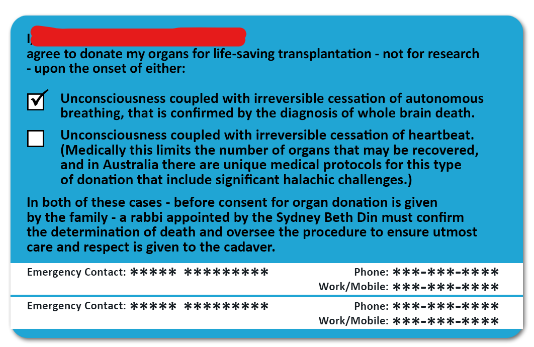
Brain death and irreversible coma are not acceptable definitions of death insofar as halakha is concerned. The sole criterion of death accepted by halakha is total cessation of cardiac and respiritory activity.
(א) איסור הלנת המת ומתי מותר להלינו. ובו ב' סעיפים:
אסור להלין המת אלא אם כן הלינו לכבודו להביא לו ארון ותכריכין או מקוננות או כדי שיבאו קרובים או להשמיע עיירות:
(1) It is prohibited to leave the corpse [unburied] over night, unless they left him over night for the sake of his honour, [viz.,] to provide for him a coffin or shrouds, or [professional] lamenting women, or in order that relatives should [have time] to come, or to assemble [surrounding] townships [for his funeral].
§ The mishna taught: In the case of a woman who was killed through court-imposed capital punishment, one may derive benefit from her hair. The Gemara asks: But why is it permitted? After all, a corpse and its hair are items from which deriving benefit is prohibited. Rav said that this is referring to a case where she says before she dies: Give my hair to my daughter. The Gemara asks: Is the prohibition contingent on the deceased’s wishes? Were she to say: Give my hand to my daughter, would we give the hand to her?
Rabbi Yoḥanan raised an objection to Rabbi Shimon ben Lakish from a baraita: There was an incident in Bnei Brak involving one who sold some of his father’s property that he had inherited, and he died, and the members of his family came and contested the sale, saying: He was a minor at the time of his death, and therefore the sale was not valid. And they came and asked Rabbi Akiva: What is the halakha? Is it permitted to exhume the corpse in order to examine it and ascertain whether or not the heir was a minor at the time of his death? Rabbi Akiva said to them: It is not permitted for you to disgrace him for the sake of a monetary claim. And furthermore, signs indicating puberty are likely to change after death, and therefore nothing can be proved by exhuming the body.