


(ז) על בשר ודגים. חלב וביצה וגבינה. כמהין ופטריות וכדומה. גם על המשקים חוץ מיין אומר:
בָּרוּךְ אַתָּה יְ‑יָ אֱ‑לֹהֵינוּ מֶלֶךְ הָעוֹלָם שֶׁהַכֹּל נִהְיָה בִּדְבָרוֹ:
אָמְרִי לֵיהּ מָר יָנוֹקָא וּמָר קַשִּׁישָׁא בְּרֵיהּ דְּרַב חִסְדָּא לְרַב אָשֵׁי: זִימְנָא חֲדָא אִיקְּלַע אַמֵּימָר לְאַתְרִין, וְלָא הֲוָה לַן חַמְרָא. אַיְיתִינָא לֵיהּ שִׁיכְרָא, וְלָא אַבְדֵּיל וּבָת טְווֹת. לִמְחַר, טְרַחְנָא וְאַיְיתִינָא לֵיהּ חַמְרָא, וְאַבְדֵּיל וּטְעֵים מִידֵּי. לְשָׁנָה תּוּ אִיקְּלַע לְאַתְרִין, לָא הֲוָה לַן חַמְרָא, אַיְיתִינָא שִׁיכְרָא, אָמַר: אִי הָכִי, חֲמַר מְדִינָה הוּא, אַבְדֵּיל וּטְעֵים מִידֵּי.
The Gemara relates that the Mar Yanuka, the younger Mar, and Mar Kashisha, the elder Mar, both sons of Rav Ḥisda, said to Rav Ashi: Once Ameimar happened to come to our place and we did not have wine for havdala. We brought him beer and he did not recite havdala, and he passed the night fasting, as it is prohibited to eat before havdala. The next day we exerted ourselves and brought him wine, and he recited havdala and tasted some food. The next year he again happened to come to our place. Once again we did not have wine and we brought him beer. He said: If so, if it is so difficult to obtain wine in your place, beer is the wine of the province. He recited havdala over the beer and tasted some food.
Mar Januqa und Mar Qašiša, die Söhne R. Ḥisdas, erzählten R. Aši: Einst kehrte Rabin in unserer Ortschaft ein, und da wir keinen Wein hatten, brachten wir ihm Met; er aber sprach darüber nicht den Unterscheidungssegen und übernachtete nüchtern. Am folgenden Tage bemühten wir uns und besorgten ihm Wein; da sprach er den Unterscheidungssegen und aß etwas. Ein Jahr darauf kehrte er abermals in unserer Ortschaft ein, und da wir keinen Wein hatten, besorgten wir ihm Met. Da sprach er: Demnach ist dies Landestrunk. Hierauf sprach er darüber den Unterscheidungssegen und aß etwas.
תַּמְרֵי בַּחֲלוּזָךְ — לְבֵית סוּדָנָא רְהוֹט. וְעַד כַּמָּה? אָמַר רָבָא: עַד תְּלָת סְאָה. אָמַר רַב פָּפָּא: אִי לָא דִּרְמַאי שִׁכְרָא לָא אִיעַתַּרִי. אִיכָּא דְּאָמְרִי, אָמַר רַב חִסְדָּא: אִי לָא דִּרְמַאי שִׁכְרָא לָא אִיעַתַּרִי: מַאי ״סוּדָנָא״? אָמַר רַב חִסְדָּא: סוֹד נָאֶה, וּגְמִילוּת חֲסָדִים.
Rav continued: If there are dates in your storeroom, run to the brewery to sell them. If you wait, there is a good chance the dates will go bad. The Gemara asks: And how many dates should one keep for himself? Rava said: Up to three se’a. Rav Pappa said: If I were not a beer manufacturer I would not have become wealthy. Some say that it was Rav Ḥisda who said: If I were not a beer manufacturer I would not have become wealthy. The Gemara asks: What is the meaning of the word sudana, the Aramaic term for a brewer? Rav Ḥisda said: A pleasant secret [sod na’e] and acts of loving kindness, as brewing is a good way to make money and also enables one to perform good deeds.
Hast du Datteln in der Kiste, so laufe zum Brauer. – Bis wieviel? Raba erwiderte: Bis drei Seá. R. Papa sagte: Hätte ich keinen Met gebraut, so würde ich nicht reich geworden sein. Manche lesen: R. Ḥisda sagte: Hätte ich keinen Met gebraut, so würde ich nicht reich geworden sein. – Was heißt Sodana [Brauer]? R. Ḥisda erwiderte: Guter Rat [sod naé] und Liebeswerk.
Das Bayerische Reinheitsgebot wurde erlassen am Georgitag, dem 23. April, 1516 auf dem Landständetag (Zusammenkunft der Vertreter des Adels, der Prälaten und der Abgesandten der Städte und Märkte) zu Ingolstadt durch die beiden damals Bayern gemeinsam regierenden Herzöge Wilhelm IV. und seinen jüngeren Bruder Ludwig X.
“Ganz besonders wollen wir, daß forthin allenthalben in unseren Städten und Märkten und auf dem Lande zu keinem Bier mehr Stücke als allein Gersten, Hopfen und Wasser verwendet und gebraucht werden sollen.”
The makers of German beer have long boasted about their unique “purity law” (Reinheitsgebot, actually “purity decree”), first proclaimed in 1516 by the Bavarian Duke Wilhelm IV and his younger Brother Ludwig X. in the town of Ingolstadt. The german Brewer abide by Reinheitsgebot, which dictates that beer may contain only three ingredients: water, barley, and hops.
Im Reichsgesetzblatt Nr. 32 vom 12.06.1906 heißt es:
“Wir Wilhelm, von Gottes Gnaden Deutscher Kaiser, König von Preußen, verordnen im Namen des Reiches nach erfolgter Zustimmung des Bundesrats und des Reichstags, […]
§1: Zur Bereitung von untergärigem Bier darf nur Gerstenmalz, Hopfen, Hefe und Wasser verwendet werden.[…]”
In 1906 the Baverian purity law for Beer becomes the Reinheitsgebot for all German Beer. The beer may contain four ingredients: water, barley, yeast and hops.
( Quelle: https://www.bayerisches-bier.de/bier-wissen/reinheitsgebot-geschichte-und-bedeutung/)
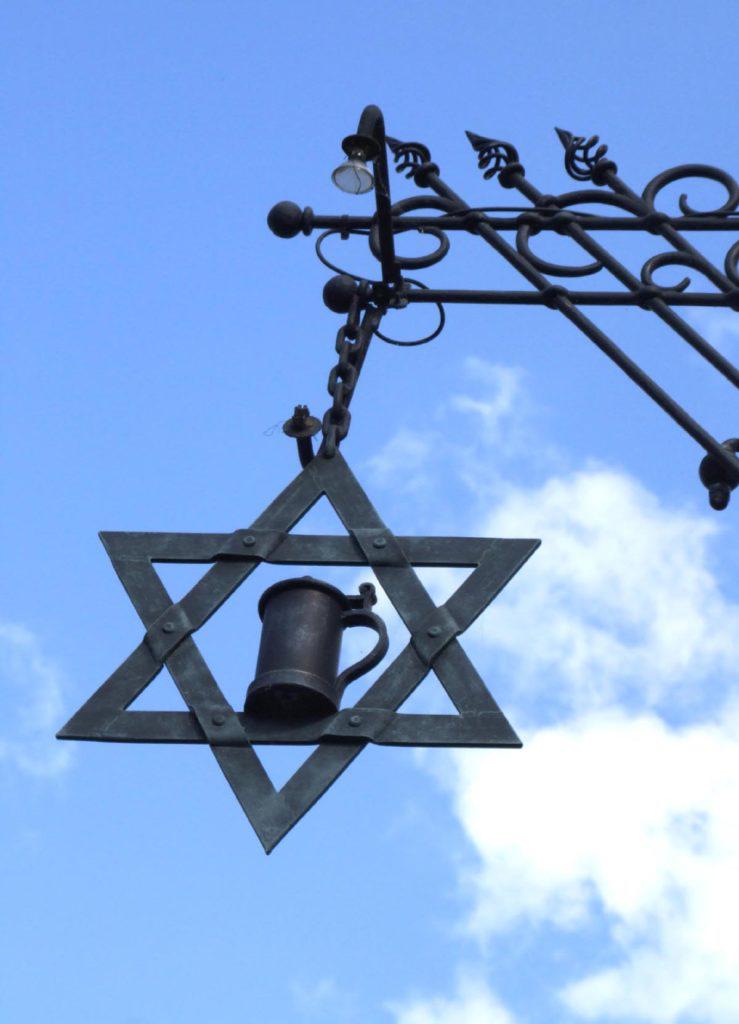
The origin of the Zoiglstern or Brauerstern is not clear. It is composed of two triangles of equal size, which are intertwined. One triangle of the Zoiglstern symbolizes the natural elements fire, water and air needed for brewing and the other the ingredients water, malt and hops - yeast as a brewing ingredient did not yet exist. The first pictorial reference in literature dates back to 1425 in the house book of "Mendel's Twelve Brothers Foundation". Such a star is also known from alchemy, which symbolized the elements at the time.
(Quelle: https://www.israelmagazin.de/zum-verwechseln-davidstern-an-wirtshausern-brauerstern-zoiglstern)